Category: Founders & Innovators
Family enterprises dominate capitalism but are still governed by instinct. Dr. Mita Dixit argues their real challenge is governance, separating emotion from ownership and designing clarity into decisions. Enduring families institutionalize dialogue, align values, vision, and voice, and treat conflict as a signal, not a flaw. In this shift, ownership becomes stewardship, and continuity is designed, not inherited.
Beyond Inheritance: Dr. Mita Dixit on Redefining Ownership for a New Era of Capitalism
IndiSight Editorial
Mar 27, 2026
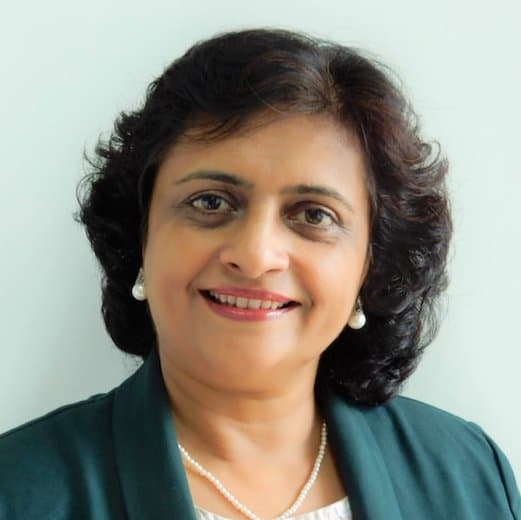
Dr Mita Dixit
Co-Founder and Director · Equations Advisors Pvt. Ltd.
Mumbai
No other institution has shaped capitalism as profoundly or as quietly as the family enterprise. It builds nations, funds philanthropy, and outlasts governments. Yet for all its power, it remains largely unstudied as a system. Family businesses employ most of the world’s workforce and generate nearly three-quarters of global GDP, yet they are still governed more by memory than by method.
Dr. Mita Dixit, Co-Founder and Director of Equations Advisors, has spent her career examining that gap. Her life’s work asks a deceptively simple question: what allows a family-run enterprise to renew itself without losing its identity? Over three decades, she has advised hundreds of promoter families across industries and continents. Some were navigating their first generational transition, others were managing fourth-generation complexity. What she found was that the real challenge was never growth or capital. It was governance.
She studies what happens when affection turns into entitlement, when relationships shape strategy, and when legacy overshadows accountability. “Continuity,” she says, “depends on how well a family learns to separate emotion from entitlement, and purpose from possession.”
Her lens is analytical, not emotional. Mita treats the family enterprise as an organizational system that demands clear decision rights, shared vision, and disciplined communication. Professionalizing ownership, she argues, is as critical as professionalizing management. The goal is not to make a family business look like a corporation, but to make it think with the same rigor.
Across Asia, Europe, and Latin America, families that endure share common habits: they debate, they document, they revisit the values that bind them. Mita’s frameworks have helped translate those habits into what she calls a culture of continuity, where trust is renewed by design and not assumed by inheritance.
The most resilient families don’t eliminate disagreement. They learn to institutionalize it.
That distinction between silencing conflict and structuring it, defines her passion and career.
The Untaught Institution
Every economy relies on two kinds of institutions: those we study and those we inherit. The family enterprise belongs to the second. It holds a majority share of global employment, commands most private wealth, and influences national policy across regions. Yet it still operates largely on instinct.
Mita’s understanding of this world is grounded in experience. She grew up in a Gujarati business family in Mumbai, surrounded by the rhythm of enterprise, factory visits, supplier meetings, and the daily calculus of trade. She studied Chemical engineering to join her father’s chemicals manufacturing business, assuming the leadership transition would be natural.
“I joined as the younger generation usually does, with enthusiasm and zero preparation,” she recalls. “There were no frameworks, no conversations about roles or boundaries. You just entered and figured it out.”
The absence of structure turned enthusiasm into tension. Her father, like many founders, equated control with security; she equated autonomy with progress. The result was not failure but confusion, proof that emotion without design is fragile.
Years later, she would describe that phase as her first case study. “We hadn’t failed as a family,” she says. “We had failed as an organization. We had emotion but no design.”
That insight became her lifelong pursuit to bring method to what had long been managed by instinct. After several years in corporate roles, she co-founded Equations Advisors in 1998 with a mission to help owner-driven companies professionalize without losing their soul.
Her doctoral research at BITS Pilani formalized what she had observed in practice. She was the first researcher in India to study “Conflict and splits in Indian family businesses.” Conflict, she concluded, is not dysfunction but lack of communication and feedback. Each disagreement signals a missing communication, an undefined role, an unspoken expectation, or an untested assumption.
Conflict is simply unmanaged design of emotions.
From that premise grew an entirely new discipline: family governance as human engineering. Over the next two decades, she guided over 200 families, built Family Constitutions, define ownership structures, and establish an open dialogue among multiple generations. The lesson was universal.
“We are taught how to build companies,” Mita says, “but not how to build understanding between the people who own them.”
Her conviction has since shaped curricula at business schools and family enterprise programs around the world. Governance, once seen as administrative burden, is increasingly recognized as the invisible infrastructure of resilience.
Governance as Competitive Advantage
In most organizations, governance arrives late, after growth, after stress, often after succession. Mita believes it should arrive first. In her view, governance is not a defensive shield but a strategic advantage. Research by PwC and the Family Firm Institute supports this: family enterprises with codified governance frameworks report up to 40 percent higher succession success rates and significantly lower internal conflict.
“Governance,” she says, “is not about hierarchy. It’s about rhythm.”
That rhythm is the cadence of decision-making. Her advisory work begins not with financials but with behavioral diagnostics: who speaks, who decides, who defers, and who implements. “These patterns,” she says, “tell you how power actually flows. Financial charts only tell you where it ends.”
A well-governed family business aligns across three dimensions:
Values, which define why the family stays together.
Vision, which defines what it wants to achieve.
Voice, which defines how it decides.
When these align, the enterprise moves from reactive management to intentional leadership. When they diverge, even profitable companies fracture.
Her company, Equations Advisors Pvt. Ltd., builds what she calls governance literacy for the families, the capacity to treat governance as culture rather than compliance. Families design decision maps, clarify ownership boundaries, and create forums for regular communication. Transparency does not depend on the personalities of family members, it starts depending on the process.
Global evidence supports her thesis. Germany’s Mittelstand, Japan’s keiretsu, and Latin America’s industrial houses all share one discipline: they separate emotion from authority early. “Love sustains family,” she says. “Design sustains enterprise.”
Still, she acknowledges that not every family succeeds. Some lack the emotional maturity to institutionalize dialogue; others operate under liquidity stress that leaves no time for reflection.
Governance requires both wealth and willingness.
The Modern Boardroom
Mita’s work as an independent director extends her philosophy from families to corporations. She sees boardrooms as mirrors of the same human dynamics, where structure exists but intent is uneven. “A company can comply with every regulation and still fail on purpose,” she says.
Her goal is to shift boards from compliance to consciousness. True oversight, she argues, lies in linking decisions to meaning. “Boards that combine action with intent create value. Boards that separate the two create paperwork.”
In promoter-led organizations, she often encounters blurred boundaries, founders who cannot delegate, and directors who hesitate to dissent. Her approach introduces what she calls decision discipline, a system that distinguishes influence from interference.
“The difference between the two,” she says, “is discipline.”
Across global markets, board design is evolving. European firms are embedding culture and ethics metrics into board evaluations. Japanese conglomerates use next-generation shadow boards to test strategic continuity. Indian companies are beginning to adopt hybrid boards that blend family directors with independent oversight.
The next generation of directors must understand analytics as deeply as accountability.
She believes future boards will be judged by how intelligently they share power. Governance, once a compliance function, is becoming a knowledge function, a space where data, ethics, and trust converge. “The boardroom of the future,” she adds, “will not just manage performance. It will manage trust.”
Her contrarian view challenges Western orthodoxy that assumes independence alone ensures objectivity. “Independence without insight,” she says, “is just distance.”
The New Logic of Succession
Succession is often treated as ceremony. Mita treats it as design. “Succession,” she says, “is not inheritance. It is readiness.”
Her framework evaluates readiness across three axes: capability, alignment, and transparency. Capability measures leadership depth. Alignment measures system maturity. Transparency measures trust. “You cannot build a future on unspoken expectations,” she notes.
Around the world, she finds convergence in method if not culture. Japan’s successors train for a decade before authority. European family firms rotate heirs through global divisions. American family offices use data-driven capability matrices. The consistent pattern is verification before inheritance.
Her contribution has been to translate that rigor into Indian and Asian contexts, where lineage still shapes legitimacy. She reframes succession as continuity engineering, the institutional capacity to outlearn the founder. “The real measure of succession,” she says, “is whether the business can still think clearly when the founder stops showing up.”
Her process is reciprocal. Founders learn to step back without detachment; successors learn to step forward without entitlement. Once decisions are separated from emotion, transition becomes renewal.
She cautions that delay is the most common failure.
Transitions collapse not because people disagree. They collapse because no one starts the conversation soon enough.
The best families, she adds, plan their obsolescence as carefully as their growth. “Founders who let go early don’t lose relevance. They gain reach.”
The Global Family Enterprise
For Mita, the family enterprise is capitalism’s original institution and still its most adaptive. “Every economic cycle tests it,” she says, “yet very few models recover as consistently.”
Her research across Asia, Europe, and North America reveals a unifying logic: endurance comes from the ability to turn memory into method. Europe’s legacy firms codify values into constitutions. East Asia modernizes stewardship through digital governance. American family offices evolve into engines of long-term innovation.
Their shared principle is intent. “They don’t preserve wealth,” she says. “They preserve adaptability.”
India’s promoter families are now entering this global dialogue from a position of maturity. Many have grown into multi-sector institutions with cross-border teams and investors. Longevity, Mita argues, now depends less on control and more on coherence.
She calls her philosophy contextual modernization, the integration of Western structure with Eastern relational intelligence.
The strength of Indian families lies in instinct. But instinct must now be supported by intelligence: digital, financial, and human.
Her argument reframes Indian capitalism as a global contribution, not an exception. Where the West built markets on contracts, India built them on trust. “The challenge,” she says, “is to professionalize that trust without sterilizing it.”
Ownership, in her definition, is stewardship of intelligence: how families manage information, influence, and integrity. It is a vision that aligns with the global move toward conscious capitalism and institutional ethics.
Inclusion, Capital, and the Long Arc
Capital moves across borders easily. Power does not. Mita examines how ownership, gender, and governance must converge for capitalism to remain credible.
“Inclusion,” she says, “is not about giving people a seat. It’s about redesigning the table.”
When inclusion is written into governance, through committee structures, role clarity, and decision rights, it becomes durable. When left to goodwill, it vanishes with leadership cycles. Across Asia, women now control nearly a third of private wealth, yet representation on boards and investment committees remains under 20 percent.
“Financial rights without decision rights,” she warns, “are modern tokenism.”
Her interventions start with data, not emotion. Families map who holds equity and who holds expertise. When those align, value compounds; when they diverge, progress stalls.
Merit has to be auditable. Otherwise, it becomes mythology.
She also challenges philanthropy’s traditional passivity. “Wealth must justify its existence,” she argues. Family offices, in her view, should act as institutional investors guided by purpose, not nostalgia. “Purpose is not a constraint on profit,” she adds. “It’s a filter for quality.”
Her approach aligns with a broader shift across Europe and Asia, where ESG and stewardship codes are redefining legitimacy. Yet she is clear-eyed about the limits of Western models. “Many ESG frameworks mistake metrics for meaning,” she says. “Governance is not compliance. It is consciousness.”
Inclusion, for her, is not ethics alone; it is economics. “The long arc of capitalism,” she concludes, “will bend toward inclusion not because it’s moral, but because it’s intelligent.”
Leadership Lessons from Dr. Mita Dixit
Continuity is not inheritance. Renewal must be designed, not assumed.
Governance precedes growth. Systems protect speed; structure sustains scale.
Knowledge unshared is risk compounded. Institutions fail when intelligence remains private.
Trust requires engineering. Transparency and rhythm matter more than sentiment.
Inclusion without power is illusion. Diversity adds value only when authority is distributed.
Governance defines capitalism. Family enterprises are where ethics and economics intersect.
Letting go amplifies influence. Founders who design succession early extend their legacy.
Capital must have direction. Wealth unaligned with purpose erodes faster than it grows.
Philosophy must become process. Belief is credible only when embedded in behavior.
Leadership is measured by absence. The strongest institutions think clearly when their founders no longer need to.
Closing Reflection
Mita’s philosophy challenges the assumption that legacy is memory. For her, legacy is measurement, the test of how intelligently systems continue after their creators.
She often tells leaders, “Institutions don’t need replicas. They need renewal.” The sentence distills a lifetime of learning into one principle: relevance is the true currency of continuity.
She sees leadership as an apprenticeship in empathy and structure. One without the other fails. Empathy without systems turns to favoritism; systems without empathy harden into bureaucracy. The future belongs to those who balance both, leaders who scale trust with the same precision they scale capital.
Her signature question captures this shift: If your enterprise were a person, what kind of future would it choose for itself?
That question now travels beyond family businesses to governments, universities, and global institutions seeking reinvention without rupture. Her philosophy, anchored in governance and empathy, belongs to that wider conversation.
As economies face uncertainty, her principle remains disarmingly simple:
Growth is an achievement. Continuity is wisdom.
And in that idea lies a blueprint for the next century of enterprise.
Our Suggestions to Read
Discover The Leaders Shaping India's Business Landscape.
Founders & Innovators
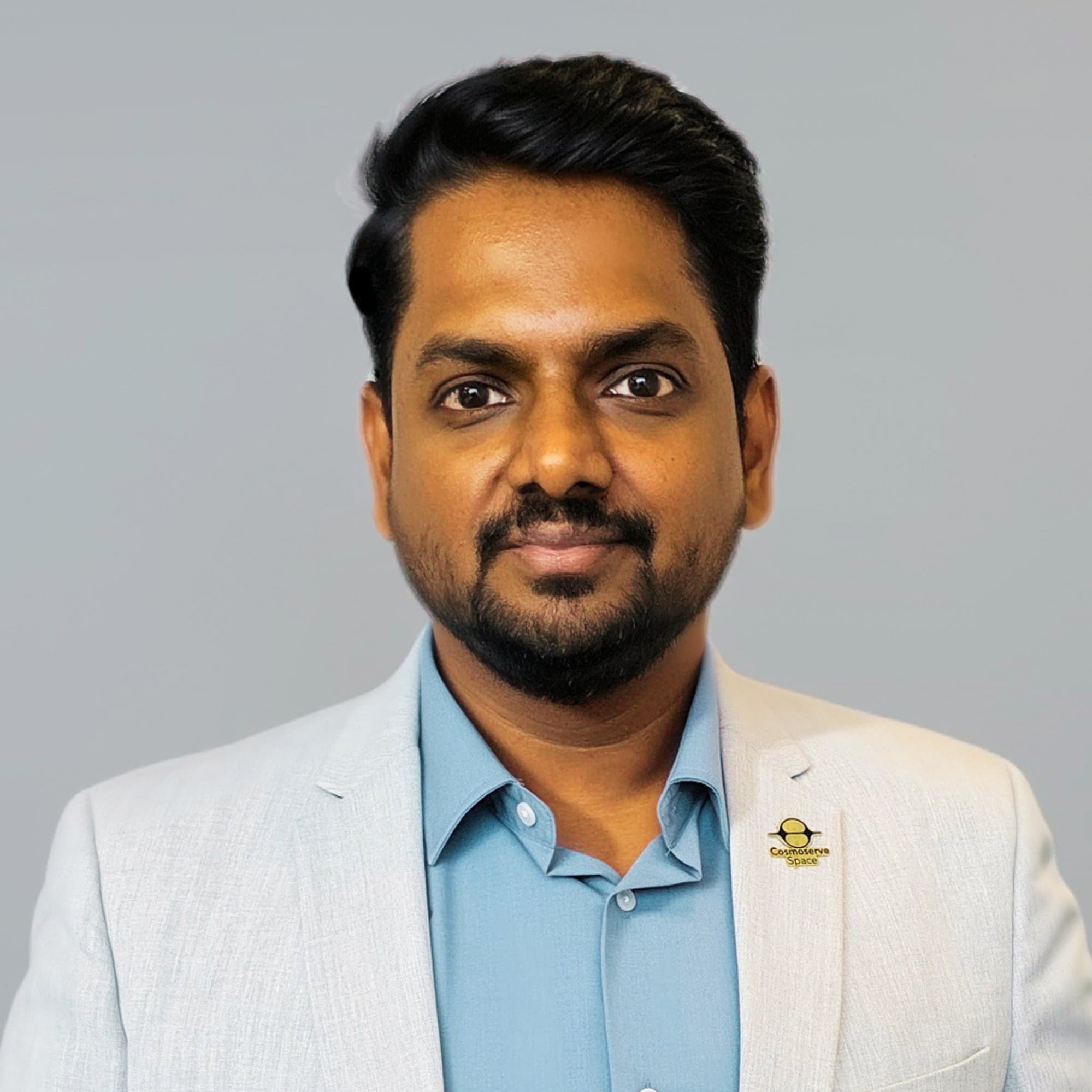
Building the Next Space Economy: Chiranjeevi Phanindra and Cosmoserve's Case for Orbital Maintenance
Chiranjeevi Phanindra, Founder & CEO of Cosmoserve Space, spent 14 years at ISRO working on re-entry and human spaceflight. Today, he is focused on a vital challenge: keeping Earth’s orbit usable.
Read Full Story

Corporate Visionaries
Shashank Sahni on What Success Leaves Out
Shashank Sahni, Google’s Managing Director of Global Ads Solutions, reflects on what customers reveal, what ambitious teams need from their leaders & what the mountains and marathons have taught him about going further.
Read Full Story
Corporate Visionaries
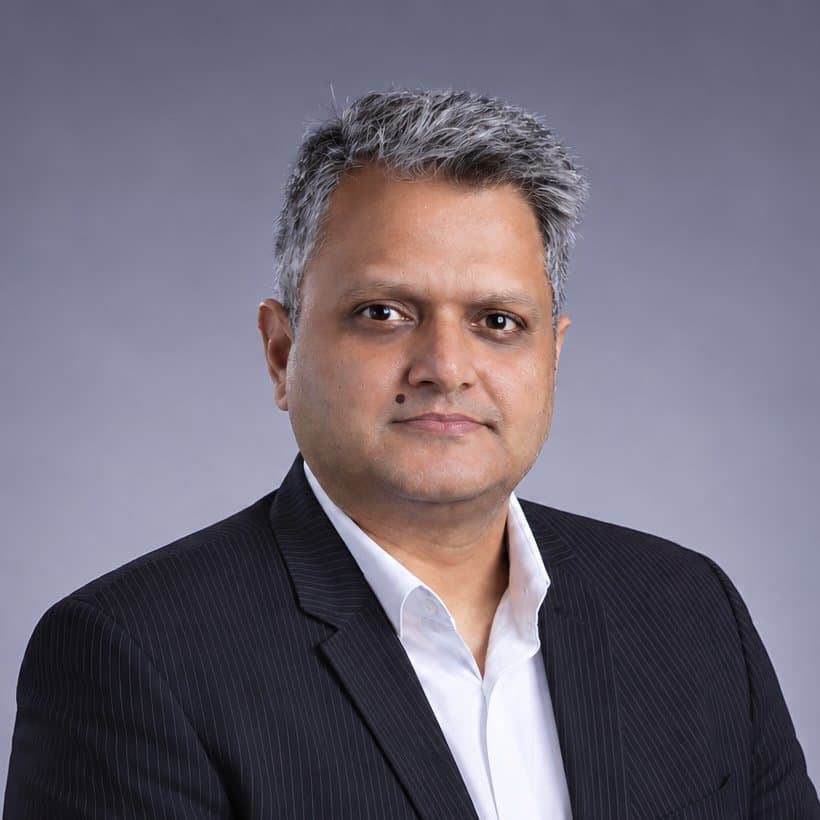
Clinical Multiplication: Divesh Singla on the Healthcare AI Case That Headlines Keep Missing
Divesh Singla, Managing Director, India at Veradigm, brings two decades in healthcare technology to the AI question leaders cannot avoid: how to expand clinical capacity without weakening human judgment.
Read Full Story