Category: Founders & Innovators
Competitors are launching battery aircraft in 2025 with 150-kilometer range. Ratandeep Tripathi launches hydrogen in 2028 with 600 kilometers. The difference is physics: lithium-ion batteries offer 250 watt-hours per kilogram; hydrogen delivers five times that. In aerospace, energy density determines whether urban air mobility becomes a category or remains a curiosity. Ratandeep is betting on physics over first-mover advantage.
The Patent-First Principle: How Ratandeep Tripathi Is Redefining Industrial Sovereignty in Indian Aerospace
IndiSight Editorial
Mar 24, 2026

Ratandeep Tripathi
Founder & CEO · Vjaitra Air Mobility
Noida
Aerospace reveals the difference between industrial activity and industrial depth. Few industries expose so clearly whether a country has the capacity to originate frontier systems or simply participate in categories defined elsewhere. That is what gives advanced mobility its larger significance: which economies can build the technical, regulatory, and economic logic around a new flying system strongly enough for the category to become credible.
Ratandeep Tripathi is building inside that test. Through Vjaitra Air Mobility, he is pursuing hydrogen-powered vertical aviation in India, where the aircraft is only the most immediate part of the challenge. The harder work lies in everything that has to mature around it, from certification pathways and energy systems to operating economics and institutional trust. His work is about whether Indian aerospace can move from participation to authorship.
From Military Aviation to Original Aerospace Intent
Ratandeep's ambition came through military aviation, where two decades in the Indian Air Force taught him that a flying system is genuine only when it survives procedure, scrutiny, and use. When he moved into the private drone world, he encountered a gap that disturbed him. India had energy and entrepreneurial enthusiasm, but what it often lacked was original aerospace intent. Too much activity leaned on imported parts and downstream assembly, which meant the country was participating without truly generating.
He chose to build against that pattern. Vjaitra secured patents on the whole aircraft design. A patented component signals improvement. A patented full-aircraft concept signals authorship. The first says you can optimize what exists. The second says you can define what should exist.
In a startup building technology that does not exist for a market that has not formed, every day presents what he calls "real situations of uncertainty." His solution was to build trust before building aircraft.
"In the aerospace industry you must build trust first," he says. "The aviation or space industry works differently. They initially build trust on people, like patents on whole aircraft, then start working on prototype, then production, then commercialization."
That sequencing inverts how most startups operate. Trust precedes product, which means intellectual property precedes hardware. Ratandeep calls this the Patent-First Principle: in aerospace, the patent is the product, and the aircraft is just the physical manifestation of the IP you already own. When investors, regulators, or partners evaluate your credibility, they look at your intellectual property portfolio before your prototype, because the IP tells them whether you understand the system or are merely assembling parts someone else designed.
The Scaffold Strategy: Sovereignty Through Design
Ratandeep is candid about dependence. He wants an Indian airframe, Indian IP, and Indian strategic control, but he is also willing to use globally accepted avionics, propulsion systems, and fuel-cell technologies where that improves certification prospects. This reflects his recognition that sovereignty and autarky are different strategies, and in a globally networked sector like aerospace, autarky leads to irrelevance.
The calculation is strategic, rooted in how aviation certification actually works. An aircraft is a system of integrated subsystems, each meeting specific airworthiness standards set by certification authorities like the FAA (Federal Aviation Administration) in the United States, EASA (European Union Aviation Safety Agency) in Europe, or DGCA (Directorate General of Civil Aviation) in India. Those authorities only recognize components already validated through rigorous testing protocols that can take years and cost tens of millions of dollars. An Indian startup using unproven Indian-made fuel cells would face certification timelines measured in decades. But a UK-manufactured fuel cell that already carries EASA certification can be integrated into an Indian airframe and achieve multi-jurisdictional approval far faster.
This is where Ratandeep's model inverts the traditional Make in India narrative. Sovereignty is about owning the architecture that determines how components work together, the design authority that specifies performance parameters, and the intellectual property that defines the system. The aircraft is Indian because the design is Indian, the integration logic is Indian, the patents are Indian, and the assembly is Indian.
Ratandeep calls this the Scaffold Strategy: build Indian design authority on global component certification, then replace the scaffolding with domestic capability once the structure is load-bearing. India does manufacture aviation-grade fuel cells at scale yet. Building that capability will take a decade, which means waiting would mean missing the market window entirely. So Vjaitra sources the fuel cell from a UK supplier that has already achieved regulatory approval, integrates it into an Indian-designed airframe, certifies the complete system, and builds the operational knowledge base. Ten years from now, when Indian manufacturers develop competitive fuel cells, the architecture exists to swap them in without redesigning the aircraft. The scaffolding is temporary, but the structure is permanent.
The Hydrogen Wager: Energy Density as Business Logic
Around the world, advanced air mobility has been largely narrated through battery-electric flight, but Ratandeep thinks that story has already hit a limit, especially for India. His argument is commercial and physical. A battery-heavy aircraft may satisfy a demonstration route, but once operators push for meaningful range, the weight penalty begins to eat into viability.
Energy density shapes the market. Lithium-ion batteries offer roughly 250 watt-hours per kilogram, while hydrogen fuel cells deliver five times that. For aviation, where every kilogram of weight reduces range or payload, that ratio is transformational. This is the physics constraint that most eVTOL (electric vertical takeoff and landing) companies are discovering too late: batteries are energy storage, but hydrogen is energy density, and density determines whether urban air mobility becomes a category or remains a curiosity.
Here is the paradox Ratandeep has internalized: in aerospace, moving slower can mean arriving first. Joby and Archer are racing toward 2025-2026 launches with battery technology that gives them 100-150 kilometer range, but if the market demands 300 kilometers by 2027, they will need to redesign the aircraft, recertify the platform, and convince early customers that version two will obsolete their version one investment. Ratandeep is targeting 2028 with a hydrogen platform that already delivers 600 kilometers, which means he is designing for the problem the market will have in the future. Speed in deep tech is about timing the market, instead of beating the clock.
His approach is pragmatic: design the airframe to be powertrain-agnostic, certify the electric version first using India's existing advisory frameworks, then swap 85 percent of the battery mass for hydrogen tanks and fuel cells once regulators write the rules for hydrogen propulsion. But hydrogen introduces new challenges. "When you are an aircraft manufacturer, you can only focus on the aircraft," he says. "You cannot focus on hydrogen, you cannot focus on ‘electric’. So that's why we collaborate." An aircraft company cannot become a hydrogen producer, a charging provider, a refueling standard-setter, and an OEM (original equipment manufacturer) simultaneously, which is why his narrative repeatedly connects Vjaitra to government missions and energy collaborators like JIO-BP (a Reliance-backed energy infrastructure company).
Regulation as Co-Creation, Infrastructure as Dependency
Ratandeep treats certification as a parallel track that must be engaged from the beginning, instead of as a hurdle to overcome after the technology works. Vjaitra has secured a Design Approval Organization certificate from India's Directorate General of Civil Aviation, and that early engagement shifts the conversation from "will regulators approve this" to "how do we shape the standards together." This is the difference between asking for permission and helping write the rulebook.
Every 30 days, India's Ministry of Civil Aviation & CII Infrastructure convenes an eVTOL task force that includes manufacturers, vertiport developers, charging infrastructure providers, and airspace regulators. Ratandeep attends these meetings. "The Government is working tirelessly on eVTOL projects," he observes. "They have a mindset that definitely the buzz of eVTOLs cannot be escaped this time." India has watched electric vehicles, solar infrastructure, and digital payments scale in other markets before adopting them domestically. The government wants to avoid repeating that pattern with urban air mobility.
The infrastructure challenge runs deep. Vertiports need to be audited for structural load-bearing, air traffic corridors need to be mapped for low-altitude flight, and refueling stations need to be designed for hydrogen safety protocols. None of this exists yet. The vehicle is only as viable as the system it requires to operate, and building that system is a coordination problem across government, private capital, real estate developers, energy companies, and aviation authorities who have never had to work together before.
Building for an Early Market
In more mature aerospace economies, companies specialize. One builds the aircraft, another operates it, another finances it, another aggregates demand. Ratandeep thinks India requires a different approach. "If you want to survive in India you must have a combination of multiple models," he explains. His answer is hybrid: supply part of the fleet externally, retain part for self-operated routes, and build booking integration and service layers around the aircraft. This is the burden and opportunity of building in emerging markets. You cannot assume the ecosystem exists. You have to become part of it yourself.
Vjaitra has announced letters of intent worth hundreds of millions of dollars. "These LOIs are based on our trust," he says. He treats those LOIs as evidence of market curiosity and early belief. LOIs are useful instruments because they are non-binding. They test market conviction without locking in prices that will inevitably be wrong, and they signal to regulators and investors that demand exists even if the supply chain remains incomplete.
Talent as Workforce Formation
Hydrogen aviation is a workforce problem. "Currently in India we don't have engineers," he acknowledges. His answer is to train forward: use global partners where capabilities already exist, expose Indian engineers, bring them back into the system, and build trainers who can create more capability domestically. This is workforce seeding.
In a facility on the outskirts of Delhi, three engineers huddle around a laptop displaying fuel cell schematics from a UK manufacturer. One is 26, fresh from IIT Madras (Indian Institute of Technology Madras). "In batteries, the constraints are known," he explains. "We optimize within them. In hydrogen, we are defining the constraints." This is what workforce formation looks like: creating expertise instead of hiring it.
That is where Ratandeep's role expands from founder to institution-builder. He is also the Country Head of the Advanced Air Mobility Institute in the United States and sits on task forces with the Confederation of Indian Industry. If Vjaitra trains 50 engineers and 10 leave to join competitors or start their own ventures, the Indian ecosystem still gains 40 trained professionals who did exist before. This is the paradox of ecosystem building: the more successful you are at creating capability, the more that capability diffuses beyond your control. But without that diffusion, the category never reaches critical mass. You cannot have monopoly and category creation simultaneously.
A Founder Thinking Beyond the Company
His most revealing remarks may be the ones where he is willing to subordinate company ego to category success. If hydrogen-powered advanced mobility reaches Indian skies through another company first, he says he would still treat that as meaningful progress. "I wish for hydrogen because hydrogen is the future," he explains. "If anyone can produce, I'm supporting them too."
When asked what he would want written in a textbook about Indian flight a generation from now, Ratandeep talks about proof of concept instead of about Vjaitra. "Indian companies are able to build full aircraft in India," he says. "We built, we did the research here, we patented them here, and now we are expanding to other countries." The emphasis is on origin. For decades, Indian aerospace operated downstream of design decisions made in Seattle, Toulouse, or Moscow. Ratandeep is trying to prove that India can sit upstream, where specifications are written and system architecture is defined.
Whether Vjaitra becomes the category winner remains open, but whether it becomes one of the companies that force the category to become more real feels far more likely. That may be Ratandeep's deeper contribution: making frontier aerospace feel less exceptional in India, less imported, less deferred to somebody else's timeline. If Indian aerospace is to earn a stronger place in the next phase of global mobility, it will need companies willing to carry technical risk, regulatory discipline, and commercial experimentation at the same time. Ratandeep has chosen to build in that difficult zone, which is why he is worth taking seriously.
Leadership Lessons
Frontier sectors reveal whether a country can generate capability or merely participate in it.
In aerospace, the patent is the product, and the aircraft is just the physical manifestation of IP you already own.
Participation creates jobs. Authorship creates industries.
Sovereignty and autarky are different strategies. In globally networked sectors, autarky leads to irrelevance.
In deep tech, speed is about timing the market instead of beating the clock. Arriving first with the wrong technology is an expensive education for whoever arrives second with the right one.
Workforce creation is part of product creation in deep tech, because creating expertise matters more than hiring it.
LOIs are useful because they are non-binding. They test market conviction without locking in prices that will inevitably be wrong.
The difference is between asking for permission and helping write the rulebook.
Infrastructure must be designed in parallel with innovation instead of following it. The vehicle is only as viable as the system it requires to operate.
You cannot have monopoly and category creation simultaneously. The more successful you are at creating capability, the more that capability diffuses beyond your control.
Closing Reflection
New mobility categories emerge when engineering, regulation, energy, and commercial judgment become coherent enough to support public trust, and that coherence is still being built. In workshops outside Delhi, engineers are training on hydrogen fuel cells shipped from the UK, and in a year, they will train others, and in five years, one of them might start a competing company. Ratandeep is building that future, even if it carries his company's name, because the scaffolding is temporary, but the structure is what remains.
Our Suggestions to Read
Discover The Leaders Shaping India's Business Landscape.
Founders & Innovators
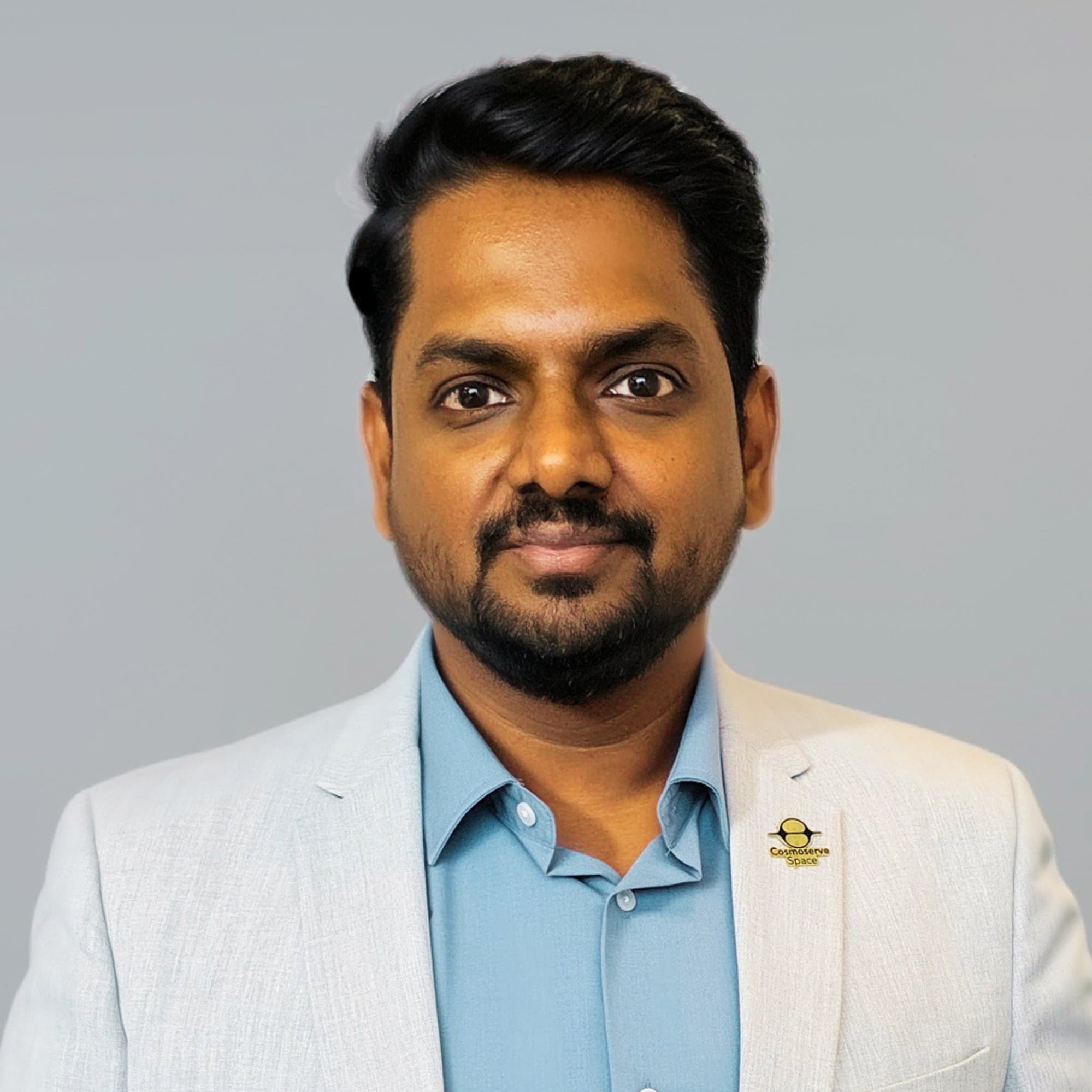
Building the Next Space Economy: Chiranjeevi Phanindra and Cosmoserve's Case for Orbital Maintenance
Chiranjeevi Phanindra, Founder & CEO of Cosmoserve Space, spent 14 years at ISRO working on re-entry and human spaceflight. Today, he is focused on a vital challenge: keeping Earth’s orbit usable.
Read Full Story
Corporate Visionaries
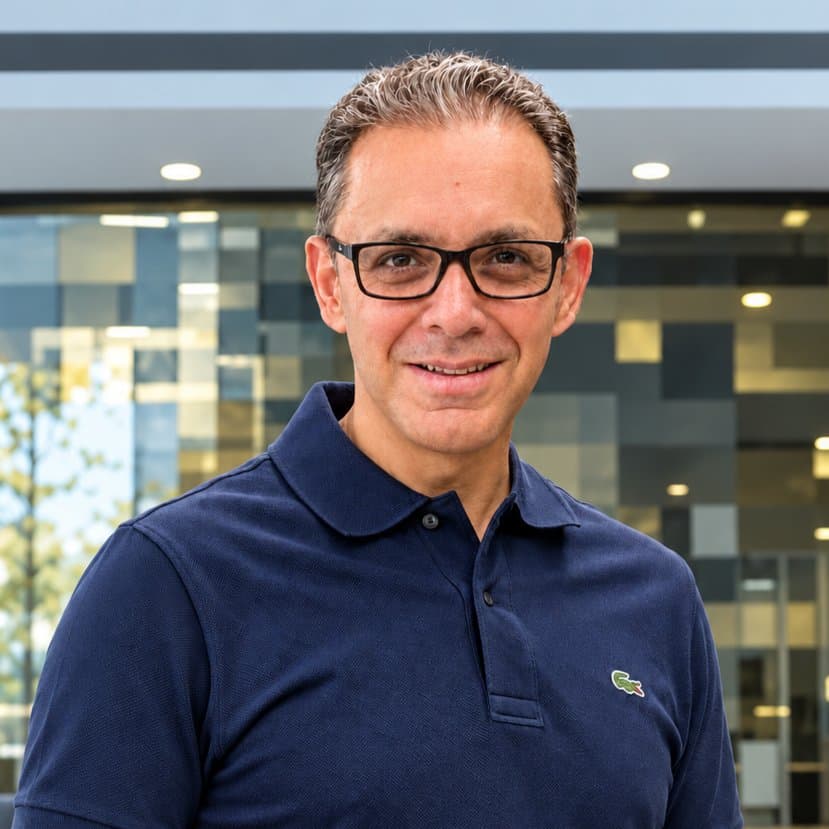
Shashank Sahni on What Success Leaves Out
Shashank Sahni, Google’s Managing Director of Global Ads Solutions, reflects on what customers reveal, what ambitious teams need from their leaders & what the mountains and marathons have taught him about going further.
Read Full Story
Corporate Visionaries
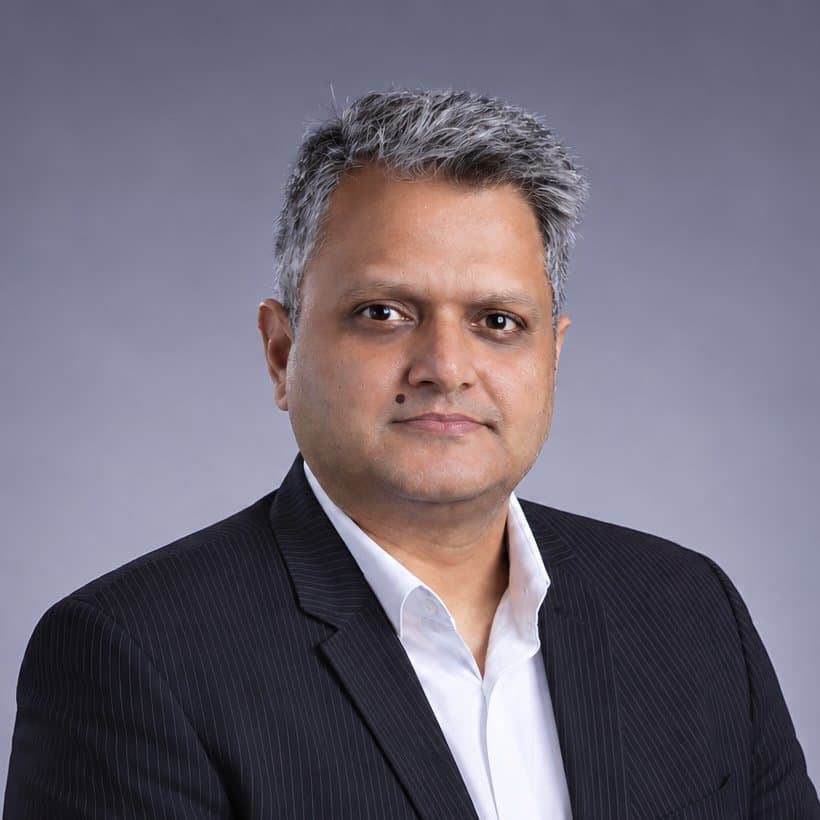
Clinical Multiplication: Divesh Singla on the Healthcare AI Case That Headlines Keep Missing
Divesh Singla, Managing Director, India at Veradigm, brings two decades in healthcare technology to the AI question leaders cannot avoid: how to expand clinical capacity without weakening human judgment.
Read Full Story