Category: Corporate Visionaries
Bijay Chowdhury has spent his career proving that responsibility is not charity but strategy. As a CSR leader, he redefined how companies align purpose with performance through structure, trust, and continuity. His philosophy turns corporate responsibility into a discipline of design where communities co-own progress, impact becomes self-sustaining, and leadership is measured not by control but by what continues to thrive when one steps aside.
Bijay Chowdhury: Redefining Corporate Responsibility for a Changing World
IndiSight Editorial
Feb 4, 2026

Bijay Chowdhury
Former Group Head - CSR and Philanthropy · Synopsis Inc
Delhi
Capital has always been the language of progress, but increasingly, conscience is becoming its grammar. Across the global economy, companies are being asked to prove that their growth is not only profitable but also purposeful. India stands at a particularly important intersection in this conversation, being one of the few countries where corporate responsibility is not a matter of choice but of law. Over the past decade, the 2 percent CSR mandate has turned corporate giving into one of the world’s largest organized development experiments, bringing both opportunity and accountability into the same frame.
For Bijay Chowdhury, this moment is not about compliance. It is about design, intention, and the discipline of building systems that serve communities with the same precision that businesses bring to their own operations. As the former Group Head for CSR and Philanthropy for Asia Pacific at Synopsys Inc., Bijay led initiatives that spanned education, entrepreneurship, and environmental sustainability across several countries in the region. He sees responsibility not as an external act of generosity but as an internal test of leadership quality, a measure of how deeply an enterprise understands the society in which it operates. “Responsibility must have structure,” he says. “It should be planned with the same discipline as business, because its results define who we are long after the numbers fade.”
Each program under his watch is built to continue without the need for constant supervision. Whether it involves schools in Telangana or women’s entrepreneurship in Delhi’s urban clusters, the aim is always continuity, communities that acquire the capability to run what they have helped create. “A program that needs you less every year,” he says, “is the sign that it’s working.” For him, leadership is not about visibility but about stewardship, to build something that continues to create value long after it ceases to carry your name.
Early Foundations
Bijay’s perspective on development did not emerge from textbooks or boardrooms. It began in Bokaro Steel City, where he grew up watching how factories powered local economies while also testing the limits of their environments. “You saw both sides of progress,” he recalls, “the productivity and the pressure.” That duality shaped his belief that growth without design quickly becomes imbalance.
Instead of following a conventional management track, he chose to study rural development at the Xavier Institute of Social Service in Ranchi. It was an unusual decision at a time when most graduates sought corporate roles, but it gave him a front-row view of how communities adapt, negotiate, and sustain change. His early years at the Jubilant Bhartia Foundation immersed him in the operational realities of development, budgets that mattered less than trust, timelines that depended on participation, and results that could not be measured only by output.
Later roles at Hewlett Packard, Deloitte, and KPMG added layers of governance, compliance, and performance measurement to his understanding. He learned how systems sustain themselves only when empathy meets efficiency, and how social investment must obey the same rigor as financial investment. During his tenure at Synopsys, he brought together what he calls “a complete view of how purpose and performance must talk to each other.” It allowed him to move fluidly between corporate metrics and community aspirations, treating both as parts of a single design. Colleagues describe him as patient and precise, a leader who prefers process over proclamation and believes that the best results are those that remain visible long after the initiator has stepped aside.
From Intent to Implementation
“Good intentions are plentiful,” Bijay says. “What’s rare is infrastructure for impact.” He believes that the sustainability of any initiative depends less on funding size and more on how clearly its logic is defined. A strong CSR strategy, in his view, functions exactly like a well-run enterprise, governed by clarity of ownership, accountability, and predictable flow of results.
He calls this approach institutional empathy, compassion that operates through structure rather than sentiment. It means involving communities not as beneficiaries but as co-planners, embedding shared ownership into both design and delivery.
Empathy without structure eventually collapses into dependency. The goal, therefore, is not to deliver help but to enable capability.
His understanding of impact extends beyond projects or geography. It questions the underlying economics of corporate responsibility, how companies decide, fund, and evaluate social change. In his view, every rupee spent on development must create an asset that can eventually sustain itself. Philanthropy may begin with generosity, but it achieves legitimacy only when it creates autonomy. “Impact must behave like an enterprise,” he says. “It should have accountability, efficiency, and a capacity to scale.”
Reimagining Corporate Capital
For Bijay, the real transformation in India’s CSR journey lies in moving from obligation to opportunity. The early years of the 2 percent mandate were primarily about compliance, budgets allocated, partners chosen, and reports filed. But now, he believes, the next phase must be about consciousness. “The purpose of business has never been charity,” he says. “It has always been continuity, the ability to create value that survives its creator.”
At Synopsys, this philosophy had translated into programs that are designed with clear governance, measurable outcomes, and a defined path toward local independence. Every initiative was expected to have its own succession plan. Communities, schools, or organizations involved were encouraged to manage budgets, track performance, and evolve their models without perpetual external dependence.
Bijay often differentiates between CSR and ESG, two terms that are frequently confused but fundamentally distinct in scope. CSR, in his view, provides direction, it tells an organization why it exists beyond profit. ESG provides data, it measures how responsibly that existence performs.
The West built precision in disclosure. Asia will build depth in design. Both must meet if the world is to move forward responsibly.
This shift, he argues, positions India to contribute a unique narrative to global capitalism, one that is not defined by activism or regulation alone but by the practical integration of conscience into corporate design.
Leadership by Design
Leadership, for Bijay, is not about command. It is about construction. “The real test of leadership,” he says, “is when a system works in your absence. That’s when your presence has meaning.”
He believes that influence must outlive proximity. When a project becomes dependent on a person, it loses its ability to evolve. Over time, he developed what he calls leadership by design, a disciplined approach that replaces supervision with ownership and aligns trust with structure.
His leadership rests on three principles.
Design before direction: build systems that guide behavior without dependence on individual instruction.
Trust before oversight: empower people to rise to the belief you place in them.
Continuity before credit: measure success by what continues, not by what commemorates you.
He admits that delegation was once his greatest weakness. “Earlier in my career, I equated responsibility with doing everything myself,” he says. “But leadership isn’t a performance. It’s a pattern.” He now views trust as the highest form of governance, an operating principle that multiplies capacity.
Control creates compliance. Trust creates capability.
The Future of Responsible Business
In Bijay’s view, the future of business will belong to those who can combine conscience with competence.
The purpose of business is not to repair what it breaks, but to prevent the breakage in the first place.
He treats CSR, ESG, and sustainability as a continuum rather than separate silos: CSR provides direction, ESG brings data, and sustainability preserves momentum. Together they form what he describes as the scaffolding of modern legitimacy, an interdependence between profit and principle.
Working within the semiconductor sector, he often draws parallels between his industry and his philosophy. “If we can measure the integrity of a circuit,” he says, “we can measure the integrity of a commitment.” In his vision, corporate responsibility must be as precise, repeatable, and measurable as the systems that define high-tech manufacturing.
He also observes a generational shift among young professionals entering the workforce. They no longer view purpose and performance as opposites but as parts of one continuum. “This generation doesn’t seek alignment,” he says. “They assume it.” Their natural integration of meaning and ambition, he believes, will accelerate the evolution of responsible business far more effectively than policy mandates ever could.
The next revolution in business won’t come from efficiency. It will come from empathy engineered at scale.
Leadership as Continuity
Success, for Bijay, is not measured by how many people follow but by how many can continue without instruction. “Leadership,” he says, “is multiplication, not accumulation.” He sees his role as enabling others to find their own clarity rather than providing constant direction. “My goal,” he explains, “is to help people build their own compass, not follow mine.”
He often reminds his teams that leadership is a relay, not a race. Each person carries the responsibility to pass on capability, not dependence. True impact, in his view, is achieved when people act with conviction even when the original architect is absent.
When your absence produces confidence instead of confusion, you’ve built something that can last.
His perspective extends beyond organizations to society itself. He believes India’s greatest advantage lies not just in demographic scale but in moral imagination, the ability of its institutions and individuals to link ambition with empathy. The country’s corporate sector, he argues, can play a decisive role in showing the world how competitiveness and care can coexist without contradiction.
A Broader Vision for Capitalism
Bijay believes the coming decades will test whether capitalism can evolve into a system that values regeneration as much as growth. “Capitalism has run its course as a race,” he says quietly. “It now has to become a relationship.”
He calls this vision inclusive competitiveness, the idea that genuine progress strengthens the ecosystems it depends on. Education should build employability pipelines, environmental projects should safeguard future production, and entrepreneurship should multiply dignity rather than dependence.
CSR was never meant to be a postscript. It should be the prologue of strategy.
He often argues that credibility has become the new currency of business. Transparency travels instantly; trust evaporates just as quickly. In a world defined by scrutiny and speed, integrity is no longer optional, it is operational. “You can’t buy trust,” he says. “You have to behave into it.”
He believes India has a singular opportunity to define a new model of prosperity, one that learns from global systems but avoids their excesses. “We can’t afford to replicate Western capitalism and its repair costs,” he says. “We can build something wiser, prosperity with conscience built in.”
For him, the measure of leadership will not be who grows fastest, but who sustains longest through trust, inclusion, and shared ownership. “Human progress,” he says, “is not the story of who built the most, but of who built what lasted.”
Lessons in Leadership
Responsibility is the new strategy.
Scale without inclusion is erosion.
Profit measures performance; purpose measures permanence.
Reciprocity is the strongest form of resilience.
Trust compounds faster than capital.
Design for continuity, not applause.
Inclusion is intelligence at scale.
Empathy is the hidden infrastructure of innovation.
Compliance creates safety; consciousness creates strength.
Systems endure when power is shared.
Reputation will replace hierarchy.
Leadership is holding the ladder steady.
Innovation without ethics is acceleration without direction.
The most valuable export is wisdom that works.
Continuity is the purest form of impact.
Closing Perspective
The future will belong to leaders who see responsibility as strategy and empathy as intelligence. Bijay Chowdhury’s work demonstrates that the next era of corporate progress will not be defined by scale alone but by the quality of what it sustains. “We’ve learned how to scale,” he says. “Now we must learn how to stay.”
He believes that markets can only thrive in societies that are stable, fair, and self-renewing, a truth that many companies are beginning to rediscover.
We can no longer build organizations that succeed at the cost of the environments that sustain them. Longevity is the new profit.
Every great institution, he believes, begins with a simple decision: to serve something larger than itself. When purpose and progress finally converge, growth no longer needs repair, it becomes renewal itself.
Our Suggestions to Read
Discover The Leaders Shaping India's Business Landscape.
Founders & Innovators
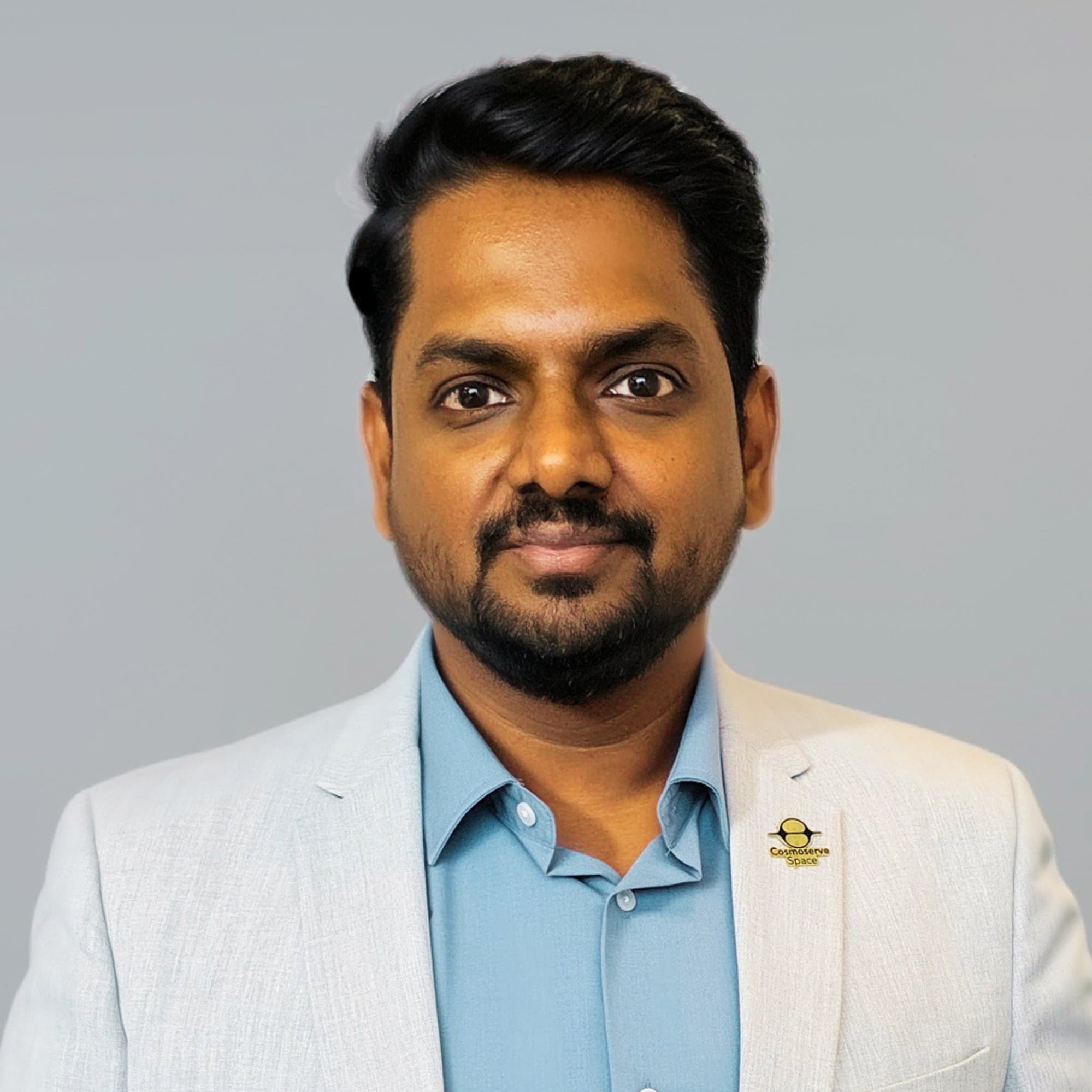
Building the Next Space Economy: Chiranjeevi Phanindra and Cosmoserve's Case for Orbital Maintenance
Chiranjeevi Phanindra, Founder & CEO of Cosmoserve Space, spent 14 years at ISRO working on re-entry and human spaceflight. Today, he is focused on a vital challenge: keeping Earth’s orbit usable.
Read Full Story
Corporate Visionaries
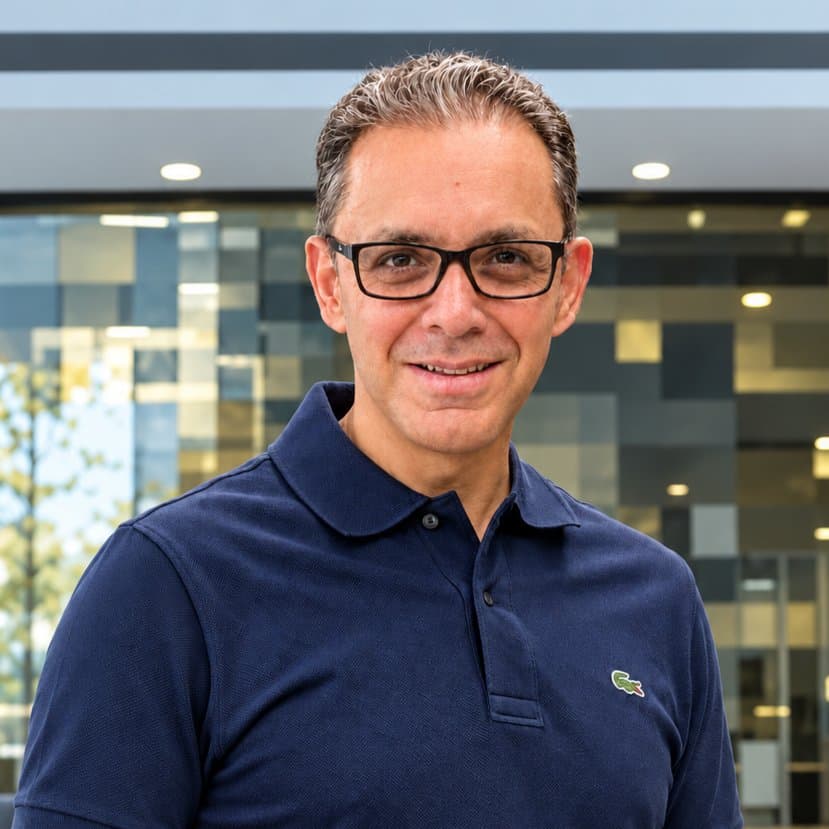
Shashank Sahni on What Success Leaves Out
Shashank Sahni, Google’s Managing Director of Global Ads Solutions, reflects on what customers reveal, what ambitious teams need from their leaders & what the mountains and marathons have taught him about going further.
Read Full Story
Corporate Visionaries
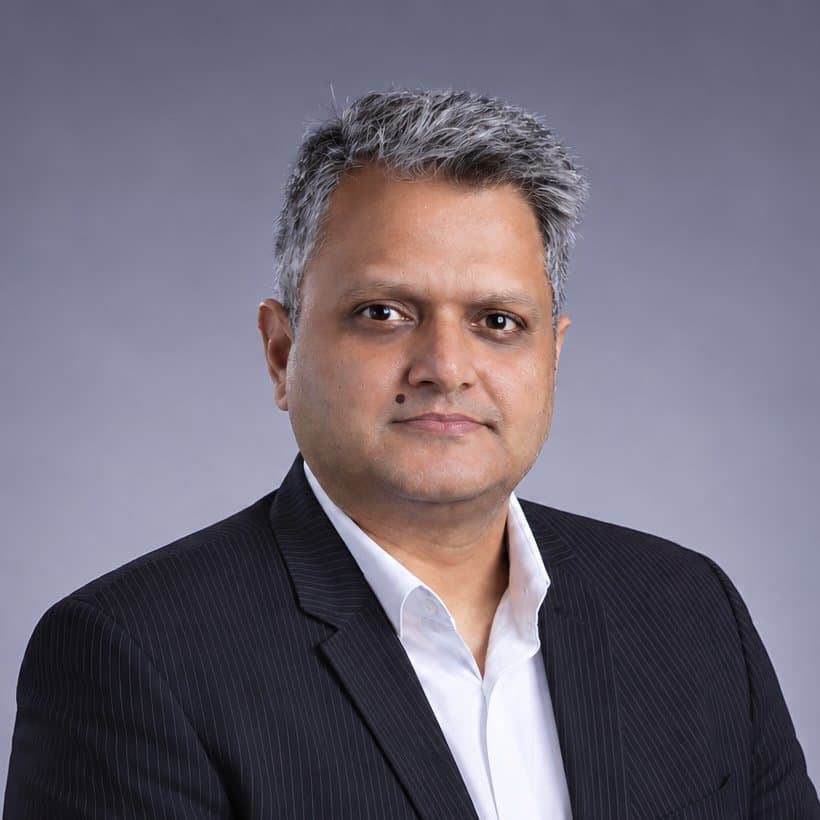
Clinical Multiplication: Divesh Singla on the Healthcare AI Case That Headlines Keep Missing
Divesh Singla, Managing Director, India at Veradigm, brings two decades in healthcare technology to the AI question leaders cannot avoid: how to expand clinical capacity without weakening human judgment.
Read Full Story