Category: Founders & Innovators
Meaning has overtaken information as the true currency of business. Santosh Desai argues that brands no longer sell products but reflect who we are, turning markets into mirrors of identity. He explores how aspiration drives exhaustion, why trust scales faster than control, and how leadership must evolve from managing outcomes to interpreting culture. The next advantage, he believes, lies in creating coherence, not speed.
When Markets Became Mirrors: Santosh Desai on Meaning, Leadership, and the Culture of Business
IndiSight Editorial
Jan 19, 2026
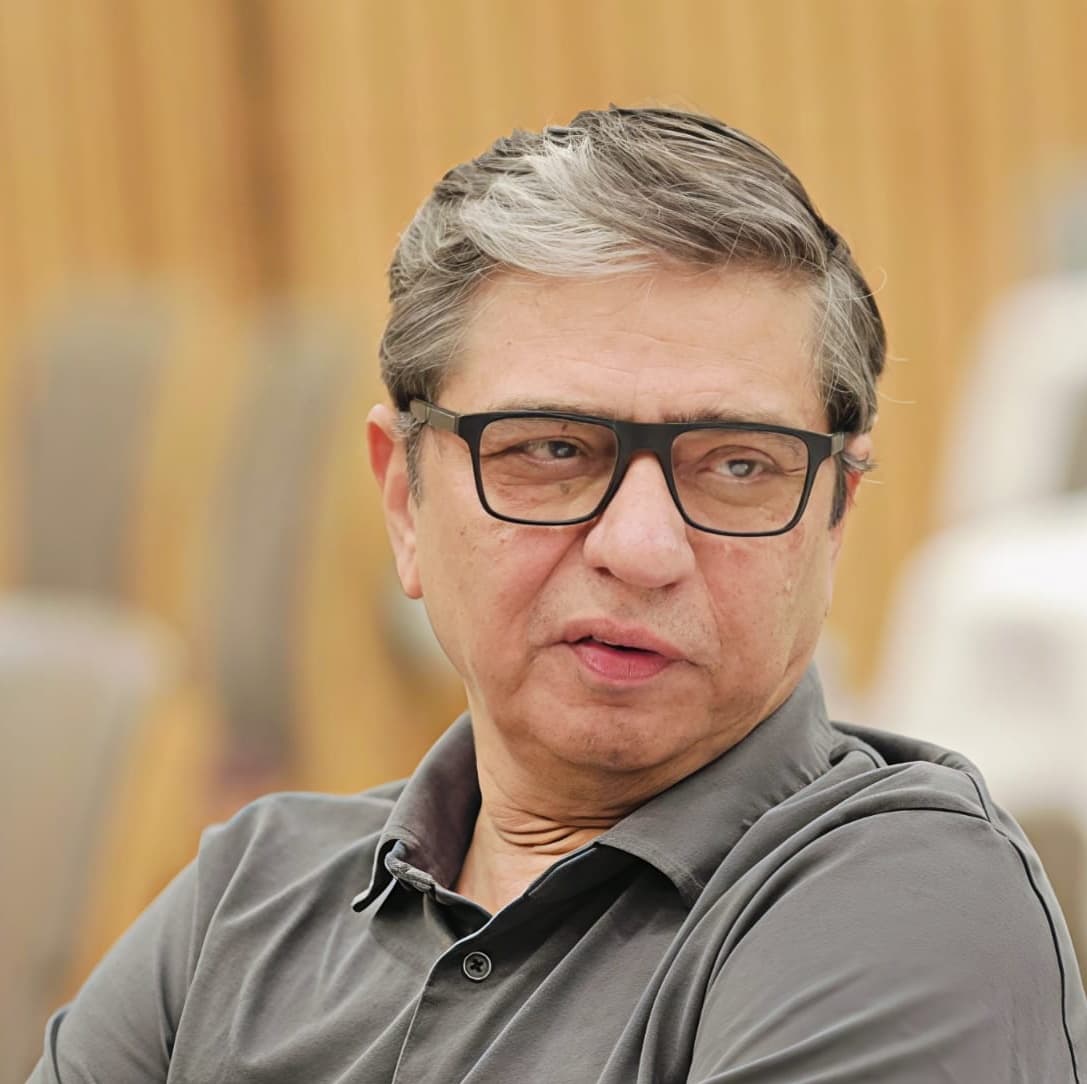
Santosh Desai
MD & CEO · Futurebrands
Gurugram
When Markets Became Mirrors
Global markets were once shaped by supply and efficiency. Today, they are shaped by emotion, identity, and the stories people tell about themselves. The modern economy no longer sells products; it sells perspectives. Every brand, every policy, every message is now a mirror, reflecting what societies believe they are becoming.
Santosh Desai has spent nearly four decades helping leaders read that reflection with intelligence and empathy. His work bridges business and anthropology, showing how markets are not just engines of consumption but theatres of meaning. In a world where technology amplifies noise faster than understanding, his frameworks remind us that interpretation itself has become a competitive advantage.
For him, branding has never been about persuasion; it has always been about perception, about how institutions, nations, and individuals make sense of who they are. Through years in advertising, consulting, and public writing, Santosh has chronicled how India, and by extension every modern society, learns to live with its own contradictions. What emerges from his work is not commentary but a method: how to lead with insight in an age addicted to information.
The Interpreter of a Changing Civilization
When India opened its markets in the early 1990s, it did not just invite foreign capital. It invited a new kind of imagination. Multinationals arrived with polished playbooks, expecting predictability. What they found was a civilization fluent in contradiction, an economy modernizing at scale yet emotionally rooted in tradition.
Santosh had joined advertising just before this inflection. He watched as scarcity gave way to choice and as desire shifted from need to narrative. “Explaining India to others forced us to first understand it ourselves,” he recalls. That realization shaped his philosophy: communication is as much about reflection as persuasion.
India, he observed, does not reject the new; it digests it. Spirituality and technology coexist. Heritage and innovation share the same rhythm. Contradiction is not confusion; it is a form of cultural intelligence. This ability to hold opposites, to adapt without erasing identity, is what Santosh calls India’s collective genius.
That insight reframed his approach to business. Markets, he realized, are not rational systems but emotional systems of exchange. They do not move through logic; they move through belief. The same principle, applied to leadership, becomes a form of wisdom. The systems that absorb contradiction without breaking are the ones that endure.
When Brands Become Rivers
Most organizations treat brands as monuments to be preserved. Santosh sees them as rivers, alive and constantly reshaped by those who touch them.
A brand is not an asset set; it is a smart expense. You never step into the same river twice, but the Ganga is still the Ganga.
For him, this is not poetry but operating logic. The essence of a brand lies not in control but in renewal. Guardianship, once a virtue, is now a liability. Meaning is co-authored every day by customers, employees, and communities. The marketer’s role is no longer to defend the brand but to shape its rhythm.
This thinking guided his leadership at Futurebrands, where discovery replaced invention. “Brands are not created; they are revealed,” he often says. The goal is to uncover what already exists in people’s collective memory. When a brand connects to that buried truth, it stops being a product and becomes part of the cultural bloodstream.
He recalls a moment from his early consulting years when a product, designed with the best of intentions, failed to find its audience. The offering was positioned as affordable and accessible, but consumers saw it as inferior. “We were trying to democratize access,” he reflects, “but we ended up diluting aspiration.” The lesson stayed with him. In emerging markets, aspiration is sacred. People do not just buy utility; they buy identity. “The product was right,” he says. “The story was wrong. And in business, the story is the product.”
Globally, this philosophy aligns with what the most enduring brands practice. Apple, Patagonia, and Amul have all learned to evolve without losing essence. The challenge is not to remain the same but to remain recognizably human while changing with time. For Santosh, that balance between motion and meaning is the true measure of longevity.
The Aspiration Economy
Aspiration, Santosh says, is the invisible architecture of modern capitalism. It determines not only what people buy but what they believe progress looks like. “Every economic phase has its own grammar of desire,” he explains.
In the 1980s, aspiration meant stability. In the 1990s, it became an expression. “We grew up in a time when everything we wanted was bad for us,” he recalls. “Liberalization was the first time wanting itself became allowed.”
That shift built the foundations of India’s consumption economy. Products like affordable cars, colas, and mobile phones were not luxuries; they were declarations of freedom. Consumption became language.
But decades later, the same aspiration that once liberated now exhausts. The drive to achieve has turned into the fear of being left behind.
We want progress without discomfort. We want change without consequence.
Santosh sees this as a structural imbalance. When aspiration rises faster than trust, institutions hollow out. When stories chase attention instead of coherence, meaning erodes. Leadership, he argues, must now focus not on generating desire but on governing it. The next decade will belong to leaders who balance ambition with awareness, who design systems that can grow without losing proportion.
These patterns are not unique to India. They echo across every economy where consumption has replaced conviction. For Santosh, the challenge before leaders everywhere is the same: how to convert restlessness into renewal and desire into depth.
The World According to Imperfection
Santosh’s idea of Brand India is not about campaigns or colors; it is about philosophy. “The world must learn to live with contradictions without feeling the great urge to resolve them,” he says. “Everything exists in dynamic equilibrium. Progress comes with consequences. You gain one thing, and you lose another.”
India’s strength, he believes, lies in calibration, not control. Unlike Western systems built on binaries of success or failure, profit or loss, India operates in a flexible middle. It absorbs conflict without collapse. That ability, he argues, is not a weakness but a competitive advantage.
He remains clear-eyed about the country’s contradictions.
We keep building hard infrastructure, but we have lost faith in soft infrastructure, in trust, ethics, and institutions.
For him, India’s real crisis is not ambition but architecture. Buildings rise faster than belief. “Some things take time. If you rush everything, you steal meaning from it.”
For business leaders, this is not philosophy; it is instruction. Growth without patience breaks coherence. Progress without reflection breeds volatility. The next advantage will not come from acceleration but from equilibrium, from the ability to hold multiple truths without collapsing into one.
What begins as cultural observation here becomes leadership design. Resilience, Santosh insists, is built not on control but on calibration.
Leadership as Cultural Intelligence
Santosh approaches leadership as a form of cultural literacy, the ability to read the invisible codes that make organizations human. “If you chase meaning, relevance is built into it,” he says.
At Futurebrands, hierarchy gives way to dialogue. There is no HR department, no attendance clock, and no unnecessary processes. People are trusted to self-regulate. “Responsibility, when given freely, tends to multiply,” he says. Trust, in his view, is not an HR value; it is an economic multiplier.
Curiosity, for him, is the currency of leadership. “The most important question I ask,” he says, “is whether you have a question in your head that you are trying to answer.” Leadership is not about knowing more but about noticing better.
He often reminds teams that listening is not a soft skill but a strategic one. In a culture obsessed with performance, true attention becomes rebellion. “Listening,” he says, “is the rarest human act.”
This approach places him among a global circle of thinkers who see leadership not as command but as coherence. The best leaders, he believes, are interpreters of systems. They create meaning in environments flooded with information. In that sense, cultural intelligence is not an HR agenda; it is a survival skill for modern institutions.
Technology and the Future of Attention
Santosh views technology as both revelation and warning. Every new tool, he says, exposes what we value and what we risk forgetting. “The danger is not that AI will replace creativity, but that we will forget what creativity feels like.”
The crisis, he believes, is attentional, not technological.
We are drowning in abundance and starving for absorption. Attention has become a traded currency, and depth becomes the first casualty.
He does not reject progress. He imagines a world where technology coexists with stillness. Machines can replicate tone but not intention. They can process data but cannot interpret meaning. “Technology can imitate rhythm,” he says, “but not purpose. And meaning lives in the purpose.”
For leaders, the message is clear. The next strategic advantage will not come from efficiency but empathy, from the capacity to sense what data cannot quantify. Progress, at its best, is not acceleration but awareness. The institutions that will endure are those that use technology to deepen humanity, not dilute it.
The Architecture of Legacy
Leadership, for Santosh, is less about building empires and more about sustaining ecosystems. “Institutions collapse when they stop asking questions,” he says. Curiosity is not decoration; it is infrastructure.
He leads with trust, not supervision. “We treat people like adults,” he says. “That means letting them find their rhythm of work, their own way to grow.” This trust is not idealism. It is a practical choice that scales faster than a process ever can.
At a national level, he applies the same principle. “We are the future’s tradition,” he says. Legacy, in his view, is not about preservation but renewal. It is not what outlasts us but what continues to evolve because of us.
He rejects perfection as illusion. “Every system carries its imperfections forward. Progress simply means improving the ratio.” For Santosh, success is not permanence; it is relevance that renews itself.
In business terms, coherence outlasts visibility. The institutions that will define the future are not those that shout the loudest but those that stay interpretable in a changing world.
Leadership Lessons
Curiosity sustains leadership. Every enduring institution begins with a question, not an answer.
Trust scales faster than control. Systems built on autonomy adapt better than those built on compliance.
Meaning outlasts relevance. Visibility fades; coherence endures.
Brands are rivers, not monuments. Renewal, not preservation, drives longevity.
Progress without reflection creates fragility. Growth must renew purpose, not erode it.
Tradition is continuity, not nostalgia. The future is the next iteration of inherited wisdom.
Leadership is cultural literacy. To lead well, one must read the invisible codes of people and context.
Institutions decay when they stop questioning. Renewal is the only defense against irrelevance.
Imperfection is systemic. Maturity lies in improving balance, not running behind purity.
Attention is the rarest currency of leadership. Those who can focus deeply will shape meaning in a distracted world.
Closing Reflection
Before the conversation closed, Santosh reflected on how meaning is constructed from the unselfconscious acts that shape daily life.
Meaning resides in the everyday. It is not in grand purposes but in the small, natural interactions that give life texture.
That line captures the essence of his philosophy. Leadership, culture, and branding are not separate pursuits; they are ways of creating coherence in a fragmented world.
His legacy, like the brands he has shaped, is not built on slogans but on interpretation. He sees the future not as a marketing story but as a moral responsibility to apply inherited wisdom intelligently to what is still being built.
We do not build meaning through grandeur, he reminds us, but through grace. The world changes, the tools change, the mediums change, but the instinct to interpret, to listen, and to connect remains the oldest and truest advantage of all.
Our Suggestions to Read
Discover The Leaders Shaping India's Business Landscape.

Education Leadership
The Human Advantage: Anu Monga on What Schools Must Still Create
Drawing on decades of leadership in international schools and education, Anu Monga reflects on what institutions must continue to create in a world where knowledge is increasingly accessible and shaped by technology.
Read Full Story

Investors & Catalysts
From Millet to Method: Rasika Prashant on Building What Consumers Return To
Rasika Prashant, CEO of NSRCEL at IIM Bangalore and Co-founder of Soulfull (later aquired by Tata Consumer Products) on consumer trust, category creation, Indian brands, and the founder discipline required after belief.
Read Full Story
Founders & Innovators
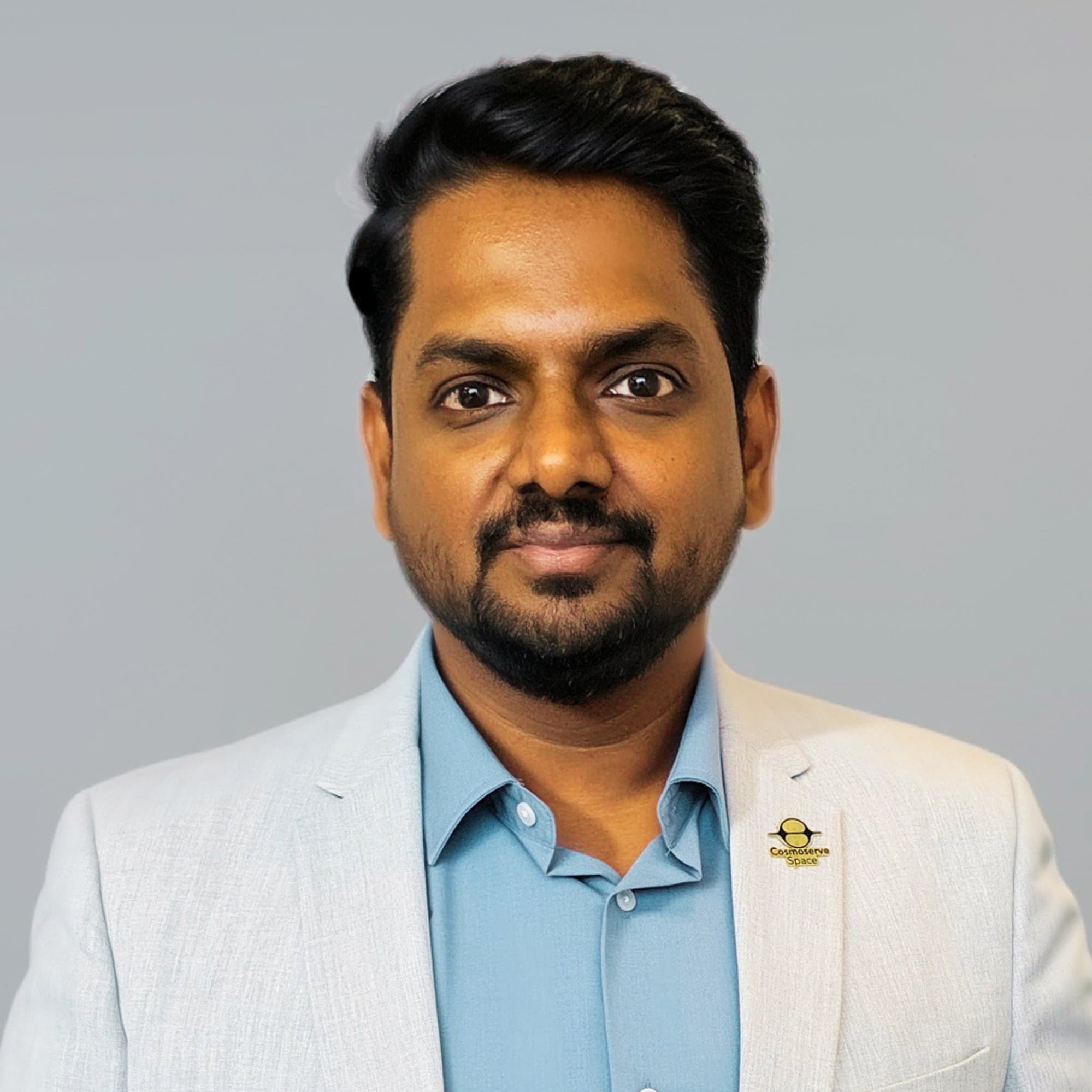
Building the Next Space Economy: Chiranjeevi Phanindra and Cosmoserve's Case for Orbital Maintenance
Chiranjeevi Phanindra, Founder & CEO of Cosmoserve Space, spent 14 years at ISRO working on re-entry and human spaceflight. Today, he is focused on a vital challenge: keeping Earth’s orbit usable.
Read Full Story