Category: Education Leadership
Education is not merely preparation for the future; it is the act of shaping it. Sameer Arora reimagines learning as humanity’s most powerful system for renewal, where thinking replaces routine and empathy becomes intelligence. His vision moves beyond achievement to ask a deeper question: can we build a world that not only learns faster, but understands better and sustains what truly matters?
When Institutions Learn to Think: What Sameer Arora Teaches Us About Adaptive Leadership
IndiSight Editorial
Jan 25, 2026
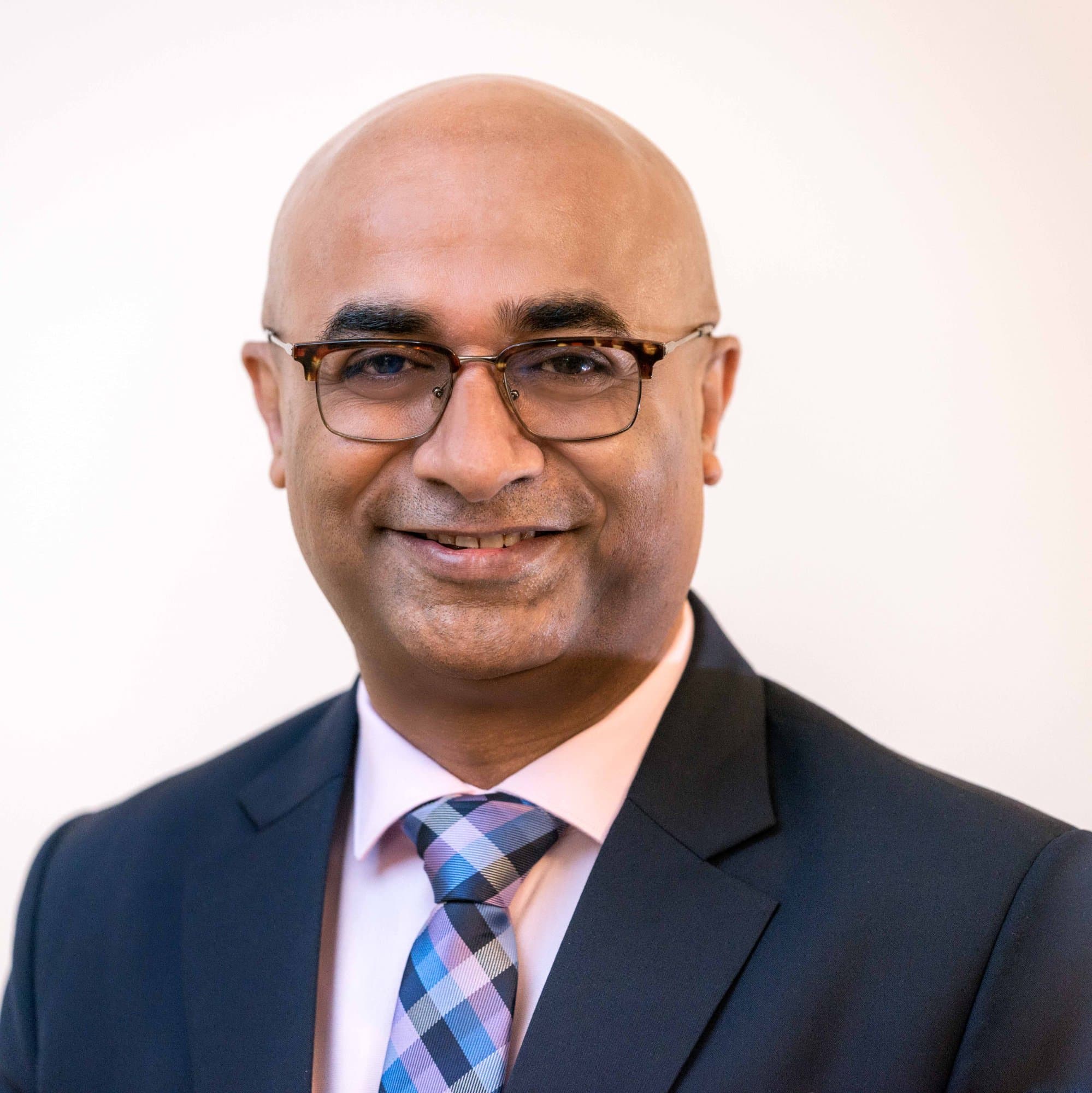
Sameer Arora
Principal · Shiv Nadar School
Gurugram
Education remains the most powerful lever of human progress, yet much of it still runs on a model built for predictability rather than possibility. Technology has transformed access to knowledge, yet it has barely touched how people learn, connect, and make meaning. The world is evolving faster than the systems that teach us how to think.
Sameer Arora, Principal of Shiv Nadar School (Gurugram), has spent his career confronting that gap. He sees education as a living ecosystem where culture, curriculum, and community shape one another. His leadership is defined by the belief that the future of learning will be created by people who understand how to adapt, reflect, and connect.
“The challenge,” he says, “is not to make schools smarter. It is to make them more human.”
For him, a school is a network of relationships. Its strength depends as much on trust and emotional safety as on structure or policy. Over three decades, he has moved from classrooms to leadership roles, blending the precision of management with the intuition of a teacher.
Learning to See Systems
Sameer’s journey began not in a policy office or a boardroom but in a modest classroom filled with the energy of curious children and the uncertainty of a first-time teacher. He recalls staying back after school, talking to students who lingered long after the bell rang. They spoke about fears, friendships, and family expectations, rarely about exams. “Those moments taught me that learning begins where listening begins,” he says. “Children are not disengaged; they are often unheard.”
He entered education to understand people, not subjects. Early in his teaching career, he noticed that two classrooms could have the same syllabus and the same teachers yet learn differently. The difference was not in the curriculum but in the environment. “The more I observed,” he says, “the clearer it became that learning depends on the emotional tone of the space. Education works through the energy that flows between people.”
He saw that students learn best when they feel seen.
Curiosity and confidence grow in the same soil. If a child feels unseen, their curiosity closes.
Over time, this realization evolved into a philosophy: every learning ecosystem has a pulse. When that pulse weakens, innovation, discipline, and performance begin to decline.
These early observations shaped how he viewed institutions. Strategy, he learned, succeeds only when people feel trusted to use judgment. “Outcomes change when perception changes,” he says. “That begins when an organization learns to see itself differently.”
From Classroom to Leadership
As his understanding of learning deepened, Sameer began to see that every classroom mirrored a larger system. He found that the questions children faced often mirrored those of adults.
His next decade took him through leadership roles that expanded his perspective from pedagogy to policy. Moving from teaching into academic coordination, then into school design and governance, he learned that systems succeed or fail not because of strategy but because of the assumptions that guide human behavior. “The higher I moved,” he says, “the clearer it became that culture decides outcomes. You can design processes, but people decide whether they live.”
That realization prepared him for his role at Shiv Nadar School, where he could bring everything together: classroom empathy, structural understanding, and the courage to question inherited norms. It became the perfect space to test whether schools could truly think for themselves.
When Change Meets Culture
The years following the pandemic forced many institutions to rethink how learning was defined and measured. What had once been seen as certainty began to feel like an assumption. Grades and tests revealed less about what students understood and more about what the system had learned to reward.
As the conversation deepened, educators began exploring how learning could be observed in more meaningful ways. The goal was not to discard structure but to align it more closely with reflection, reasoning, and collaboration. Assessment became less about proof and more about perspective.
The process revealed something essential about organizational change. Innovation is rarely hindered by lack of skill; it falters when people do not feel safe to question what has always been done. Genuine reform depends as much on trust as on design.
This collective introspection reshaped how educators across the ecosystem approached change. Culture evolved not through new tools, but through shared dialogue. Progress became a function of participation. When people understand the reason behind change, they begin to own it. That, in essence, is how institutions grow from instruction to insight.
Holding Stability and Change
Every growing institution faces a central paradox: how to evolve without losing its core. Sameer calls this dynamic stability, the balance between movement and meaning. “If you disrupt without direction, you create noise,” he says. “If you preserve without purpose, you stop growing.”
This belief came from experience. He has led through moments when the need for change felt undeniable, yet the risk of losing what worked was equally real.
The hardest part of leadership, is knowing what to hold and what to release.
He treats mistakes as data. “When something goes wrong, my first question is not who caused it but what the system is trying to tell us,” he explains. That mindset has shaped his mentoring style, encouraging teams to listen to friction instead of fearing it. “Tension is information,” he says. “It tells you where alignment is missing.”
Early in his career, he believed speed was strength; now he sees steadiness as deeper momentum. For him, stability is awareness in motion. “Resilience,” he says, “is intelligent adaptation.”
Teachers innovate within a shared purpose, ensuring ideas grow from intent. “True freedom exists where trust makes structure unnecessary,” he says.
He believes that institutions, like people, learn through reflection.
Nature does not function through rigid control. It adapts through feedback, awareness, and trust. Institutions that learn to adapt with awareness do more than endure change; they renew themselves through it.
Education in Context
Across the world, education systems are wrestling with similar questions. Finland emphasises trust, Singapore builds innovation into public policy, and the United States debates access and equity. India’s challenge, Sameer believes, is not the lack of ideas but the fragmentation of effort.
Thousands of educators are innovating in isolation. If we can connect ideas instead of just scaling them, we can build a movement instead of a model.
He believes India’s diversity demands innovation that is both inclusive and adaptable. “If an idea can thrive across such varied contexts,” he says, “it has already been stress-tested for the world.”
At Shiv Nadar School, data is used to understand. Authority follows expertise. Decision-making is distributed so that the system itself becomes capable of learning. “The future belongs to organizations that can absorb complexity without collapsing under it,” he says.
Students learn to connect disciplines, see interdependence, and question assumptions. As one student put it, “We are not told what to think. We are taught how to notice.”
He believes India now stands at an inflection point. “We are building schools in a world that no longer has boundaries,” he says. “But our responsibility is to interpret the global into the local and the future into the present.”
Leadership as Learning
Sameer views leadership as a continuous conversation between experience and reflection. “The real test of leadership,” he says, “is whether the organisation can learn after you leave.”
He runs the school as a learning system. Insight travels faster than hierarchy. Teachers act as designers of experiences, not executors of plans. Reflection is built into the rhythm of work itself. Feedback loops are embedded into projects so that learning becomes self-correcting.
When leaders remain grounded, it signals safety to the group. And safety accelerates performance.
Teachers are encouraged to shadow peers, conduct self-studies, and share classroom experiments openly. “The school’s best ideas rarely come from the top,” he says. “They emerge from the edge.”
Five Principles of Thinking Systems
Sameer’s philosophy of leadership rests on a single premise: institutions, like people, can think. They sense, interpret, and evolve. The role of leadership is to expand that collective intelligence, not control it. When systems learn to see themselves clearly, change follows almost naturally.
At the core lies coherence, the quiet force that replaces control. Rules hold only as long as they are understood; purpose endures because it is felt. When intent becomes collective, governance turns into self-regulation, and complexity begins to organize itself.
Feedback, in this worldview, is not a process but a pulse. Systems breathe through truth. When information flows freely across levels and across egos, the institution renews its ability to respond. Hierarchies can sustain order; only feedback sustains relevance.
Trust is what turns that feedback into energy. No system can learn when its people are guarded. Data can reveal performance, but trust reveals potential. Environments built on trust learn faster because they do not waste energy protecting themselves.
Inquiry is what keeps that learning alive. Curiosity is the engine of renewal. When leaders ask questions they cannot answer, they give everyone permission to think. Curiosity turns compliance into exploration and transforms organizations from structures of work into laboratories of thought.
And then there is awareness, the rarest quality in leadership. In a world that glorifies acceleration, awareness becomes a competitive advantage. Speed without direction is noise. Reflection does not slow progress; it ensures that progress has meaning.
Together, these ideas form a living philosophy. They are not methods or models; they are conditions for consciousness. Institutions that embody them remain adaptable without losing integrity, ambitious without losing soul. Leadership, in that sense, is not about managing systems but about cultivating sentience, helping organizations learn to see, to feel, and to evolve.
Education in the Age of Intelligence
Artificial intelligence, he says, will redefine not just what we learn but how we measure wisdom. “AI will not replace humans; it will reveal how mechanical our thinking can become.”
He believes schools must now protect distinctly human capacities: judgment, empathy, and discernment. “The next advantage will not be intelligence,” he says. “It will be consciousness, the ability to connect knowledge with values.”
Students at Shiv Nadar School engage with technology as a tool for inquiry. They examine how algorithms mirror human biases and how design decisions shape behaviour. “We are entering a time when our capacity to know is growing faster than our capacity to care,” he adds. “Education must close that gap.”
He often describes educators today as moral technologists, people who design systems of learning that enhance empathy as much as efficiency. “Our challenge is to teach responsibility as deeply as we teach innovation,” he says.
A Broader Vision
Sameer sees education as the foundation of every sustainable system. “If the last century taught us how to produce,” he says, “this one must teach us how to preserve.”
He describes this as planetary literacy, the capacity to see how every decision, however local, echoes across larger systems. At Shiv Nadar School, this idea is embedded in practice. Social and environmental inquiry runs through projects, and international collaborations allow teachers and students to step outside their own lenses and return with new ones.
“Our strength as a country lies in our ability to adapt without losing who we are,” he says. “We can be modern without becoming mechanical.” His emphasis on values-based growth reflects his belief that education is the bridge between personal integrity and public good.
He argues that real transformation begins when students see themselves as future stewards rather than employees. “If education only prepares you to succeed,” he says, “it has missed half its purpose. It should also prepare you to sustain what you build.”
What Comes Next
Sameer’s current focus is on collaboration beyond his own institution. He is building a network of educators in India, Finland, and Singapore to apply the principles of thinking systems across contexts. “The goal,” he says, “is not to expand an institution but to share an approach. We are not trying to franchise success; we are trying to make reflection scalable.”
He now mentors school leaders who want to translate these ideas into their own settings. Some are developing collaborative assessment systems, while others are experimenting with faculty-led research on learning. “Leadership is not about replication,” he says. “It is about translation. Each context must find its own rhythm.”
“The most important work ahead,” he adds, “is to build leadership that can hold both structure and soul.”
Leadership Lessons
Sameer’s reflections have matured into convictions that reach beyond education, touching how people, teams, and institutions grow.
Education shapes every system. When people learn to think critically, every institution, from business to governance, functions with sharper awareness and stronger judgment.
Trust builds speed. Control can create order, but trust creates movement. Teams move faster when they feel safe to decide and act.
Empathy drives performance. Empathy is not sentiment. It is design logic that shapes how leaders manage attention, resolve conflict, and build resilience.
Wisdom sustains intelligence. Knowledge expands what we can do. Wisdom refines when and why we should do it. Systems that value reflection retain intelligence over time.
Listening creates adaptability. Decisions improve when information is heard completely. Listening early prevents correction later.
Reflection strengthens structure. Thinking is not a pause from work; it is the architecture of better work. Without structured reflection, effort becomes repetition.
Technology must stay human. Machines process data, people process meaning. Progress depends on the consciousness guiding the tool, not the tool itself.
Values determine longevity. Growth without ethics is acceleration without direction. The measure of leadership is not how far we go, but how consciously we travel.
Closing Reflection
When asked what the future of education looks like, Sameer pauses. “It is both the river and the bridge,” he says.
The river, he explains, is the flow of ideas, technologies, and expectations that never stop moving. The bridge represents the shared values that allow people to cross that flow safely. One without the other leads to either chaos or stagnation.
Our responsibility, is to keep the bridge strong enough for the next generation to cross, yet flexible enough to let the river pass.
That vision captures the essence of his philosophy: progress must remain human. By joining structure with empathy and change with reflection, Sameer Arora continues to remind us that education’s truest work is not producing achievement but sustaining meaning.
Our Suggestions to Read
Discover The Leaders Shaping India's Business Landscape.
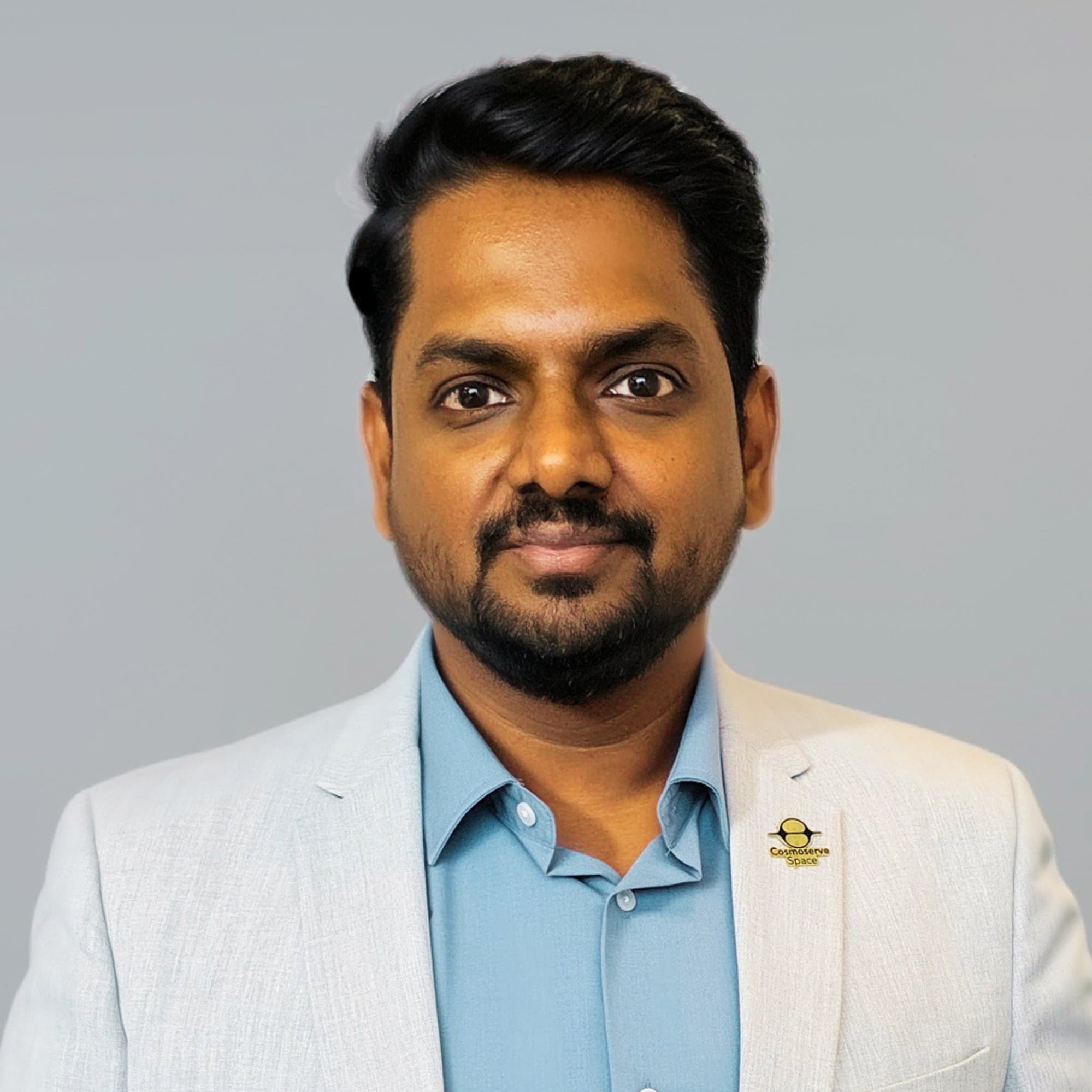
Founders & Innovators
Building the Next Space Economy: Chiranjeevi Phanindra and Cosmoserve's Case for Orbital Maintenance
Chiranjeevi Phanindra, Founder & CEO of Cosmoserve Space, spent 14 years at ISRO working on re-entry and human spaceflight. Today, he is focused on a vital challenge: keeping Earth’s orbit usable.
Read Full Story
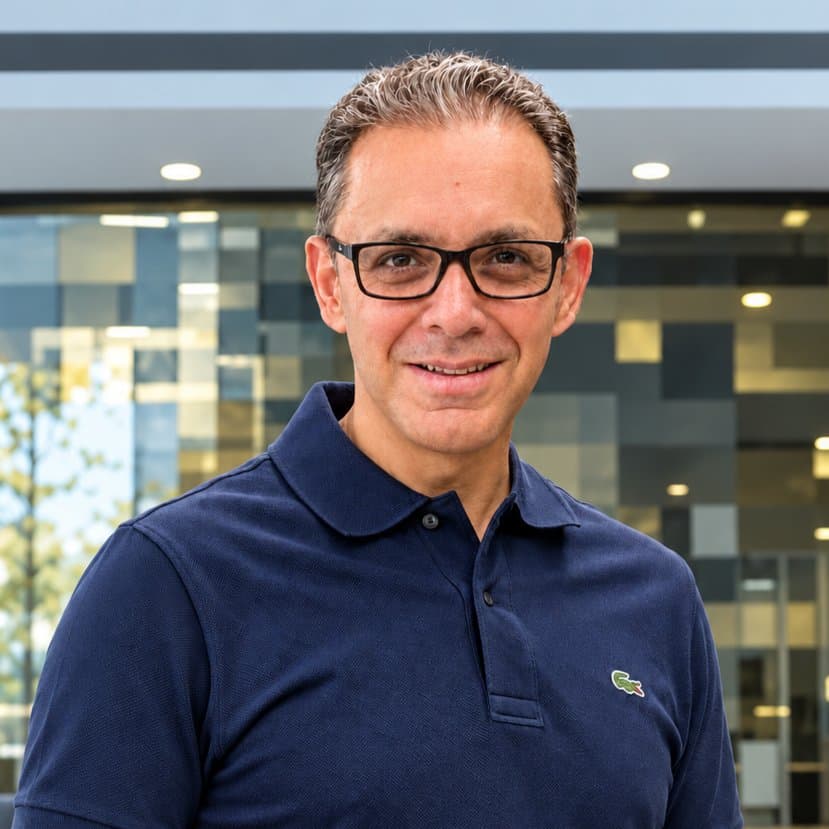
Corporate Visionaries
Shashank Sahni on What Success Leaves Out
Shashank Sahni, Google’s Managing Director of Global Ads Solutions, reflects on what customers reveal, what ambitious teams need from their leaders & what the mountains and marathons have taught him about going further.
Read Full Story
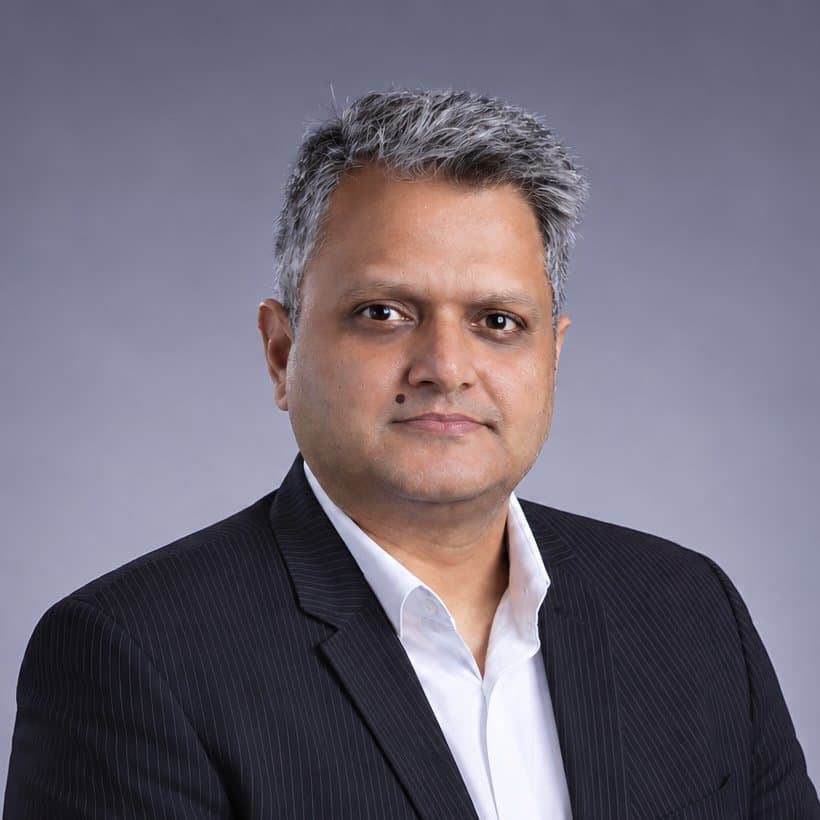
Corporate Visionaries
Clinical Multiplication: Divesh Singla on the Healthcare AI Case That Headlines Keep Missing
Divesh Singla, Managing Director, India at Veradigm, brings two decades in healthcare technology to the AI question leaders cannot avoid: how to expand clinical capacity without weakening human judgment.
Read Full Story