Category: Corporate Visionaries
Having worked close to India’s ₹75,000 crore banking recapitalization discussions, AirSewa, Zomato’s intercity food bet, and Moloco’s AI-led markets, Siddharth Jhawar offers a sharper way to think about scale, systems, and decision quality.
The Quality of Decisions: Siddharth Jhawar on Judgment, Scale, and the Systems That Shape Markets
IndiSight Editorial
Jun 16, 2026

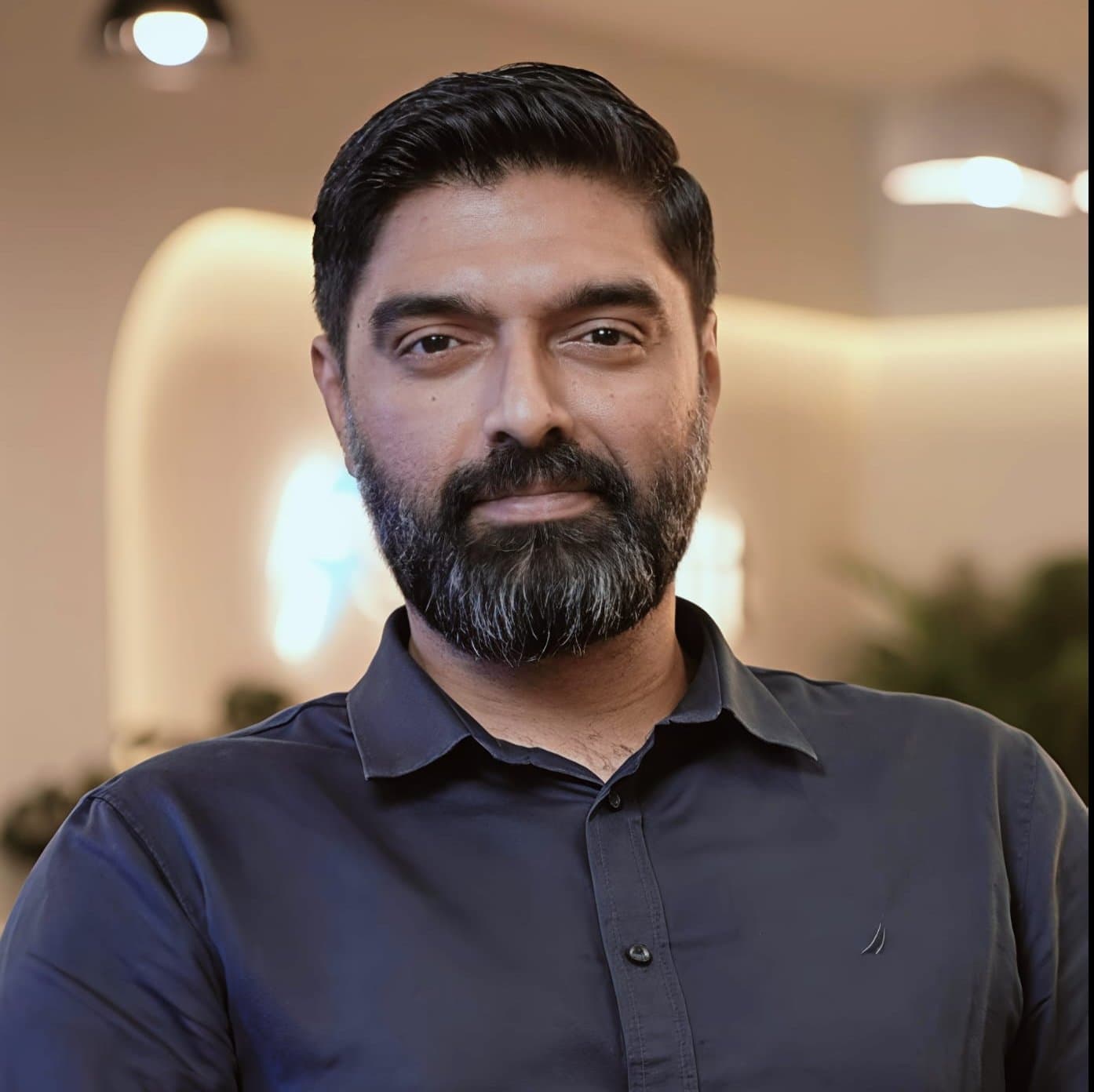
Siddharth Jhawar
Country Manager (GM India) · Moloco
Gurgaon/India
Decision quality has become one of the least discussed and most consequential sources of power in modern business. In digital markets, advantage no longer rests only on product strength, market access, or capital depth. It compounds through thousands of repeated choices that determine which user to reach, what signal to trust, how to price attention, when to move, and when to hold.
Those choices influence growth, margins, and strategic room far more than most organizations are willing to admit. This is one reason advertising technology matters far beyond advertising. It is one of the clearest places to study how modern firms now compete, because it compresses data, speed, incentives, and commercial judgment into one operating discipline.
As Country Manager of Moloco India, Siddharth Jhawar operates where machine learning, market behavior, and commercial performance meet directly in a category shaped by a larger struggle. Businesses outside the largest technology platforms are trying to strengthen their decision-making in markets where data and scale have accumulated at the top, and Siddharth approaches that challenge through the language of choices, incentives, trade-offs, and consequences.
Intelligence is to crunch all the data. Wisdom is to know whether to use it.
That distinction gives the article its center of gravity. The value of Siddharth's perspective comes from the systems he has worked inside and the repeated contact he has had with the same management problem in different forms: how judgment weakens, how systems drift, and how leaders can improve decision quality before the cost becomes obvious.
He has worked close enough to capital, government, consumer platforms, logistics, and machine learning to understand how institutions behave when pressure rises, when incentives weaken, and when speed starts to outrun judgment.
Pressure as Formation
Siddharth's professional arc gains force when viewed through the kind of pressure he kept choosing rather than through the sequence of institutions on his résumé. Deutsche Bank gave him an early education in capital markets and scenario thinking, the kind of training that leaves people with a durable habit of looking beneath visible performance for the strain that may already be building.
Government widened that habit in a more demanding way. As Officer on Special Duty to the Minister of State for Finance in 2014, Siddharth entered a setting where technical correctness was only one variable in a much larger chain of movement, where bureaucratic sequencing, political timing, file movement, personalities, and the internal mood of the system all mattered as much as the merit of the idea itself.
Harvard broadened the frame, Bain added regional range across financial institutions, Disney and Hotstar took him into the economics of media and monetization, and Zomato pulled him into a setting where customer behavior, logistics, and execution pressure collided every day. Moloco then brought those lessons into a company where decision-making sits close to the core of value creation.
The pattern becomes clear: Siddharth has worked inside systems under stress, and that matters because stress reveals whether incentives still hold, whether priorities are real, and whether judgment can stay sharp once complexity rises.
Systems Usually Weaken Before They Look Weak
One of the most valuable lessons Siddharth appears to have taken from government came during India's banking stress, when non-performing assets were rising and the implications had begun moving well beyond individual balance sheets.
Looking back at that period, he recalls, "We realized the problem was far worse than people were thinking it was. It was the tip of the iceberg."
That observation matters because it applies far beyond banking. Institutional weakness usually gathers quietly. Standards soften. Easier decisions begin replacing stronger ones. Allocation discipline weakens while current performance still looks acceptable enough to reassure the people reading dashboards and writing updates.
Siddharth's account of that period keeps attention on what happens before crisis becomes visible. He speaks about concentrated loan books, weak diversification, and a culture that had started normalizing easier lending judgments. One senior official described it to him as "lazy banking," a phrase that stayed with him because it captured the issue in direct managerial terms.
Once rigor weakens where capital is being allocated, future cost begins compounding quietly. He helped model scenarios around the government's ₹75,000 crore recapitalization package. The larger lesson remained strategic. Strong institutions pay close attention to weak signals. They examine what is building underneath current performance. They ask whether momentum is being supported by sound decisions or by assumptions that have simply not yet faced real stress.
This creates a dangerous lag in institutional learning. By the time performance metrics show decline, the culture of decision-making has often been compromised for months or years. The fix requires leaders willing to question current success while results still look strong. That is uncomfortable work, because it means arguing with momentum.
But the organizations that last are the ones whose leaders can distinguish between performance that comes from sound systems and performance that comes from conditions that have not yet changed.
Accountability Follows Design
AirSewa, the grievance redressal platform for airline passengers, sharpened another important part of Siddharth's thinking. Citizens expected the government to solve delays, refunds, and service failures even though much of the airline ecosystem remained privately run.
Speaking about that platform, he explains, "The job of that portal was to direct the complaint to the right person."
Its significance reaches well beyond aviation. AirSewa worked because it organized leverage. A complaint raised privately could dissolve into routine neglect. A complaint routed through an official system with procedural visibility carried different weight.
Siddharth's experience suggests something sharper: the actor organizing information and escalation often shapes outcomes more effectively than the actor touching every operating layer directly, and leaders who understand this spend less time assuming responsibility will emerge naturally and more time arranging the conditions under which responsibility becomes real.
The principle scales. In platform businesses, the company that controls recommendation algorithms shapes commercial outcomes more effectively than the one controlling inventory. In supply chains, the actor with visibility into demand signals can coordinate better than the one owning warehouses. In distributed organizations, the team structuring information flow often drives execution faster than the team holding formal authority.
This is why some of the most consequential management work happens in the design of systems rather than the operation of them.
Scale Through Sequence
At Zomato, Siddharth led the intercity food delivery initiative, and this period offers one of the clearest views into his operating style. The concept drew attention because it sounded ambitious. The harder issue sat beneath it.
If you ask me to design a nationwide cold supply chain with multiple connections everywhere, I can't sleep at night.
That answer reveals respect for complexity. Siddharth's instinct was to reduce the system before trying to expand it. Fewer cities. A smaller operating loop. Internal paid orders before broad customer exposure. Additional pressure introduced layer by layer. Each stage had to prove it could hold before the next one deserved to exist.
This reflects a serious view of scale. Reliability earns the right to exposure. Exposure earns the right to expansion. Businesses often move from concept to visibility too quickly because ambition is easier to communicate than operating maturity.
That principle applies well beyond logistics. In software, consumer platforms, financial products, and new market entry, leaders often expose a weak system to full demand before the underlying process has shown it can carry the weight. Siddharth's method places stress where it can teach rather than where it can damage the whole.
This approach challenges a persistent belief in growth businesses: that speed requires accepting breakage. Siddharth's counter is that speed actually depends on knowing precisely where breakage is affordable and where it is catastrophic. A failed experiment in a sandbox teaches. A failed transaction in production destroys trust.
The difference lies in how carefully you have separated the two. Companies that confuse velocity with recklessness eventually pay for scale with credibility.
What the Model Knows
Siddharth's most useful idea is his distinction between pattern recognition and judgment.
Intelligence is to crunch all the data. Wisdom is to know whether to use it.
That line gives shape to one of the central questions facing every serious business working with machine learning. Models can process more information, move more quickly, and optimize more variables than any human team, but the harder question begins after that: which calls still depend on human interpretation, commercial sense, and contextual understanding?
His kaju katli example from Zomato makes the point with unusual precision. The data suggested kaju katli was a strong candidate for intercity movement because it already traveled frequently across restaurant networks. The model had found a pattern. The business decision still required interpretation. Customers ordering from another city were seeking something rooted in place, emotionally charged, and worth the effort.
This is why Siddharth's role at Moloco matters beyond adtech. Advertising is one of the clearest settings in which to study machine-led decisioning because the choices are constant, measurable, and immediate in commercial effect.
A common belief in data-heavy businesses is that better information gradually reduces the need for human interpretation, but Siddharth's experience suggests the opposite: better information increases the need for stronger judgment, because the volume of possible action grows with the quality of the signal, and while the model can say what is likely, leadership decides what is meaningful.
This distinction will become more important as models improve. As pattern recognition becomes more sophisticated, the gap between what is statistically probable and what is strategically sound will widen. A model can predict that a customer segment will respond to an offer. It cannot decide whether pursuing that segment aligns with the company you are trying to become. The better the model, the more crucial the judgment about what to do with what it reveals.
Pace Requires Restraint
Siddharth's comments on speed stand out because they treat speed as a result of design rather than a matter of attitude.
Speaking about adtech, he says, "You can't go wrong. If your pipelines are broken, there's a lot of money to be lost."
In tightly connected systems, one mistake can turn quickly into commercial damage. The answer lies in placing experimentation where it can teach without destabilizing the whole. Sandbox environments matter. Smaller groups with clear ownership matter. Separation between testing layers and revenue-critical systems matters.
Speed improves when teams have room to test, enough authority to move, and enough judgment to know what they are protecting, rather than the false urgency that comes from crowded decision paths and blurred ownership.
His view on learning follows the same logic.
The best way to learn is to pick up a real problem and solve it.
Capability compounds faster through live constraints, bounded experimentation, and repeated contact with real decisions. Siddharth's signals for whether a company is actually learning are practical: how many meetings are happening, how long does a decision take, how clearly can teams explain priorities. Those measures reveal whether the organization is becoming more capable or simply more occupied.
Leadership Still Rests on Human Quality
Siddharth is especially compelling when he speaks about trust, risk, and ethics without grand language. Trust, in his account, grows when expectation, capability, and ownership remain aligned. Government carries high public expectation with constrained process and limited resources. Consulting can generate strong internal trust under pressure. Startups can hold deep trust and internal confusion at the same time.
His view of risk carries similar maturity. Coming from a middle-class Indian background, prudence was the natural default. Experience widened that frame. The risks he values are those that expand judgment, deepen capability, and widen the size of the question one is willing to confront.
His comment on ethics provides one of the article's hardest truths.
I think ethics are largely driven by individual conscience.
Guardrails matter. Systems can improve conduct. The final burden of moral judgment still sits with the person making the call. Siddharth's sunshine test captures this cleanly: if the decision appeared publicly tomorrow, would the people closest to you be comfortable reading it?
The same seriousness appears in the way he thinks about leadership itself. Asked what he wants his work to ultimately represent, he says, "I want that twenty years later, whoever has worked with me thinks of this phase as the best phase of their lives."
That answer places leadership under a more demanding standard than valuation or visibility can provide, one where work should stretch people, sharpen them, and still leave them stronger.
That standard may be harder to measure, but it proves more durable. Companies that extract performance from people eventually face talent flight, cultural decay, and the compounding cost of rebuilding trust. Companies that invest in people while demanding excellence create capacity that survives leadership transitions, market shifts, and competitive pressure.
The difference shows up in retention, in judgment quality under stress, in how quickly the organization can learn and adapt. The leaders who will matter most in the coming decade are those who can build systems where people become more capable while performing at the highest level.
India's Next Business Test
Siddharth's comments on India are among the sharpest in the conversation because they carry both confidence and scrutiny. As he says, "We think small."
He sees the country's strengths clearly. Indian teams know how to build under constraints and create commercially relevant products in imperfect conditions. The harder question is ambition. Domestic scale can absorb attention for long enough that outward ambition arrives late.
That observation matters in software, gaming, and digital businesses where global demand already exists. Better access to advanced decision-making capability can widen the field for businesses outside dominant technology ecosystems, strengthening competition and innovation across the wider market.
Leadership Lessons
Decision quality is becoming one of the strongest sources of competitive advantage in digital markets.
Institutions often weaken internally before the market recognizes the problem.
Accountability improves when complaints, decisions, and responsibility are routed to the right person with enough visibility to force response.
Scale deserves to be earned through validated steps.
Data can identify patterns. Leadership decides which patterns matter.
Speed improves when ownership is clear and experimentation is bounded.
Learning matters when it changes how the business solves problems.
Trust takes different forms in different systems, and it becomes hardest to sustain when expectation, authority, and resources are badly misaligned.
Risk becomes valuable when it broadens judgment and capacity.
Ethics still rests, in the end, on the person making the call.
India’s practical ingenuity is real. Its next leap depends on wider ambition.
Leadership leaves a lasting mark through the quality of the environment it creates for others.
Closing Reflection
The companies that will matter most are the ones that can get smarter without losing judgment. As more decisions move into systems and more work gets shaped by models, the value of knowing what to trust and what to override will only grow. Intelligence can process complexity. Wisdom decides what deserves to be done.
Our Suggestions to Read
Discover The Leaders Shaping India's Business Landscape.

Corporate Visionaries
When AI Leaves the Lab: Gowrav Shekar on AI, Judgment and Building for Consequence
Gowrav Shekar, Head of Technology and AI Practices at Adani AI Labs, brings a builder’s lens to AI, shaped by real workflows, imperfect data, ownership, consequence and validation after deployment.
Read Full Story
Corporate Visionaries
The Cost of a Yes: Vimal Stan Steven on What Product Leaders Must Decide Before They Build
Vimal Stan Steven, Senior Director of Product at SpotDraft, argues that AI makes building easier, but judgment harder. The real product discipline lies in knowing what deserves to be built, tested and carried.
Read Full Story

Corporate Visionaries
Sarath Gollapalli on the Work That Makes Technology Dependable
Sarath Gollapalli, Vice President at Broadridge, reflects on why AI-era enterprise technology still depends on fundamentals: client understanding, reliability, governance and ownership.
Read Full Story