Category: Policy Shapers
Prof. Krishnamurthy V. Subramanian, India’s youngest-ever Chief Economic Adviser, brings lessons from the International Monetary Fund, Indian School of Business, and ancient wisdom on evidence, reform and uncertainty.
Prof. Krishnamurthy V. Subramanian: The Chief Economic Adviser Who Read Beyond the Headline
IndiSight Editorial
Aug 4, 2026
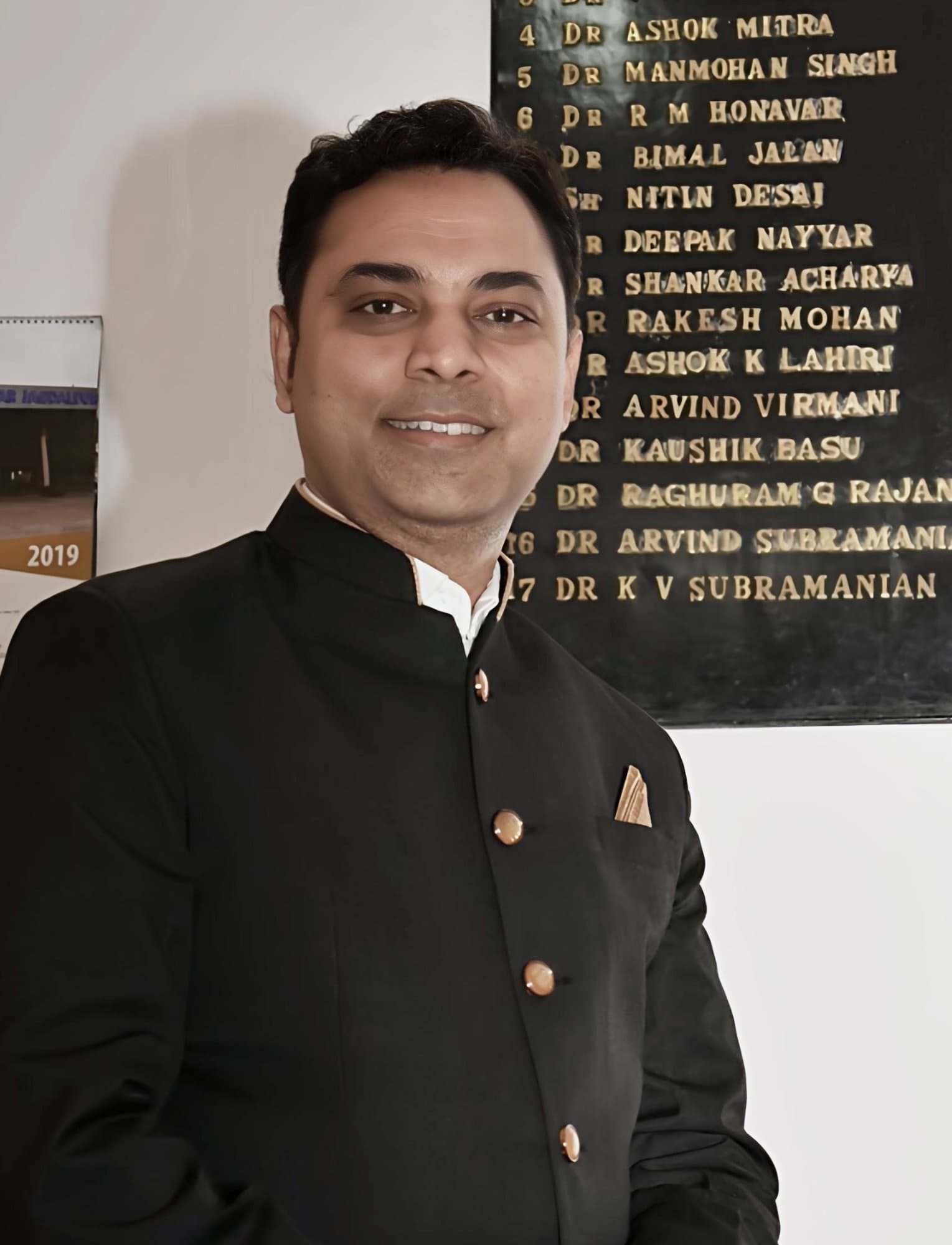
Prof. Krishnamurthy V Subramanian
Former Chief Economic Advisor · Govt of India
India
On 31 August 2020, India’s GDP numbers landed like a verdict. The economy had contracted by nearly 24 percent during the lockdown quarter, the worst contraction on record, confirming what businesses, workers and households had already experienced.
That evening, Prof. Krishnamurthy V. Subramanian, then India’s 17th Chief Economic Adviser and the youngest person to hold the office, went on television and said that a V-shaped recovery was underway.
Prof. Krishnamurthy was early, and leadership often has to live with the uncomfortable distance between being early and being wrong. That distance runs through much of his thinking on evidence, judgment and responsibility.
The official number described a quarter that had already ended. His office was studying something more current: roughly 60 high-frequency indicators across freight, mobility, payments and production, reviewed every week and discussed with the Prime Minister and the Cabinet each Monday. By late August, several of them had begun to turn. The public was looking at the deepest contraction in India’s history. Prof. Krishnamurthy was looking at several weeks of quieter evidence that had yet to enter the headline numbers.
He made the call while understanding the risk. An incorrect public forecast from the country’s Chief Economic Adviser, in the middle of a pandemic, could have influenced how households and businesses planned at a moment when the margin for error was exceptionally small. The safer course would have been to acknowledge the contraction, point to early signs of stabilisation and wait for more data. It would also have offered little leadership value once the evidence became obvious to everyone.
Prof. Krishnamurthy captures the tension in his own words:
Optimism without evidence is wishful thinking. Evidence without optimism is paralysis.
Three careers, one question
The call reflected an unusual professional path. Before entering government, Prof. Krishnamurthy spent years as a Professor of Finance at the Indian School of Business, studying finance, institutions and governance. After completing his term as Chief Economic Adviser, he moved into global economic governance as an Executive Director at the International Monetary Fund, representing India and other South Asian economies, before returning to ISB.
Academic research gave him the discipline to build an argument and test it against evidence. Government placed him inside decisions whose consequences could reach 1.4 billion people. The IMF exposed him to frameworks shaped largely by the experience of advanced economies, frameworks that did not always travel easily into the conditions he had spent much of his career examining.
His work has also received significant international recognition. Prof. Krishnamurthy became the first Indian economist in the University of Chicago’s 85-year history to receive its Distinguished Alumnus Award for Professional Achievement, an honour recognising the impact of his career across academia, public policy and institution-building.
Each role revealed something the others could not. Across all three runs one question: how should a leader act while the information is still forming and waiting carries a cost of its own?
What Prof. Krishnamurthy was actually watching
Prof. Krishnamurthy’s responsibility in August 2020 was to understand what had happened after the lockdown quarter ended. The GDP release remained essential, but it could only describe the period it measured.
Every business leader faces a version of the same lag. Revenue reflects customer choices made months earlier. Attrition surfaces dissatisfaction that may have accumulated for a year before someone resigns. Credit losses often originate in underwriting decisions taken long before they appear in quarterly results. By the time a number reaches the board or the Cabinet, the conditions that produced it may already have changed.
More data alone does not resolve the problem. Someone still has to decide which indicators describe current movement, which are echoes of the past and which retain influence simply because they have occupied a dashboard for years. Familiarity often gives a metric authority it has not earned.
The 60-indicator system worked because the measures were chosen around a narrow operating question: was the economy beginning to move, and in which direction? That focus made the reading fast enough to matter. Quarterly GDP could record the past with authority. The high-frequency indicators were intended to catch the present while decisions could still shape what followed.
Seeing movement, however, requires more than noticing which number changed. It requires understanding what moved it.
Finding the first pin
Prof. Krishnamurthy explains causal diagnosis through the arrangement of pins in a bowling alley. A ball striking one at the edge may bring down one or two. A ball directed at the right point transfers force through the entire formation. The leader’s task, in an economy or a company, is to identify the pin whose movement changes the rest of the system.
An economy contains circular relationships. Consumption depends on income. Income grows with investment and employment. Investment responds to expectations of future consumption. A variable can be the result of one process and the cause of another, which means an intervention aimed at the most visible symptom may leave the underlying mechanism untouched.
He states the principle sharply
Causation is the essence of science. Correlation is the start of superstition.
The discipline shaped his reading of the pandemic. A contraction of nearly 24 percent naturally created pressure for a large and immediate response. Prof. Krishnamurthy’s team first examined what was holding activity down. Their reading was that physical restrictions, rather than a conventional collapse originating in demand, banking or credit markets, were the binding constraint.
The distinction changed the policy question. If movement, production and consumption were restricted, the scale of support could not be considered separately from the economy’s ability to use it.
Corporate dashboards create similar risks. Falling sales may lead to larger incentives even when customers are leaving because the product has lost relevance. Slow execution may produce another review committee when unclear authority is delaying decisions. Rapid loan growth may strengthen reported performance before weaknesses in underwriting become visible.
The number reaching the executive committee is usually the final expression of a longer chain. Leadership creates value by tracing it backwards. Which constraint is holding the business back? Which behaviour produced the outcome? What else will move when the intervention begins? Could an improvement in the next quarter create a larger weakness over the next three years?
The handbrake
When Covid reached India, Prof. Krishnamurthy searched for a useful historical precedent and found no close equivalent. Most modern economic crises had begun inside financial markets, banking systems or sovereign balance sheets. The pandemic began by restricting physical activity. Factories closed, transport slowed, and even households with money available had fewer places to spend it.
His conclusion was that policy had to reflect the economy’s capacity to absorb support at each stage. Demand could return relatively quickly as restrictions eased. Factories, transport networks and services required longer to restore capacity.
He compared the situation to driving with the handbrake engaged. During lockdown, physical restrictions limited how far additional demand could travel through the economy. Fiscal capacity also had to remain available in case the crisis lasted longer than expected or returned in another wave.
Relief had to reach vulnerable households and businesses. Alongside relief, the response had to protect productive capacity, preserve room for further intervention and prepare the economy for reopening. Timing was part of the policy itself.
The same issue appears in corporate strategy. A business may raise growth targets before building sufficient managerial depth, introduce technology before understanding the workflow it is meant to improve, or enter a market before developing local regulatory knowledge and distribution capability. Senior executives may arrive with ambitious mandates while authority remains concentrated elsewhere.
The strategy may be reasonable and still arrive before the organization can carry it. When expenditure, hiring and projects expand faster than coordination capacity, activity increases while execution weakens.
Capital allocation determines where resources go. Leadership determines whether the institution is ready to use them well.
What government taught him about resistance
Prof. Krishnamurthy entered government believing that a strong analytical case would generate momentum. Public office showed him that evidence alone rarely moves an institution whose rules are tied to income, authority and status.
He explains the problem through an unreserved train compartment. Passengers who board first occupy the available space. Travellers who enter later also need room, but those already seated resist moving because they have become accustomed to the advantage they hold.
A regulation may impose a wider economic cost while preserving the influence of the department administering it. A market restriction may reduce customer choice while protecting an established business. Inside a company, a lengthy approval chain may delay decisions while strengthening executives who control access to the final sign-off.
Many transformations fail at this point. Leadership spends months constructing the economic case and much less time understanding how the proposal will redistribute authority. The future benefit appears in an enterprise-wide projection. The loss is experienced personally by a business head, functional leader, channel partner or employee.
Resistance, in Prof. Krishnamurthy’s framing, deserves interpretation. Some objections protect an entrenched advantage. Others reveal an unrealistic timetable, a weak implementation plan, an overlooked risk or a lack of trust in those proposing the change. Leaders who cannot distinguish between them may either dismiss a legitimate concern or spend months negotiating with an interest that has no intention of moving.
He is direct about the cost of consequential work:
If you want applause, always, then don’t get into policymaking. If you want impact, be ready to take resistance.
Government also changed his view of communication. He had assumed that strong evidence would carry its own authority. Public policy showed him that evidence gains influence when people can understand what it means for them.
His Economic Surveys used Thalinomics, behavioural economics and cricket to take technical arguments beyond a specialist audience. Communication was part of implementation because policy in a democracy has to reach the people whose support determines what a government can sustain.
Companies face the same gap. Senior leaders may spend months testing assumptions and debating trade-offs. Employees later receive a town-hall presentation, a revised organization chart and an implementation date. Management has experienced the full reasoning process. The wider organization receives its conclusion.
Persuasion in such circumstances is a form of institutional translation. Analysis establishes why a strategy may work. Communication gives people enough context to carry it when conditions begin to depart from the original plan.
Conviction under public exposure
Government made the consequences of judgment impossible for Prof. Krishnamurthy to treat as an intellectual exercise. Policy redirects resources, changes incentives and affects people immediately.
He describes the asymmetry between observing a decision and carrying responsibility for it:
Commentary comes with the benefit of hindsight. Policymaking has to be done with judgment that relies on foresight, while being aware that you will be criticised with the benefit of hindsight.
Boards, investors and commentators evaluate choices after uncertainty has receded. By then, the acquisition has succeeded or failed, the market has developed or disappointed, and the restructuring has restored competitiveness or damaged capability. The facts have arranged themselves into a clean account of what should have been apparent earlier.
The decision-maker had to act while several accounts remained possible.
Prof. Krishnamurthy describes the weight of public responsibility in larger terms:
The skin in the game is not your skin as much as the skin of 1.4 billion people.
The V-shaped recovery call was made while every indicator could still have reversed. Another wave, a slower reopening or an unexpected shift in household behaviour could have changed the trajectory.
Confidence, in his account, influences economic behaviour. Businesses invest when they expect demand to recover. Households decide how much to spend or save partly through their view of the future. Employees remain committed when they believe the institution has a credible route through disruption.
Confidence can therefore become productive capital, provided the evidence beneath it remains sound and the leader stays willing to revise the position.
Public conviction creates its own danger. Once a leader has stated a view strongly, changing it can feel like surrendering credibility. Identity begins to attach itself to the forecast. New information is then assessed partly for what it says about the leader rather than what it says about reality.
Prof. Krishnamurthy’s formulation places a higher burden on optimism:
For anything good to happen, credible optimism is necessary. For anything bad to happen, even flimsy pessimism is sufficient.
Credible optimism requires a defensible reading of present conditions, a plausible route to improvement and the willingness to recognise evidence that demands a different course.
What evidence cannot decide
Evidence can clarify what is happening and improve the estimate of what may follow. It cannot fully settle which burden is acceptable, whose interests should receive priority or how far responsibility extends beyond the immediate result.
For a wider frame, Prof. Krishnamurthy turns to Indian knowledge systems, which he believes deserve serious study as sources of thought on economics, governance and management.
Kautilya’s Arthashastra is central to his argument. It examines taxation, corruption, incentives, state capacity and economic activity with an institutional realism that remains recognisable. Kautilya’s concern with who monitors the monitor speaks directly to a governance problem that continues to challenge modern institutions: oversight systems can themselves be captured by the people they are intended to check.
The tradition’s treatment of taxation offers another lens. Prof. Krishnamurthy returns to the image of a cloud drawing water from the earth and returning it as rain. Revenue collected by the state gains legitimacy when it returns through public goods, capability and wider prosperity. Taxation, in this reading, becomes a reciprocal relationship between the citizen and the state.
The Purushartha framework places material prosperity within a larger order. Artha gives wealth creation a legitimate role in human life, while Dharma gives it direction. Prosperity serves a wider purpose when it expands productive capacity, employment and opportunity within an ethical framework.
Prof. Krishnamurthy also finds leadership counsel in the Bhagavad Gita. Krishna offers Arjuna different paths of action, knowledge and devotion, and then leaves the choice with him. Leadership, in this reading, provides context and counsel while preserving the agency and responsibility of the person who must act.
He summarises the relationship between formal analysis and inherited wisdom in one line:
Wisdom is the superset. Theory is the subset.
Theory explains relationships and helps predict outcomes. Wisdom introduces questions of purpose, proportion and consequence.
The practical test begins when such ideas enter a modern institution. Duty, restraint and reciprocity still have to be converted into incentives, accountability and decision processes capable of surviving competing interests and uneven management quality. Ancient wisdom can widen the horizon of leadership. Institutional performance still depends on how those principles are translated into everyday choices.
Prof. Krishnamurthy’s own test for economic models applies here as well. A framework earns relevance through the quality of explanation and application it offers. Origin alone is never enough.
Purpose has to be designed into the work
Prof. Krishnamurthy’s interest in Indian thought connects directly to his view of institutional performance. Two organizations can share the same structure, compensation system and reporting lines and still produce very different outcomes because written rules cannot determine how people use authority or understand responsibility.
He puts the limitation simply:
Institutions are important, but they are not sufficient.
Prof. Krishnamurthy points to ISRO, where employees work inside public-sector structures while connecting their daily responsibilities to a national scientific mission. The meaning attached to the work influences the energy and discipline people bring to it.
Within the Chief Economic Adviser’s office, he tried to build a similar connection. As Chief Economic Adviser, Prof. Krishnamurthy was responsible for a large cadre of Indian Economic Service officers and a CEA office with more than 100 people. He identified a high-performing team, delegated real responsibility and ensured that officers could see how their analysis influenced decisions involving the Prime Minister, Finance Minister and Cabinet.
Their work no longer disappeared into a senior office. They could see which decision it had informed and why it mattered. Purpose was created through empowerment, ownership and visible consequence.
The management principle can be described as traceable purpose: people should be able to understand where their work travels, who uses it and what it changes.
Scale changes how traceable purpose is created. Large organizations require leaders at multiple levels to build the same connection, supported by systems that link individual contribution to institutional impact. Managers, information systems, promotion decisions and everyday fairness have to carry the design.
Purpose gains force when leaders align management quality, incentives and operating choices with the mission they ask people to serve. Employees bring greater energy to work they believe in, and that belief becomes stronger when the institution repeatedly demonstrates that contribution, ownership and responsibility are real.
Traceable purpose works when employees can see both the consequence of their contribution and the leadership systems that make such contribution possible.
Where the framework stops explaining reality
Prof. Krishnamurthy’s sharpest criticism eventually turns towards economics itself. Natural science often starts with an observation and builds a theory to explain it. Economics, he argues, can begin with an elegant model built around a simplified view of behaviour and then describe the gap as a puzzle when reality moves differently.
He compares this to a sculptor becoming so absorbed in the elegance of his own work that he forgets he is shaping stone rather than a living person.
The corporate equivalent is familiar. A strategy looks coherent in the board presentation, a transformation programme contains precise milestones and a performance system produces exact measurements. When customers, employees or markets respond differently, management may focus on execution while leaving the original assumptions unexamined.
Prof. Krishnamurthy encountered a larger version of the same problem at the IMF, where global debates were often organised through frameworks shaped heavily by advanced-economy experience. In climate discussions, for example, he argued that current aggregate emissions offered an incomplete picture without considering historical stocks, per-capita measures and consumption embedded in production elsewhere.
Intellectual independence requires deep command of the prevailing framework and enough discipline to identify where its explanatory power weakens.
The same standard has to apply to the alternative framework a leader prefers. Local adaptation can become an excuse for weak standards just as global conformity can ignore local reality. Intellectual independence demands evidence in both directions.
Leadership runs on a longer clock
Prof. Krishnamurthy was the first person in his extended family to attend university. His father lost his own father at seven, could not pursue higher education and joined the Indian Railways in a clerical role. That single formal job educated his children and altered the family’s trajectory across generations.
The experience helps explain why Prof. Krishnamurthy evaluates institutions through consequences that outlast the tenure of the person making the decision. The value of a job, policy or investment may continue unfolding long after the leader responsible has left office.
His preferred leadership example comes from the 2003 Cricket World Cup, when Rahul Dravid agreed to keep wickets while remaining one of India’s premier batsmen. The arrangement increased his physical workload and allowed India to field another specialist player, improving the balance of the team.
Prof. Krishnamurthy reads Dravid’s decision as a test of whether someone in a critical role can accept a less favourable personal equation when the institution benefits. Companies outlive their chief executives. Institutions outlive policymakers. The allocation of capital, authority and credit should reflect a horizon longer than the officeholder’s tenure.
The test that remains
The August 2020 call was never simply a contest to forecast GDP faster than another economist. It reflected a broader discipline: reading the present through incomplete signals, locating the constraint that mattered, choosing the right sequence and remaining answerable to evidence after the judgment became public.
Prof. Krishnamurthy’s call held. It could also have failed. Another wave, a slower reopening or an unexpected change in household behaviour could have turned a strong reading into a costly one. Better dashboards and greater experience can reduce uncertainty. They cannot remove it.
The significance of the call lies beyond the fact that one forecast proved correct. It lies in the quality of the work that preceded it and the responsibility carried after it.
On 31 August 2020, the most visible number described a quarter that had already passed. Prof. Krishnamurthy was trying to understand what had begun after it.
Leadership earns its value during that interval, when the available evidence is strong enough to require judgment and still incomplete enough to make judgment uncomfortable.
Our Suggestions to Read
Discover The Leaders Shaping India's Business Landscape.
Corporate Visionaries
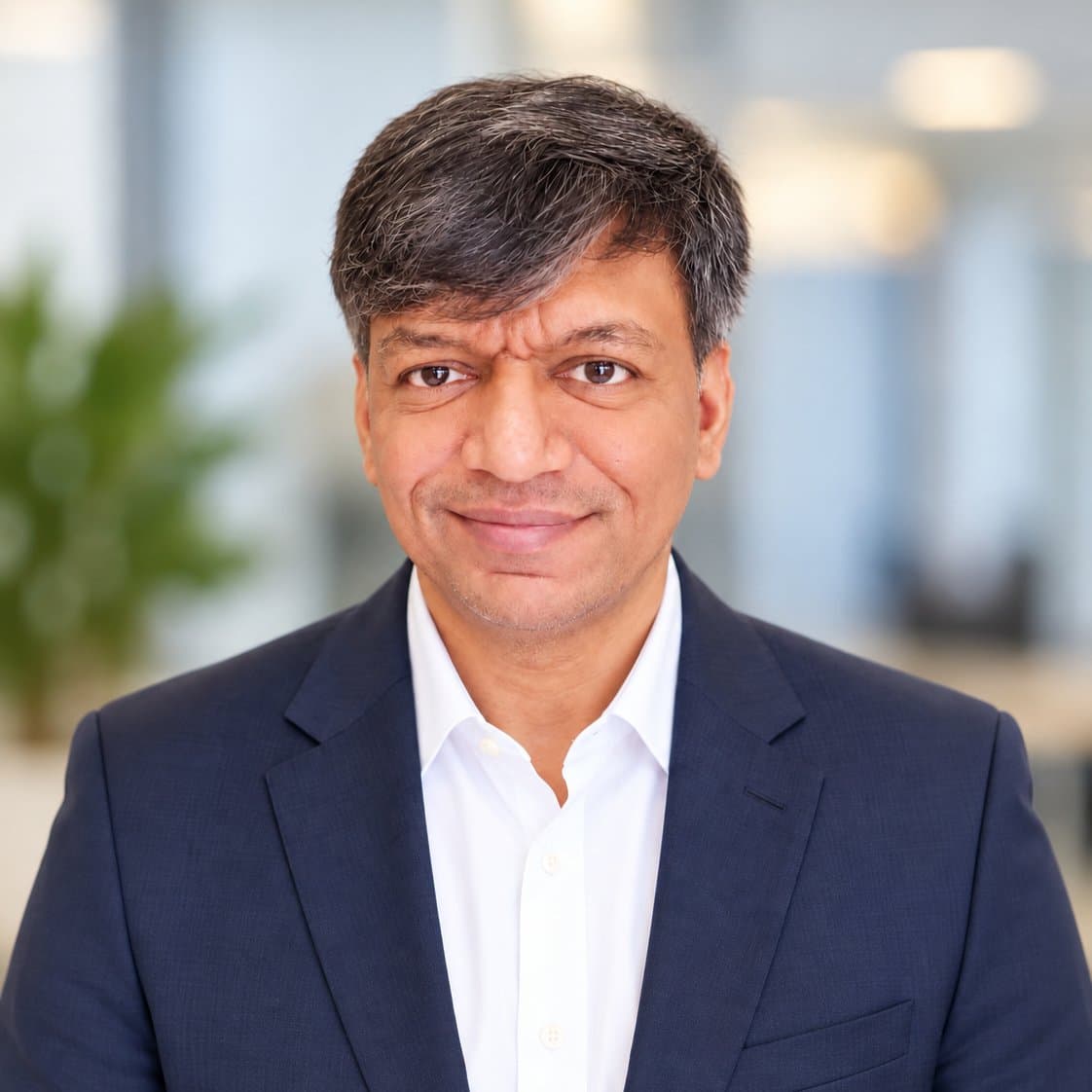
When AI Leaves the Lab: Gowrav Shekar on AI, Judgment and Building for Consequence
Gowrav Shekar, Head of Technology and AI Practices at Adani AI Labs, brings a builder’s lens to AI, shaped by real workflows, imperfect data, ownership, consequence and validation after deployment.
Read Full Story
Corporate Visionaries
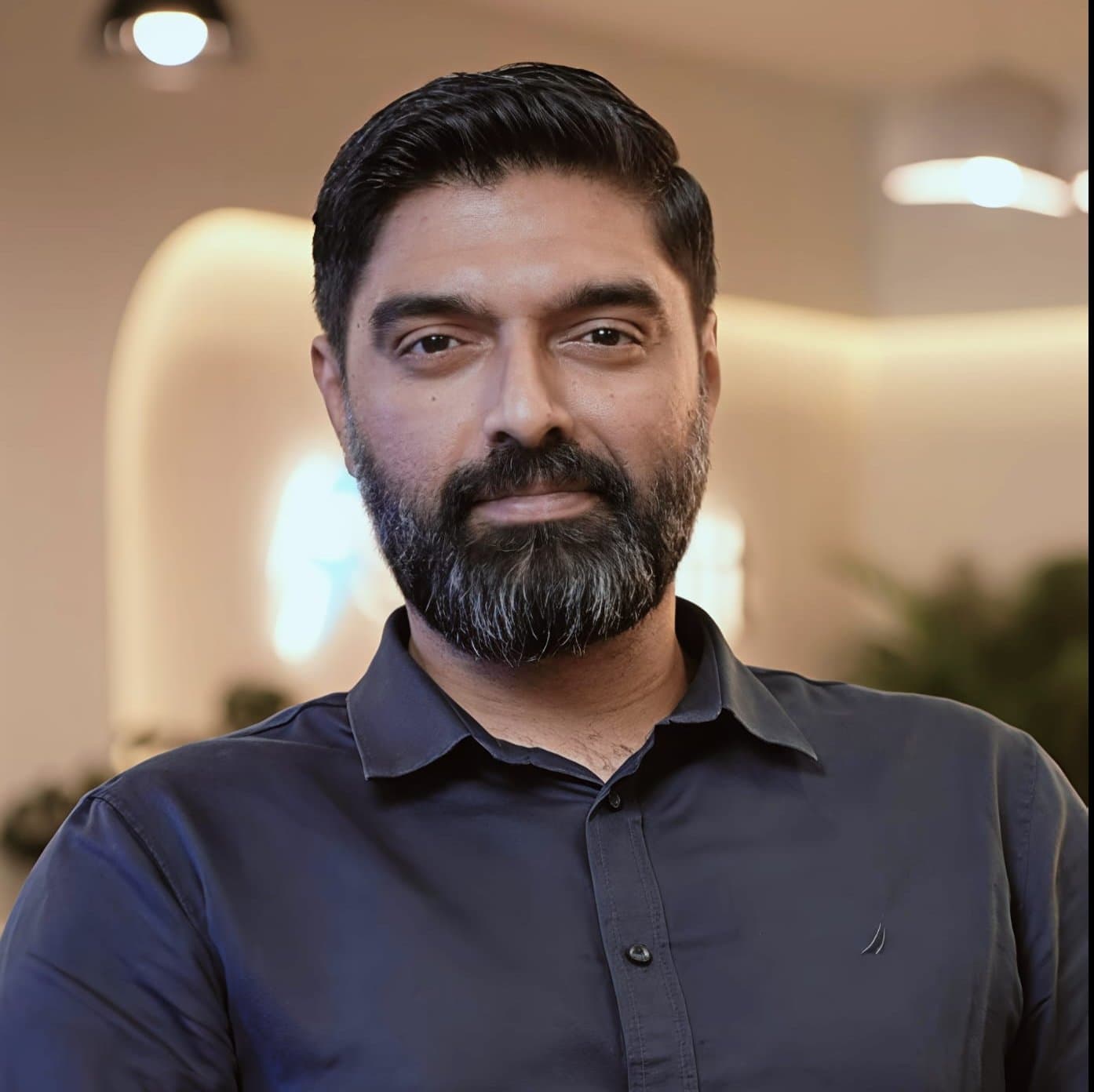
The Cost of a Yes: Vimal Stan Steven on What Product Leaders Must Decide Before They Build
Vimal Stan Steven, Senior Director of Product at SpotDraft, argues that AI makes building easier, but judgment harder. The real product discipline lies in knowing what deserves to be built, tested and carried.
Read Full Story

Corporate Visionaries
Sarath Gollapalli on the Work That Makes Technology Dependable
Sarath Gollapalli, Vice President at Broadridge, reflects on why AI-era enterprise technology still depends on fundamentals: client understanding, reliability, governance and ownership.
Read Full Story