Category: Founders & Innovators
The Quick Heal co-founder on creating one of India’s earliest cybersecurity product categories, building through constraint, and why AI is changing the economics of digital trust
Sanjay Katkar and the Founder’s Discipline of Seeing What Customers Cannot Name
IndiSight Editorial
Aug 2, 2026
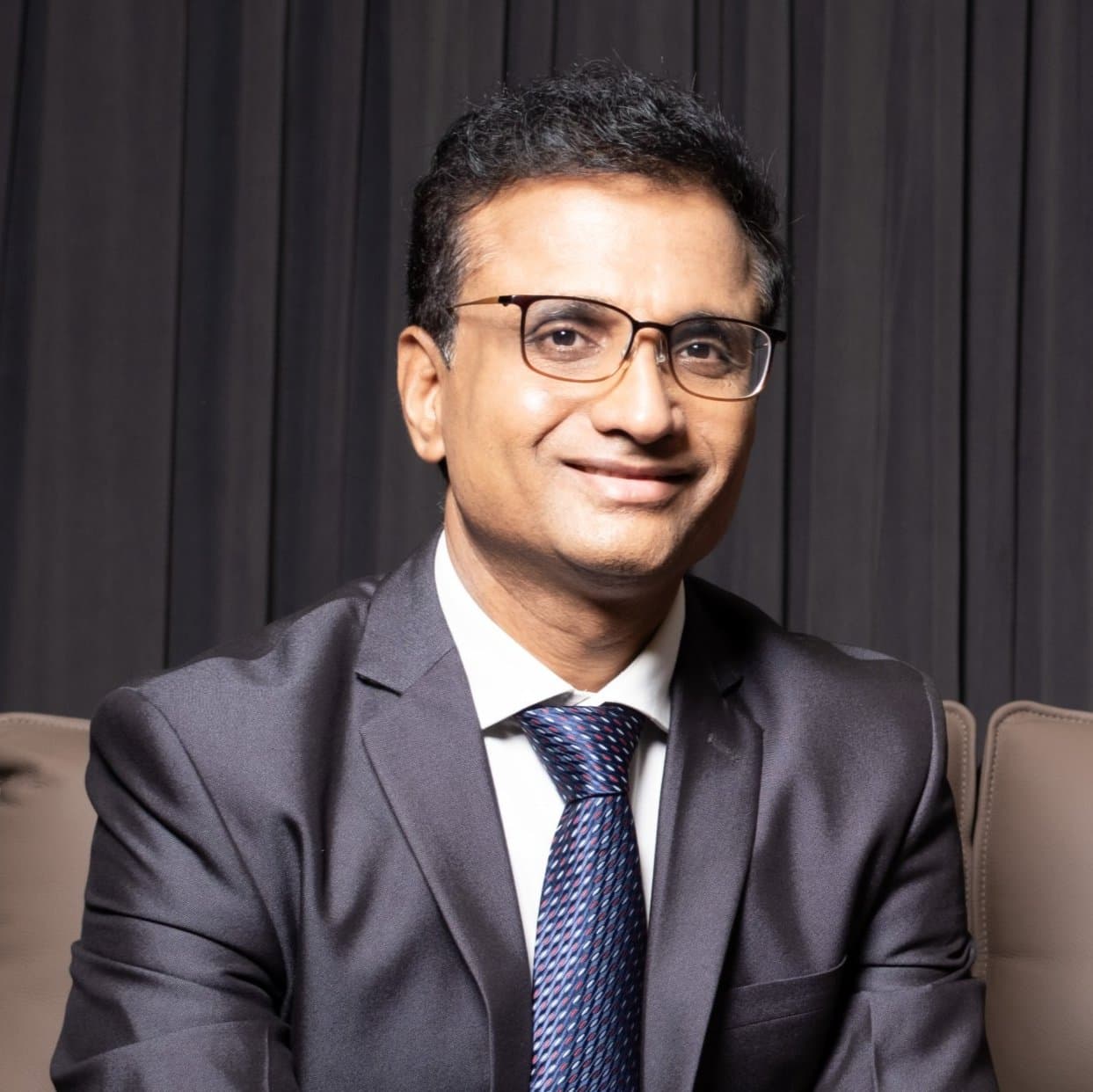
Sanjay Katkar
Co-Founder & Jt. MD · Quick Heal Technologies
Pune, India
India’s software story is often told through services, outsourcing, and execution at global scale. Far less attention has gone to the slower work of building software products in categories Indian customers were still learning to understand, value, and pay for.
Sanjay Katkar belongs to that earlier and rarer generation of Indian technology builders.
When he co-founded Quick Heal with his elder brother Kailash Katkar in 1995, India’s IT economy was still taking shape. Computers were entering colleges, offices, banks, small businesses, and homes. Cybersecurity had barely entered mainstream business vocabulary. Software payment habits were weak. Venture capital was distant from everyday founder life. Indian software products carried a credibility burden against Western brands. Customers facing a virus infection often mistook the problem for hardware failure.
Quick Heal was built inside that gap.
The company helped create one of India’s earliest cybersecurity product categories when the market could feel the problem before it had language for it. A machine stopped working, and the customer assumed hardware failure. A repair engineer opened the system and often found something else: a virus. What later became cybersecurity began for Sanjay as a practical act of diagnosis, repeated across college labs, repair benches, local businesses, and customer sites.
His career carries a larger business argument. Deep-technology companies are built when founders interpret confusion before demand becomes clear, translate technical problems into customer confidence, and stay long enough for the market to understand what they saw early.
Reading the Problem Beneath the Complaint
Sanjay entered computing through a series of practical turns. He was more interested in electronics, but after missing the admission path he wanted, he moved into computer science partly because Kailash, who ran a hardware repair workshop, saw computers gaining importance. During college, virus infections began disrupting lab practicals. At the workshop, machines arriving for repair showed similar hidden failures.
Curiosity turned into method. Sanjay applied a debugger to an infected file, studied its behaviour over several weeks, removed the virus manually, and wrote a small tool to automate the cleaning. His professor asked him to clean the college lab computers. Each new virus became another problem to decode. By 1994, during his final year of masters, he was building a fuller antivirus product. Quick Heal launched in 1995.
“Customers describe symptoms. They don’t understand the problem.”
The observation carries the discipline behind Quick Heal’s beginning. Customers could say the computer had stopped working. Sanjay learned to identify the underlying cause. He was solving virus infections while helping create the customer understanding that would eventually make cybersecurity legible as a category.
Sanjay also recognises how unformed the journey was at the start. “Even I myself was not understanding what I’m entering into honestly,” he says. Quick Heal was born through practical problem-solving before the company had the comfort of a mature market thesis.
For aspiring founders, the lesson is direct. Early markets rarely speak in clean product briefs. Customers complain through delays, workarounds, repeated failure and unresolved friction. A founder’s advantage begins when he can read those signals before the customer has vocabulary for the category.
Trust Before Distribution
The India of the mid-1990s was a difficult place to build a software product company. Piracy had shaped user behaviour. Western brands carried more credibility. Indian products had to prove themselves repeatedly because perception worked against them before evaluation could begin.
Sanjay understood that technical superiority alone would rarely create commercial trust. Quick Heal had to make customers feel the outcome: one cleaned machine, one satisfied user, one convinced repair partner, and one city at a time.
National software distributors were reluctant to carry an Indian antivirus product, so Quick Heal turned to the people customers already trusted: hardware repair vendors, technicians, dealers, and local service partners. These partners knew customers’ machines, pain points and anxieties. Quick Heal trained them, supported them, and gave them a product that strengthened their own credibility with customers.
When phone-based selling in other cities proved difficult, the company opened branch offices, starting with Nashik after Pune. People wanted reachable support. They wanted to know the company stood behind the product.
“We were building confidence,” Sanjay says of that period.
Quick Heal’s early scale came from building trust infrastructure before formal market acceptance arrived. The company’s deeper work was to create the conditions under which customers, dealers and local partners felt safe recommending it. In unfamiliar categories, distribution works when it carries credibility. The first route to market may be the person the customer already calls when something breaks.
Product Intelligence from Indian Reality
Quick Heal’s early product advantage came from Indian realities that global competitors had little reason to treat as central.
International antivirus products already existed in the 1990s. They had brand recognition and advanced features. Several of their assumptions failed inside India’s operating environment. When an infected file was detected, products could prompt users to restore from backup. In India, backups were often missing and original software was often unavailable. A technically accurate instruction had limited value if the user could not follow it.
Quick Heal focused on cleaning the file.
The Novell network problem made the same point at enterprise scale. Offices using Novell networks had central servers, DOS-based endpoints, shared drives and constant file movement. When one machine was infected, the virus could spread quickly across the network. Cleaning became a long operational interruption. Most antivirus products required users to disconnect machines, boot each system from a clean disk, clean every endpoint separately, clean the server, and then reconnect the network. Sanjay saw customers losing one or two working days in this process.
He spent nearly six months building a different answer. Quick Heal could detect the network, connect to the server through its own mechanism, and use server APIs to clean the infected server and endpoints without relying on the infected machine’s normal login path. The benefit was simple enough for dealers to repeat: a network problem that previously took two days could now be handled in around two hours. Dealers began saying, in effect, if it is a network virus problem, bring Quick Heal.
A smaller example carries the same product philosophy. During a customer visit, Sanjay saw a user waiting late only to shut down a computer after the antivirus scan completed. In the next version, Quick Heal added a simple checkbox that allowed the machine to shut down automatically after scanning and cleaning. The product had noticed the person sitting in front of the computer.
Innovation is complete when the customers no longer need to understand what is the tech behind it.
Read across these decisions, a pattern becomes clear. Quick Heal was reducing the distance between failure and recovery. Global products could diagnose the problem, but Sanjay was focused on how quickly the customer’s real work resumed. In markets where downtime is expensive and redundancy is limited, recovered time becomes the product. The technology is the means.
Quick Heal’s strongest ideas came from real Indian operating conditions: slow internet, old machines, missing backups, local repair networks, limited awareness, and users who wanted security to work with minimal explanation. Customer proximity helped Sanjay see problems that product benchmarking would have missed.
The Stamina Problem
When asked what India still misunderstands about building durable software product companies, Sanjay begins with founder stamina.
Services provide faster validation. A customer pays for a project, delivery creates revenue, and the cycle continues. Products demand a longer investment before the market fully understands the value. For Quick Heal, the first paid customer arrived around 1997, and real sales came later. During those years, the hardware repair business funded software development. Banks were reluctant to fund software products, and venture capital was scarce in the way later founders would recognise.
Sanjay is candid about the difficult years. When the software business was still thin and hardware profits were being reinvested into development, he considered whether someone should acquire the company. Later, when the company began doing better, acquisition offers came more seriously. By then, the founders’ psychology had changed.
We thought we have so much to prove, we have so much to contribute. Let’s continue.
The founder who once wondered whether to sell had reached a different stage of conviction. Venture funding followed in 2010, and Quick Heal made its stock market debut in 2016. Its survival came from the ability to keep improving before the market had fully rewarded the work.
Founder stamina, in his account, is staying long enough for product quality, customer confidence, and market vocabulary to mature together.
Scale created a different test. In Quick Heal’s early years, deep founder involvement protected quality. Later, the same involvement risked slowing the company. Scarcity built discipline, but scale required investment in people, technology, global expansion, and future categories. Discipline had to guide investment, while still allowing bolder decisions.
Experience should become wisdom.
The tension inside Sanjay’s stamina argument is that patience protects a company from giving up too early, but it can also make change harder when new markets begin to move. Quick Heal’s story shows the value of staying the course, while also reminding founders that endurance has to be paired with timely renewal.
Long-cycle entrepreneurship demands two forms of maturity. The founder has to stay long enough for the market to catch up, then change enough so the institution can keep moving without his constant presence.
Partnership, Talent and Legitimacy
Quick Heal was built through a long partnership between Sanjay and Kailash. Sanjay was closer to technology and product development. Kailash was closer to customers, operations, partners, and the repair market. Their arguments could be intense, and Sanjay acknowledges they often disagreed. Trust in each other’s intent held the partnership together. They looked at the business through different lenses but in the same direction.
The same instinct for looking beneath the surface shaped Sanjay’s talent philosophy. Computer science graduates were limited, and many polished candidates were placed elsewhere. Sanjay often encountered people with backlogs, weaker English, less impressive resumes, or less prestigious college backgrounds. He learned to look for curiosity, ownership, resilience, and the ability to stay with hard problems.
Global credibility created another test. In India’s early technology environment, founders were often advised to protect what they knew. Methods were kept close. Technical knowledge was treated as secret advantage. Sanjay saw the limit of that mindset in cybersecurity.
Cybersecurity rewards collaboration because threats cross company boundaries. Malware moves across markets. Attackers share tools, exchange vulnerabilities, and learn quickly. Sanjay remembers several Indian antivirus companies from the 1990s, many of which disappeared as the category became more demanding. Quick Heal chose a more open path: certification systems, independent testing environments, global research networks, and sample-sharing communities. Global trust required more than the company’s own claim of excellence. The product had to be tested, compared, challenged, and validated.
Indian deep-tech companies earn global standing when their products can survive independent testing, peer scrutiny, certifications, and long collaboration.
Cybersecurity as a Business of Silence
Quick Heal began with consumer reassurance. Seqrite, the enterprise cybersecurity arm, changed the trust equation.
A consumer worries about losing personal files or documents. An enterprise worries about whether a factory will stop, whether hospital systems will function, whether records remain protected, whether critical services stay live, and whether a breach damages customer confidence or shareholder value.
Sanjay frames enterprise cybersecurity as a long-term partnership. The question has moved beyond whether a product can detect malware. The deeper question is whether the company can be trusted during crisis: whether the team responds quickly, adapts its platform, and keeps innovating over years.
Cyber risk is business risk.
The boardroom has entered the conversation because attacks can interrupt operations, damage customers’ trust, and affect enterprise value. Cybersecurity is unusual because success often appears as silence: steady operations, uninterrupted customers, contained risk, and a crisis that never becomes a headline. Sanjay argues that boards should judge security by preparedness, recovery speed, continuity, and the ability to serve customers through disruption.
That preparedness goes beyond tools. A cyber incident asks practical questions: who takes the first decision, who informs the CEO, who communicates with customers, who handles regulators, and who decides whether a critical system should be stopped. Those answers come from preparation, ownership and practice. A dashboard may show alerts, but a crisis tests decision rights, communication discipline, recovery muscle and leadership readiness.
AI and the Economics of Attack
AI changes cybersecurity by changing the economics of attack.
For years, enterprise security rested partly on an assumption: attackers had limited time, limited skill, and limited ability to scale personalised attacks. AI weakens that logic. An attacker can generate convincing phishing messages in multiple languages, research targets quickly, create malicious code, produce fake apps, and use synthetic voice or video with far less effort. When the cost of attack falls, the volume rises.
In Sanjay’s view, the next phase is “AI-assisted attacks versus AI-assisted defenders.”
Defensive AI must take on work where speed and scale exceed human capacity: analysing patterns, correlating signals, identifying anomalies, isolating endpoints, and surfacing critical alerts. Human judgment must remain accountable where decisions carry business consequences: disconnecting a manufacturing network, shutting down a hospital-linked system, handling regulators, or deciding how much disruption the organisation can absorb.
The boundary is between speed and consequence. Machines can compress response time. People must carry accountability for decisions that can change the operational state of an institution.
The Trust India Has to Build
Sanjay believes India has the ingredients to become a global cybersecurity product nation: engineering talent, a digitised economy, digital public infrastructure, startup energy, population-scale systems, and exposure to real-world cyber complexity. India’s scale also gives builders a testing environment few countries can match.
The missing piece is global trust.
For Sanjay, trust is built like infrastructure: through repeated performance, local support, tested systems, accountable conduct, and time. It begins with the first customer who believes the product works, travels through partners who are willing to recommend it, becomes stronger through certifications and independent validation, and eventually turns into the confidence required for critical systems.
Trust cannot be copied.
Building a successful company and building a globally trusted product are different achievements. The second takes longer, costs more, and requires institutions to submit themselves to external standards. India must prove that its products can be trusted with critical digital assets through consistent quality, transparency, certification, responsible AI, research depth, customer success, and long-term credibility.
Sanjay’s critique extends to capital and policy. In his view, Indian venture capital often evaluates deep-technology companies too early through profitability and revenue, while deep tech requires long gestation. He believes government policy and patient capital need to support founders building in categories where the payoff may arrive late but the strategic importance is high.
India may have the talent. The harder question is whether it can build the patience, standards, and trust infrastructure required for the world’s most sensitive digital systems.
What Aspiring Founders Can Take from Sanjay Katkar’s Work
Read the complaint behind the complaint. Customers may describe the machine that stopped, the delay they faced, or the workaround they use. The founder has to identify the deeper problem before the market turns it into a clean category.
Build trust before chasing scale. Quick Heal grew through technicians, dealers, local offices, and partners who already had customer confidence. In a new category, reach works only when credibility travels with it.
Treat constraints as field research. Slow networks, missing backups, old machines, and low awareness gave Quick Heal product ideas that a competitor-led roadmap may have missed.
Build for the person using the product. Sanjay’s examples are practical: clean the file because the customer has no backup, add a shutdown option because someone is waiting late after a scan. The technology earns trust when it makes the user’s day easier.
Stay with the product while the market is still learning. Quick Heal received validation slowly. Sanjay’s point for founders is direct: a product company often has to keep improving before the category, the customer, and the revenue curve mature together.
Revisit the habits that once protected the company. Founder involvement, frugality, and product attachment helped Quick Heal in the early years. As the company scaled, those habits had to make room for delegation, investment, and reinvention.
Look for hunger before polish. Sanjay’s early teams were built by valuing curiosity, ownership, resilience, and the ability to stay with difficult technical problems. Deep technology needs people who keep learning after the interview is over.
Let serious work face serious scrutiny. Quick Heal earned credibility through certifications, research networks, sample-sharing communities, and global evaluation. Founders building deep technology have to make their work credible outside their own walls.
Build security readiness before the crisis. Tools and dashboards matter, but real incidents test people. The hard questions are who informs the CEO, who speaks to customers, who handles regulators, and who decides whether to stop a critical system.
Think of trust as infrastructure. Products may win attention through features, but serious companies earn belief through consistency, standards, customer conduct, and time.
The Question That Remains
The next generation of Indian founders in cybersecurity, AI, defence systems, semiconductors and other deep-technology categories will face a version of the problem Sanjay faced in 1995: markets that are still learning, capital that wants faster proof, and global buyers who default to established names. His work suggests that category creation begins in the years when the market has not yet learned how to measure the product.
Quick Heal began when customers thought infected machines had hardware problems. The category was unclear, the market was unready, and Indian software still had to fight for belief. Three decades later, the underlying question has expanded from individual computers to enterprises, public systems, AI-enabled threats, and national technology credibility.
India’s cybersecurity opportunity will be decided by whether founders, boards, investors, and policymakers can build the trust infrastructure that serious technology requires.
Technology keeps changing. The demand for confidence does not.
Our Suggestions to Read
Discover The Leaders Shaping India's Business Landscape.

Corporate Visionaries
Sarath Gollapalli on the Work That Makes Technology Dependable
Sarath Gollapalli, Vice President at Broadridge, reflects on why AI-era enterprise technology still depends on fundamentals: client understanding, reliability, governance and ownership.
Read Full Story
Corporate Visionaries
The Work Before the Story: Rahul Malhotra on Trust, Behaviour and the Business of Marketing
Rahul Malhotra brings 30+ years at P&G and Shell across global CEO and marketing roles, offering deep insight into business, consumer behaviour, organisational change, commercial judgement and reputation.
Read Full Story
Corporate Visionaries
The Craft of Institutional Capital: Archit Shah on Judgement, Risk and Investing Across Cycles
The Zurich Kotak General Insurance Chief Investment Officer brings a practitioner’s view of investing, where good judgement under uncertainty has to become decisive action through portfolio construction.
Read Full Story