Category: Education Leadership
Namrata Sethia chose classrooms over certainty, building Vardhman into a school where legacy, accessibility, and global readiness work together rather than compete. Her leadership blends rigor with empathy reinvesting every surplus into teachers, infrastructure, and systems that give students real agency, resilience, and cultural grounding. In her hands, education becomes both duty and design, proving that strong schools can honour tradition while preparing children to thrive anywhere in the world.
The Inheritance of Duty: Namrata Sethia on Reinventing School Leadership
IndiSight Editorial
Sep 25, 2025
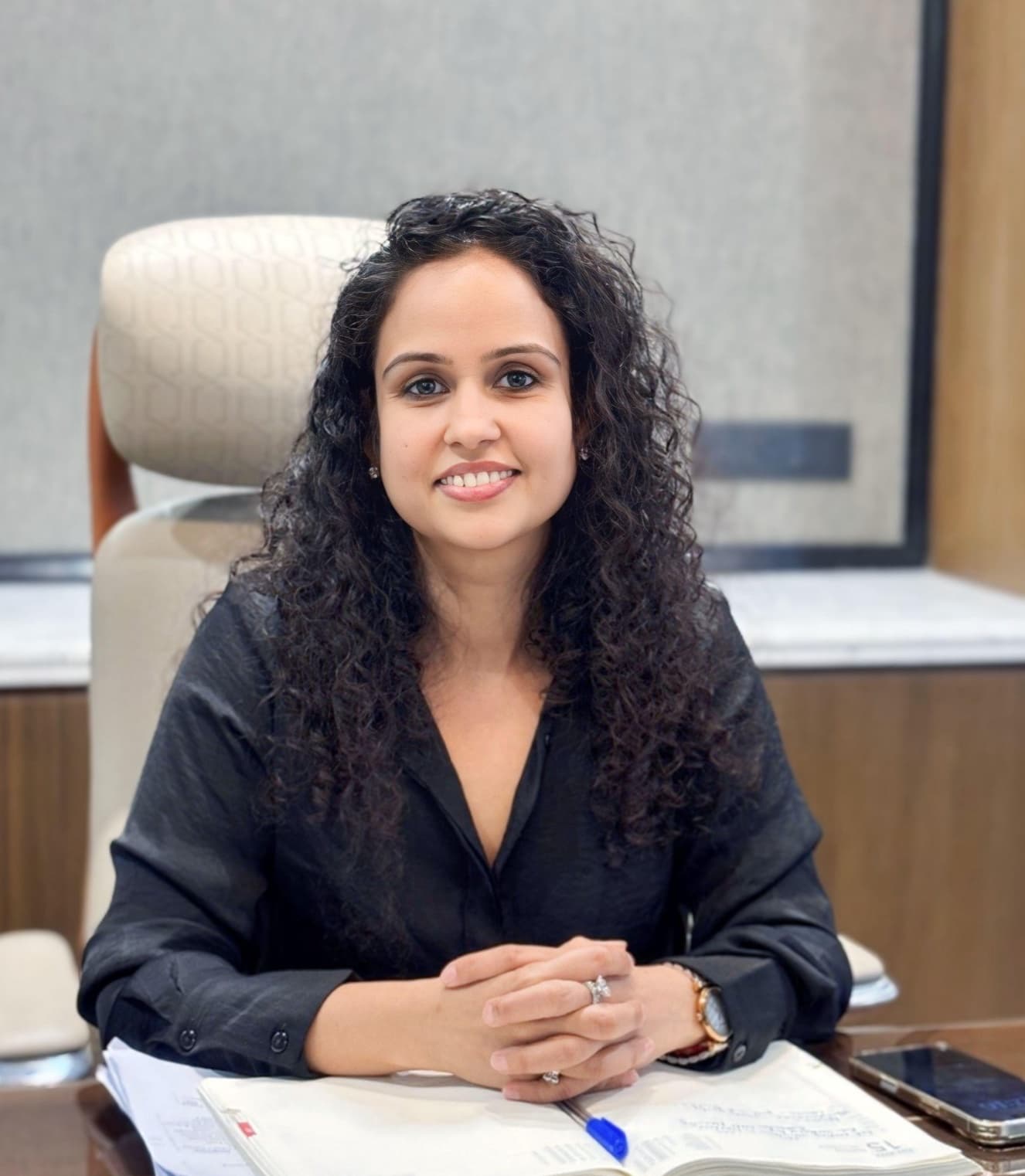
Namrata Sethia
Director · Vardhman Group of Schools
Jaipur
When people hear that Namrata Sethia once stood between a secure corporate career and the chance to enter her family’s real estate business, they usually assume the story ends with her choosing the safer path. Real estate would have been logical: predictable projects, visible assets, steady financial rewards. Schools, in comparison, looked like a long stretch of uncertainty where results take years, sometimes decades, to show.
Namrata went the other way. “I had been teaching children since I was in school myself,” she remembers. “Explaining a math problem to a classmate or helping a neighbor’s child with homework gave me an energy I could not find anywhere else.”
That memory, small and ordinary at the time, later became decisive. It convinced her that her future was not going to be built in boardrooms but in classrooms.
A Legacy That Demanded More Than Nostalgia
Her grandfather-in-law, Shri Moolchand Ji Sethia, left behind more than stories. He was a professor, critic, translator, and poet, someone who believed education was a sacred duty rather than a commercial pursuit. He taught students and teachers alike, translated Jain agamas into Hindi and English, and critiqued some of the country’s leading poets. For him, schools were not categories of government-run, elite, or budget institutions. They were places where children could grow into capable, responsible citizens.
Namrata often goes back to his core belief: quality education should not be limited to the few who can afford it. “We are building the future,” she says. “If education fails, society pays the price.” She does not say it as a slogan. It is the way she justifies daily trade-offs, from budgeting to training to policy adoption.
Governance Beyond Family Ties
In family-led institutions, there is always a danger of leaning too heavily on tradition. Legacy can inspire, but it can also trap. Namrata has been careful not to let the past become a cage.
Her father-in-law and husband remain closely connected to the schools, but both gave her the autonomy to lead. She chose to extend that autonomy to her team. Teachers, coordinators, and even students have direct channels to share ideas. Hierarchies exist, but they are not barriers.
“Leadership is listening first, then deciding,” she says. “A single person thinks in one direction, but when a hundred people brainstorm together, something genuinely new can emerge.”
This style of governance has changed the culture of Vardhman. Teachers feel they are part of building the institution rather than simply executing instructions. Parents see themselves as collaborators rather than clients. Students are encouraged to voice their opinions and even redesign aspects of school life. The institution has grown less dependent on her personal authority and more resilient in its design.
Balancing Duty and Finance
Every school struggles with the same dilemma: parents expect affordability, teachers expect fair pay, and infrastructure needs constant investment. Balancing those demands is difficult in any environment, more so in a competitive market.
“To get the best faculty, we need to pay them well,” Namrata says plainly. “When fees are kept nominal, very little is left, and whatever remains must be reinvested in infrastructure.”
The cushion comes from the family’s diversified businesses. Profits from the schools are not taken out. They are cycled back into labs, facilities, or teacher development. This is not philanthropy in the conventional sense, but neither is it profit maximization. It is closer to stewardship, where finance is aligned with purpose rather than separated from it.
Globally, systems solve this equation differently. European schools rely heavily on state funding. American private schools run on tuition and alumni endowments. Parts of Asia scale through subsidies and large networks. Vardhman offers another model: family-backed reinvestment. It may not be universally replicable, but it demonstrates one way to reconcile mission with sustainability.
Policy as Architecture
India’s New Education Policy (NEP) of 2020 is still debated in education circles. For many schools, it is a checklist of compliance. For Namrata, it is an architectural plan.
“The most important part of NEP is that it focuses on skills early,” she says. Students from grade six onward begin exploring areas of interest. By the time they finish school, they are expected to have gone beyond exposure to genuine practice. The restructuring of grades nine to twelve into one block is especially important to her. It gives students four years instead of two to test interests before choosing a specialization.
For Namrata, this is not a minor reform. It is a chance to reshape how India uses its demographic dividend. A generation trained only to look for jobs will strain the system. A generation equipped to create jobs can transform it. Entrepreneurship and financial literacy, if introduced early enough, can allow teenagers to experiment with ventures or investments while still in school.
Policy, in her view, should not be treated as a document to comply with. It should be treated as a design for the future.
Anchoring and Exposure
Namrata often frames curriculum as a tension between roots and wings. Students need cultural anchoring to feel grounded, but they also need exposure to operate in a global world. Too much anchoring creates rigidity. Too much exposure without grounding produces detachment.
“Concepts never change,” she notes. “What changes is how you make them visible to children.”
Her approach is to blend. A child educated in Jaipur should be able to walk into a classroom in London or Dubai and feel prepared, yet remain connected to their own cultural context. Other countries wrestle with the same tension. Finland protects teacher autonomy while maintaining coherence. Singapore emphasizes skills while embedding national identity. Japan balances modern exposure with tradition. Namrata’s model adds India’s voice to this global dialogue.
Positioning in a Polarized Market
The Indian school market is split into three clear camps. On one end are heritage institutions with prestige but limited accessibility. On the other are budget schools that serve the majority but lack resources. In between is a small but growing set of international schools that cater to expatriates and high-income families.
Vardhman deliberately positions itself between these extremes. Its model is to combine quality with accessibility, global exposure with local grounding. For families in Rajasthan, this balance makes the school aspirational but not unattainable.
Independent observers note that fewer than ten percent of Indian schools operate in this middle path. That scarcity makes Vardhman’s positioning unusual, and it provides lessons for those seeking to scale without drifting into either exclusivity or compromise.
Innovation as Resilience
“Innovation is not a robotics kit,” Namrata says. “It is a mindset.”
She recalls a project where students had to build a fountain entirely out of waste. They measured straws for accuracy, designed a frame for stability, calculated water flow, and engineered the final structure. Science, math, art, and engineering converged in one messy but successful experiment.
“The harder frontier to cultivate is the audacity to try and fail,” she explains.
For her, innovation is about resilience, not equipment. Students who can attempt, fail, and attempt again will thrive whether they are coding, designing, or leading. That attitude, she argues, is what connects Jaipur to Silicon Valley, Shenzhen, or Berlin.
Sustainability as Identity
“Most schools treat SDGs as poster projects,” Namrata says. “For us, they are awakenings.”
At Vardhman, sustainability is not managed by committees alone. Students monitor plastic use, even in the director’s office. They compress waste into eco-bricks and use them to build furniture and walls. They collect food for slum communities and spend weekends teaching in rural schools.
What matters is that these initiatives are not staged for brochures. They are led by students who see their peers doing it and want to join. Activities end when the event is over. Identity endures when habits form.
How the Philosophy Works in Practice
Namrata’s leadership becomes tangible in the systems she has built.
● Parent Connect Programs: Every two months, parents spend two hours in school with their child, participating in activities and talking to teachers. One parent said afterward, “It showed me confidence in my child I had never seen at home.”
● Bloom’s Taxonomy in Phases: Teachers are introduced to three principles every quarter. They are expected to use them in lesson plans and assessments. Monthly reviews ensure consistency. Over the years, rote learning is slowly replaced by higher-order thinking.
● Student Councils with Authority: Students are given safety and budget guidelines, then left to design events themselves. A recent sports day was reimagined completely by students to reflect what they felt mattered to their generation.
These mechanics are important because they are replicable. Schools in different contexts can adapt them without copying the entire model.
Teachers and Parents as True Partners
Namrata often calls teachers “dream architects” and parents “co-educators.” She means it literally.
Teachers rotate into leadership roles, planning events and managing teams. She values openness to learn more than years of experience. “A teacher has to be a learner first,” she insists.
Parents are drawn in as well. The connect programs give them direct insight into their child’s learning, not just report cards. Her philosophy of parenting rests on three principles: give time, listen, and lead by example. “If you want them to read, hold a book yourself,” she says.
For her, no change inside classrooms can succeed if homes remain disconnected.
Leadership as Possibility
At the heart of her philosophy is a simple but demanding idea: leadership is about releasing possibility, not circling endlessly around flaws.
“We rise by purpose, not by critique,” she says.
Rules matter, but they provide structure. Empathy matters, but it gives space. Together they allow growth. She models that balance in her personal life. Morning walks are not only about fitness but about clarity. Pauses before major decisions are about perspective. “Wellness is not indulgence,” she says. “It is preparation.”
Children notice these habits before they notice instructions. For Namrata, presence itself becomes a curriculum.
Global Vision and India’s Demographic Test
India’s demographic dividend is celebrated, but Namrata warns it will collapse if teaching is not reimagined. Recruitment should focus on adaptability over seniority. Training should be continuous. Rewards should encourage creativity, not just compliance.
Her second emphasis is independence. “We have to build job givers, not job seekers,” she says. That means entrepreneurship and financial literacy must start early, not after graduation.
Her references are global. Like Finland, she values teacher autonomy. Like Singapore, she emphasizes skill development. Like the US, she insists on entrepreneurship as culture. Asked what she hopes a Vardhman student might one day say at the United Nations, she answers: “That their schooling gave them the courage to stand on their own and the curiosity to keep learning long after graduation.”
Leadership Lessons from Namrata Sethia
Reinvest in Growth: Surpluses should return to classrooms, not leave them.
Structure with Empathy: Discipline sets boundaries, empathy fills the space inside.
Model Before You Teach: Children copy presence before they follow words.
Agency Requires Responsibility: Voice without authority is tokenism; real participation has consequences.
Innovation Is Resilience: The ability to try again is more valuable than equipment.
Teachers Must Stay Learners: Adaptability matters more than tenure.
Global and Local Can Coexist: Strong schools prepare children to move across borders without losing their roots.
Closing Reflection
Namrata Sethia’s story begins in Jaipur but speaks to a wider question facing education everywhere. How do institutions balance legacy with reinvention, mission with money, discipline with empathy?
Her model may not be replicable everywhere, but it illustrates something important. Inheritance can be a responsibility rather than nostalgia. Reinvention can strengthen rather than sever tradition.
“The real test for Indian education will not be the policies it writes but the institutions it designs,” she says.
That test is not India’s alone. Societies rise or falter depending on how they prepare the next generation. Leaders like Namrata remind us that education is not just a service. It is duty, and it is design.
Our Suggestions to Read
Discover The Leaders Shaping India's Business Landscape.
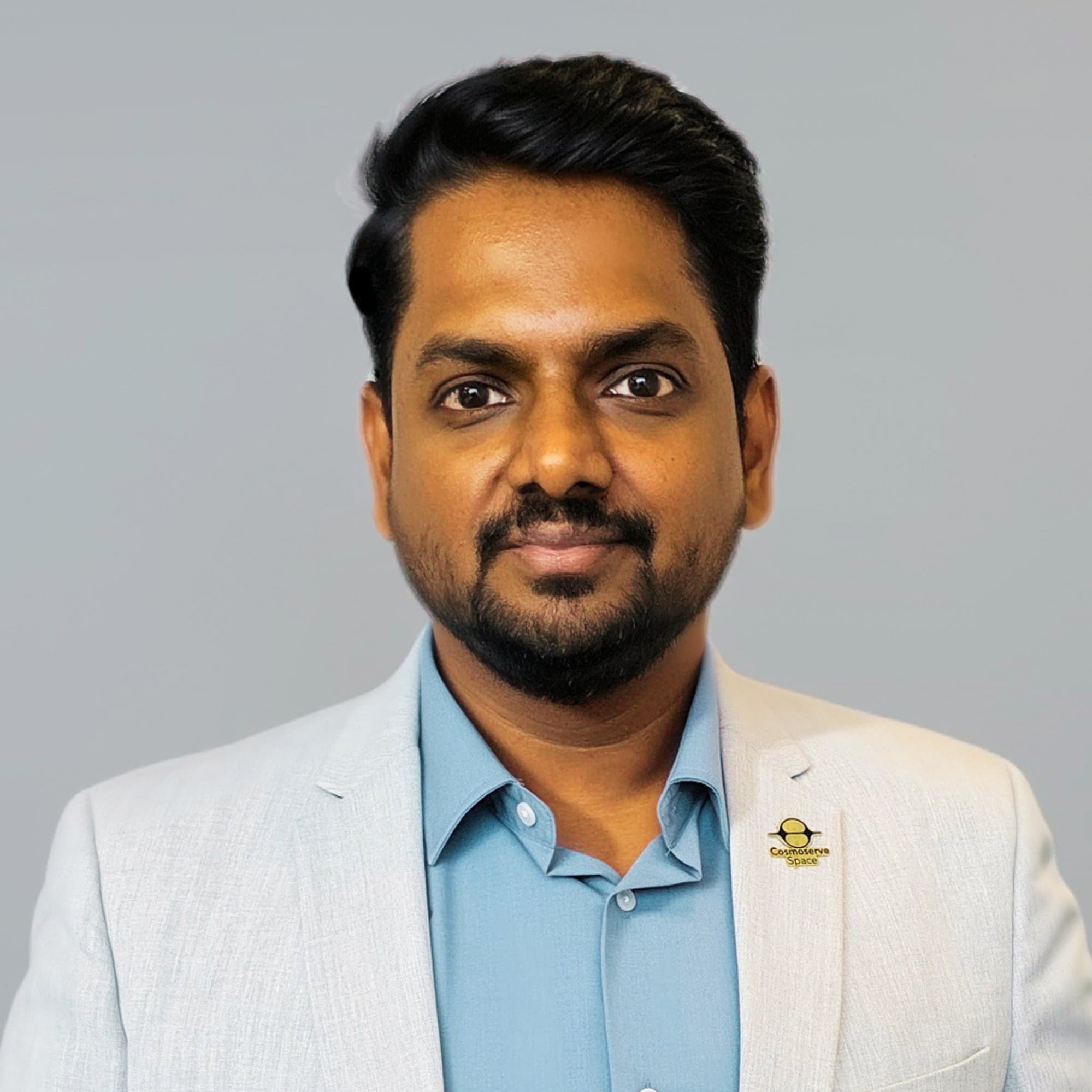
Founders & Innovators
Building the Next Space Economy: Chiranjeevi Phanindra and Cosmoserve's Case for Orbital Maintenance
Chiranjeevi Phanindra, Founder & CEO of Cosmoserve Space, spent 14 years at ISRO working on re-entry and human spaceflight. Today, he is focused on a vital challenge: keeping Earth’s orbit usable.
Read Full Story

Corporate Visionaries
Shashank Sahni on What Success Leaves Out
Shashank Sahni, Google’s Managing Director of Global Ads Solutions, reflects on what customers reveal, what ambitious teams need from their leaders & what the mountains and marathons have taught him about going further.
Read Full Story
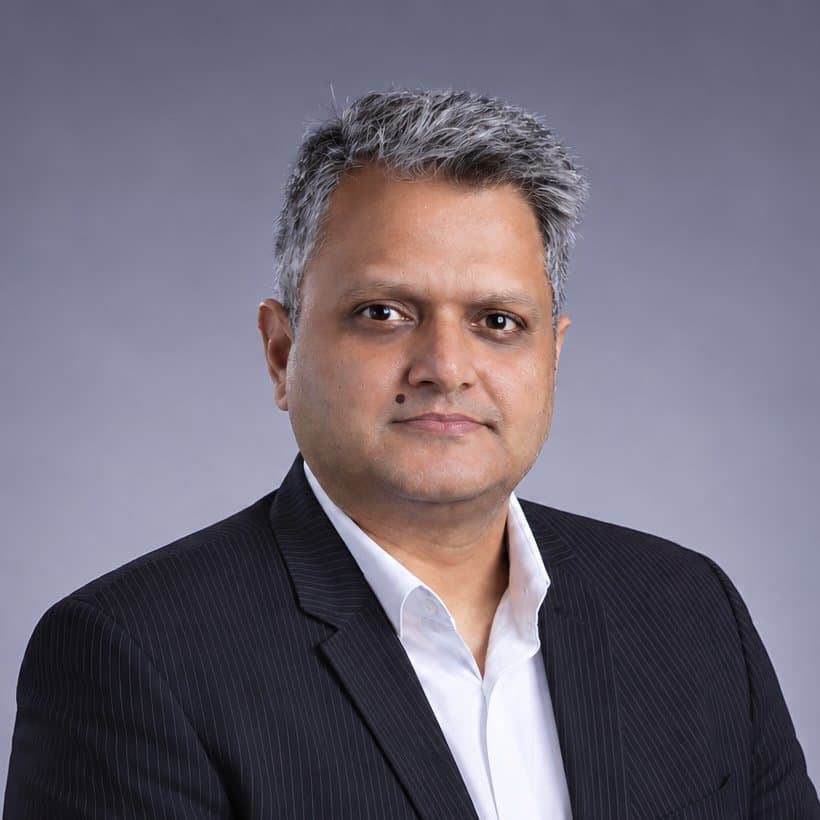
Corporate Visionaries
Clinical Multiplication: Divesh Singla on the Healthcare AI Case That Headlines Keep Missing
Divesh Singla, Managing Director, India at Veradigm, brings two decades in healthcare technology to the AI question leaders cannot avoid: how to expand clinical capacity without weakening human judgment.
Read Full Story