Category: Education Leadership
Dr. Vasudha Neel Mani leads with the conviction that education and leadership share the same purpose: to make people whole. As a Cambridge Ambassador and Principal at Rockwoods International School, she integrates emotional intelligence with strategic clarity. Her philosophy reframes empathy as infrastructure and reflection as performance. Across classrooms and boardrooms alike, she reminds us that emotional depth is not the opposite of excellence, but its source.
The Educator’s Advantage: Dr. Vasudha Neel Mani on Why Emotional Intelligence Is the New Management Science
IndiSight Editorial
Jan 19, 2026
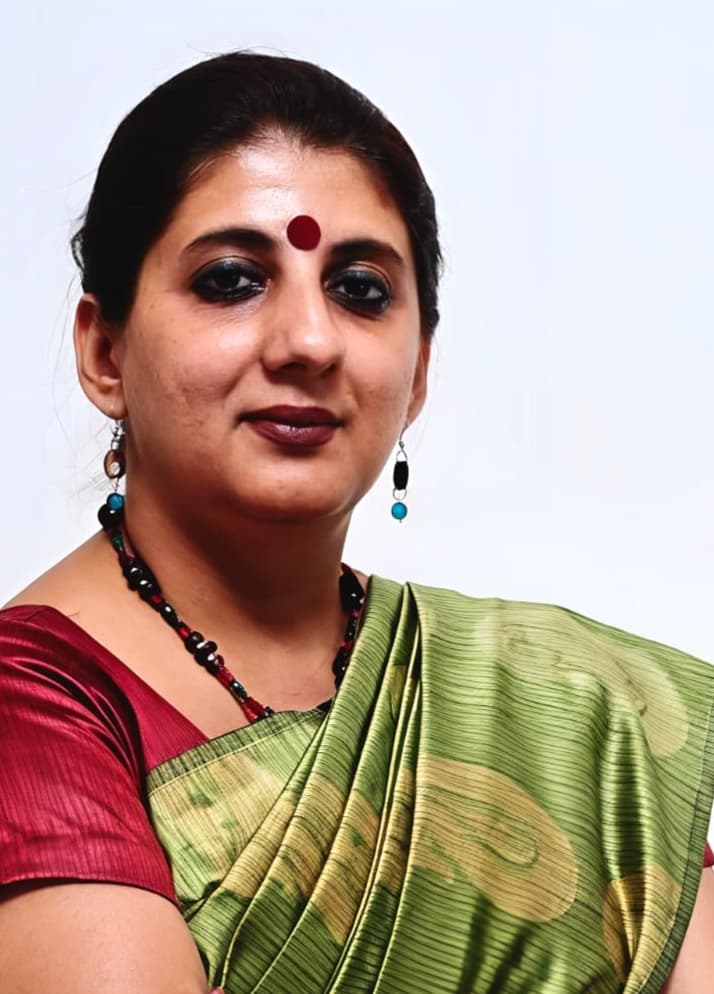
Dr. Vasudha Neel Mani
Principal · Rockwoods International School
Udaipur, India
Every strong institution is built by someone who understands people before processes. For Dr. Vasudha Neel Mani, that understanding defines leadership. It is not about visibility or titles but about how ideas translate into systems that work for everyone: students, teachers, and the organization itself.
Over three decades, Dr. Vasudha has built schools that operate on a simple premise: structure should support growth, not control it. A Cambridge Ambassador for South Asia and Principal at Rockwoods International School, she has shaped her leadership around a discipline rarely seen in education, combining emotional intelligence with managerial precision.
Her leadership is not rooted in charisma but in clarity. It comes from her ability to connect emotion with structure and reflection with accountability.
Early Lessons in Design Thinking
Dr. Vasudha began her career in special education long before inclusion became a policy discussion. Her early classrooms were small, diverse, and unpredictable. Each child learned differently. Each required a new design.
That experience shaped her professional architecture. She learned that sustainable progress in any system depends on personalization. It is a principle that now drives how she builds institutions.
When you touch the emotional cord of a child, you are sorted.
Working in a context with limited tools and recognition taught her how to improvise systems, measure effort, and celebrate progress that does not always show up in numbers. These lessons, learned early, became her foundation for managing people and systems under constraints. That reality is common to most organizations.
She carried this idea into mainstream and international schools, blending the rigor of Cambridge pedagogy with the empathy of special education. The result is a model that values curiosity over compliance. “Children remember what they discover, not what they are told,” she often tells her faculty.
This philosophy evolved into a broader leadership pattern: build for human variation, not for institutional convenience.
The Frameworks That Scale
Dr. Vasudha’s schools run on three frameworks that could apply to any enterprise: Cognition, Differentiation, and Responsibility.
Cognition over Coverage
She rejects the industrial model of covering syllabi. Instead, her teams plan backward from outcomes. Each lesson is designed to create understanding that transfers from classroom to life. She measures success not by how much content was delivered but by how much was absorbed and applied.
In management terms, she focuses on the quality of learning loops, not the quantity of output. That shift, from input metrics to insight metrics, has changed how her schools operate.
Differentiation as Design
Drawing from her special education background, Dr. Vasudha treats diversity as default. Every class operates as a learning spectrum. She expects her teachers to meet students where they are, not where the average sits. “Progress,” she says, “is the real metric.”
In practice, this means tiered evaluations, flexible learning paths, and a bias for inclusion. For leaders in any field, this becomes a metaphor. Systems must adapt to people, not the other way around.
Responsibility as Practice
Older students are expected to own their learning by planning projects, designing rubrics, and evaluating peers. The same principle applies to her faculty. Freedom is non-negotiable, but so is accountability. Ownership, in her view, is the foundation of maturity in any organization.
Across all three frameworks, her goal is not control but consciousness. It is about building a system where everyone, from student to senior leader, operates with awareness of their impact.
Leadership by Emotional Regulation
Dr. Vasudha starts her day before sunrise. Meditation, reflection, and silence are part of her operational design. They are not rituals of personal wellness but tools for organizational stability. “The emotional state of a leader multiplies across the system,” she says.
This is what she calls energy discipline: managing one’s internal climate before influencing the external. In practice, it means she never reacts immediately, listens longer than she speaks, and chooses restraint over reaction.
Silence is not absence. It is an assessment.
Her stillness serves a business purpose. It keeps decision-making measured, communication calm, and culture consistent. In a world driven by immediacy, she has made reflection a competitive advantage.
She applies the same logic to her leadership team. They are encouraged to practice personal rituals of calm such as journaling, walking, or exercise, not as self-care but as cultural continuity. The stability of a system, she believes, comes from the emotional steadiness of its leaders.
Her approach also redefines what productivity means in leadership. “Being busy,” she says, “is not the same as being effective.” Every decision, meeting, and policy must serve clarity. Anything that adds noise without adding value is eliminated.
That principle has quietly reshaped how her schools operate. Meetings are shorter. Feedback is structured. Teachers have voice but also responsibility. The result is a workplace that feels both disciplined and human.
Faculty as Partners in Growth
Most school leaders manage. Dr. Vasudha builds capacity. Her faculty are not executors. They are co-creators. Each academic year begins with what she calls a vision dialogue, a working session where teachers and administrators co-design the goals and cultural expectations for the year ahead.
The rules are clear. Experiment freely. Fail safely. Improve continuously. “Accountability,” she says, “is care with structure.”
She insists that every team member understand both purpose and process. “Clarity,” she says, “is a kindness.” When people know what they are building toward, alignment happens naturally.
Attrition is low. Engagement is high. Internal leadership pipelines have emerged organically. Many of her team members have gone on to lead institutions of their own. That, she says, is the ultimate measure of organizational health.
Her stance on loyalty is pragmatic.
Loyalty should never become a liability. Respect tenure, but reward learning.
By institutionalizing mentorship and feedback loops, she has created what she calls a learning organization within a learning organization. Teachers are trained in peer observation, and leadership development is treated as continuous, not ceremonial.
Her approach resembles the best corporate systems. Distributed ownership, reflective leadership, and deliberate culture define her management style.
Tradition and Innovation Can Coexist
Dr. Vasudha’s perspective on innovation is practical, not ideological. She sees tradition as raw material, something to decode and redesign, not discard.
Tradition holds the emotional logic of a community. Innovation gives it a new language.
She redesigned spelling tests into games, time tables into applied mathematics, and moral lessons into a structured Gratitude Program. This framework teaches students to trace every convenience back to its human source. “We are not teaching charity,” she explains. “We are teaching perspective.”
This approach is a masterclass in adaptive design. Take what already works, preserve its essence, and upgrade its relevance. It is how long-standing institutions modernize without losing identity.
Her position on technology follows the same logic. “AI will not make educators redundant. It will reveal who was mechanical,” she says. After completing an ISB program on Leadership and AI, she began integrating digital tools into classrooms with clear boundaries. Technology should enhance thought, not replace it.
And when asked about education policy, she is blunt.
We have politicized the symbolic, such as uniforms and slogans, while ignoring the fundamentals of quality. Frameworks do not transform institutions. People do.
Her view on modernization is clear. The future of Indian education depends less on technology and more on emotional intelligence scaled across systems.
This conviction connects deeply with global management trends. As corporations rethink leadership in the age of automation, Dr. Vasudha’s framework reads like an organizational survival guide: emotional literacy as strategic advantage, trust as infrastructure, and values as long-term capital.
The Global Citizen
Dr. Vasudha’s definition of global citizenship is not linguistic or geographic. It is behavioral.
You can be fluent in English, travel the world, and still not be global if you can’t respect differences.
Her approach is rooted in balance. She teaches students to expand identity, not erase it. At her school, Diwali celebrations coexist with international summits. Students study Shakespeare and Premchand in the same breath. They learn to engage globally while staying rooted in their own context.
In her view, global competence begins with ethical literacy, the ability to coexist without losing integrity. “The most global individuals,” she says, “are often the most rooted.”
This perspective extends to how she develops teachers. She encourages them to observe global best practices but adapt them locally. “Importing without translating,” she says, “creates imitation, not innovation.”
Her message resonates far beyond classrooms. In any organization, global relevance grows from local credibility. To act global, you must first think responsibly where you are.
The Question That Guides Her
Every leader is shaped by one persistent question. For Dr. Vasudha, it is this: How can I prepare my children to face the world without fear?
It drives her philosophy more than any curriculum ever could. She believes schools, and by extension institutions, must equip people to manage uncertainty. “Life will test them,” she says. “Our job is to build the mindset that helps them recover fast and keep perspective.”
She teaches her team to normalize failure, analyze it, and move forward. “A child who fears mistakes will never take initiative,” she says. The same rule applies to adults. Reflection replaces blame. Learning replaces defensiveness.
Her question has evolved with time. It once meant academic resilience. Now it means emotional stamina, the ability to stay balanced in a volatile world.
Our generation fought for survival. They are fighting for meaning.
This awareness keeps her institutions adaptive. Every new program or reform is tested through that single filter: Will it make our people stronger in the face of ambiguity?
Leadership in Practice: Her Management Blueprint
Beneath the philosophy lies structure. Dr. Vasudha’s operating model runs on four management pillars that mirror modern organizational strategy.
Context Before Control: Every new initiative begins with why. Whether it is introducing AI tools or redesigning a curriculum, she starts by framing context. “When people understand intent, they can align effort,” she says.
Culture as Process, Not Event: Teacher appreciation days and newsletters are surface markers. The real culture work happens in everyday conversations, transparent communication, and how leaders respond when things go wrong.
Empathy with Boundaries: Her leadership style combines approachability with precision. She listens deeply but expects accountability. “You can care for people and still expect performance,” she says.
Legacy Through Multiplication: Her success metric is not expansion in size but replication in leadership quality. She measures legacy by how many people she has prepared to lead ethically.
This blueprint could fit any industry. Education simply happens to be her canvas.
Leadership Lessons
Leadership begins with emotional clarity, not authority.
Systems should teach responsibility, not dependence.
Replace compliance with curiosity.
Trust people enough to let them fail.
Stillness is a leadership skill.
Decode tradition before you discard it.
Emotional well-being is institutional infrastructure.
Loyalty without growth becomes inertia.
Gratitude is perspective made visible.
Global competence begins with local integrity.
Lead more by consistency than by charisma.
Redefine success as balance between achievement and awareness.
Productivity means clarity, not activity.
Leadership is not what you control but what you enable.
Closing Reflection
Dr. Vasudha’s influence lies in how she converts personal insight into organizational methods. Her schools function less as institutions and more as living systems that adapt, learn, and stay human.
She believes the future of education, and leadership at large, belongs to those who can connect empathy with execution.
Legacy is not what we leave behind. It’s what we leave within.
Her work offers a larger message for leaders across industries. As automation accelerates and hierarchies flatten, what will differentiate effective organizations is not access to data but access to depth, the ability to read people, build culture, and create systems that breathe.
The principles she practices in education, such as personalization, reflection, trust, and emotional literacy, may well become the building blocks of the next generation of management.
Her story is not about one school or one leader. It is about a principle that every sector can borrow: when you build with awareness, results take care of themselves.
Our Suggestions to Read
Discover The Leaders Shaping India's Business Landscape.
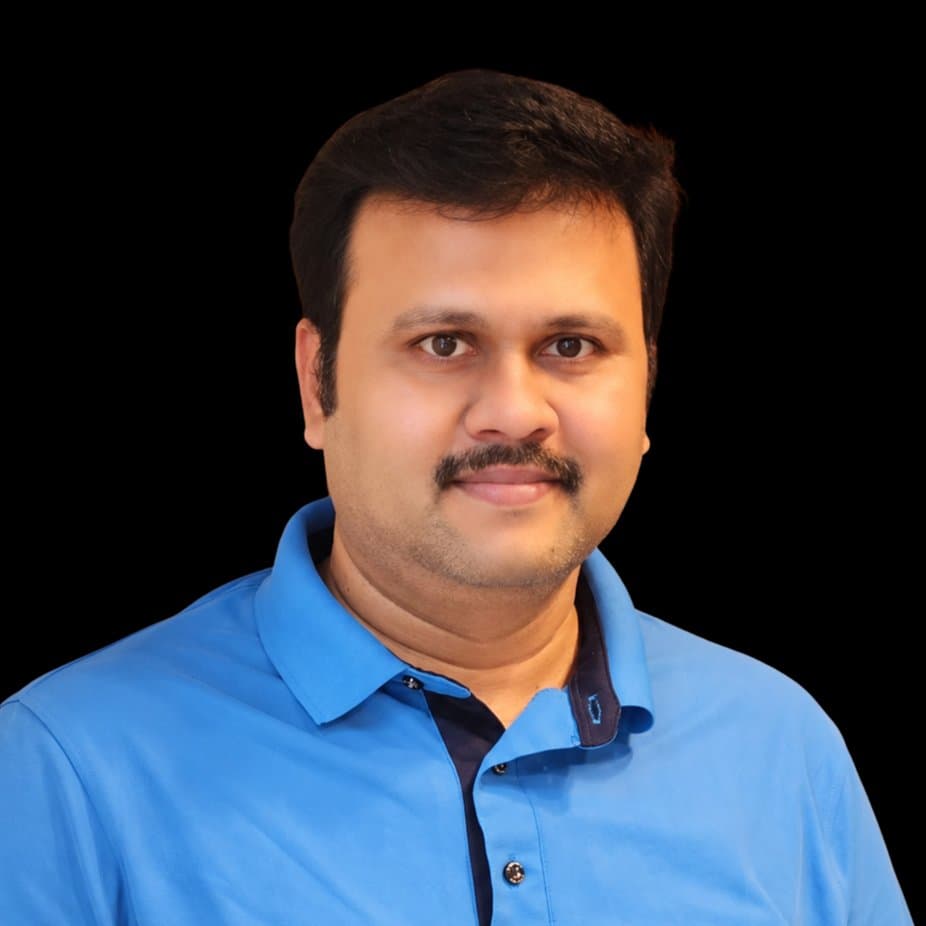
Corporate Visionaries
Sarath Gollapalli on the Work That Makes Technology Dependable
Sarath Gollapalli, Vice President at Broadridge, reflects on why AI-era enterprise technology still depends on fundamentals: client understanding, reliability, governance and ownership.
Read Full Story
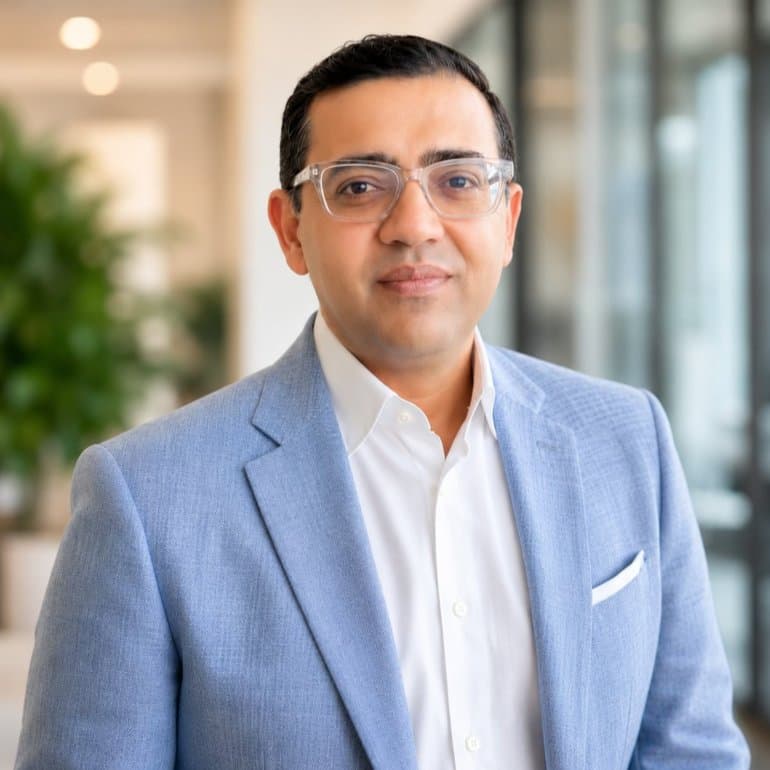
Corporate Visionaries
The Work Before the Story: Rahul Malhotra on Trust, Behaviour and the Business of Marketing
Rahul Malhotra brings 30+ years at P&G and Shell across global CEO and marketing roles, offering deep insight into business, consumer behaviour, organisational change, commercial judgement and reputation.
Read Full Story
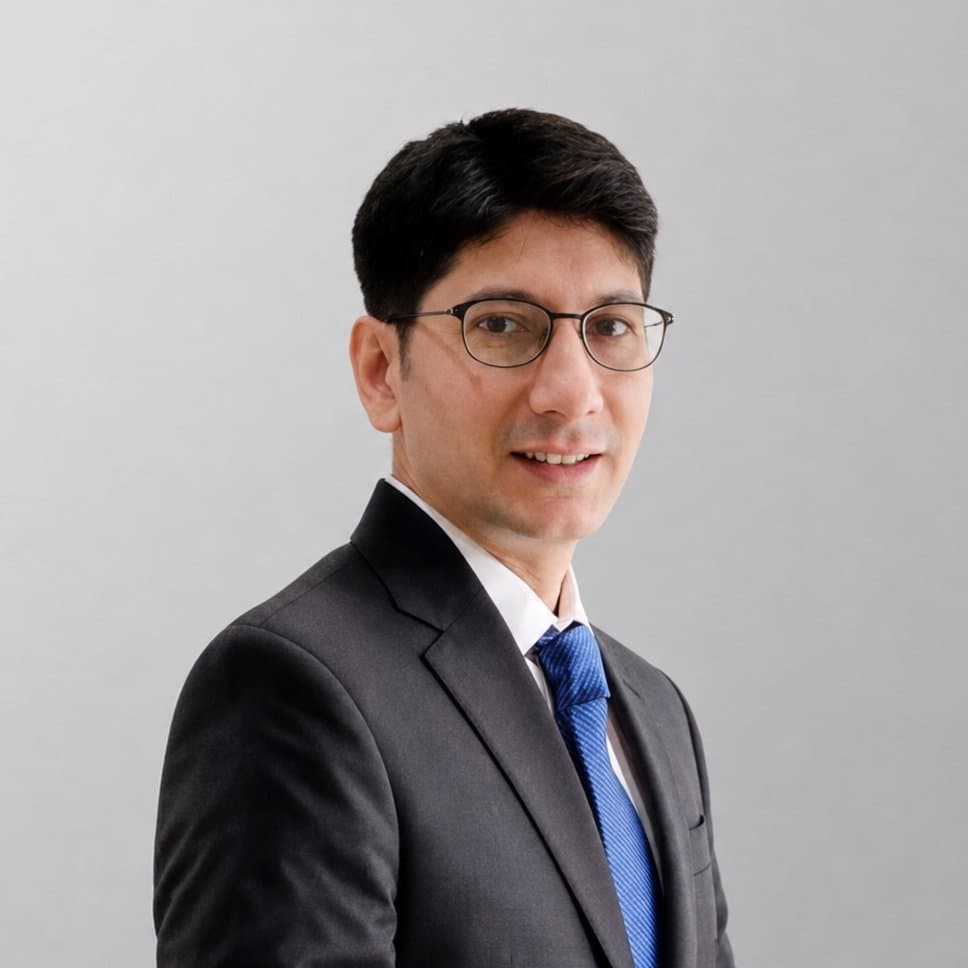
Corporate Visionaries
The Craft of Institutional Capital: Archit Shah on Judgement, Risk and Investing Across Cycles
The Zurich Kotak General Insurance Chief Investment Officer brings a practitioner’s view of investing, where good judgement under uncertainty has to become decisive action through portfolio construction.
Read Full Story