Category: Corporate Visionaries
Susanne Pulverer represents a new era of global leadership, defined by awareness, integrity, and balance. Shaped by Sweden’s discipline and India’s depth, she views leadership as coherence in action and compassion in practice. Her philosophy envisions a form of capitalism grounded in truth, trust, and togetherness, where growth creates meaning and business becomes a force for conscious progress.
The Coherence Principle: Inside Susanne Pulverer’s Philosophy of Global Leadership
IndiSight Editorial
Jan 24, 2026
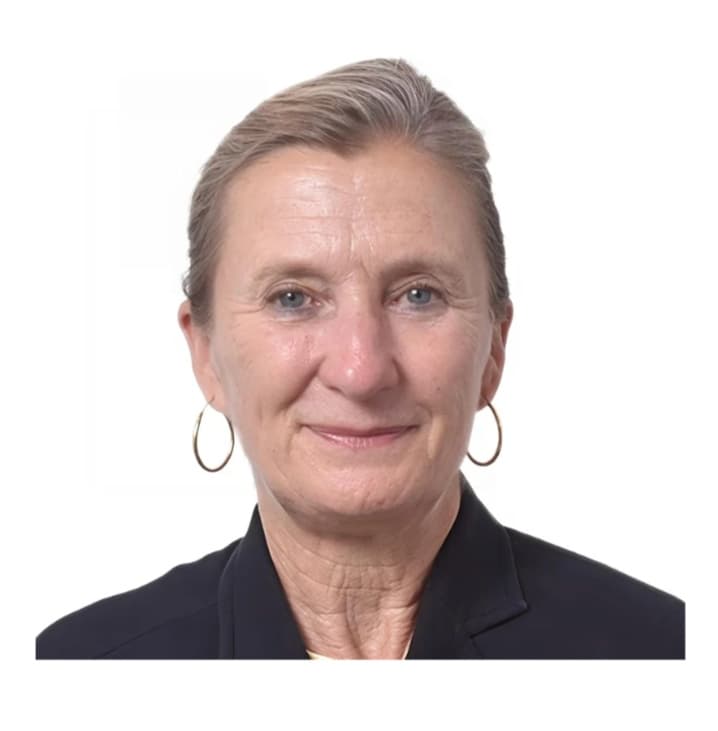
Susanne Pulverer
Ex CEO and CSO · IKEA, India
Bengaluru
The Measurable and the Meaningful
Modern capitalism has been built on what can be measured. Growth is charted in decimals, progress reduced to metrics, and success announced in dashboards. Yet the most decisive elements of leadership such as trust, cohesion, belief, and moral conviction resist quantification. That tension between what is countable and what is consequential defines the modern enterprise.
Few leaders have lived inside that paradox as deeply as Susanne Pulverer. After nearly three decades at IKEA, she led the company’s India operations through one of global business’s most intricate experiments: translating a Scandinavian philosophy of equality, design, and sustainability into the emotional, diverse, and price-sensitive marketplace of India.
“In Sweden,” she says, “I grew up believing that only what could be measured existed. India taught me that not everything that matters can be quantified.”
That realization reshaped not only her leadership but her entire idea of progress. It turned management from a science of prediction into a discipline of awareness, a constant negotiation between data and discernment.
Susanne’s worldview was built through contrast. She began in medicine, trained as a physiotherapist, where the task was to observe before acting, to decode the human system before prescribing movement. Back then, physiotherapy was more hierarchical. “Doctors prescribed. We implemented. I realized I had no space to question or create.”
Later, as she transitioned into business in the 1990s during Sweden’s economic slowdown, she entered a different anatomy altogether: the pulse of organizations and the muscle memory of culture. Over twenty-eight years, she worked across ten domains at IKEA including communications, sourcing, sustainability, retail, marketing, risk, and governance, each a unique organ in a global body. What she absorbed was the connective tissue between them: how purpose holds systems together.
That journey, spanning continents and contexts, made her a systems thinker long before the phrase became fashionable.
If I can lead people, teams, and organizations, my influence extends far beyond my own twenty-four hours.
Her leadership evolved at the intersection of two moral climates. From Sweden she carried discipline, equality, and process. From India she absorbed improvisation, intuition, and compassion. Together, they taught her that leadership is less about command and more about coherence, less about giving direction and more about creating rhythm so that diverse people, ideas, and markets can move together without losing their individuality.
She returns often to a principle that has become her compass: listen deeply, decide collectively, act responsibly. “Authority,” she says, “has to be handled with care. In most cases, decisions made together last longer than those imposed from the top.”
Now, as an advisor to boards and senior executives, Susanne helps organizations balance profit, sustainability, and human well-being not as trade-offs but as interconnected design constraints.
Growth is not the pursuit of more, but the mastery of enough.
Her story is not just about a company. It is about the evolution of consciousness within enterprise: how leaders learn to balance metrics with meaning, speed with reflection, and power with awareness.
Origins of a Global Mind
Before she became a very respected corporate leader, Susanne Pulverer’s career began in hospital corridors, not boardrooms. “I started as a physiotherapist,” she recalls. “I thought healing was the highest form of work.”
Her early years taught her patience, discipline, and the long arc of trust, the idea that progress often happens silently before it becomes visible. Yet she also saw how rigid hierarchies could limit innovation.
In her early thirties, with two children and another on the way, she made the decision to begin again. She returned to university to study business management. “I wasn’t chasing a title,” she says. “I wanted to understand how systems work, how decisions are made, how organizations breathe.”
Her first corporate role was at a call centre in a publishing house, an entry-level job during Sweden’s financial crisis. “Those nine months taught me more about motivation than any course could,” she says. “People respond to tone, not title. Influence begins when others feel seen.” She adds, “No job is too small. It is essential to do your best every day with your fullest capacity, then career comes to you.”
Soon after, she moved into communications, where she learned how ideas travel, how resistance forms, and how transparency can shape culture.
Communication, is the invisible architecture of leadership.
When IKEA approached her, she entered what would become a lifelong education in systems thinking. Across nearly three decades, she worked across functions and countries, culminating in her leadership of IKEA India.
“India opened me,” she says. “I learned that logic explains the world, but intuition connects it.”
That sentence captures her evolution. Sweden gave her structure; India gave her soul. Together, they gave her balance. She began to see organizations not as machines to optimize but as ecosystems to harmonize.
Leadership as an Operating System
Susanne does not romanticize leadership. She treats it as infrastructure. “Leadership,” she says, “is an operating system. It either enables performance or limits it.”
Her approach is both holistic and grounded in consent, ensuring that decisions are collectively owned rather than imposed. In practice, this means leadership must be continuously recalibrated.
You never finish learning to lead. The environment changes faster than competence, and what worked last year can create friction today.
That insight came from failure. Early in her managerial years, she was told she was moving too fast and leaving little space for collaboration. “It hurt,” she says, “but it changed me completely.”
From then on, she began to treat feedback as data rather than judgment.
Feedback is intelligence, it tells you how the system is responding.
She often describes organizations as powered by three invisible currencies: Truth, Trust, and Togetherness. “Authority can make people act,” she says. “But only trust makes them commit.”
Her leadership model is rooted in design, not charisma. She builds systems where dissent is safe and accountability circulates naturally. “If people don’t feel safe to disagree,” she says, “you’ll get compliance, not creativity.”
She prefers what she calls sociocratic decision-making, a process that refines decisions through consent rather than command. “The goal is not agreement,” she says. “It’s ownership.”
What many call slowness, she calls precision. “Speed without alignment is noise. Progress without ownership is temporary.”
That philosophy guided her as she led IKEA India through expansion and transformation. She often reminded teams that leadership was not about knowing more, but seeing better. “Many strategies fail,” she says, “because they’re built on old truths. Assumptions that worked yesterday can quietly become liabilities today.”
The Geography of Leadership
Global leadership today is less about exporting models and more about importing understanding. The center of gravity has shifted from management as structure to leadership as sense-making.
Trained in the Scandinavian tradition of equality and precision, Susanne’s worldview expanded through India’s improvisational, emotionally intelligent, and multi-layered business context. “In Sweden, I grew up with a scientific view of life, only what can be seen and measured exists. India taught me that intuition is also knowledge.”
That insight reshaped how she led.
In Europe, results build trust. In India, trust builds results.
The distinction is more than cultural. It defines how institutions sustain credibility across diverse markets. The Western model assumes stability. The Indian model assumes interdependence. Both are essential in a globalized economy.
“You cannot copy-paste culture,” she says. “You have to live it differently in each place.”
She calls this coherence leadership, holistic in scope, guided by consent, and adaptable across cultures. It mirrors the second act of globalization itself, moving from efficiency through standardization to legitimacy through adaptation.
The companies that endure, are those that listen across markets, not those that speak the loudest.
India, she adds, taught her a deeper truth: that compassion is not softness but strategy. “Precision without compassion creates fragility. Compassion without structure creates drift.”
Her synthesis of the two is her greatest contribution to the idea of global leadership. “When I look back,” she says, “India made me more human.”
And that may be the most universal lesson of all, that in an age of algorithms and automation, humanity remains the rarest form of intelligence.
The Moral Geometry of Business
Every few decades, capitalism pauses to reconsider its conscience. The industrial era was built on productivity, the information era on efficiency. The present age, defined by ecological limits and emotional fatigue, demands a new grammar of value.
Susanne calls it growing within the limits of the planet. For her, leadership is not about perpetual expansion but responsible design.
A company must be profitable, but it must also be purposeful. The difference lies in what you choose to measure.
She often quotes IKEA’s founder, Ingvar Kamprad: “Waste of resources is one of the greatest diseases of mankind.” During her time at IKEA India, the company strengthened its focus on reducing waste and building recycling habits among customers. “Together,” she says, “we can turn waste into a valuable resource.”
Her framing of growth is equally nuanced. “You can grow in many ways, through innovation, services, or circularity. Progress doesn’t have to mean more material consumption.”
That reframing moves sustainability from rhetoric to structure. She calls it values-based architecture, a system where ethical behavior becomes the easiest path, not the exceptional one. “It’s not enough to add sustainability to a strategy,” she says. “It must be the design principle of the system itself.”
Her leadership in India proved that profitability and conscience can coexist when guided by design, not slogans. Responsibility without performance is fragility, she says. Performance without responsibility is collapse.
Power, Trust, and the Architecture of Safety
In Susanne’s world, power is not volume. It is awareness. “If people operate in fear,” she says, “you lose intelligence.”
She has seen how fear silences creativity, replaces reflection with reaction, and rewards agreement over insight. “When people stop challenging,” she says, “organizations start declining.”
Her solution is not charisma but architecture. Psychological safety, she argues, is a system design challenge.
You can’t order people to speak. You have to build structures that make honesty safe.
This philosophy shaped IKEA India’s approach to inclusion and equality. “We have a non-negotiable goal of achieving 50 percent gender equality across all levels,” she says. “I feel proud seeing how women leaders contribute across every function. It makes IKEA India a better place every day.”
She defines diversity as function, not form. For her, compassion is not softness but the discipline to act when something needs to change. The best teams, she says, are those where difference shapes decisions, not just decorates them.
Technology and the Human Algorithm
Susanne views technology as both accelerator and mirror. “AI is a fantastic innovation,” she says. “But the question is how consciously we use it.”
She sees AI not as a replacement for human judgment but as a test of leadership intention.
We’ve learned to build intelligent systems. Now we must learn to build intelligent intentions.
Her conviction is that technology should amplify humanity, not automate it out of relevance. “Technology should extend human imagination, not compress it,” she says. “Every tool inherits the consciousness of its creator.”
That belief echoes her broader view that systems, whether digital or human, reflect the awareness that designs them. “We are designing machines to learn,” she says. “We should design leaders to listen.”
Listening, for her, is not passive. It is the most active form of intelligence, the bridge between data and meaning. “A machine can process signals,” she says. “Only a human can understand silence.”
In an age driven by acceleration, her reminder lands with rare stillness: wisdom still takes time.
A Life Well Led
When asked what a life well led means to her, Susanne pauses. “To do well by doing good,” she says. “That’s the only definition that endures.”
After twenty-eight years with IKEA, she now works as an advisor helping organizations align purpose with performance. “Every company has a story it tells itself,” she says. “My work is to help them see the story that is actually true.”
She speaks less about performance and more about presence, about meaning over metrics.
Impact is not a number. It’s a responsibility.
To her, leadership is not a position to hold but a relationship to sustain with people, with systems, and with the planet. “The higher you rise,” she says, “the more you must return to listening.”
That may be the defining paradox of her philosophy. The higher the altitude, the deeper the humility.
Susanne Pulverer’s career stands as evidence that wisdom is not the opposite of ambition. It is its evolution. In an age driven by data and automation, she reminds the business world of a truth it cannot afford to forget: humanity remains the most advanced technology ever built.
Leadership Lessons
Never confuse authority with awareness. Leadership begins where hierarchy ends.
Growth is sustainable only when it is self-aware. Speed without reflection is fragility disguised as ambition.
Listening is the highest form of intelligence. What you sense between the words matters more than what you hear.
Technology magnifies intent. Ethical design begins with ethical leadership.
Failure is feedback in disguise. The most resilient systems learn faster than they break.
Diversity is not optics; it is architecture. Teams mirror the range of perspectives they allow.
Humanity is a competitive advantage. Machines can optimize; only people can humanize.
Presence outlasts power. In an age of noise, stillness is strategy.
Progress demands periodic unlearning. Yesterday’s best practice can quietly become today’s blind spot.
Legacy is not what you leave behind. It is what continues to grow in the minds you have shaped.
Closing Reflection
Susanne Pulverer’s idea of leadership is simple. Build things that matter. Stay true to purpose. Put people before numbers. Profit helps, but it is not the reason to exist. She believes growth should add meaning, not just size. What she holds closest is awareness, the habit of paying attention, listening carefully, and acting with heart. In the end, she says, progress is not about speed. It is about understanding.
Our Suggestions to Read
Discover The Leaders Shaping India's Business Landscape.
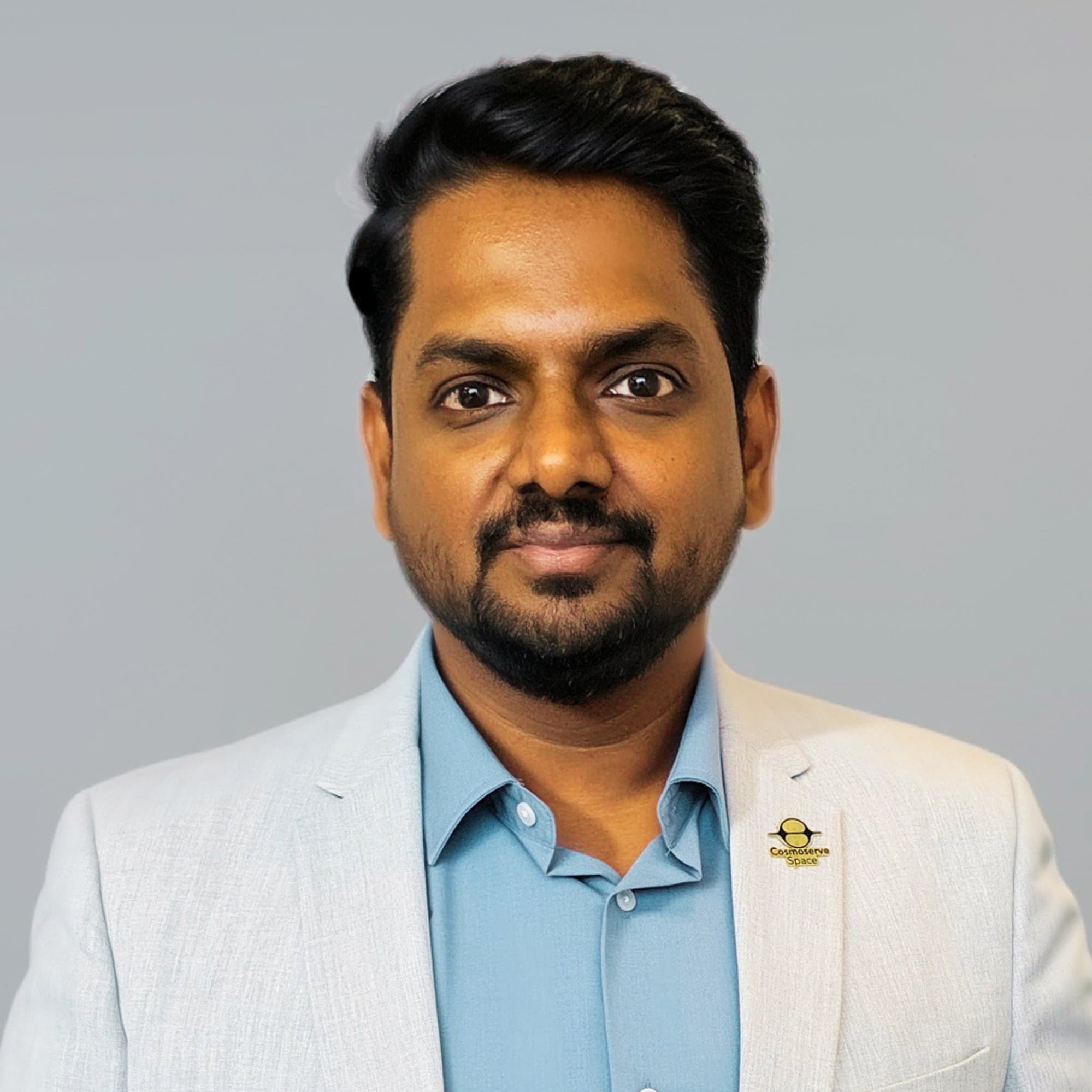
Founders & Innovators
Building the Next Space Economy: Chiranjeevi Phanindra and Cosmoserve's Case for Orbital Maintenance
Chiranjeevi Phanindra, Founder & CEO of Cosmoserve Space, spent 14 years at ISRO working on re-entry and human spaceflight. Today, he is focused on a vital challenge: keeping Earth’s orbit usable.
Read Full Story
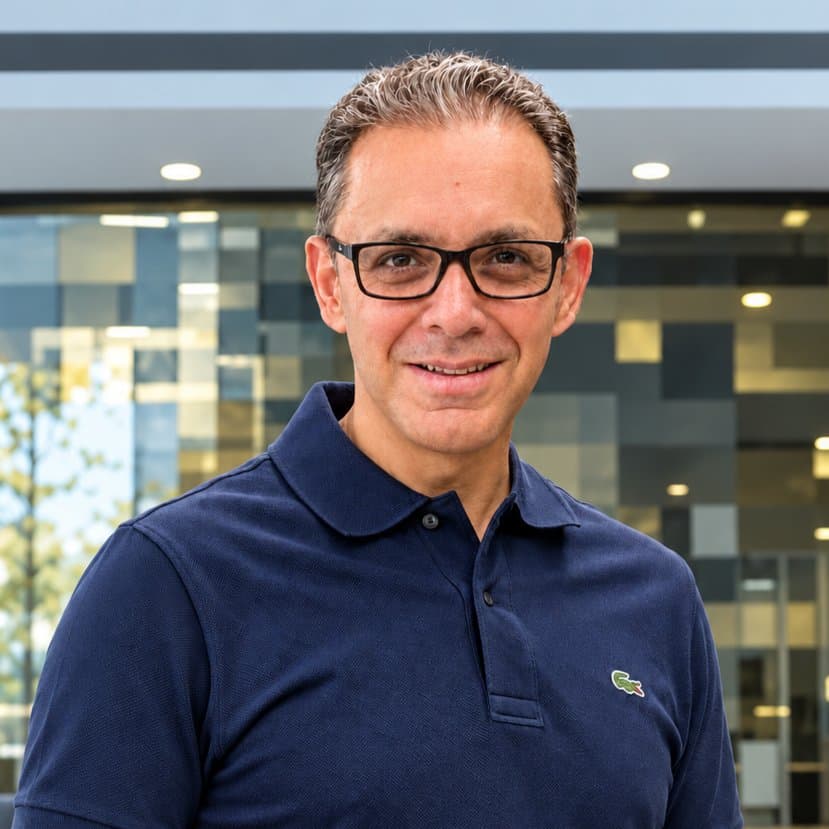
Corporate Visionaries
Shashank Sahni on What Success Leaves Out
Shashank Sahni, Google’s Managing Director of Global Ads Solutions, reflects on what customers reveal, what ambitious teams need from their leaders & what the mountains and marathons have taught him about going further.
Read Full Story
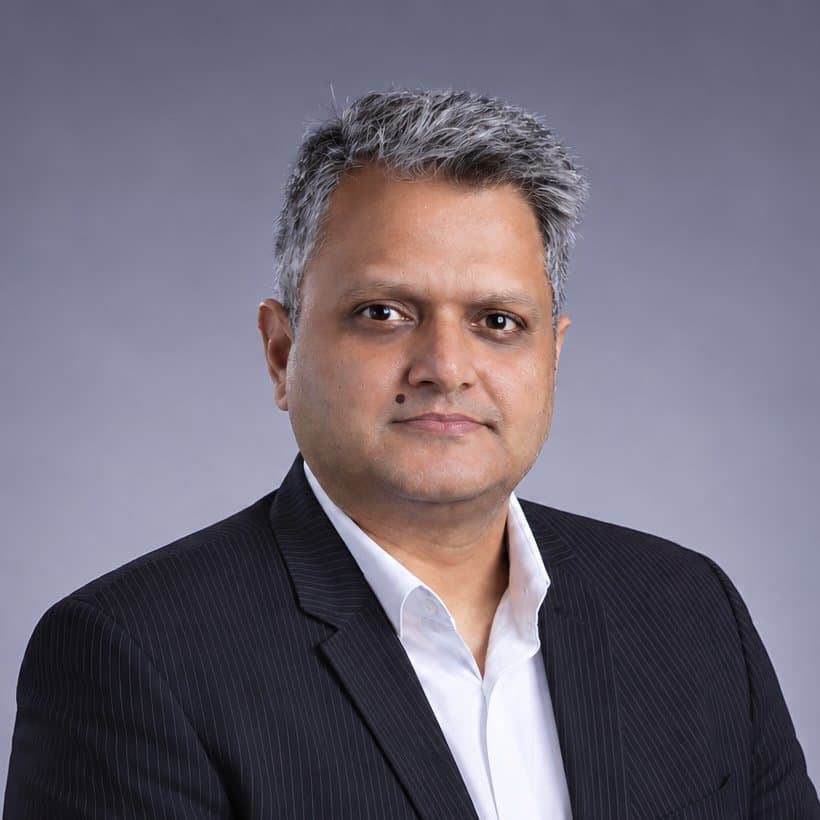
Corporate Visionaries
Clinical Multiplication: Divesh Singla on the Healthcare AI Case That Headlines Keep Missing
Divesh Singla, Managing Director, India at Veradigm, brings two decades in healthcare technology to the AI question leaders cannot avoid: how to expand clinical capacity without weakening human judgment.
Read Full Story