Category: Corporate Visionaries
Dr. Kalyana Chakravarthy believes today’s enterprises are overbuilding technology while underinvesting in judgment. In the age of intelligent overbuild, he argues, transformation is less about speed and more about sense-making; aligning systems with human intent. For him, the real advantage lies not in automation, but in designing technology that deepens awareness, strengthens culture, and serves meaning before scale.
The Age of Intelligent Overbuild : Dr. Kalyana Chakravarthy on Human-Centric Transformation
IndiSight Editorial
Jan 28, 2026
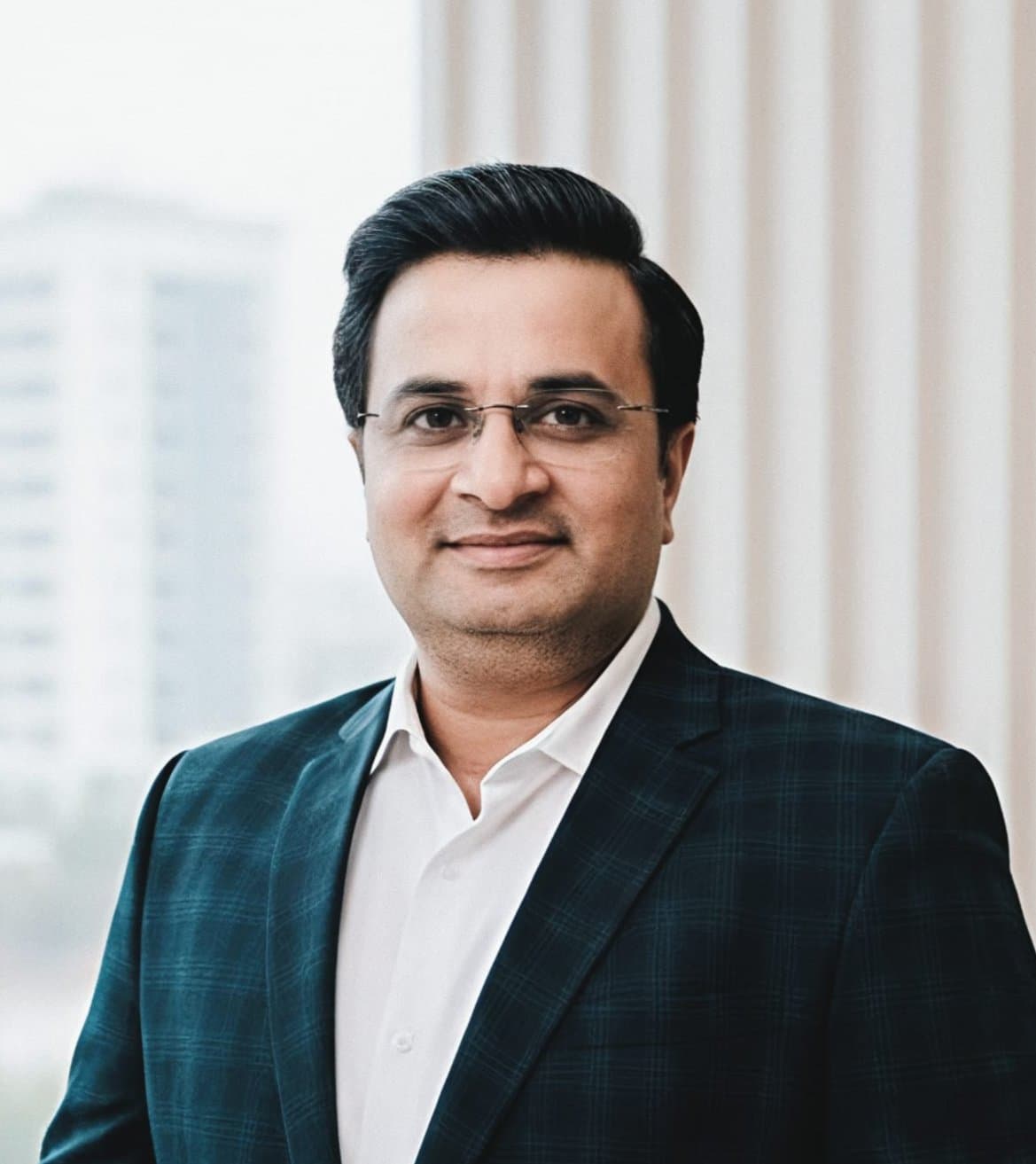
Dr. Kalyana Chakravarthy
VP - Technology · GRT Jewellers
Chennai, India
Across boardrooms, transformation has become both mantra and myth. Enterprises pour billions into automation, AI, and analytics to forecast, personalize, and optimize at scale, yet many cannot explain what purpose these systems actually serve. Technology is everywhere, but meaning is scarce. The modern corporation risks mistaking activity for intelligence and scale for success.
Dr. Kalyana Chakravarthy calls this the age of intelligent overbuild, a period when technology outpaces human judgment. For him, the next era of enterprise leadership will depend not on technical acceleration but on organizational sense-making. He argues that the real competitive advantage now lies in judgment design, the discipline of aligning progress with purpose.
“Technology is not a contest of speed but a question of sense,” he says. “The companies that thrive will not be the most automated but the most aware.”
From Code to Conscience
Dr. Kalyana’s career has unfolded across four industries that rarely intersect: banking, retail, healthcare, consulting, and jewelry. Each one, he says, offered a different lesson in what technology cannot do.
His first lessons in leadership came without a title. As a young technician in Bhimavaram in Andhra Pradesh, he was responsible for maintaining a room full of humming desktops before anyone arrived for work. “You learn consistency before ambition,” he recalls. That early discipline, the ability to deliver quietly without applause, became the foundation of his managerial philosophy.
At JP Morgan, he joined the pilot team that built its Bengaluru support operations. There were no precedents, only principles. “There was no manual, only intent,” he says. “Structure was not bureaucracy. It was the only thing that allowed trust to travel.” He learned that systems succeed only when governance makes belief visible.
When he moved to Tesco and later JCPenney, the rhythm shifted from precision to responsiveness. “In banking, accuracy keeps you safe. In retail, adaptability keeps you alive.” These contrasting worlds taught him that technology is empathy in action, the bridge between logic and emotion.
At Standard Chartered, empathy met scale. The challenge was to harmonize cultures across 54 countries while driving large-scale digital transformation.
You cannot introduce digital systems into organizations that have not learned to think digitally. Human readiness must evolve before digital readiness.
By the time he joined GRT Jewellers in 2025 as Vice President of Technology, his task had reversed. Now he had to modernize a legacy business without diluting its soul. “A family that has shopped with us for sixty years is not buying convenience,” he says. “They are buying ‘connection’.”
Each transition reshaped his understanding of leadership. From finance he learned precision, from retail empathy, from banking governance, and from jewelry emotion. “Unlearning is as important as learning,” he says. “Every change of context tests how much wisdom can travel.”
Framework One: The Economics of Sense-Making
After three decades of leading transformation, Dr. Kalyana believes most digital investments fail for one simple reason: they begin with the machine instead of the meaning. “Companies invest in technology faster than they invest in understanding,” he says. “You can automate a broken logic and scale the mistake.”
His philosophy, which he calls the economics of sense-making, argues that every rupee spent on technology should strengthen either customer confidence or operational truth. If it does neither, the spend is unjustified.
Customer confidence is the emotional ROI of technology, the degree to which systems make people feel seen, safe, and understood. Operational truth is the rational ROI, how accurately decisions reflect the company’s real conditions. The healthiest organizations, he says, build systems that serve both.
This philosophy came to life at GRT Jewellers. The company had invested heavily in automation for billing and inventory, but the relationships that defined its brand remained analog. “We had systems everywhere except where they mattered,” he recalls. “Customers did not remember our technology. They remembered how we made them feel.”
Rather than introducing another layer of software, he is building what he calls the Memory Layer, a relationship engine designed to capture not only transactions but context. Birthdays, anniversaries, family milestones, personal preferences, the details that define real relationships rather than dashboards.
He believes this design will create measurable impact, estimating that customer retention could rise by 10 to 15 percent and average purchase value by about 15 percent without using a single promotional lever.
The idea was simple yet deliberate: invest in memory, not machinery. Let technology serve emotion, not replace it.
Framework Two: Escaping the Overbuild Trap
Across industries, non-tech enterprises often fall into what Dr. Kalyana calls the overbuild trap, overspending on infrastructure before clarifying purpose. It happens when organizations pursue automation as proof of progress rather than as an instrument of strategy.
The overbuild trap begins with good intentions. Leaders want efficiency. Vendors promise miracles. Budgets grow. But no one stops to ask what problem the technology actually solves.
He observed the same pattern in banking, manufacturing, and healthcare: systems that run perfectly but solve nothing. The cure, he argues, lies in a single sequence correction: clarify business logic before building digital logic.
He distills the solution into three filters every investment must pass: relevance, readiness, and resilience. Relevance asks whether the system improves what customers or employees actually experience. Readiness checks whether people have the mindset and skill to use it wisely. Resilience tests whether the system can adapt when markets shift. If the answer to any is no, pause the project.
At Standard Chartered, the large-scale implementations he led succeeded only when this discipline shaped how new systems were deployed. Projects that began with alignment, where teams discussed cultural readiness before the technical rollout, were three times more likely to succeed within the first eighteen months. “Technology adoption is not a race,” he says. “It is a rhythm.”
Framework Three: The Human-Centric Transformation Matrix
To translate this philosophy into practice, Dr. Kalyana developed what he calls the Human-Centric Transformation Matrix, a framework that helps leaders measure the balance between technical readiness and cultural readiness inside their organizations. He describes it as a mirror more than a model, a way to see where progress is real and where it is only mechanical.
In his view, digital transformation succeeds when two forces evolve in harmony: capability and culture. When technology advances faster than people, companies fall into what he calls the overbuild trap, where systems become sophisticated but unloved, efficient but emotionally hollow. When people evolve faster than technology, potential stays trapped in ideas that never scale. The healthiest organizations are those that move these two curves together, where culture absorbs technology instead of resisting it.
Dr. Kalyana often tells executives that readiness is not a checklist but a rhythm. “Most enterprises start with infrastructure,” he says. “The smarter ones start with alignment.” Technology built on misaligned intent creates complexity without conviction. But when alignment comes first, systems acquire meaning, and meaning accelerates adoption.
He calls this the essence of what he terms the transformation zone, where capability meets readiness and technology multiplies human capacity instead of replacing it. In that zone, automation becomes augmentation.
The goal is not to build systems that think for people, but systems that help people think better.
For him, this matrix is not a diagram for consultants but a discipline for leaders. It demands humility, the willingness to measure not how fast you can deploy technology, but how deeply your people can integrate it. When organizations achieve that balance, technology stops being a cost center and becomes what he calls a competitive instinct, a natural extension of judgment rather than a replacement for it.
Framework Four: The Ethics of Acceleration
Dr. Kalyana argues that governance must evolve as fast as innovation. “The same rigor that protects a balance sheet should protect data,” he says. “Oversight cannot be ceremonial. It has to be alive.”
He recalls an early project where full automation created dependency. “The system ran beautifully until one small error appeared. It took months to fix because no one remembered how it worked. That was not innovation. That was ignorance disguised as progress.”
For him, responsible technology means embedding ethics as infrastructure. Algorithms may scale judgment, but they cannot invent morality. “Machines can act,” he says. “Only humans can interpret.”
Not everyone agrees with this restraint-first philosophy. Many point to companies such as Amazon, which built empires through relentless automation. Dr. Kalyana’s response is pragmatic. “That model works when you are inventing markets,” he says. “But when you are preserving heritage, speed without sensitivity is risk.” He cites the Wells Fargo scandal as a warning. “They had perfect systems and broken culture. The technology worked. The humans did not.”
He believes accountability must scale alongside intelligence.
Automation without comprehension is fragility. When people understand the system, they protect it. When they do not, they fear it.
India’s Management Experiment
Dr. Kalyana sees India’s transformation journey as both laboratory and teacher. Scarcity has shaped its ingenuity. Constraint has driven precision. “You cannot afford to build ten systems when one well-designed platform will do,” he says.
He cites UPI and Aadhaar as examples of design-led inclusion, systems that expand access without diluting accountability. They prove that inclusion and governance can coexist. “They show what responsible scalability looks like,” he says.
For him, India’s next global contribution will not be software or cost arbitrage. It will be a new management language that fuses purpose with precision.
Our advantage is calibrated freedom. We can innovate responsibly without losing speed.
This model of governance as a living system, adaptive, ethical, and empathetic, could redefine how the world understands transformation. “We have learned to scale technology,” he says. “Now we must learn to scale judgment.”
Framework Five: The New Leadership Contract
In an age where technology measures everything except belief, Dr. Kalyana insists that leadership is the last un-automated function. “You can code a process,” he says, “but you cannot code conviction.”
His framework for modern leadership rests on four interconnected disciplines: empathy as intelligence, discipline as integrity, unlearning as strategy, and visibility as accountability. He adds a fifth principle that ties them all together: rhythm. “A leader’s job is to keep the system in motion without losing its soul.”
Dr. Kalyana describes performance not as pressure but as psychological safety.
If people cannot question logic, you are not running a business; you are running a ritual.
The most resilient organizations, he says, are those that encourage contradiction. “Dissent is data in disguise.”
His view of leadership replaces control with coherence. “Culture is the infrastructure people do not see,” he says. “If that fails, everything above it collapses.”
From Transformation to Translation
The next decade of digital enterprise, he believes, will be shaped not by technological breakthroughs but by cultural translation, the ability of organizations to interpret new tools in human terms. “Data will always be faster than people,” he says. “The question is whether leaders can slow down long enough to make sense of it.”
He envisions the future of technology as augmentation with comprehension: data amplifying trust, governance evolving with innovation, and intelligence serving humanity. “When that happens,” he says, “technology stops being a cost center and becomes a competitive instinct.”
This philosophy has made him both a practitioner and a thinker. Yet he resists the label of thought leader. “These are not theories,” he says. “They are observations written down.”
Principles for the Age of Intelligent Overbuild
Every transformation begins with trust, not technology.
Empathy is a strategic capability, not a soft skill.
Governance must evolve as fast as innovation.
Culture is the invisible code that runs performance.
Adaptability is the new stability.
Legacy is not memory. It is ‘relevance’.
Collaboration will replace consolidation.
Progress must serve meaning.
Alignment precedes infrastructure.
Technology must scale conscience, not only capacity.
Closing Reflection
Dr. Kalyana Chakravarthy has spent his career reminding organizations that transformation is not a technical project. It is a human endeavor conducted through machines. The most advanced system still begins with a choice: to care.
He believes the measure of modern leadership is not how efficiently enterprises grow but how gracefully they evolve. “Efficiency is temporary,” he says. “Empathy endures.”
As the world races toward intelligence, his message is simple and enduring: progress without empathy is regression disguised as speed.
Our Suggestions to Read
Discover The Leaders Shaping India's Business Landscape.
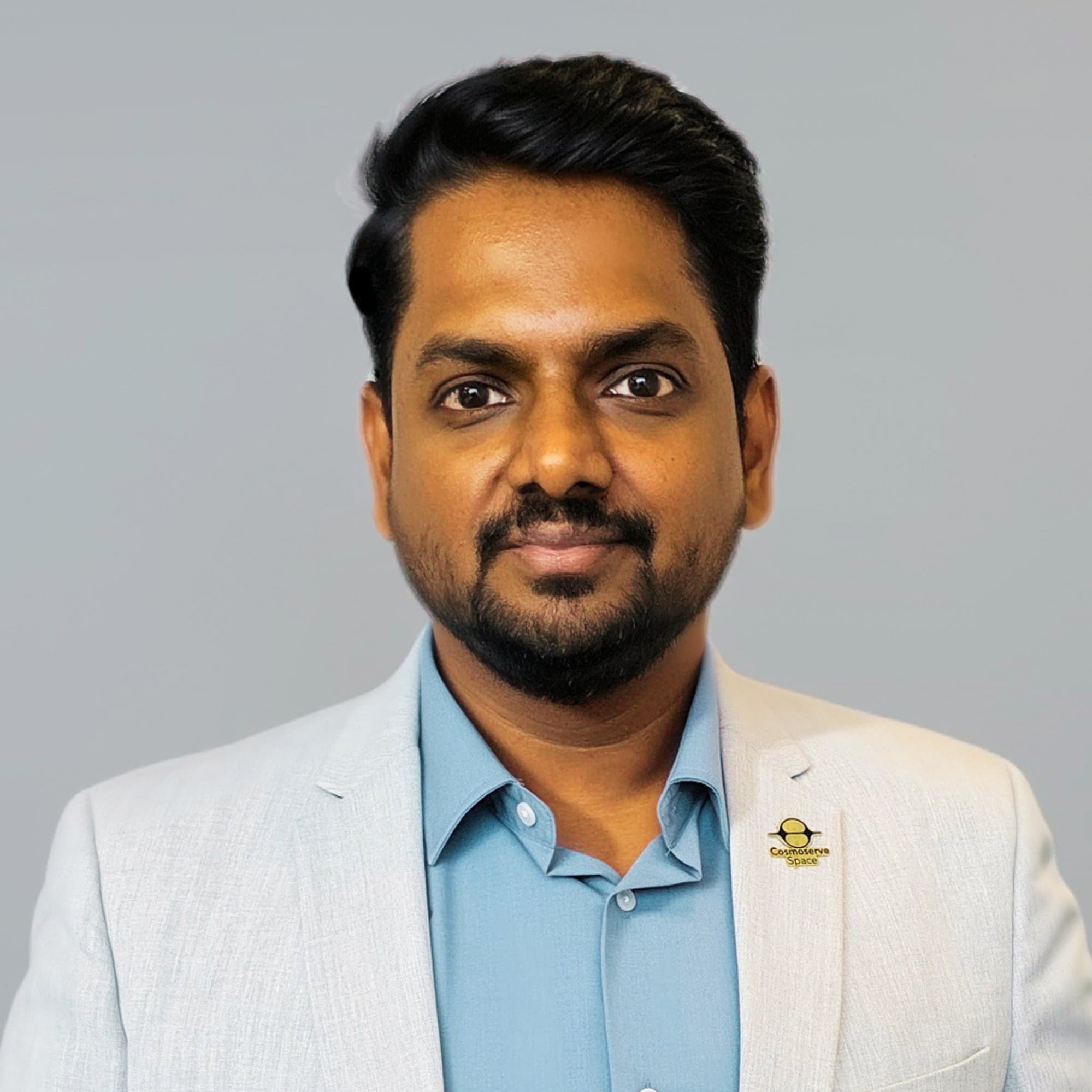
Founders & Innovators
Building the Next Space Economy: Chiranjeevi Phanindra and Cosmoserve's Case for Orbital Maintenance
Chiranjeevi Phanindra, Founder & CEO of Cosmoserve Space, spent 14 years at ISRO working on re-entry and human spaceflight. Today, he is focused on a vital challenge: keeping Earth’s orbit usable.
Read Full Story
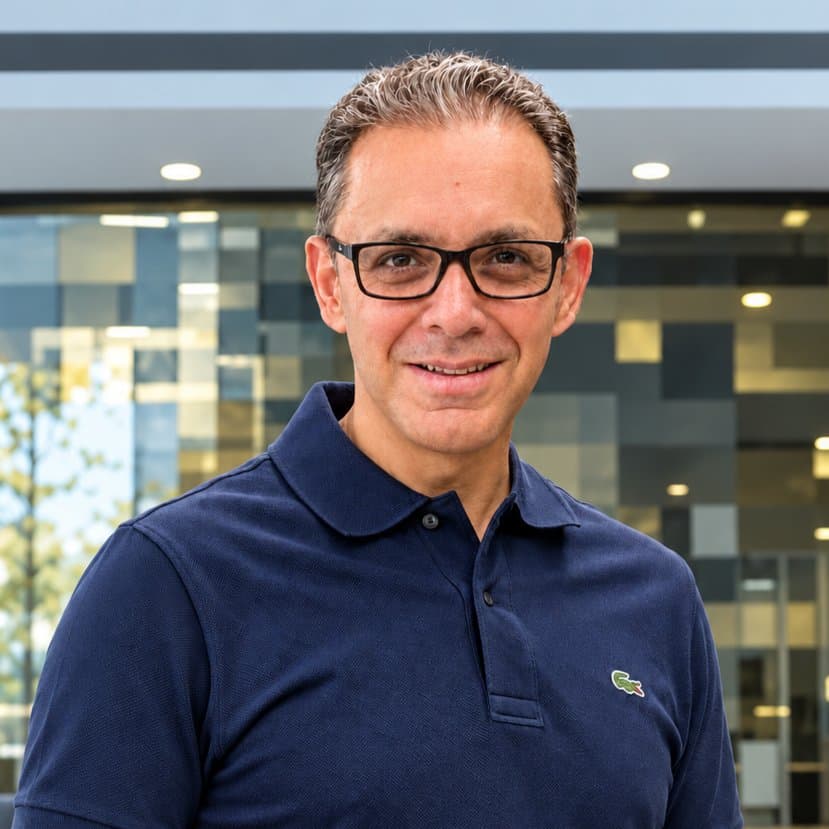
Corporate Visionaries
Shashank Sahni on What Success Leaves Out
Shashank Sahni, Google’s Managing Director of Global Ads Solutions, reflects on what customers reveal, what ambitious teams need from their leaders & what the mountains and marathons have taught him about going further.
Read Full Story
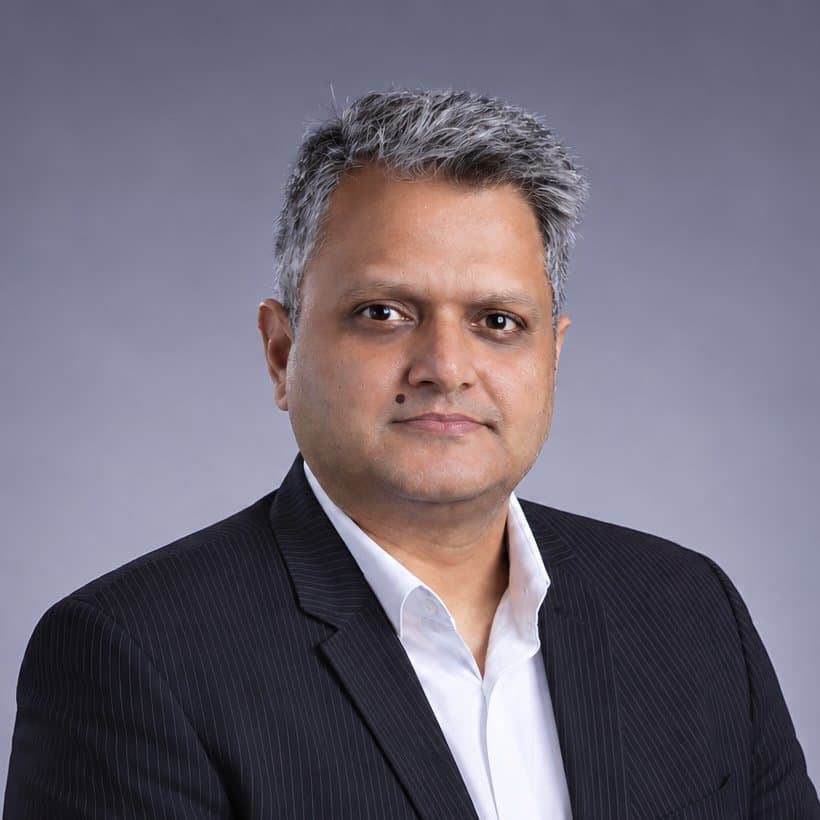
Corporate Visionaries
Clinical Multiplication: Divesh Singla on the Healthcare AI Case That Headlines Keep Missing
Divesh Singla, Managing Director, India at Veradigm, brings two decades in healthcare technology to the AI question leaders cannot avoid: how to expand clinical capacity without weakening human judgment.
Read Full Story