Category: Corporate Visionaries
Subramanian Chidambaran blends shop-floor realism, boardroom strategy, and Indic philosophy into a uniquely coherent leadership lens. He treats agility, innovation, and decarbonization not as buzzwords but as civilizational responsibilities rooted in truth, benefit, and beauty. For him, strategy is applied wisdom, a way to build institutions that endure, not just compete.
Satyam, Shivam, Sundaram: Subramanian Chidambaran's Global Grammar of Strategy
IndiSight Editorial
Sep 22, 2025
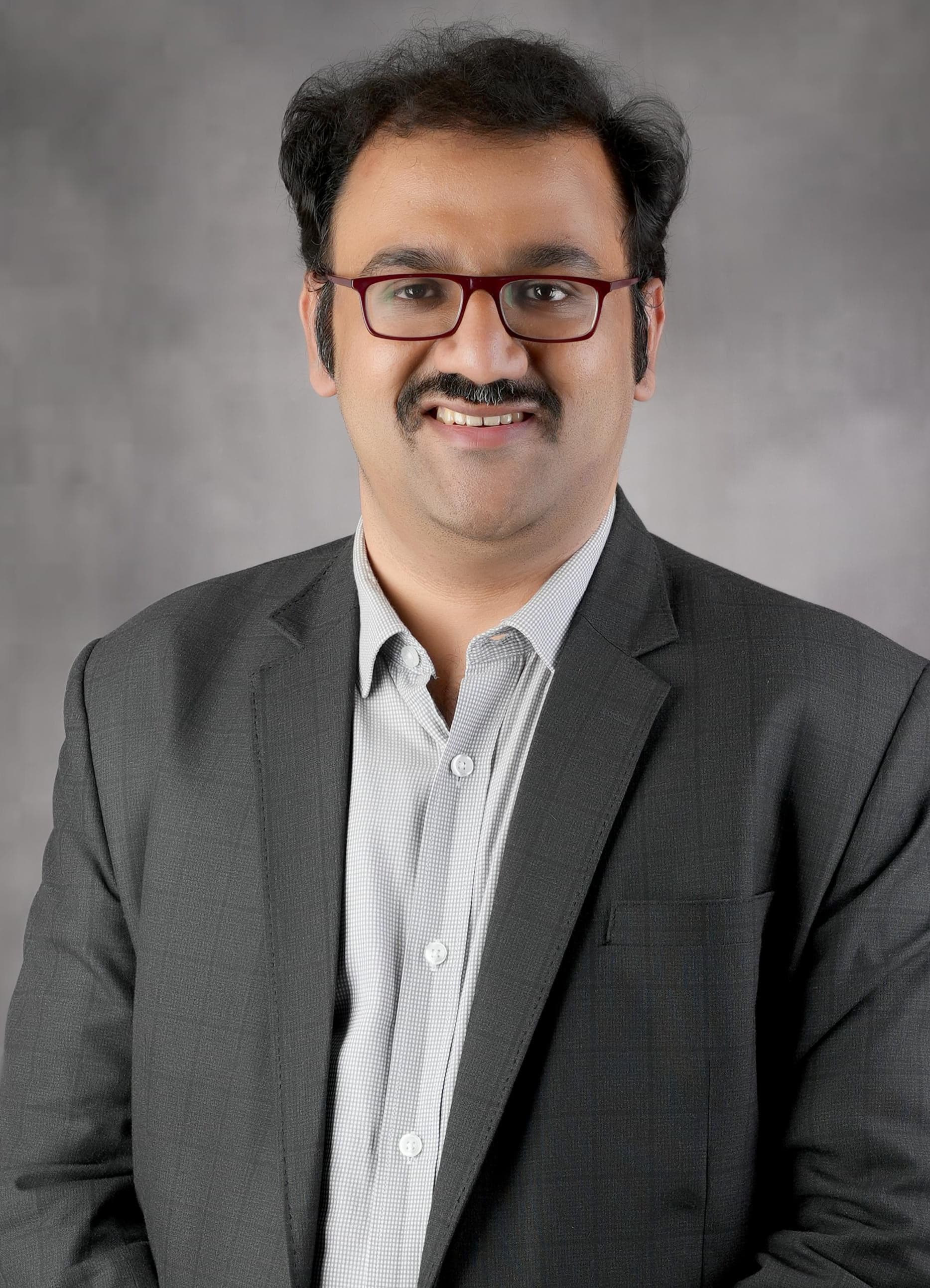
Subramanian Chidambaran
On the surface, Subramanian Chidambaram’s career looks like a familiar arc. An engineer from Mumbai, sharpened at IIM Lucknow, trained in the crucible of McKinsey, seasoned through leadership roles at Siemens, and now Chief Strategy Officer at Cummins India. The resume is impeccable, the milestones predictable. Yet to stop there would miss what makes him singular. For Subbu, as he is widely known, strategy is not just corporate calculus. It is philosophy applied to enterprise, reinterpreted for a volatile, hyperconnected, and fractured world.
From shop floor to strategy rooms
Born in Mumbai with roots in Palakkad, Kerala, Subbu grew up amid the bustle of Matunga’s educational hub. Engineering at VJTI gave him the technical scaffolding, but it was his first job with Siemens that gave him something rarer: exposure to the shop floor.
“I was in technical order processing, sitting right next to manufacturing lines,” he recalls. “It taught me how workmen think, how decisions get made at the ground level, how culture and rhythm matter as much as engineering precision.”
Three years in, he sensed the path ahead was slow and predictable. He wanted acceleration, so he chose IIM Lucknow. It was his first time outside Mumbai, and it introduced him to research, case studies, and structured business thinking. A McKinsey internship sealed the next step.
Five years at McKinsey shaped him in ways only a consulting crucible can. He learned to adapt to unfamiliar industries overnight, to win trust from skeptical clients, and to compress complexity into stories told through slides. But something else happened too. Amid the intensity of boardrooms, he started spending weekends learning Sanskrit.
“I realized I didn’t want to remain a consultant all my life,” he admits. “Sanskrit gave me balance. It made me look at the world differently.”
The two tracks would soon converge. After leaving McKinsey, he rejoined Siemens, this time in their internal consulting and then corporate strategy roles. Later, Cummins offered him a broader canvas as Chief Strategy Officer for India, while also drawing him into global strategic projects. In parallel, he completed an MA in Sanskrit, taught Vedanta at Mumbai University, and is now pursuing a PhD on Indic leadership at Chinmaya Vishwa Vidyapeeth.
Few strategists operate this way, with one foot in corporate systems and the other in civilizational knowledge.
The grammar of agility
In corporate circles, agility is often tossed around as a slogan. Subbu draws a sharper line.
“Flexibility is the ability to manage variance. Agility is the ability to sustain your core while reinventing yourself in response to permanent change.”
He illustrates with a simple distinction. Resilience is financial stability and inventory basics that protect against temporary shocks. Agility is building modular processes and decision systems that can reconfigure themselves when disruptions are permanent. Both, he argues, are essential.
But agility is not infinite responsiveness. “Real agility requires saying no to most opportunities,” he explains. “The agile organization isn’t the one chasing every trend. It is the one with the discipline to ignore attractive distractions until the right moment arrives.”
This contrarian streak runs deep. “While Silicon Valley preaches ‘move fast and break things,’ and Wall Street optimizes for extraction, Indic strategy optimizes for continuation. The question isn’t how to win the game, but how to keep the game worth playing.”
Confidentiality and the council
If agility is one pillar, confidentiality is another. Here Subbu invokes the Arthashastra. Chanakya used the term Mantrato describe strategy, with its execution entrusted to a mantri parishad, a small council. Confidentiality was not negotiable.
“Transparency is needed only to the extent it helps someone do their job,” Subbu explains. “Transparency for its own sake is overkill. A strategy that everyone knows is already a failed strategy.”
He believes leaders today must reclaim the discipline of surrounding themselves with three or four people who will speak the hard truth, not a chorus of flatterers. “CEOs who are promoters and deeply invested in long-term sustenance still do this. But too many professional CEOs, with short tenures, avoid uncomfortable feedback.”
The point is not secrecy for secrecy’s sake. It is about protecting ideas long enough for them to survive.
Innovation at the intersection of truth, benefit, and beauty
When Subbu reframes Satyam, Shivam, Sundaram as a filter for innovation, he is doing more than invoking tradition. He is creating a rigorous framework.
Satyam is truth. “You have to separate genuine innovation from sophisticated imitation. When Netflix created streaming, it wasn’t improving rentals. It was reimagining consumption itself. Compare that to the dozens of Netflix clones that just copied features.”
Shivam is benefit. “Technology must serve society. AI might make things efficient, but is it making lives more human? Shivam forces us to ask that.”
Sundaram is beauty. “If innovation doesn’t touch people emotionally, it will not endure. Google and Apple succeed because their products are both functional and lovable.”
In an era when artificial intelligence, green hydrogen, and digital hype cycles dominate headlines, his framework is not romantic nostalgia. It is a demand for rigor. The three filters expose how much of what we call innovation is merely packaging. He recalls watching firms pour money into ideas that were clever but not truly needed, beautiful but not truthful, profitable but not beneficial.
“True technology,” he insists, “sits only at the intersection of all three.”
He warns that ignoring any one of the three leads to distortion: clever toys without purpose, beneficial tools nobody wants, or beautiful shells with no substance.
“If we took Satyam-Shivam-Sundaram seriously, many of the current innovations would be exposed as elaborate marketing exercises.”
Decarbonization as growth
Energy transition is another arena where Subbu challenges conventional framing.
“India must see decarbonization not as compliance but as a growth driver,” he insists. Growth, in his view, must be responsible, not manufactured through artificial demand creation.
Bridge technologies like hybrids, cleaner engines, and carbon capture are not distractions but necessary waypoints. “Zero carbon will take time and money. Bridge technologies buy us that time.”
Financing, he argues, will require fresh thinking. Governments cannot foot the bill alone. He points to carbon markets as a practical application of the Indic principle of charity: those who cannot decarbonize pay penalties that support those who do.
Energy, in his framing, is now as much diplomacy as economics. “Global firms can offset geopolitical risks by diversifying footprints. Indian firms must invest in self-reliance where possible, and partnerships where necessary.”
Fail fast, fail safe
Subbu sees risk not as something to be minimized, but as something to be structured.
“The fail-fast, fail-safe model works when organizations create low-inertia spaces like incubators with pre-committed budgets. You allow ideas to be tested quickly, accept that many will fail, and move on. The key is to contain the cost of failure while maximizing the speed of learning.”
It is an approach he likens to Carnatic music. “You must master the raga structure. But the magic lies in improvisation. Strategy is no different.”
Emotional intelligence as data
Perhaps his most unusual claim is that “emotions are also data.” He explains that during his consulting years, facts often failed to persuade. What shifted conversations was listening for the unspoken anxieties in the room.
“A true leader doesn’t just see people as roles or numbers. He sees them as individuals with unspoken expectations. That emotional quotient is as real a dataset as any financial report.”
This is why he insists business storytelling is not an oxymoron. “Indians are storytelling people. Strategy communicated without narrative will be forgotten. Strategy embedded in a story endures.”
The four quadrants of self
Subbu lives his own philosophy through what he calls four quadrants: spiritual pursuits, passions like Sanskrit and Carnatic music, family, and job. Each quadrant feeds the others. Family provides emotional strength, passions provide inner strength, spirituality provides perspective, and work provides purpose.
“If one quadrant weakens, the whole structure tilts. Leadership is not just about balance sheets. It is about balance of self.”
Indic thought for global leadership
Here Subbu stakes his boldest claim. Western strategy, he notes, was born on the battlefield. Indic strategy, shaped by the Arthashastra, was designed to sustain civilization.
“Western strategists gave us war. Chanakya gave us raj dharma. That difference explains why Western strategy optimizes for competitive advantage, while Indic strategy optimizes for ecosystem health.”
This, he argues, is not nostalgia but a call to reframe. Traditions in India have always emphasized that individual success and collective welfare are inseparable. For Subbu, this is the missing piece in today’s boardrooms. Short-term advantage may win quarters, but it rarely sustains societies. Long-term stewardship of markets, communities, and natural systems is what keeps institutions relevant across generations. It is why some companies endure for a century while others fade despite spectacular early wins.
Where this approach fails
Subbu is candid about the limits of civilizational thinking. Indic frameworks can paralyze leaders who need instant decisions. Consensus building can slow execution in hierarchical systems. And yes, some leaders misuse philosophical language to avoid hard choices.
“But if used with rigor, these frameworks stretch our horizon. They prevent us from reducing strategy to spreadsheets.”
Leadership lessons
Enduring innovation sits only where truth, benefit, and beauty converge.
Agility is not infinite responsiveness. It is the discipline to ignore attractive distractions until the right one arrives.
Confidentiality is not just secrecy. It is survival for ideas.
Decarbonization is not compliance. It is responsible growth.
Bridge technologies buy time. The risk is mistaking them for destinations.
Fail fast, but design structures that make failure safe.
Emotions are not soft data. They are often the most decisive dataset in the room.
Storytelling is strategy’s memory system. Without it, nothing sticks.
Leadership is a four-quadrant balance: spirit, passion, family, work.
Indic strategy is not about winning at all costs. It is about keeping the game worth playing.
Closing reflection
Subbu’s synthesis is rare. Shop floor pragmatism, boardroom discipline, Sanskrit philosophy, and Carnatic music all converge into one grammar. It is not a Western import with local coloring. It is an Indian export with global consequence.
“Strategy, at its core, is applied civilization,” he concludes. “It is how leaders take principles forged over centuries and apply them to the next quarter, the next decade, the next century. Those who understand this will not just build more resilient companies, they will build futures worth inheriting. Those who do not will optimize themselves into irrelevance, congratulating their metrics while wondering why their impact vanished.”
Our Suggestions to Read
Discover The Leaders Shaping India's Business Landscape.
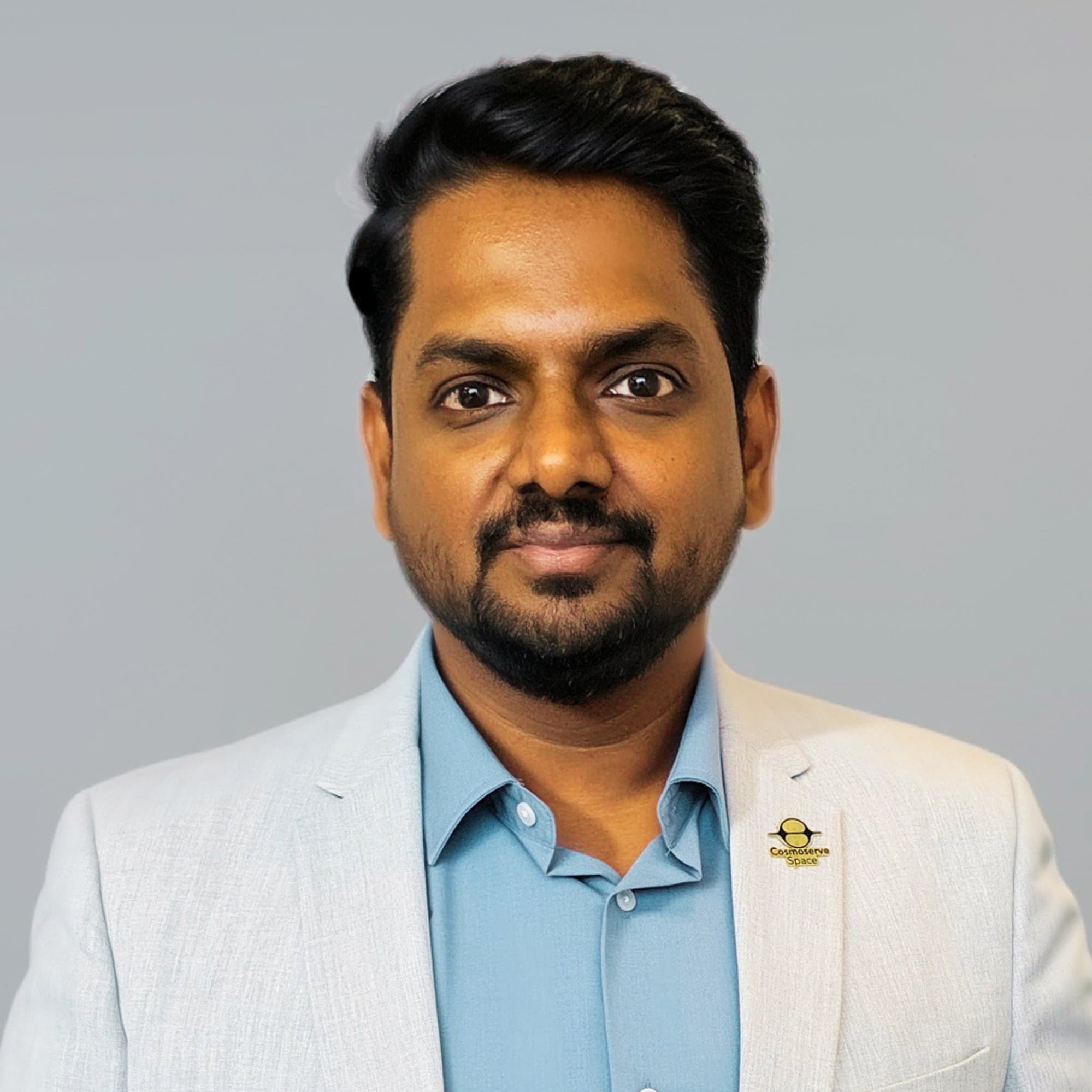
Founders & Innovators
Building the Next Space Economy: Chiranjeevi Phanindra and Cosmoserve's Case for Orbital Maintenance
Chiranjeevi Phanindra, Founder & CEO of Cosmoserve Space, spent 14 years at ISRO working on re-entry and human spaceflight. Today, he is focused on a vital challenge: keeping Earth’s orbit usable.
Read Full Story

Corporate Visionaries
Shashank Sahni on What Success Leaves Out
Shashank Sahni, Google’s Managing Director of Global Ads Solutions, reflects on what customers reveal, what ambitious teams need from their leaders & what the mountains and marathons have taught him about going further.
Read Full Story
Corporate Visionaries
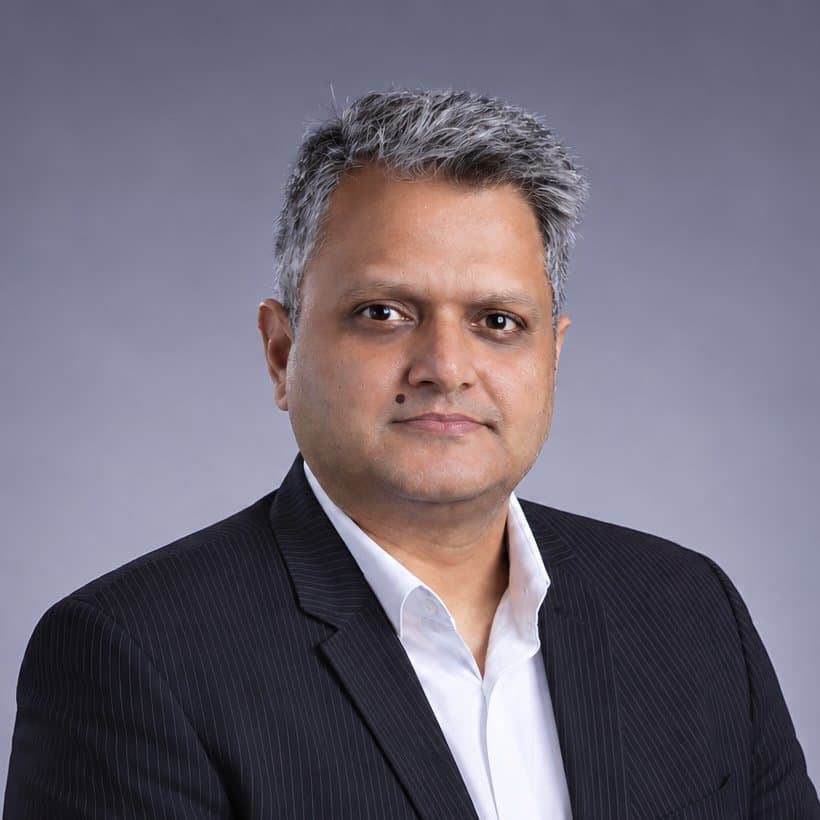
Clinical Multiplication: Divesh Singla on the Healthcare AI Case That Headlines Keep Missing
Divesh Singla, Managing Director, India at Veradigm, brings two decades in healthcare technology to the AI question leaders cannot avoid: how to expand clinical capacity without weakening human judgment.
Read Full Story