Category: Mentors & Coaches
After leading global teams at Fidelity, Dell, and GE, Sandeep Suri now helps leaders replace performance with presence, proving trust is the most scalable leadership advantage.
Sandeep Suri: Redesigning Leadership from the Inside Out
IndiSight Editorial
Oct 8, 2025
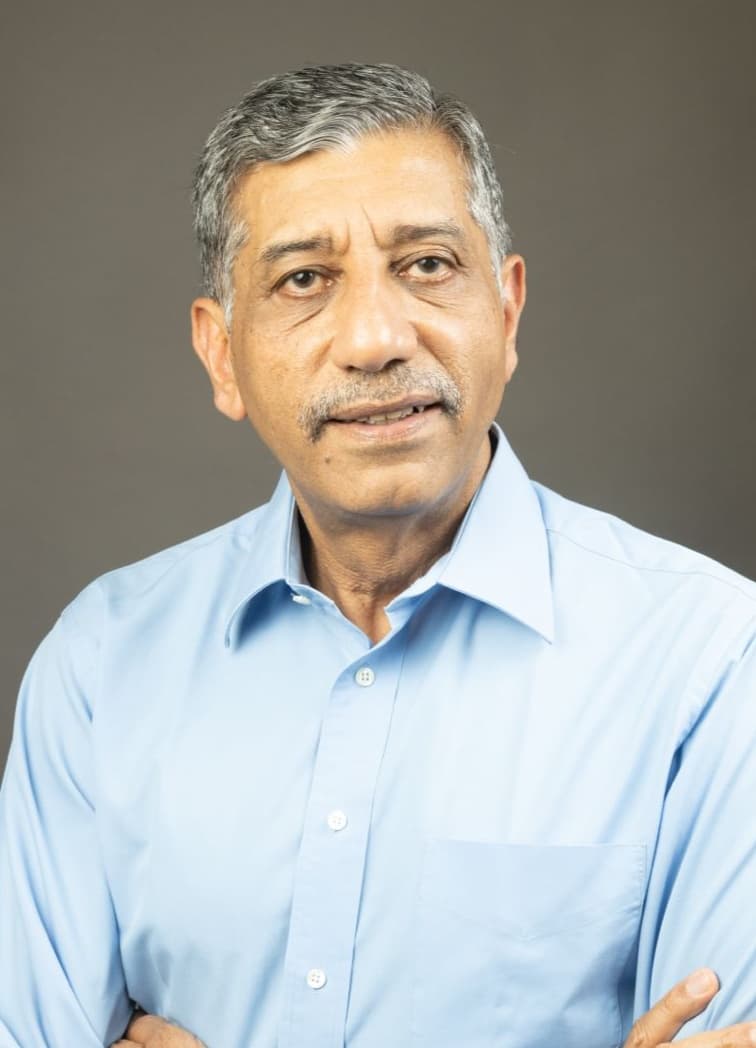
Sandeep Suri
Beginning with a Different Vocabulary
Most conversations about leadership begin with numbers: headcount, revenue, market share. Sandeep Suri begins elsewhere.
“Leadership,” he says, “is not about louder voices or sharper decks. It is about creating the kind of safety where people can think clearly, act bravely, and grow without fear.”
After more than three decades across six countries, shaping organizations at Fidelity Investments, Dell, Mphasis, GE Capital and ANZ Grindlays, Sandeep could have chosen to speak in the familiar vocabulary of scale and strategy. Instead, he speaks in the language of presence, trust, and clarity.
Now an executive coach, angel investor, and host of the Aspire & Acquire podcast, he works with mid-career professionals, senior executives, and founders not to help them climb faster, but to help them realign deeper. His mission is simple but profound: to shift leadership from performance theatre to authentic design.
The Journey That Built the Lens
Sandeep’s story does not follow the straight lines of corporate ambition. It began in frontline sales at Escorts Ltd. before moving to Bajaj Auto Finance and ANZ Grindlays Bank. These early years taught him the rhythm of markets and the humbling lessons of client-facing reality.
His real apprenticeship came at GE Capital (GECIS) and later Mphasis, where he learned to manage transitions, service delivery, and operational risk in high-stakes environments. The work was technical, but the learning was human: clarity mattered more than cleverness, empathy steadied execution, and integrity outlasted every quarterly target.
At Dell International Services, setting up and leading the Chandigarh site exposed him to the art of scaling global service hubs. But it was at Fidelity Investments (2005 to 2018) that his philosophy crystallized. Rising to Country Head and General Manager for Ireland, he built Fidelity’s Ireland operations into a strategic powerhouse, introducing Robotic Process Automation long before automation became mainstream.
Yet when asked what he remembers most, he doesn’t talk about the scale of operations or technology. He talks about people.
“You can hand over tasks,” he says, “but if you don’t hand over responsibility, you’re not empowering anyone. You’re just instructing them.”
That difference, between handing over work and handing over ownership, became his compass. Even in a career filled with numbers and systems, Sandeep understood that the most scalable system was trust.
When Failure Became the Mentor
For all his clarity today, Sandeep admits he once mistook leadership for control.
“Early in my career, I believed being a good leader meant anticipating every problem and having all the answers,” he recalls. “What I didn’t realize was that this suffocated the very people I was trying to develop.”
He frames it not as regret but as recalibration. “Leading people gave me humility. It showed me that clarity is not about knowing everything yourself. It is about clearing the space for others to rise.”
By sharing these scars, Sandeep signals something rare in corporate storytelling: leadership is not a perfectly polished climb. It is a series of wrong turns that only make sense when you trace the arc of learning.
Rewriting the Mid-Career Story
For Sandeep, the most overlooked group in today’s workplace are mid-career professionals, those with 12 to 20 years of experience. They have climbed past the uncertainty of their early years, proven their competence, and often shoulder critical responsibility. Yet paradoxically, this is the stage when many begin to feel stuck.
“They’ve ticked the boxes. They’ve built credibility. But the spotlight moves to younger talent below them or to senior executives above them,” he explains. “They become the dependable middle: invisible, over-relied upon, and under-recognized.”
This invisibility breeds a dangerous narrative that mid-career is a plateau, a slow descent toward irrelevance. Sandeep rejects that outright.
“Mid-career is not a decline. It is a redesign,” he says. At this inflection point, the opportunity is not to chase louder promotions, but to re-anchor identity. Mid-career professionals must shift their energy from proving themselves to positioning themselves, clarifying the value they bring, setting boundaries that protect energy, and embracing growth beyond titles.
He urges them to ask sharper questions:
Am I being valued for activity or for impact?
Am I chasing recognition, or am I creating resonance?
Am I climbing faster, or am I climbing true?
Through coaching, he helps mid-career professionals stop being passengers of institutional agendas and start becoming designers of their own trajectory.
Coaching at the Top of the Pyramid
If mid-career is about rediscovery, senior executive coaching, as Sandeep practices it, is about endurance. At the highest levels, success is not about competence. It is about clarity under pressure, presence under scrutiny, and humanity under power. The spotlight is ruthless, the risks reputational, and the loneliness very real.
This is where Sandeep steps in. He works with CXOs, board leaders, and country heads who already carry influence but risk losing alignment. His coaching gives them a space they cannot find inside the boardroom, a space to test raw ideas, confront blind spots, and realign before the weight of their decisions cascades across entire organizations.
“Executives don’t fail because they lack intelligence,” he says. “They fail when they stop listening, stop realigning, and stop creating space for others.” His role is to help leaders hold onto that listening, sharpen intent, and create cultures that thrive without fear.
For these leaders, the outcomes are profound: decisions made with greater courage, cultures recalibrated for trust, and legacies built not on noise but on resonance. What endures, Sandeep insists, is not titles or board minutes but the behaviors that ripple long after a leader has moved on: empathy, integrity, and the ability to make people feel safe enough to do their best work.
Trust as the Real Operating System
When Sandeep looks back at decades of leading global teams, one theme eclipses all others: trust as infrastructure.
“I’ve seen leaders destroy their best talent by second-guessing every decision,” he says. “The best people don’t leave for money. They leave because they weren’t trusted with the complexity they were hired for.”
Control, he insists, is an illusion that breeds fragility. Trust, on the other hand, compounds. It scales better than any process map.
True leadership, in his lens, is not about writing the perfect plan yourself, but about designing an environment where the plan and the people outlive you. It is not about holding the pen. It is about building a table where others can write.
The Power of Small Signals
Culture, Sandeep argues, is not what leaders announce. It is what they allow.
“Leaders are like being there in a fish bowl. You are being watched, all the time. The small things matter more than the big speeches.”
He points to the micro-signals leaders send every day: who they interrupt, who they let speak, whose contributions they acknowledge, whose mistakes they forgive. These small signals, multiplied over months, shape the invisible constitution of a workplace.
“If only the loudest voices are rewarded, you’re not building a culture. You’re breeding insecurity.”
For him, culture is not built in annual events. It is built in everyday moments of recognition, restraint, and respect.
Energy as Infrastructure
Sandeep is blunt about one of the most corrosive myths of modern work, that constant availability is proof of commitment.
“Being reachable is not the same as being reliable,” he says. “Energy is a resource. Protecting it isn’t selfish, it’s strategic.”
He reframes work-life balance as energy design, a conscious allocation of effort towards what sustains you and away from what corrodes you. “Ask yourself,” he tells leaders, “where do you feel most alive? Where do you feel most drained? That map is more important than your org chart.”
For him, balance is not indulgence. It is infrastructure. Without it, leaders become depleted performers, mistaking exhaustion for excellence. With it, they become reservoirs of resilience who can energize others without burning themselves out.
The Future of Mid-Career
If mid-career today feels like an identity crisis, Sandeep believes the future could make it even more complex and more promising. Hybrid work, automation, and flatter hierarchies are already reshaping what organizations value.
For him, this means mid-career professionals will no longer be judged only by experience, but by adaptability and authorship.
“Ten years from now,” he predicts, “the leaders who matter won’t be the ones with the longest resumes. They’ll be the ones who can hold ambiguity without fear, and who can metabolize change into momentum for their teams.”
He also foresees AI amplifying both risk and opportunity. Risk, because it will automate many transactional skills that mid-career professionals once relied on. Opportunity, because it frees them to redefine their value around design, empathy, and sense-making, the human edges AI cannot replicate.
He urges organizations to stop treating mid-career as a plateau and start treating it as the breeding ground for the next elevation. This, he insists, is where the future of leadership will be won or lost.
Legacy Without Titles
When asked what he hopes endures from his leadership, Sandeep does not hesitate.
“I don’t want to be remembered for titles or projects. I want the behaviors to remain.”
Those behaviors are deceptively simple: creating safety in the room, granting trust without micromanagement, listening without interruption, setting boundaries without apology.
For him, legacy is not the logo on your business card or the size of the office you once occupied. Legacy is what people carry with them long after they’ve stopped working with you: the courage they found in your presence, the clarity they borrowed from your guidance, the self-belief you quietly reinforced when doubt was eating them alive.
“The real proof of leadership is not what happens when you’re there. It’s what continues when you’re not.”
The Compass He Leaves Us With
Sandeep’s philosophy distills into a compass for modern leadership, one forged not in abstraction but in lived tension across continents and crises.
Culture is a fabric, not a slide deck. It is woven in micro-behaviors, not annual speeches.
Presence is a decision, not a default. It is the choice to clear the space, not fill it.
Trust scales better than control. Systems may collapse without it, but with it, even chaos becomes navigable.
Mid-career is not decline, it is redesign. It is the hidden chapter where alignment becomes more valuable than acceleration.
Coaching creates alignment, not hustle. Its benefit is clarity, resilience, and recognition that lasts.
Leadership must be portable, not parochial. Culture shifts, but values must travel.
Legacy is not performance. It is behavior. What outlives you is how you made people feel in your presence.
In a corporate world obsessed with velocity, Sandeep Suri reminds us that true leadership is not speed without direction. It is clarity without fear.
He is not asking us to abandon ambition. He is asking us to practice it differently, as designers of trust, as curators of safety, as custodians of energy.
And in that shift lies not just better leaders, but more human ones.
Our Suggestions to Read
Discover The Leaders Shaping India's Business Landscape.
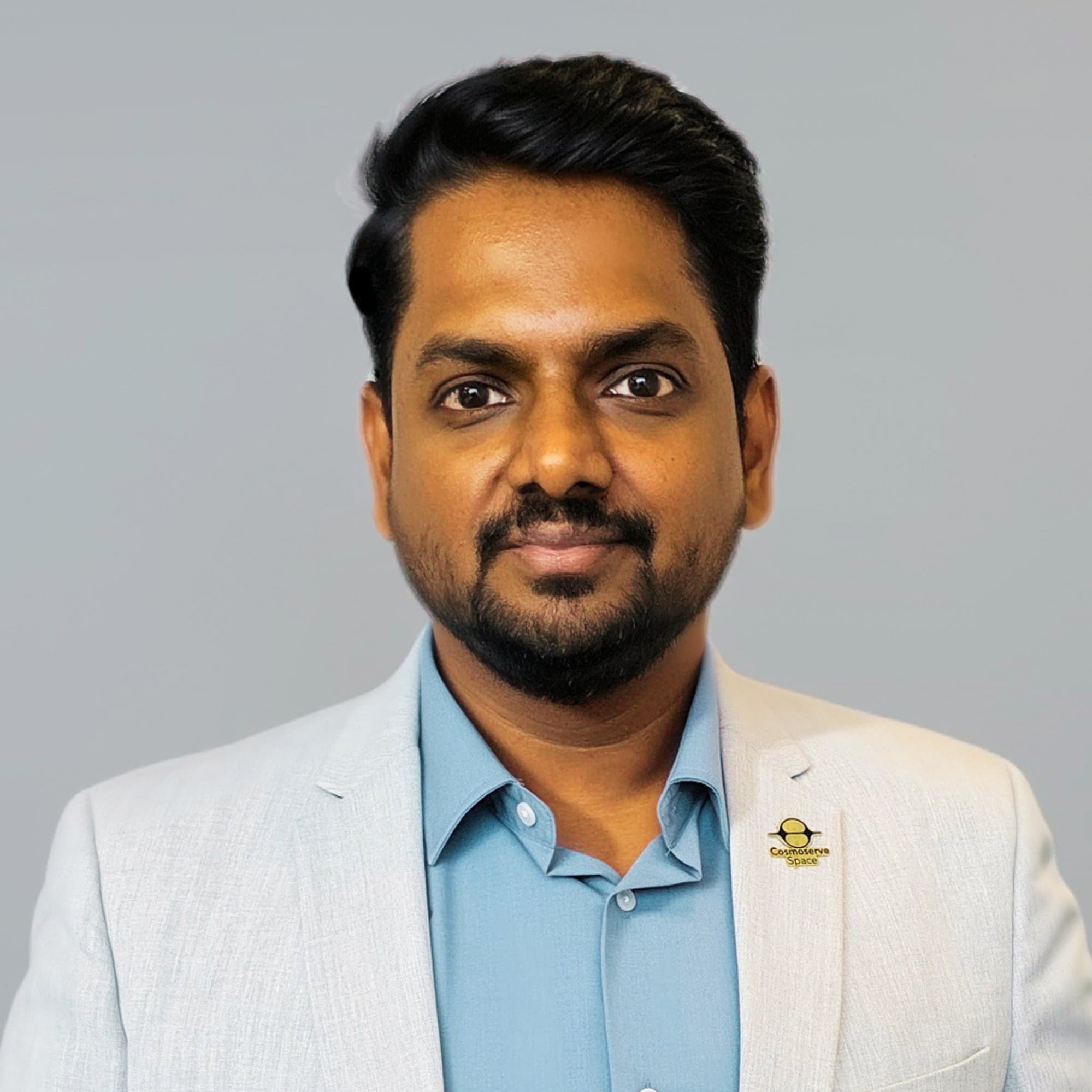
Founders & Innovators
Building the Next Space Economy: Chiranjeevi Phanindra and Cosmoserve's Case for Orbital Maintenance
Chiranjeevi Phanindra, Founder & CEO of Cosmoserve Space, spent 14 years at ISRO working on re-entry and human spaceflight. Today, he is focused on a vital challenge: keeping Earth’s orbit usable.
Read Full Story
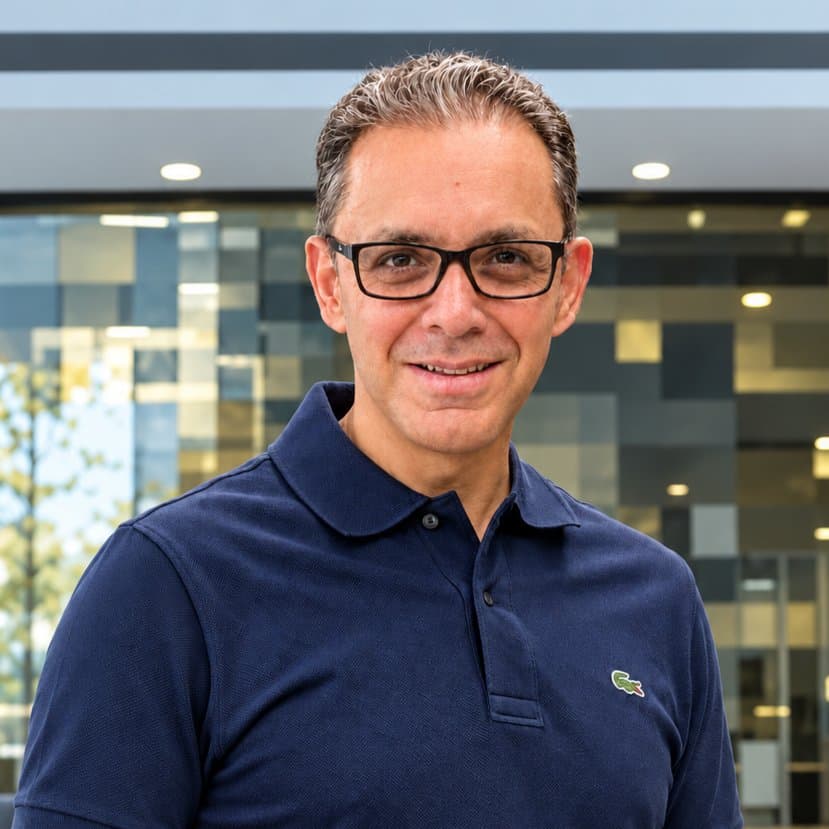
Corporate Visionaries
Shashank Sahni on What Success Leaves Out
Shashank Sahni, Google’s Managing Director of Global Ads Solutions, reflects on what customers reveal, what ambitious teams need from their leaders & what the mountains and marathons have taught him about going further.
Read Full Story
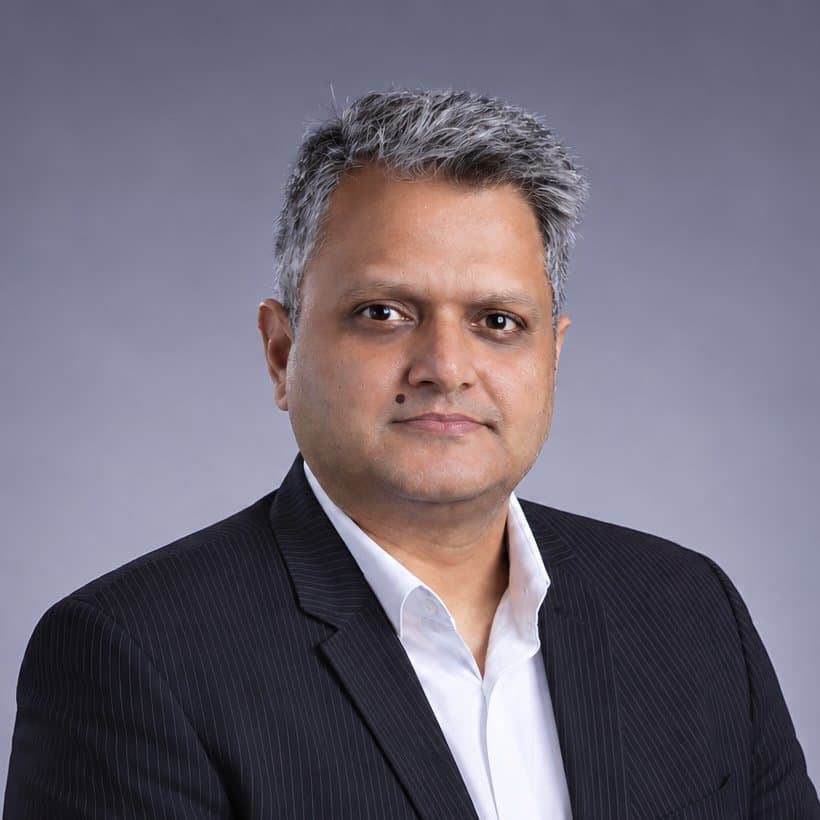
Corporate Visionaries
Clinical Multiplication: Divesh Singla on the Healthcare AI Case That Headlines Keep Missing
Divesh Singla, Managing Director, India at Veradigm, brings two decades in healthcare technology to the AI question leaders cannot avoid: how to expand clinical capacity without weakening human judgment.
Read Full Story