Category: Education Leadership
Dr. Aparna Rao, Deputy Director at RV Institute of Management, Bengaluru, challenges education’s race toward automation, arguing that true progress lies in emotionally intelligent, globally adaptive minds.
Root Before Fruit: Rethinking Higher Education Through the Leadership Lens of Dr. Aparna Rao.
IndiSight Editorial
Jan 24, 2026
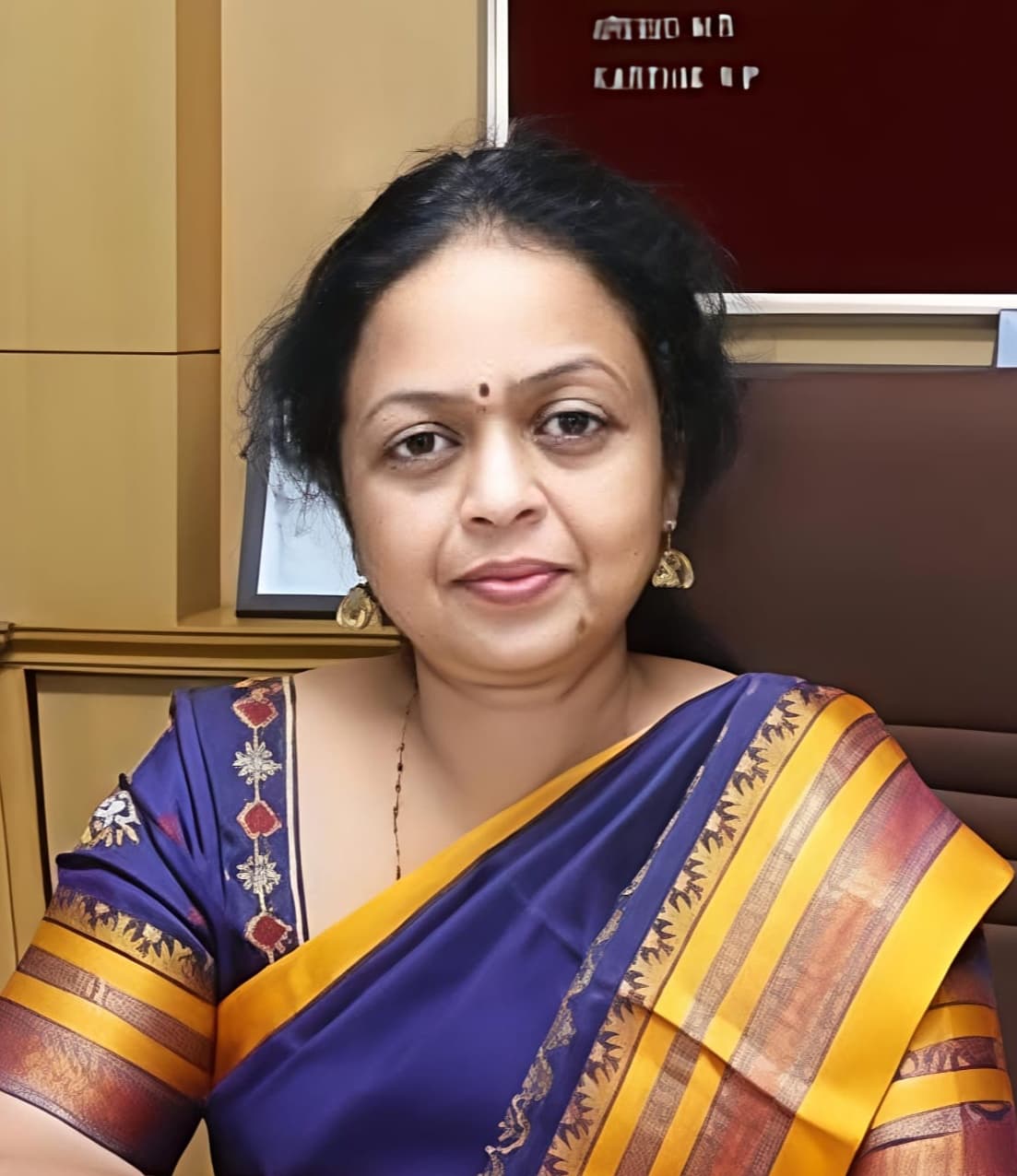
Dr. K. Aparna Rao
Deputy Director · RV Institute of Management
Bengaluru
Indian higher education is at a paradoxical point. Institutions are multiplying, degrees are accessible, and technology is everywhere. Yet, employability rates remain stubbornly low. The question is not whether India is producing enough graduates; it is whether we are producing ready minds.
For over two decades, Dr. Aparna Rao, now Deputy Director at RV Institute of Management, Bengaluru, has lived at the intersection of education and employability. Her career has moved across the full spectrum of academia as faculty, principal, director, and now senior leadership across some of South India’s most respected management institutions. Each role has expanded her view of what education could become if it stopped chasing compliance and started cultivating consciousness.
“Root is more important than fruit,” she often says. It is both philosophy and framework. The line captures the essence of her approach to leadership: fix what lies beneath before scaling what shows above. In a sector defined by new buildings, upgraded labs, and impressive infrastructure, Dr. Aparna argues that India’s biggest education gap is not financial or technological. It is human.
Reframing the Purpose of Higher Education
Across her career, Dr. Aparna has observed how easily metrics can displace meaning. She has seen institutions become efficient without becoming effective, and curriculums grow broader without becoming deeper. Her critique is simple but sharp: “Quality is not a number. It is a way of thinking, creating, and leading.”
The real question she poses to education leaders is philosophical. What kind of human being does the system produce? If the answer centers only on employability or income, she believes we have misunderstood the purpose of education itself.
Dr. Aparna calls for a fundamental shift from compliance to consciousness. When universities design around audit checklists, they produce graduates who follow instructions well but question little. True quality, she says, comes when institutions create the conditions for independent thought.
A classroom should not prepare you to take orders. It should prepare you to make choices.
Her leadership model treats academic institutions as living organisms rather than administrative hierarchies. Infrastructure may symbolize ambition, but people sustain purpose. “Institutions grow by people, not by buildings,” she says. That principle defines how she hires, how she leads, and how she measures progress.
A Career Built on Systems and People
Dr. Aparna’s path was not scripted. She began her journey as an HR professional, drawn to the human element of management. Teaching started as an experiment but soon became a calling. “When I entered the classroom, I realized I was shaping something far more permanent than performance,” she recalls. “I was shaping belief.”
Over the next twenty years, she served as faculty, principal, and academic director across leading B-schools before joining RV Institute of Management. Each institution became a laboratory for her ideas on leadership, culture, and learning. Her early HR training grounded her in the mechanics of behavior. Her years in academia refined that understanding into a philosophy of development that connects institutional health with human growth.
Every organization reflects its people. If the leadership is restless, the culture will be chaotic. If the leadership is centered, the system will find rhythm.
This conviction has guided her through every turnaround, accreditation cycle, and cultural transformation she has led.
Leadership as Design, Not Personality
Dr. Aparna rejects the notion that leadership is charisma. For her, it is design. She builds systems the way an engineer builds engines with clear inputs, predictable outcomes, and reliable feedback loops.
She describes her framework for institutional excellence through three coordinates: Competence, Culture, and Continuity.
Competence begins with knowledge depth. Every educator must remain a learner first. “You cannot lead people who are learning if you have stopped learning yourself,” she says. She expects her faculty to stay ahead of the curve through reading, experimentation, and constant learning.
Culture defines how institutions behave when no one is watching. Her term for it is emotional discipline. Rules and procedures create structure, but behavior sustains credibility. “Discipline is not about control,” she explains. “It is about consistency. Flexibility is important, but respect for time, work, and people is non-negotiable.”
Continuity ensures that the institution does not collapse when a leader leaves. “If a system depends on one person, it is not a system,” she says. Her goal is to design governance structures that make succession natural, not disruptive.
These coordinates have shaped her approach to leadership. She hires slowly, removes misaligned talent quickly, and invests deeply in those who share the institution’s long-term values. Her principle is clear: never confuse loyalty with alignment.
The Employability Paradox
Dr. Aparna views India’s unemployment crisis as an employability crisis in disguise.
Corporates are ready to hire. But graduates are not ready to deliver.
Her diagnosis rests on three structural gaps.
First, academic inflation. Degrees have multiplied faster than depth. Policies designed to expand access have unintentionally diluted accountability. “We have made passing easy,” she notes, “but we have not made learning meaningful.”
Second, policy optimism. Reforms often assume that structural change automatically produces quality. “Policies are good intentions,” she says. “But transformation lives and dies inside the classroom.”
Third, industry impatience. Employers expect graduates to perform from day one without investing in development. “Corporates run on results,” she explains. “Education runs on patience. The two must meet halfway.”
For Dr. Aparna, employability is not a placement metric. It is a mindset. It begins with attitude and adaptability, not technical proficiency alone.
A student who knows their strengths, weaknesses, and purpose will never remain unemployed. Confidence is employability.
Teaching the Architecture of Work
Dr. Aparna’s HR background gives her a unique lens on education. She sees every classroom as a rehearsal for the professional world, a space to simulate collaboration, tension, and decision-making.
“Job readiness is not about a résumé,” she says. “It is about resilience.”
She believes in exposing students early to ambiguity and failure. “Do not overprotect them,” she insists. “Let them fall, reflect, and rebuild. That is how real confidence is formed.”
Her method centers on grounded confidence, a blend of capability and composure. It is the ability to stay stable when conditions change.
The world rewards calm execution. Education must prepare you for that.
She frequently reminds her students that employability is not the end goal. It is the by-product of self-awareness, humility, and curiosity. “The more they chase placement,” she says, “the less they discover potential.”
Building Global Leaders in Indian Classrooms
With India’s management schools producing record numbers of graduates, Dr. Aparna asks a crucial question: how many are globally ready?
She challenges the idea that international exposure automatically creates international competence.
Global readiness is not about visiting another country. It is about thinking across boundaries.
Her framework for developing global leadership has three levers.
Exposure. Encourage learning across contexts, not just continents. “Students must learn to decode diverse realities,” she says. “That requires curiosity, not travel.”
Empathy. Global leaders must be able to work across value systems. “If you cannot understand what drives people, you cannot lead them,” she explains.
Execution. The ultimate differentiator is not knowledge but composure under pressure. “Anyone can ideate,” she says. “Only a few can implement it calmly.”
She often tells her students that a brand does not make a leader, a teacher does.
A true B-school should graduate people who can build others, not just manage them.
Technology and the Human Gap
Dr. Aparna embraces technology as an enabler but warns against its emotional side effects. “AI, ERP, SAP, they simplify administration,” she says. “But they cannot build belonging.”
Her concern is not digitalization itself but the erosion of empathy that can follow. “You can attend ten online courses, but none will replace the teacher who listens to you,” she says. “Learning without connection becomes a transaction.”
Her rule is simple: use technology to expand relationships, not replace them. “AI can help you,” she says. “But it cannot hug you.”
She advocates for blended education that preserves the energy of physical interaction while leveraging digital reach. In her view, the future of education depends on restoring humanity to learning. “A strict teacher, a shared laugh, or a meaningful disagreement, these are not nostalgic details,” she says. “They are emotional circuits that make learning work.”
Mentorship as Strategic Capital
Over years of leading teams and mentoring students, Dr. Aparna has come to see mentorship as a form of institutional capital. “People remember how you made them feel, not what you taught them,” she says.
Her approach is built on three principles: presence, patience, and partnership.
Presence is the willingness to stand by someone even when you cannot solve their problem. Patience is the courage to let them grow at their pace. Partnership is the humility to walk beside them, not ahead.
She does not see mentorship as altruism but as infrastructure. “It is not charity,” she explains. “It is how you build continuity. Mentorship multiplies trust, and trust sustains institutions.”
Her influence extends far beyond formal mentorship programs. Many of her former students now lead teams across industries but still call her for perspective. “That is leadership,” she says quietly. “When people trust your thinking long after they leave your system.”
The Framework of Institutional Maturity
Dr. Aparna summarizes her leadership philosophy in what she calls the Four Stages of Institutional Maturity.
Foundation: Establish direction and discipline. Without clear norms, freedom turns to chaos.
People: Build culture through accountability and respect. “Culture eats policy every day,” she says.
Growth: Balance process with empathy. Scale must not dilute values.
Legacy: Design systems that outlast personalities. “If the place collapses when you leave,” she says, “you managed. You did not lead.”
Each stage demands a different mindset. Together, they create resilience. Her career has shown that institutions succeed not by avoiding friction but by channeling it into growth.
From Reform to Philosophy
Dr. Aparna’s critique of education reform is both structural and moral. India’s system, she says, confuses productivity with progress. “We measure success by numbers. But the real outcome of education is invisible. It lives in how people think.”
She calls for three philosophical shifts.
First, from compliance to curiosity. Education should train people to ask better questions, not to deliver better audits.
Second, from information to emotional intelligence. “A good leader needs empathy as much as expertise,” she says. “We should teach that with the same seriousness as finance or strategy.”
Third, from employability to citizenship. Education should prepare individuals not only for jobs but for responsibility. “The world needs more reflective professionals,” she says. “Not just productive ones.”
The Ethic of Enough
At a time when ambition is marketed as virtue, Dr. Aparna speaks of restraint. She calls it the ethic of enough. “Not everyone needs to be at the top,” she says. “Success is alignment between skill and role. When that fits, excellence follows naturally.”
Her advice to leaders is equally unorthodox: slow down to sustain.
An exhausted leader creates an exhausted organization. Calm is a competitive advantage.
Leadership Lessons from Dr. Aparna Rao
Education without employability is policy theater.
Hire for alignment, not convenience.
Replace control with culture.
Treat mentorship as infrastructure, not charity.
Emotional intelligence is the new accreditation.
AI can automate data, not dignity.
Global readiness begins with self-awareness.
Stop measuring learning. Start measuring curiosity.
Build roots before chasing fruit.
Institutions that feel human will outlast those that only look modern.
Closing Reflection
Every conversation with Dr. Aparna returns to the principle that guides her philosophy: sustainable excellence begins with the people who uphold it. For her, the true strength of higher education lies in its faculty, students, staff, mentors, and leaders — individuals who shoulder responsibilities that often go unnoticed. When they are supported with clarity, discipline, and empathy, excellence isn’t an aspiration; it becomes the natural outcome.
Her message is global yet grounded. Institutions are not shaped by vision statements or grand infrastructure, but by the everyday consistency, curiosity, and care of the people who make them work.
In a world chasing metrics and momentum, Dr. Aparna Rao reminds us that the most radical act of leadership is often the simplest one: to stay human in systems that forget how.
Our Suggestions to Read
Discover The Leaders Shaping India's Business Landscape.
Founders & Innovators
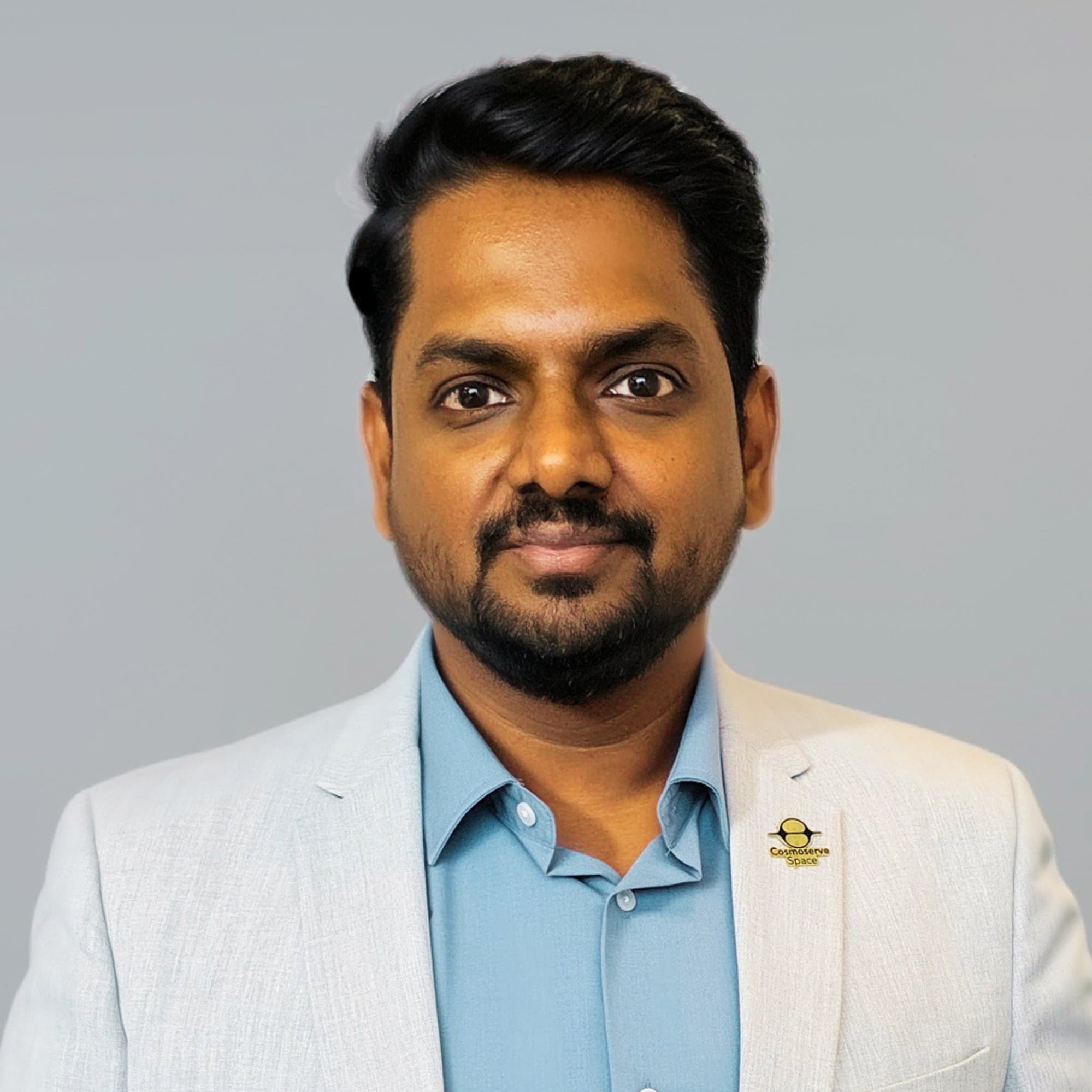
Building the Next Space Economy: Chiranjeevi Phanindra and Cosmoserve's Case for Orbital Maintenance
Chiranjeevi Phanindra, Founder & CEO of Cosmoserve Space, spent 14 years at ISRO working on re-entry and human spaceflight. Today, he is focused on a vital challenge: keeping Earth’s orbit usable.
Read Full Story

Corporate Visionaries
Shashank Sahni on What Success Leaves Out
Shashank Sahni, Google’s Managing Director of Global Ads Solutions, reflects on what customers reveal, what ambitious teams need from their leaders & what the mountains and marathons have taught him about going further.
Read Full Story
Corporate Visionaries
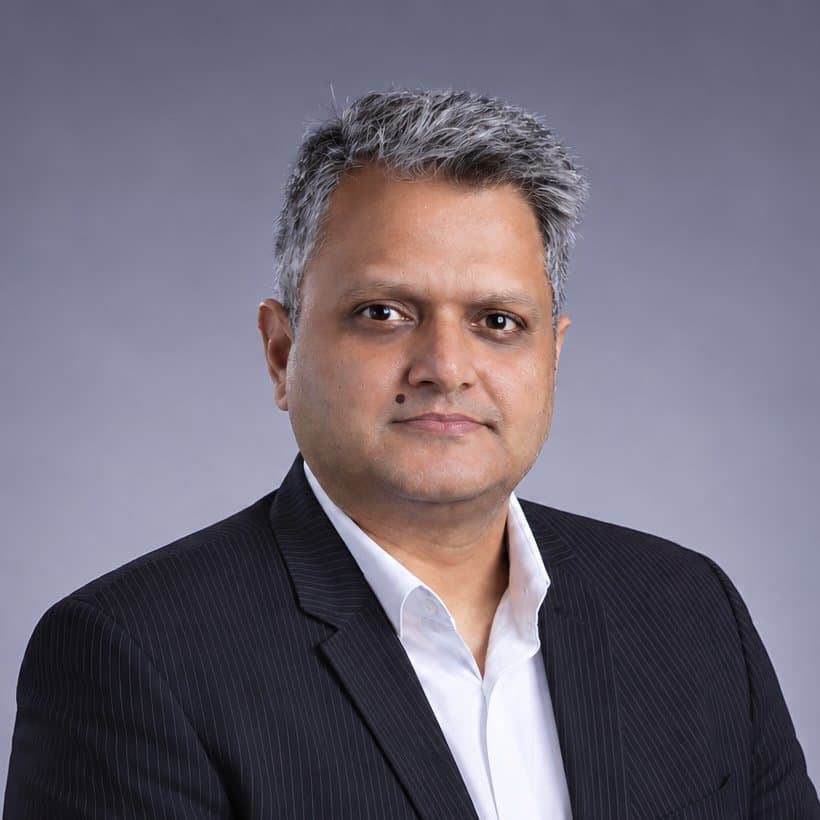
Clinical Multiplication: Divesh Singla on the Healthcare AI Case That Headlines Keep Missing
Divesh Singla, Managing Director, India at Veradigm, brings two decades in healthcare technology to the AI question leaders cannot avoid: how to expand clinical capacity without weakening human judgment.
Read Full Story