Category: Corporate Visionaries
Vaibhav Srivastava’s journey is defined by discernment: the courage to walk away, build with intent, and lead through trust, patience and systems designed to endure.
ROE: The Hidden Metric Behind Vaibhav Srivastava's Leadership Playbook
IndiSight Editorial
Aug 20, 2025
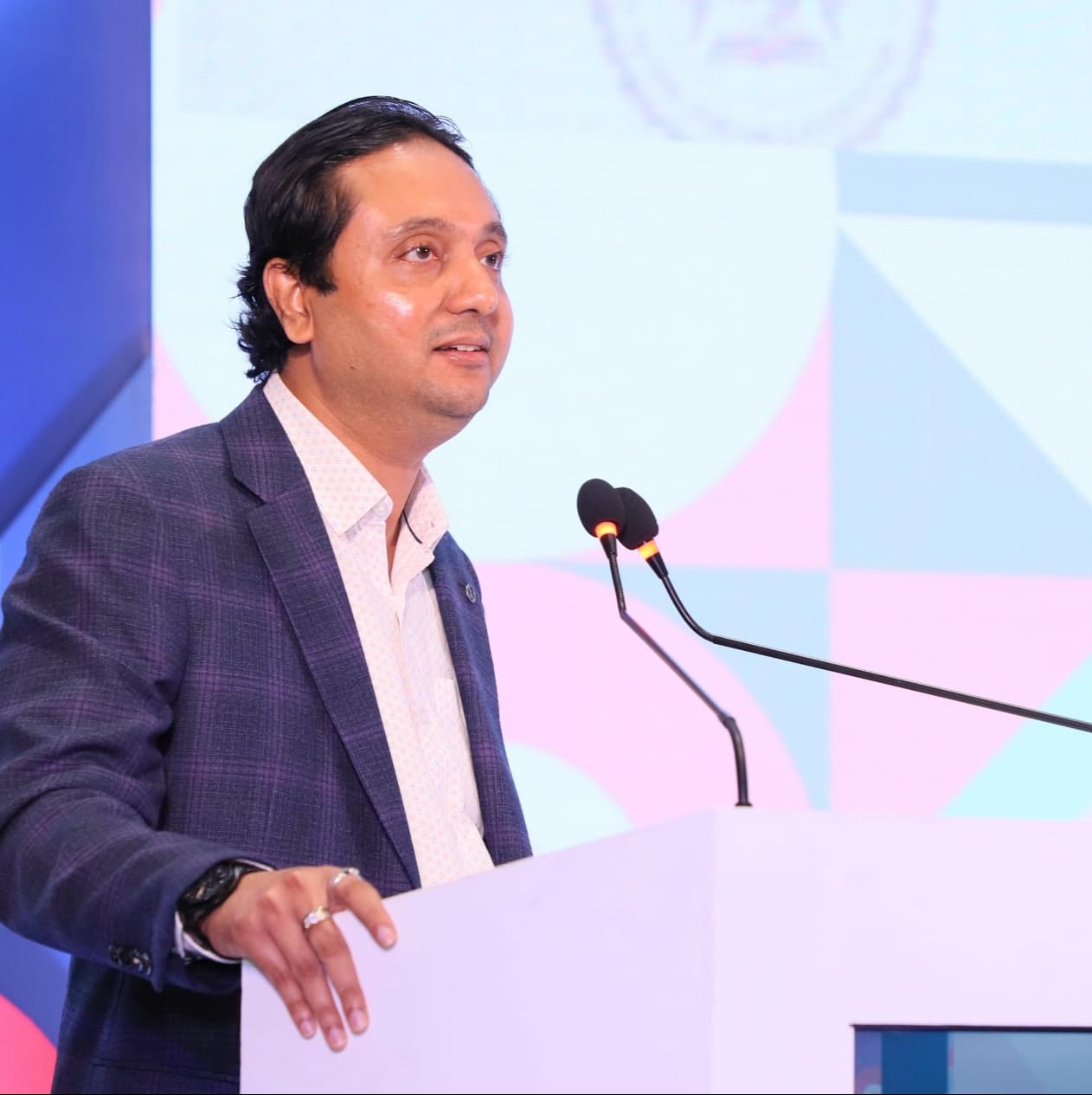
Vaibhav Kumar Srivastava
Head - Education & Edtech business · Google Cloud (India)
Mumbai
The Opportunity You Don’t Take
In 2018, Vaibhav Srivastava sat across the table from the founder of what would soon become one of India’s most talked-about edtech ventures. The offer was extraordinary: an open budget, a free hand to build the B2B engine, and the chance to shape a future that would later be valued at nearly $300 million.
He walked away.
“It scared me,” he says, not because of the stakes, but because he sensed something deeper. “That day, I wasn’t walking away from equity. I was walking away from a version of myself that would’ve been led by title and transaction.”
That refusal became a quiet pivot point, a personal realignment that redefined ambition not as speed or valuation but as peace, purpose, and principle. It was the moment his leadership philosophy began to crystallize: clarity over chaos, substance over scale.
Lessons the Strategy Deck Never Taught
Vaibhav grew up in Kanpur, Uttar Pradesh, in a household rooted in service, discipline, and intellectual clarity. His father, an Indian Air Force veteran who later served at the Reserve Bank of India, brought a sense of order and quiet rigor to daily life. His mother, a schoolteacher, taught him the power of precision in thought, language, and conduct.
His early clarity wasn’t born in air-conditioned boardrooms. It was forged in Mumbai’s industrial estates, where he began his career knocking on office doors with pamphlets in hand, pitching automation to organizations that still managed ledgers by hand. “There were no ACs, no laptops. People thought email was a joke,” he recalls.
It was a brutal proving ground. Those days, most people didn’t want what he was selling. But if he could convince someone to listen to him for ten minutes and show real value, something shifted. Trust began to form, slowly and quietly.
Those years built his core ethic: listen without an agenda, earn belief before chasing targets, and measure value not in deals closed but in lives made easier.
That sensibility stayed with him as he moved through HP, IBM, Microsoft, Cisco, and now Google. Titles changed, scale expanded, but the foundation never did. Transformation, for him, never begins in a deck or dashboard. It begins when someone finally trusts you enough to say, “sit down.”
Building in Ambiguity
Across a career spanning more than two decades, Vaibhav has never inherited structure. Every mandate began from zero, undefined and untested. “Ambiguity wasn’t the risk. It was the constant,” he says.
At IBM, he failed in government sales. “I thought I could sell my way through bureaucracy. I was wrong. Bureaucracy doesn’t bend to pressure. It bends to patience.”
At Microsoft, he rose fast, four promotions in six years, but what stayed with him wasn’t the titles. It was the mentorship. “My managers taught me gratitude. I tell my team the same thing today: the day you stop thanking people is the day you stop deserving their trust.”
Cisco deepened his sense of external credibility. “If the industry doesn’t trust you, your own team eventually won’t either.” Working with policymakers and ministers taught him that influence is not personal currency, it is ecosystem capital.
When he returned to Microsoft, it wasn’t nostalgia. It was readiness, both his and the ecosystem’s.
The Google Chapter: No Team, No Roadmap, Just Trust
In 2021, Vaibhav was handed the education and edtech charter at Google Cloud with a single instruction: build it from scratch.
“There was no team, no targets, no playbook. Just trust,” he recalls. “And trust, given unconditionally, is the strongest performance driver I’ve ever seen.”
What followed wasn’t just execution. It was architecture. Under his leadership, the Digital Campus initiative evolved into something deeper, not about technology adoption but absorption.
“Adoption creates spikes. Absorption creates systems. That’s the delta most people miss.”
He illustrates it through moments. When floods in Rajasthan wiped out internet access, offline sync protected students’ lessons. In Jharkhand, automation gave professors back hours to mentor final-year students. In rural Maharashtra, bilingual interfaces dissolved a generation’s fear of English.
“In each case,” he reflects, “tech didn’t win. Change management did.”
The Discipline of ROE
One of Vaibhav’s most enduring ideas is ROE, Return on Effort.
“Hustle isn’t the point. Outcomes are,” he says. “If effort isn’t changing the outcome, then we’re just staying busy.”
He uses ROE as a daily diagnostic:
Is the effort aligned with the mission?
Could the same outcome be achieved with less?
Could the outcome be ten times greater with the same effort?
If none hold true, it’s drift.
At Microsoft, ROE eliminated 60 percent of redundancy. At Cisco, it reframed statewide campus pilots. Today, he applies it in hiring, mentorship, and partner reviews. “ROE introduces friction. But friction is clarity. It reveals misalignment.”
On AI: Partner, Not Teacher
Where others debate the ethics of AI, Vaibhav focuses on its practical role in classrooms.
Automate the repetitive: “We don’t need AI to replace teachers. We need it to give them their evenings back.”
Personalize the learning curve: “If you’re weak in concept two, why push you to concept six? AI can intervene quietly, without judgment.”
Enable absorption at scale: “Access to content isn’t learning. The question is, did teaching become lighter? Did learning become easier? If not, it’s noise.”
And he’s wary of performative innovation. “Everyone wants an AI feature. But unless it changes how a student thinks, solves, or grows, it’s just a toy.”
Decision-Making Without Apology
Vaibhav often returns to one principle: the courage of saying no.
Whether it was declining that multimillion-dollar equity offer or shelving programs that lacked ethical grounding, he sees clarity as strength. “If you can’t say no with dignity, you’ll say yes out of weakness. That’s when strategy becomes noise.”
He admits that the memory of walking away from that edtech offer still resurfaces, not for the money lost but for the clarity gained. “That moment redefined ambition for me. I realized I didn’t want to win at the cost of peace.”
Leadership as System Memory
Vaibhav is aware that organizations forget. People move, tech evolves, structures dissolve. “What survives is culture, but only if it’s taught.”
He invests heavily in documentation, peer training, and cross-team learning loops. “If the system collapses without you, you aren't a leader. You are a dependency.”
He calls middle managers “the immune system of organizations.” Senior leaders may set direction, but middle managers determine absorption. “If your vision dies in the middle, it was never real.”
Mentorship Without Heroism
Unlike many senior leaders, Vaibhav doesn’t romanticize mentorship. He designs for it.
“When someone’s laid off, don’t say ‘you’ll be fine.’ That’s lazy empathy. Give them a plan.”
His framework resembles a playbook more than a pep talk: skill matrix, opportunity mapping, story scripting, outreach cadence, follow-ups. “The hardest shift,” he says, “is internal, helping people believe that asking for help isn’t weakness. It’s strength.”
Learning That Sticks
He admits he once ignored many of the principles he now teaches: empathy, system alignment, patience. “I was outcome-obsessed. I didn’t realize some results take years to show. You plant behavior, not metrics.”
He recalls a government pilot that hit every product goal but failed in spirit. “We onboarded everyone except teachers. They arrived confused and unsupported. That’s when I learned: never deploy without dignity.”
He smiles at the memory. “Leadership without scars is theater.”
Where the Future Leads
For Vaibhav, the next frontier isn’t technology. It’s trust.
“Cloud, AI, gamification, these will scale. But the real question is, will we still build for humans?”
He believes the future of education depends on building absorptive capacity in students, institutions, and systems. The ability not just to adopt, but to integrate, sustain, and evolve.
“Tech will move faster than curriculum. Unless we redesign from first principles, we’ll stay reactive.”
Yet, he remains optimistic. Not because of platforms. Because of people.
Key Takeaways for Leaders, Founders, and Institutions
For Education Leaders and Policymakers
Focus on absorption, not adoption. Real change shows up in behaviors, not usage reports.
Build with teachers, not just for them. A system without dignity will fail quietly.
Middle management carries the vision. Without them, momentum dies.
For Founders in EdTech and AI
Solve real problems, not vanity metrics.
Design for reality. If learning stops when Wi-Fi drops, the model is broken.
Replace dashboards with feedback loops. Transformation is iterative, not instant.
For Early-Career Professionals
Respect systems as much as speed. Public ecosystems run on rhythm, not rush.
Influence grows from clarity, not charisma.
Without outcomes, effort becomes drift.
For Mentors and Managers
Share playbooks, not slogans.
Document. Knowledge outlives individuals.
Own both the miss and the momentum. Accountability is a practice, not a post.
Final Reflection
Now based in Mumbai, Vaibhav lives with his wife and son. He remembers the day his son got into IIT Bombay, not as a headline, but as something deeply personal. “It wasn’t about the college,” he says. “It was a reminder that if you keep showing up with integrity, it reflects somewhere, sometimes through your children.”
He also recalls the 2005 Mumbai floods, just days after his marriage. The city stood still, flooded roads, broken communication, no certainty. “You couldn’t reach anyone. You couldn’t rely on systems,” he reflects. “But you still had to move. You still had to decide.”
For him, that moment wasn’t a crisis. It was a revelation, that leadership doesn’t begin with clarity, it begins with commitment. When systems fail, instinct steps forward.
He didn’t set out to become a global voice in education. He simply kept building, patiently, precisely, with purpose.
In a world chasing adoption, he built for absorption.
In a culture obsessed with speed, he practiced stillness.
And in an era flooded with noise, he chose depth.
Because adoption looks good on paper. But absorption, that’s what changes lives.
Our Suggestions to Read
Discover The Leaders Shaping India's Business Landscape.
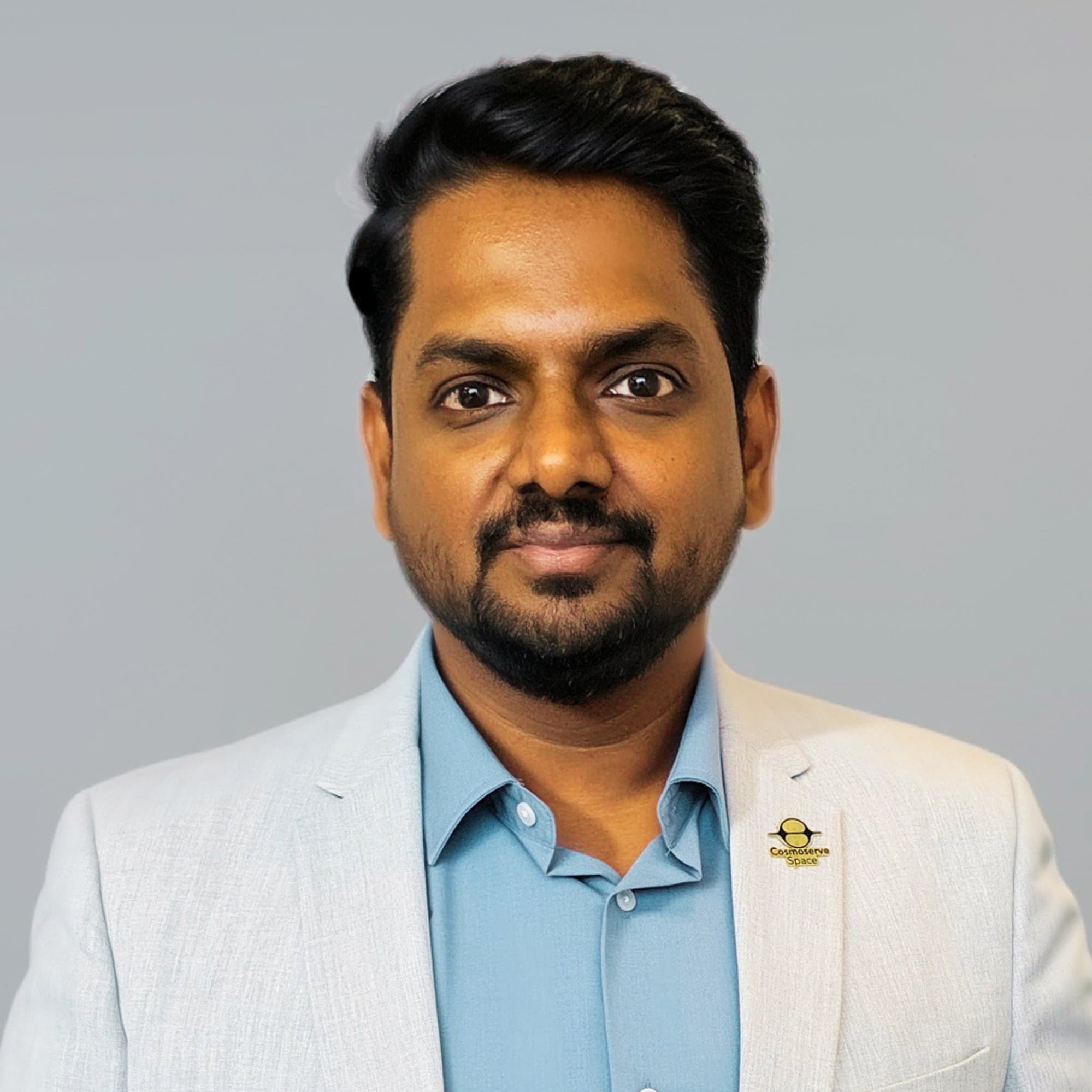
Founders & Innovators
Building the Next Space Economy: Chiranjeevi Phanindra and Cosmoserve's Case for Orbital Maintenance
Chiranjeevi Phanindra, Founder & CEO of Cosmoserve Space, spent 14 years at ISRO working on re-entry and human spaceflight. Today, he is focused on a vital challenge: keeping Earth’s orbit usable.
Read Full Story
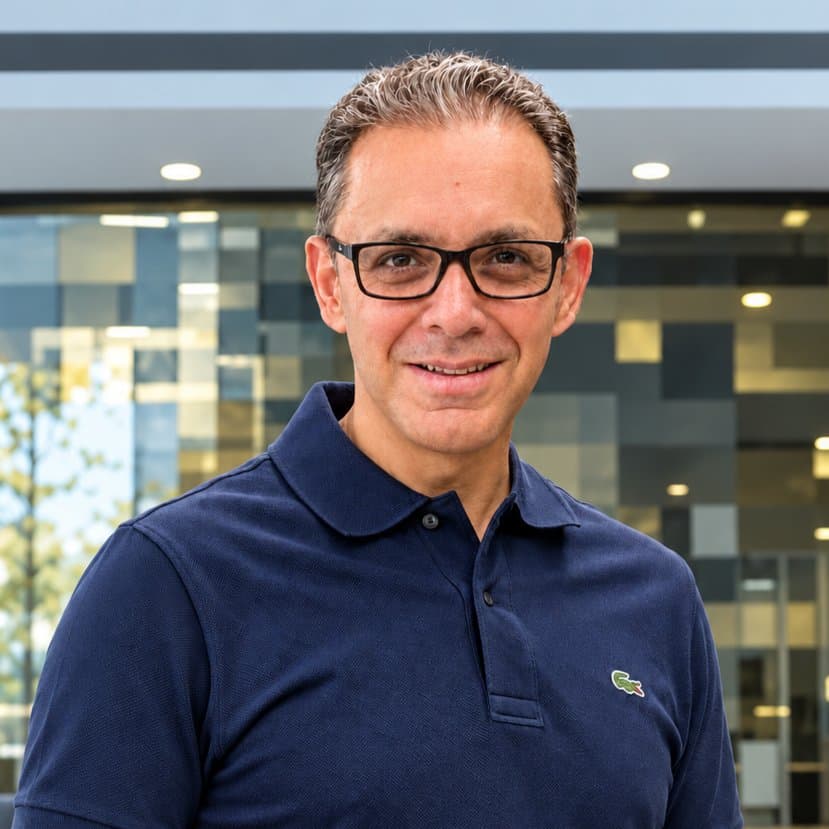
Corporate Visionaries
Shashank Sahni on What Success Leaves Out
Shashank Sahni, Google’s Managing Director of Global Ads Solutions, reflects on what customers reveal, what ambitious teams need from their leaders & what the mountains and marathons have taught him about going further.
Read Full Story
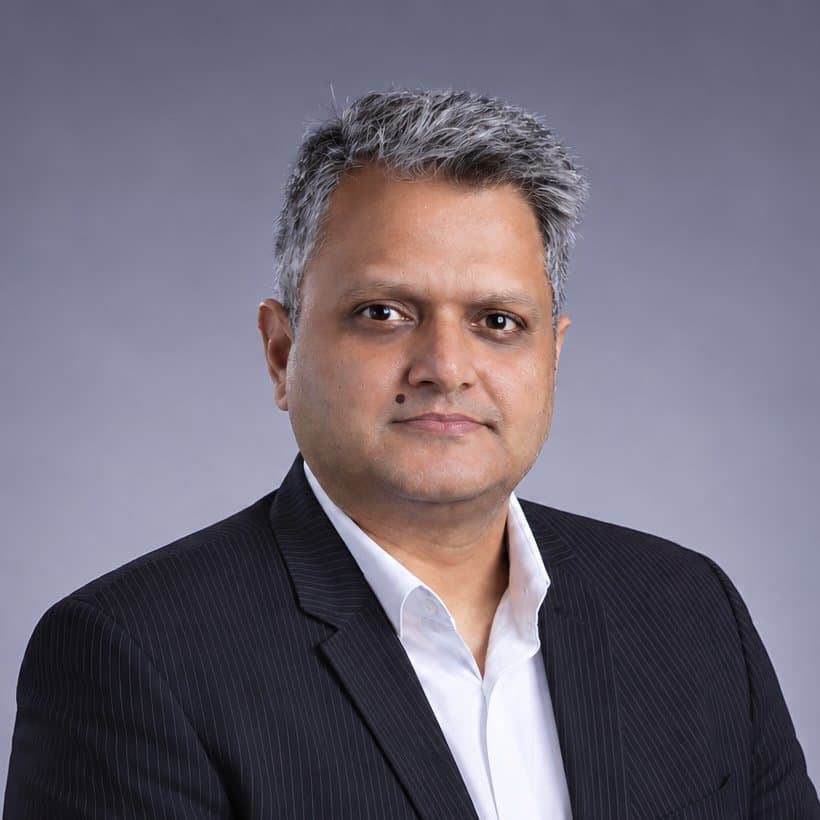
Corporate Visionaries
Clinical Multiplication: Divesh Singla on the Healthcare AI Case That Headlines Keep Missing
Divesh Singla, Managing Director, India at Veradigm, brings two decades in healthcare technology to the AI question leaders cannot avoid: how to expand clinical capacity without weakening human judgment.
Read Full Story