Category: Founders & Innovators
As consulting recalibrates in an age defined by artificial intelligence, volatile capital, and compressed decision cycles, Ritin Agarwal is making a focused bet: information is abundant, judgment is rare. Through Fundvice, he is shaping a model that blends financial precision, governance discipline, and structured debate into a repeatable decision engine. The result is a consulting philosophy grounded less in optics and more in coherence, credibility, and long-term value creation.
Rewriting Consulting: How Ritin Agarwal Is Turning Judgment into a Competitive Advantage
IndiSight Editorial
Feb 17, 2026

Ritin Agarwal
Managing Partner · FundVice
Noida
The New Logic of Consulting
The consulting world stands at a crossroads. Artificial intelligence is transforming how insight is created, startups are redrawing the boundaries of scale, and investors are chasing resilience more than disruption. The market no longer rewards the loudest idea; it rewards the most coherent one.
For decades, consulting thrived on accumulated expertise and brand legacy. But the currency of expertise is eroding. Clients today do not seek information. They already have too much of it. What they need is interpretation, the ability to translate data, noise, and emotion into direction.
In that shifting landscape stands Ritin Agarwal, Managing Partner of Fundvice, one of India’s fast-rising consulting firms operating at the intersection of consulting, investment banking, and business transformation. His conviction is simple yet precise. “Information has no edge anymore. Interpretation does.”
Over the years, Fundvice has built a reputation for connecting financial precision with strategic sensemaking. From structuring mergers for global clients and serving Private Equity funds with the support needed for portfolios, its focus remains consistent: help organizations make disciplined decisions. The firm has facilitated transactions aggregating two hundred million dollars, helped achieve cost savings delivered worth fifty million dollars, grown to seventy-five professionals, and developed internal products that turn consulting from a service into a repeatable system.
From Two Firms to One Vision
When FundVice was established in 2018 by Heena Arora Agarwal, an investment banker, the objective was definitive: to bridge the gap between capital strategy and operational discipline.
Meanwhile Ritin, a management consultant, was leading an independent practice focused on mid-market transactions and financial architecture.
Two years later, their professional interests converged during a complex client engagement. The resulting synergy was organic rather than premeditated; both were addressing identical challenges through different lenses. Heena applied a banking-led focus on strategic clarity, and Ritin brought consulting-driven institutional rigor. Over time, these overlapping mandates made a compelling case for integration over independent operation.
In 2022, FundVice acquired Ritin’s firm, consolidating both practices under a single platform. Heena continues to lead the firm’s capital acquisition advisory and investor narrative strategy, while Ritin heads its M&A, integration, and finance function capabilities. The partnership is effective because it is defined by complementary expertise rather than similarity. “We do not always agree,” Ritin notes. “But that intellectual friction sharpens outcomes.”
That balance became the firm’s backbone: structure built on scrutiny, growth measured through repeatability, and leadership grounded in shared responsibility rather than hierarchy.
A Professional Without a Corporate Beginning
Ritin’s path to leadership is unconventional. He never worked in a corporate setup. The early years were spent learning through proximity, first under his father, a practicing chartered accountant in a tier-four town, and later through his own experiments in consulting. His mother, a retired consumer court judge, shaped his sense of fairness and proportion.
“I did not come from a city or pedigree where networks made things easy,” he says. “So I had to build credibility transaction by transaction.”
He began with small mandates: family businesses, early entrepreneurs, and SMEs struggling with compliance. Those assignments, though modest, sharpened his instinct for financial behavior. They taught him that governance is not paperwork. It is the moral structure of an organization.
“Most people think finance is about numbers. It is not,” he says. “Finance tells you how people think, what they value, what they hide, and what they postpone.”
By the time he met Heena in 2020, he had already spent years refining a consulting philosophy grounded in ethics, humility, and detail. That philosophy found its institutional form in Fundvice.
The Rebuild
In 2021, Fundvice reached its hardest turning point. The firm had grown fast but unevenly. Misaligned hiring, scattered focus, and diluted accountability forced a reckoning. Ritin and Heena made a decision most founders would avoid. They let go of nearly the entire team.
“It was brutal,” he recalls. “We did client pitches, models, even design work ourselves. But that year made us see what excellence really costs.”
That reset became the foundation of the company’s second life. They rebuilt from scratch, not by scaling headcount but by institutionalizing discipline. Every process, from client onboarding to delivery, was redesigned to eliminate dependency on individuals and reward consistency.
The results were immediate. Client retention rose sharply. Referrals grew organically. The firm moved from a three-thousand-square-foot space to a seventeen-thousand-square-foot office in two years. Yet Ritin insists the real progress was cultural, not spatial. “We realized that quality is not a department. It is a habit. Once you design for it, it sustains itself.”
Consulting in an Age of Intelligence
Modern consulting, in his view, is not about offering frameworks. It is about designing interpretive systems. The firm’s work spans private equity advisory, M&A strategy, and startup financing, but the underlying question is always the same: how do you make judgment scalable?
“Automation can do the repetitive,” he says. “But judgment comes from experience, context, and restraint.”
Fundvice’s digital transformation practice emerged from that idea. The team helps clients automate without losing control and analyze without losing intuition. Whether integrating financial dashboards, optimizing cash flows, or building predictive models for portfolio monitoring, the intent is to turn data into usable intelligence.
He often tells clients, “You do not automate to save people. You automate to let people save time.”
The firm’s technology-enabled products reflect this pragmatism. One tool streamlines investor outreach, while another evaluates startup pitch decks for coherence, readiness, and risk alignment. Each emerged from repeated client problems, not from a need to sound innovative but from the irritation of inefficiency.
The Discipline of Capital
Few founders talk about money with the disarming clarity Ritin does. “Raising capital is an event,” he says. “Managing it is culture.”
He has seen too many founders mistake valuation for validation, spending aggressively without understanding the compounding effect of poor financial design. “The best founders I have met know exactly when to stop,” he says. “They see capital as continuity, not comfort.”
In his own firm, every cost decision reflects that philosophy. The question is never “Can we afford it?” but “Does it create compounding value?” It is the same logic he applies when advising clients. Whether he is working on a fifty-million-dollar transaction or a mid-sized domestic deal, the discipline remains identical: logic first, optics later.
Ritin believes that India’s next phase of entrepreneurship will be defined by capital maturity. “The era of easy money is over,” he says. “Now it is about proving that efficiency can scale without austerity. Founders who understand that balance will outlast the hype cycle.”
Leadership as Design
Leadership, in his eyes, is less about charisma and more about calibration. “You cannot have structure without chaos,” he says. “Chaos grows you. Structure sustains you.”
That belief is visible in how Fundvice is run. Ritin thrives in experimentation, while Heena ensures strategic discipline in execution. Their synergy is less about agreement and more about productive tension. “We debate more than we agree,” he says. “But debate builds clarity.”
Internally, the firm has codified this balance into policy. Every project operates within defined accountability bands, yet teams have the autonomy to experiment within those boundaries. “You grow faster when you know where your edges are,” he says.
He also speaks often about dignity in leadership, a value that shows up in small, operational details. Every employee, from analysts to administrative staff, is treated as a stakeholder. “You cannot expect clients to respect you if you do not respect your own people,” he says. “Professionalism is built from the inside out.”
India’s New Management Logic
For decades, India’s consulting ecosystem was defined by dependence on foreign models, imported frameworks, and global validation. Ritin believes that is changing. “You can build world-class consulting firms from India,” he says, “but you have to build them differently.”
His argument is simple. India’s advantage lies in its tolerance for volatility. “Western systems are built for predictability,” he says. “Indian systems are built for adjustment. That is why we survive shocks better.”
Fundvice’s work increasingly reflects this worldview. Its client portfolio spans family offices, mid-market enterprises, and global investors looking to acquire or scale in India. Each engagement begins with a diagnostic conversation on governance because, as Ritin insists, “governance is not compliance. It is clarity.”
He believes the country’s next competitive edge will come not from scale but from credibility. “The world already trusts India’s ambition,” he says. “Now it wants to trust our ethics. That is the next leap.”
The Measure of Judgment
Ritin’s philosophy of leadership rests on an idea of proportion. “I am always ninety-five percent right,” he says. “That five percent keeps us humble.”
It is a mindset forged by failure and refined by partnership. Heena, he admits, plays a crucial role in keeping his confidence grounded. “She challenges me constantly,” he says. “When you have someone who questions your logic, you grow faster.”
He measures success not in market share but in self-awareness. “My growth is where I buy an island,” he says with quiet humor. “My loss is where I move back to my hometown. That keeps me in check.”
What distinguishes his worldview is the mix of ambition and restraint. For him, success is not expansion at any cost, but discipline that endures through cycles. “Confidence should come from experience and data,” he says. “Otherwise you are not fooling others; you are fooling yourself.”
Leadership Lessons
1. Discipline is the invisible infrastructure of success: Momentum can create noise, but only discipline creates continuity. Every sustainable organization is built on design, not chance.
2. Quality must be institutional, not individual: If excellence depends on one person, it is fragile. Systems outlast talent because they teach quality to repeat itself.
3. Governance is credibility in motion: Ethics is not an accessory; it is a competitive advantage that compounds over time.
4. Debate is a form of respect:True collaboration begins when people feel safe to disagree intelligently.
5. Capital should serve intention, not impulse: Financial discipline defines how long conviction can survive uncertainty.
6. Chaos and structure are both necessary conditions: Growth needs disorder. Stability needs design. The art of leadership lies in knowing when to let one give way to the other.
7. Leadership begins with dignity: Culture is measured not by what a company says but by how it treats those with the least power.
8. Humility is strategic, not sentimental: That five percent margin of error keeps curiosity alive and arrogance in check.
9. Founders must outgrow their titles: When the institution earns its own respect, leadership becomes collective.
10. Judgment is the last competitive advantage: Tools will evolve, but the ability to decide clearly under pressure remains timeless.
The Long View
The conversation with Ritin leaves a clear impression. He is building something larger than a firm. He is building a philosophy of work that ties integrity to intelligence, speed to discernment, and ambition to humility.
His perspective on consulting could easily extend to leadership itself. “You can automate processes, but not purpose. You can measure efficiency, but not intention. In the end, what sustains any organization is judgment.”
In a sector crowded with noise, Fundvice represents a quiet confidence. It reminds us that the future of consulting will not belong to those who speak the loudest, but to those who think the deepest.
Our Suggestions to Read
Discover The Leaders Shaping India's Business Landscape.
Founders & Innovators
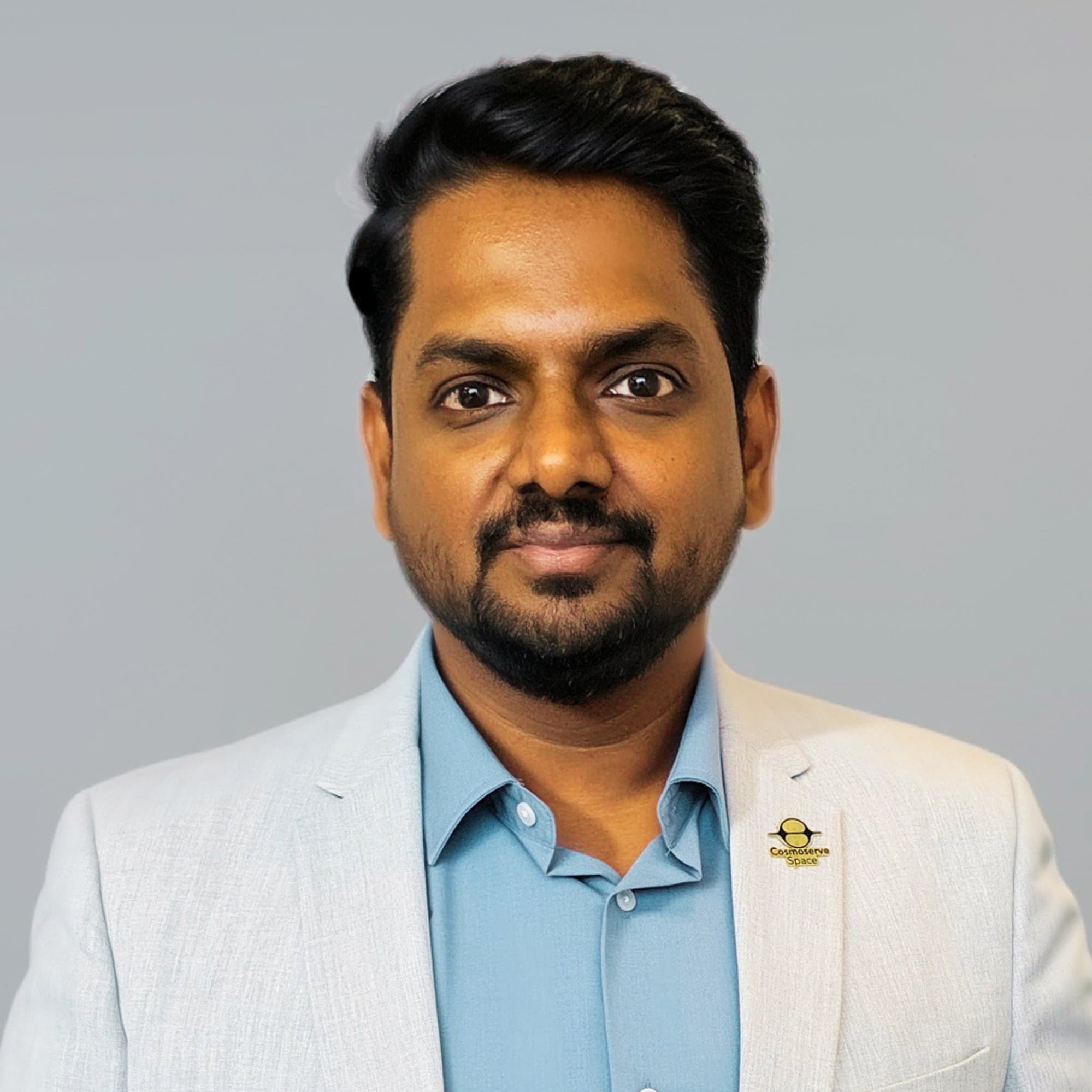
Building the Next Space Economy: Chiranjeevi Phanindra and Cosmoserve's Case for Orbital Maintenance
Chiranjeevi Phanindra, Founder & CEO of Cosmoserve Space, spent 14 years at ISRO working on re-entry and human spaceflight. Today, he is focused on a vital challenge: keeping Earth’s orbit usable.
Read Full Story
Corporate Visionaries
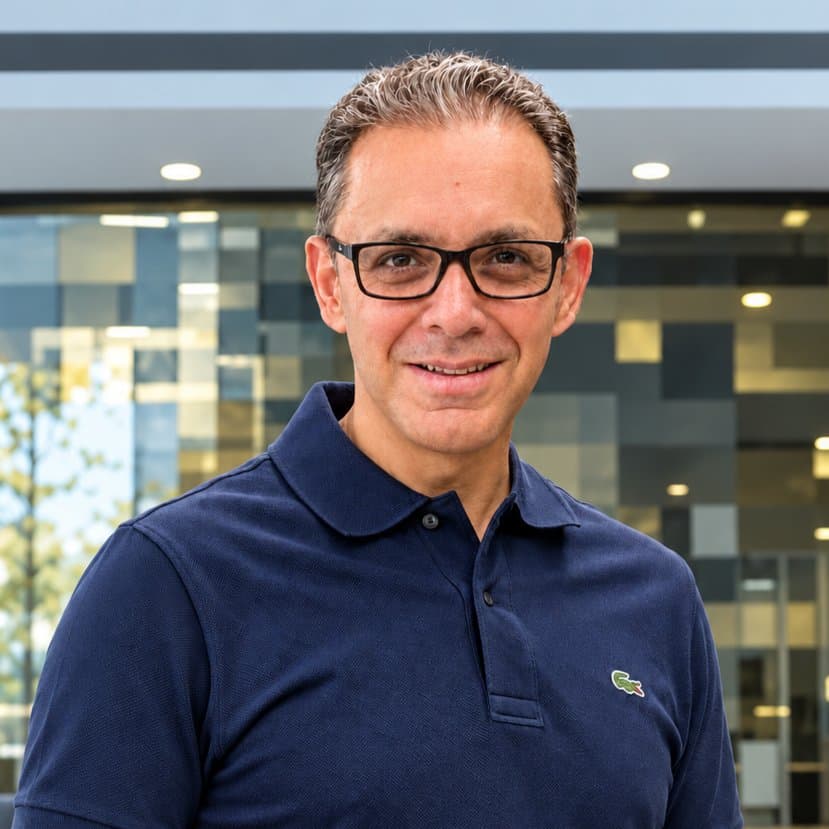
Shashank Sahni on What Success Leaves Out
Shashank Sahni, Google’s Managing Director of Global Ads Solutions, reflects on what customers reveal, what ambitious teams need from their leaders & what the mountains and marathons have taught him about going further.
Read Full Story
Corporate Visionaries
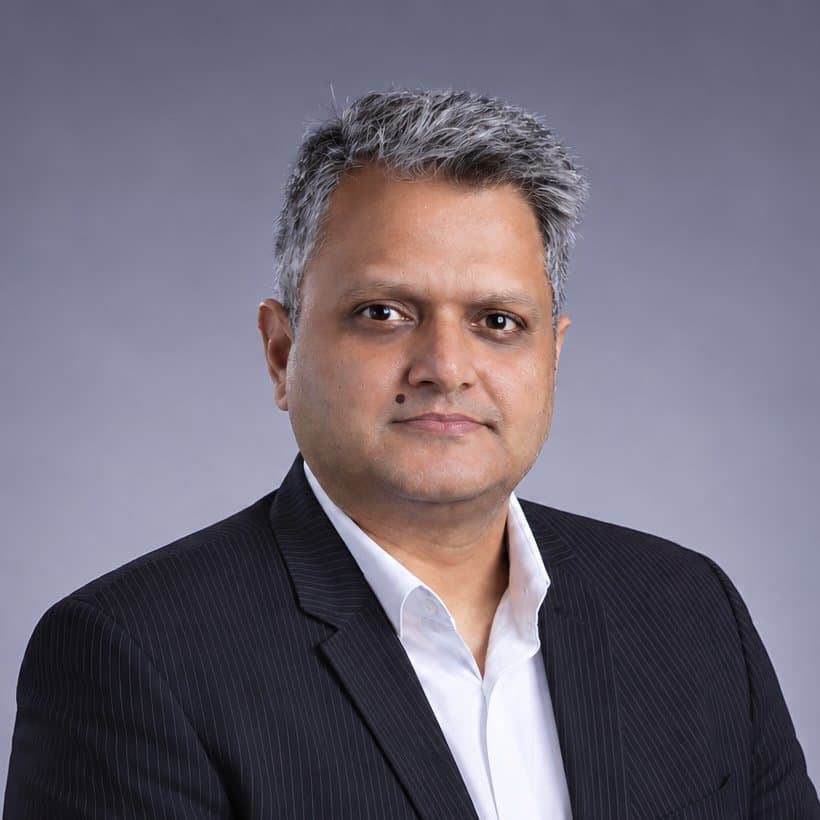
Clinical Multiplication: Divesh Singla on the Healthcare AI Case That Headlines Keep Missing
Divesh Singla, Managing Director, India at Veradigm, brings two decades in healthcare technology to the AI question leaders cannot avoid: how to expand clinical capacity without weakening human judgment.
Read Full Story