Category: Corporate Visionaries
Rajneesh Wadhwa argues that modern capitalism is no longer defined by speed alone, but by the intelligence of the systems that sustain it. Drawing on decades across global finance, infrastructure, and governance, he advances a central idea: durable economic advantage comes from comprehension, integrity, and the ability to learn from breakdowns, not just momentum. For him, the future belongs to institutions that balance growth with accountability and design capital to think, not just move.
Rajneesh Wadhwa: Building the Mind of Modern Capitalism
IndiSight Editorial
Feb 17, 2026
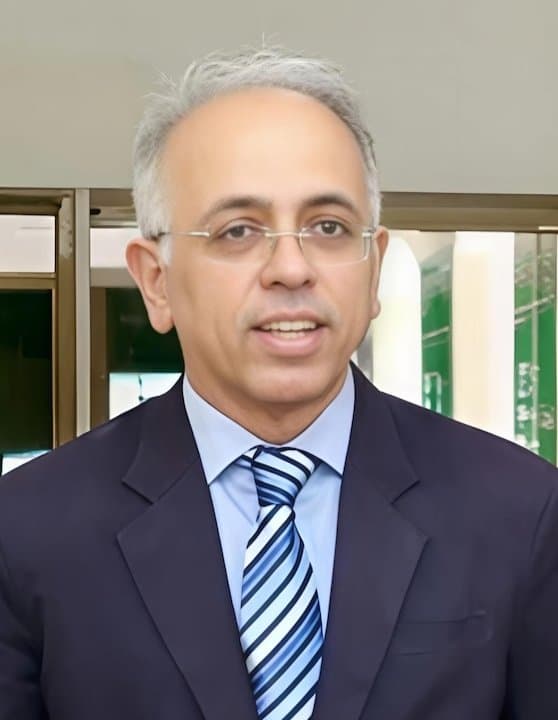
Rajneesh Wadhwa
Founder · The Distress Advantage
Gurugram
Acceleration once defined modern capitalism. The faster a company scaled, the more successful it appeared; the faster capital moved, the more efficient markets seemed. That equation has changed. The next decade belongs to systems that think as hard as they move. Economic advantage now depends on judgment, on how well leaders balance speed with comprehension and growth with governance.
Across industries, boards are beginning to realize that expansion, ethics, and longevity cannot exist on separate ledgers. Profitability, accountability, and purpose now share the same balance sheet. The question has shifted from how fast organizations can grow to whether their progress can survive scrutiny. The institutions that will lead are those that combine agility with integrity, creating value that lasts because it can withstand examination.
Rajneesh Wadhwa has spent over three decades navigating this reality. His career has crossed banking in London, entrepreneurship in the United States, renewable energy and infrastructure in India, and higher education and AI governance in the United Kingdom. Behind these transitions lies one principle: systems sustain themselves when they understand what holds them together. For Rajneesh, sustainable advantage has less to do with momentum and more to do with comprehension.
He calls this philosophy The Distress Advantage, a belief that the moments when a system breaks reveal its most accurate information. Having led the turnaround of more than ₹1,500 crore in distressed assets, he argues that resilience emerges not from constant motion but from disciplined reflection and redesign. “Capital behaves as it is trained to,” he says. “The question is whether our systems still reward intelligence or only speed.”
Formative Lessons
Rajneesh’s first lessons in enterprise came from his father’s printing business, built from scratch after Partition. The business thrived not on scale but on precision and reliability. When Rajneesh underperformed in school, his father gave him a choice: study seriously or learn the cost of every rupee by working at the press. “That conversation taught me accountability before I even knew what it meant,” he recalls.
Engineering studies in Nagpur taught him the comfort of logic, systems that behaved predictably when designed with integrity. An MBA in Boston exposed him to deregulation, digital finance, and globalization. The experience also revealed an imbalance. “Technology was moving faster than the values that governed it,” he says. “It made me wonder how long progress could outrun reflection.”
At Air France, he began in ticket operations, a role that demanded accuracy and patience. “That role showed me that consistency at the bottom of a system determines reliability at the top,” he says. Later at Orange Technologies in the UK, he worked under Lord Peter Imbert, who told him, “Either it’s done, or it isn’t.” The lesson stayed with him.
Accountability isn’t a philosophy. It’s a habit.
When he joined Standard Chartered to help integrate ANZ Grindlays in India, the assignment was intense. The goal was to align teams, operations, and credibility under public pressure. “The math of mergers isn’t hard,” he says. “The hard part is keeping ownership of outcomes clear.”
His entrepreneurial chapter in the United States tested different muscles. He built a technology company that specialized in migrating legacy systems to web platforms, a precursor to cloud adoption. The business grew rapidly and went public. But success brought dissonance. “We were efficient, but we were losing meaning,” he says. He exited voluntarily, distributed his equity to employees, and returned to India. “What I built in others mattered more than what I could keep for myself.” That decision redefined his compass, moving him from expansion to alignment and from ambition to architecture.
Turning Crisis into Intelligence
Rajneesh’s later years have been devoted to understanding why systems fail. He views corporate distress not as collapse but as unprocessed intelligence.
Most crises aren’t financial. They’re cognitive. When leaders stop interpreting signals accurately, systems start repeating mistakes.
The Distress Advantage begins with diagnosis. Every breakdown, Rajneesh argues, stems from one of three deficits: capital, coordination, or conscience. Each demands a different response. Adding liquidity without repairing logic only delays decay. “Money,” he explains, “multiplies what already exists. If a system is broken, funding magnifies the break.”
His recovery work starts with people, not spreadsheets. He listens for how information moves, how disagreement is managed, and how truth is handled. “You can read an organization’s future by how it handles dissent,” he says. In his view, truth-telling is the most undervalued form of capital.
Governance fails the moment honesty becomes negotiable.
Rajneesh often reframes ethics as efficiency. “Integrity reduces friction,” he says. “It makes collaboration smoother, decisions faster, and execution cleaner.” For him, ethics is not a moral accessory. It is an operating advantage. Companies that internalize this principle recover faster and remain stable longer.
He also believes that failure must be studied like data.
Every failure carries a map of what went unseen. Treat it as information, not indictment.
Over the years, his diagnostic approach has influenced how banks manage recovery, how funds evaluate stressed assets, and how governments design institutional renewal. “Resilience,” he says, “isn’t inherited. It’s engineered.”
Capital as a Design Problem
Rajneesh sees capital as an intelligent but morally neutral system. “It learns faster than people, but it doesn’t know why it learns,” he says. Working across finance and infrastructure, he discovered that most breakdowns originate in misaligned incentives, not poor ideas. “Technology fails less often than governance,” he notes. “We overengineer the product and underengineer the process that holds it together.”
His decade in renewable energy confirmed this. He helped mobilize more than a billion dollars in projects across Asia, guiding investments in solar, manufacturing, and sustainable infrastructure. The lessons were consistent. Clean energy often failed not because of technology, but because markets, regulators, and communities moved at different speeds. “Coordination, not capability, is the real bottleneck,” he says.
To close that gap, he proposed Return on Integrity (ROI²), a measure linking governance maturity to cost of capital.
Markets already penalize opacity. Soon, they’ll reward credibility.
He believes future valuation models will integrate behavioral reliability, examining whether leaders and institutions keep promises over time. “We have metrics for emissions and compliance,” he adds. “It’s time we develop metrics for intention.”
His work in AI governance draws from the same logic. “Artificial intelligence is capitalism in digital form,” he says. “It optimizes efficiency without moral context. The question is not whether machines will make decisions, but whether we’ll still understand the principles guiding them.” For Rajneesh, the next frontier of leadership lies in designing systems, financial or algorithmic, that can act intelligently without abandoning conscience.
Leadership as a Discipline of Design
Rajneesh defines leadership as the ability to sustain logic under complexity. Leaders, in his view, are not orchestrators of activity but designers of coherence. “The job,” he says, “is to keep structure and purpose aligned when everything else shifts.”
He cautions founders and executives that ambition, if unchecked, leads to fatigue rather than progress. Many organizations, he observes, are built for motion but not for thought. “Speed without comprehension exhausts people,” he says. “The first act of leadership is to slow down the system long enough to think clearly.”
His Four Filters of Leadership Intelligence serve as a guide. The first, Moral Awareness, asks whether decisions advance profit or principle. The second, Cognitive Balance, examines how an organization behaves under stress. The third, Structural Alignment, measures whether incentives reinforce responsibility. The fourth, Temporal Patience, tests whether leaders can build for decades, not quarters. “These are practical lenses,” he says. “They help organizations stay intelligent when circumstances become unpredictable.”
He treats composure as a form of capital. “Calm is precision,” he says. “It clarifies timing, improves interpretation, and prevents costly overreaction.” In turnaround settings, he often slows meeting cycles to reintroduce reflection. “Panic burns more value than delay,” he explains.
Rajneesh considers failure the most honest diagnostic tool in management. “Every breakdown shows what the structure couldn’t support,” he says. He urges boards to treat recurring mistakes as symptoms of design flaws, not personal shortcomings. “Leadership matures when systems learn from themselves.”
When entering complex engagements, he observes how information flows inside the organization, how decisions are communicated, and how accountability moves. “Decay begins when people protect their position more than the purpose,” he says.
He also believes that authority is measured not by visibility but by proportion.
Real influence doesn’t shout. It adjusts with precision.
His emphasis on composure and clarity has made him a sought-after advisor for boards that face ethical or operational drift.
For Rajneesh, leadership is fundamentally a design discipline, the creation of systems that remain rational even when leaders change. “Strong institutions don’t depend on charisma,” he says. “They depend on configuration. They keep thinking clearly even when everyone else reacts.”
Governance in a Cognitive Economy
Rajneesh believes the next revolution will be cognitive, not industrial. “We’ve taught machines how to decide,” he says. “Now we need to teach institutions how to interpret.”
He identifies governance, education, and energy as the core levers of global redesign. Each represents a test of how well societies can align intelligence with intention. “Technology has multiplied reach,” he says. “It must now improve reason.”
As Professor of Practice in AI Governance and Ethics, Rajneesh develops frameworks that help institutions manage algorithmic accountability. His focus is not compliance but comprehension, ensuring that systems remain transparent and explainable. “Artificial intelligence doesn’t replace governance,” he says. “It exposes its maturity.”
In higher education, he is helping design a university model that blends science, governance, and consciousness.
Education has to evolve beyond employability. It must cultivate discernment, the ability to weigh consequences before making decisions.
He describes this evolution as moral efficiency, the capacity to turn ethical awareness into measurable performance. Economies that master this, he predicts, will gain stability and influence in the coming decades. “Power will move to those who can connect intelligence with empathy and ambition with accountability,” he says.
Lessons in Leadership
Trust, once earned, accelerates every decision and lowers every cost.
Strategic restraint protects value more effectively than urgency.
When ethics are embedded in the process, organizations act responsibly without supervision.
Growth becomes meaningful only when it strengthens the environment that supports it.
Failure, examined objectively, reveals the logic flaws behind recurring breakdowns.
Judgment is the ultimate differentiator between management and leadership.
Sustainability works best when treated as a design principle, not a campaign.
Credibility is the most convertible asset in modern markets. It moves capital faster than promotion ever could.
The Future Belongs to Builders of Trust
Global capitalism is entering a quieter, more exacting phase. Investors now separate firms that create long-term value from those that simply circulate capital. Regulators link access to transparency. Customers reward reliability over promises. In this environment, accountability has become a source of advantage.
Leadership today is less about expansion and more about alignment, keeping innovation, governance, and purpose moving in the same direction. Strategy has evolved from managing assets to managing consequences.
Capital will always follow intelligence. But in the next economy, intelligence will be judged by conscience.
Organizations that understand this shift will not only adapt to the future but define it. Their edge will come from credibility, not speed, and from trust, not visibility. In the long arc of commerce, that may prove to be the only advantage that compounds indefinitely.
Our Suggestions to Read
Discover The Leaders Shaping India's Business Landscape.
Founders & Innovators
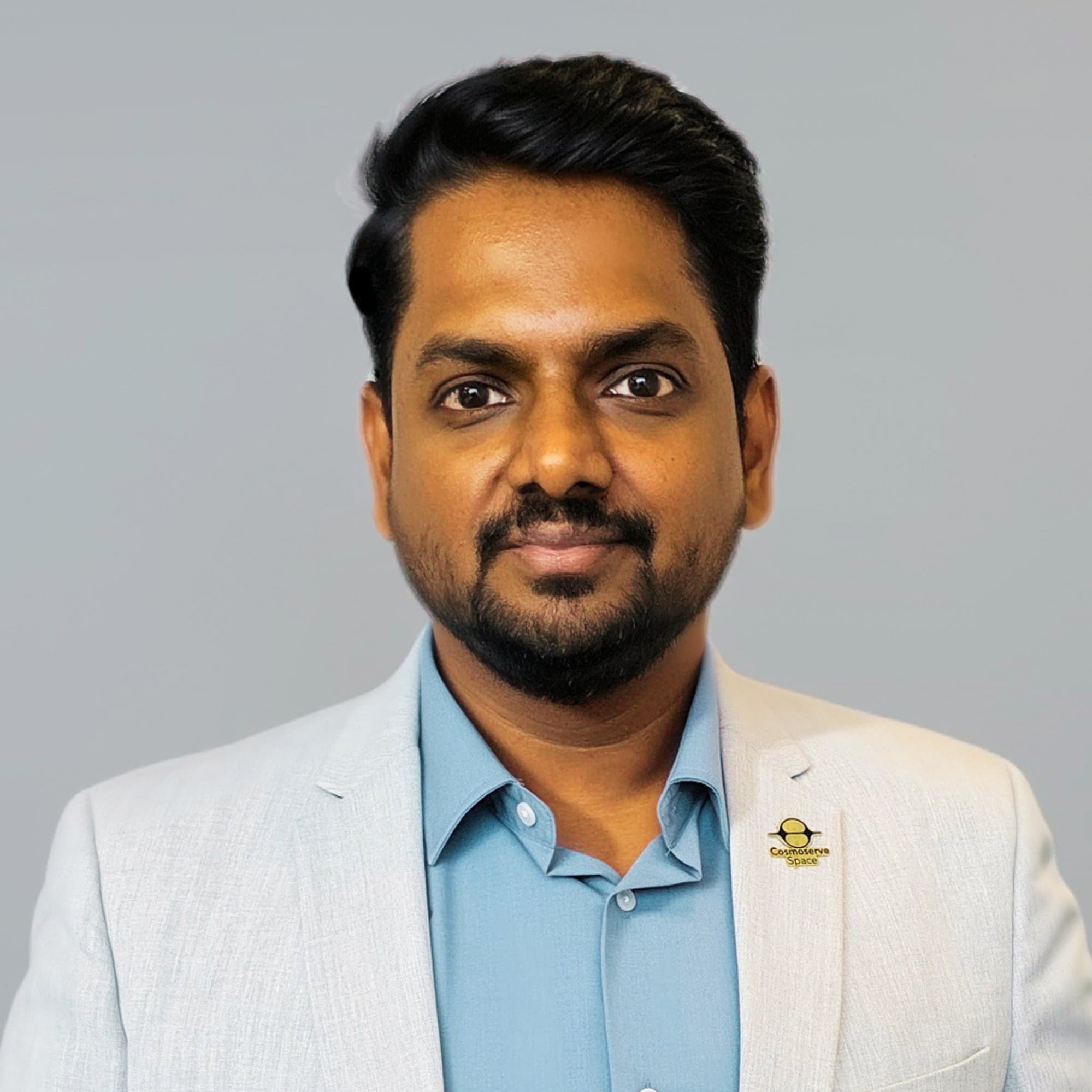
Building the Next Space Economy: Chiranjeevi Phanindra and Cosmoserve's Case for Orbital Maintenance
Chiranjeevi Phanindra, Founder & CEO of Cosmoserve Space, spent 14 years at ISRO working on re-entry and human spaceflight. Today, he is focused on a vital challenge: keeping Earth’s orbit usable.
Read Full Story

Corporate Visionaries
Shashank Sahni on What Success Leaves Out
Shashank Sahni, Google’s Managing Director of Global Ads Solutions, reflects on what customers reveal, what ambitious teams need from their leaders & what the mountains and marathons have taught him about going further.
Read Full Story
Corporate Visionaries
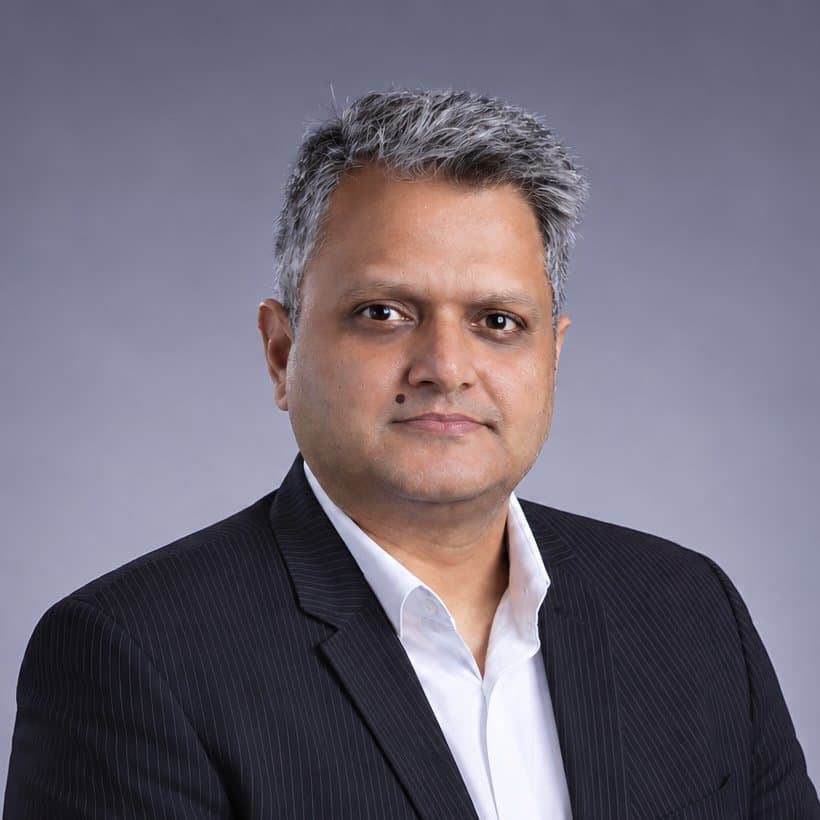
Clinical Multiplication: Divesh Singla on the Healthcare AI Case That Headlines Keep Missing
Divesh Singla, Managing Director, India at Veradigm, brings two decades in healthcare technology to the AI question leaders cannot avoid: how to expand clinical capacity without weakening human judgment.
Read Full Story