Category: Corporate Visionaries
A deep exploration of Dr. Dinesh Chandrasekar’s philosophy on responsible AI, trust-centered innovation, and the ethical evolution of leadership. The piece examines how technology, conscience, and human interpretive intelligence must work together to shape the future, with India emerging as a global testbed for ethical AI at scale.
The Next Frontier of Thought: Dr. Dinesh Chandrasekar on Conscious Technology and the Ethics of Acceleration
IndiSight Editorial
Dec 14, 2025
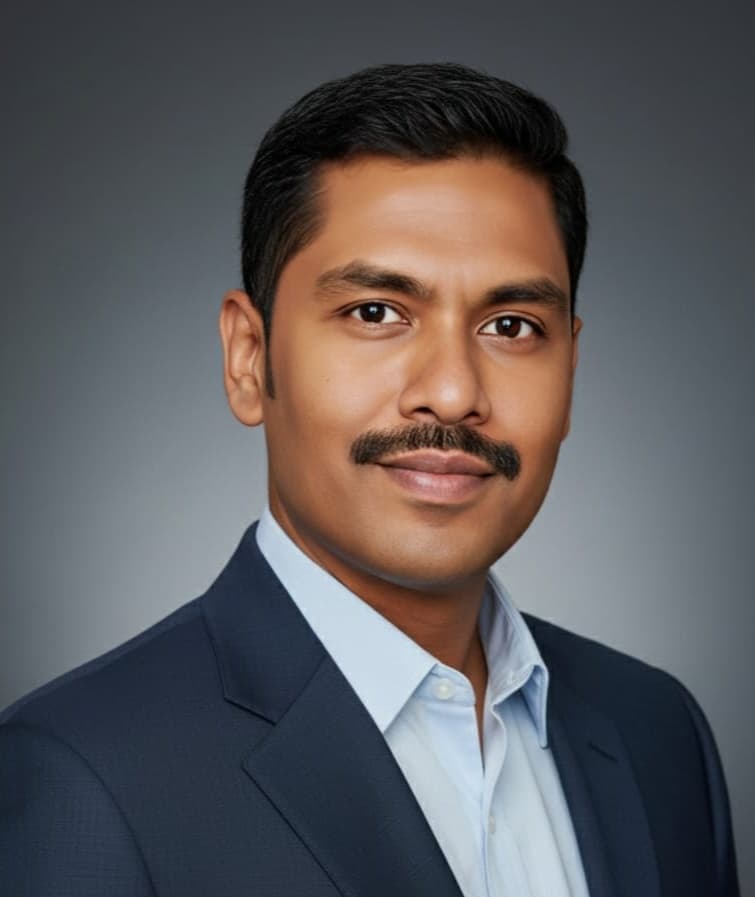
Dr. Dinesh Chandrasekar
Chief Strategy Officer & Country Head · Centific AI
Every technological revolution begins as a story of capability and ends as a test of conscience. Artificial Intelligence has now crossed that threshold. It no longer merely automates; it interprets, predicts, and increasingly decides. The question confronting leaders today is not whether AI can think, but whether humans can still think clearly within systems shaped by it.
For Dr. Dinesh Chandrasekar, Chief Strategy Officer at Centific, this is the defining challenge of our age. “We’re building systems that can think,” he says. “The real question is whether we can think with them, not just through them.”
Across 27 years, Dr. Dinesh’s career has mirrored the evolution of enterprise itself, from the precision of Citigroup and GE to the complex creativity of Hitachi, and now to Centific, a company redefining AI through responsibility. He stands at the intersection of science and philosophy, someone who treats technology not as an instrument of efficiency but as an instrument of ethics. “Technology is not neutral,” he says. “It inherits the morality of its makers. That is why the next frontier of leadership is not engineering; it is enlightenment.”
Defining Tensions: Technology, Ethics, and the Discipline of Restraint
The corporate history of innovation is often narrated as acceleration. Dr. Dinesh reframes it as calibration. “Acceleration without alignment creates distortion,” he says. “It’s not enough to move fast; you have to move wisely.”
At Centific, this idea shaped what he calls the responsibility scaffold, a structural layer that tests every algorithm for bias, drift, and consequence before it scales. It’s not a compliance checkbox; it’s part of design logic. “Governance is not bureaucracy,” he explains. “It’s architecture. Without it, intelligence collapses under its own velocity.”
He often cautions against mistaking motion for progress. “Speed is seductive,” he says, “but speed without awareness leads to fragility.” In his view, the most undervalued leadership skill of this decade is restraint, the ability to slow interpretation before accelerating execution. “In a data-saturated world, wisdom begins with pause.”
This isn’t a philosophical abstraction. It’s a measurable economic truth. Dr. Dinesh calls trust “the new capital asset.” In industries where algorithms decide credit, logistics, or medical outcomes, bias is not just a moral concern; it’s a financial one. “Markets are beginning to price morality,” he says. “Reputation is liquidity. Lose it once, and you lose compounding credibility.”
The Future of Work and Responsible Intelligence
If the industrial age optimized physical labor and the digital age optimized informational labor, Dr. Dinesh believes the intelligent age must optimize interpretive labor, the ability to contextualize, connect, and create meaning. “Machines will handle repetition,” he says. “Humans must now master relevance.”
He predicts that productivity itself will soon be measured differently. “Output per hour is an industrial metric,” he says. “Output per insight will define the intelligent era.”
At Centific, this philosophy powers responsible acceleration, a practice that pairs velocity with vigilance. Every major deployment integrates a human conscience loop, where technologists, linguists, and behavioral scientists continuously review AI outcomes. “You can automate decision-making,” he says. “You cannot automate discernment.”
He sees India as the moral and technical laboratory for responsible AI.
If an algorithm can be ethical in India, with our density, diversity, and democracy, it can be ethical anywhere. Our complexity is our competitive advantage.
This is more than national pride. For Dr. Dinesh, India’s diversity is its systemic gift to global technology. “Silicon Valley built the tools,” he says. “India can build the conscience.” He imagines an economy where the next export isn’t code, but ethical intelligence, values embedded into systems by design, not regulation. “Our contradictions train empathy,” he adds. “Empathy will be the new infrastructure of innovation.”
Education, in his view, must evolve with equal urgency. “We don’t need coders,” he says. “We need conscious builders.” He envisions future curricula grounded in cognitive diversity, where engineers learn ethics, anthropologists learn algorithms, and business leaders learn behavioral design. “Technology rewards competence,” he says. “Civilization rewards conscience.”
The Economics of Trust and the Architecture of Advantage
Dr. Dinesh argues that the next economy will reward compound integrity, the idea that credibility compounds faster than capital. “Data built the digital economy,” he says. “Trust will build the intelligent one.”
Centific’s operational model reflects that. Every engagement is designed not just for delivery, but for ethical compounding: each transparent act enhances stakeholder trust, which then attracts better clients, partnerships, and talent. “Integrity is the only currency that appreciates with use,” he says.
He predicts that investors will soon measure a company’s ethical resilience alongside profit. “The next decade’s valuation metrics will include explainability, fairness, and accountability,” he says. “Just as ESG transformed sustainability from compliance to competitiveness, Responsible AI will transform ethics from philosophy to performance.”
He is blunt about economics. “Ethics without economics fails,” he says. “You have to make responsibility profitable.” His concept of ethical efficiency, reducing risk through transparency, translates directly into business advantage. Centific’s clients report not only compliance confidence but reduced project rework and improved retention. “Governance doesn’t slow you down,” he says. “It stabilizes acceleration.”
He also challenges policymakers to rethink how capital interacts with conscience.
Reputation will be securitized. Trust will become an asset class. The market will shift from attention to accountability.
Cognitive Leadership and Organizational Renewal
In Dr. Dinesh’s mind, the most important shift in business leadership isn’t technological; it’s cognitive. “The modern enterprise must think like an adaptive brain,” he says. “It must learn, forget, and relearn continuously.”
At Centific, he operationalized this idea through compound learning loops, systems that capture learnings from each project to refine every next one. “Knowledge is perishable,” he says. “Awareness is renewable.”
He believes companies should start tracking a Learning Return on Investment, the ratio between insights generated and decisions improved. “The true measure of maturity,” he says, “is not how much data you own but how intelligently you evolve.”
This framework emerged from his early days in journalism, when he learned that information without interpretation is noise. “A journalist doesn’t just report facts,” he says. “He connects them into meaning. That’s what leadership now demands, turning data into judgment.”
He calls this interpretive intelligence, the capacity to see ahead through patterns, not predictions. “You can teach code,” he says. “You can’t teach perspective.” That must be cultivated through lived experience, reflection, and ethical discomfort.
He often reminds young leaders that the greatest barrier to reinvention is expertise. Unlearning is the hardest skill for high performers. His mantra for executives is simple: “Stay curious. Stay teachable. Stay unfinished.”
India and the Ethics of Scale
For Dr. Dinesh, India’s most overlooked advantage is philosophical, not demographic. “We’ve always lived with contradiction,” he says. “That’s why we understand complexity better than most societies.”
He sees India’s next strategic role as the world’s ethical sandbox, a place where diversity stress-tests systems. “When we teach machines to learn from plurality,” he says, “we make them globally relevant.” This perspective reframes India’s economic identity from technology exporter to values architect.
He gives the example of Centific’s multilingual AI program, built with teams across Hyderabad, Manila, Nairobi, and Warsaw. Each dataset is validated by native linguists to ensure fairness and accuracy. “That’s what ethical inclusion looks like,” he says. “It’s not charity; it’s calibration.”
For Dr. Dinesh, diversity isn't a moral virtue; it's a mathematical necessity. “Homogeneity breeds bias,” he says. “Diversity ensures accuracy.” This philosophy has led Centific to embed local context in every global deployment. “A good model doesn’t just work everywhere,” he says. “It behaves responsibly everywhere.”
He argues that India can export this approach as policy, not just practice, sharing frameworks that align inclusion, data sovereignty, and trust. “If the last century’s global order was built on oil and capital,” he says, “the next will be built on ethics and intelligence.”
Global Vision: Civilization, Cooperation, and the Ethics of Progress
Dr. Dinesh describes AI as humanity’s first experiment in shared cognition. “For the first time, we are creating intelligence that learns from us, interprets us, and will one day advise us,” he says. “We must decide what values we want it to inherit.”
He envisions a constitution for consciousness, a global compact that defines how intelligence is created, governed, and distributed. “We’ve learned to regulate information,” he says. “Now we must learn to regulate interpretation.”
This responsibility, he insists, cannot be monopolized. “Governments can regulate, but only businesses can operationalize ethics,” he says. “And only educators can sustain it.”
He calls for distributed ethics, a decentralized moral architecture that scales through frameworks, not policies. “We already have global supply chains for materials,” he says. “Now we need supply chains for values.”
India, he believes, is uniquely qualified to help build that order.
Our democracy trains us in coexistence, That’s the rarest technology skill today.
He imagines a world where ethics is treated as infrastructure, codified, tested, and funded like power grids. “The next infrastructure race will not be for 5G or chips,” he says. “It will be for trust.”
Yet his optimism is pragmatic. “Technology will fail,” he admits. “But when it fails ethically, it teaches. When it fails deceptively, it destroys.”
For Dr. Dinesh, the measure of civilization’s progress will not be how powerful our systems become, but how much dignity they preserve. “Efficiency creates value,” he says. “Humanity creates meaning. The future will need both.”
Leadership Lessons
Build organizations as learning systems, not control systems. Growth without reflection scales fragility.
Design for responsibility, not just velocity. Sustainable advantage lies in consequence management.
Measure productivity in insight, not output. Intelligence compounds only when learning compounds.
Lead with dual lenses. The microscope manages the present; the telescope designs the future.
Normalize failure as feedback. Progress is the science of iterative humility.
Scale culture before infrastructure. Values, not code, determine longevity.
Anchor technology in ethics. Every algorithm is a moral decision written in syntax.
Redefine success as systemic wisdom. Legacy is the residue of ethical decisions over time.
Move from competition to cooperation. Shared intelligence outperforms isolated excellence.
Stay teachable. In the age of AI, unlearning is a competitive skill.
Value human energy as capital. The most efficient systems are those that protect emotional bandwidth.
Live your philosophy before you scale it. Leadership credibility begins as personal alignment.
Engineer empathy into systems. Inclusion is not a virtue; it’s the foundation of accuracy.
Institutionalize curiosity. Innovation is not an accident; it’s the byproduct of disciplined questioning.
Closing Reflection: The Architecture of Legacy
For Dr. Dinesh, leadership is not about power; it’s about coherence. “You can buy data,” he says. “You can’t buy discernment.”
He believes the best leaders retire in motion, constantly reinventing before disruption forces them to. “Reinvention is not a phase,” he says. “It’s a philosophy.”
He defines success not by scale but by wisdom.
Success is not building the biggest company, It’s leaving behind a wiser system.
His leadership operates on three constants: humility before complexity, empathy before action, and ethics before scale. From his newsroom beginnings at The Indian Express to boardrooms shaping frontier AI, his compass hasn’t changed. “Technology solves problems,” he says. “Wisdom solves patterns.”
As he reflects on the decades behind him, he remains focused on the decades ahead. “When machines learn to think,” he says, “humans must learn to feel more deeply.”
That single sentence captures the essence of his worldview. Intelligence may now exist outside the human brain, but wisdom still begins within the human conscience.
Our Suggestions to Read
Discover The Leaders Shaping India's Business Landscape.
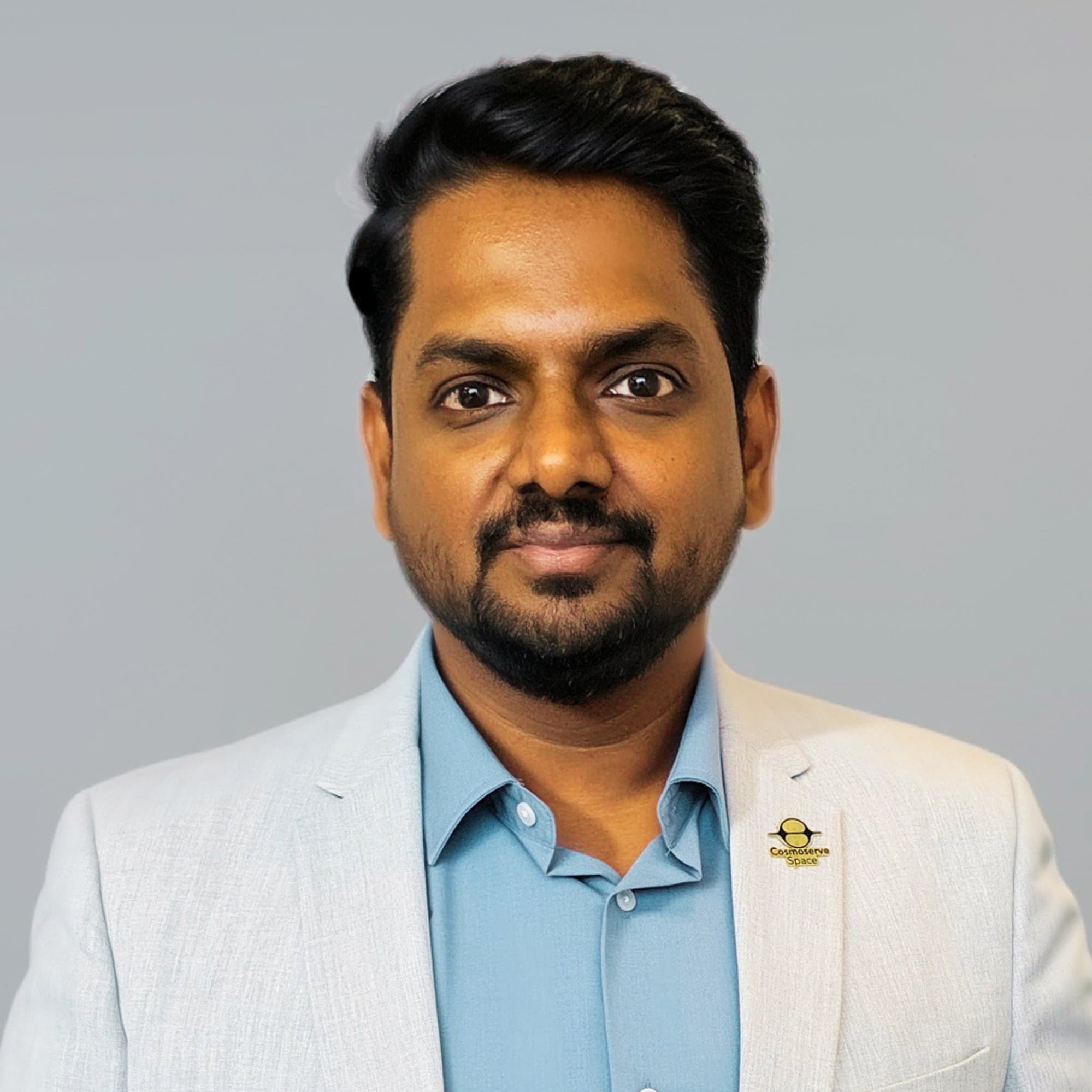
Founders & Innovators
Building the Next Space Economy: Chiranjeevi Phanindra and Cosmoserve's Case for Orbital Maintenance
Chiranjeevi Phanindra, Founder & CEO of Cosmoserve Space, spent 14 years at ISRO working on re-entry and human spaceflight. Today, he is focused on a vital challenge: keeping Earth’s orbit usable.
Read Full Story
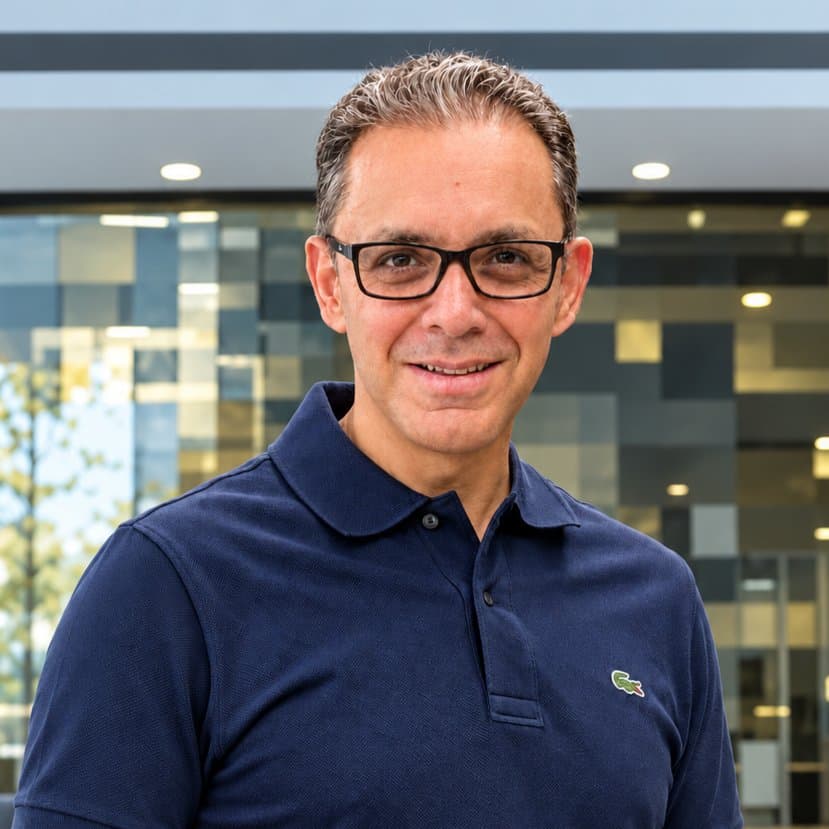
Corporate Visionaries
Shashank Sahni on What Success Leaves Out
Shashank Sahni, Google’s Managing Director of Global Ads Solutions, reflects on what customers reveal, what ambitious teams need from their leaders & what the mountains and marathons have taught him about going further.
Read Full Story
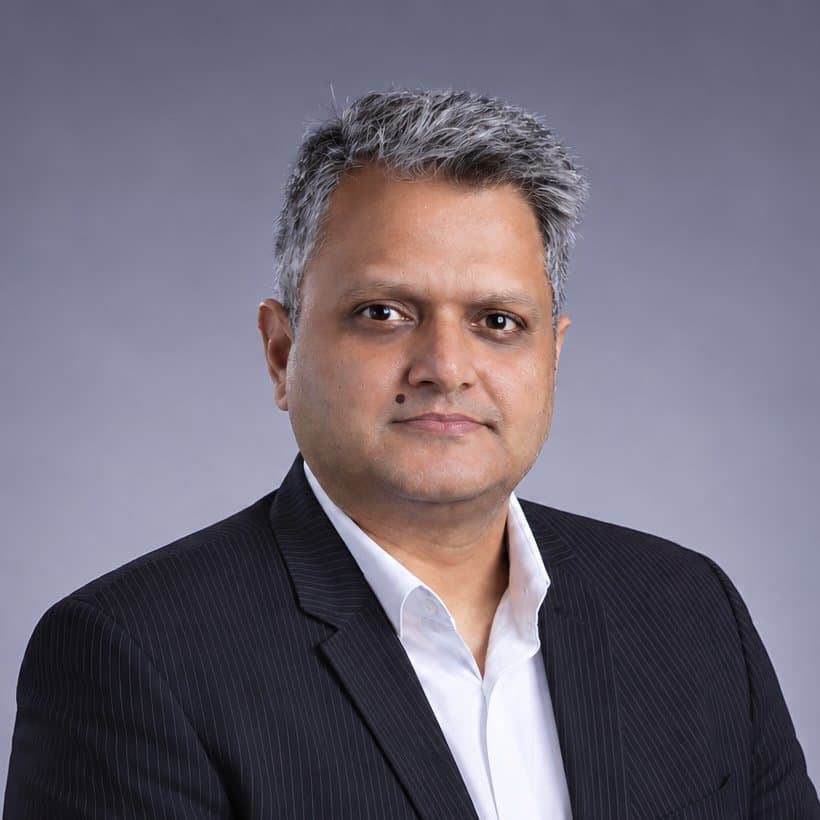
Corporate Visionaries
Clinical Multiplication: Divesh Singla on the Healthcare AI Case That Headlines Keep Missing
Divesh Singla, Managing Director, India at Veradigm, brings two decades in healthcare technology to the AI question leaders cannot avoid: how to expand clinical capacity without weakening human judgment.
Read Full Story