Category: Policy Shapers
Diana Moraru transformed Moldova's relationship with India through trust, credibility, and quiet diplomacy. Her leadership shows that enduring international partnerships are built one meaningful conversation at a time.
Diana Moraru: Making Moldova Matter in India
IndiSight Editorial
Sep 4, 2025
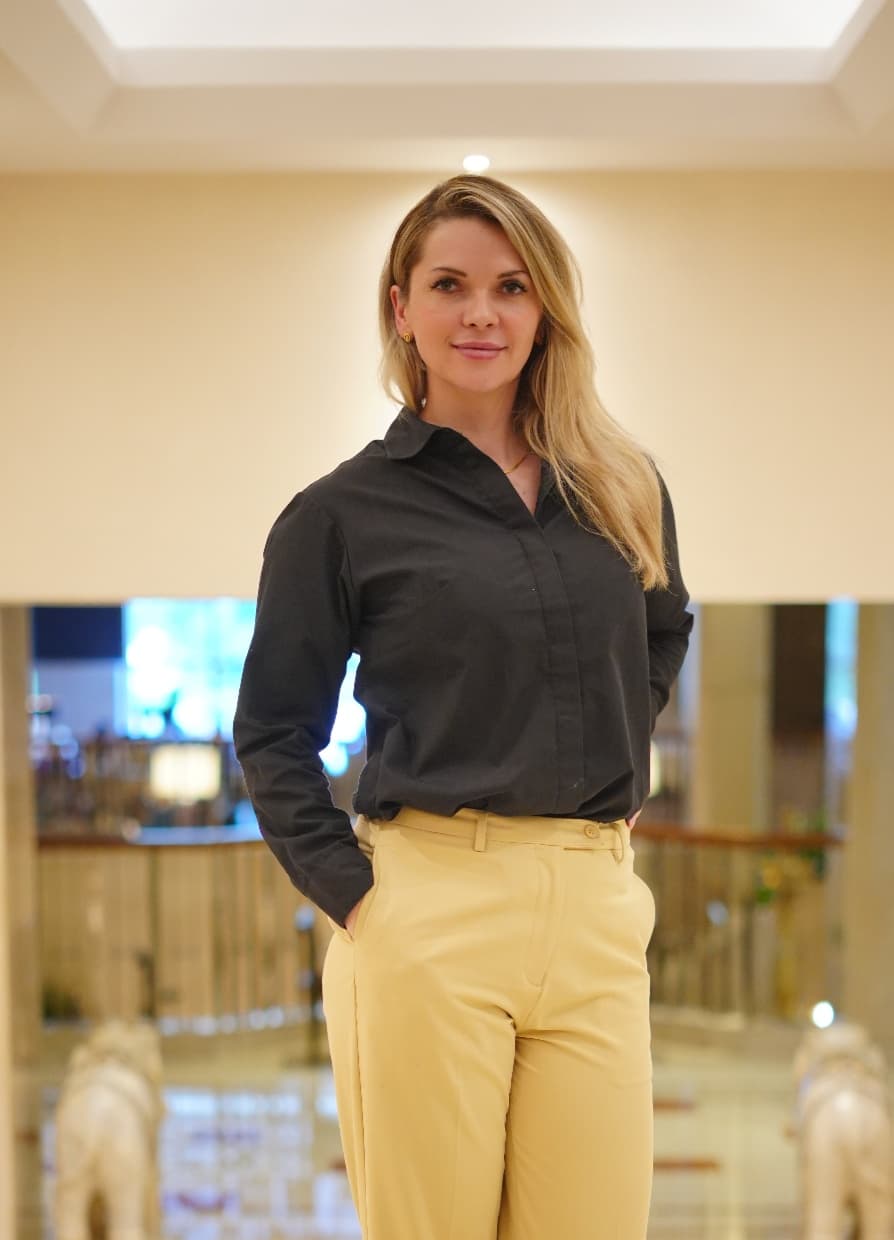
Diana Moraru
Founder & CEO · IndoMold Connect
Mumbai
Most people would never place Moldova and India in the same sentence. Diana Moraru not only imagined that link, she built it.
With IndoMold Connect, she has turned quiet conversations into corridors of trust, bringing two nations with little history of engagement into an emerging partnership in education, culture, and business.
Her leadership is not about headlines or handshakes. It is the slower, harder work of making the invisible visible.
Early on, she was dismissed and not taken seriously, but she kept showing up until Moldova stopped being an afterthought in Indian rooms. In doing so, she has offered the world an alternate blueprint for leadership: not inherited, not performed, but authored deliberately, one relationship at a time.
Leading Without a Map
Diana chose a terrain where no roadmap existed. There were no government mandates, corporate agendas, or precedents for the bridge she set out to build.
IndoMold Connect was born not from policy but from conviction; the belief that Moldova, a small European nation often overlooked, deserved a seat in dialogue with India, a rising global power in education, business, and technology.
At first glance, the two countries could not be more different. Moldova, a nation of just over 2.6 million people, is landlocked between Romania and Ukraine, its story often reduced to geography and geopolitics. India, home to more than a billion people, is not just a market but a continent-sized idea.
Their paths rarely crossed in history, their economies seldom touched, and their academic or cultural exchanges were almost nonexistent.
What began as Diana’s belief slowly became a platform. But in the absence of precedent, the credibility had to be hers.
“There was nothing to point to,” she recalls. “I had to become the credibility they could bank on.”
In the early days, boardrooms in India politely heard her out, then moved on. At one meeting, an executive even asked if Moldova is part of Russia. She carries that memory as a quiet reminder of how early-stage work is often met with misunderstanding.
“That clarified why I was there. If people didn’t know us, then my work was to change that.”
Where many would have seen rejection, Diana saw a blank page. She decided to write a story worth reading.
From Frameworks to Foundations
Before founding IndoMold Connect, Diana thrived in structured corporate environments. At Rezon Media and Renault, she managed teams, hit targets, and delivered on efficiency. But efficiency, she realized, was not the same as impact.
“I could deliver outcomes. But I wasn’t shaping anything meaningful.”
Leaving corporate life was not a career switch. It was a leap from predictability into ambiguity. Instead of hierarchy, she embraced authorship. What she was shaping wasn’t just partnership but a dialogue between two very different countries. It demanded patience, cultural sensitivity, and more listening than speaking.
Her leadership shifted too. Corporate life had trained her to optimize for speed. IndoMold Connect required rhythm, trust, and timing. It was less about control and more about choreography.
She learned to measure progress not in weeks or quarters, but in seasons and years. She learned that sometimes the most important part of leadership is not pushing harder but waiting longer, trusting that the seeds she planted would eventually take root.
Building Without Recognition
Unlike many international ventures, IndoMold Connect didn’t start with ceremonies or announcements. It began in silence: late-night calls, coffee-shop introductions, quiet determination.
“I wasn’t building bridges. I was laying foundations beneath bridges that hadn’t even been imagined yet.”
For months, there were no metrics. No headlines. Friends back home would ask what she was working on, and she found it difficult to describe. It was unprecedented. But she kept working. Without the comfort of external validation, she was building something the world hadn’t yet learned to name.
And then, the first signals emerged: Indian students reaching out to Moldovan universities, professors expressing curiosity, entrepreneurs asking questions. Small, but significant.
They weren’t victories you could put on a billboard. But they were proof that Moldova could matter in India’s imagination if someone cared enough to hold the door open.
Leadership Assembled, Not Bestowed
Diana’s platform wasn’t handed to her; she built it brick by brick.
“You build in silence. You let your work become your eligibility.”
Her leadership rejects spectacle. She pays attention to the unspoken: the energy of a room, the fatigue in a negotiation, the cultural rhythms that dictate timing. Influence, to her, is not imposed; it is accumulated.
Each conversation is a thread, woven patiently into a net strong enough to hold possibility. It is leadership less about charisma and more about endurance.
Reframing Moldova: From Promotion to Positioning
While many nations pour resources into glossy branding campaigns, Diana chose a different path.
“I never set out to simply promote Moldova. I wanted to reposition it. Not by talking louder, but by being more exact.”
This choice mattered. Today, Indian students do not stumble upon Moldovan universities; they choose them. Moldovan wines are poised to enter India, ready to make their mark in the market. Entrepreneurs and educators no longer hear of Moldova as an afterthought; they recognize it as a partner with something distinct to offer.
Designing Systems That Outlast Their Founder
Diana designed IndoMold Connect not for attention but for resilience. Every structure she built was meant to endure quietly, intelligently, and long after she stepped away.
“I’m not interested in programs. I’m interested in permanence.”
For her, the true test of leadership is whether the system works without her. Her architecture follows principles that resist fragility:
Modular, not monolithic
Co-owned, not top-down
Evolving, not fixed
Emotionally intelligent, not just efficient
Her measure of success is not being indispensable.
“If it needs me forever,” she says, “then I’ve failed to design it right.”
In that philosophy lies a quiet redefinition of legacy: success not as visibility, but as continuity.
The Courage to Think in Decades
Diana invests in partnerships resilient enough to survive political cycles, narratives strong enough to outlast marketing trends, and systems flexible enough to grow beyond personalities.
“The most powerful systems are often the hardest to see, until they’re the only ones still standing.”
Her work suggests a model for how small states can engage with global powers. Instead of chasing scale, Moldova, through IndoMold Connect, positions itself as precise, adaptive, and deeply rooted in trust.
In a world often obsessed with immediacy, her long view is both rare and radical.
A Breakthrough Moment
For years, Moldova went unnoticed. Then came a turning point: Moldovan universities signed memorandums with Indian institutions.
“For the first time, I wasn’t the only one telling the story. Others were carrying it forward.”
That moment validated her philosophy: credibility built quietly can compound into momentum.
It also proved something larger: that even the smallest of nations, if represented with patience and precision, can carve a place in the imagination of a global power.
Influence Without Stagecraft
What Diana proves is unusual: that real influence doesn’t need spectacle. It can be built in quiet ways that last.
“If someone else can take this further without ever needing to credit me, I’ve done my job.”
This is not modesty; it is method. She has designed IndoMold Connect to be free of personality cults. It does not need her name at the center to work. It is meant to evolve, adapt, and endure.
Many assume that great leadership must always be visible. Diana proves otherwise, showing that the most enduring influence often comes quietly, not from being seen, but from being felt.
Where Moldova Meets India
Moldova and India were not often uttered in the same sentence. While both countries have people who believe in strong family values, share a love of food and art, and bond over stories shared around a dining table, they are vastly different in scale.
Moldova is a small European nation; intimate, strategic, and often overlooked. India is a vast, rising power, steering global conversations in education, trade, and technology. Their contrast is striking, yet it is in this very difference that new possibilities emerge.
For a long time, their paths barely crossed. But Diana saw an opportunity. She bridged Moldova’s knowledge and strength with India’s talent and appetite for growth. Together, they opened the door to exchanges that broaden horizons on both sides.
At a time when collaboration is both necessary and fragile, Diana’s work points to a new kind of diplomacy: personal, built on trust, and flexible enough to thrive beyond the walls of formal institutions.
A Blueprint for Global Builders
Diana’s story is not limited to connecting two countries. It stands as a lesson in modern leadership itself.
She represents a new class of builder: cross-border, cross-sector, cross-temporal.
Her philosophy offers lessons for small states, entrepreneurs, and policymakers alike:
Patience is strategy. If you want to create something truly impactful, you must accept that it will bear fruit in the long run, not overnight.
Strong systems live beyond the individual who built them. The strongest structures thrive when passed on.
Narratives shape futures. The story you tell becomes the system you build.
These are not just principles for Moldova and India. They are tools for anyone attempting to build in uncertain times.
The Architect Between Nations
Through IndoMold Connect, Diana has given us more than bilateral ties. She has given us a vision of leadership that resists impatience, noise, and ego.
Diana isn’t the kind of leader who needs the spotlight. She is busy laying a strong foundation, building something that she hopes will last long after she has moved on.
She believes that if her work lives on, if the partnerships she built continue to grow, and if the connections stand the test of time, then it is worth far more than any moment under the spotlight.
She is here to change the way the world learns to connect.
Our Suggestions to Read
Discover The Leaders Shaping India's Business Landscape.
Founders & Innovators
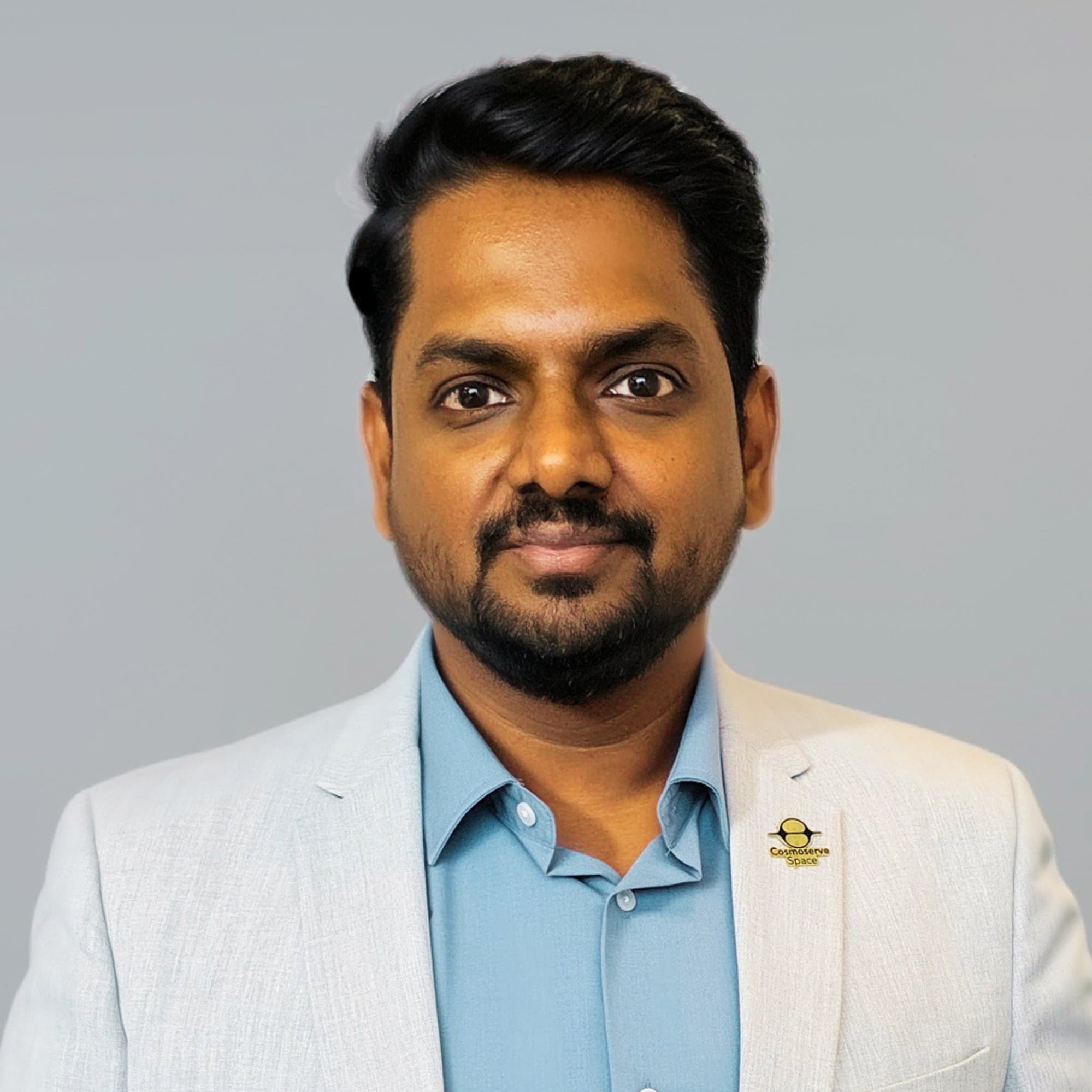
Building the Next Space Economy: Chiranjeevi Phanindra and Cosmoserve's Case for Orbital Maintenance
Chiranjeevi Phanindra, Founder & CEO of Cosmoserve Space, spent 14 years at ISRO working on re-entry and human spaceflight. Today, he is focused on a vital challenge: keeping Earth’s orbit usable.
Read Full Story
Corporate Visionaries
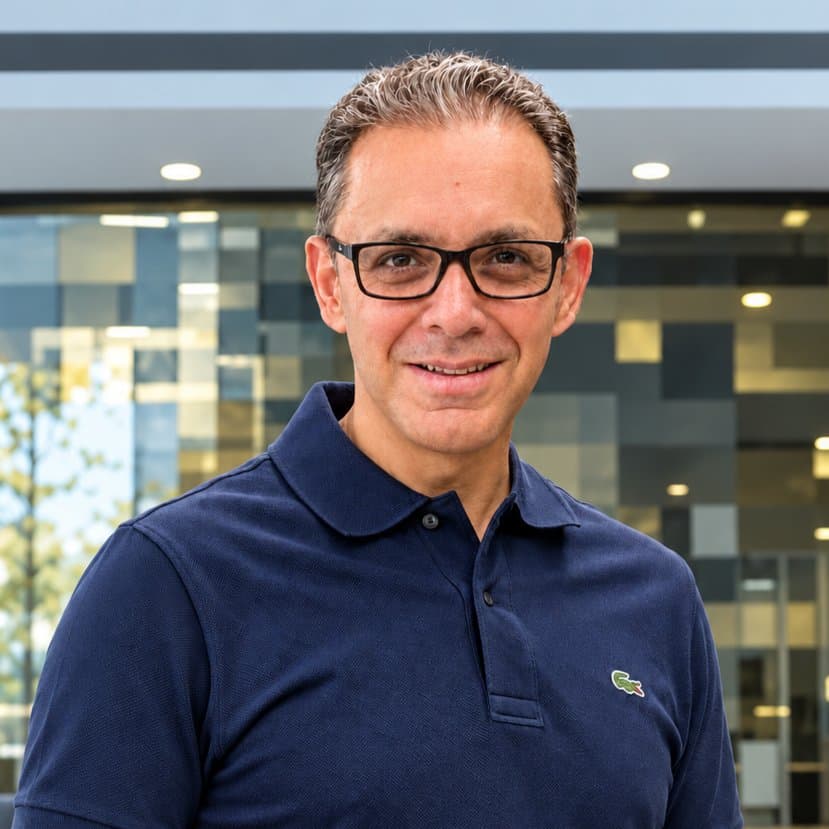
Shashank Sahni on What Success Leaves Out
Shashank Sahni, Google’s Managing Director of Global Ads Solutions, reflects on what customers reveal, what ambitious teams need from their leaders & what the mountains and marathons have taught him about going further.
Read Full Story
Corporate Visionaries
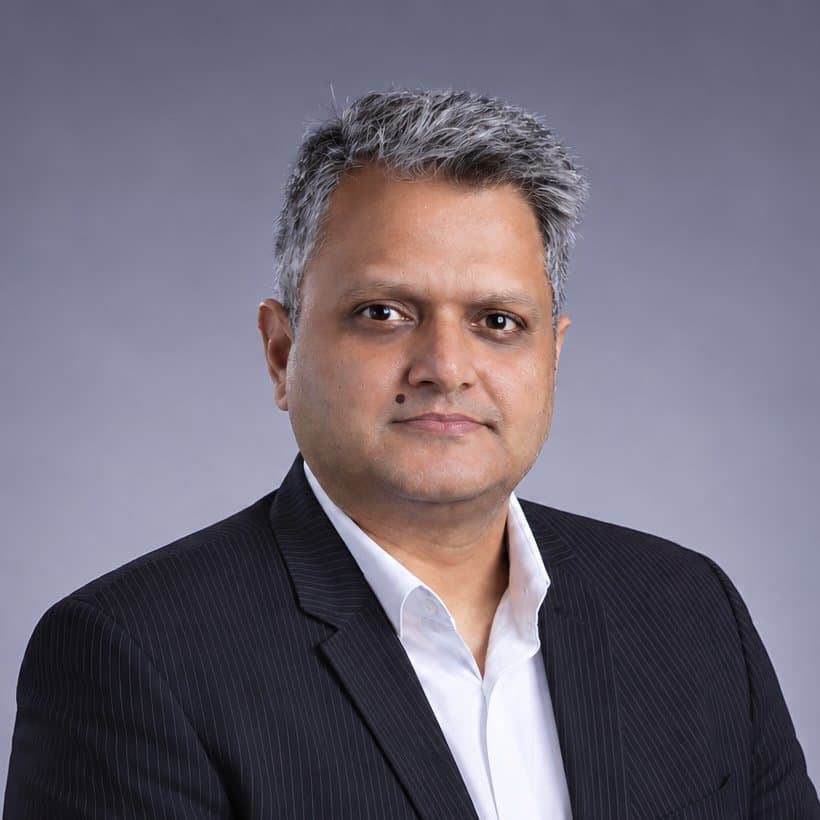
Clinical Multiplication: Divesh Singla on the Healthcare AI Case That Headlines Keep Missing
Divesh Singla, Managing Director, India at Veradigm, brings two decades in healthcare technology to the AI question leaders cannot avoid: how to expand clinical capacity without weakening human judgment.
Read Full Story