Category: Corporate Visionaries
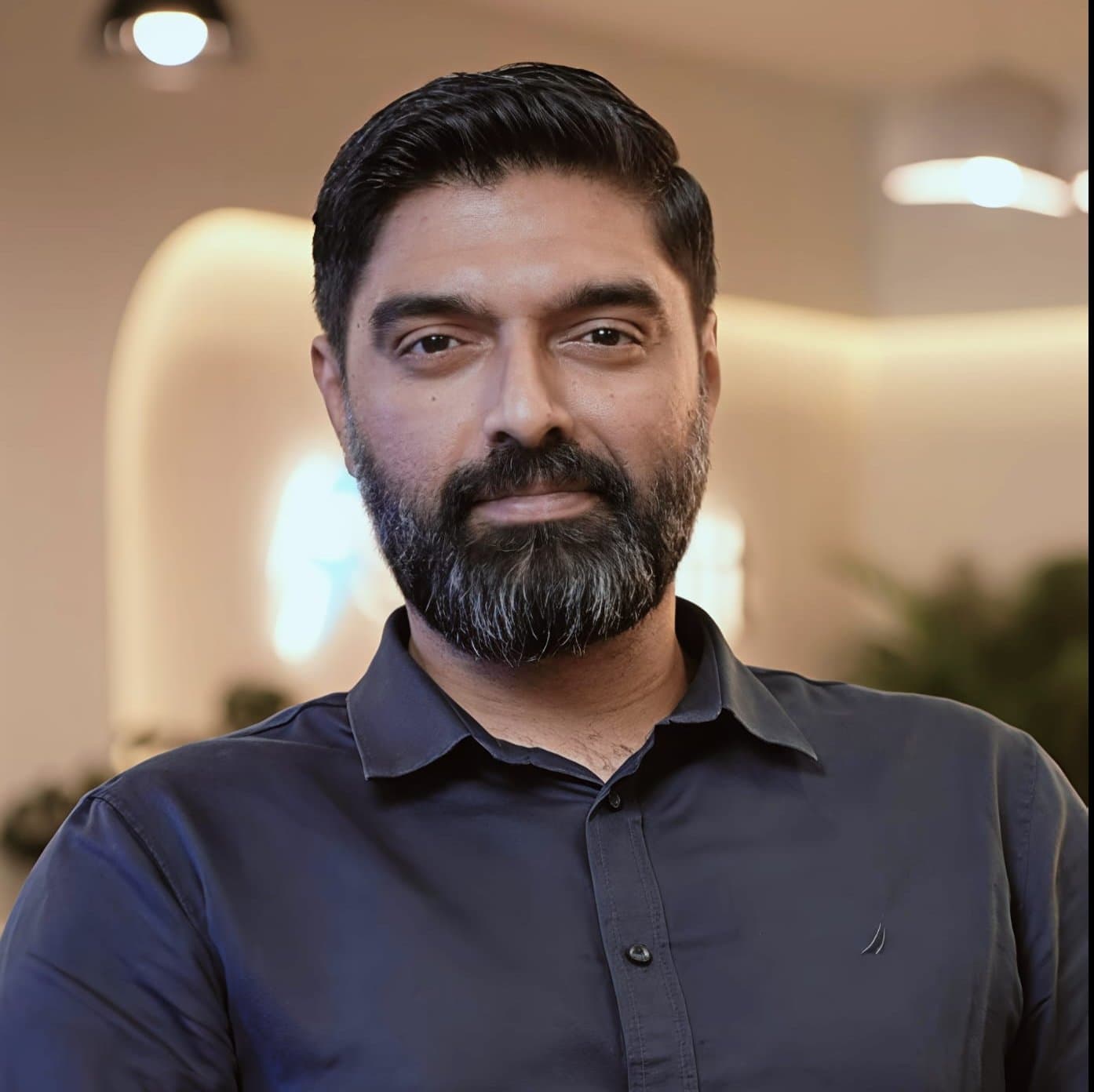
Rajaram Sankaran brings 25+ years across pharmaceuticals, consumer health, CXO leadership, and life sciences strategy, shaping businesses, markets, leadership teams, and long-term healthcare impact.
Designing Health Economies: Rajaram Sankaran on the Future of Global Care
IndiSight Editorial
Jun 20, 2026

Rajaram Sankaran
Partner · Heidrik & Struggles
Chennai/India
The Economics of Care
Healthcare today is a system of interlocking pressures: financial, human, and political. Rising costs and aging populations are pushing mature economies to the edge of sustainability, while emerging ones are rewriting the rules out of necessity. In India and Africa, what began as improvisation has evolved into method. Care is now lean, inventive, and inclusive because it has no choice but to be all three.
Across the world, the conversation has moved from discovery to delivery, now to design, and increasingly to access. Health systems are stabilizers of national productivity and collective morale. In the United States, healthcare accounts for nearly one-fifth of GDP. In Europe, it shapes fiscal planning and social policy. In Asia, it determines how fast a workforce can rebound from shocks and how quickly economies can absorb innovation. A country's health infrastructure has become both its economic backbone and its moral signature.
Democratizing healthcare, ensuring quality care reaches the many and the few, has become the defining challenge of our time. Whether through the United States' coverage expansion, India's Ayushman Bharat initiative, or patient access programs that make expensive oncology treatments affordable in emerging markets, the question is how quickly access can be engineered at scale.
At the center of this transition lies a question that will define the next decade of global health: can growth and goodness be designed to reinforce each other rather than compete?
That is the question guiding Rajaram Sankaran, Partner at Heidrick & Struggles and Head of its Healthcare and Life Sciences Practice in India. His career spans Abbott, AstraZeneca, Torrent, and Carlyle's Abacus Pharma, crossing corporate structures and geographies from multinational operations to private equity-backed ventures across India and East Africa. The perspective this breadth provides is rare: an understanding of how governance, talent, leadership, and access interact across different health systems.
Rajaram describes healthcare as an economic system built on belief.
Profit without conscience destroys trust. Purpose without discipline weakens institutions.
His philosophy rests on a single premise: equilibrium is never discovered by accident; it is engineered through intent, governance, and long-term accountability.
Operating Across Systems and Contexts
Rajaram's leadership journey began in global corporations known for precision and process. At Abbott and AstraZeneca, he learned how discipline sustains quality, how data defines predictability, and how robust systems enable consistent delivery across geographies and markets. These institutions taught him that scale is built on repeatability, that trust is earned through reliability, and that large organizations thrive when they translate complexity into clarity.
That foundation prepared him for East Africa. He left multinational stability to lead a private equity-backed healthcare company in an environment where markets were fragmented, regulations unpredictable, and supply chains fragile. "Success depended less on forecasting than on faith," he says. "People became the real infrastructure."
It was here that Rajaram redefined leadership. In weak systems, credibility and intent become currency. When institutions are young, trust must be earned every day through action.
Those years taught him that the economics of healthcare extend far beyond pricing and policy. In sub-Saharan Africa, a simple logistics delay could mean a patient's life. An ethical compromise could ripple through an entire community.
You learn that efficiency has a moral dimension. When every resource matters, the smallest act of integrity compounds.
Access became tangible in ways theory never captures. Rajaram witnessed how innovative companies extend oncology care by providing multiple treatment units for the price of one, ensuring continuity despite payment constraints. "Access is how healthcare earns its right to operate at scale," he says.
Decisions That Define Leadership
The hardest part of leadership, Rajaram often says, is choosing between two rights. Healthcare amplifies that tension because the stakes are both moral and financial.
Conscientious commerce keeps you alive, but cutting-edge science keeps you trusted. Without both, no system can sustain itself.
In life sciences, where scientific rigor underpins every breakthrough, the relationship between commerce and discovery is inseparable. Pharmaceutical innovation depends on revenue to fund research, yet that research earns societal trust when it prioritizes patient outcomes. Medical science, whether in drug development, diagnostics, or biologics, demands long-term investment in uncertain outcomes. Leaders must balance the commercial discipline that sustains operations with the scientific ambition that drives progress. Commerce provides the means; science provides the meaning.
He has watched organizations lose balance when they confuse motion for progress. "Growth without judgment corrodes from within," he says. "Systems survive because they know when to pause."
Modern leaders, he explains, operate in a VUCA world: Volatility, Uncertainty, Complexity, and Ambiguity. Information overload, activist investors, and digital scrutiny mean decisions are contested in real time. "In such environments, humility becomes a strategy," he adds. "You must know how to listen without losing direction."
For Rajaram, maturity in leadership is a function of awareness. Leaders who can stay steady when context shifts create institutions that last. True stability is built on emotional resilience and clarity of purpose.
Industry at a Crossroads
Healthcare sits at the center of every economy's moral equation. It is both an engine of productivity and a measure of fairness. The world now spends close to one-tenth of its GDP on health, yet efficiency and access remain uneven. In mature markets, precision is institutional; in emerging ones, innovation is improvisational. Both reveal the same truth: a health system mirrors the values of the society that builds it.
India and Africa have become the world's high-growth healthcare markets, where affordability and inclusion drive invention. Constraint has become the new competitive advantage.
Frugality is design under pressure.
Digital tools are accelerating that shift. Mobile diagnostics, AI-enabled triage, and virtual pharmacies have allowed these markets to leapfrog infrastructure gaps. Yet technology alone cannot guarantee equity. "Medical science and technology can extend life," he says, "but only governance rooted in conscience can ensure that life is preserved with dignity and distributed with fairness."
Access is the design constraint that forces innovation. From low-cost surgery networks in India to community-based insurance models across sub-Saharan Africa, the next generation of healthcare delivery is being built where resources are scarcest and needs are greatest.
Leadership as Economic Force
Rajaram sees leadership as an economic force long before it becomes a personal trait. The quality of boardroom decisions can shape industries. Leadership is about consciousness. The leader's role is to create alignment between purpose and performance so that execution becomes an outcome of shared belief rather than imposed authority.
He treats every enterprise as a living system. Context often changes faster than capability, and unless leaders evolve, systems decay. Startups run on speed and improvisation. Mature firms depend on process and discipline. Crisis calls for courage, and recovery requires restraint. Each stage demands that leaders rewire their own thinking, because what worked once may now hold the organization back.
"Authority without accountability is empty," he says. "Empathy without standards is indulgence. The strength of leadership lies in moral courage, the willingness to choose what is right even when the easy path is profitable."
Culture, Rajaram adds, is built through consistency.
Values are remembered when they are enforced in uncomfortable moments. That is when people decide whether they believe you.
He believes the future belongs to those who can build velocity without losing values and scale without losing soul.
Technology and the Future of Conscience
Technology, in Rajaram's view, is a reckoning. For the first time, intelligence is no longer a human monopoly. He argues that digital transformation is a leadership challenge. "Companies often upgrade systems faster than they upgrade their thinking," he observes.
He often reminds boards that technology magnifies culture before it changes it. Automation will expose what is broken at scale. The real question is whether leaders can remain accountable for what they delegate to machines. "The conversation around AI should be about how we leverage it," he says. "Technology is delegation. The question for every leader is simple: what part of your decision-making processes are you willing to automate?"
He warns that as algorithms begin to influence diagnosis, investment, and hiring, the definition of judgment itself will evolve.
We are moving from data-driven to intent-driven decisions. If the intent is flawed, scale will only multiply the error.
In life sciences especially, where scientific rigor underpins every advance, the interplay between technology and governance becomes critical. Tools enable discovery, but disciplined leadership ensures those discoveries serve humanity equitably.
The Moral Core of Enterprise
Every enterprise eventually faces a moral stress test. Markets may reward speed, investors may reward scale, but history rewards the trust you build. Capital without conscience creates combustion. It generates energy but can destroy everything in its path.
Rajaram defines moral courage as discipline, the ability to ask difficult questions before convenient ones.
Governance is conscience made visible through structure.
He often warns that truth delayed is truth denied. "If truth must travel upward through layers of approval, it will die of exhaustion before it reaches accountability." His experience across India and sub-Saharan Africa reinforced this conviction: resilience is born from inclusion. The leaders who listen longest often lead the farthest.
He believes trust is now the ultimate currency. It compounds over time like capital and can be lost faster than profit margins. The institutions that will outlast this era are those that protect credibility as fiercely as they pursue growth.
Access plays a central role in this moral calculus. Organizations that design for inclusion as strategy earn trust in ways that marketing never can.
Global Health and Emerging Markets
Rajaram believes the next wave of healthcare innovation will come from constraint. "Scarcity forces systems to prioritize," he says. India and Africa have become the world's high-growth healthcare markets where the future is being built today.
The most sustainable models, he argues, will emerge from public-private partnerships where government reach meets enterprise agility and shared accountability replaces fragmented effort.
When government brings scale and the private sector brings speed, real progress happens.
Healthcare can no longer follow the logic of manufacturing, built around efficiency and output. Its next evolution will follow the logic of ecosystems that are adaptive, interdependent, and centered on outcomes that endure beyond the financial quarter.
Rajaram points to the success of India's low-cost surgery networks, community-based insurance models in Africa, and tele-health cooperatives that blend philanthropy with profitability. "These are blueprints for the next global model," he says.
Governance as the New Advantage
Adaptability has become the real measure of stability. The ability to adjust faster than context changes defines relevance. As capital moves faster than conscience and technology evolves faster than understanding, decision-making has become the true differentiator of resilient institutions.
Rajaram sees value creation as a three-part equation that operates simultaneously: capital, credibility, and consequence. Capital fuels growth, credibility earns trust, and consequence defines legacy. Lose one, and the system eventually collapses.
He believes commitment to purpose now sits where strategy once did.
In an age of volatility, the power to decide wisely is the ultimate edge. Everything else can be outsourced or automated.
In healthcare, these choices are magnified. It is where science meets humanity, where data meets dignity. Purpose is a survival mechanism. When organizations know why they exist, they make faster and cleaner decisions.
"The leaders who will define the future are those who build institutions capable of sustaining impact across generations," Rajaram says. "Markets will always reward speed, but history judges us by the substance we leave behind. Leadership is the discipline of moving right."
He pauses, then adds quietly, "In the end, conscience is a strategic necessity."
Leadership Lessons from the Economics of Care
Purpose is economic power: Organizations that understand why they exist make sharper, quicker, and more ethical choices. Purpose is operational clarity that multiplies speed and precision.
Governance sustains growth: Scale without structure collapses. The most successful institutions design systems that reward truth and ensure accountability travels faster than ambition.
Trust is the new capital: Market cycles may reward returns, but trust compounds. It attracts talent, reduces friction, and turns goodwill into strategic advantage.
Access is innovation's proving ground: The next generation of breakthroughs will come from designing for scarcity. When resources are limited, creativity becomes procedural.
Technology tests intent: Every new tool exposes the ethics of its user. Digital transformation will succeed in organizations where intent is as evolved as capability.
Leadership is contextual: What serves a start-up fails in a mature firm. Great leaders sense when to improvise, when to institutionalize, and when to relearn entirely.
Courage and restraint must coexist: Growth demands ambition, but endurance demands discipline. The ability to accelerate without aggression defines modern leadership.
Empathy must have standards: Compassion without accountability creates dependency. Real inclusion invites contribution.
Governance is the new intelligence: In a world drowning in data, the differentiator is discernment, the ability to decide what to ignore.
Conscience compounds over time: Every ethical choice builds invisible equity. The institutions that invest in integrity today create resilience that money alone cannot buy.
Our Suggestions to Read
Discover The Leaders Shaping India's Business Landscape.

Corporate Visionaries
When AI Leaves the Lab: Gowrav Shekar on AI, Judgment and Building for Consequence
Gowrav Shekar, Head of Technology and AI Practices at Adani AI Labs, brings a builder’s lens to AI, shaped by real workflows, imperfect data, ownership, consequence and validation after deployment.
Read Full Story
Corporate Visionaries
The Cost of a Yes: Vimal Stan Steven on What Product Leaders Must Decide Before They Build
Vimal Stan Steven, Senior Director of Product at SpotDraft, argues that AI makes building easier, but judgment harder. The real product discipline lies in knowing what deserves to be built, tested and carried.
Read Full Story

Corporate Visionaries
Sarath Gollapalli on the Work That Makes Technology Dependable
Sarath Gollapalli, Vice President at Broadridge, reflects on why AI-era enterprise technology still depends on fundamentals: client understanding, reliability, governance and ownership.
Read Full Story