Dr. Yuvaraju Chinnam, Pro-Vice Chancellor of Malla Reddy (MR) Deemed to be University, is rethinking how engineering students learn, solve problems and prepare for careers beyond the classroom.
Beyond the Degree: Dr. Yuvaraju Chinnam and the Engineers India Will Need
Nov 2, 2026
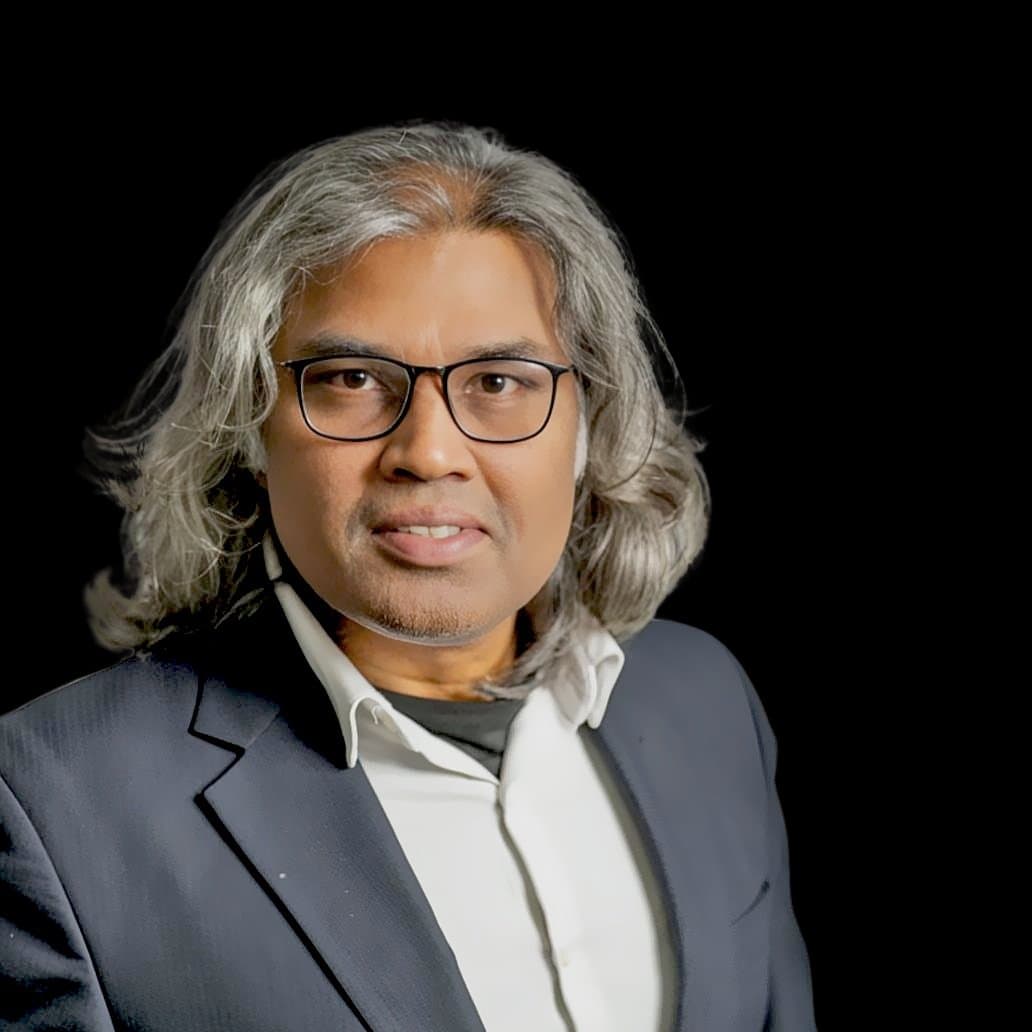
Dr. Yuvaraju Chinnam
Pro Vice-Chancellor · Malla Reddy (MR) Deemed to be University
Hyderabad, India
A city map may seem an unlikely place to begin a conversation about engineering education. For Dr. Yuvaraju Chinnam, it helps explain why he believes universities need to rethink how they prepare students.
While researching dengue risk around Guntur, Andhra Pradesh, he examined land use, vegetation and water bodies to identify conditions associated with potential mosquito-breeding habitats. His background in computing helped him work with the geographical data. Making sense of the findings, however, meant looking at the problem through public health and environmental science.
Dr. Yuvaraju had started his career in software engineering before moving into satellite image processing and academic research. He was familiar with the technical side of the work. The dengue project brought him into contact with questions that demanded a wider understanding of the problem.
He often returns to the importance of “understanding the pain point.” In engineering, he believes, getting that part right can be as demanding as developing the technology itself.
The experience has influenced his thinking about what students should learn at university. A problem involving public health, for instance, may require computing, environmental knowledge and an understanding of local conditions. Few serious engineering challenges fit comfortably within the boundaries of a single department.
Now Pro-Vice Chancellor of Malla Reddy (MR) Deemed to be University, Dr. Yuvaraju wants students to become familiar with such complexity while they are still studying.
Start with the question, not the answer
One of his proposals is an Engineering Readiness Training Programme covering the first 45 days of undergraduate study. He wants students to encounter computational thinking, design and systematic problem-solving at the beginning of their engineering education.
The idea comes from a concern about how students approach unfamiliar problems. Years of schooling can make them comfortable with questions that have clearly defined answers. Engineering work often begins much earlier, when the problem itself is still being understood.
Dr. Yuvaraju wants the first few weeks of university to introduce students to that process. They would learn to examine a problem, consider possible approaches and work out what they need to know before attempting a solution.
He also advocates a progression of projects across the four years of an engineering degree. Students would begin with manageable assignments and gradually take on work that demands greater independence and technical judgment.
By their final year, he expects them to be capable of explaining their design decisions, investigating failures and dealing with the practical difficulties that emerge during development.
A concept may seem easy enough in class. The real test comes when students try to use it in a project and things do not go as planned. Dr. Yuvaraju wants them to have those experiences early, with faculty helping them understand where they went wrong.
His thinking also reflects how much access to technical knowledge has changed.
“Nowadays, you don’t need to teach anything,” he says.
It is a provocative way of putting it, particularly for someone responsible for higher education. But Dr. Yuvaraju is referring to the volume of learning material now available outside the classroom. Students can find programming lessons, technical demonstrations, specialist lectures and explanations of almost any engineering concept online.
He sees an opportunity for faculty to spend more time helping students make sense of what they learn.
Someone still needs to ask whether an approach is sound, whether a result can be trusted and whether the student has understood the underlying principle. Those conversations become especially important when students begin working on projects of their own.
For Dr. Yuvaraju, the teacher's role increasingly involves guiding that process.
What should a degree actually certify?
Dr. Yuvaraju has also been thinking about how universities recognise technical ability.
He has suggested that credible external assessments, including programming evaluations, could count towards academic recognition. Substantial engineering projects and serious startup work might also deserve consideration for academic credit.
The proposals are still ideas under discussion. They raise some difficult questions for universities.
How much credit should a student receive for developing a product? What would count as sufficient evidence of technical understanding? And how should faculty evaluate work completed outside the usual classroom structure?
A working prototype tells only part of the story. Faculty also need to know how students developed it, what problems they encountered and whether they can explain the engineering behind their decisions.
Group projects make the task more complicated. A team may deliver an impressive result, but its members will have contributed in different ways. Understanding those contributions requires faculty to spend time with the students and examine the work in some detail.
The same care would be needed when assessing startup activity. A commercially promising idea may involve considerable technical achievement, but universities would still have to establish what the student had learned and whether it met the requirements of the degree.
Dr. Yuvaraju's proposals could give students more freedom to pursue serious technical interests. Making them work would place additional demands on faculty and academic assessment.
There is also a larger question about the degree itself. Employers may value demonstrable skills, while universities have a responsibility to establish that graduates understand the principles behind their work. Dr. Yuvaraju believes there is room to recognise practical achievement more meaningfully within that framework.
For universities, the difficult part is deciding how much credit such work deserves and what students should have to demonstrate to earn it.
Opening the laboratory to the world
Dr. Yuvaraju's plans extend well beyond undergraduate teaching.
He says he helped coordinate 22 international collaborations during his first year at the university, involving institutions in the United States and Asia and technology organisations in Europe and Israel.
In December 2025, Kyungdong University in South Korea announced a partnership for academic cooperation and student mobility. Dr. Yuvaraju also describes connections with Israel's Check Point Software and the Indo-Dutch Cyber Security School.
The value of such relationships will depend on what students and researchers are able to do through them. Exchanges, joint investigations and access to specialist expertise could give the university opportunities that would be difficult to develop entirely on its own.
His industry connections include cybersecurity companies and deep-tech ventures.
One association he discusses is with Red Balloon Aerospace. According to Dr. Yuvaraju, the company's team was associated with the university for six months before moving to a larger facility. In May 2026, Red Balloon Aerospace launched an indigenous commercial super-pressure balloon to an altitude of roughly 25 kilometres.
The launch was the company's engineering achievement. Its earlier association with the university is relevant to Dr. Yuvaraju's interest in bringing emerging technology ventures closer to academic research.
He wants students to encounter ambitious technical work while it is being developed, when difficult questions are still being investigated and the eventual outcome is uncertain.
Industry collaborations can take research in unexpected directions. A company may approach a university with a specific engineering difficulty, only for the investigation to uncover a more fundamental question. Researchers can pursue that question further, while the company gains a better understanding of the technology it is developing.
Dr. Yuvaraju hopes to make these relationships more systematic through a proposed initiative called BRIDGE.
Under the concept, companies would bring technical problems to the university. Researchers could then assemble teams with the relevant expertise, drawing on different departments and involving students who are ready to contribute.
The idea is appealing, although the practical details will matter enormously.
Companies have development schedules and commercial priorities. University researchers have teaching responsibilities, ongoing projects and their own research interests. Both sides would need to agree on the scope of the work, the resources required and how the findings could be used.
Questions of intellectual property would also need attention, particularly when research contributes to a company's technology.
For BRIDGE to become useful, the university would need people capable of taking on the problems companies bring to it. Some projects may require expertise spread across several departments. Others may depend on equipment or specialist knowledge that takes years to develop.
Dr. Yuvaraju sees these collaborations as an opportunity to bring more demanding research problems onto campus. Their real value would become clear through the work completed and the relationships that continue beyond an initial agreement.
The harder task is building a culture
Dr. Yuvaraju's own research interests have taken him into quite different fields.
Alongside his work on geospatial public health, he co-authored a 2025 paper in Scientific Reports on AI-based anomaly detection and another study investigating sensing technology for honey adulteration.
The subjects differ considerably, and each requires researchers to understand the particular problem they are investigating. His work across these areas reflects the interdisciplinary approach he wants to encourage among students and faculty.
His experience with research infrastructure has also shaped his views.
He recalls an investment of roughly ₹1.5 crore in GPU computing resources that made him appreciate how much specialised knowledge is needed to use advanced facilities effectively.
Purchasing the equipment is one decision. Finding people who know how to use it for demanding research, and giving them the opportunity to develop that expertise, is a longer undertaking.
Researchers working with specialised technologies build their judgment through years of experiments, unexpected results and discussions with colleagues. Much of what they learn comes from experience that cannot easily be captured in a manual.
Students benefit when they can work alongside such people. They see how a researcher approaches a difficult question, how methods are adjusted when results are inconclusive and how much care goes into establishing whether a finding can be trusted.
For Dr. Yuvaraju, developing faculty expertise is central to what a university can achieve. Research facilities become more useful as the people working with them grow more capable. Experienced faculty also help younger researchers take on work that might otherwise be beyond their reach.
His understanding of leadership has changed over the years.
As a young department head, he expected colleagues to respond to situations with the same urgency and approach that he brought to his own work. Experience gradually changed that expectation.
“The way you respond, don’t expect everybody to respond,” he says.
He came to appreciate that people work differently and bring different strengths to a team. Leading them effectively required a better understanding of those differences.
The lesson has particular relevance to the kind of university he wants to help build. Researchers from different disciplines may disagree about methods, priorities or even the nature of the problem they are trying to solve. Working together requires the willingness to listen and recognise what another person's expertise can contribute.
Dr. Yuvaraju encountered something similar during the dengue project. His computing background gave him one way to examine the data. Other disciplines helped him understand what the information meant in the context of public health.
He now wants more students to experience that kind of learning before they graduate.
His proposals cover several parts of university life: the first 45 days of an engineering degree, projects spread across four years, new approaches to academic credit and closer relationships with research institutions and industry.
Putting them into practice will take time. Faculty will need support, students will need serious projects to work on, and external collaborations will have to produce more than signed agreements.
The outcomes may be less immediately visible than a new laboratory or an announced partnership. They will emerge in the quality of student work, the questions researchers are able to investigate and the confidence companies place in university teams.
The Guntur maps offer a useful way to think about what Dr. Yuvaraju is trying to achieve. His technical knowledge helped him examine the geographical evidence. Understanding its relevance to dengue risk required him to look beyond his own field.
He wants engineering graduates to be prepared for the same situation: to recognise when their knowledge is insufficient, seek out the expertise they need and keep working until they understand the problem well enough to do something about it.