Category: Corporate Visionaries
Arvind Chari, Chief Investment Strategist at Quantum Advisors, embodies the rare intersection of intellect, integrity, and foresight. From navigating global crises to advocating India’s rightful place in global portfolios, he views finance as a moral discipline rooted in responsibility, humility, and process. For him, capital is conscience measured through endurance and trust.
Capital Remembers: Arvind Chari on Fiduciary Leadership, Simple Systems, and Why India Merits a Dedicated Seat in Global Portfolios
IndiSight Editorial
Dec 25, 2025

Arvind Chari
Chief Investment Strategist · Q India UK (Quantum Advisors)
London
Arvind Chari has built his career on a principle that many in global finance acknowledge but few consistently live by. Capital is not just a number on a screen. It is a responsibility to those who entrust it.
At the end of the day, you are managing someone else’s money. If you carry that responsibility at the back of your mind every single time, you remain true to the objective.
That ethic of responsibility is the spine of Arvind’s work as Chief Investment Strategist at Q India UK, affiliate of Quantum Advisors Pvt Ltd. He has steered portfolios through rate cycles, currency stress, and liquidity shocks. He has written frameworks that survived both boom and strain. He has also retired products that could earn fees but could not justify their place in a client’s portfolio. A strategist can predict. A fiduciary must decide. He chooses the latter.
Arvind’s influence extends well beyond any one institution. Through regular exchanges with global pension funds, sovereign allocators, and family offices, he has become one of the clearest voices arguing for a simple idea that has far reaching consequences. India should be treated as a stand-alone allocation in global portfolios. Not as a small weight inside a broad emerging markets basket. The case does not rest on national sentiment. It rests on how real portfolios behave, how risk is carried, and how compounding is earned over long periods.
He pairs that advocacy with a set of operating rules that never leave the room. Define the return you target. Define the risk you will accept. Build everything around those two definitions. Communicate early. Communicate plainly. Judge success not by quarterly rankings but by the survival of the process when markets turn against you.
Foundations: Learning Macro by Reading Every Word
Arvind did not begin with a formal education in macroeconomics. He built his foundation the way an operator learns a craft. He read every word that mattered. He credits Dr. Y. V. Reddy’s speeches and the Reserve Bank of India’s reports as the bedrock of his understanding. He would print long policy documents, underline passages, and retype sections until the logic of the system felt second nature. Inflation dynamics. Monetary transmission. Liquidity management. Fiscal interplay. He did the slow work that later lets a strategist react fast.
He also learned to write on finance early. A boss in his first years insisted that he craft regular notes, not just build spreadsheets. That habit sharpened how he thought. Writing forced him to clarify assumptions, separate a fact from an opinion, and elevate what matters to an investor over what fascinates an analyst. Two decades later he still writes often. Not because it markets a view. Because it tests it.
The most important career choice came at the start. He began not inside a massive institution with several layers between analyst and decision. He began inside a smaller, entrepreneurial setup. He had to do more than one job on most days. Work with operations on valuation. Sit with compliance to map the control points that debt funds require. Contribute research even while managing execution. That intensity shortened the learning curve. It also created a habit that stayed. When Arvind builds teams, the dealer does not only press buttons on a screen. The dealer must own a small part of the research. When a credit analyst builds a case on a company, the discussion is incomplete until the portfolio implication is clear.
Start at a place where you will be trusted with real work. Responsibility accelerates learning. It also reveals whether this craft is for you.
By 2006 he was running fixed income money. The process instincts hardened under pressure. Rate cycles demanded discipline on duration. Liquidity waves demanded humility on timing. He set one non-negotiable rule that predated fashion. Mark to market all the way through. Do not smooth returns to protect appearance. Let the price speak so that risk does not hide in the shadows of a monthly line.
Product Innovation, with Purpose
Arvind’s product contributions began with a simple idea that many investors now treat as standard. Every household should treat gold as an allocation, not a trade. When Quantum launched its gold exchange traded fund, it was not the first to market. Benchmark had paved the path. UTI followed. Quantum was among the early movers, with Arvind as the first fund manager alongside his now celebrated colleague Chirag on the build. The point of the product was not novelty. The point was portfolio design. For years Quantum has told investors that five to twenty percent in gold provides a hedge against the three forces that no model can fully capture. Policy errors. Geopolitical shocks. Collective mispricing.
Gold is a hedge against ‘stupidity’ Stupidity of governments, central bankers and politicians. Some proportion belong in most portfolios. The exact number depends on the world you see.
His second major product initiative shaped how he sees the duty to close a fund as clearly as the duty to launch one. In 2010 he helped build amongst India’s first offshore daily liquidity bond fund. It solved a genuine problem for international investors who wanted Indian fixed income exposure without committing to lock-ups. For a while, it worked as designed. Then came the taper tantrum of 2013. Arvind’s portfolios were structured well to deal with the rate risk in rupees. The currency, however, wiped out dollar returns for clients.
He remembers a day on the trading desk when the discomfort was visceral. Not because of the mark on a position. Because he felt he had failed on the only measure that matters to a fiduciary. His clients lost money. He earned fees. He asked whether he had communicated the macro risks strongly enough. Whether he had pushed for hedges that clients resisted. Whether he should have forced redemptions, even at the cost of assets under management. The experience left a mark that shaped every decision after it.
Performance comes and goes. Responsibility does not. If the investor loses when you win, you did something wrong.
In time he concluded that the product itself was misaligned with how foreign investors truly used it. India local currency bonds for foreign investors is a short term tactical trade, not a strategic allocation. That is not wrong in itself. It felt wrong for a fund structure meant for long-term allocation. He wound the fund down in 2018. Process over fees. Principle over AUM. Fiduciary first.
From Portfolio Manager to Strategist
That choice marked a pivot. Arvind moved from running a product to reshaping a platform. He began to spend more time with the world’s long capital. Pensions. Endowments. Sovereign vehicles. He interacted with C-suite investment professionls which gave him boardroom insights of how investment committees review country exposures, consultants report tracking error, and staff teams reconcile top-down policy with bottom-up opportunity. What he saw was both rational and flawed.
Most large funds display a powerful home bias. US pensions hold heavy US equity and US credit. European pensions behave similarly at home. Japanese plans favor Japan. Beyond that, international exposure gets allocated the way busy teams keep their lives manageable. Buy the broad indices. Top up or trim the big buckets. Trust the index provider’s weights as a representation of reality. That is not malice. It is the only way to run multi trillion balance sheets with finite attention.
The framework breaks when it collapses very different countries into one category label. Brazil and Turkey are not the same as India. China is a world of its own. South Africa is different again. Yet broad emerging market indices bunch them together. Investors then rebuild the world inside their internal dashboards. Developed markets are displayed by country. Emerging markets are displayed by category. The result is systematic underallocation to economies that deserve dedicated analysis and dedicated weight.
Arvind’s advocacy grew out of that repeated observation. When he says India is not an emerging market he is not denying that India is young. He is asking allocators to stop using a category label as a substitute for real analysis. He proposes a simple lens that has three parts.
First, judge India as a country, not as a component. India is a democracy with rule of law, institutional continuity, and a listed equity universe that mirrors the real economy better each year. Treating it as a footnote inside a basket distorts results and dilutes accountability.
Second, align the internal investment process to the country decision. If you will not invest in single country active mandates in general, do not make an exception for India. If you will, build a standalone India policy with its own risk budget, time horizon, and reporting.
Third, manage the politics of change early. Many boards resist moving away from index defaults because they fear career risk if a discrete bet underperforms. Arvind reminds them that they already take discrete bets. Home bias is the largest of those bets. If the plan can hold seventy percent US exposure as a matter of policy, then it can hold a carefully sized India allocation as a matter of design.
Geographic precision beats categorical convenience. You either make choices by country or you let an index make them for you.
The Laws of Capital
Arvind distills twenty years of practice into four working laws. They are not theories. They are operating rules that have survived both stress and euphoria.
Law One. Capital seeks certainty. Markets deliver chaos.
Every allocation assumes tomorrow resembles today. Markets exist to break that assumption. Survival requires acceptance. A strategist who accepts uncertainty limits leverage, builds liquidity buffers, and sizes exposures to survive being wrong on timing. During the global financial crisis, certainty vanished almost overnight. The lesson was lasting. Build with the knowledge that the system can change faster than your dashboards can refresh.
Accept uncertainty and be realistic about what you can achieve in a given market. That realism is a risk control by itself.
Law Two. Volatility is information. Permanent loss is destruction.
Daily price moves are noisy and useful at the same time. They warn you when liquidity is thinning or when concentration is rising. Permanent loss is different. It is capital that cannot be rebuilt without fresh external inflows. In Indian fixed income, Arvind enforced full mark to market well before it became fashionable. That discipline looked harsh during calm periods. It looked wise after the Taper Tantrum episode of 2013 and again during the IL&FS shock in 2018. Many credit funds displayed smooth daily lines until they did not. Liquidity vanished. Concentration risk surfaced. The mark to market discipline made those risks visible earlier.
Build portfolios that can survive being completely wrong about timing, partially wrong about direction, and still protect against permanent capital loss.
Law Three. Consensus protects careers. Conviction creates wealth.
If you follow a benchmark, you will lose exactly what everyone else loses. That protects you from blame. It does not build long run results. Independent thinking requires a willingness to lose differently. Before 2008, Arvind stepped away from daily put-call structures that boosted returns in fixed income. He also cut credit risk inside debt funds when smooth returns tempted the industry to reach. Those choices cost short term rankings. They preserved long term integrity.
Different losses teach different lessons. Protect your ability to learn.
Law Four. Simplicity beats sophistication under pressure.
Offer a simple risk return framework to the client. Design product, process, and communication around it. Define the return you target. Define the risk you will accept. Explain plainly what must be true for the strategy to succeed. Repeat it until everyone in the chain can describe it in a few sentences. In stress, simplicity helps investment teams stay with a plan. In calm, simplicity keeps managers from chasing ideas that do not fit the mandate.
Process survives. Performance dies.
He has imbibed these laws from the firm that he has worked for over 20 years. ‘Value Alignment, with you and the firm you work for is crucial in the greedy world of finance and money’. Quantum’s long-term philosophy of doing what is right for the investor, being an asset manager and not an asset gatherer, saying no to opaque business practices and having the conviction to avoid poorly governed companies which exist in the Indian indices and markets has shaped and reflected his own moral framework.
When Systems Break
Crisis often begins as a change in belief before it becomes a change in price. In 2008, investors believed growth was guaranteed. In 2013, investors believed currency stability would hold. In each case, sentiment cracked first. A strategist does not try to guess the exact trigger. A strategist asks a different question. What do most people assume cannot fail. What happens if it does.
If everyone assumes that major central banks will backstop asset prices forever, then understand how a prolonged pause or a policy mistake would ripple through your holdings. If everyone assumes that the dollar will remain the only unquestioned reserve, ask how non dollar assets would behave under a regime where several currencies compete for trust. If everyone assumes that the post war rules will always protect contracts and trade, plan for a world where bilateral deals dominate and compliance costs rise.
Arvind is not a doomsayer. He is an operator who prefers being early to being surprised. He encourages allocators to rehearse failure states in advance. Not to win hero points for calling the crash. To avoid irreversible damage when the obvious assumption stops being obvious.
Future Architecture: Climate, Inequality, and Repricing
Climate is a financial reality with moral consequences. The order of emphasis matters. Indian power markets already show this. Solar bids often beat the levelized cost of new thermal power. Battery storage prices are moving the same way. Developers, banks, and equity investors can argue over timing. They cannot argue with arithmetic. The transformation of energy systems is an investable inevitability.
‘India is Ground Zero for Climate Change’, he says. If the world is serious about a lower carbon future, India must be financed at scale. Not as charity. As infrastructure that drives returns for decades. Transmission. Storage. Distributed generation. Industrial retooling. City redesign. The allocators who treat this as an environmental public relations exercise will miss the point. The allocators who build pipelines that de-risk execution will be paid as the transition compounds.
Inequality has a similar structure. It is a social fact with financial consequences. When asset prices rise faster than wages for long periods, frustration builds. Political systems respond. Sometimes with prudent redistribution. Sometimes with clumsy intervention. Either way, a strategist should plan for a world where tax, subsidy, and regulation react to restore a sense of fairness. This is not an excuse to sneer at social programs. It is a recognition that stability is an economic input. In India, rural employment guarantees, targeted subsidies, and forms of affirmative action often serve as shock absorbers. They are part of what makes the growth story durable.
Do not deride stability tools as inefficiency. Without social stability, no compounding story lasts.
India as a Dedicated Allocation
Bring these lenses together and the case for a standalone India allocation becomes practical rather than patriotic. India’s listed universe spans domestic consumption, financial intermediation, technology services, renewables, digital payments, logistics, and manufacturing that is finally scaling. Policy has shifted toward formalization, digitization, and supply chain deepening. Courts and regulators are imperfect, and they also function. Capital accounts remain managed, and they are opening with discipline. The corporate sector is far from perfect, and governance standards have moved forward over the past two decades.
Arvind’s conversations with pension boards have a predictable rhythm. Staff understand the opportunity. Consultants see the trend. Boards resist a formal policy shift because it adds a country lens that did not exist before. He responds by holding up a mirror. Their plan is already taking concentrated country exposure at home. Measured by tracking error against global GDP, most plans are already making discrete bets. If they can underwrite a seventy percent US exposure by policy, they can underwrite a carefully sized India allocation with a clear framework, a long horizon, and a reporting line that does not bury it inside a category.
Treat the decision as a governance upgrade. Put India in the same room as the United States, Europe, Japan, and China. When you do that, questions become precise. How much. Through what vehicles. With what currency policy. With what internal accountability. The shift is mental and mechanical at once. It is also reversible if evidence changes. What cannot be justified any longer is unthinking reliance on a label as the reason to underweight.
Leadership as Fiduciary Duty
Arvind’s leadership philosophy can be described in one sentence. Serve the investor first. Everything else follows.
This shows in how he builds teams. The dealer participates in research. The credit analyst understands the portfolio. The youngest analyst knows who the client is. There is no room for the comfort of silos. When people see the whole, they act for the whole. When people feel ownership, they do work that survives them.
It shows in how he hires. He looks for people who can surpass him. On the day they join, they may not. The question he asks is simple. Will they grow into someone better than the person who hired them. Institutions that hire this way make succession a design feature rather than a last minute scramble.
It shows in how he communicates. He learned the hard way that transparency protects trust as much as returns do. Investors can forgive losses when they understand the why. They do not forgive surprises. Communication is not a soft skill that sits outside portfolio construction. Communication is a control system inside portfolio construction.
Two leaders shaped his long stay. Founder Ajit Dayal, who built a unique investment firm which puts the investor at the center of every decision and embodies 'what is good for investor is good for us'. And I. V. Subramaniam, known to most as Subbu, who held the investment bar steady even when monthly rankings tempted teams to chase what did not fit. Tone at the top matters more than style books. It draws people who believe the same things. It also drives people away when they do not.
One caution he offers to younger professionals follows from that point. Talent can build a career in almost any market. Values cannot. If your ethical instincts contradict the house culture, leave early. Misalignment erodes performance from the inside.
A Simple Framework that Survives Pressure
Strip the jargon away and Arvind’s method fits on one page.
Define the return you target.
Define the risk you will accept.
Build everything around those two definitions.
Size exposures so that a miss on timing does not force you to unwind the idea. Keep cash and liquid sleeves that give you room to maneuver when prices move against you. Hold hedges that you hope expire worthless. Review the plan weekly. Leave the portfolio unchanged when nothing material has changed. Do not change course to follow peers. Evaluate your process more often than you evaluate your ranking. Publish what you believe so that your own words hold you accountable.
Above all, keep the humility that the market enforces. You will be wrong often. You will be right sometimes. What matters is that the losses you take do not threaten permanence. What matters is that the system you built can learn faster than the next shock arrives.
Simple does not mean easy. It means repeatable under pressure.
Leadership Lessons
Be true to label. A product must deliver what it promises on the tin. If a fund is a short duration vehicle, do not smuggle in risk that the label does not admit.
Treat mark to market as a discipline, not a threat. Prices are information. Use them to make risk visible before it becomes permanent loss.
Close products that do not serve the investor. Fees are not a reason to exist. Alignment is.
Build teams that see the whole. Ask dealers to do research. Ask analysts to articulate portfolio impact. Remove the comfort of silos.
Hire for institutional succession. Recruit people who can surpass you. Culture is how an institution survives its leaders.
Communicate as if trust depends on it. Because it does. Bad news delivered early strengthens relationships.
Separate volatility from destruction. One is a daily fact. The other is a strategic failure. Manage them differently.
Write to think. Put your view on paper so that logic is visible and memory is honest.
Rehearse failure states in advance. Ask what assumption everyone believes cannot fail. Plan the portfolio for that exact failure.
Treat social stability as an economic input. Program design and subsidies can look inefficient at a distance. They often are part of what makes compounding possible.
Keep the framework simple enough to repeat in a boardroom. If your strategy cannot be explained in a few sentences, it will not be defended when pressure rises.
Respect home bias as human. Then extend your understanding to countries that deserve dedicated weight. Geographic precision beats categorical convenience.
Closing Reflection
Long capital does not forgive vanity for long. It rewards realism. It rewards process. It rewards the quiet discipline of remaining true to objective when the easiest option is to chase what moved last week. Arvind’s voice carries weight because it is anchored in that discipline. He has built, defended, and when needed retired products based on whether they serve the investor. He has adapted after mistakes and argued for change that better reflects how portfolios actually compound. He has matched conviction with humility, and systems with responsibility.
Define the return you target. Define the risk you will accept. Build everything around those two definitions.
In a world that tempts complexity at every turn, there is a stark kind of freedom in that line. It frees an allocator to ignore the performance games that die each quarter. It frees a board to fund transitions that matter over decades. It frees a strategist to argue for country weights that reflect reality rather than label. Most of all, it frees capital to remember what it is. A responsibility. A trust. A promise to make decisions that other people can live with, not just this quarter, but permanently.
Our Suggestions to Read
Discover The Leaders Shaping India's Business Landscape.

Education Leadership
The Human Advantage: Anu Monga on What Schools Must Still Create
Drawing on decades of leadership in international schools and education, Anu Monga reflects on what institutions must continue to create in a world where knowledge is increasingly accessible and shaped by technology.
Read Full Story

Investors & Catalysts
From Millet to Method: Rasika Prashant on Building What Consumers Return To
Rasika Prashant, CEO of NSRCEL at IIM Bangalore and Co-founder of Soulfull (later aquired by Tata Consumer Products) on consumer trust, category creation, Indian brands, and the founder discipline required after belief.
Read Full Story
Founders & Innovators
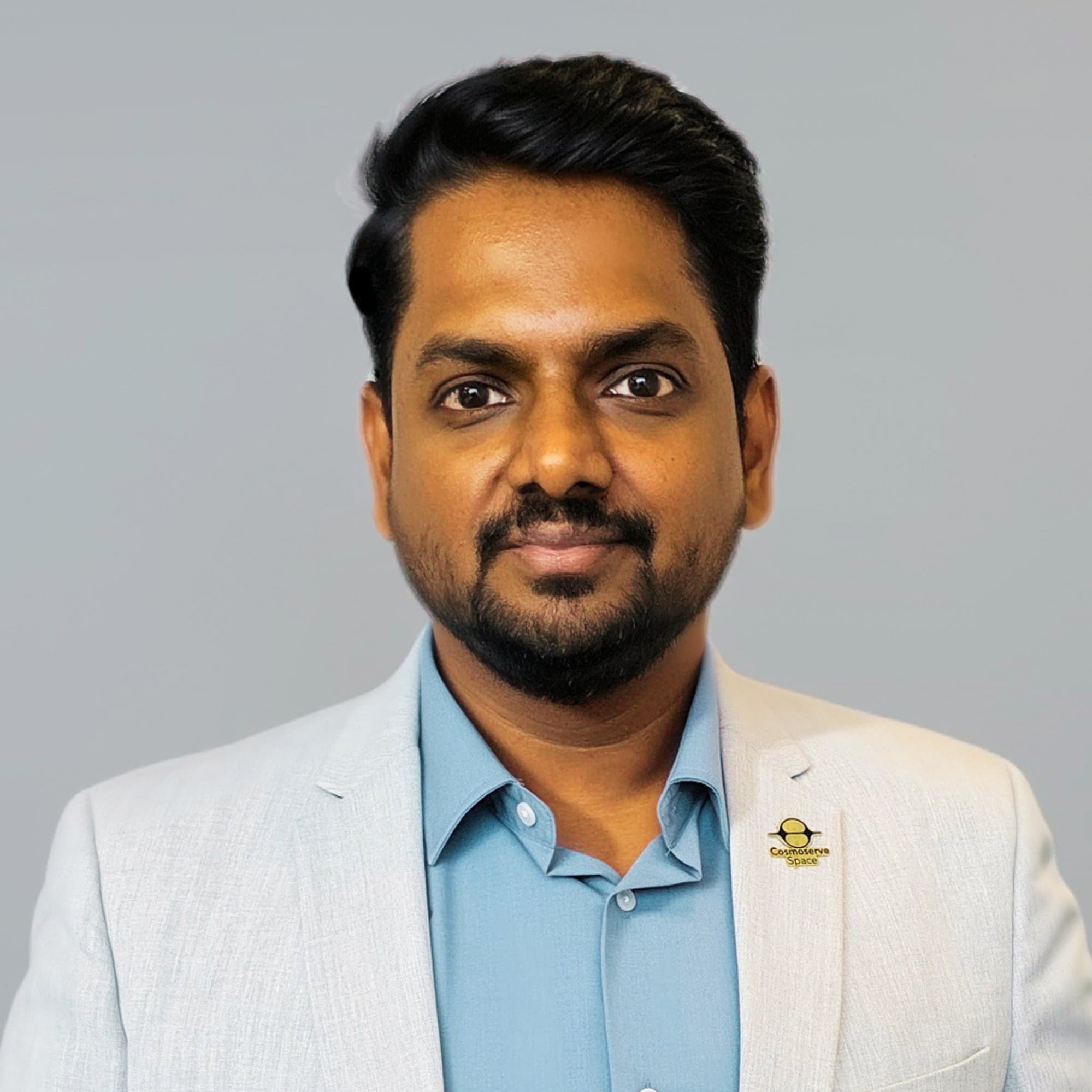
Building the Next Space Economy: Chiranjeevi Phanindra and Cosmoserve's Case for Orbital Maintenance
Chiranjeevi Phanindra, Founder & CEO of Cosmoserve Space, spent 14 years at ISRO working on re-entry and human spaceflight. Today, he is focused on a vital challenge: keeping Earth’s orbit usable.
Read Full Story