Category: Corporate Visionaries
Arnab Chatterjee’s leadership philosophy centers on awareness, preparedness, and simplicity. Across his journey from Nestlé to UMA Global Foods, he shows how conscious leadership, deep consumer insight, and disciplined execution create lasting value. For him, success is built on curiosity, culture, and the courage to keep learning while never lowering standards.
Arnab Chatterjee and the Practice of Awareness: How Conscious Leadership Impacts Companies
IndiSight Editorial
Dec 13, 2025

Arnab Chatterjee
CEO · UMA Global Foods
Bengaluru
The Discipline of Awareness
Most organizations do not collapse from lack of knowledge. They collapse from lack of awareness. Arnab Chatterjee has seen it happen more than once. A company grows fast, becomes efficient, and then quietly loses sight of what made it valuable in the first place. “Past success,” he says, “is the hardest competitor you will ever face. It blinds you more than failure ever can.”
For Arnab, leadership begins with the discipline to stay aware, of markets, systems, and the subtle signals that most people stop noticing once the numbers look good. Awareness, in his view, is not emotional intelligence. It is strategic consciousness, the ability to sense when structure is decaying beneath performance.
Across three decades in consumer business, from Nestlé and Britannia to Kellogg, Nissin, Unibic, and Mother’s Recipe, he has built, scaled, and revived brands through this demanding lens. Today, as CEO of UMA Global Foods, a fast-growing enterprise operating across packaged staples, value-added foods, and exports, he applies the same philosophy at scale. “At UMA,” he says, “everything I have learned about preparedness, simplicity, and awareness comes together.”
He describes UMA not as a company but as a living lab for leadership. “It is one thing to talk about culture or systems,” he says. “It is another to embed them across hundreds of people and thousands of outlets. That is where philosophy either stands or collapses.”
Foundations: The Making of a Builder
Arnab Chatterjee began his career not with a grand plan but with curiosity. “I started out in sales,” he recalls. “Back then, I did not know strategy or P&L. What I did know was that the market never lies. A customer’s reaction tells you everything about whether your idea works.”
That early exposure to the discipline of selling and the immediacy of consumer response taught him that real insight lives on the street, not in the boardroom. “You can learn frameworks later,” he says. “But your first education comes from listening to people who do not care about your title.”
He moved through Nestlé, Coca-Cola, Britannia, Kellogg, Nissin, Unibic, and Mother’s Recipe, deliberately taking profit-center roles to understand how every function connects. “Once you manage a P&L, you cannot hide behind silos. You learn how marketing, supply chain, finance, and people decisions shape one another.”
That integrated view became the backbone of his leadership. It taught him that growth is never only about product or pricing. It is about alignment across systems. “If strategy, structure, and people move with strategic coherence, the business almost propels itself,” he says. “When they do not, even the best product struggles.”
At UMA Global Foods, this philosophy shapes everything from distribution design to new product launches. “We build go-to-market strategy from deep consumer and market insight,” Arnab says. “Preparedness means creating the infrastructure and resources required to succeed.”
He has accelerated the new-product funnel, not slowed it. “Innovation should move fast,” he says. “But execution must stay disciplined. You can always correct course if you move early, not if you stand still.”
The Builder’s Code: Preparedness Over Prediction
Arnab often says that most leaders overestimate prediction and underestimate preparation.
“Everyone wants to be the first to spot the next trend,” he says. “Very few invest in the systems that can adapt when that trend shifts.”
Preparedness, for him, is not about elaborate forecasting. It is about capability and readiness. He points to firefighters who practice every day. “That is preparedness,” he says. “When the call comes, they do not think, they act.”
He believes preparedness has three layers: insight, infrastructure, and execution quality. Insight ensures decisions are grounded in market reality. Infrastructure provides the physical and digital foundation for scale. Execution converts plans into consistent results. “Preparedness must show up in the daily pursuit of flawless delivery,” he says. “That is what separates sustainable companies from lucky ones.”
Overplanning, by contrast, is a warning sign. “If you are rewriting the plan every few weeks, you are reacting, not preparing. Preparedness means refining the plan, not replacing it.”
His mantra for execution is uncompromising: never lower the standards.
At UMA, preparedness translates into operational precision. “We designed structures for speed without losing coherence,” he explains. “Independent business units operate with shared alignment. Preparedness and simplicity sound philosophical, but they show up in how fast a factory line adapts to a new SKU or how quickly feedback from a distributor turns into a decision.”
The Simplicity Principle
Arnab has long believed that simplicity is the ultimate sophistication in business. “Complexity usually starts inside the company, not outside,” he says. “The more priorities you add, the less focus you have. The less focus, the slower the progress.”
He defines simplicity as clarity in what to pursue and what to avoid. It is not cutting corners, it is deciding what not to chase. His teams begin every strategic cycle by asking, what is the main thing, and are we keeping it the main thing?
Simplicity, for him, runs from strategy to communication to execution. “A clear plan, clear message, and clear ownership are the three anchors,” he says. “If even one becomes complicated, alignment disappears.”
In every company he has led, Arnab applied this discipline to structure, process, and team design. He often cites Jeff Bezos’s two-pizza rule: small teams are effective teams. “Bureaucracy kills energy, smaller groups communicate faster, build trust faster, and deliver better.”
He also believes simplicity demands courage. Complexity makes leaders sound intelligent, simplicity makes them accountable.
The Awareness Quotient
Leadership literature has long focused on emotional intelligence. Arnab believes the conversation has evolved. Emotional intelligence is necessary, but awareness is deeper. It is strategic consciousness, awareness of yourself, your team, and the ecosystem you are part of.
Awareness, for him, means seeing situations as they are, not as one hopes they will be. It requires discipline, humility, and honesty. “You can be tough and still be deeply aware,” he says. “Awareness is not about being agreeable. It is about being grounded.”
He values speed, but with intention. “It is better to fail and fail fast than to protect mediocrity,” he says. “Iteration teaches faster than perfection.”
This philosophy defines how he mentors teams. “A leader who is not aware of his own limits eventually turns them into the organization’s limits,” he says. “Awareness lets you catch those blind spots early.”
It also shapes his view of markets. “Every business gives early signals. Most leaders wait for data to confirm what intuition already knows. Awareness bridges that gap.”
The Culture Algorithm
In Arnab’s view, data explains what is happening, but culture explains why. “Culture is the software of a company,” he says. “It runs quietly in the background until one day you realize it is outdated.”
He sees culture as the ultimate competitive advantage, the real wow factor of any organization. “Your culture can eat any strategy or AI for breakfast,” he says. “It determines whether people move together or in silos.”
A quick diagnostic, he suggests, is language. “When conversations drift from purpose to personality, culture is decaying.”
Throughout his CXO journey, whether at multinational giants or homegrown brands, Arnab has focused on embedding culture into daily behavior: how meetings are run, how conflict is handled, and how decisions are made when no one is watching. A company’s real culture is revealed by what it tolerates, not what it celebrates.
He returns often to the principle of small, empowered teams. Structure must protect initiative, not stifle it. Bureaucracy should never replace accountability.
Markets, Consumers, and Reinvention
Arnab has spent three decades inside India’s most dynamic consumer sectors, food, beverages, and FMCG. He has watched consumers change faster than most organizations can adapt. “The consumer evolves daily,” he says. “Systems rarely keep pace.”
He defines reinvention as continuity with consciousness. “Every great company has a core identity, and reinvention should not destroy that identity. It should upgrade its expression.”
At UMA Global Foods, this belief shapes every decision. “Growth is not about chasing every new category, it is about scaling what fits our DNA and resisting what does not.”
He prefers rapid iteration to grand reinvention. “Always light several small fires and build on what catches on.”
This pragmatism stems from experience across both multinational discipline and startup chaos. “Startups move fast because they have nothing to lose. Large firms move slow because they have too much to protect. Excellence lies in combining both, speed with depth.”
He calls it entrepreneurial patience, the ability to move quickly without losing coherence. “Preparedness gives you stability, speed gives you learning.”
Technology, Meaning, and the Future of Work
Arnab views technology not as a revolution but as a reminder. “Every time a new tool arrives,” he says, “we must ask the same question, what does being human still mean?”
He sees AI as an enabler, not a substitute. AI can analyze data but it cannot feel consequence. The future belongs to leaders who make technology amplify, not replace, human judgment.
Digital transformation, in his view, often stops too early. “Transformation, a much overused word, cannot happen unless the right conditions for it are created first,” he says. “Technology only works when people, purpose, and process move together.”
He believes the next productivity frontier will be measured not in time but in trust. Algorithms can predict what consumers want, but brand awareness is finally an outcome of emotional connect and trust.
Markets, Trust, and the D2C Illusion
Few leaders understand Indian consumption as deeply as Arnab. He has seen the rise of modern trade, the hype of e-commerce, and the promise of quick commerce. Each time, someone declared the end of the old order. Each time, the small neighborhood store survived.
“The kirana has died many deaths on paper but it keeps coming back stronger.”
For him, the secret lies in emotional memory. “That shopkeeper remembers your name, your child’s exams, your preferences. You cannot automate that.”
This intimacy, not infrastructure, makes India’s retail system irreplaceable. It is also why Arnab remains cautious about the D2C boom. For every brand that succeeds, hundreds vanish quietly. The internet lowered entry barriers but not the cost of trust.
He believes real growth will come from blending agility with authenticity. “The next phase of Indian consumer business will belong to those who combine the kirana’s intimacy with digital efficiency.”
Trust, he says, has its own velocity. “You can scale distribution. You cannot scale credibility.”
Global Vision and Leadership Ethos
For Arnab Chatterjee, leadership is a posture, not a position. “The moment you start believing you know everything, you stop leading,” he says. “Curiosity is a leader’s real currency.”
Across India, Southeast Asia, and Africa, he has seen how strategy travels but culture decides how far it goes. “When conversations shift from purpose to personality, awareness is fading,” he says. “Culture and awareness must evolve faster than the business itself.”
He believes in mentoring and reverse mentoring with equal conviction. “Learning is the new currency,” he says. “If you are not learning, you are already behind. Mentoring keeps you grounded, reverse mentoring keeps you relevant.”
He also believes mistakes are proof of effort. “You are not trying hard enough if you are not making mistakes.”
Humility, he says, is not modesty but awareness. “True leaders know how much they still have to learn.”
And when asked to define his execution mantra, Arnab answers without hesitation, “High quality execution means never lowering the standards.”
Leadership Lessons
Develop go-to-market strategy from deep consumer insight. Ground every move in real behavior, not boardroom assumptions.
Preparedness beats prediction. Build infrastructure, people, and processes that can adapt.
Execution quality is sacred. Never lower the standards.
Simplicity creates strength. From strategy to communication, keep it clear and focused.
Speed with intention. Fail fast, learn faster, refine relentlessly.
Iteration over perfection. Light several small fires and build on what catches on.
Culture is the wow factor. It can eat strategy or AI for breakfast.
Small teams, big trust. Bureaucracy kills energy, empowerment sustains it.
Learning is the new currency. Invest in mentoring and reverse mentoring.
Mistakes are effort in disguise. If you are not making them, you are not stretching enough.
Final Reflection
Arnab Chatterjee believes leadership is not about being the loudest voice in the room but the quietest one that holds it together. His approach to business is built less on the thrill of disruption and more on the discipline of awareness.
He often says the most underrated leadership trait is composure, the ability to stay steady when everything else is in motion. “Every job looks easy when you are not the one doing it,” he says. “The hardest part of leadership is to stay calm when everyone else wants speed.”
After decades of building and rebuilding consumer businesses, Arnab sees leadership as a living equation: part strategy, part consciousness, and part courage. “Markets shift, technologies advance, cultures adapt,” he says. “But people always follow steadiness. They trust the leader who balances speed with depth.”
That balance defines Arnab Chatterjee’s leadership: conscious, prepared, and uncompromisingly simple. It is the kind that builds not just companies, but character.
Our Suggestions to Read
Discover The Leaders Shaping India's Business Landscape.
Founders & Innovators
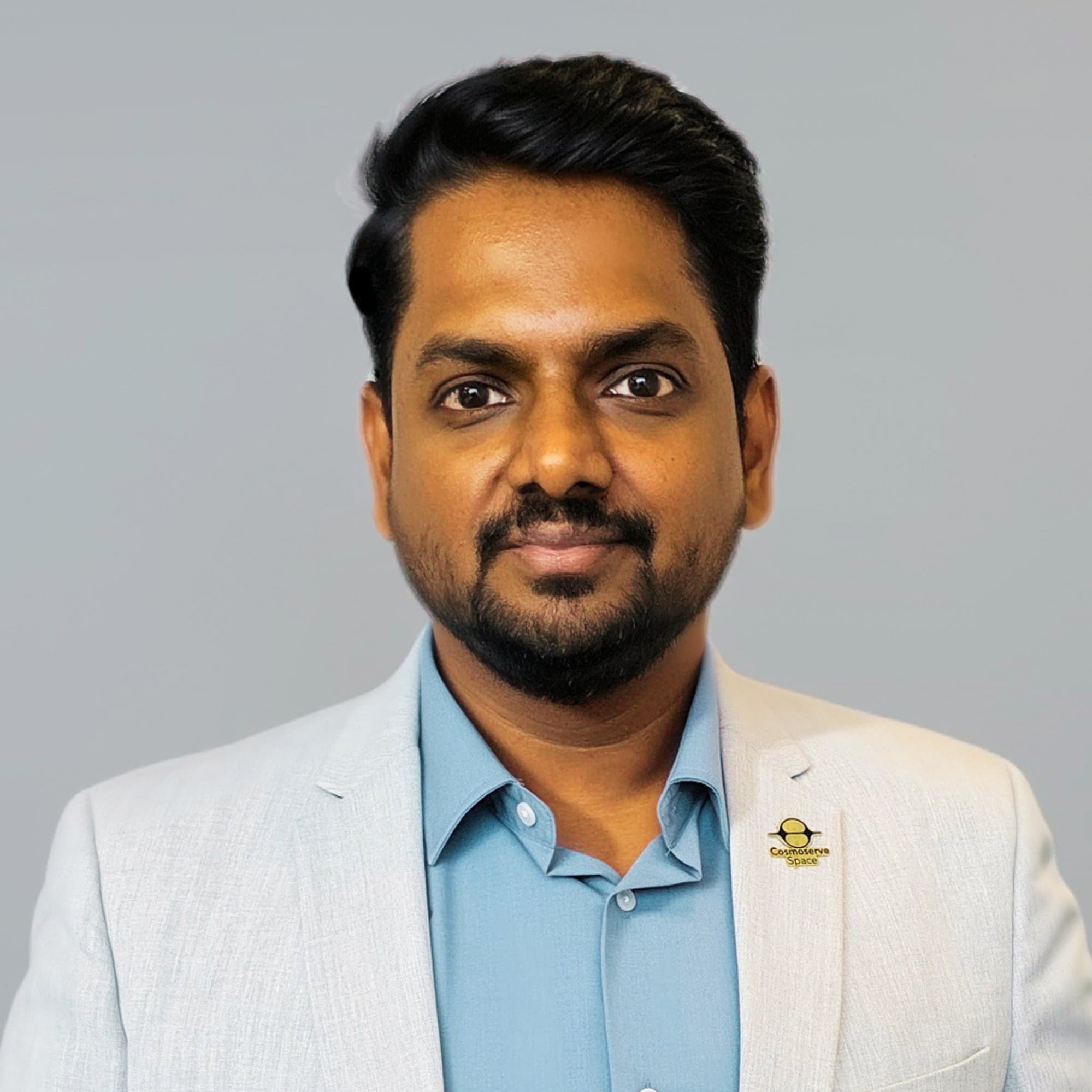
Building the Next Space Economy: Chiranjeevi Phanindra and Cosmoserve's Case for Orbital Maintenance
Chiranjeevi Phanindra, Founder & CEO of Cosmoserve Space, spent 14 years at ISRO working on re-entry and human spaceflight. Today, he is focused on a vital challenge: keeping Earth’s orbit usable.
Read Full Story

Corporate Visionaries
Shashank Sahni on What Success Leaves Out
Shashank Sahni, Google’s Managing Director of Global Ads Solutions, reflects on what customers reveal, what ambitious teams need from their leaders & what the mountains and marathons have taught him about going further.
Read Full Story

Corporate Visionaries
Clinical Multiplication: Divesh Singla on the Healthcare AI Case That Headlines Keep Missing
Divesh Singla, Managing Director, India at Veradigm, brings two decades in healthcare technology to the AI question leaders cannot avoid: how to expand clinical capacity without weakening human judgment.
Read Full Story