Category: Founders & Innovators
Safaän Shawl is part of a generation rewriting the logic of ambition. He believes progress is not acceleration but alignment, not growth for its own sake but growth that endures. His work across research and investing transforms patience into capital and precision into principle. What he builds is more than a firm. It is a philosophy of composure, discipline, and quiet conviction shaping the next era of enterprise.
Young and Deliberate: Safaän Shawl on the Future of Ambition
IndiSight Editorial
Jan 11, 2026
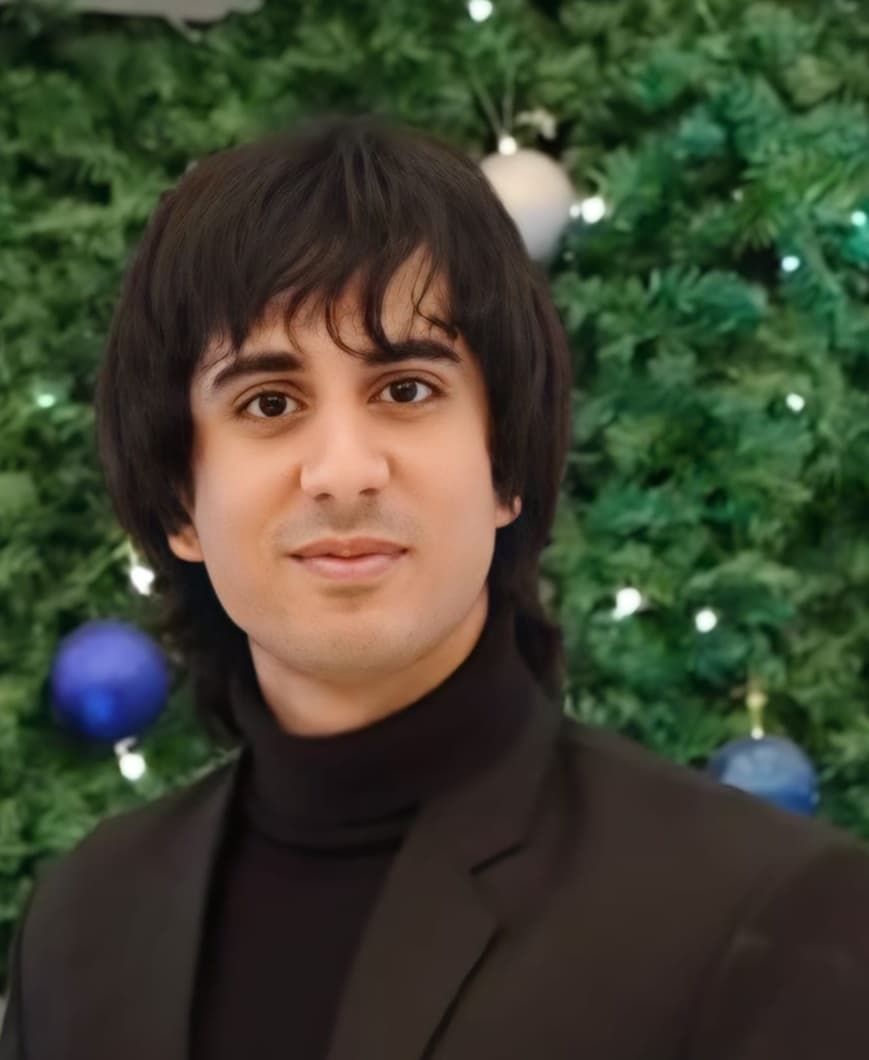
Safaän Shawl
Managing Partner · Maples And Moss Capital
The Age of Early Builders
Something fundamental is changing in how leadership begins. The old sequence of study, work, and rise no longer holds. Boundaries between learning and execution are dissolving. Students are publishing research before graduation, forming capital pools from dorm rooms, and shaping markets long before they enter them.
It is not recklessness. It is a generational shift in how people interpret time, access, and trust. Knowledge is open, mentorship is digital, and credibility comes from output, not permission. In this landscape, waiting no longer guarantees wisdom.
Around the world, a new kind of apprenticeship has emerged, self-authored, digitally mentored, and globally networked. What earlier generations learned through decades of hierarchy, this one absorbs through communities of practice, open data, and social credibility. The frontier has moved from access to interpretation. The question is no longer whether someone can enter the system but whether they can understand it deeply enough to rebuild it.
Among the most interesting examples of this early builder mindset is Safaän Shawl, who studies computer engineering and economics while operating Maples and Moss Capital, an investment firm that functions across India, Singapore, and Abu Dhabi. His work is not about scale but about systems, about how emotion, judgment, and design interact to shape decision-making.
“Markets are not efficient mechanisms,” he says. “They are moral mirrors. They show how people behave when certainty disappears.”
He sees his work not as trading but as translating behaviour, the quiet and unmeasurable part of finance that separates momentum from meaning. In his view, leadership begins when learning stops being about collection and starts being about interpretation. Decision-making, he often says, is not a ladder but a language.
Seeing Systems from the Inside
Shawl’s education has been immersive rather than linear. He learned from watching organizations under stress and how financial models behave when context shifts.
During a project involving high-reliability industrial supply chains, he was tasked with rethinking supplier networks in a sector where the margin for error was almost nonexistent. The goal was not speed or efficiency but resilience, building reliability into a system that operates under pressure and consequence. It taught him that optimization without stability is fragile and that precision, in certain domains, carries an ethical dimension. “Precision is moral when error has national consequence,” he says.
He often says that the greatest laboratories for learning are not classrooms but constraints. When resources are scarce and reputations are at stake, observation sharpens into intuition. That is where principles either hold or collapse. The discipline of accuracy, in his view, is not technical but moral.
At PepsiCo, he worked on forecasting disruptions across volatile regions. The experience, he says, reframed finance as a behavioural discipline. “Numbers do not lie,” he reflects, “but people interpreting them often do.”
This early exposure taught him that systems collapse not because of weak data but because of weak interpretation. “Every breakdown is a story of misread incentives,” he says. “Structure fails when psychology does.”
What he learned through these projects was that reliability is not an outcome but a mindset. Organizations that survive uncertainty treat accuracy as a form of respect. They design systems that expect error and evolve with it.
The Logic of Patience
When he launched Maples and Moss in 2023, he chose fine wine as his first asset class. Most observers saw novelty; he saw inefficiency. “Wine is a data set disguised as art,” he says. “It ages, it reacts, it remembers. That makes it honest.”
He analysed seventy-five years of data across 2,400 vintages to test how acidity, soil, and temperature interact with economic variables such as inflation or tariff cycles. The resulting framework was published in the International Research Group for Chemical Trade Journal.
The model achieved roughly eighty percent predictive accuracy when back-tested against Liv-ex, the global wine index. Yet for him, prediction was never the purpose. “Illiquid assets test character,” he says. “They reward those who understand that value is revealed slowly.”
He calls patience the invisible algorithm. It is not delay but data, a living measure of how conviction matures. Most investors underestimate silence because markets reward motion. Yet in illiquid assets, time is not a cost; it is compounding judgment.
To him, the real work of investing is not forecasting price but regulating emotion. Markets move between logic and longing. The investors who endure are not those who react fastest but those who listen longest.
Technology as an Extension of Judgment
At Maples and Moss, algorithms assist but never decide. Shawl uses automation to audit data and surface anomalies, not to replace reasoning. “Technology should clarify uncertainty, not hide it,” he says.
His team designed a linguistic model that studies how critics’ adjectives such as balanced or complex correlate with later pricing. The outcome was not a predictive engine but a mirror of perception. “Technology compresses time,” he says. “It shrinks the distance between impulse and outcome. The real advantage is not reaction speed, but emotional delay.”
He warns that the next technological disruption will not be about capability but calibration. The danger is not that machines think too much but that people think too little while trusting them. “Technology should never replace hesitation,” he says. “Hesitation is where wisdom hides.”
He believes automation will define maturity not by how fast systems learn but by how gracefully they stop learning when context changes. The future of intelligence, he adds, will depend on the humility to question the logic that technology repeats.
He believes the value of AI lies in restraint. “The future of intelligence is not who automates first,” he says. “It is who knows when not to.”
The Written Mind
Before he built models, he wrote. His essays and books titled The Great Northern War, A Symphony of Faith and Fury, and The Crimson Dawn explore how ideology and interpretation shape outcomes.
“Writing trains clarity,” he says. “It forces you to slow down thought until it becomes coherent.”
Every model, he says, begins as a paragraph. If he cannot write it clearly, he does not build it. This habit, he believes, prevents intellectual corruption, the kind that hides behind complex formulas and confident noise. Writing exposes not what you know but what you have ignored.
Another academic observer notes, “In finance, the danger is interpretive bias. Writing disciplines that. It creates cognitive honesty.”
For Shawl, every analytical discipline needs a linguistic one beside it. “You can automate logic,” he says, “but never comprehension.”
He believes writing converts noise into narrative. “If you cannot describe your idea to someone who does not care, you do not understand it yet,” he says.
Education as Strategy
He sees formal education as a system for building judgment, not credentials. “You can only take meaningful risks when you know how to recover from them,” he says.
His studies in engineering and economics are less about specialisation and more about pattern recognition, understanding feedback loops across physical and financial systems. “Learning,” he says, “is infrastructure. It keeps exploration from collapsing into noise.”
He plans to pursue research in behavioural finance and systems design. “Curiosity generates novelty,” he says. “Education converts it into durability.”
He views learning as an operating system that calibrates how people process complexity. Every concept becomes valuable only when it meets uncertainty. “The real exam,” he says, “is never on paper. It is in how calmly you make decisions when nothing seems certain.”
He often speaks about absorptive capacity, the ability to integrate knowledge rather than accumulate it. In his experience, education is less about acquiring frameworks and more about testing which ones survive contact with reality.
The Generational Mirror
He often describes his generation as brilliant but impatient. “We can accelerate anything except self-awareness,” he says.
He believes three quiet risks define modern ambition: intellectual haste, emotional volatility, and avoidance of structure. Digital exposure, he adds, amplifies all three. “We scroll past wisdom faster than we can absorb it.”
He believes visibility has become the new vulnerability. The moment you are seen, you are measured, often before you are ready. “Our generation confuses exposure with achievement,” he says. “We spend more time performing competence than building it.”
He adds that digital awareness has created what he calls an attention deficit in reflection. The feed moves faster than the mind. “The challenge is not distraction,” he says. “It is digestion.”
For him, the challenge of leadership today is not visibility but composure. “Speed without calibration leads to burnout,” he says. “We confuse exhaustion with excellence.”
His view of leadership is simple: calm is competence. “Composure is not detachment,” he says. “It is control over narrative, both internal and external.”
He believes the leaders who thrive will be those who transform calm from a personality trait into a design principle. Stillness, in his words, is not silence. It is a deliberate absence of noise that restores perspective.
The Design of Durability
What interests him most is not growth but persistence, the psychology of what lasts when momentum fades. He believes most people chase expansion without understanding stability, confusing scale with strength. Longevity, he says, is not a by-product of success but its true measure.
He has distilled his reflections into four disciplines he calls Durability Design.
Clarity prevents self-deception and keeps leaders from mistaking activity for progress.
Steadiness sustains judgment when data and emotion conflict.
Honesty allows correction before collapse because denial costs more than failure.
Consistency turns action into identity, making integrity predictable instead of performative.
“These are not virtues,” he says. “They are ways of thinking. If you hold them long enough, they become culture.”
He applies the same framework to leadership. Clarity is not about knowing more but knowing what not to pursue. Steadiness comes from structure, not emotion. Honesty requires intellectual self-audit before moral ones. And consistency, he says, is the slowest form of trust. “People do not follow brilliance,” he adds. “They follow predictability that earns respect.”
To him, repetition is creativity disguised as discipline. The best ideas, like the best organizations, are not invented; they are maintained.
He often explains that the most reliable systems are built not through intensity but repetition, through habits that outlast emotion. A Singapore-based family office that partnered early with Maples and Moss described his approach as “a study in coherence.” Its principal said, “Most managers sell conviction. He sells clarity.”
Lessons from the Mind of a Builder
The firm may be small, but its philosophy travels widely. Shawl’s reflections have evolved into principles that apply to anyone building something meant to last.
Markets mirror behaviour. Every price movement reveals psychology.
Structure creates freedom. Systems do not restrict creativity; they protect it.
Technology amplifies emotion. Awareness, not automation, defines intelligence.
Education compounds resilience. True learning builds recovery, not résumé lines.
Consistency outlasts intensity. Patience scales better than passion.
He often reminds young founders that reliability is the highest innovation. “A good system should outlive its designer,” he says. “Otherwise, it was just enthusiasm, not architecture.”
Each idea points to a single discipline: measured conviction. The maturity of leadership, in his view, is the ability to stay curious without becoming chaotic.
The Quiet Rebellion
For Shawl, progress is not movement. It is judgment sustained over time. He believes the future of leadership will belong to those who think slower, decide deeper, and act with emotional precision.
“The loudest players move markets,” he says. “The quiet ones understand them.”
His philosophy signals a shift from ambition to design, from chasing growth to building stability. It is a model of leadership that replaces noise with intellect, speed with clarity, and performance with composure.
What his worldview captures is a deeper cultural turning point. The institutions that once equated speed with superiority are learning that longevity has its own velocity. Markets, technology, and leadership are converging around a single truth: intelligence is not acceleration but awareness.
In an age racing toward automation, perhaps the next revolution will belong to those who choose stillness, not as pause but as power.
Our Suggestions to Read
Discover The Leaders Shaping India's Business Landscape.
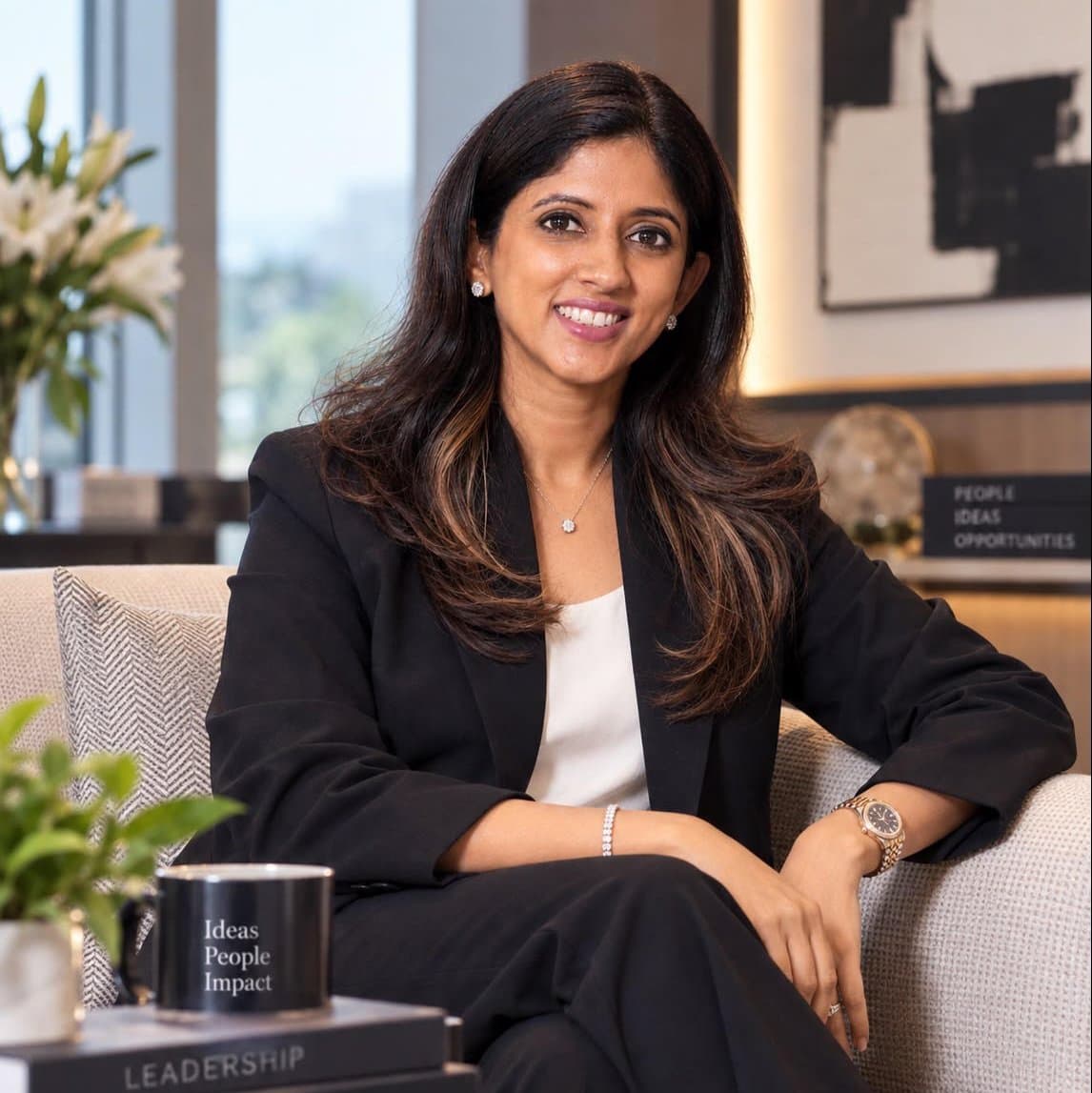
Investors & Catalysts
From Millet to Method: Rasika Prashant on Building What Consumers Return To
Rasika Prashant, CEO of NSRCEL at IIM Bangalore and Co-founder of Soulfull (later aquired by Tata Consumer Products) on consumer trust, category creation, Indian brands, and the founder discipline required after belief.
Read Full Story
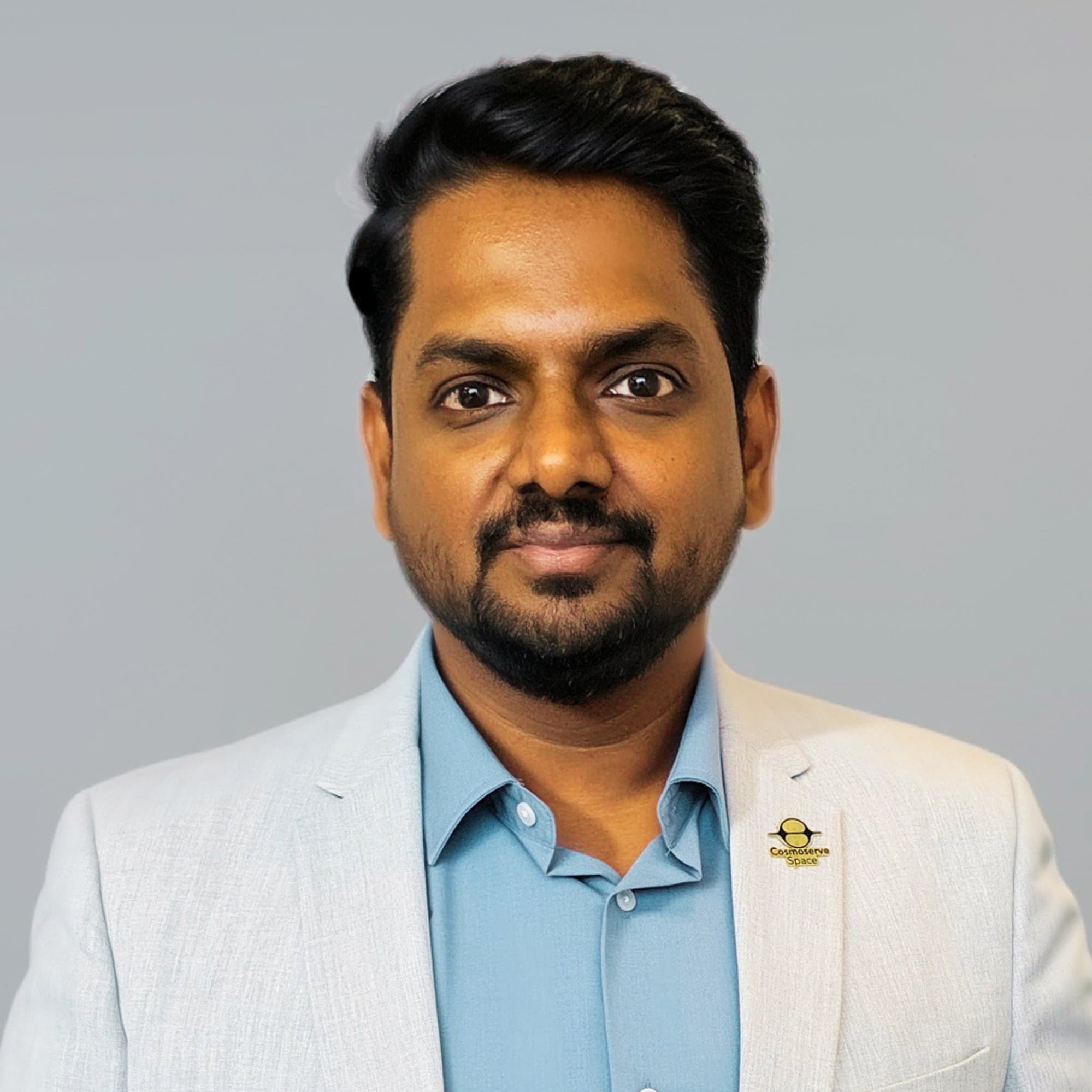
Founders & Innovators
Building the Next Space Economy: Chiranjeevi Phanindra and Cosmoserve's Case for Orbital Maintenance
Chiranjeevi Phanindra, Founder & CEO of Cosmoserve Space, spent 14 years at ISRO working on re-entry and human spaceflight. Today, he is focused on a vital challenge: keeping Earth’s orbit usable.
Read Full Story
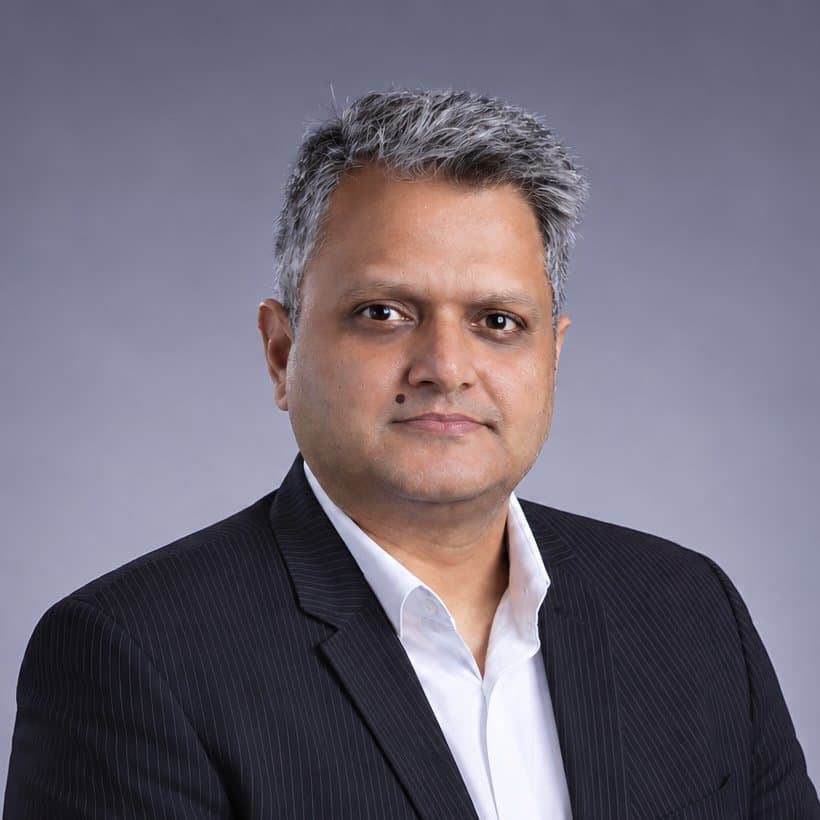
Corporate Visionaries
Clinical Multiplication: Divesh Singla on the Healthcare AI Case That Headlines Keep Missing
Divesh Singla, Managing Director, India at Veradigm, brings two decades in healthcare technology to the AI question leaders cannot avoid: how to expand clinical capacity without weakening human judgment.
Read Full Story