Category: Founders & Innovators
Pranay Jindal’s journey captures a rare shift in modern leadership, from chasing scale to building with substance. After years across India’s leading startups, he founded Svya, a handcrafted silver brand rooted in trust, discipline, and empathy. His approach views growth not as a race but as a reflection of how responsibly a company evolves. In redefining what sustainable success looks like, he reminds us that true progress is measured by balance, not speed.
When Scale Learns Restraint: Pranay Jindal on Building with Balance
IndiSight Editorial
Feb 3, 2026
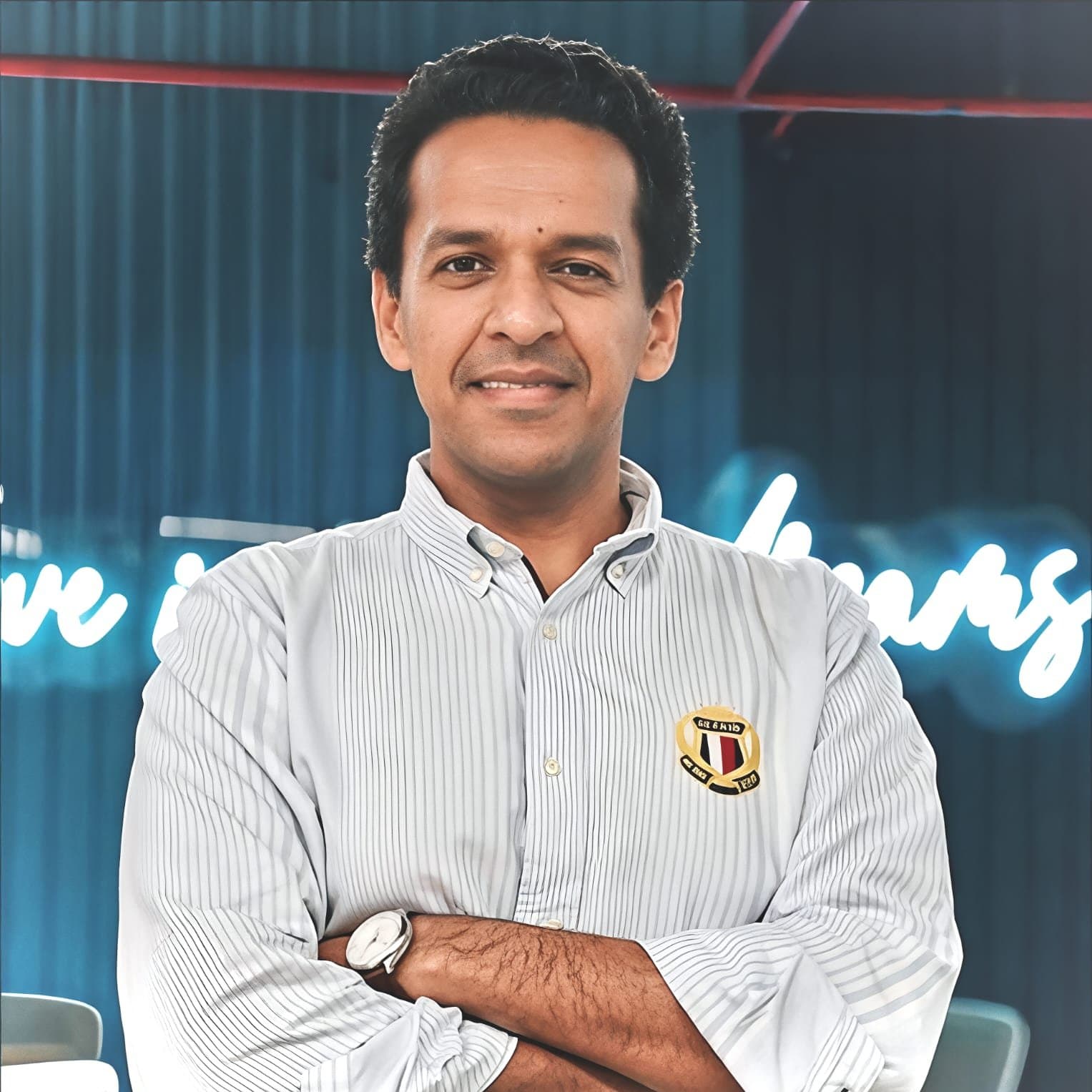
Pranay Jindal
Founder · Svya
Delhi
Competitive advantage today depends as much on empathy as on execution. For decades, success in business was measured by speed, efficiency, and the ability to expand faster than others. That logic built scale, but it also created fragility. Pranay Jindal has spent over fifteen years learning how systems grow stronger when they move with intention, not just momentum.
Across Airtel, Paytm, 1MG, Toppr, and Amber Student, he built teams, led markets, and watched the startup world evolve from instinct-driven hustle to data-obsessed precision. His new venture, Svya, brings those lessons together in a sector that surprises many who know his background. It is a handcrafted silver-jewelry brand that tests whether a company can be fast, ethical, and emotionally intelligent at the same time.
“I wanted to see if kindness could be part of how a company performs,” he says. “Not as charity, but as structure.”
Formative Years
Pranay’s foundation was built on the ground, not in a boardroom. At Airtel Gujarat, his first posting after MBA, he entered a market defined by daily competition. Vodafone and Uninor were cutting prices, and every day demanded sharper execution.
He remembers choosing to go directly to customers rather than rely only on retailer discounts. “That was our version of D2C back in 2013,” he says, recalling visits to college hostels where students compared mobile data packs. “The closer you are to the customer, the better your decisions get.”
That habit of listening early shaped how he understood leadership. It was never just about targets or numbers. “One of my team members once went through a difficult personal loss,” he recalls. “For fifteen minutes, he just needed someone to listen. That day I understood what leadership really means.”
Those early encounters taught him that people remember how you make them feel far more than the results you demand. Human connection, he says, precedes performance.
From Corporates to Startups
Over the next decade, Pranay worked across industries: telecom, fintech, edtech, and e-commerce. Each brought different lessons, but one pattern remained constant. The closer a leader stayed to customers, the more accurate their intuition became.
“In sales you meet every kind of person,” he says. “You start to sense empathy. You know who is serious, who is pretending, and who just needs to be heard.”
At Paytm and 1MG, he saw how data and dashboards could inform decisions but also blur judgment. “There was information for everything and understanding for very little,” he says. “We were moving fast, often without complete comprehension of why we were doing what we were doing.”
That realization began to shift how he thought about performance. Numbers tell you what is happening; conversations tell you why.
Speed delivers results, but if you move too fast, you stop learning. The best teams balance energy with awareness.
Crossing the Line from Advisor to Founder
After years of working with founders, Pranay decided to become one. Consulting startups had shown him a recurring pattern: founders were either deeply technical or deeply financial, but few understood how to sell.
“I had done my part telling people what to do,” he says. “I wanted to invest that experience in building something myself.”
Sales, he explains, was his natural language. “Some people build Ferraris. Some people drive them. I am the one who drives,” he says with a smile. “Building a product is new to me. Selling is what I have always done.”
That honesty led him to a category he had never worked in before: jewelry. “It is so product-first and design-driven that it forced me to slow down,” he says. “Earlier I took decisions in days. Now I take them over weeks. That patience has changed how I think.”
Svya was born from that deliberate pause. It represents, in his words, “the balance between empathy and enterprise.”
Understanding the Customer
Whether selling telecom plans or jewelry, Pranay believes certain patterns in human behavior never change. “Everyone wants to be seen and heard,” he says. “Everyone wants a small upgrade in life, something just twenty percent better.”
That desire for slight improvement, he believes, drives India’s growing premiumization wave.
People are no longer buying only to save. They are buying for lifestyle, for pride, for experience.
This insight shapes how he approaches design and marketing at Svya. “Before even choosing which segment to enter, I spoke to fifty women,” he says. “We listened more than we pitched. That is where real insights come from.”
Culture and Hiring
For Pranay, culture determines how long success lasts. He measures it through small choices, how people hire, how they handle ethical tests, and how they treat colleagues.
He often tells an interview story that became his informal ethics test. “If a distributor gives you a cheque dated one day ahead, would you cash it today to meet your target?” he asks. “How they respond to that question helps me identify whom to hire.”
He believes strong cultures emerge slowly and are led by example. “Speed changes with business cycles,” he says. “Culture is the only constant.”
Leadership, in his view, is about structure more than charisma.
People do not need big speeches. They need fairness, safety, and consistency.
He avoids micro-management and focuses instead on outcomes and feedback. “Agree on what matters, give space, and then check in,” he says. “For strong performers, monthly reviews are enough. For others, once every two weeks. But feedback must be frequent, faster than failure.”
Balancing Data and Judgment
Pranay’s career has lived at the intersection of analytics and instinct. He has seen both succeed and both fail.
At Amber Student, he recalls a key example. “There was no data on which countries sent students to which cities,” he says. “But one partner told us Germany was showing strong signs. We trusted that, moved quickly, and got fifty bookings in a month.”
Each booking meant revenue and proof that intuition still matters. “Data shows patterns. People explain them,” he says. “Human judgment will always be the best leading indicator.”
He cautions that large datasets can create the illusion of certainty.
When numbers give you confidence without context, that is dangerous. If you stop asking why, technology starts deciding what.
Governance and Trust
Ethics, for Pranay, is not a department. It is an extension of how people were raised. “Governance should be in your DNA,” he says. “It reflects your upbringing and your values.”
He sees trust as something that compounds over time. “You cannot ask for it on day one,” he says. “Work with someone for ten years and the trust you build in the last five will be greater than the first five.”
That philosophy guided how he designed Svya’s operations. He believes documentation, transparency, and feedback loops create credibility faster than marketing does.
A company is judged by how it treats people who have no power inside it. Fairness lasts longer than inspiration.
Inside Svya
Svya designs its pieces in-house and works with selected manufacturing partners in Jaipur under strict confidentiality. Each design is protected, each batch produced in limited quantity. The company operates online only, avoiding the overheads of physical stores.
“We are building for consistency, not vanity,” he says. “Selling jewelry is easy. Designing it right is hard.”
He credits his team for pushing experimentation. “Jewelry as a category hasn’t seen enough innovation,” he says. “Everyone sells the same patterns. We want to change that.”
Decisions at Svya are guided by three simple questions: does it protect our purpose, strengthen trust, or help us learn? “If it fails all three questions, we stop,” he says. “These are not rules but habits that keep us aligned. They help us move fast without losing discipline.”
He sees Svya as a test of focus and patience. “Jewelry is a long-cycle business,” he says. “You nurture small green shoots and see which ones take root. We are fine growing slower if trust deepens faster.”
Technology supports that discipline quietly. “We track repeat behavior and feedback,” he says. “But we use data to listen better, not to manipulate preference.”
For him, resilience is about design, not drama. “Design evolves, platforms change, but judgment must stay consistent,” he says. “If our systems remain stable when teams evolve, that’s real progress.”
If customers keep returning, if suppliers stay for years, if employees find meaning here, the business is working. Growth follows trust; it cannot replace it.
Learning from Failure
Not every decision has worked. He recalls a hiring choice that taught him the cost of delay. “I waited months for the perfect candidate,” he says. “By the time we hired, we had lost a quarter of execution.”
The mistake reminded him that conviction and urgency must coexist. “Sometimes you learn balance only after you lose it,” he says. “Leadership is not about perfection. It is about judgment.”
Building for the Long Term
Asked whether capitalism can remain compassionate at scale, Pranay pauses. “It depends on structure,” he says. “When growth is system-led, not personality-led, compassion and scale can coexist.”
He points to documentation, HR systems, and transparent processes as signs of maturity.
If your growth depends on a few people or bursts of capital, it will fade. If it depends on design and discipline, it lasts.
He believes India’s startup ecosystem has already moved from excess to introspection. “The burn-heavy phase is behind us,” he says. “Founders now understand that discipline is not a constraint; it is a competitive advantage.”
Operating Principles
The following principles, distilled from his reflections, summarize how he leads:
Balance before speed. Moving fast matters only when direction is right.
Hire for judgment. Good sense outlives good résumés.
Feedback must be quicker than failure. Timely feedback saves time, money, and morale.
Systems outperform individuals. Well-designed processes protect performance from mood swings and mistakes.
Focus compounds value. Every decision is a choice about where attention goes.
Culture grows through consistency. People trust what they see repeated, not what they hear promised.
Governance is everyday behavior. Ethics shows up in how you treat those who cannot reward you.
Transparency is practical economics. It reduces friction and eliminates hidden costs.
Curiosity keeps teams alive. Listening to customers reveals truths that reports miss.
Respect is the final metric. Revenue fades. Reputation endures.
Defining Success
When asked what success will look like five years from now, Pranay does not mention valuation. “If the people who built this company still speak with respect about how we worked, that will be a success,” he says.
Growth, for him, is both economic and ethical. “You should grow without losing empathy,” he says. “If people enjoy building with you, everything else follows.”
He closes with quiet conviction. “Velocity fades. Values persist. Real progress is not motion for its own sake. It is ‘direction’ sustained by purpose.”
Our Suggestions to Read
Discover The Leaders Shaping India's Business Landscape.
Founders & Innovators
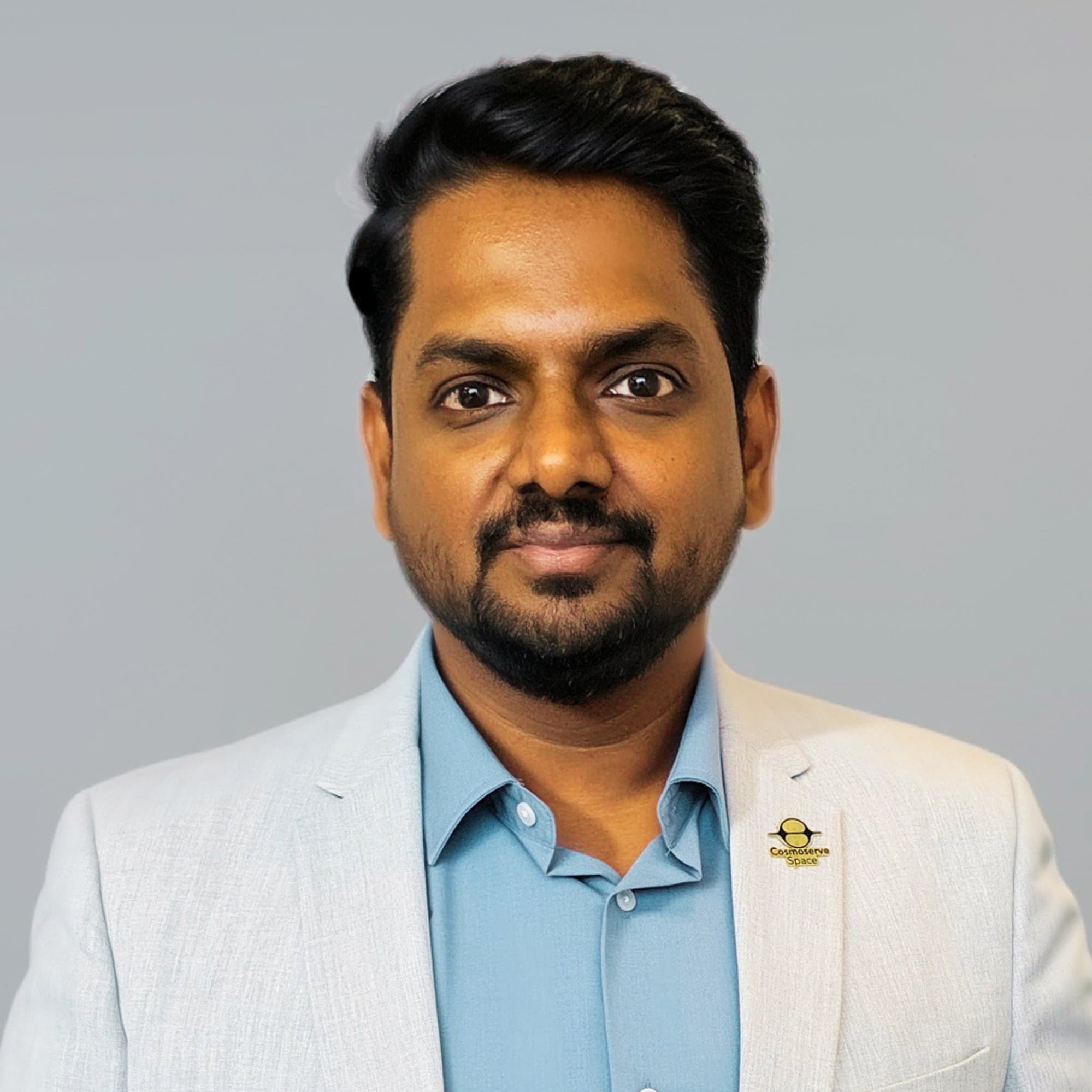
Building the Next Space Economy: Chiranjeevi Phanindra and Cosmoserve's Case for Orbital Maintenance
Chiranjeevi Phanindra, Founder & CEO of Cosmoserve Space, spent 14 years at ISRO working on re-entry and human spaceflight. Today, he is focused on a vital challenge: keeping Earth’s orbit usable.
Read Full Story

Corporate Visionaries
Shashank Sahni on What Success Leaves Out
Shashank Sahni, Google’s Managing Director of Global Ads Solutions, reflects on what customers reveal, what ambitious teams need from their leaders & what the mountains and marathons have taught him about going further.
Read Full Story

Corporate Visionaries
Clinical Multiplication: Divesh Singla on the Healthcare AI Case That Headlines Keep Missing
Divesh Singla, Managing Director, India at Veradigm, brings two decades in healthcare technology to the AI question leaders cannot avoid: how to expand clinical capacity without weakening human judgment.
Read Full Story