Category: Founders & Innovators
As India ages, care is no longer a private family matter; it’s an economic system in need of structure. Navneet Gupta is building where the system breaks: trust, continuity, and coordination.
The Trust Builder: How Navneet Gupta Is Building India's Care Coordination Economy
IndiSight Editorial
Apr 7, 2026
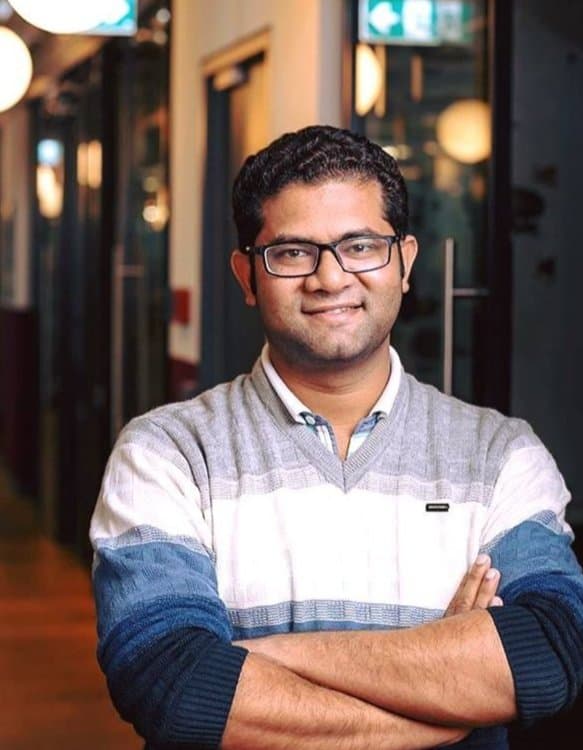
Navneet Gupta
Founder & CEO · ServiceGTD
Bengaluru/India
India's next major service economy may emerge from a space that business has historically treated as private, fragmented, and largely invisible: care. By 2050, India is projected to have about 347 million people aged 60 and above, up from about 149 million in 2022, with older adults expected to account for 20.8 percent of the population. The 80-plus segment is projected to grow even faster and place greater pressure on families, providers, and institutions never designed for this scale of ageing. NITI Aayog has already pointed to serious weaknesses in senior care, including low pension coverage and weak institutional support, while the Ministry of Social Justice has explicitly framed professional caregiver capacity as a supply-demand gap requiring formal intervention.
India is dealing with a market in which families are more geographically dispersed, chronic conditions are becoming more common, and care needs are stretching across home support, rehabilitation, assisted living, medical coordination, and end-of-life care, while the country still lacks a strong coordinating layer that can make these services visible, accountable, and dependable for families who are often managing them from another city or another country.
Navneet Gupta is building in that opening. After sixteen years across Microsoft, Flipkart, Wise, Careem, and DocuSign, he left a senior engineering trajectory to build ServiceGTD, a platform that helps families, especially NRIs, coordinate care for ageing parents across more than forty Indian cities. The visible service is eldercare support. The deeper proposition is trust in a market where quality is uneven, standards are still emerging, and reassurance carries as much weight as delivery.
From Optimization to Interpretation
During his years abroad as an NRI, Navneet encountered pressures familiar to millions of Indians outside the country: the challenge of arranging support for ageing parents when the decision-maker is remote, the provider is local, and the emotional weight behind every request far exceeds the transaction itself. When he later spoke with more than 120 NRI families, the same issues appeared repeatedly: communication barriers, opaque pricing, weak continuity, and providers who could complete tasks while failing to understand the human weight behind every request.
Technology that optimizes people assumes humans are predictable. Technology that understands people begins with the opposite assumption.
That line captures the intellectual move behind his company. In digital systems, progress comes through speed, automation, and standardization because repeatability improves value. In care, families do not simply need access to providers but need someone who can interpret urgency, manage ambiguity, and stay accountable when the situation shifts in ways that no standard workflow can anticipate.
"What looks like a service problem on the surface is actually a trust and coordination problem," Navneet explains.
India already has hospitals, diagnostics networks, homecare providers, senior living experiments, and thousands of local operators across formal and informal settings. The more meaningful shortage lies in the intermediary layer that can convert fragmented supply into dependable outcomes for families operating with incomplete visibility and highly uneven confidence in the system.
The Coordination Opportunity
Eldercare is still discussed through isolated service lines such as home nursing, rehabilitation, or assisted living, while families experience ageing as an accumulation of overlapping demands in which medical needs interact with mobility, daily supervision, emergency readiness, compliance, and continuity of care. As India ages, demand will extend beyond a larger number of services and toward a stronger system for orchestrating them. Mordor Intelligence estimates India's senior living market at USD 4.47 billion in 2026 with projected growth to USD 14.14 billion by 2031.
ServiceGTD assigns dedicated relationship managers, relies heavily on WhatsApp to keep all stakeholders aligned, and remains involved after initial service deployment because the category requires continuity, which is often the real source of comfort for families managing vulnerability from far away.
"Care isn't a commodity. It's a relationship," Navneet says.
A relationship-heavy category cannot be run like a passive software marketplace that facilitates matching and then fades into the background. It requires judgment, intervention, and visible ownership. Navneet had to unlearn an instinct that serves people well in technology, where friction is treated as a design flaw. In care, certain forms of friction are useful: listening takes time, escalation requires human discretion, and follow-up is part of quality control.
His argument is not against technology but for a different division of labor between systems and humans. Scheduling, documentation, communication, monitoring, and coordination all benefit from software support while judgment, empathy, and situational interpretation remain firmly human responsibilities.
In care services, technology should amplify human care, not replace it.
He applies the same discipline to data.
"Data collection must always be proportional to the value it creates for the person receiving care."
In a category built on trust, excessive surveillance can weaken the very confidence a care system is supposed to strengthen.
The Economics of Structured Empathy
Eldercare is labor-intensive, quality-sensitive, and hard to standardize, while many investors prefer categories in which software absorbs variability and customer acquisition scales aggressively. Navneet reframes the constraint.
Empathy, when structured right, can become a defensible advantage rather than a cost center.
That argument works only if empathy is translated into operating discipline. Partner verification, communication protocols, regular check-ins, escalation paths, and service continuity turn reassurance from a founder value into a repeatable capability. In trust-heavy categories, the company that can hold complexity together may build stronger retention than the company that merely connects supply to demand.
Reputation becomes the real accelerator in sectors like this, where families who trust the coordination layer tend to stay, refer, and deepen their dependence over time. Navneet sold his first flat to help fund the company, creating room to build the business in a way that matched the category's realities rather than forcing it too early into a growth template that could damage trust-building.
"I've always believed in putting skin in the game," he says.
He has already seen how easily that damage can happen. One early advisor proposed awareness-building tactics that may have worked commercially, but Navneet ended the relationship because the methods did not meet his standards for transparency.
Healthcare, especially eldercare, is a trust-driven space. If you compromise on integrity even once, the long-term cost to reputation can far outweigh any short-term gains.
Building in the Gaps
India has seen adjacent service categories professionalize before, but eldercare is more trust-dependent because continuity matters more than discovery. Senior living operators such as Antara Senior Care, Columbia Pacific Communities, Ashiana Housing, and Covai are building in parts of the category, largely around residential formats, while Navneet's play sits in the connective tissue around distributed care, especially for families managing from afar. That requires ongoing accountability rather than one-time conversion.
Accountability Before Crisis
Navneet argues that protection should not depend on a victim's ability to complain. In eldercare that assumption is especially weak because many seniors will not escalate problems early, some avoid conflict, some normalize discomfort, and some simply lack the leverage to challenge poor service.
"In care, accountability shouldn't begin when something goes wrong. It should be designed into the system so that problems are less likely to occur in the first place," Navneet says.
That principle shapes ServiceGTD's approach through partner verification before onboarding, pilot deployments, regular check-ins, and clearer communication channels. It also shapes his view of policy. If he could influence one reform, he would push for a national framework for accreditation and standards across homecare providers, caregivers, and assisted-living facilities.
Thoughtful regulation, focused on standards and accountability rather than excessive compliance, could play a major role in building trust and accelerating the development of this ecosystem.
India's eldercare sector does not need ceremonial compliance so much as it needs stronger quality signals, better workforce preparation, and clearer consumer protection. Without that, demand may continue to rise faster than standards, which is one of the fastest ways for a promising category to lose public trust.
India's Unique Path
India's path will differ from many ageing societies abroad. Japan has leaned into robotics and highly structured eldercare support, Nordic systems have relied on state-backed care institutions, and Singapore has combined family responsibility with large-scale dependence on migrant domestic labor. India is unlikely to follow any one of those models cleanly. The country's route is more likely to involve a hybrid structure where family involvement remains strong, private operators professionalize unevenly, and trusted coordination layers become more important as demand broadens.
Legacy Beyond Valuation
When Navneet talks about legacy, he does not begin with valuation. He wants the standards his company is trying to normalize around verification, transparency, and accountability to become wider market practice. That is a more serious ambition than company growth alone since it suggests he is trying to influence the grammar of the category itself.
India's care economy will expand because demographics, migration, and family patterns will ensure that. The deeper question concerns the kinds of institutions that will define it as it grows. Navneet's wager is that trust, treated with enough rigor, can become one of the few durable moats in the sector. That is one of the harder business questions India will have to answer in a longer-lived future.
Our Suggestions to Read
Discover The Leaders Shaping India's Business Landscape.
Founders & Innovators
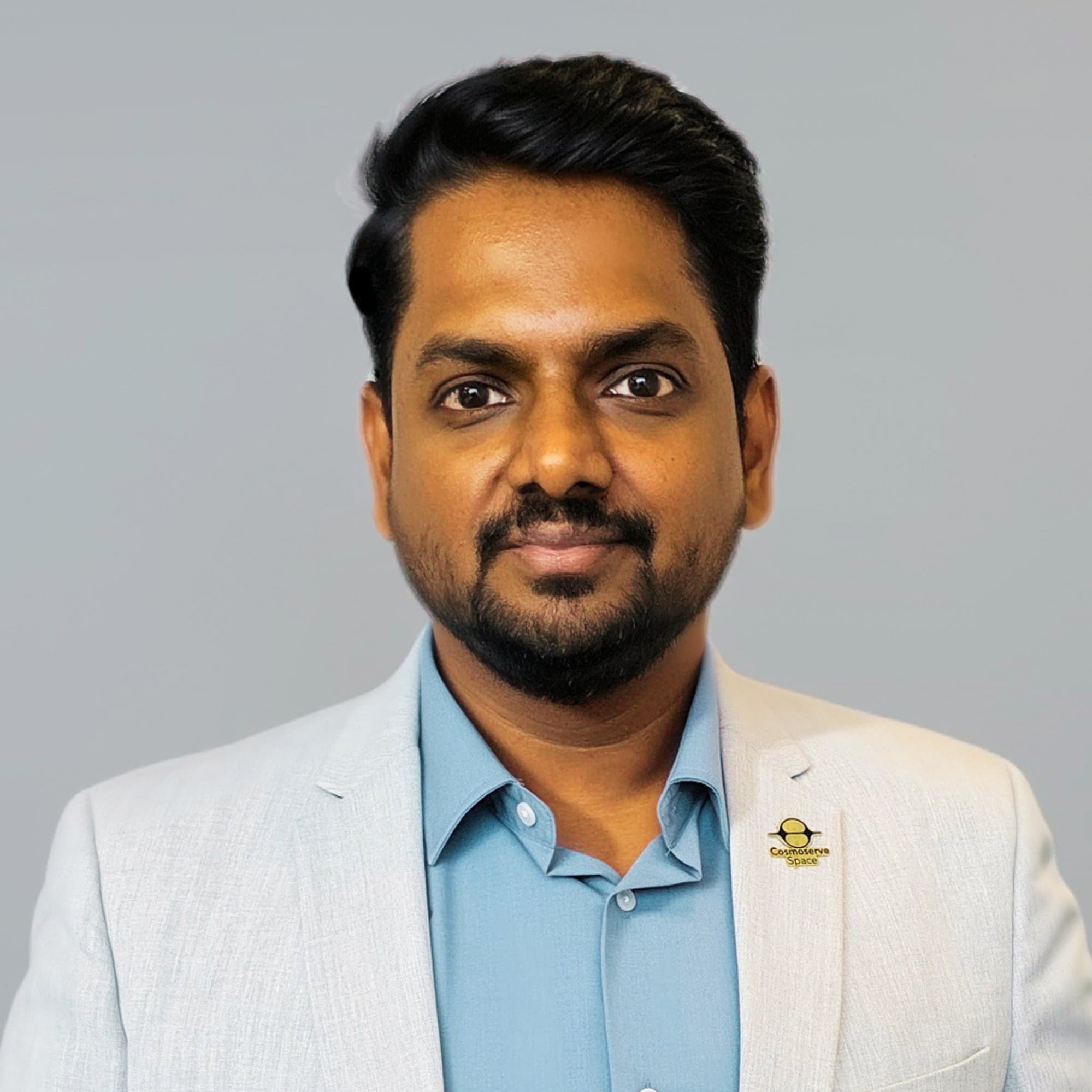
Building the Next Space Economy: Chiranjeevi Phanindra and Cosmoserve's Case for Orbital Maintenance
Chiranjeevi Phanindra, Founder & CEO of Cosmoserve Space, spent 14 years at ISRO working on re-entry and human spaceflight. Today, he is focused on a vital challenge: keeping Earth’s orbit usable.
Read Full Story
Corporate Visionaries
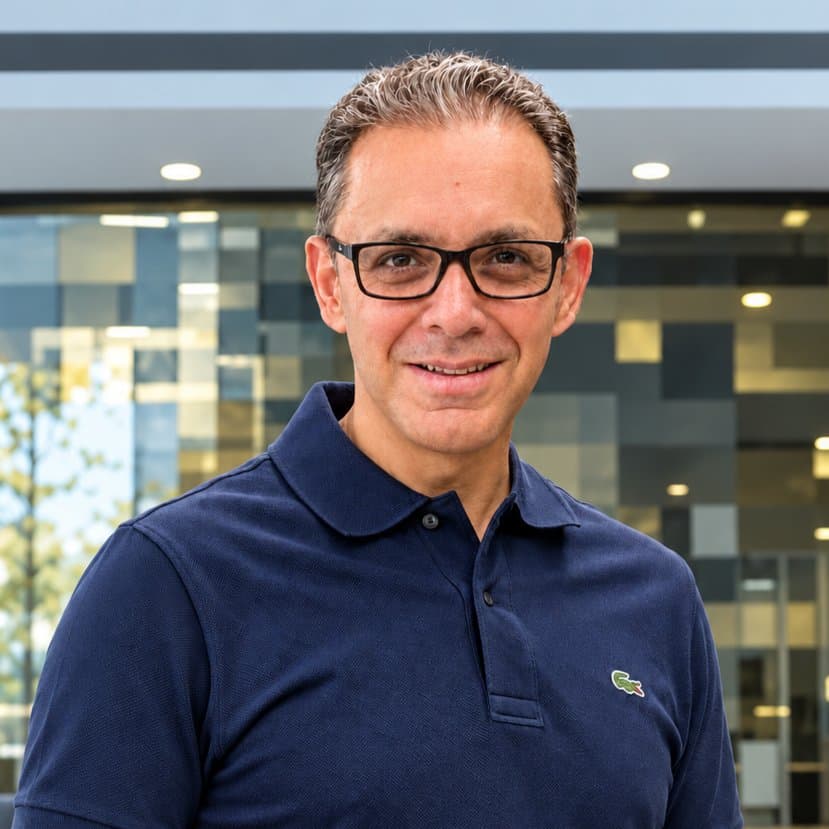
Shashank Sahni on What Success Leaves Out
Shashank Sahni, Google’s Managing Director of Global Ads Solutions, reflects on what customers reveal, what ambitious teams need from their leaders & what the mountains and marathons have taught him about going further.
Read Full Story
Corporate Visionaries
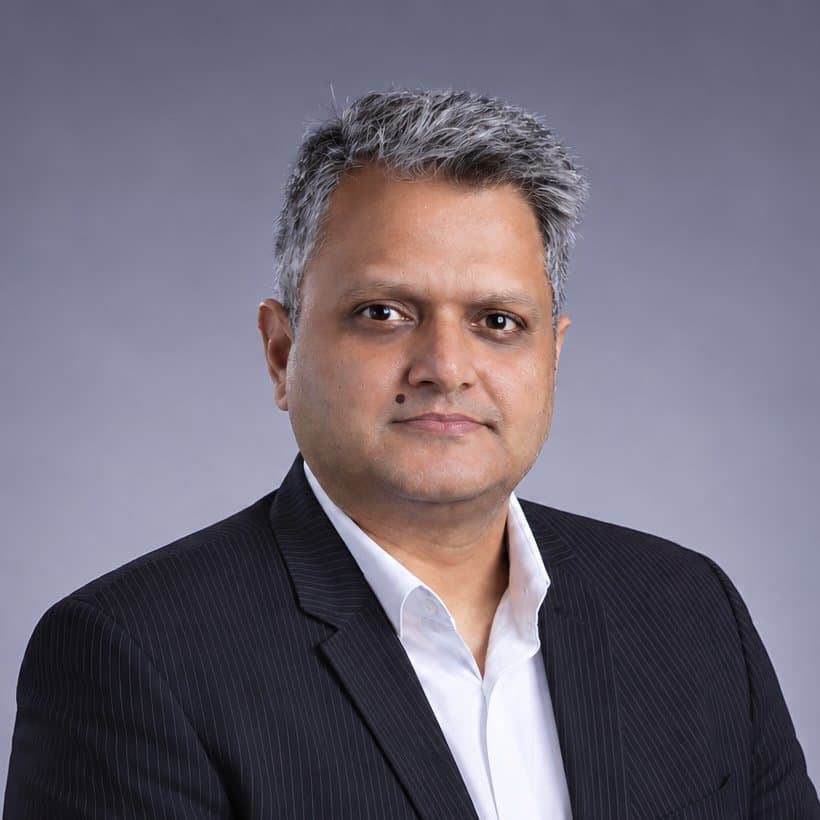
Clinical Multiplication: Divesh Singla on the Healthcare AI Case That Headlines Keep Missing
Divesh Singla, Managing Director, India at Veradigm, brings two decades in healthcare technology to the AI question leaders cannot avoid: how to expand clinical capacity without weakening human judgment.
Read Full Story