Category: Founders & Innovators
Ashish Srivastava, Co-Founder & CEO of Finland Education Hub, explains why the future of education depends on preserving humanity while embracing innovation.
The Quiet Reimagination of Education: Why Ashish Srivastava's Lens Matters Now More Than Ever
IndiSight Editorial
Jul 10, 2025

Ashish Srivastava
In a time when education is being rapidly technologized, rebranded, and restructured, it is rare to encounter someone who asks a far simpler and yet far more courageous question: What must education preserve, even as it evolves?
Ashish Srivastava is not trying to impress you with disruption. He is not campaigning for reform with noise, nor is he building products for scale with the urgency of venture cycles. Instead, he is quietly asking institutions to return to their roots, to rethink the cultures they create, and to rebuild their inner alignment, not just their outer results.
His work is not defined by the usual metrics of innovation. It is shaped by a deeper inquiry: What kind of people do we hope to shape, and how should that intention inform the institutions we build?
This is not a story about a founder. This is a story about a lens.
Education as a Cultural Mirror, Not a Delivery System
In most conversations about the future of education, the focus immediately turns toward digital access, AI integration, skill alignment, and curriculum modernization. These are important. But they are not the soul of the system.
What Ashish consistently points out, often without saying it explicitly, is that education is not merely about knowledge delivery. It is a cultural mirror. It reflects what we value as a society: the behaviors we reward, the questions we encourage, the voices we listen to, and the definitions of success we embed into every classroom.
To treat education as infrastructure alone, he believes, is to hollow out its deepest potential. The institutions we build are not just preparing students for a future economy; they are shaping how they think, care, lead, and make sense of complexity.
That lens of education as formation, not just instruction, defines everything he does.
Where This Perspective Comes From and Why It Matters
Ashish’s grounding is both global and rooted. He studied engineering at Thapar Institute before pursuing an MBA at ESADE Business School in Spain and later completing advanced leadership training at Hult Ashridge in the UK. But these milestones are not central to his identity. What shaped him more were the contradictions he observed between educational theory and institutional practice, across geographies, systems, and ideologies.
He spent years engaging with global education movements, including the Positive Impact Rating for Business Schools in Switzerland, the World Economic Forum at Davos, and several UN SDG dialogues, but came away not with jargon or frameworks. He came away with questions. Why do so many well-intentioned institutions struggle to live their stated values? Why is transformation so often reduced to templates, rather than built through trust?
Those questions, slowly and deliberately, gave rise to his core initiative, not as a company, but as a conversation.
Finland Education Hub: A Lab for Realigning Institutional Intent
Finland Education Hub is not an education consulting company in the traditional sense. It is not selling dashboards or test prep tools. It is not focused on scale first, nor does it pitch itself with market disruption vocabulary. Finland Education Hub is something else entirely, a space for institutional clarity.
Ashish co-founded the hub after spending years observing how schools were drowning in operational fatigue, caught between compliance checklists, legacy curricula, and the pressure to be digitally relevant. In the process, they had stopped asking the one question that truly matters: Why do we exist as an institution?
Finland Education Hub works by slowing institutions down, not to make them less effective, but to make them more intentional. It guides school leaders, educators, and governing boards through deep reflective processes, helping them reconnect with purpose before chasing performance. It introduces frameworks for self-audit, cultural diagnostics, and long-horizon planning, not in a way that’s external or imposed, but co-created with each ecosystem.
This is not about innovation theatre. It’s about inner alignment.
Leading with Questions, Not Charisma
What makes Ashish’s approach distinct is his complete rejection of performative leadership. He does not equate loudness with clarity, nor does he view decision-making as a solo sport. His teams operate on rhythms, not reaction. Conversations, not commands.
He fosters a culture where disagreement is welcome, where silence is respected, and where progress is measured by the depth of questions being asked, not just the speed of deliverables being shipped. He often says that leadership is less about direction and more about discernment: “If my team feels safe enough to challenge my assumptions, that’s when I know we’re actually growing.”
This isn’t philosophy. It is practice, one that he has tested through slow building, low-morale turnarounds, and quiet pivots. The foundation is always the same: people don’t need to be told what to do. They need space to make sense of what matters.
Why the Human Must Remain at the Centre of AI in Education
Ashish doesn’t reject AI. In fact, he is one of its more nuanced observers in the education space. But he approaches it with caution, not because of fear, but because of care.
He warns against the narrative that AI will fix education by default. “AI can help us scale operations, personalize pathways, and surface insights. But it cannot replace the presence of a teacher, the culture of a classroom, or the identity-forming nature of shared learning.”
Within Finland Education Hub, AI is being integrated in thoughtful, intentional ways, from reflective feedback loops to micro audits that help schools self-correct without external policing. But the aim is not optimization for its own sake. It is an amplification of what makes education deeply human.
AI, in his view, should be a quiet enabler, not the main character.
What Institutions Must Confront Now
Across every project, Ashish subtly brings institutions back to one unavoidable truth: you cannot outsource cultural intention.
Technology will keep changing. Curriculums will evolve. Pedagogical trends will shift. But if the internal compass of an institution is broken, if its leaders are disconnected from purpose, no external intervention will be enough.
This is the shift he is inviting: from noise to nuance, from programming to presence, from policy to philosophy.
Finland Education Hub is not a solution. It is a mirror.
Reflections for the Ecosystem
This lens, this way of thinking, is not just for school leaders.
For students, Ashish’s work reminds us that education is not a phase, but a lifelong rhythm. Clarity is more powerful than credentials.
For educators, the message is urgent: Your presence, not just your pedagogy, shapes lives. Bring your doubt, your discipline, your values into the room.
For entrepreneurs, the lesson is subtle but vital: Systems change does not always begin with velocity. Sometimes, it begins with stillness.
For policy architects and board members, Ashish’s lens is a call to slow down, to listen, and to move from fix-it thinking to stewardship thinking.
The Vision That Quietly Compels
Ashish isn’t building to be seen. He is building to last.
He believes that schools can, and must, become more than pipelines to employment. They can be places where ethics, wonder, clarity, and courage are cultivated with intention. But that will not happen by accident. It will only happen when institutions are willing to pause, ask harder questions, and invest in the unsexy work of inner alignment.
In that sense, Ashish Srivastava is not a founder to be followed. He is a lens to be learned from. And that lens, clear, patient, and deeply human, might be exactly what education needs next.
Our Suggestions to Read
Discover The Leaders Shaping India's Business Landscape.
Founders & Innovators
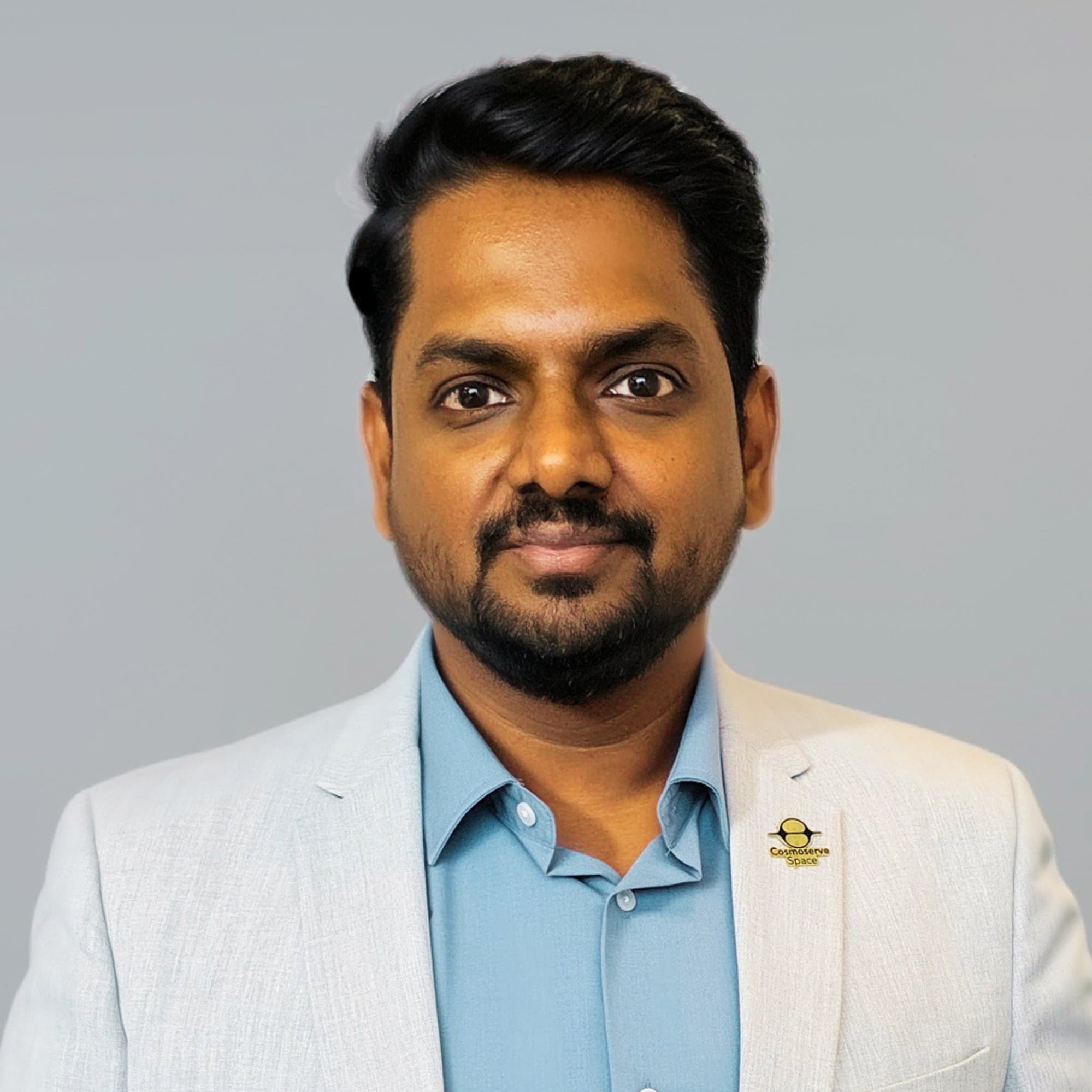
Building the Next Space Economy: Chiranjeevi Phanindra and Cosmoserve's Case for Orbital Maintenance
Chiranjeevi Phanindra, Founder & CEO of Cosmoserve Space, spent 14 years at ISRO working on re-entry and human spaceflight. Today, he is focused on a vital challenge: keeping Earth’s orbit usable.
Read Full Story
Investors & Catalysts
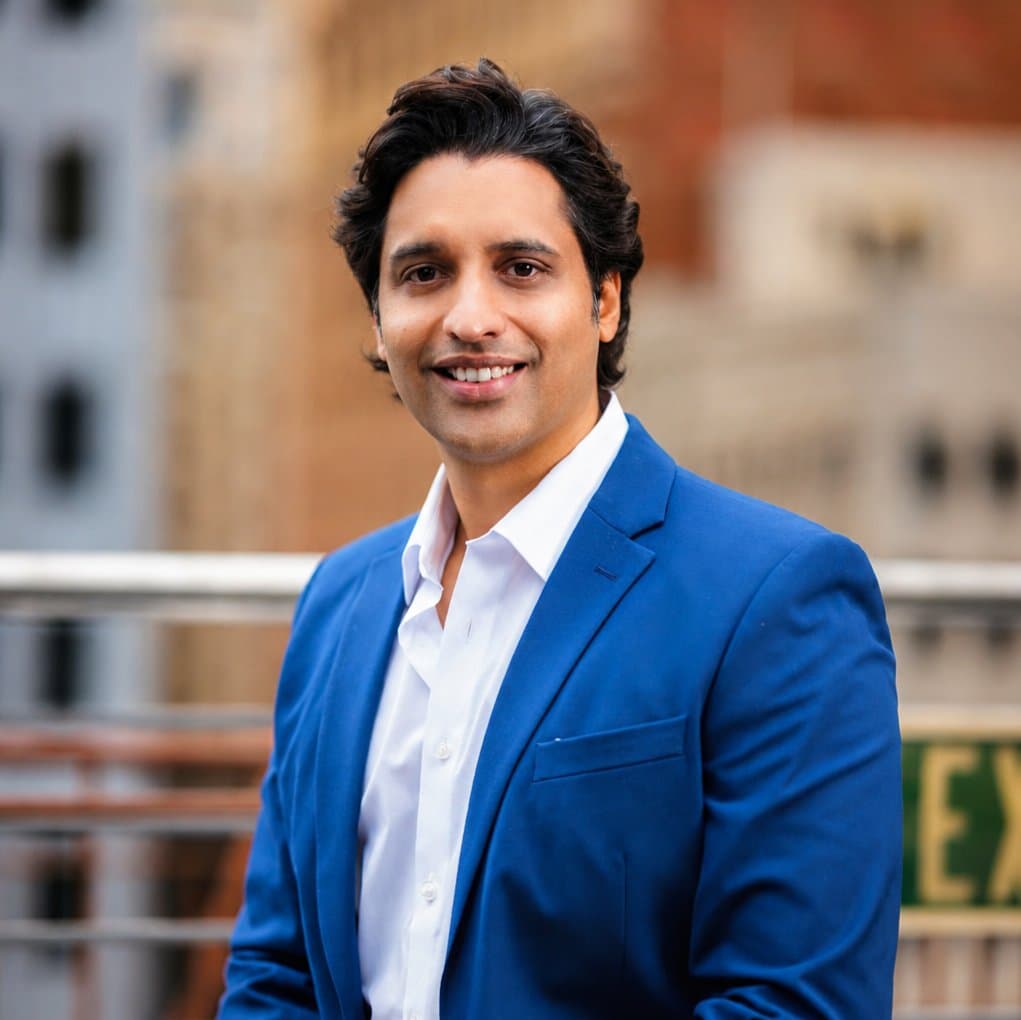
The Physical Economy Was Never Slow: A Conversation with Nikhil Choudhary
Nikhil Choudhary, Managing Partner at Nirman Ventures, on the harder ground of technology, where physical AI, venture discipline and industrial adoption have to meet the realities of machines, workers, capital and trust.
Read Full Story
Education Leadership
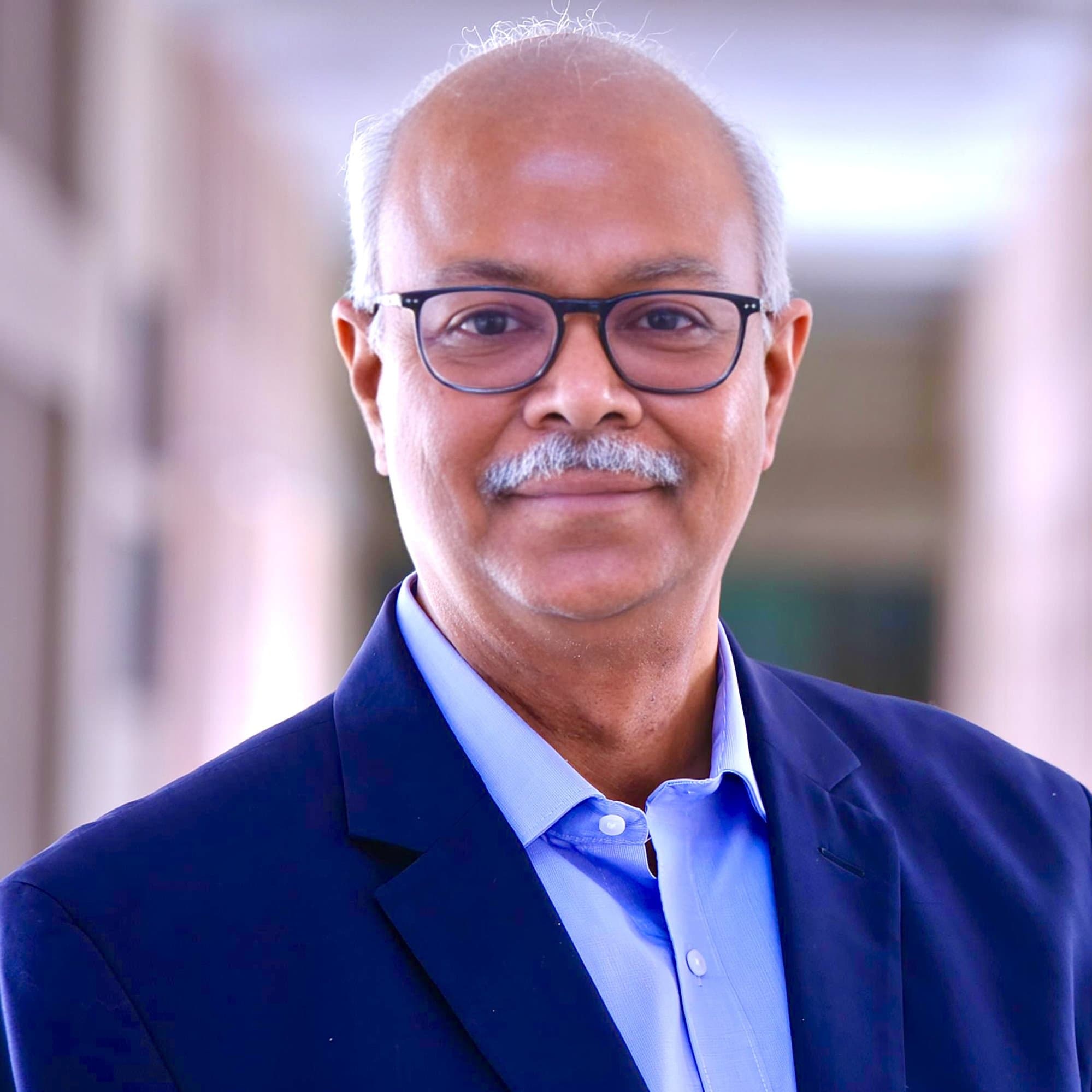
Dr. Chandrasekhar Sripada on Building Human Capital for a Future-Ready India
A global HR leader across SAIL, NIIT, Reliance, Capgemini, IBM and Dr. Reddy’s, and now an academic at ISB, Dr. Chandrasekhar Sripada brings a rare view of how institutions build trust, participation, and capability.
Read Full Story