Category: Corporate Visionaries
Rajeev Krishnan's journey reflects calm, deeply human leadership shaped by reinvention and resilience. From transforming global retail businesses to leading SPAR India, he proves culture is the true driver of success.
The Quiet Power of Leadership of Rajeev Krishnan on Clarity, Culture, and Character
IndiSight Editorial
Aug 7, 2025
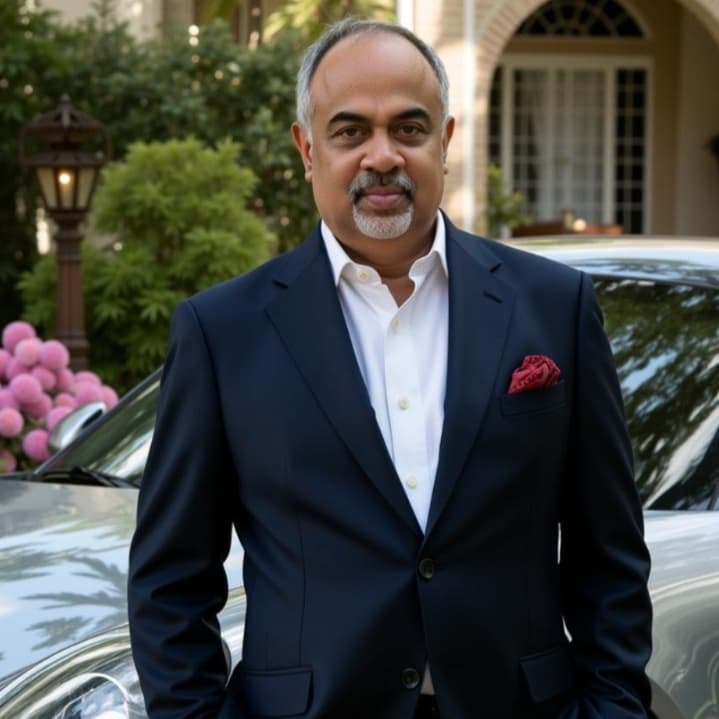
Rajeev Krishnan
Ex Managing Director & CEO · Landmark Group
Mysuru
An underperforming store, demotivated staff and low sales. These were the chips handed to Rajeev Krishnan early on in his journey as he joined the management team of one particular Target store. Yet, after turning around the failing store and posting record results, Rajeev Krishnan got feedback he didn’t expect: “You’re too intense.”
That moment didn’t break him, it rebuilt him. From that tension emerged a new leadership muscle: modulation. Rajeev didn’t just learn how to deliver outcomes, he learned how to do it without burning people out. This wasn’t just career growth. It was cultural intelligence in motion.
A former CEO of SPAR India, and a global executive across Target Corporation, Bharti Walmart, and McKinsey, Rajeev’s story isn’t just one of career progression. It’s a story of how stillness, structure, and systems thinking shaped a leader who could operate across continents without ever losing clarity or character.
Rajeev Krishnan’s journey doesn’t announce itself with grandiosity. Instead, it unfolds in layers, through stumbles, stretches, and the subtle clarity of someone who listens before he leads. His belief in people is not idealistic, it’s pragmatic. It shapes how he hires, how he builds, and how he measures success. Rather than being driven by optics, Rajeev has consistently pursued what endures: cultures that breathe, systems that adapt, and leadership that begins with awareness.
From Shyness to Self-Worth: The Formative Fire
Born in New Delhi, Rajeev grew up across different cities, rarely the loudest voice in the room. He was the boy who wouldn’t raise his hand, the student who preferred the back row. But sport, especially cricket, gave him agency. The five years at St. Joseph’s became his accidental leadership laboratory. A seemingly simple gesture, organizing a college rock concert at St. Joseph’s in Bangalore in 1986, accentuated that spark. No money, no precedent, no safety net. Just a bold idea and belief in people.
But the real pivot came quietly. At the end of college, his principal gave him a handwritten note: "I believe in you. I hope you believe in yourself." That note stayed in his wallet for years. It wasn’t just encouragement, it was permission. Permission to show up fully, to lead without having all the answers, and to let purpose grow louder than doubt.
28 Rejections and a $200 Bet: Entering the Arena
This leap into the U.S. wasn’t just geographical, it was philosophical. After the confidence forged in his college years, Rajeev entered a new country, unsure of where he belonged. And yet, with every rejection and every stumble, he built a reservoir of resilience.
Rajeev moved to the U.S. with nothing but $200, a borrowed suitcase, and an invisible weight of expectations. What followed were 28 job rejections, until finally, one retail chain gave him a shot as a part-time employee. Four months later, he was a part of the management team, running the show.
Retail became his dojo. Every shelf told a story. Every cashier had a dream. He watched, listened, and absorbed. He saw leadership not as command, but as choreography, of people, pressures, and untapped potential.
His time in the U.S. opened his eyes to both the challenges and possibilities of diversity. While there were moments of feeling different, what stayed with him was how a society could hold space for many identities to coexist. That experience didn’t just deepen his understanding of inclusion, it reinforced his appreciation for India’s pluralism. A country where diversity isn't an aspiration but a lived reality. He began to understand that great leadership is not about asserting identity but about helping others find their own.
The Target Years: Metrics, Modulation, and the Mirror
Target didn’t just offer Rajeev a job, it offered a compass. After surviving the tough retail trenches of early America, he stepped into a company known for operational discipline and structured leadership. The challenge ahead wasn’t just about business metrics, it was about evolving from a store operator into a culture shaper.
At Target, he was handed a store most had written off. Low morale. Low sales. High turnover. Within a year, the store was unrecognizable. Sales soared. Energy returned. People started showing up, not just to clock in, but to believe again.
“You don't build a great culture with slogans. You build it with decisions, who you hire, who you promote, what you tolerate, and what you celebrate.”
But success came with feedback. Despite delivering stellar outcomes, Rajeev was told: "You’re seen as too intense." It stung. But it also stirred something.
A senior HR leader told him: "You don’t need to shrink. You just need to stretch. Learn to modulate." That became a turning point. He began to see leadership not as a single speed, but as a spectrum. Sometimes, you lead by walking ahead. Sometimes, by walking beside. And often, by stepping back so others can lead.
The Bharti Walmart Chapter: Building Bridges at Scale
Rajeev spent a critical phase of his leadership journey at Bharti Walmart, a joint venture navigating the complexities of modern retail in India. It was a high stakes environment where ambition met bureaucracy, and operational excellence had to coexist with regulatory agility.
This chapter was less about managing retail and more about managing paradoxes. It taught him that scale without soul is hollow, and speed without alignment is chaos. The job wasn’t just to bring in systems, it was to build belief.
In employees, in customers, in the very possibility of organized retail in a polyphonic market.
What made it transformational wasn’t just the macro numbers. It was the micro wins: building confidence in teams who had never been part of a structured retail environment, navigating supply chains that had never been digitally tracked, creating customer experiences in places where brand loyalty was still a new concept.
Looking back, Rajeev credits this period for sharpening his cultural intelligence, operational foresight, and most of all, his patience. It wasn’t glamorous. But it was grounding. And it laid the human foundation for everything he would later scale.
Leading SPAR India: When Culture Becomes the Operating System
By the time Rajeev took over SPAR India, he was no longer just building businesses, he was shaping personal and collective ethos. Every experience until then, from rejection in the U.S. to scale in India, had prepared him for this.
The mission wasn’t just to fix a P&L. It was to build a place where people felt seen, safe, and stretched. SPAR became his canvas, and culture his brushstroke. He instituted an open-door policy, not as symbolism but as structure. He began meetings with personal reflections instead of metrics. He made “no new idea, no meeting” a mantra, not to push innovation, but to pull people into it.
His goal? Build a place where people didn’t just work, they grew. Where failures were treated as tuition. Where titles didn’t determine voice. Where culture wasn’t an HR initiative, it was everyone’s responsibility.
Rajeev didn’t chase culture decks. He watched body language. He listened to hallway chatter. He celebrated the silent contributors. And when systems got in the way of the soul, he restructured the systems.
Mentoring with Heart: The Unseen Wins
Rajeev has mentored dozens across geographies and industries. But he doesn’t chase the obvious high-flyers. He looks for the ones who hesitate, the ones on the edge of quitting or breaking.
"I don’t teach people how to lead," he says. "I help them remember who they are."
One former mentee, once riddled with imposter syndrome and ready to exit corporate life, credits Rajeev’s intervention with reshaping their entire leadership arc. "He didn’t give me answers," they later shared. "He gave me back my voice."
He’s the kind of mentor who will challenge you and then sit with you when you cry. He’s unafraid of silence. He doesn’t mistake extroversion for leadership. And he deeply believes that the strongest people are often those who once believed that they wouldn't make it or who were once told they wouldn’t make it, yet they chose to persevere.
Even in parenting, this philosophy shows. When his daughter chose to study animation, he didn’t push her toward conventional success. He invested in her curiosity. Because for Rajeev, ambition must follow authenticity, not the other way around.
Retail Isn’t Dying. It’s Just Remembering.
Rajeev doesn’t buy into doomsday predictions about retail. For him, retail is simply evolving.
"It’s not about omnichannel or AI dashboards," he says. "It’s about whether your store feels like it understands me."
He’s excited about technology, but cautious. "Tech should do the grunt work so people can do the heart work."
His dream is a retail future that empowers frontline workers, not replace them. That uses data to elevate dignity. That remembers that behind every transaction is a human aspiration.
He’s clear: AI can optimize. But it cannot imagine. It cannot nurture. And it certainly cannot make someone feel seen on a hard day.
Giving Back: The Teacher in the Leader
Today, Rajeev spends a large part of his time working with students, young professionals, and startups. He teaches not from a pedestal, but from the floor, sharing lessons from rejection, resilience, and reinvention.
He encourages students to own their stories, to get comfortable with failure, and to not chase the optics of success. He reminds them that learning is not a race, but a rhythm.
He also reminds institutions that leadership isn’t built in MBA classrooms alone. It’s built in how we recover from being overlooked. In how we treat everyone in the team, from fresh recruits to long-time veterans, from the front lines to the C-suite. In how we speak to ourselves when we fall short.
Final Reflections: Lessons for Those Who Dare
Rajeev’s leadership lessons don’t emerge from textbooks or theories, they are lived experiences. They rise from rejection letters, from tough conversations, from battles with self-doubt and the quiet conviction to keep going.
If you're an aspiring leader, business owner, or someone stuck between self-doubt and ambition, Rajeev's story is your permission slip. It’s a reminder that:
Leadership isn’t about being the loudest voice in the room, it’s about being the one that listens when it matters most.
Failure is not a flaw. It’s a filter, for what you truly believe in.
Culture doesn’t live in decks or values painted on walls. It breathes through daily choices.
Growth is personal before it becomes professional. Your team grows when you do.
And most of all, your presence, how you show up when no one’s watching, matters more than any metric.
So what’s the next step for us as leaders? Take a hard look at one system, one habit, one decision loop, one meeting ritual, that’s grown stale. And ask: Is this building people, or just maintaining the process?
Rajeev Krishnan didn’t follow a playbook. He built his own. And he’s still turning the pages, thoughtfully, humbly, powerfully.
Because real leadership isn’t a destination. It’s a decision. Made every single day.
Our Suggestions to Read
Discover The Leaders Shaping India's Business Landscape.
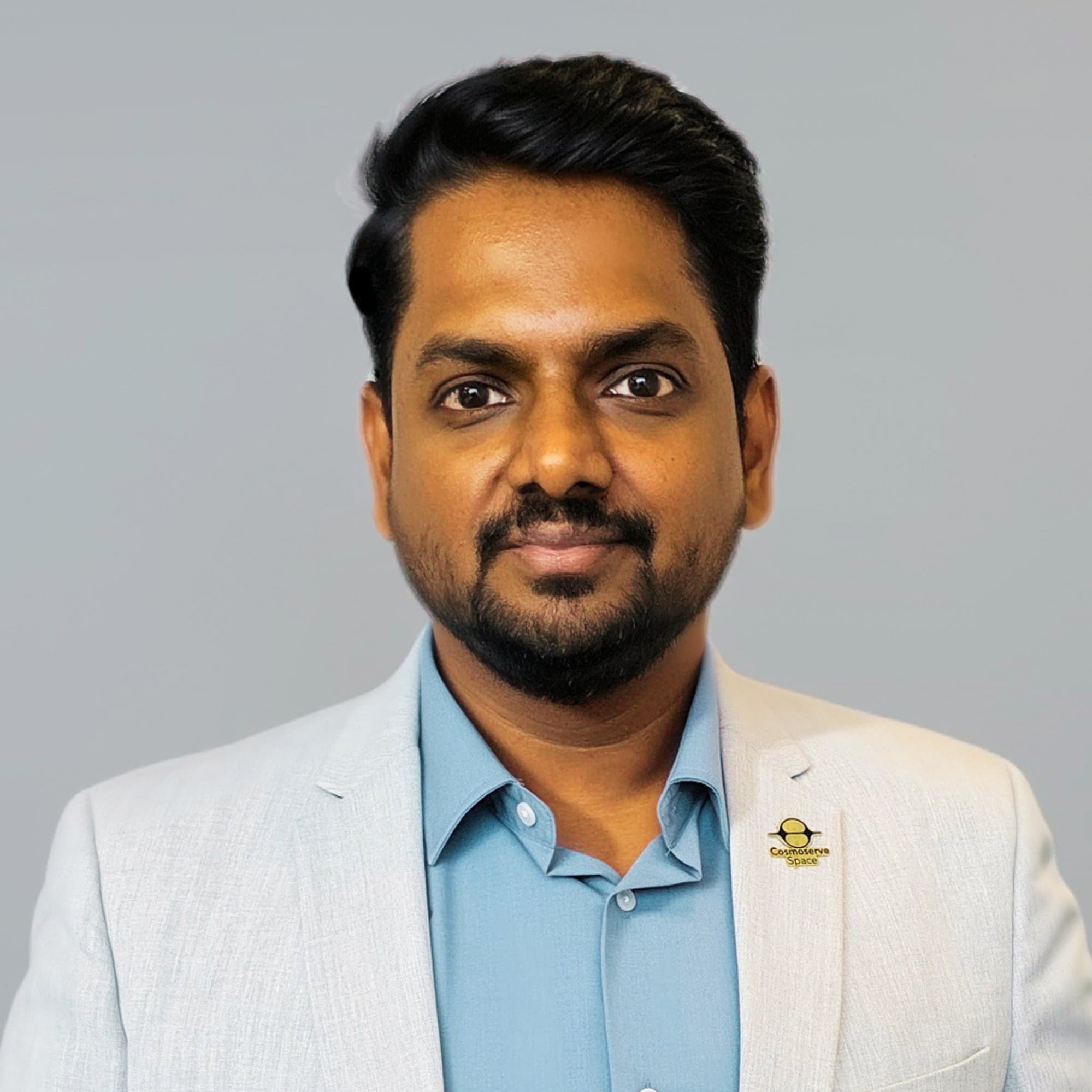
Founders & Innovators
Building the Next Space Economy: Chiranjeevi Phanindra and Cosmoserve's Case for Orbital Maintenance
Chiranjeevi Phanindra, Founder & CEO of Cosmoserve Space, spent 14 years at ISRO working on re-entry and human spaceflight. Today, he is focused on a vital challenge: keeping Earth’s orbit usable.
Read Full Story
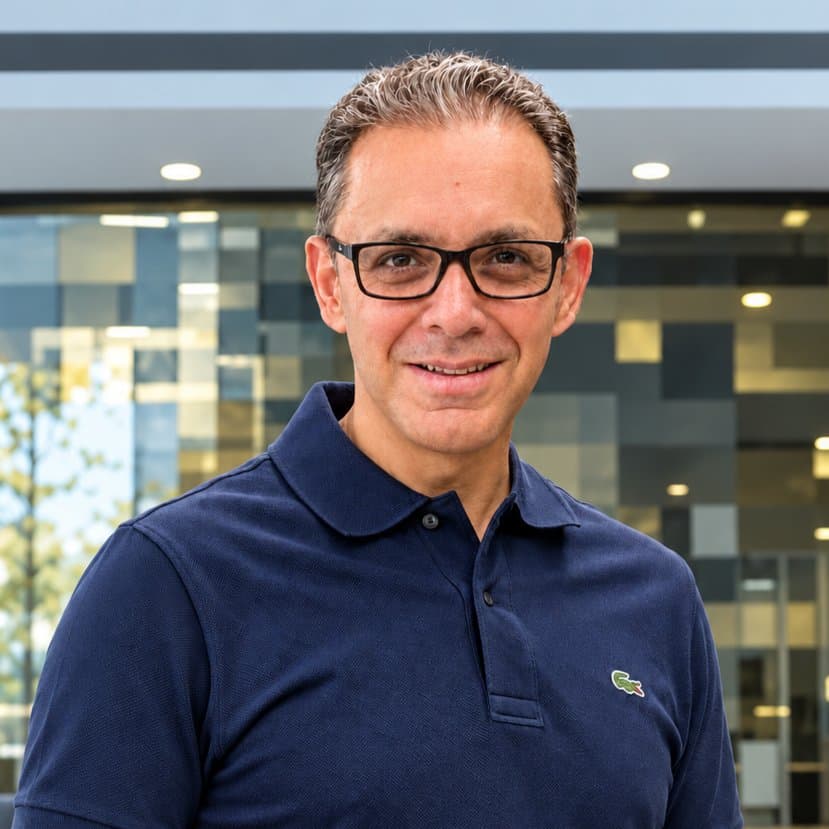
Corporate Visionaries
Shashank Sahni on What Success Leaves Out
Shashank Sahni, Google’s Managing Director of Global Ads Solutions, reflects on what customers reveal, what ambitious teams need from their leaders & what the mountains and marathons have taught him about going further.
Read Full Story
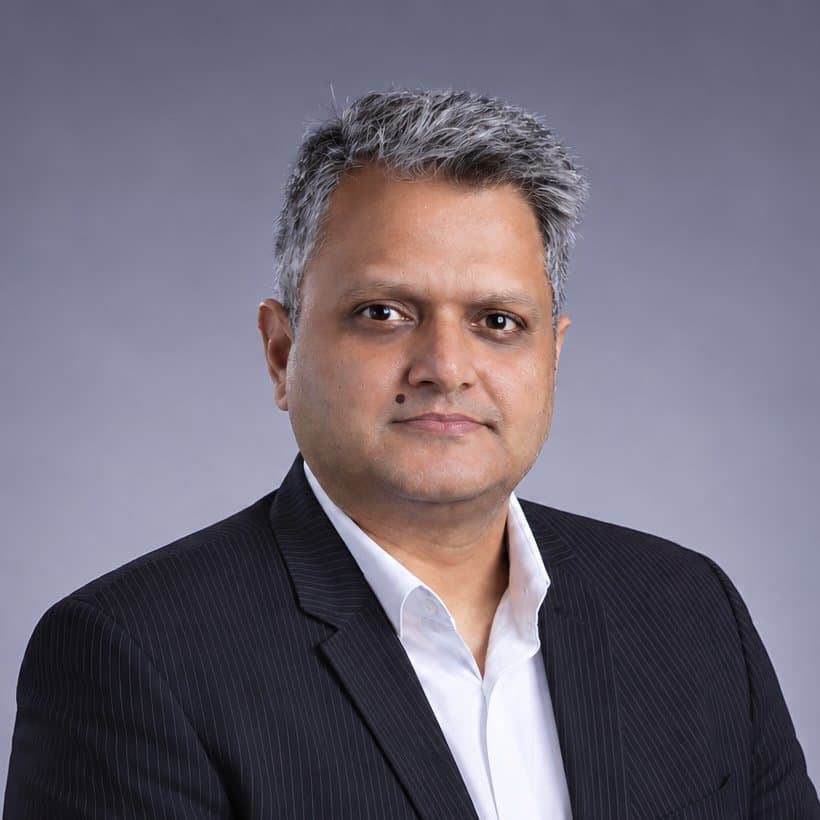
Corporate Visionaries
Clinical Multiplication: Divesh Singla on the Healthcare AI Case That Headlines Keep Missing
Divesh Singla, Managing Director, India at Veradigm, brings two decades in healthcare technology to the AI question leaders cannot avoid: how to expand clinical capacity without weakening human judgment.
Read Full Story