Category: Policy Shapers
Lasting reform begins after the headlines fade. Kartikeya A operates at the intersection of vision and execution, building public systems that endure by aligning policy, people, and trust. From shaping India’s early green hydrogen policy to rebuilding trust through transparency, his leadership proves a simple truth: real influence is earned through endurance, integrity, and inclusion. For him, policy isn’t a document, it’s a living system that must remember why it exists, long after its author moves on.
The Patience to Move a Nation: Kartikeya A and the Future of Public Leadership
IndiSight Editorial
Feb 3, 2026

Kartikeya A
Delhi
When Vision Meets Resistance
Policy rarely fails because of weak ideas. It fails because ideas are not built to last. Kartikeya A has spent his life inside that delicate intersection where public vision meets institutional reality, where applause fades and the real test begins.
He has built his career within the machinery of policy, the intricate, often invisible process of turning ambition into governance design. Over the years, he has learned that transformation does not depend on new announcements but on the patience to sustain alignment between departments, regulations, and people.
His approach is understated but rigorous. He treats persuasion as a public discipline that demands facts, empathy, and endurance.
Real influence doesn’t come from the title you hold. It comes from the conviction you carry.
That conviction was tested when he helped design Andhra Pradesh’s Green Hydrogen and Pumped Storage policy, long before hydrogen entered India’s mainstream energy conversation. With no formal mandate and little political momentum, he spent two years aligning ministries, investors, and technical experts. Some dismissed the idea as premature. “There were days I questioned if it was too soon,” he admits. “But progress never begins from consensus. It begins from belief.”
By the time the policy was adopted, global investment had begun to flow. What started as a state-level experiment became a national reference point. The experience reshaped his understanding of statecraft: authority in complex systems is not granted by hierarchy but earned through credibility, coherence, and proof of endurance.
For him, policy is not a document. It is a living organism that must withstand politics, inertia, and fatigue. The measure of leadership is not who writes the plan but who remains long enough to make it work.
The Patience That Builds Speed
For Kartikeya, execution is the true frontier of policy reform. He often says that government programs rarely fail from lack of intent; they fail from lack of alignment. Ministries operate at different speeds, investors wait for clarity, and communities demand participation. Each has logic, each has limits, and each must be synchronized.
He recalls a renewable-energy corridor that looked flawless on paper but faltered in practice. Twenty-three of thirty-one local councils withheld approval, delaying nearly eight hundred million dollars in investment. “The data made sense,” he says, “but the people didn’t feel seen.”
Instead of pushing harder, his team paused. They restructured the stakeholder process, organized community consultations, and created livelihood-mapping programs to secure local participation. Within three months, every council approved. “People weren’t rejecting clean energy,” he says. “They just didn’t feel part of it.”
That experience taught him that inclusion is not a political gesture. It is a policy instrument. Systems move faster when citizens understand their role in the outcome. Execution, in his eyes, is the highest form of leadership discipline, the point where conviction turns into design and design turns into delivery.
Making Systems Speak
Working across departments taught Kartikeya to view governance as an ecosystem of interdependent systems. Policies often collapse not from poor intent but from weak coordination, when finance moves faster than regulation, when land approvals lag behind investment, and when infrastructure planning outpaces institutional capacity.
He argues that genuine reform begins when public systems learn to communicate as one organism.
You can have perfect technology and abundant capital, but without connection across ministries and mechanisms, progress remains fragmented.
He defines high-functioning policy systems through four traits:
Shared vision when ministries and agencies independently cite the same priorities.
Aligned timelines when interdependent actions follow synchronized milestones.
Transparent communication when data, budgets, and decisions are accessible.
Continuity of learning when institutional memory survives leadership turnover through documentation and process clarity.
“Markets are efficient at discovery,” he notes. “But governments are indispensable for direction. One without the other produces either chaos or stagnation.”
He draws examples from Chile’s hydrogen diplomacy, Morocco’s solar clusters, and Finland’s education reforms, systems that thrive because institutions move in concert. In his view, policy coherence, not political charisma, is what sustains national advantage.
Trust as Economic Infrastructure
Trust, Kartikeya believes, is the invisible infrastructure that underpins every functioning state. It cannot be legislated, replicated, or imported, yet it determines the velocity of reform. “Every economy,” he says, “moves only as fast as the trust it can sustain.”
He learned this during a leadership transition that froze investor confidence overnight. The contracts remained valid, but the belief system that held them together collapsed. Instead of renegotiating, he opted for transparency. His team opened data dashboards, published real-time progress updates, and created grievance systems that citizens and investors could access directly. Within months, confidence returned.
Integrity is not a moral virtue. It’s an operational asset. It lowers the cost of coordination.
He points to models that institutionalized trust as policy: Germany’s industrial partnerships built on reliability, the Nordic culture of public disclosure, Japan’s long-term supplier relationships. “The last century rewarded efficiency,” he says. “This one will reward integrity.”
To Kartikeya, credibility is the true currency of reform. But even credibility fades without structure. Continuity, he believes, is what converts trust from sentiment into policy infrastructure.
Designing for Continuity
Modern governance, he argues, suffers from short-term reflexes such as quarterly reviews, election cycles, and leadership churn. When attention resets, so does intent.
Ambition without patience creates momentum without memory.
He often references Japan’s mentorship culture, Singapore’s foresight programs, and Germany’s stakeholder capitalism as examples of institutional design built for longevity. “Continuity isn’t resistance to change,” he says. “It’s the architecture of endurance.”
He applies the same principle to his own practice. Every decision, agreement, and meeting is documented. “Documentation,” he says, “is how institutions think across time. It’s not bureaucracy. It’s protection.”
Each morning, before responding to any message, he writes one page about what the previous day taught him. “It forces me to find the pattern in the noise,” he explains. “Most people react to information. I try to learn from it first.”
That ritual is his microcosm of governance. The discipline of documentation, both personal and institutional, ensures that learning compounds instead of resets.
Most initiatives fail not because people lack will, but because systems forget what they were created to remember.
Thinking Beyond Technology
For Kartikeya, policy design is not about forecasting disruption but preparing societies to absorb it. “The nations that will lead,” he says, “are those that integrate deeply, not those that invent first.”
He studies how Finland embedded AI literacy into public education, how Singapore built foresight cells inside government, and how South Korea paired technological innovation with social protection. None were overnight successes; each was a product of cultural absorption and policy patience.
He draws a distinction between adoption and absorption. Adoption is technical; it installs new tools. Absorption is cultural; it changes collective behavior. “AI can predict behavior,” he says, “but it cannot replace judgment. The smarter our systems become, the more disciplined our choices must be.”
To him, intelligence is a national capacity for discernment, the ability to hold complexity without losing balance. “Technology tells us what can be done,” he says. “Wisdom decides what should be done.”
The Discipline of Fairness
Kartikeya often says that fairness is the most underused instrument in public policy. He recalls pausing a nine-hundred-megawatt wind project in Anantapur when eighteen of twenty-two villages raised concerns over land acquisition. The delay cost forty million dollars and six months of momentum, but it rebuilt confidence. “It reminded us that sustainability is not an energy principle,” he says. “It’s a human one.”
He believes the future of economic development lies in institutionalizing fairness, embedding empathy into regulation, equity into growth, and dialogue into design. “The future will belong to those that are fast and fair,” he says. “Power is not proven by how much you accelerate, but by how responsibly you pause.”
Empathy, he adds, is not a soft skill but a structural competence.
People support what they help shape. When they’re included early, you don’t have to persuade them later.
The New Geography of Power
He reads the global energy transition as more than a technological race. It is a redesign of power itself, from extraction to alignment. “Energy,” he says, “is now the grammar through which nations express intent.”
He studies how Chile turned ports into hydrogen hubs, how Morocco built solar diplomacy, and how the Nordic countries fused sustainability with competitiveness. Each success reflects a coherent national system where policy, capital, and culture reinforce one another.
India, he believes, can design a model that scales without depletion. Its size forces innovation. Its democracy demands empathy. “If we align both,” he says, “we can build growth that restores rather than consumes.”
He sees the next global competition not as a race for dominance but for dependability. “We’re not competing for control anymore,” he says. “We’re competing for consistency.”
For India, that consistency will depend on the quality of its institutions, whether they can think with agility, act with depth, and endure beyond political cycles. “We already have ingenuity and resilience,” he says. “If we combine them with conscience, India can become not just a fast nation but a steadying one.”
Leadership Principles
Influence grows through consistency, not control.
Inclusion accelerates progress faster than authority.
Coordination is the foundation of reform.
Integrity is the most reliable currency of trust.
Continuity compounds credibility.
Technology should elevate judgment, not replace it.
Empathy strengthens institutions from within.
Transparency reduces the cost of coordination.
Documentation preserves shared intelligence.
The best leaders design systems that remember principles, not personalities.
Closing Reflection
When asked what he hopes his work will stand for, Kartikeya does not speak of policy papers or positions. He speaks of continuity, the ability of systems to sustain progress long after individuals move on.
The real test of leadership, is how seamlessly purpose outlives the person who began it.
He believes this century will be defined not by invention but by integration, by how societies balance ambition with awareness, speed with reflection, autonomy with interdependence. His own aspiration fits quietly within that frame: to help build public systems that keep thinking, adapting, and improving without dependence on any one leader.
He defines success not as recognition but as resilience. “The greatest contribution,” he says, “is when a system runs so smoothly that people forget who designed it.”
And he ends with a line that captures his philosophy:
“Power is temporary. What matters is whether what you build keeps standing when the world shifts again, and whether it still serves the people it was meant to serve.”
Our Suggestions to Read
Discover The Leaders Shaping India's Business Landscape.
Founders & Innovators
Building the Next Space Economy: Chiranjeevi Phanindra and Cosmoserve's Case for Orbital Maintenance
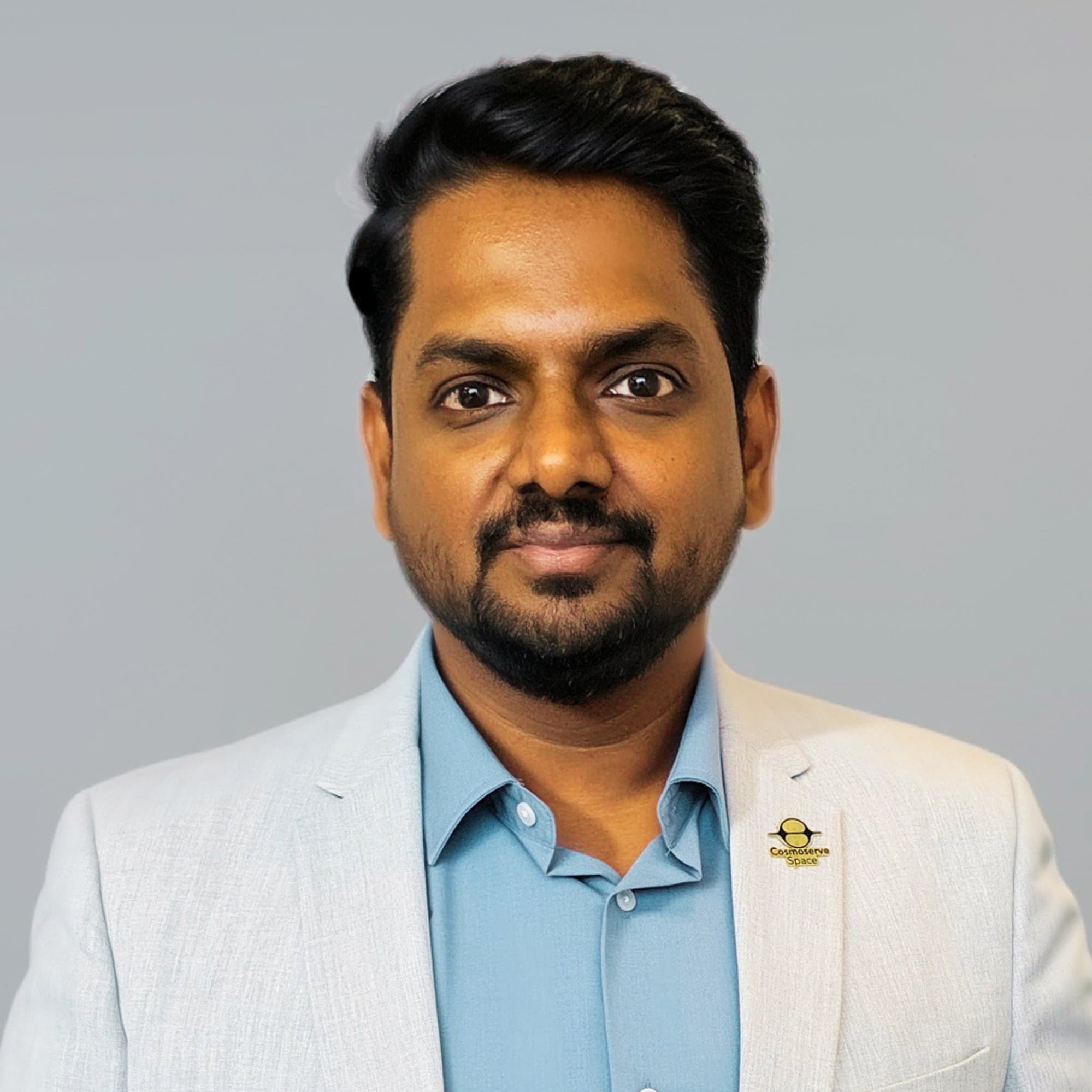
Chiranjeevi Phanindra, Founder & CEO of Cosmoserve Space, spent 14 years at ISRO working on re-entry and human spaceflight. Today, he is focused on a vital challenge: keeping Earth’s orbit usable.
Read Full Story

Corporate Visionaries
Shashank Sahni on What Success Leaves Out
Shashank Sahni, Google’s Managing Director of Global Ads Solutions, reflects on what customers reveal, what ambitious teams need from their leaders & what the mountains and marathons have taught him about going further.
Read Full Story
Corporate Visionaries
Clinical Multiplication: Divesh Singla on the Healthcare AI Case That Headlines Keep Missing
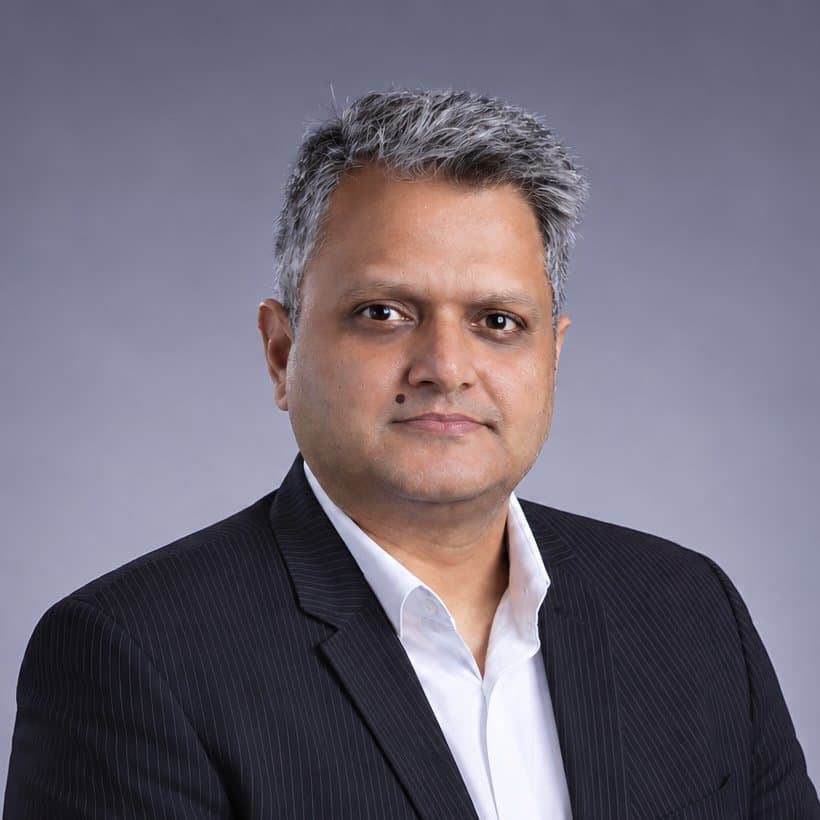
Divesh Singla, Managing Director, India at Veradigm, brings two decades in healthcare technology to the AI question leaders cannot avoid: how to expand clinical capacity without weakening human judgment.
Read Full Story