Category: Education Leadership
Dr. Raul Rodriguez is reshaping higher education in India by rebuilding institutions from first principles rather than updating legacy systems. His leadership blends systems thinking, emotional clarity, and deep cultural awareness to create learning environments that reward curiosity over compliance. He isn’t chasing tradition or global imitation he’s crafting a signal strong enough to redefine what relevance, purpose, and reinvention look like in modern education.
The Education Architect: Reimagining Talent Beyond Traditional Degrees
IndiSight Editorial
Aug 3, 2025

Dr Raul Villamarin Rodriguez
Vice President · Woxsen University
Hyderabad
In a world where most academic institutions still cling to outdated rituals, rankings, and rigid curricula, Dr. Raul Rodriguez is carving out a radically different path. As Vice President of Woxsen University, he isn’t content with surface-level fixes or flashy reforms. He is rethinking what higher education should truly be in today’s world.
This isn’t about ideology for Dr. Raul. It’s about experience. He’s seen firsthand how the systems we rely on eventually stop serving the people they were built for. He holds this firm belief: systems are built by people, and people eventually outgrow the systems they once trusted.
“I didn’t come to India to manage what exists,” he says plainly. “I came to imagine what could exist.”
From Sports to Systems Thinking: A Nonlinear Journey
His career path defies academic convention. He began as a professional basketball player in Spain. When an injury brought that dream to a halt, he found himself drawn to law enforcement, where he focused on behavioral profiling. But it was his growing fascination with how systems shape people, and how people change those systems, that eventually led him into academia.
Each pivot in his journey wasn’t a detour, but a deepening. Every role helped sharpen his sense of how people behave in structures, and how those structures often fail to keep up.
“Unlearning wasn’t a choice. It was survival,” he reflects.
This personal history has become central to his leadership style. He doesn’t carry a traditional academic chip on his shoulder. And he doesn’t treat the university like a museum that needs to be preserved and kept frozen in time. Instead, he views it as a living, breathing organism that must adapt, innovate, and sometimes start over.
India: A Land of Talent, Trapped by Legacy
Dr. Raul moved to India nearly 15 years ago. He’s worked across continents, but he calls India the most intellectually dense and culturally complex environment he’s experienced.
“There’s an undeniable fire in India’s youth,” he says. “But the system they’re navigating is still built for a world that no longer exists.”
He points to outdated education policies and legacy practices that reward memorization over mastery. Universities remain stuck in an era where placements matter more than purpose, and where administrators fear disruption more than they fear irrelevance.
“You cannot prepare students for the future using policies written in the past,” he argues.
This isn’t about blaming individuals. It’s about rethinking the very architecture. The underlying principles no longer align with today’s needs. Students are being measured by metrics that don’t reflect real-world competence. Faculty are judged by the volume of publications rather than the value of their teaching. And institutions chase international rankings instead of internal relevance.
Reinventing the Institution, Not Just the Syllabus
At Woxsen, Dr. Raul didn’t push for incremental tweaks. He started over. Exams were replaced with real-world projects. They turned traditional classrooms into creative spaces that felt more like design studios. Learning became collaborative and unpredictable, sometimes even a little chaotic, but in the best way.
Of course, not everyone was on board.
“Some parents had reservations. They were more concerned about the absence of grades than the presence of growth,” he recalls.
But he didn’t retreat. Because he believes that the discomfort of change is where true learning begins.
“Most reforms fail not because they’re wrong, but because they’re rushed or cosmetic,” he says. “We need the courage to redesign, not just update.”
The redesign goes deeper than guest lectures or corporate tie-ins. Real industry collaboration is part of the everyday learning process. And students aren’t judged by what they can recite, but by how they think, adapt, and work with others.
A Different Kind of Leadership: Quiet, Intentional, Attuned
Dr. Raul’s leadership style stands in sharp contrast to the performative models often seen in academia and corporate settings. He doesn’t speak in jargon or position himself as a visionary savior. Instead, he listens deeply.
He tunes into things others overlook: the silence after a meeting ends, the mood in a hallway, the energy in the room when no one’s performing.
“Most leaders confuse motion with progress,” he says. “They add more policies, more meetings, more metrics. But often what’s needed is subtraction, not addition. Less noise. More clarity.”
For him, real leadership is about coherence. Alignment between values, actions, and results. It’s not about commanding attention. It’s about cultivating an ecosystem where purpose doesn’t need to be constantly declared, it’s simply felt.
He doesn’t believe institutions collapse because of bad ideas. They unravel when intentions drift apart, when energy is scattered, when incentives are misaligned.
In his view, the quiet work of alignment is far more transformative than any keynote speech or press release.
Beyond Obedience: Cultivating Inquiry
One of Dr. Raul’s core beliefs is that education has spent too long teaching students how to comply, not how to think.
“We reward completion. But we should be rewarding curiosity,” he says.
He’s particularly critical of how many faculty members, despite their academic credentials, hesitate to challenge entrenched systems. In his words, “We have overqualified educators with underdeveloped courage.”
The job of a teacher, he insists, isn’t just to deliver knowledge. It’s to model the behavior we hope to see in students: risk-taking, inquiry, humility, and the willingness to unlearn.
“The moment a teacher stops learning, the classroom starts decaying,” he says.
A New Metaphor: The University as a Frequency
Dr. Raul offers an elegant reframe: universities are not factories. They are frequencies.
“A university should be like a tuning station,” he explains. “It should amplify what matters and dampen what doesn’t. It should help society hear itself again.”
At Woxsen, this isn’t just a poetic vision, it’s a lived practice. Students aren’t just prepared for industry; they’re challenged to shape it. Evaluation is fluid. Projects are co-created. Learning doesn’t end with answers; it begins with better questions.
What India Must Stop Copying
Dr. Raul is blunt when it comes to India’s obsession with global rankings and imported models.
“India doesn’t need to replicate Harvard or Oxford,” he says. “It needs its own institutions, ones that emerge from its soil, speak its languages, and reflect its contradictions.”
This isn’t a call for isolation. It’s a call for authenticity. He’s watched as foreign universities set up Indian campuses with minimal regulation while domestic ones are burdened with compliance.
“Same students. Same economy. But wildly different rules,” he observes. “That’s not reform. That’s inequality, dressed up in global branding.”
A Playbook for Change: Takeaways for Every Stakeholder
Dr. Raul isn’t interested in armchair critique. He offers a clear, actionable playbook.
For Policymakers
Cut down red tape and give institutions more breathing room.
Define India’s own version of excellence instead of chasing foreign benchmarks.
Fund bold experiments. Innovation comes from risk, not routine.
For Education Leaders
Culture comes first. Fix the human dynamics before fixing the curriculum.
Step away from the hero model. Shared values build resilient institutions.
Provide direction, not domination. The goal is clarity, not control.
For Educators
Facilitate, don’t dictate. Help students explore, not just memorize.
Take risks. Model curiosity.
Keep learning. Your students will sense the difference.
For Parents
Ask deeper questions. What is your child becoming, not just where are they placed?
Stop equating marks with merit.
Support teachers. Undermining them weakens the very ecosystem your child depends on.
For Students
Don’t wait for instructions. Start building.
Confusion is growth. Stay with it.
You’re not a customer. You’re a creator. Education isn’t a transaction, it’s transformation.
Legacy as Signal, Not Statue
When asked about the legacy he hopes to leave, Dr. Raul shrugs off the idea of personal monuments.
“I don’t want a statue. I want to leave a signal,” he says. “If I’ve done my job well, people will think differently, even when I’m not in the room.”
That’s the kind of leadership rarely celebrated in headlines. It’s quiet, but it’s durable. It’s not about being remembered; it’s about creating conditions where others can thrive and lead.
In an era obsessed with speed, scale, and spotlight, Dr. Raul Rodriguez is advocating something more radical: thoughtful reinvention. The courage to slow down. The clarity to realign. The discipline to rethink, not just education, but relevance itself.
He isn’t just building a university. He’s crafting a signal strong enough to reshape the very way we understand talent, learning, and leadership. And in doing so, he’s inviting India, and the world, not to move faster, but to think deeper.
Our Suggestions to Read
Discover The Leaders Shaping India's Business Landscape.
Founders & Innovators
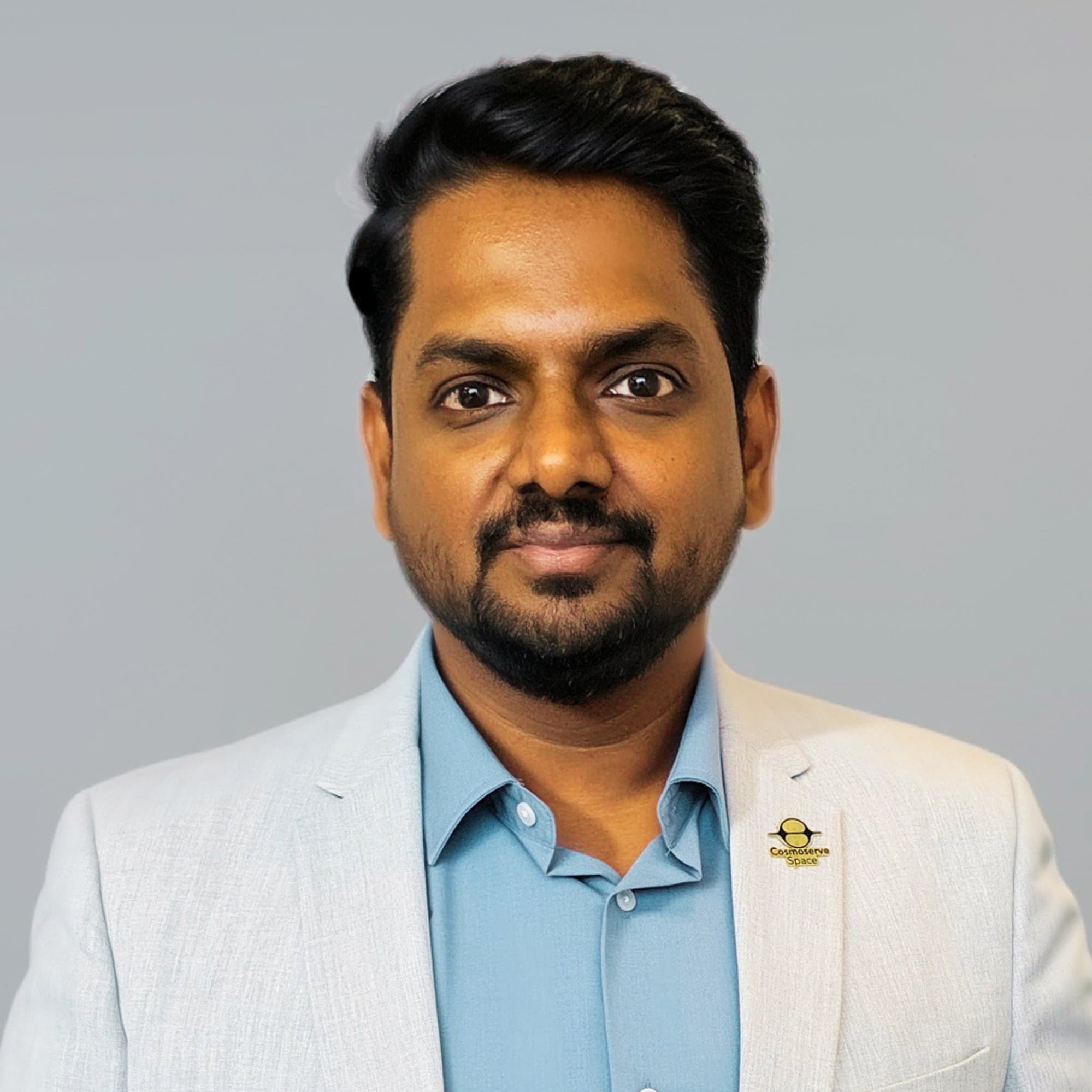
Building the Next Space Economy: Chiranjeevi Phanindra and Cosmoserve's Case for Orbital Maintenance
Chiranjeevi Phanindra, Founder & CEO of Cosmoserve Space, spent 14 years at ISRO working on re-entry and human spaceflight. Today, he is focused on a vital challenge: keeping Earth’s orbit usable.
Read Full Story
Corporate Visionaries
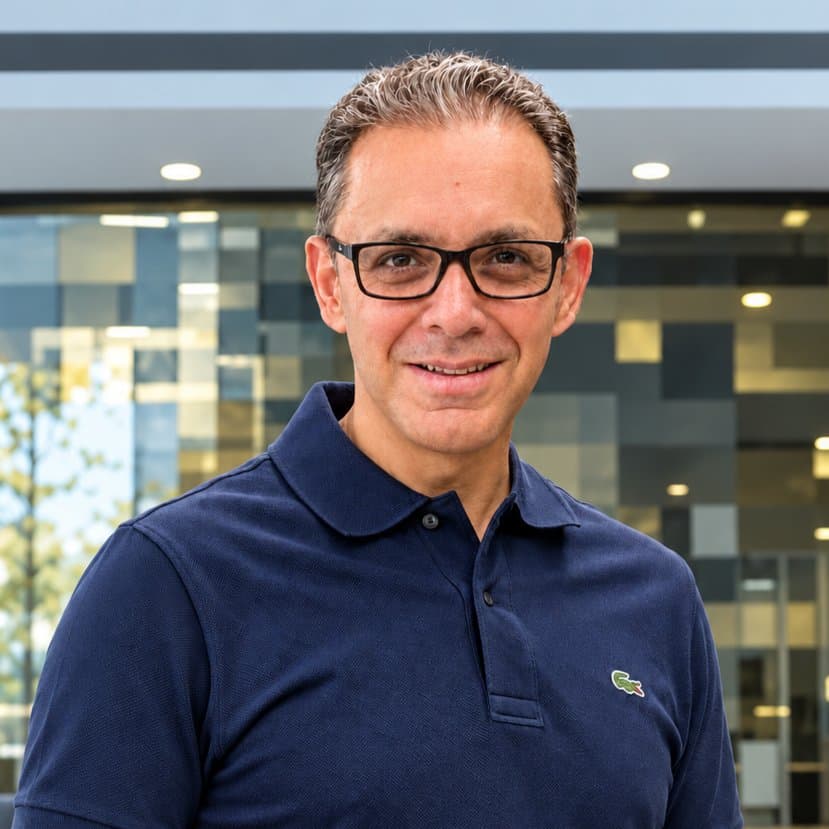
Shashank Sahni on What Success Leaves Out
Shashank Sahni, Google’s Managing Director of Global Ads Solutions, reflects on what customers reveal, what ambitious teams need from their leaders & what the mountains and marathons have taught him about going further.
Read Full Story
Corporate Visionaries
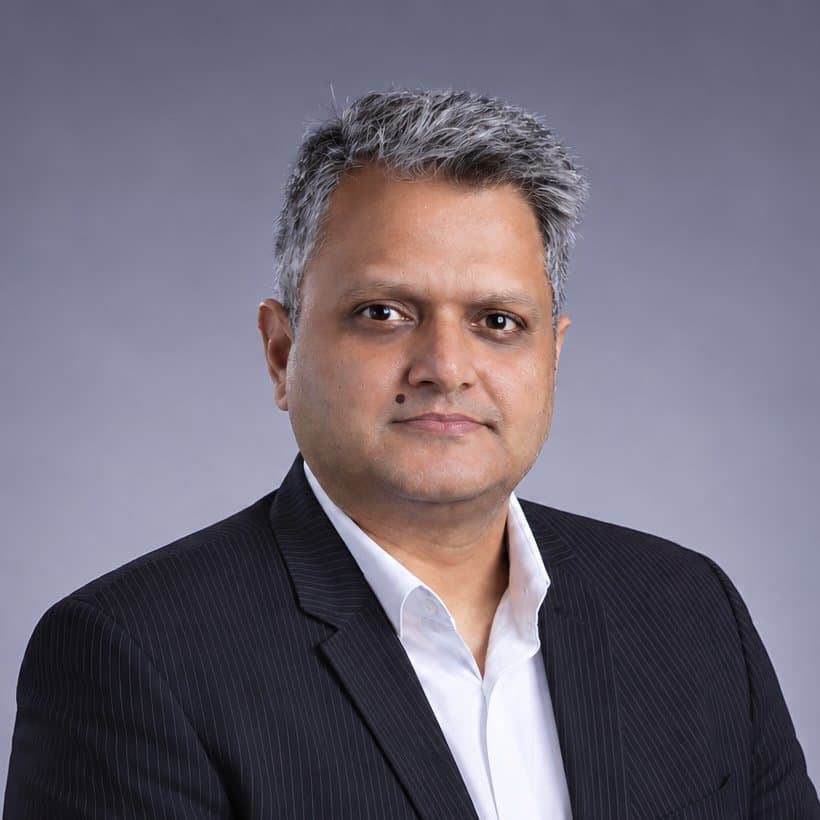
Clinical Multiplication: Divesh Singla on the Healthcare AI Case That Headlines Keep Missing
Divesh Singla, Managing Director, India at Veradigm, brings two decades in healthcare technology to the AI question leaders cannot avoid: how to expand clinical capacity without weakening human judgment.
Read Full Story