Category: Corporate Visionaries
As R&D moves to the center of competitive advantage, the real test is no longer discovery alone but conversion. Anubhav Saxena, Chief R&D Officer at Pidilite, shows how research becomes business consequence through culture, systems thinking, user insight, and institutional discipline. The lesson is clear: innovation compounds when organizations are designed to turn scientific effort into durable, market-relevant value.
The Conversion Framework: Anubhav Saxena on Turning R&D Effort Into Business Consequence
IndiSight Editorial
Jun 9, 2026
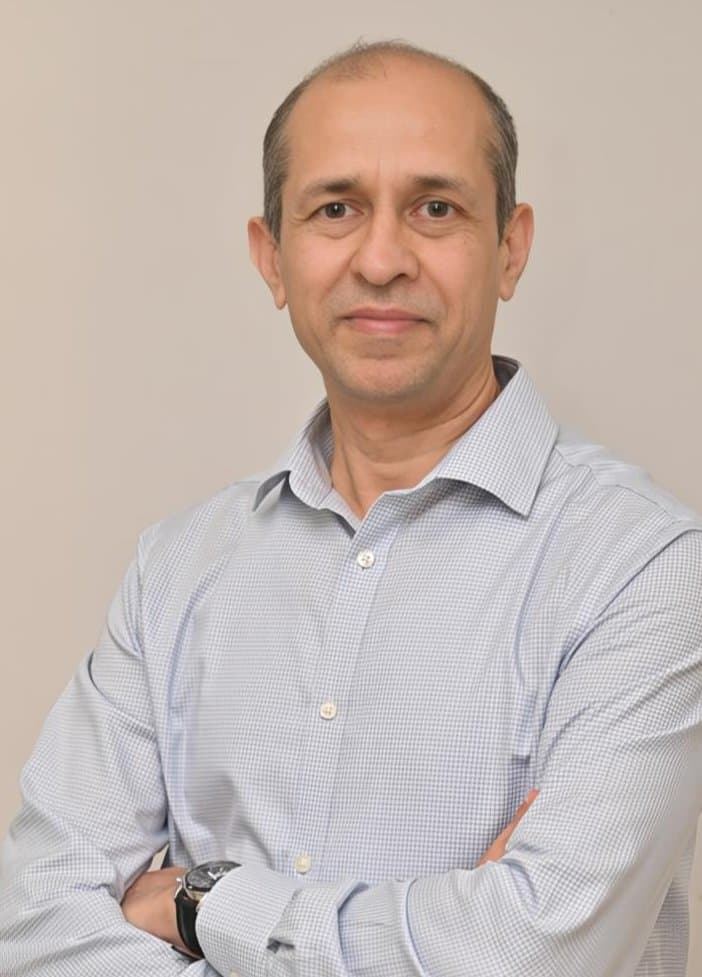
Anubhav Saxena
Chief R&D Officer · Pidilite Industries Ltd
Mumbai/India
Research Has Moved to the Center of Strategy
For much of the late twentieth century, competitive advantage was explained through capital, scale, efficiency, and market access. The logic no longer carries the same authority. In the current global economy, advantage is being determined much earlier in the value chain, inside research labs, engineering centers, design systems, and technical partnerships where new materials are tested, production methods are rethought, and intellectual property is created before value is captured. Research and development now sits at the intersection of industrial competitiveness, technological sovereignty, and long-term economic resilience. In sectors as varied as semiconductors, energy, chemicals, healthcare, advanced manufacturing, and AI, R&D has become one of the principal ways through which firms and nations secure position in the next global order.
The change creates a significant opening for countries that can combine scientific talent with industrial execution. India is one of the few economies with the scale, technical base, entrepreneurial depth, and market complexity to matter in the transition. Yet the opportunity extends far beyond higher R&D spending or larger patent counts. The harder question is whether India can build the institutional discipline to translate research into enduring advantage. Whether it can create firms that shape categories through proprietary knowledge. Whether it can build research ecosystems where academia, industry, and capital reinforce one another. Whether it can develop leaders who understand R&D has become strategic architecture for competitiveness.
Anubhav Saxena is worth studying because he works in a role where science must justify itself through products, platforms, performance, and market relevance over time. As Chief R&D Officer at Pidilite, his career, stretching from polymer chemistry to global materials innovation and institution-building, gives him a rare vantage point on a question many companies still struggle to answer: how does research become commercially consequential? What distinguishes his thinking is the rigor with which he approaches the question. Innovation, in his view, is built through culture, capability, portfolio choices, user understanding, and the discipline to turn scientific work into durable business strength.
The Making of His Research Instinct
Anubhav's early life did not point obviously toward global R&D leadership. He grew up in Meerut, studied in Bareilly, and came through a Hindi-medium government school environment before moving deeper into chemistry. Like many middle-class families of the period, the logic around education was grounded in employability. Qualifications had to lead somewhere tangible.
The move from MSc to IIT Delhi for an MTech followed a familiar path. It promised stronger credentials and a better salary. A project at Ranbaxy changed the trajectory. During that period, he realized he had the aptitude for deep technical work, but a different appetite for where he wanted his capability to go. Research offered range, complexity, and a stronger intellectual pull.
A PhD in polymers at IIT Delhi followed. Those years mattered because they gave him his first real exposure to building capability under constraint. He worked with a young professor who was still setting up the laboratory ecosystem. Equipment, consumables, and access were not always available in ideal form. Collaboration had to be cultivated deliberately. The experience taught him something he would carry forward: ideas need systems around them before they can travel.
Japan Expanded the Lesson Dramatically
After completing his PhD, Anubhav took a postdoctoral position at the Nara Institute of Science and Technology in Japan. The decision would alter both his technical worldview and his expectations from institutions.
"Japan was a life-changing moment," he says. "Both personally and professionally. A culture shock in the positive sense. That was my journey to becoming a better human being, relatively."
In Japan, he worked across polymer chemistry, polymer physics, and material science in a research environment where process discipline and interdisciplinary collaboration were embedded into daily work. He saw how quickly knowledge could compound when disciplinary boundaries were more permeable and when institutional seriousness supported the work instead of getting in its way.
The outcome was a deeper understanding of how innovation becomes cumulative. He came away with a stronger belief in collaboration, structural rigor, and the role of environment in shaping scientific possibility. Institutions, he learned, do far more than host talent. They determine whether talent can produce repeatable value.
From Specialist to Builder
When Anubhav joined GE's India Technology Centre in Bangalore, and later grew through the transition into Momentive, the nature of the challenge changed. The question was no longer simply how to conduct strong research. It was how to establish research as a strategically credible function inside a global commercial system.
The spin-off period was especially formative. A relatively small India team had to define its future within a newly independent business. Scientific credibility had to be translated into organizational significance. Anubhav helped frame the India research team as a possible global research center rather than a low-cost extension of work happening elsewhere, requiring a clear articulation of value, capability, and future relevance.
By the time he left, the center had grown materially in scale and talent quality. The deeper shift was in his own role. He had moved from specialist to builder. He had learned technical competence matters greatly, but institutional design determines whether the competence ever compounds.
Pidilite became a consequential next chapter. It placed him inside an organization where research had to justify itself through repeated product success across categories, use environments, and market conditions. Strong R&D cultures are rarely built from slogans. They are built from repeated institutional habits.
Why Pidilite's Model Matters
One of the strongest things Anubhav says about Pidilite is that the company developed a user-centered instinct long before design thinking became common business language. Leaders stayed close to how products were actually used. The operating habit shaped product decisions in ways many technically competent firms still struggle to achieve.
"We spend a lot of time with users," he says. "That connect is at all levels, social, emotional, practical."
A product may perform extremely well in controlled conditions and still struggle in the market if teams misunderstand how the real environment behaves. India magnifies the challenge because variation is structural. Climate shifts. Substrates vary. Customers improvise. Informal practices reshape outcomes.
Anubhav learned the lesson sharply through a failed adhesive launch. The product performed strongly on technical parameters, yet underperformed once it entered the field.
Your product has to be idiot-proof. Our product will go to lakhs of customers. We can't know how they will use it. It should work in all conditions.
Teams often solve the technical problem immediately in front of them while leaving the broader use system insufficiently explored. The result is fragile success inside the lab and weak transfer into the market.
"We were doing linear thinking," he says. "A to B to C to D. We had not visualized all the elements of the problem upfront."
The observation captures one of the central ideas in his leadership philosophy. Industrial research requires systems thinking. Teams need to hold multiple interacting conditions together early enough to shape the product before launch. User understanding, in that context, becomes a technical input. It influences the chemistry, the format, the use case, and the commercial viability all at once.
In India, market complexity is not an incidental variable. It is the operating condition. A carpenter, contractor, painter, fabricator, or retailer may all engage with the same product differently. A serious R&D organization has to understand reality in use, not just reality in specification. Pidilite's product development process brings these perspectives together early, which translates into faster pilot cycles, earlier validation, and repeated testing under real conditions. Products are challenged before they are celebrated.
Culture as Competitive Infrastructure
Anubhav returns to culture with unusual force. He sees it as one of the primary determinants of whether research can become a repeatable source of advantage.
India's R&D ecosystem does need stronger funding. Yet he is equally clear financial input alone does not create research quality. Organizations can invest heavily and still struggle if the internal operating culture discourages initiative, curiosity, and disciplined risk-taking.
He is especially critical of coercive managerial instincts.
Coercive leadership style in very simple terms: whatever I say, you do. You don't build culture in that manner.
His criticism is strategic. Teams become weaker when leaders expect replication instead of thought. Research environments need autonomy, psychological safety, and diversity of approaches. They also need review mechanisms that hold teams accountable to quality, rigor, and learning.
"Failures are there for learning, not to penalize," he says. "But at the same time, there has to be accountability."
High-performance R&D cultures require room for experimentation alongside disciplined judgment. Anubhav appears to handle the tension through the quality of the review conversation. Teams are challenged through open-ended questioning. Have they thought deeply enough? Have they understood the system? Have they explored enough possibilities? The questions surface depth quickly and create better technical conversations than command-driven review cultures usually allow.
Strong teams do not emerge from forcing uniformity. They emerge from understanding differences in strengths, working styles, and project fit. Leadership becomes more than supervision. It becomes placement, coaching, and environment design.
The deeper point is easy to miss. Culture in R&D is not a soft subject. It is operating infrastructure. It determines whether people surface difficult ideas, challenge weak assumptions, collaborate across silos, and stay with uncertain work long enough for it to mature. Culture is not adjacent to innovation. It is one of its preconditions.
The Portfolio Logic of Serious R&D
Anubhav's framing of innovation as a portfolio is one of the strongest business ideas in his worldview. Industrial R&D cannot be run at one speed. Different types of work need different expectations, timelines, and talent structures.
A share of the portfolio must protect today's business through incremental or cost-saving projects. Another share should build products for the near future. A smaller but essential part has to stay with longer-horizon platform research taking years to create visible returns. The approach protects both the commercial base and the future capability base.
The underlying managerial discipline is simple. Present economics and future options have to be managed together. Companies focusing only on immediate output narrow their long-term relevance. Companies over-romanticizing long-horizon work often weaken the business discipline required to sustain it.
One of the most interesting examples of how he has operationalized the philosophy is My Passion Project. Scientists are invited to propose ideas outside Pidilite's current business areas, form small interdisciplinary teams without their managers, and pursue the work with review and mentoring. The mechanism gives technical talent autonomy, pushes cross-functional collaboration, creates space for entrepreneurial behavior, and develops capability before commercial pressure compresses the work.
Culture becomes real through structures, rituals, and designed opportunities shaping how people think and act. Anubhav's approach appears to recognize aspiration is never enough. Institutional behavior changes only when the system itself changes.
Talent, AI, and the Next R&D Model
Anubhav's view of talent goes beyond hiring for technical skill. He is interested in broader operating capability. Collaboration across disciplines. Systems thinking. Openness to new tools. The ability to move beyond narrow ownership of ideas. Comfort with AI-enabled workflows. These are the attributes he sees becoming increasingly important in next-generation R&D organizations.
On AI, his position is grounded. He sees immediate value in productivity, data analysis, search, and technical acceleration. He also recognizes more advanced AI-led discovery in industrial settings still requires stronger internal maturity. Data quality, team readiness, workflow design, and internal capability matter greatly.
The key issue is not merely tool acquisition. It is the learning system around those tools. As with everything else in his worldview, the issue comes back to capability.
His views on patents follow the same logic. Filing numbers do not impress him. Strategic IP, strong grant rates, and the ability to commercialize are far more meaningful. Patent quality reflects whether an organization can ask meaningful questions, convert them into defensible claims, and capture value over time.
The strategic implication is broader. In every R&D system, the real differentiator is not activity but conversion. How much of the work becomes usable knowledge. How much becomes defensible value. How much strengthens the firm's future position. Capability is what turns technical effort into business consequence.
Sustainability as Design Discipline
Anubhav approaches sustainability with the same managerial seriousness he brings to R&D more broadly. He treats it as a design and systems problem rather than a communication exercise. For sustainability to scale commercially, it has to be embedded from the beginning, in product architecture, material choice, packaging, process intensity, and lifecycle thinking.
That means reducing material use while preserving performance. It means incorporating recycled and reusable systems where possible. It means exploring renewable feedstocks where viable. It means engineering products that reduce footprint in practical, commercially usable ways.
Sustainability is increasingly becoming a design constraint shaping competitiveness across categories. Companies integrating it early will build better product logic, stronger material intelligence, and greater resilience against future regulatory and market shifts. Companies treating it as an afterthought will eventually pay for the delay.
The Larger Relevance of His Leadership
By the end of the conversation, one line from Anubhav feels like the clearest summary of how he leads.
Leaders should act boldly, listen deeply, and build the culture where people thrive.
The statement holds together the central strands of his worldview. Acting boldly speaks to strategic courage. Listening deeply speaks to users, teams, and judgment. Building the culture where people thrive speaks to the idea research strength grows through the environment people inhabit.
Anubhav matters beyond one company or one category because he is working on a larger challenge now mattering globally: how to make research repeatable as a source of advantage. His answer is disciplined and demanding. Build capability. Design culture. Stay close to users. Think in portfolios. Protect intellectual value. Develop interdisciplinary talent. Use AI with maturity. Treat sustainability as part of product design from the beginning.
Leadership is shaping the conditions under which better science can keep becoming better business.
Leadership Lessons
R&D becomes strategic when tied to product relevance, business economics, and institutional discipline.
Culture determines whether research investment compounds or dissipates.
User understanding is a technical advantage with direct commercial value.
Systems thinking is essential in markets defined by complexity and variation.
Strong R&D organizations manage a portfolio across current performance and future platforms.
Leadership quality shows up in how well people with different strengths are placed, developed, and trusted.
Autonomy and accountability must grow together inside high-performance research cultures.
Interdisciplinary collaboration is one of the strongest multipliers in industrial innovation.
Entrepreneurial behavior inside R&D requires mechanisms, not slogans.
Patent quality and commercialization matter more than filing volume.
AI will favor organizations building internal learning capability quickly and seriously.
Sustainability becomes commercially meaningful when embedded in design from the beginning.
Our Suggestions to Read
Discover The Leaders Shaping India's Business Landscape.

Corporate Visionaries
Sarath Gollapalli on the Work That Makes Technology Dependable
Sarath Gollapalli, Vice President at Broadridge, reflects on why AI-era enterprise technology still depends on fundamentals: client understanding, reliability, governance and ownership.
Read Full Story
Corporate Visionaries
The Work Before the Story: Rahul Malhotra on Trust, Behaviour and the Business of Marketing
Rahul Malhotra brings 30+ years at P&G and Shell across global CEO and marketing roles, offering deep insight into business, consumer behaviour, organisational change, commercial judgement and reputation.
Read Full Story

Corporate Visionaries
The Craft of Institutional Capital: Archit Shah on Judgement, Risk and Investing Across Cycles
The Zurich Kotak General Insurance Chief Investment Officer brings a practitioner’s view of investing, where good judgement under uncertainty has to become decisive action through portfolio construction.
Read Full Story