Category: Founders & Innovators
India is creating wealth faster than its institutions can absorb, leaving families and founders unprepared for the discipline of holding it. Rajmohan Krishnan argues that wealth is not just financial but relational and moral, requiring stewardship, trust, and governance. The real challenge begins after success, when capital must translate into responsibility, continuity, and meaningful contribution across generations over time society.
Rajmohan Krishnan on the discipline of holding wealth after success has arrived
IndiSight Editorial
Jun 7, 2026
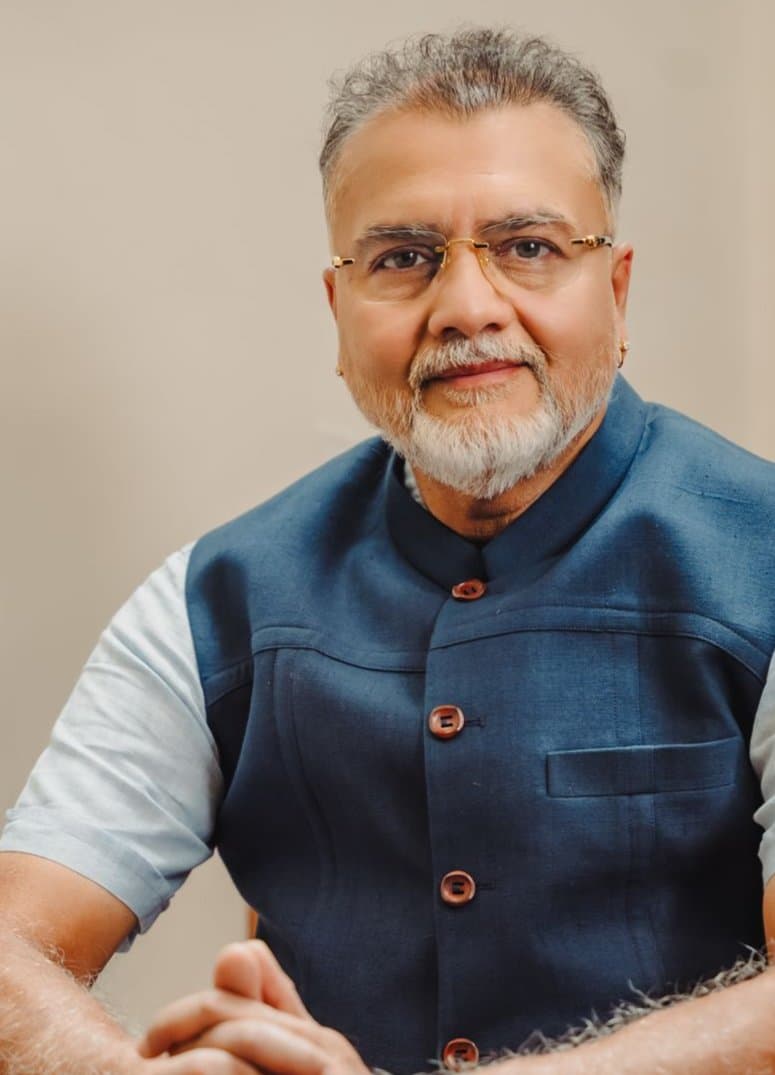
Rajmohan Krishnan
Founder & Managing Director · Entrust Family Office
Bengaluru, India
Wealth Has Outrun Its Operating System
India is producing wealth at a speed its institutions have yet to absorb. Startup founders are monetising companies before 30. Business families are moving from operating profits to layered pools of private capital. Promoter families are converting long-held assets into liquid capital. Professionals who once spent decades building financial security are reaching a serious scale far earlier.
A new wealth cycle has begun. With it comes a harder question: who teaches a society how to hold wealth well once it arrives?
Wealth creation changes the balance sheet first. Then it begins changing behaviour. Families speak differently. Siblings compare contributions. Founders struggle with control. Children learn privilege before proportion. Advisors enter with polished language and uneven incentives. Ambition, once aimed at survival or scale, must mature into responsibility.
Rajmohan has spent three decades working inside this adjustment. As Founder and Managing Director of Entrust Family Office, he has advised families through liquidity events, succession transitions, ownership splits, and moments he describes as quiet fracture. His career began in mainstream finance and took shape at Kotak Mahindra, where he built private banking and wealth businesses across regions. Over time, he moved away from institutional wealth management toward a harder model: conflict-free, fee-only advice built around alignment.
His discomfort began with a simple recognition. Inside a bank, the advisor’s first obligation is still to the institution. As Rajmohan puts it, “When I represent a bank, I represent an institution that wants to make profits.”
A bank needs fee income. An advisor inside the system is expected to keep products moving. The client may be respected and the professional may be sincere, but incentives still shape what gets recommended, how often portfolios are disturbed, and how much complexity enters a client’s life.
Rajmohan wanted to sit on the other side of the table. He describes the move as a shift from representing the institution to representing “the client and his interests,” from the sell side to the buy side. Entrust grew from that decision. Its work expanded from investment advisory into succession, structures, tax, real estate, family operations, philanthropy, and the many unstructured decisions through which wealth becomes complicated.
The firm’s range reflects Rajmohan’s central belief: wealth is a business system, a family system, and a moral system at once.
The Hidden Balance Sheet
Rajmohan draws a distinction at the center of modern private wealth: managing money and understanding wealth require different forms of intelligence.
Fund managers manage money. Wealth platforms allocate it. They identify managers, structures, instruments, and opportunities. Allocation alone cannot reveal what capital is doing inside a family. It cannot show whether wealth is producing anxiety, discipline, entitlement, generosity, resentment, or purpose. A family can earn excellent returns and still become unstable.
A serious wealth conversation has to examine the hidden balance sheet: trust, discipline, values, family communication, contribution, risk appetite, decision rights, and the capacity to let go.
Rajmohan’s definition of wealth extends beyond financial assets. Wealth can include knowledge, art, reputation, land, estates, relationships, cultural memory, and a family’s way of making decisions. Money is often the most visible form. It is rarely the whole.
For Rajmohan, the language of ownership becomes misleading once wealth is viewed across generations.
You are the custodian of money. You might have earned it. You can enjoy it. But you don’t own it.
Capital sits with one person for a period, then moves. It may pass to children, institutions, philanthropy, community, or the market. Seeing money through custody changes the leadership posture. Control gives way to responsibility. Consumption gives way to proportion. Asset growth becomes part of a larger question: what should wealth enable, protect, and transmit?
A person with vast capital who remains trapped by every market movement has solved one problem while creating another. The balance sheet may expand while anxiety continues to govern the person holding it. After liquidity, the operating business may continue, while financial assets, tax obligations, global structures, and succession issues form a second enterprise around the family. Many families underestimate it.
The Problem After Success
Sudden wealth creates a vacuum. The struggle that shaped time, ambition, and urgency begins to loosen. A founder sells a company. A professional builds serious financial scale. A family monetises an asset or exits a business. The balance sheet changes quickly. The inner operating system often lags behind.
Rajmohan began seeing younger founders and next-generation wealth holders with liquidity, confidence, and access, yet without a tested view of what wealth should do to life. They knew how to invest. They had advisors. They had networks. Far fewer had thought seriously about enough, parenting, restraint, giving, governance, or the discipline required to carry abundance.
Wise Wealth came from that gap.
The book emerged from a larger concern than returns. It came from years of watching wealth create both freedom and strain, sometimes within the same family. Rajmohan had seen capital open doors, but he had also seen it unsettle relationships, distort judgement, and test values people assumed were already settled. The book gave language to what he had been observing in client rooms for years.
It studies people who seem to carry money better than others. Rajmohan spoke to wealth creators and leaders who treated capital as responsibility. Their reflections moved across parenting, habits, philanthropy, corporate governance, personal conduct, and the small disciplines that form character.
One example stayed with him. A wealthy family made sure its children went to school by bus instead of being insulated by private comfort from the beginning. Children who encounter ordinary life develop a different relationship with privilege. They learn proportion before entitlement.
The First Crack Is Relational
Families usually fracture long before outsiders notice. Public battles, litigation, shareholding conflicts, and succession disputes arrive late. Earlier signals live inside family language: who feels heard, who carries the business, who enjoys the proceeds, who receives favour, and who pays the emotional cost of silence.
Rajmohan’s view is plain: fragility in wealthy families begins mainly through relationships. Money intensifies unresolved accounts. Old hurts attach to ownership. Uneven contribution becomes resentment. Preferential treatment becomes family memory. Entitlement borrows the language of fairness. Silence begins to look like stability until illness, inheritance, marriage, liquidity, or a legal claim exposes the real condition of the system.
A common pattern appears across family enterprises. One member or branch carries growth, absorbs pressure, builds value, and holds the business through difficult years. Others remain connected, sometimes respectfully, sometimes passively. At distribution, identical treatment can feel emotionally safe to elders, yet structurally unfair to the contributor.
When contribution varies sharply across family members, Rajmohan avoids the easy language of sameness. His view is that dignity, protection, and contribution must each receive separate attention. Equal division often becomes the easiest answer. Wiser design demands sharper conversations.
The issue rarely begins with greed. It begins with an unspoken question: who carried the burden, and how should that burden be recognised? Once money attaches itself to that question, affection alone cannot hold the room together.
Succession Begins With Surrender
The hardest part of succession is psychological surrender.
Documents are necessary. Trusts, wills, holding structures, family constitutions, and governance forums all matter. Paperwork carries only the decisions a family is willing to make. Many founders understand succession and still delay. They know the risks. The harder issue is usually control.
Wealth creators often become the center of gravity. They made the enterprise, carried the pressure, protected the family, negotiated with the world, and developed a strong instinct for personal authority. Formal succession asks them to imagine a system where their presence is no longer central.
Rajmohan has seen accomplished people delay for years until a health event, a claim, or a family conflict makes the decision unavoidable. At that stage, trust is thinner and options are narrower. He uses an old Sanskrit idea to describe the human pattern: mortality can feel immediate in a moment of loss, yet daily life slowly takes over again, and the urgency of change fades into familiar habits.
Succession follows a similar rhythm. Families see uncertainty around them yet continue to behave as if time will remain generous.
For Rajmohan, succession must transfer values first. He calls values and ethics “the most important thing” a family must carry forward before anything else.
Values need repetition. A founder explains why a decision was taken, why a temptation was resisted, why money was spent or preserved, why one opportunity was refused, why one person was trusted. Conversations accumulate slowly. Later, when the elder’s voice is absent, memories begin to guide instinct.
The Inheritor’s Test
Next-generation wealth has a polished public life. It appears in investor forums, global conferences, private-market networks, family-office circles, and conversations about allocation. Exposure has value. Education has value. Financial literacy has value. These advantages still leave legitimacy unfinished.
Rajmohan is direct about inheritors who confuse access with contribution. His advice is simple: “You need to create something on your own.”
Creation can take many forms. It may mean building a company. It may mean joining the family enterprise with seriousness. It may mean backing founders while adding judgment, governance, customer access, networks, and strategic direction. It may mean helping capital become useful to real businesses.
When inherited capital is placed into a fund and grows, the allocator has participated in value created by someone else’s skill. Respect grows when the capital holder contributes beyond the cheque.
India now has heirs who are globally educated, financially conversant, and comfortable around sophisticated instruments. Their challenge is different: how to develop credibility without the origin story of scarcity.
Rajmohan’s answer begins with discipline. Be on time. Keep commitments. Learn the business deeply. Study how others handled wealth. Speak with people who made mistakes. Small habits become large signals. Capital magnifies the person holding it.
Trust Is the Real Currency
Finance runs on numbers, but the finance business runs on trust. A client rarely sees the full machinery behind advice. They do not see every incentive, distribution arrangement, internal target, margin structure, or product priority. They meet the advisor, the deck, the allocation, and the explanation. Trust becomes the bridge between what the client can verify and what they must rely on.
In wealth advisory, trust needs more than personality. A charming advisor inside a conflicted structure still carries the weight of the structure. A well-intentioned professional can still be shaped by incentives they did not design. The business model matters because it determines the direction from which advice is pulled.
Fee-only advice sounds clean in principle. Commercially, it is difficult. Rajmohan admits that “people don’t want to pay for advice.” Product-led models are easier to scale. Economics can be embedded inside instruments. Activity can look like service. The harder business is direct advice, where the client pays visibly for judgment and expects accountability through outcomes.
For Rajmohan, conflict-free advice is more than market positioning. It is the boundary on which he built the firm. Alignment changes the relationship. Advice can include restraint, inaction, walking away from products, avoiding needless complexity, negotiating harder, or refusing a structure that looks elegant while adding little real value.
Serious private wealth rarely sits in clean compartments. A property decision touches tax, law, liquidity, family preference, future inheritance, and emotional history. A succession decision touches identity, control, fairness, and dignity. Fragmented experts can each solve a slice and still leave the family with contradictions.
India Needs Productive Capital
India is creating wealth faster than before, yet the nature of that wealth matters. The country has celebrated consumption platforms, convenience businesses, financial markets, services, and startup liquidity. Each has value. Rajmohan’s concern lies elsewhere: India needs deeper productive capacity.
He believes the real opportunity lies in building companies. Large fortunes usually begin with enterprise creation. Businesses generate the real leap. Investments can multiply capital later, yet original value comes from building products, supply chains, factories, brands, platforms, technology, and institutions. The strongest wealth creators built operating engines before becoming allocators.
India’s challenge is to make capital work harder for national capability. Consumer convenience is too narrow a base for the ambition of a major economy. Contract manufacturing gives scale, but industrial strength requires ownership of brands, design, technology, and intellectual property.
“Made in India” must grow into “made by India.” Production, ownership, and strategic capability need to move together.
Private capital can help. Family capital, founder capital, and long-horizon wealth can support manufacturing, deep technology, patient enterprises, and sectors where public markets often demand faster proof. Patient capital earns its value when it funds building, supports conviction, and stays engaged through the hard years.
The Next Wealth Opportunity
The next phase of private wealth will reward families and advisors who can think beyond allocation. Capital markets, tax, law, reporting, and product access will remain necessary. The real opportunity will sit in helping families convert capital into continuity, productive enterprise, philanthropy, governance, and prepared successors.
Technology will change the surface of the industry. Reporting, portfolio analysis, tax workflows, document management, and financial intelligence will become faster and more automated. A tool can process information, but the harder decisions around succession, legitimacy, and public purpose still require human judgment.
For India, newly created wealth can become a national asset only if it moves into enterprise-building, manufacturing depth, patient innovation, education, healthcare, climate, and institution-building.
Rajmohan’s message for future wealth holders is demanding. Build before allocation becomes identity. Govern before conflict arrives. Prepare heirs before inheritance hardens them. Keep advice clean before complexity distorts trust. Use capital to create capability before it settles into comfort.
An Older Vocabulary for a New Wealth Age
Rajmohan believes India can offer more than capital to the world. It can offer a philosophy of holding capital. India already carries a deep inheritance of serious wealth ideas, even as it learns from global financial systems.
We don’t need to learn from Warren Buffett, honestly. We have enough wisdom of our own.
The remark is about intellectual confidence. India has traditions around duty, restraint, giving, trusteeship, and continuity. Its social and philosophical inheritance contains ways of thinking about wealth that extend beyond return maximisation.
Modern finance gives structures. India’s older traditions can provide language for responsibility. The opportunity lies in combining governance, transparency, professional advice, and capital markets with an older understanding of duty and restraint.
A distinct Indian philosophy of wealth would ask different questions. How much is enough? What should a family preserve? What must it share? How should heirs be prepared? What does business owe society? How should philanthropy become part of identity instead of reputation management?
Leadership Lessons
A strong portfolio cannot compensate for weak family communication.
Trust in finance depends on clean incentives and visible accountability.
Families need to discuss contribution before money turns it into resentment.
Succession should begin while relationships are still steady, before pressure arrives.
Values are passed through how families decide, spend, reward, and disagree.
Inheritors earn respect when they help build and create real value.
Small habits often reveal how someone will handle large responsibility.
Private capital becomes more valuable when it builds productive capacity across the economy.
The Discipline After Success
India’s new wealth cycle will be tested far beyond wealth lists, exits, valuations, and private capital flows. The deeper test will occur inside families, advisory rooms, trust structures, and the quiet decisions through which people reveal their relationship with money.
Rajmohan works in the aftermath of success. His concern is the moment after capital arrives, when ambition must become stewardship, ownership must become custody, and inherited access must become contribution. His thinking carries a demanding business lesson: wealth is easier to create than to carry well.
For a country entering an age of fast wealth and uneven institutional maturity, that discipline may become one of its most important forms of leadership.
Our Suggestions to Read
Discover The Leaders Shaping India's Business Landscape.

Corporate Visionaries
Sarath Gollapalli on the Work That Makes Technology Dependable
Sarath Gollapalli, Vice President at Broadridge, reflects on why AI-era enterprise technology still depends on fundamentals: client understanding, reliability, governance and ownership.
Read Full Story
Corporate Visionaries
The Work Before the Story: Rahul Malhotra on Trust, Behaviour and the Business of Marketing
Rahul Malhotra brings 30+ years at P&G and Shell across global CEO and marketing roles, offering deep insight into business, consumer behaviour, organisational change, commercial judgement and reputation.
Read Full Story
Corporate Visionaries
The Craft of Institutional Capital: Archit Shah on Judgement, Risk and Investing Across Cycles
The Zurich Kotak General Insurance Chief Investment Officer brings a practitioner’s view of investing, where good judgement under uncertainty has to become decisive action through portfolio construction.
Read Full Story