Category: Corporate Visionaries
Ashish Musaddi, Founder & CEO of Integrace, argues that the smartest organizations aren't the fastest; they're the ones that pair data with judgment, fairness, and thoughtful leadership.
Power, Patience, and the Human Enterprise: Ashish Musaddi’s Way of Leading
IndiSight Editorial
Feb 16, 2026
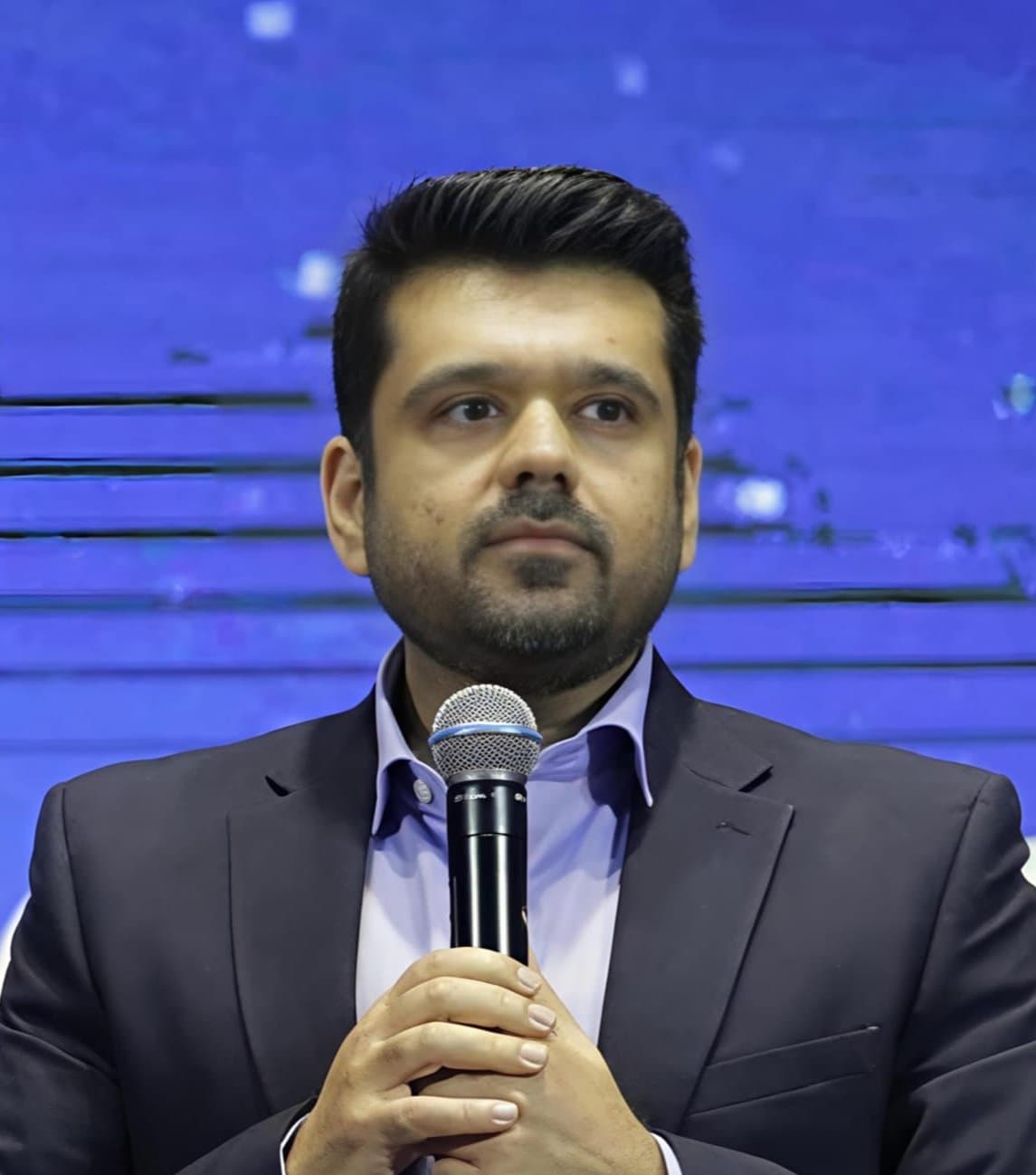
Ashish Musaddi
CHRO · Integrace Health
Mumbai
Technology has accelerated everything except wisdom. Data flows faster than it can be understood. Decisions are made before they are fully thought through. Ashish Musaddi has seen this up close. Across global organizations, he has watched information multiply and reflection shrink, speed becoming the new proxy for intelligence. “Momentum often hides blindness,” he says. “Reflection is what helps you see again.” He speaks not as a theorist but as a practitioner who has spent two decades building teams across continents, managing complexity in cultures that prize speed yet quietly crave depth.
In his view, what makes a company truly modern is not its technology but its capacity for collective discernment. Knowledge will always be abundant. Judgment will always be scarce. Most enterprises collapse, he believes, not because they lack data, but because they stop interpreting it with context and humility. “An organization learns when it is willing to slow down just enough to ask what it might have missed,” he says. That principle, he adds, must be designed into how leaders think. Reflection is not a break from action, it is part of execution itself.
Early Choices and the Making of a Generalist
Ashish grew up in a Marwari family where commerce was a natural language and accounting the default career. He understood numbers early, but numbers did not challenge him enough. What intrigued him was human behavior, how individuals reacted to systems, and how systems shaped choices. “Numbers were easy,” he recalls. “People were not, and that made them more interesting.” He moved from finance to human resources not because it was fashionable, but because it was unpredictable. At the International School of Business and Media, he discovered the language of leadership, how cultures form, how power flows, and how institutions evolve.
His professional grounding began at AstraZeneca’s manufacturing unit in Bengaluru. It was an unusual place for a management graduate to start, but that experience, he says, taught him what leadership looks like where it cannot be performed for an audience. “When you work in a factory, you understand what decisions mean for people who make your product. You see the real cost of a delay or a careless policy.” Two years in manufacturing and another in sales HR gave him a view that many executives never acquire, the intersection where value is actually created, where incentives and human effort meet. Those early years built his instinct for systems thinking.
A leader who understands how revenue is made and how people experience it will never make decisions lightly,
When MSD entered India, he joined as its thirtieth employee, helping build the company’s local structure from the ground up. It felt like running a start-up with the resources of a multinational. He designed roles, shaped teams, and built HR frameworks without precedent to guide him. “You stop theorizing and start building,” he recalls. “That’s when you learn what truly holds an organization together.” By the time he moved to Novartis to lead HR for the consumer health division, he had absorbed a truth that would stay with him: leadership is not control, it is calibration. “The first time I became a people manager, I realized how impatient I used to be. Leadership is not efficiency; it’s patience in motion.”
Managing Difference and Seeing Systems
A regional assignment with LyondellBasell introduced him to the world of international business. He managed teams across Africa, the Middle East, Turkey, and India, each with its own tempo and temperament. Inflation crises in Egypt, mergers in Saudi Arabia, and engineering expansion in India forced him to think in plural terms.
People everywhere want to do good work, but culture defines how they express it.
That period taught him what he now calls intellectual detachment, the ability to respect local nuance without losing strategic coherence.
Working across such contrasts helped him move beyond the illusion of best practice. “What works in one country may backfire in another,” he explains. “The more you see, the less judgmental you become. Alignment matters more than uniformity.” His style became less about instruction and more about inquiry. He learned to pause a debate and ask a deeper question, what problem are we really trying to solve? That shift, he says, transforms leadership from management to stewardship.
At Integrace, he applies this principle constantly. During a strategy review on expansion timelines, discussion drifted into argument. Ashish interrupted quietly. “What are we optimizing for, speed or coherence?” The room fell silent. Someone said, “Both.” He replied, “Then let’s define what coherence means at speed.” The meeting that followed took longer but produced a decision that endured.
Influence can be collective, but accountability must stay personal. Without ownership, collaboration becomes diffusion.
Humility, Learning, and the Economy of Attention
In recent years, visibility has become currency. Ashish sees its cost. “We’ve built systems that reward how loudly people speak about their success,” he says. “The risk is that learning stops where visibility begins.” He argues that humility is not a moral virtue but an operating principle. In organizations where people can admit mistakes early, learning compounds. In cultures where they cannot, risk compounds instead.
When arrogance enters a system, people stop sharing what went wrong. And when that happens, organizations lose their memory.
At Integrace, every leadership program begins with two hours of reflection before sessions start. It is not an icebreaker; it is a design choice. “Most people find silence uncomfortable,” he says. “But silence reveals how we think.” Reflection, for him, is a management process, not an offsite ritual. The companies that survive uncertainty are those that make time to examine their decisions before the world does it for them.
He distinguishes between training and learning with precision. “Training counts hours. Learning changes behavior.” At Cipla, he replaced metrics like training hours with measures of behavioral change and team effectiveness. “You can feel when a culture is learning,” he says. “People start talking about problems, not people.”
Leadership, he adds, is also about disciplined focus.
Strategy fails not from lack of ambition but from the inability to say no. When everything becomes a priority, nothing truly advances.
Technology, Fairness, and the Work of Trust
Technology has given leaders more data than ever, yet Ashish warns that analytics can erode judgment if not used with intent. “AI can measure performance,” he says. “It cannot measure intent.” He admits he has caught himself calling an algorithm accurate only when it agrees with his own instinct. “Most of us do the same,” he says. “The moment a system disagrees, we call it immature.” The problem, he argues, is not machine error but human ego. “Data should illuminate thinking, not replace it. The question is not whether machines can decide, but whether humans can stay accountable.”
He returns often to fairness as the cornerstone of trust. “Transparency is not about broadcasting everything,” he says. “It’s about communicating both the good and the bad without humiliating anyone.” To him, fairness is more powerful than perfection because it builds durability into relationships.
People accept difficult decisions if they trust the intent behind them. They resist even good ones if they suspect bias.
He describes ethics as a system property. “Integrity should live inside the process,” he says. “It shouldn’t depend on who is in the room.” That principle guided his time at Cipla, where he led global learning and culture transformation. By codifying decision rights, accountability, and behavioral norms, he helped the organization reduce ethical ambiguity and internal friction. The goal, he says, is not compliance but coherence, a state where values do not have to be announced because they are practiced.
Culture, Consequence, and Leadership Across Generations
Culture, for Ashish, is the most misunderstood management function. It is often treated as emotion when it is actually a design.
Culture is how decisions get made when no one is watching.
During his first months at Cipla, he asked eighteen senior leaders to define the company’s culture. He received eighteen different answers. That moment, he says, was revealing. “Everyone had good intent, but intent without shared language creates fragmentation.”
He believes culture succeeds only when consequence exists. “When wrong behavior goes unaddressed, it becomes permission,” he says. “Culture without consequence becomes theatre.” He insists that negative outcomes are as important as rewards because they signal boundaries. “Silence is not neutrality. It's an endorsement.”
As workforces grow younger, he sees both challenge and promise. “The new generation is self-aware, decisive, and vocal about boundaries,” he says. “They’re not lazy. They’re clear.” He does not believe meaning can substitute for money, nor that compensation alone retains people. “People join for money and stay for meaning,” he says. “You need both.” His advice to leaders is to respect this generation’s clarity rather than trying to reform it. “They are not looking for indulgence,” he says. “They are looking for integrity in how the system treats them.”
The Future: From Speed to Thoughtfulness
In a world that celebrates velocity, Ashish believes the next edge will belong to discernment. “Information is infinite,” he says. “Wisdom is not.” The future will demand leaders who can slow down in time to prevent their organizations from burning out on momentum. He calls this the discipline of stillness, an act of leadership design. “Agility without reflection creates shallow decisions,” he says. “Stillness gives decisions their weight.”
His own failures taught him the value of thoughtfulness. At MSD, he once created a detailed HR manual that collapsed in implementation. “It looked perfect on paper,” he recalls. “But people don’t follow systems. They follow meaning.” Years later, he approved a hiring surge that prioritized numbers over cultural fit, only to see attrition spike months later.
Growth without discernment is expansion on borrowed time.
Both experiences reinforced his belief that power must be designed to protect, not dominate. “If power does not protect people, it will eventually destroy what it builds.”
Today at Integrace, he is building an organization that aims to address the unaddressed medical conditions ignored by big pharma because they are too complex or too niche. The company’s purpose, he says, lies in reaching spaces where awareness and access are still missing. “We are not just producing drugs,” he says. “We are building capability around care.”
For Ashish, leadership finally resolves into one principle: coherence. The alignment between what people believe, what systems reinforce, and what an organization represents.
When belief, design, and behavior move together, the culture sustains itself.
Then he adds a line that could serve as the thesis of his entire philosophy: “The future will not belong to the fastest. It will belong to the most thoughtful.”
Leadership Lessons
Reflection is part of execution. Action without analysis breeds repetition, not learning.
Humility is structure, not sentiment. It keeps systems open to feedback.
Fairness compounds trust. Even hard choices feel just when intent is clear.
Focus defines leadership. Strategy is knowing what not to pursue.
Culture requires consequence. Unaddressed behavior becomes an invisible policy.
Learning outlasts training. Knowledge matters less than behavior change.
Technology cannot replace judgment. Data guides; humans decide.
Purpose and pay coexist. Meaning sustains what compensation attracts.
Power must protect. Authority that harms eventually collapses.
Stillness is strength. Reflection creates resilience in fast systems.
Our Suggestions to Read
Discover The Leaders Shaping India's Business Landscape.

Education Leadership
The Human Advantage: Anu Monga on What Schools Must Still Create
Drawing on decades of leadership in international schools and education, Anu Monga reflects on what institutions must continue to create in a world where knowledge is increasingly accessible and shaped by technology.
Read Full Story
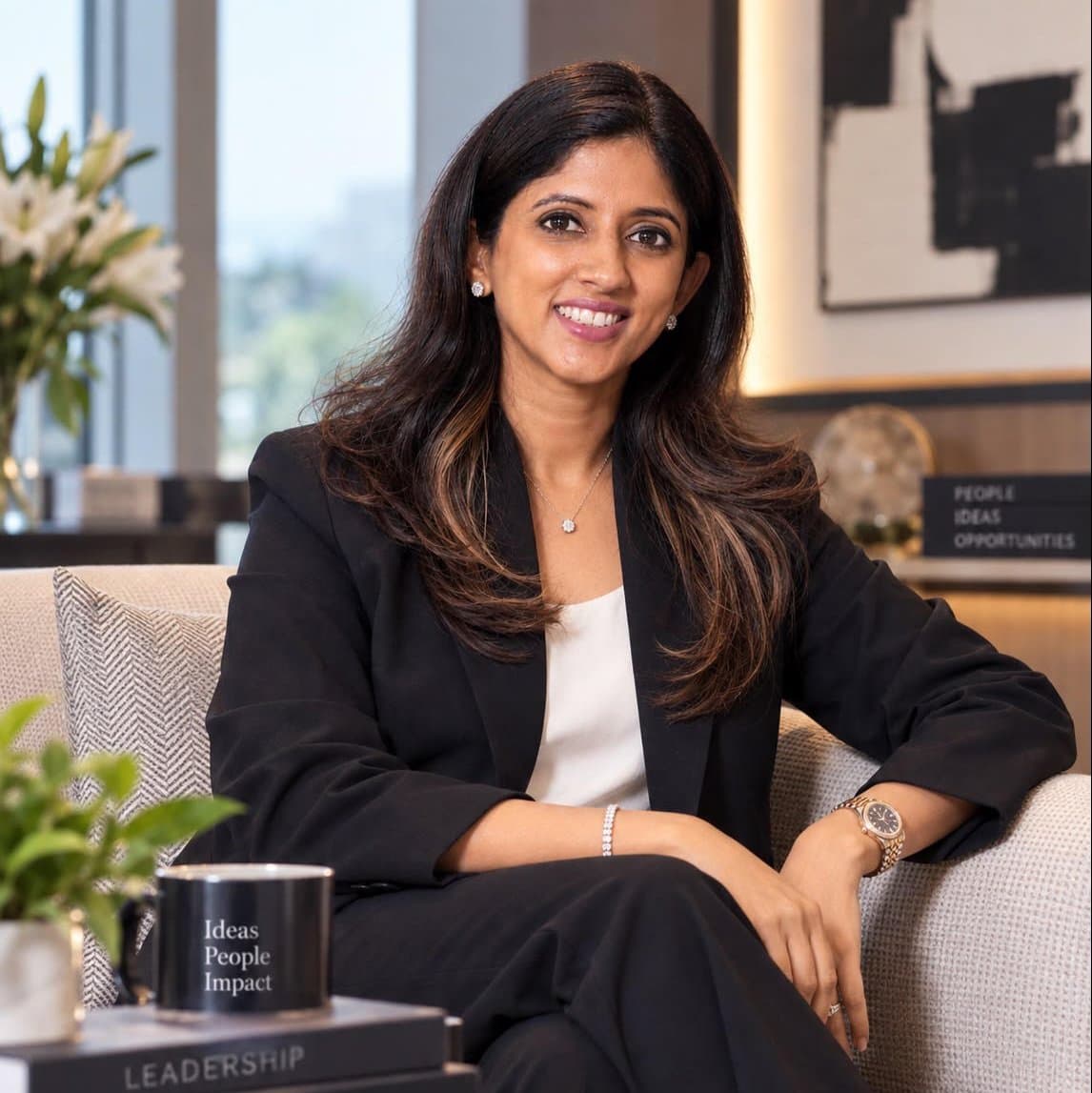
Investors & Catalysts
From Millet to Method: Rasika Prashant on Building What Consumers Return To
Rasika Prashant, CEO of NSRCEL at IIM Bangalore and Co-founder of Soulfull (later aquired by Tata Consumer Products) on consumer trust, category creation, Indian brands, and the founder discipline required after belief.
Read Full Story
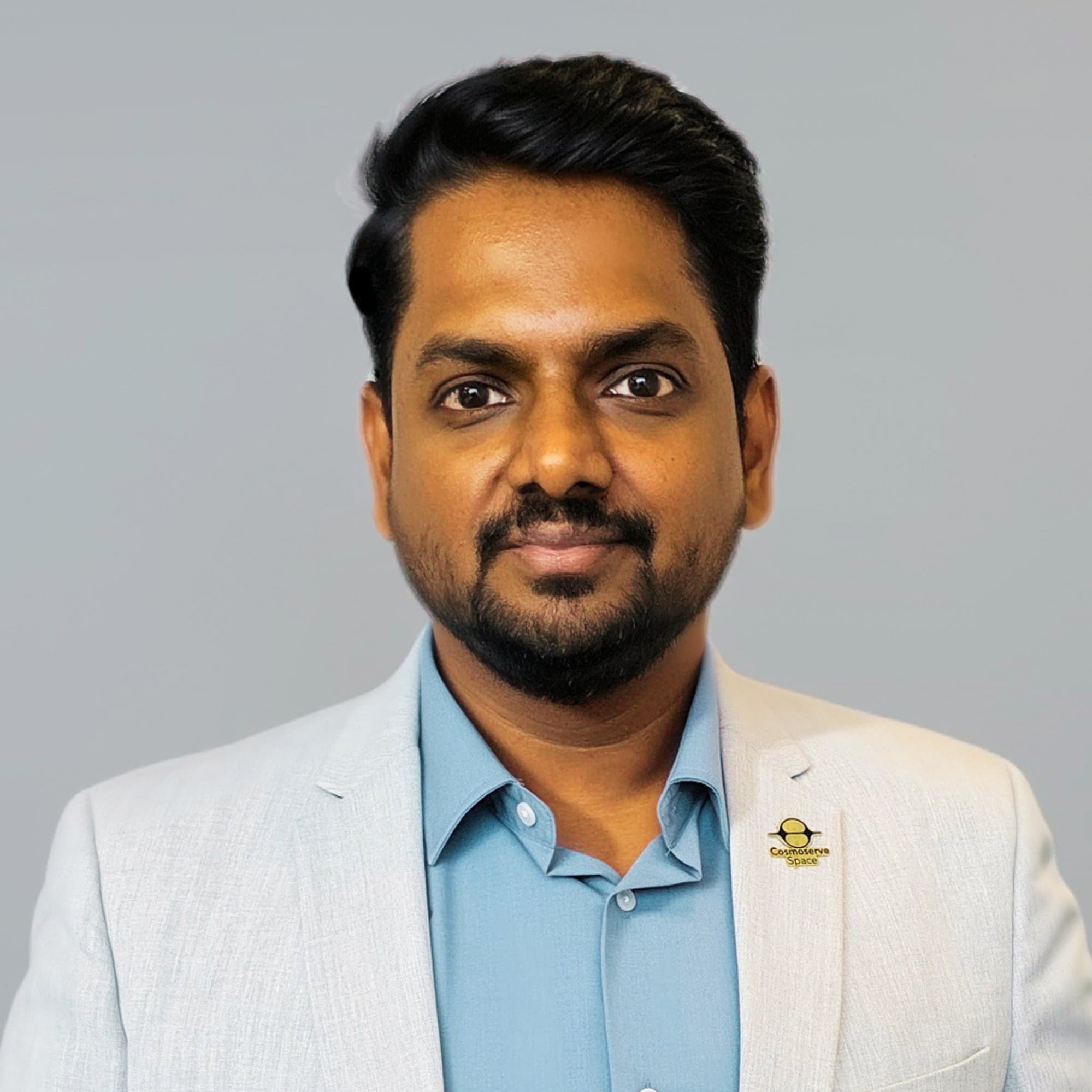
Founders & Innovators
Building the Next Space Economy: Chiranjeevi Phanindra and Cosmoserve's Case for Orbital Maintenance
Chiranjeevi Phanindra, Founder & CEO of Cosmoserve Space, spent 14 years at ISRO working on re-entry and human spaceflight. Today, he is focused on a vital challenge: keeping Earth’s orbit usable.
Read Full Story