Category: Corporate Visionaries
Aditya Sandhu leads with clarity, humility, and purpose. From ITC and Udaan to Nykaa and VLCC, he modernizes businesses by building strong cultures, resilient teams, and enduring systems.
From Field Vans to Boardrooms: The Architecture of a Relentless Leader
IndiSight Editorial
Aug 6, 2025
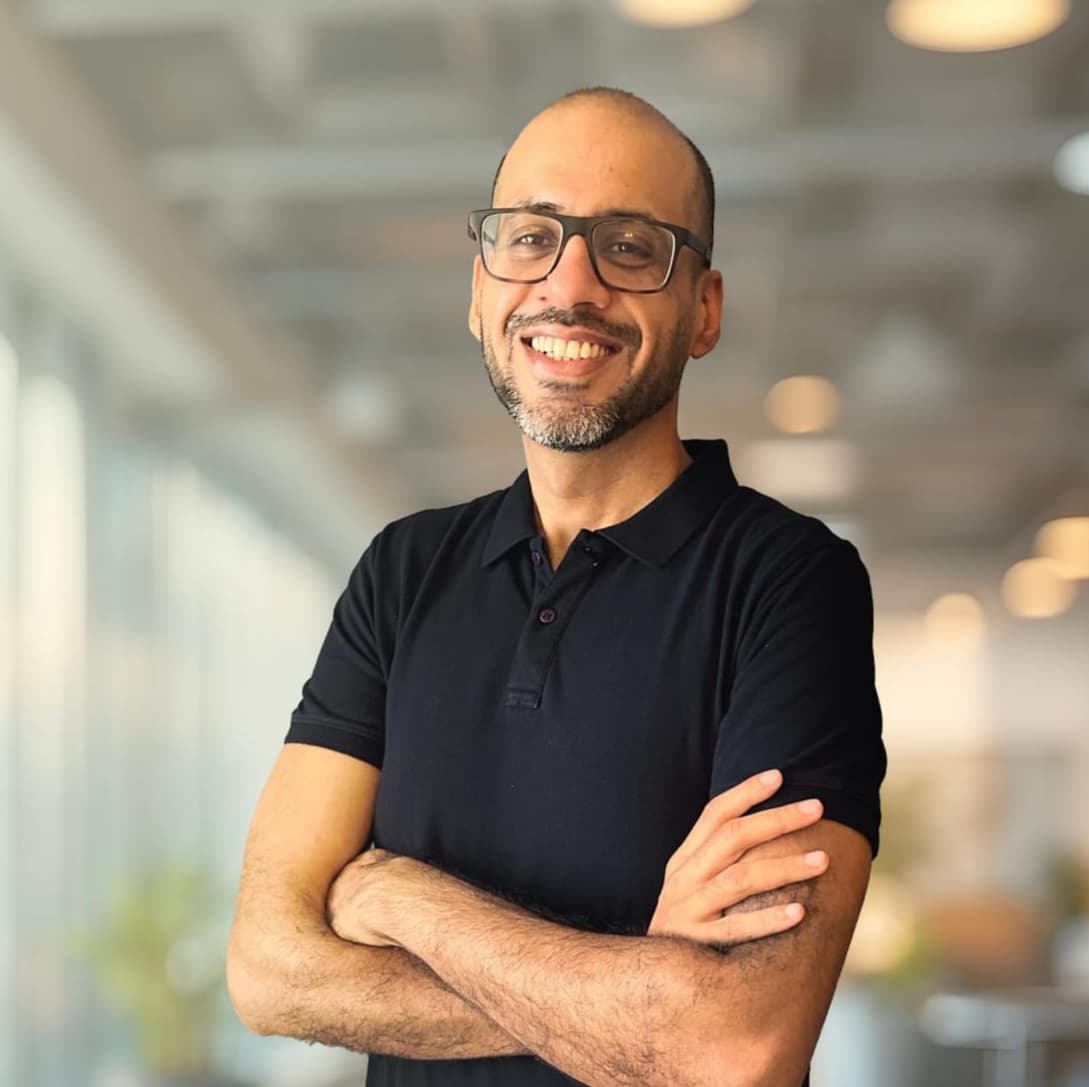
You feel his presence before you fully understand his depth.
There’s no showmanship. No grandstanding. Just quiet resolve, the kind that doesn’t perform under pressure, but performs because of it.
Aditya Sandhu is a distinctive kind of business leader: equal parts strategist, operator, builder, and boardroom presence. As Chief Business Officer at VLCC, a Carlyle-backed global wellness and personal care powerhouse, and a Board Member at Ustraa, his leadership spans the spectrum, from hyper growth to heritage brands. With past chapters at Nykaa, Udaan, and ITC, and entrepreneurial ventures like BrainPlay, his career has touched every dimension of business: scale, turnaround, zero to one, and digital transformation.
He leads not by spotlight, but by design. Across legacy giants, unicorns, and zero resource startups, he hasn’t just built business lines, he’s built trust in rooms full of pressure, complexity, and high expectation.
This is not a story about scale. It’s a story about how to stay steady while building it. It’s about the power of listening before acting. And about a leadership blueprint rooted in clarity, humility, and intent.
Aditya’s leadership journey has moved through some of the most competitive arenas of Indian business, starting with ITC, where he was placed after completing his management studies at SCMHRD Pune. There, the training was rigorous and expansive, rotating through categories like tobacco, food, and personal care. His early years taught him that leadership isn’t a job title, it’s a field assignment.
“Ten villages a day wasn’t a metaphor. That was the job. No AC. No backup. Just you, your product, and a promise made to a shopkeeper who didn’t know your brand.”
It was in these villages, often alone, navigating language, resistance, and harsh conditions he wasn’t attuned to, that he learned how to listen first, act second, and execute with conviction.
From the ground reality of India, he transitioned to the scale reality of the U.S., managing supply chain and distribution operations at ITC’s American subsidiary. There, he was suddenly working with billion dollar distributors and experienced sales professionals twice his age.
“It became extremely important that I find a common ground with them. Something they find interesting and relatable, and can be a good conversation starter. I realized sports was their language. I learned about the NFL just so I had something to open conversations with. That shared language opened doors faster than any pitch.”
It taught him how cultural fluency builds commercial fluency, and that rapport often precedes revenue.
When he returned, it was to build from zero. As co founder of a lean startup, he learned frugality, firsthand execution, and the value of customer success.
“If I had ₹100, I’d spend it getting one more customer, not outsourcing admin.”
They built revenue models based on impact, not billing. Clients only paid the big tranche if results were delivered. That shaped his views on aligned incentives, outcome based partnerships, and trust driven commercial contracts.
His next leap: Udaan. Fast, complex, and high stakes.
“You pitch on Monday. By next Monday, it’s live.”
That cadence taught him prioritization. Perfection wasn’t the goal, progress was. He developed a rhythm of deploying lean versions, learning from data, and iterating fast. Not “build and wait,” but “build and observe.”
Nykaa was another defining chapter. Just before its IPO, he joined to build the B2B Superstore business. Starting with zero and scaling to over 1,500 people and 600 cities, the challenge was massive. But Aditya was clear: speed was only valuable if it didn’t come at the cost of strategic integrity.
“You could debate. But there were no shortcuts. We didn’t compromise speed with chaos, or stability with stagnation.”
Colleagues remember his management style as calm under pressure, fiercely data driven, and deeply human. He took accountability when things failed. He gave credit when teams succeeded.
“If someone failed, I took the blame. If we won, the credit was theirs.”
At VLCC, he entered a different kind of battlefield: transformation within a legacy company. He didn’t dismantle systems. He modernized them with care.
“You don’t overwrite heritage. You evolve it, with context and clarity.”
Across business units: product, tech, GTM, and innovation, his goal was to unlock agility without creating chaos. It wasn’t about building from scratch; it was about updating the DNA.
When asked how he leads under pressure, especially when there’s investor scrutiny and high internal expectation, his answer is disarmingly honest:
“Pressure is real. But that’s exactly when you need to be honest. To your team. To your board. To yourself.”
He believes leadership is ultimately about coherence:
Be honest about what’s working, and what’s not.
Build plans with priorities that teams can act on.
Create a system where the quietest voices still get heard.
“If you’re not hearing the truth from your team, you’re flying blind.”
His approach to cross functional tension? Start with alignment, not structure. Execution follows belief, not org charts.
“People don’t resist strategy. They resist confusion.”
Across teams and verticals, he’s known for his ability to simplify problems without dumbing them down.
“You see three dots. You connect them differently. That’s where real strategy is born.”
How to Grow in Your Career: Lessons from Aditya’s Playbook
These principles aren’t just advice, they’re distilled from lived experiences across legacy giants and hyper growth unicorns, forged in moments of challenge and choice:
Chase the hard assignments: Aditya didn’t begin in boardrooms. He began in a van navigating unknown territories in Bihar. No GPS. No fallback. Just the will to deliver. Those early years gave him more than market knowledge, they built the muscle for resilience and independent thinking.
Cultivate deep listening: In his early FMCG days, Aditya discovered that real signals often hide behind silence. Listening, especially to what isn’t being said, became his superpower across sectors.
Master the rhythm: At Udaan and Nykaa, speed was oxygen. But he learned that wisdom lies in knowing when to sprint and when to breathe. Leadership is tempo, not theatrics.
Make the invisible visible: Whether decoding GTM engines or reimagining CX at VLCC, Aditya consistently turned ambiguity into architecture. He saw what others missed and built what others couldn’t define.
Stay human: From high pressure boardrooms to late night field reviews, he never lost sight of people. Trust wasn’t an add on, it was embedded in every decision. His team first lens made him credible and magnetic.
Earn your credibility: He didn’t chase titles. He chased outcomes. His credibility wasn’t claimed, it was earned, moment by moment, with consistency and humility.
Be obsessively curious: From diving deep into tech stacks to learning NFL playbooks just to bond with U.S. sales teams, Aditya’s learning mindset gave him fluency across domains.
Avoid unnecessary drama: In volatile industries, staying grounded isn’t a bonus, its survival. Aditya chose clarity over chaos and signal over noise.
Lead with a calm core: He’s seen the post IPO pressures, the startup pivots, and the transformation mandates. What centered the storm was his calm, measured, anchored, and contagious.
“Take ownership before it’s assigned. Carry weight before anyone applauds it. That’s how leadership compounds, not through noise, but through rhythm.”
These aren’t maxims. They’re muscle memory, earned in field vans, tested in boardrooms, and refined in high stakes pivots.
Raised in a military family, Aditya doesn’t romanticize leadership. He decodes it.
“You don’t need to be loud to be followed. You just need to be clear, and show up every single time.”
A Message to the Builders of Tomorrow
For those just stepping into the arena, leaders, operators, and founders, his message is clear:
“Leadership isn’t built in brainstorms or boardrooms. It’s built in the quiet moments. When the brief is messy, the outcome uncertain, and the weight is yours to carry.”
If his journey says one thing, it’s this: clarity is earned. Respect is earned. And scale, when built right, doesn’t need to shout. It simply works.
Our Suggestions to Read
Discover The Leaders Shaping India's Business Landscape.
Corporate Visionaries
Shashank Sahni on What Success Leaves Out
Shashank Sahni, Google’s Managing Director of Global Ads Solutions, reflects on what customers reveal, what ambitious teams need from their leaders & what the mountains and marathons have taught him about going further.
Read Full Story
Corporate Visionaries
Clinical Multiplication: Divesh Singla on the Healthcare AI Case That Headlines Keep Missing
Divesh Singla, Managing Director, India at Veradigm, brings two decades in healthcare technology to the AI question leaders cannot avoid: how to expand clinical capacity without weakening human judgment.
Read Full Story
Corporate Visionaries
When AI Leaves the Lab: Gowrav Shekar on AI, Judgment and Building for Consequence
Gowrav Shekar, Head of Technology and AI Practices at Adani AI Labs, brings a builder’s lens to AI, shaped by real workflows, imperfect data, ownership, consequence and validation after deployment.
Read Full Story