Category: Corporate Visionaries
Pankaj Rai, Group Chief Data and Analytics Officer at Aditya Birla Group, brings over three decades of experience across finance, analytics, and enterprise transformation. At a time when institutions everywhere are trying to become more intelligent, his work asks a deeper question: how do people, ideas, and judgment become shared capability that can endure inside large organizations?
Capability That Travels: Pankaj Rai and the Human Work of Building Intelligent Institutions
IndiSight Editorial
Jun 8, 2026
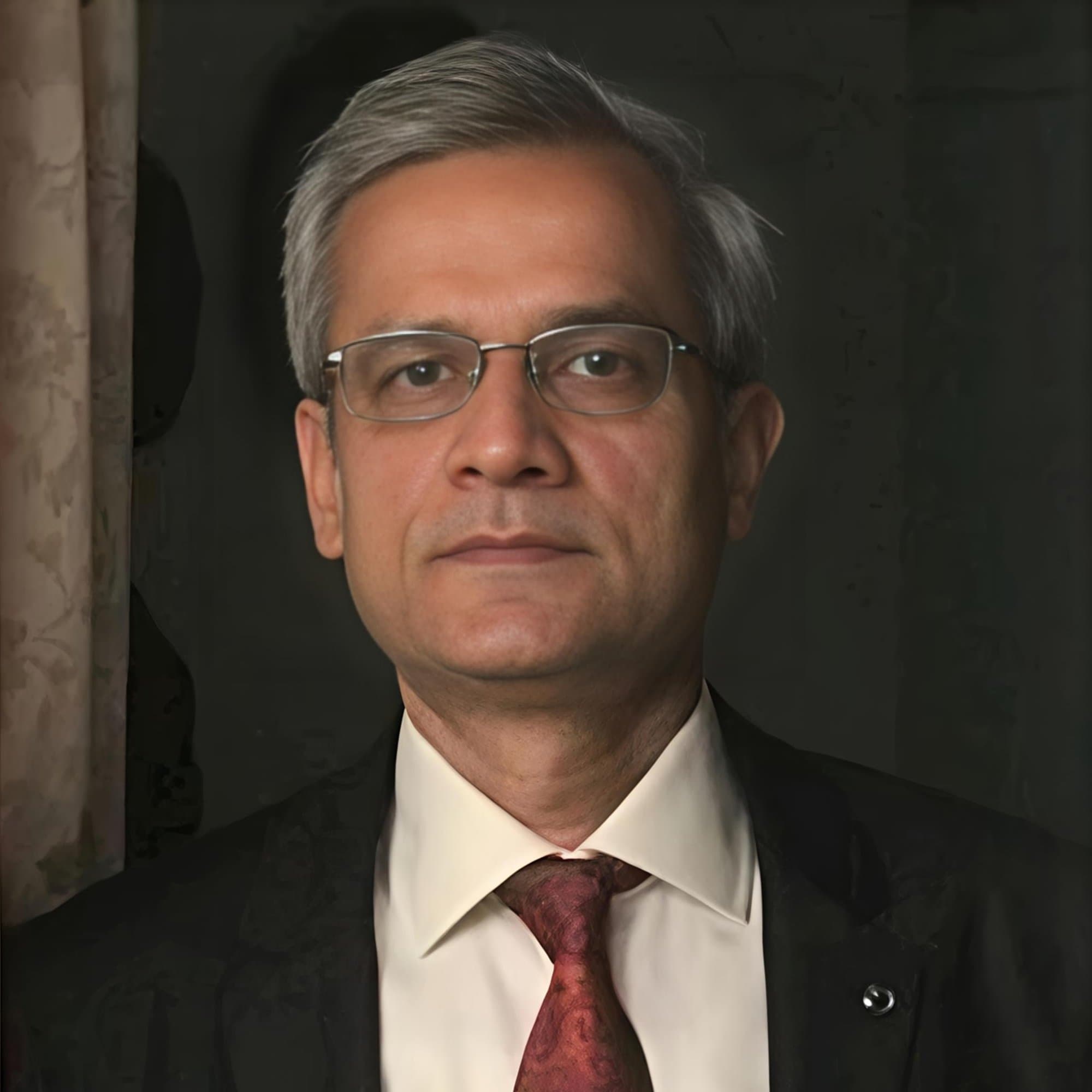
Pankaj Rai
Group Chief Data and Analytics Officer · Aditya Birla Management Corporation
Bengaluru, India
Institutions are built twice. First comes the formal design: capital, strategy, leadership teams, operating models, systems, technology programs, markets, and scale. These are the forms people can name, measure, present, and review.
The second construction grows inside people. It appears in how teams think, how managers make decisions, how trust develops, how language shapes action, and how capability moves from a few strong individuals into wider practice. A company may invest heavily in platforms, data, and process, yet its deeper strength depends on whether people know how to use those assets with judgment.
The real test of an institution is whether capability can travel.
Pankaj Rai, Group Chief Data and Analytics Officer at Aditya Birla Group, works at precisely this intersection: data, enterprise transformation, institutional capability, and human judgment. His role places him inside one of India’s most complex business groups, where capability has to move across businesses, teams, operating realities, and decision systems.
A central question runs through Pankaj’s work: how does capability become real?
Capability, in his view, is shaped through people. They have to understand it, practice it, adapt it, and eventually make it part of their own way of working. When that happens, capability begins to move beyond specialists and enter institutional memory.
A Career Built Without Mythology
Pankaj recalls his early life with unusual ease. He was born in Lucknow, grew up first in a public sector township in Gorakhpur, and later moved to Delhi when his father’s career took the family there. His father came from a village background and entered IIT Bombay after growing up with Bhojpuri as his primary language.
At IIT Bombay, his father noticed that several of his most articulate classmates had come from Modern School in Delhi. When Pankaj was of school age, he chose Modern School because it could give his son a broader capability: language, confidence, and cultural fluency before they became professional barriers.
That detail matters. It shows pattern recognition before Pankaj had a language for frameworks. His father valued education deeply, and he also understood the importance of designing capability early enough for it to become natural.
Pankaj studied electrical engineering at IIT Delhi and later management at IIM Ahmedabad. His own telling leaves room for circumstance, family expectation, friends, timing, and decisions whose meaning became clearer only later. He wrote the GRE because many people around him were doing so. He moved away from engineering after writing statements of purpose made him question whether he truly wanted to study it further. He joined Feedback Ventures partly because friends thought consulting might suit him better than selling light bulbs.
Things happen by chance.
Chance may open a door, and meaning comes later through reflection. After Feedback Ventures came ICICI, GE Capital, Standard Chartered, Dell, Wells Fargo, and eventually Aditya Birla Group. Finance taught discipline. Risk taught consequence. Consulting taught pattern recognition. Offshoring taught scale. Analytics taught decision support. Digital product thinking taught iteration. Conglomerate leadership taught the difficulty of making capability travel across contexts.
The Power of Common Language
At GE Capital, Pankaj encountered one of the ideas that would quietly shape his later work: the power of a common organizational language. As a Six Sigma Black Belt, he absorbed DMAIC: define the problem, measure the baseline, analyse what the data reveals, improve the process, and control it so the gain holds.
Six Sigma was commonsensical. Define the problem, measure it, analyse it, improve it, control it. The genius was that anyone could use it. I never forgot that lesson.
The word that matters there is “use.” A framework becomes powerful when it can move across people, teams, and contexts. It gives an institution shared grammar. It helps people separate causes from symptoms. It lets a conversation move from opinion to method.
Years later, that lesson would return in Pankaj’s work at Aditya Birla Group.
A large institution needs intelligence, and it also needs a shared language through which intelligence can travel.
Careers as Living Products
When Pankaj speaks about careers, he rarely begins with ambition or planning. He begins with how unpredictable a life can feel while being lived. One of his most distinctive ideas is to treat a career closer to a product under active development. A product enters the market, receives feedback, adds features, adapts, improves, and relaunches. A person can do the same.
Can we be a product manager of our lives and careers also?
For a generation surrounded by choices, the question is practical. Professional life has become more fluid. Skills age quickly. Industries shift. New opportunities appear without established templates.
Pankaj’s daughter’s decision to take a break after several years of work sharpened the idea for him. He admits it was difficult for his own generation to understand at first. Yet he sees a new logic emerging: people may need space to experiment before choosing their next form of contribution. A break, when used with intent, can become renewal rather than drift.
His language around careers avoids easy romance. He is asking for a more active relationship with one’s own development. Careers require feedback loops, experiments, and a sharper understanding of where one’s usefulness meets a real need.
Abundance requires trend setting, not trend spotting.
A proven path can offer comfort. A self-authored path asks more from the individual. It requires judgment, patience, and the ability to proceed without immediate approval from the world.
From Potential to Kinetic Value
Pankaj’s career philosophy connects directly with his view of learning. Professionals often collect qualifications, skills, frameworks, and credentials with the assumption that accumulation itself creates relevance. Pankaj looks for movement. A skill earns value when it moves into use. Knowledge must become action. Experience must become judgment. A framework must become behavior.
Framework is the potential. Execution is kinetic.
Ideas earn value when they enter practice. A framework may organize thought, but usefulness begins when it changes a decision, improves a habit, helps people collaborate, or gives a team better language for action.
For young professionals, Pankaj’s question is sharper than “what should I learn?” It is: where will this learning become useful? What problem does it help solve? What decision does it improve? What capability does it unlock?
Modern professionals live with abundant learning. Access has expanded. Direction has become harder. When knowledge is everywhere, selection and application carry greater weight.
Networks as Learning Systems
Pankaj speaks about networking in a way that sounds less like career strategy and more like a discipline of mutual usefulness. He often shares a simple three-part principle for meeting people: offer something they may value, seek something they can teach, and leave with a genuine offer to help.
Everyone can add value to everyone else.
His own networks reflect the idea: school, college, former companies, running, social work, spirituality, banking, women’s networks, and other areas of interest. These overlapping circles allow him to engage with different types of people and ideas. Networking becomes one way curiosity stays alive.
Pankaj’s instinct for connection often shows up in small, ordinary choices. Even in transient spaces, he looks for ways to turn proximity into conversation. A flight, a waiting area, a morning run, or a casual meeting can become a place where two people discover context, exchange ideas, or leave with a connection they did not expect.
A strong network can extend influence. A better network extends understanding. Younger professionals may understand emerging contexts faster. People outside one’s function may see problems differently.
Running belongs lightly inside this same pattern. Pankaj’s long association with BHUKMP, a running group whose name comes from Bangalore, Hyderabad, Ultra, Kaveri Trail, Mumbai, and Pondicherry, gives another view of how he builds community: through conversation, belonging, and the habit of making people part of a circle before hierarchy asks them to prove themselves.
Capability Beyond Experts
Again and again, Pankaj returns to a question that sounds simple until one sees how rarely institutions ask it with discipline: what is worth solving?
Large organizations are rarely short of activity. They run programs, pilots, reviews, dashboards, initiatives, and transformation agendas. Still, capable institutions can spend enormous energy on priorities that matter less than they believe.
Dell became one of the clearest tests of this belief. When Pankaj joined Dell in Bangalore in 2005, the analytics opportunity was still emerging. Dell Financial Services needed an analytics function, and Pankaj’s banking background gave him a way into the problem. What began in one domain eventually expanded across marketing, pricing, supply chain, online, strategic, and financial services analytics. By the time he left, the analytics team had grown into a 500-person organization.
The number matters, and the deeper lesson sits elsewhere. Dell taught him that data capability is a culture challenge as much as a technical one. The harder work is helping the business ask better questions of data. Unless business leaders know what to ask, what to test, what to ignore, and what to act on, analytics remains a specialist achievement rather than an institutional capability.
At Aditya Birla Group, the challenge is magnified by diversity. A conglomerate spanning apparel, cement, financial services, telecom, and chemicals does not naturally share one operating vocabulary. Pankaj’s 3W framework gives the group a common language: ways of thinking, ways of working, and ways of doing. Ways of doing covers data science, engineering, and architecture. Ways of working covers talent, funding, partnerships, productization, and scale. Ways of thinking covers strategy, innovation, research, and maturity.
Technology comes last.
Strategy creates direction. Operating models create movement. Culture shapes adoption. Technology becomes powerful when the surrounding system is prepared to use it well. For Pankaj, transformation is cultural before it becomes technical. If an institution wants a data-led culture, it needs recurring processes that use data, rituals that reinforce attention, and behaviors that make better decisions more likely.
Why Frameworks Live or Fade
Pankaj likes frameworks, but he does not worship them. A framework can organize thought, but it cannot guarantee adoption. It can provide language, but people still have to live it. It can create potential, but execution determines whether it becomes real.
He often reaches outside business to make the point. Gandhi’s ideas around nonviolence, discipline, and moral conviction had force because he lived them, communicated them, and aligned them with a movement. In another conversation, Pankaj recalled hearing Ajit Doval use the camel as a metaphor for quiet direction: the camel walks toward its destination, and the caravan forms behind it. Pankaj later shared the image with his team. A young intern offered the question many leaders forget to ask: what if the camel walks and nobody follows?
Direction matters. Timing matters too. Context matters. Communication matters. People follow when an idea becomes meaningful to them, not when it sounds elegant to its originator.
A framework earns its place when people use it without the author present. Pankaj’s own frameworks are less about control than translation. They give teams language for movement. They help business leaders, technologists, and practitioners speak across domains.
Central Capability and Local Ownership
To explain the boundary between central teams and business ownership, Pankaj uses a simple distinction: run, change, and transform. The frontline runs. Business teams change. The center transforms. Each layer carries a different time horizon. The center’s role is to create the next level of practice and help the system absorb it.
Central excellence should not become permanent ownership of every important capability. The center creates, transfers, renews, and moves forward. It exists to expand the institution’s capacity and make the wider system stronger.
The Dell experience remains important here. A large analytics organization can become an internal service factory if it only delivers projects. Its larger value appears when people leave with a stronger sense of how data, business judgment, and decision quality belong together.
The team’s scale mattered. Its memory mattered more.
The Full-Stack Human
Pankaj’s most human idea may be the full-stack human being. The phrase borrows from technology, but his meaning is broader. People need to build vertically across science, commerce, and humanities. Technical knowledge matters. Commercial understanding matters. Human understanding matters.
The office is a gym.
The workplace can build more than technical skill. A finance discussion can strengthen commercial thinking. A presentation can build communication. A cross-functional project can stretch empathy, influence, and judgment. Capability grows when people treat everyday work as practice, not only performance.
His language around human capability is unusually gentle for someone who has spent decades inside high-performance institutions.
You don’t have to be a go-getter. As long as you can be a nice human being, that is enough.
The line brings character back into a conversation often dominated by ambition. In institutions, intelligence travels further when people are willing to listen, help, connect, and make others feel seen.
His 5C framework sits near the same idea: curiosity, compassion, conviction, creativity, and communication. Curiosity helps people see beyond their own function. Compassion helps them understand what others are carrying. Conviction gives direction when choices multiply. Creativity opens new routes. Communication allows an idea to move from one mind into many.
The Discipline of Stepping Back
High-performance cultures often celebrate forward motion. Pankaj’s thinking contains a quieter counterpoint: withdrawal, reflection, and narrative discipline. His life includes running, walking, conversation, community, and selective consumption of information. He speaks about joy of missing out as a deliberate alternative to fear of missing out.
JOMO is required in the abundance era.
Selective attention is an attempt to preserve judgment. In environments overflowing with information, the ability to miss what does not matter becomes a leadership discipline. When people are young, everything can look like signal. Experience teaches which things deserve reaction and which do not.
Business relevance appears quickly. Leaders constantly assign narratives to events: a colleague’s silence, a team’s resistance, a failed initiative, a competitor’s move, a delayed outcome. First interpretation is not always the wisest one. Reflection creates room between stimulus and story.
Learning, Unlearning, and Intention
Pankaj is careful with the language of unlearning. Many changes happened organically. People who knew him in school and college remember him as quiet. At IIM Ahmedabad, he did not speak much in group settings.
Later, at Dell, he realized public speaking would matter in a large organization. He volunteered for induction sessions when speakers were unavailable, using those rooms as practice grounds. Over time, he moved from using a standard deck to making the content his own. He built the muscle through repetition.
His broader phrase for such movement is the shift from intuition to intention.
Journey from intuition to intention.
Experience gives raw material. Reflection creates structure. Action tests the structure. Over time, a person becomes more deliberate without pretending life can be fully controlled.
Leadership Lessons
1. Start by asking what is worth solving: Before tools, teams, or frameworks, leaders need sharper problem selection. Effort becomes meaningful when it is aimed at something that truly deserves institutional energy.
2. Give people a language they can actually use: A framework becomes useful through practice. Models earn value when they change a meeting, a decision, a habit, or a conversation.
3. Make capability travel beyond the expert: Capability matters when it travels. If knowledge stays with one person, one team, or one central function, the institution remains fragile.
4. Build central teams that strengthen the wider system: The best central teams create capability, help the business absorb it, and then move to the next frontier. Their work should make the organization less dependent and more capable.
5. Convert learning into usable value: Abundance makes choice harder. When people have more tools, information, career options, and advice, judgment becomes the real advantage.
6. Treat careers as living products: Careers behave more like products now. They are tested, improved, rebuilt, and redirected through feedback. Relevance comes from learning in use.
7. Build networks that feel human: Networking works best when it expands understanding. A good conversation should leave both people with more perspective, trust, and usefulness than they had before.
8. Protect the space for reflection: Reflection belongs inside performance. The pause between an event and the story we attach to it often decides whether a leader reacts, listens, learns, or grows.
The Unfinished Work of Capability
Near the end of one conversation, Pankaj reflected on the anxiety many people feel about the future. There is endless talk about what technology will do, which jobs will change, what markets will become, and which predictions will come true. He does not dismiss such conversations, but he questions their proportion. The world is a complex system. Politics, economics, society, technology, environment, and law move together. Prediction has limits.
His advice is practical.
Spend 80% of time on what you can do.
Pankaj is asking people to stop surrendering attention to forecasts they cannot control. Action creates personal data. Personal data creates learning. Learning creates direction.
Pankaj’s larger contribution sits in the conversation on capability: how people build it, how institutions absorb it, and how leaders create conditions where it can last. The future will offer institutions more intelligence than they know how to use. Pankaj’s work points toward a quieter test: whether organizations can grow people wise enough to use it well.
Our Suggestions to Read
Discover The Leaders Shaping India's Business Landscape.

Corporate Visionaries
Sarath Gollapalli on the Work That Makes Technology Dependable
Sarath Gollapalli, Vice President at Broadridge, reflects on why AI-era enterprise technology still depends on fundamentals: client understanding, reliability, governance and ownership.
Read Full Story

Corporate Visionaries
The Work Before the Story: Rahul Malhotra on Trust, Behaviour and the Business of Marketing
Rahul Malhotra brings 30+ years at P&G and Shell across global CEO and marketing roles, offering deep insight into business, consumer behaviour, organisational change, commercial judgement and reputation.
Read Full Story

Corporate Visionaries
The Craft of Institutional Capital: Archit Shah on Judgement, Risk and Investing Across Cycles
The Zurich Kotak General Insurance Chief Investment Officer brings a practitioner’s view of investing, where good judgement under uncertainty has to become decisive action through portfolio construction.
Read Full Story