Viewpoint
The Great Convergence: Winning the Battle for Proximity and Trust in Indian Retail
How quick commerce, D2C brands and kirana stores are all fighting for the same thing, and what boards need to do about it.
Published on September 23, 2026 · 7 min read
The One Prize Everyone Wants
Indian retail has come down to one thing. Whoever is closest to the customer, and whoever the customer trusts, is able to sell the product. Call it the great convergence. Online brands are opening real stores to move faster. Old-style retailers are learning digital tricks to hold their ground. Everyone is chasing the same customer, just from different directions.
For brands and board, this is not a simple case of “going digital”; There is a real difference between two things. Recalibrating just means moving an old process online, like turning a paper form into a digital one.
Reinventing means changing how decisions get made in the first place, moving from habit to real, current data.
Three players are chasing the same customer, from three different starting points.
• Quick commerce is buying closeness by building many small warehouses near customers, with an aim to catch quick, impulse buys.
• D2C brands are buying trust by opening real stores, a way past the limits of online ads alone.
• Kirana shops and general trade are protecting the trust they already have, built over years of relationships and a supply network that is hard to copy fast.
Three Roads to the Same Customer
Quick Commerce Wins on Speed : Apps like Blinkit, Zepto and Instamart do not work like normal online shopping. People buy on the basis of habit and impulse, not research. A brand’s paid ads bring in the first sales. The app notices the early demand at each warehouse and starts showing the brand for free after that. Paid and free visibility feed each other. Over time, as the app learns to trust the brand’s sales pattern, it needs less ad money to keep sales going. Think of it like a wheel. Once it starts spinning, it is cheaper to keep it moving.
D2C Brands Are Opening Real Stores : D2C brands usually hit a point where the cost of getting a new customer eats up all their profit. A real store helps here in a simple way. A customer who has touched and trusted a product in person tends to buy more of it later, both online and offline.
The bigger win is what a store makes possible behind the scenes. Lenskart is the example people bring up most. As the company moved more manufacturing in-house instead of importing, its frame and lens costs came down 35 to 40% below the industry average, a real part of its recent profit growth. A physical store is more than just a place to sell here. It is the base that makes this kind of in-house manufacturing worth doing.
Kirana Shops Have an Edge That Is Hard to Copy : General trade is still the backbone of FMCG and FMCD sales in India, and for good reason. Quick commerce is aggressive, but it still has to earn customer loyalty the hard way. What brings customers back to any delivery app, more than price or choice, is simple reliability, getting the order right and on time. Until quick commerce can match the ease of walking into a shop where the owner already knows you, the kirana’s edge holds.
The Real Numbers Behind the Business
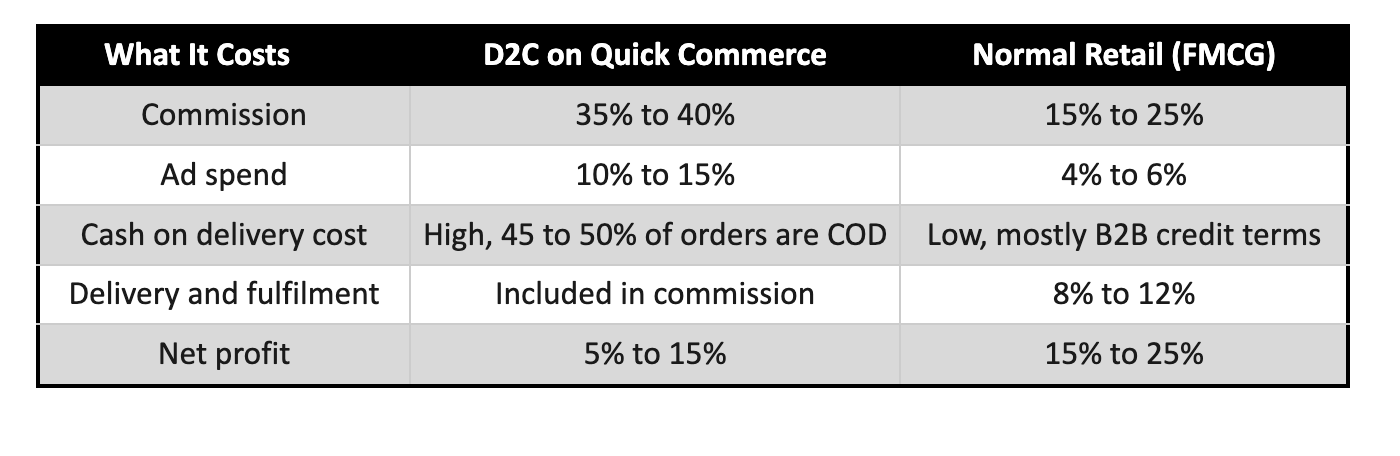
What It Really Costs to Sell on E-Commerce and Quick Commerce
Selling through quick commerce costs more than it looks. Commissions alone can be almost double what a brand pays in normal retail.
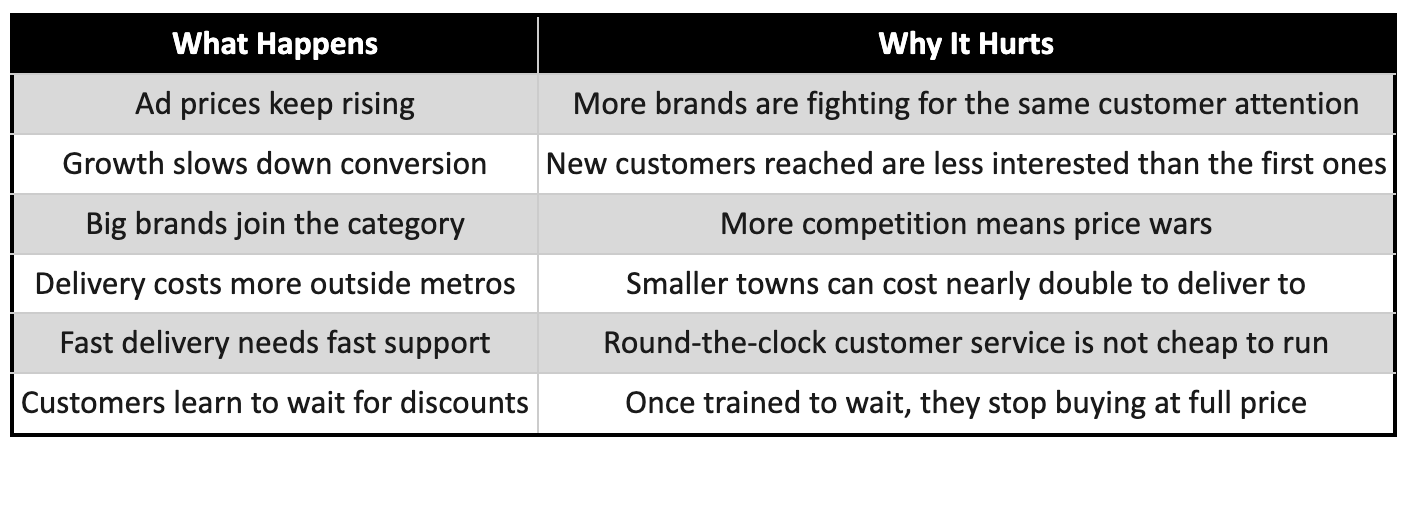
Six Things That Eat Into D2C Profit
The Hidden Cost of Extra Stock
Retail, at its core, is about using money wisely. Stock sitting on a shelf is money doing nothing. The longer a product sits unsold, the more it costs the business elsewhere (meaning its hidden impact is more on the business than spending on other things). Cash on delivery makes this worse too, since payment only comes in once the courier collects the cash, delaying it further. Seasonal and fashion goods bear the brunt of this the most. Very little sells at full price through an entire season, so what a business expects to earn and what it actually earns by clearance time are usually two different numbers.
Designing for the Ten-minute Window
Choosing the Right Products to List
A small warehouse cannot hold as much stock as a supermarket. Listing everything does not work here the way it might in a big store. The real question is not what a brand can list. It is what has already sold well somewhere else. A product with a good sales record in general trade or on the brand’s own website is a safer bet. A brand new product with no history anywhere is a risky gamble in such a tight shelf space.
There is a quieter cost too. A slow seller does not just perform badly on its own. It drags down how the app treats the brand’s whole product list, since the app judges the full account, not just one item. Keeping the list short is a smart business choice here, not just caution. A short list of steady sellers almost always beats a long list where half the items are doing nothing.
Packaging Has Three Seconds to Work
Packaging used to be judged standing in front of a shelf, with time to pick it up and look closely. On a phone screen, it gets judged in about the time it takes a thumb to swipe past. A few things matter more because of this. The brand name and logo should read clearly even while shrunk to the size of a coin.
Flavour or size should be obvious at a glance. Nothing extra should compete for attention beyond the brand, the product and one clear message. The colour should stand apart from other packs likely sitting next to it in a search result. A simple test helps here. Shrink the design down small and check what still reads clearly and what becomes noise.
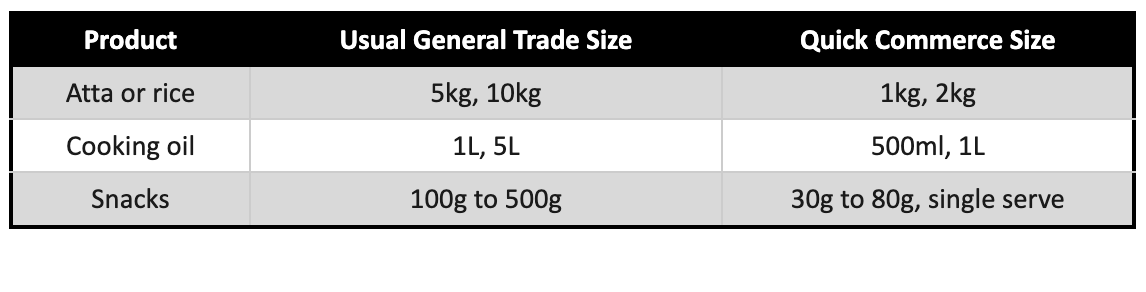
Getting Pack Size and Price Right
Indian shoppers carry fairly fixed prices in their heads. Crossing one of those lines, even by a single rupee, can hurt sales more than the actual price gap would suggest.
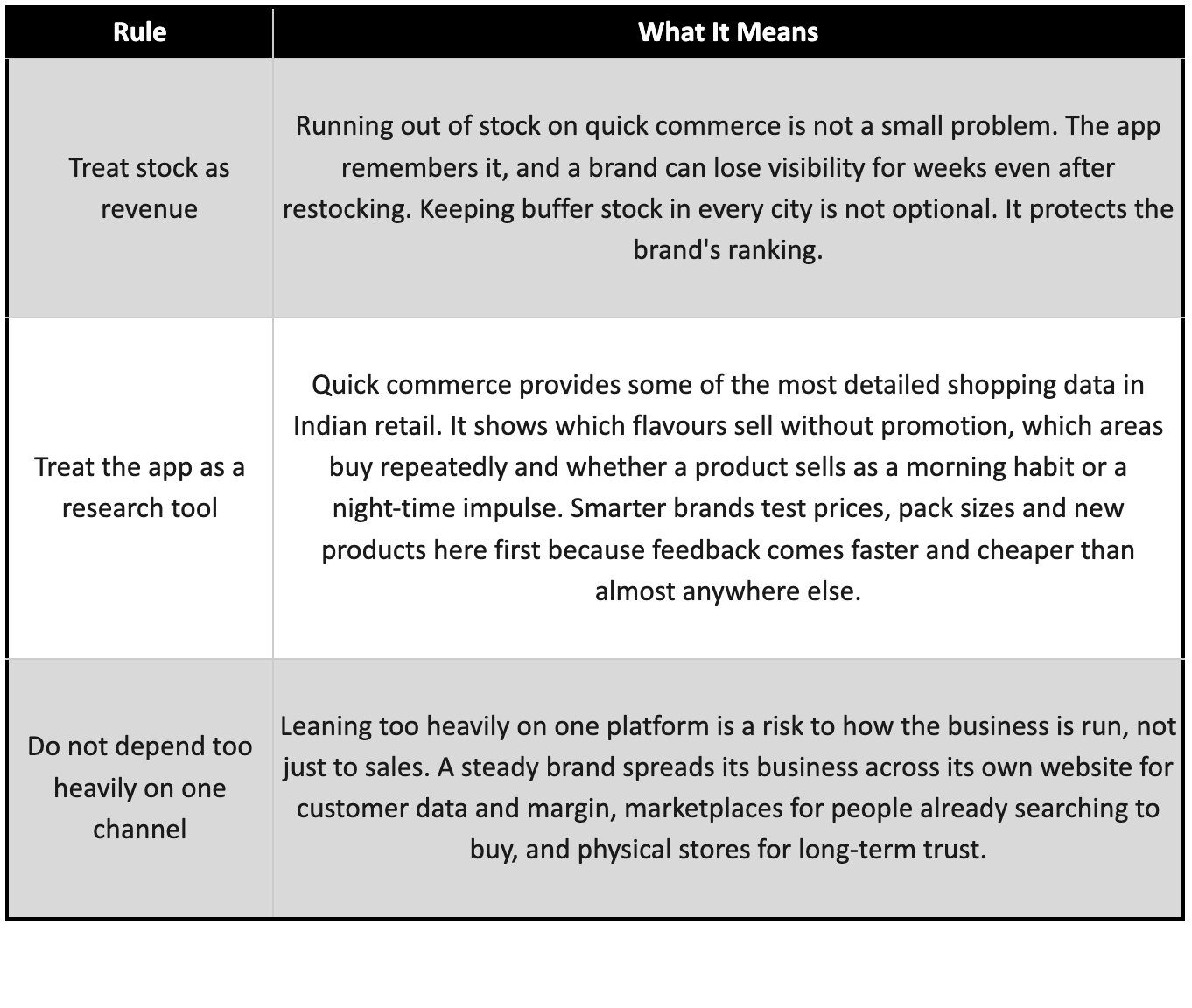
A Simple Three-part Plan for Selling Across Channels
Most brands treat online, offline and quick commerce like three separate businesses, run by three separate teams, each reporting different numbers to the board. That is the wrong way to do it. The brands getting this right run all three channels on one shared set of rules.
What Boards Should Be Asking
Boards looking at any digital plan should ask three simple questions. Does the plan touch the real share of revenue and profit? Is it creating new revenue, or just squeezing a little more out of what already exists? Is the thinking built for the next several years, or is it a short-term target dressed up as a big plan?
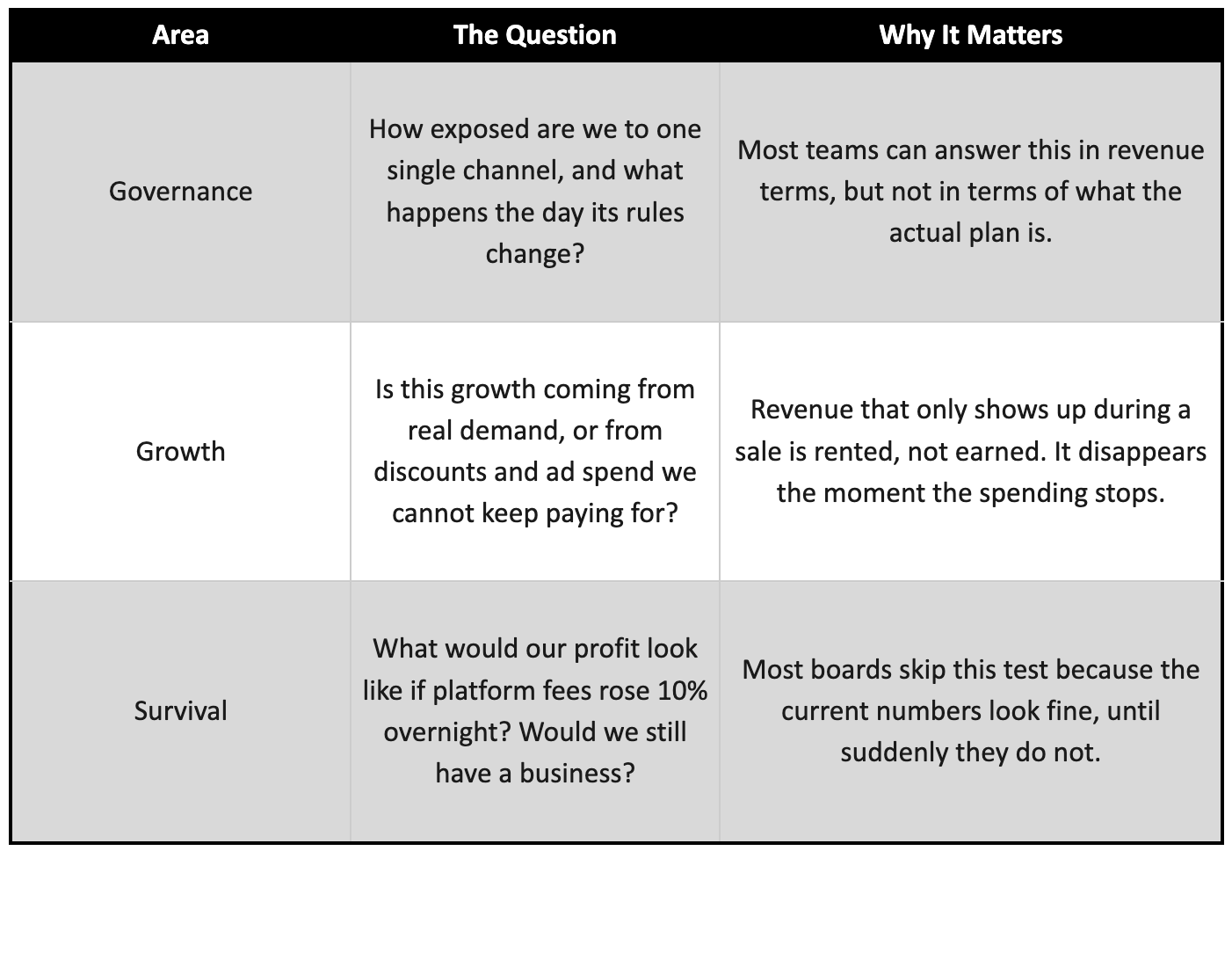
Beyond judging any one plan, there are three sharper questions a board should keep asking management regularly, one on governance, one on growth, and one on whether the business can actually survive.
A few practical steps follow for 2026. No amount of new technology will help if a company’s basic systems cannot produce clean data first, so fixing that comes before anything fancy. Systems should flex without breaking every time something changes. Reports that take days to prepare are already outdated by the time the board sees them, so one clear, current source of truth matters more than it sounds. And nothing hurts a store’s trust faster than an online discount on the same product the very same week, so pricing should stay the same across every channel.
For leadership teams trying to act on this, a short honest list works better than a long one.
• Put one person, with the real power to decide things, in charge of the plan, not just report on them.
• Look honestly at the product list and cut it down to what is actually selling fast on quick commerce.
• Check if packaging reads clearly at thumbnail size, not just on a laptop screen.
• Get a clear picture, in real rupees, of what cash on delivery and unsold stock actually cost the business.
• Hold the line on stock availability, since it protects both visibility and sales.