Intelligence
Industrial Cybersecurity Market: India’s Role In A USD 54.8 Billion Global Cyber-Resilience Opportunity
As factories, utilities & supply chains connect faster, India is emerging as a force in the USD 54.8 billion industrial cybersecurity market, where resilience will define the next industrial edge.
A
Ashish Kolte (MarketIntelo)
August 6, 202611 min read
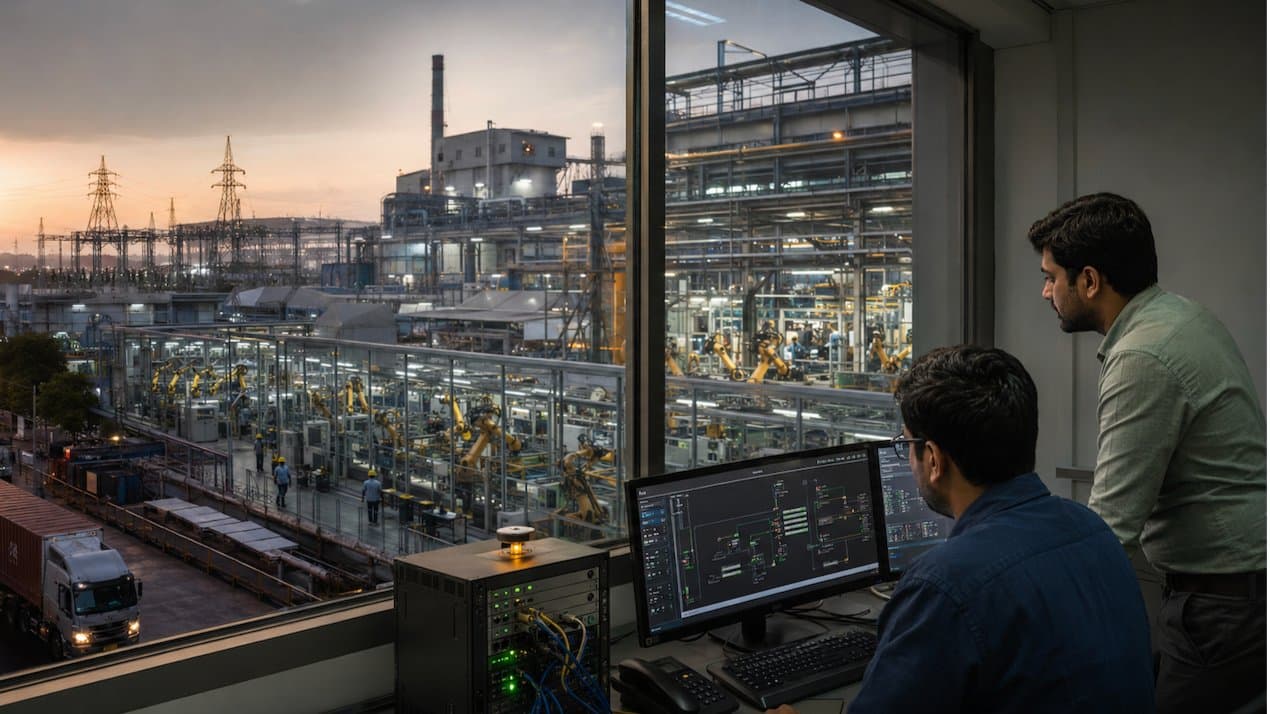
The first warning often looks smaller than the damage it can create.
A ransomware attack on business systems forced Colonial Pipeline to halt pipeline operations in the United States. A cyber incident at JBS disrupted food-processing operations across North America and Australia. Toyota lost output after a supplier incident in Japan suspended operations across 14 domestic plants. In India, Oil India reportedly faced a ransomware attack in Assam with a ransom demand of about USD 7.5 million, while Tata Power disclosed a cyberattack on its IT infrastructure and said its critical operational systems continued to function.
The deeper signal across these incidents is interruption. Fuel movement, food processing, automobile production, power infrastructure and industrial supply chains now carry a common exposure: digital compromise can travel into physical and economic disruption.
Industrial cybersecurity has therefore entered a more serious phase. It is becoming the resilience layer of connected industry. The global market is valued at USD 25.4 billion in 2025 and is projected to reach USD 54.8 billion by 2034, growing at a CAGR of 9.8 percent. The forecast implies nearly USD 29.4 billion in additional value over the period.
The number matters, but the larger story sits beneath it. Industries are digitising their operating cores faster than many plants, suppliers and mid-sized partners can secure them. India’s opportunity lies here: building the capability layer that helps factories, utilities, logistics systems and industrial suppliers stay connected without becoming fragile.
The New Industrial Weak Point
Industrial systems were built around uptime, safety and predictability. Machines, controllers, supervisory systems and plant networks often remain in use for decades. Many were engineered for stable, closed environments where cyber exposure was a limited operating concern.
Modern industry has changed that model. Factories now connect with cloud dashboards. Vendors access machines remotely. Sensors feed predictive-maintenance systems. Production data moves into ERP, quality, logistics and analytics platforms. Digital twins, automated warehouses, smart grids and connected energy systems are making industrial operations more intelligent, while also increasing their exposure.
Every new connection creates two realities at once. It improves visibility and expands the attack surface. A remote vendor login creates an access-control risk. An unpatched controller creates a vulnerability risk. A connected sensor creates a data-integrity risk. A poorly segmented plant network creates a continuity risk.
The distinction between enterprise cybersecurity and industrial cybersecurity is critical. A breach in a corporate network can affect communication, payments, records or customer data. A breach inside an industrial environment can affect plant uptime, equipment behaviour, product quality, worker safety, shipment commitments and public confidence. In energy, utilities, food, chemicals, transportation and pharmaceuticals, cyber risk can quickly move from the IT department into the operating balance sheet.
Why Demand Is Becoming Structural
The market has moved from USD 12.8 billion in 2019 to USD 20.1 billion in 2023 and USD 25.4 billion in 2025. By 2034, it is expected to more than double again. Growth of this nature usually appears when a category moves from discretionary spending to operating necessity.
Several forces are converging. IT and OT are merging inside industrial enterprises. Production systems increasingly interact with enterprise software, maintenance platforms, analytics engines and supply-chain networks. The old boundary between corporate IT and plant OT has weakened, especially in companies adopting Industry 4.0 systems without equivalent investment in industrial security architecture.
Ransomware has also changed the economics of industrial risk. Downtime in a factory or utility compounds quickly through missed orders, idle labour, delayed shipments, contractual penalties, insurance scrutiny, safety checks and reputational damage. Colonial Pipeline became a defining case because a ransomware attack on business systems still led the company to halt pipeline operations.
Supplier exposure has become another weak point. Toyota’s 2022 supplier incident showed how disruption at one component supplier could affect an entire production ecosystem. Large manufacturers can invest heavily in security and still remain vulnerable through vendors, integrators, maintenance partners and smaller industrial suppliers.
Regulation is adding pressure. India’s CERT-In directions require specified cyber incidents to be reported within six hours and require ICT system logs to be maintained for a rolling period of 180 days within Indian jurisdiction. The Central Electricity Authority’s power-sector cyber guidance emphasises asset registers, compliance, critical information infrastructure, trusted vendors and cyber drills. SEBI’s 2024 Cybersecurity and Cyber Resilience Framework has widened formal cyber-resilience expectations across regulated entities in India’s securities market.
Cybersecurity is slowly becoming an operating licence question in critical sectors.
The Market Is Really Three Markets
The headline market number hides an important segmentation. Industrial cybersecurity is separating into three connected markets: critical infrastructure resilience, manufacturing continuity and industrial services capability.
Critical infrastructure is the first market. Energy and utilities account for 28.5 percent of global demand, while oil and gas contribute another 12.8 percent. Together, these sectors represent more than 41 percent of the market. Power, fuel, water and energy systems sit close to public life, so cyber failure carries consequences beyond company performance.
Manufacturing continuity is the second market. Manufacturing accounts for 22.3 percent of demand, while transportation contributes 15.7 percent. Smart factories, robotic lines, connected warehouses, logistics networks and digital supply chains create efficiency, while also making industrial output more dependent on trusted systems. A manufacturer’s cyber maturity now affects its ability to deliver.
Services capability is the third market. Solutions account for 58.2 percent of the market, while services account for 41.8 percent. A services share of that size reveals the complexity of the problem. Industrial enterprises need asset discovery, network segmentation, vendor-access design, compliance interpretation, incident readiness, managed detection and plant-level advisory. OT environments require engineers, cybersecurity teams and operations leaders to work together because technical decisions can affect physical production.
The most valuable opportunities will emerge where these three markets overlap.
India’s Real Opportunity
India’s industrial cybersecurity opportunity should be viewed through the country’s manufacturing ambition, infrastructure build-out and technology-services depth.
Manufacturing is expanding across electronics, automotive, chemicals, pharmaceuticals, defence production, renewables, logistics and industrial parks. The government’s manufacturing push, PLI-led capacity creation and emerging high-technology production base are increasing the number of connected plants, suppliers and industrial systems. Connectivity will rise with that expansion. Cyber exposure will rise with it.
Large refineries, power utilities, steel plants and defence-linked facilities may attract board-level attention and stronger controls. The more vulnerable layer may sit in the middle: component suppliers, industrial SMEs, regional manufacturers, plant contractors, automation vendors, logistics providers and maintenance partners. These firms are becoming part of national and global supply chains, yet many do not have the cyber budgets, OT visibility or specialist talent of large industrial groups.
That is India’s real opening. The country can build a plant-level resilience capability for the industrial mid-market.
The need is already visible. Oil India and Tata Power show how critical sectors face cyber pressure. Reported targeting of Indian power-sector assets shows that grid-linked infrastructure sits inside a larger geopolitical and operational risk field. CEA’s power-sector guidance shows policy recognition that asset visibility, trusted vendors, critical information infrastructure and cyber drills matter. CERT-In’s reporting and log-retention regime pushes enterprises toward better detection discipline. SEBI’s cyber-resilience framework shows that market infrastructure and regulated entities are also being pulled into a more formal resilience architecture.
India has the raw ingredients to respond: a large IT-services base, growing cybersecurity firms, engineering talent, national cyber institutions, public-sector industrial depth and a manufacturing ecosystem that needs affordable, scalable protection. The strategic question is whether India can convert these ingredients into OT-specific capability, instead of treating industrial cybersecurity as a standard extension of enterprise IT.
The most promising Indian play may be a combined capability stack: OT asset inventory, managed detection, vendor-access governance, compliance readiness, cyber drills, industrial SOCs, threat intelligence and insurance-grade risk reporting for factories and infrastructure operators.
Building The Sovereign Stack
India is beginning to assemble the foundations of a sovereign industrial cybersecurity stack. The word sovereign should be understood carefully. It does not mean isolation from global technology. It means domestic capability in sectors where operational resilience, national infrastructure and industrial competitiveness increasingly depend on trusted systems.
Institutions such as C3iHub at IIT Kanpur are important in this context because they connect research, critical-infrastructure security, translational capability and deployment. C3iHub’s cyber-security maturity work for critical sectors and its deployment of an advanced Security Operations Center at SAIL’s Bhilai Steel Plant signal how India’s academic and institutional ecosystem can move from research into operational resilience.
This is where India’s advantage can become differentiated. The country already has deep services strength. What it needs is more OT-specific specialisation: engineers who understand plant environments, cybersecurity professionals who understand industrial protocols, advisory teams that can translate regulation into operating practice, and managed services that can support mid-market factories without enterprise-level complexity.
The sovereign stack will be strongest if it is practical. It has to serve the plant manager, the maintenance vendor, the power utility, the industrial supplier and the logistics operator. Cybersecurity cannot remain a boardroom dashboard in this market. It must become visible at the level of assets, access, processes and response decisions.
Capital And Capability
For founders and investors, industrial cybersecurity is attractive because the pain is specific and the consequences are measurable.
Generic enterprise-security products rarely fit cleanly into plant environments. Factories need security decisions that understand uptime, maintenance windows, legacy controllers, safety systems and production constraints. A plant manager cannot treat every alert as a reason to stop operations. A CISO cannot ignore unknown assets simply because they sit outside traditional IT inventory. A vendor cannot receive broad remote access just because a machine needs servicing.
The strongest companies in this space will solve for context. They will help industrial customers answer practical questions: which assets are connected, which systems are exposed, which vendors have access, which vulnerabilities matter most, which segment of the plant network needs isolation, and which response decision can protect safety while preserving production continuity.
For investors, demand quality will depend on proof of operational value. The best companies will show reduced downtime risk, faster compliance readiness, better vendor governance, lower insurance friction, stronger incident response and clearer visibility across industrial assets. In this market, credibility will come from real deployments, sector knowledge and integration capability.
Industrial automation incumbents and specialised OT-security players will both shape the competitive landscape. Honeywell, Siemens, ABB, Schneider Electric, Rockwell Automation, Cisco, Fortinet, Dragos, Claroty, Nozomi Networks, Palo Alto Networks, Microsoft and Tenable are relevant because industrial cybersecurity sits between control systems, networking, cloud, threat detection and operations. India’s opportunity will require both partnership with global platforms and the creation of local capability suited to Indian plants, utilities and suppliers.
AI Will Face A Harder Test In OT
AI will matter in industrial cybersecurity, but OT environments will test AI more sharply than conventional enterprise IT.
Industrial systems are often deterministic, safety-critical and sensitive to false positives. A model that flags unusual behaviour inside a corporate network may create analyst workload. A model that misreads a signal inside a plant could trigger unnecessary intervention or miss a condition that affects production. Adoption will depend on explainability, validation and trust from operations teams.
AI can still create real value. It can detect abnormal traffic, reduce alert noise, identify changes in machine behaviour, support faster triage and help under-resourced teams prioritise risk. In plants where teams do not have deep OT-security staffing, AI-assisted monitoring can become a force multiplier.
Attackers will also use automation to scan faster, craft more convincing social-engineering attempts and adapt intrusion paths with greater speed. As agentic AI systems mature, industrial companies may face threats that move faster than traditional response cycles.
The practical answer is disciplined augmentation. AI should improve visibility and judgment, while final decisions in safety-critical environments remain governed by human expertise, tested procedures and operational accountability.
Speed matters in cybersecurity. In industrial environments, trust matters even more.
The Forward Economic Argument
Industrial cybersecurity is becoming part of the economics of connected growth.
Companies once treated cybersecurity mainly as a protection cost. Connected industry changes that equation. Cyber resilience now influences uptime, customer confidence, regulatory readiness, supplier qualification, insurance terms and board accountability. A manufacturer with weak cyber controls may eventually face procurement risk, financing risk and partnership risk alongside attack risk.
Cyber insurance could become a quiet enforcement mechanism. Insurers, lenders, customers and regulators will increasingly ask whether companies have asset visibility, incident logs, access controls, tested response plans and segmentation between critical systems. Over time, industrial cyber maturity may become part of how supply-chain partners judge reliability.
The next decade of industrial growth will therefore depend on a difficult balance. Companies must connect more systems to improve productivity, while governing every connection with greater discipline. Smart factories, automated logistics, digital energy systems, connected utilities and data-led manufacturing will all require stronger resilience architecture.
At USD 25.4 billion in 2025, industrial cybersecurity is already a significant market. At USD 54.8 billion by 2034, it becomes a major global infrastructure opportunity. The larger issue is what the market represents: the cost of making connected industry trustworthy.
Future industrial advantage will belong to enterprises that can digitise without becoming fragile, scale without losing visibility and stay productive when digital systems come under pressure.
Contributor Note
This article has been contributed by MarketIntelo and authored by Ashish Kolte, Marketing Manager at MarketIntelo. It examines the industrial cybersecurity market, the rise of cyber resilience across connected industry, and India’s role in the emerging global opportunity.
About MarketIntelo
MarketIntelo is a market research and business consulting firm specialising in industry intelligence, market sizing, trend analysis, opportunity assessment and forecasting. The company supports global enterprises and small and medium-sized businesses through syndicated research, customised studies, consulting services and regularly updated market databases.
More Intelligence
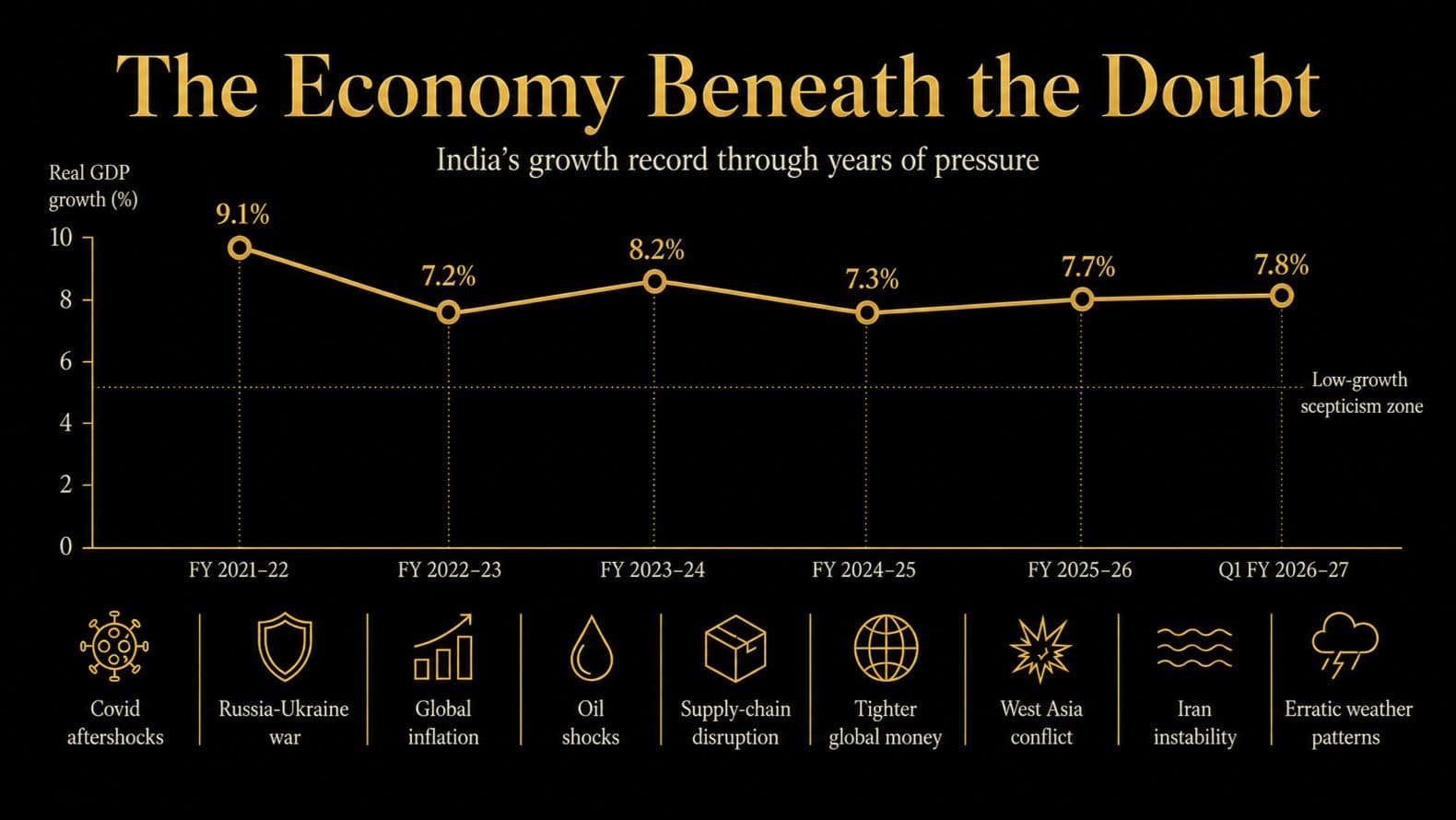
Beyond the 7.8% Headline: What the “Dead Economy” Remark Missed
When confidence in India’s post-Covid recovery was fragile, the then Chief Economic Adviser saw a 7% growth decade ahead. 5 years later, the latest 7.8% Q1 GDP print gives that call sharper context.
August 31, 2026

Can Sugar-Free Chocolate Become the Next Billion-Dollar Better-for-You Food Category?
Sugar-free chocolate, already a USD 2.6 billion global market, is projected to reach USD 4.86 billion by 2034, as better-for-you indulgence moves from niche demand toward mainstream consumption.
August 18, 2026
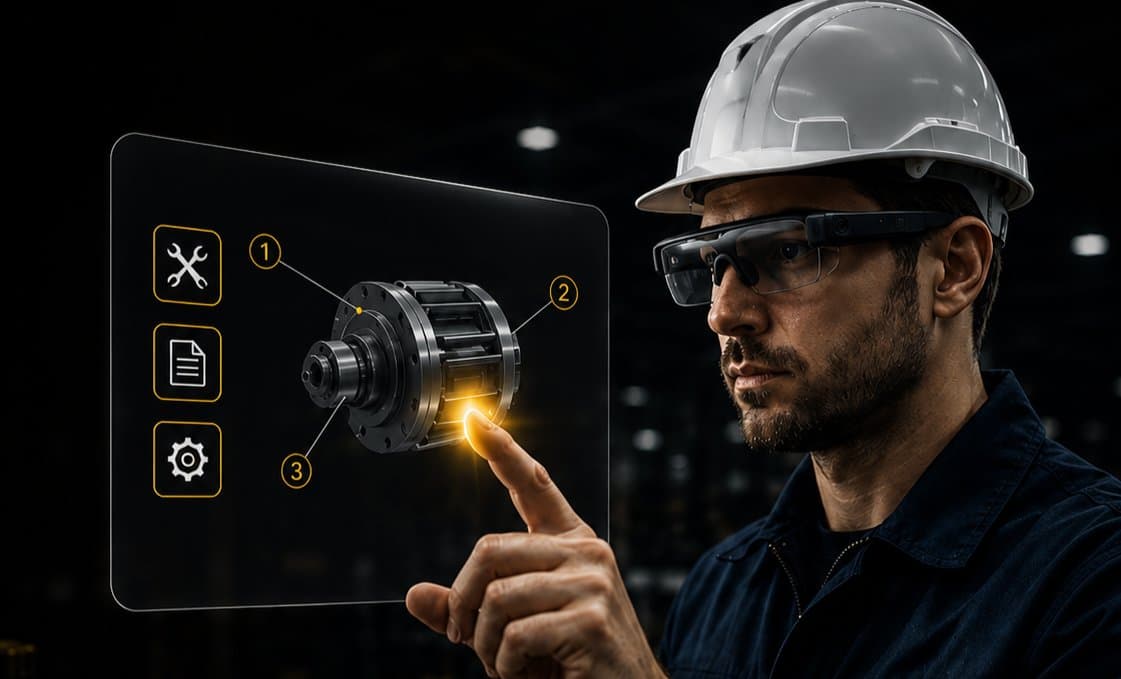
Digital Transformation on the Shop Floor: Why the Industrial AR Glasses Market Is Gaining Momentum
Industrial AR glasses are becoming the operating interface of connected factories, linking workers and expertise as the market is projected to grow from $4.2 billion in 2025 to $19.8 billion by 2034.
July 23, 2026