Intelligence
Digital Transformation on the Shop Floor: Why the Industrial AR Glasses Market Is Gaining Momentum
Industrial AR glasses are becoming the operating interface of connected factories, linking workers and expertise as the market is projected to grow from $4.2 billion in 2025 to $19.8 billion by 2034.
A
Ashish Kolte (MarketIntelo)
July 23, 202610 min read
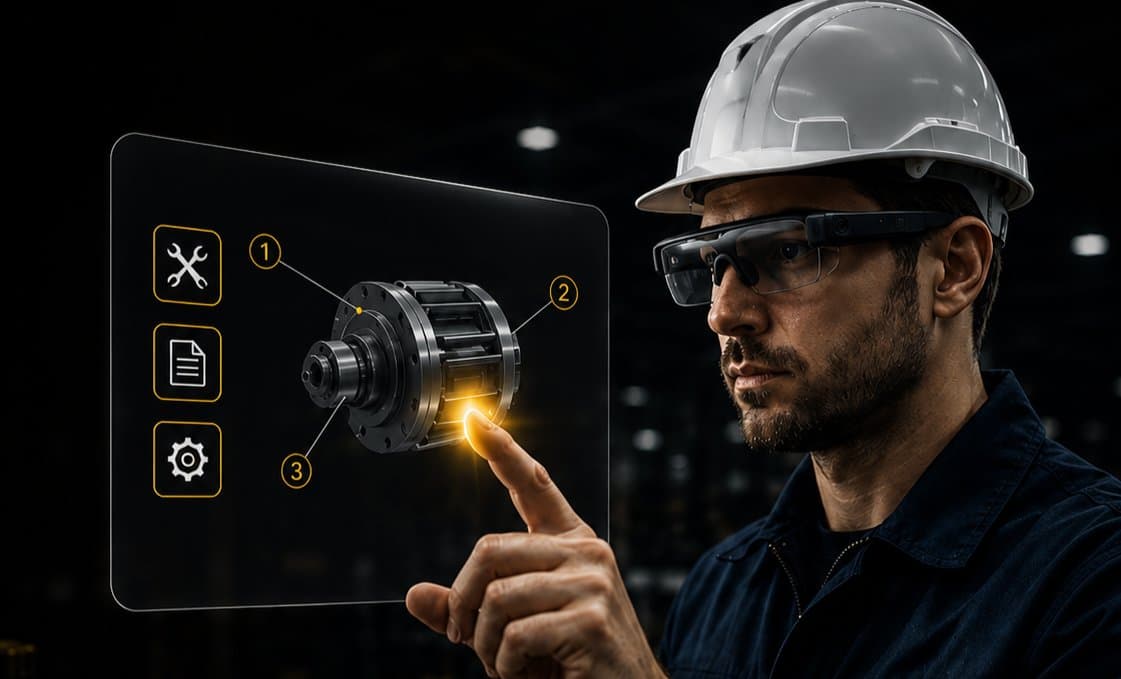
Industrial augmented reality glasses are becoming an increasingly practical part of digital transformation across manufacturing, logistics, maintenance and field services.
By placing digital information within a worker’s field of view, AR glasses provide hands-free access to instructions, equipment data and remote expert support. Employees can remain focused on the task while reviewing the information required to complete it accurately and efficiently.
This capability is gaining importance as industrial operations become more connected and technically demanding. Companies are under pressure to improve productivity, manage workforce shortages, strengthen safety and reduce operational errors. At the same time, improvements in display quality, battery life, connectivity and software integration are making AR glasses more suitable for regular use.
The industrial AR glasses market is therefore moving beyond isolated experimentation. Adoption is beginning to expand across workflows where immediate access to information can improve the quality and speed of execution.
Market overview
Industrial AR glasses are designed for environments where workers need hands-free access to information while performing physical tasks.
Their applications span assembly lines, equipment maintenance, quality assurance, warehousing, logistics, training and remote technical support. In each of these settings, the technology connects the worker more directly with digital instructions and enterprise systems.
The market is expanding alongside the broader movement towards smart factories and connected industrial operations. As companies digitise workflows, AR glasses can help translate data from production, maintenance and logistics platforms into practical guidance for frontline employees.
The submitted market estimates point towards significant growth, although the figures differ across forecasts. One estimate values the industrial AR glasses market at approximately $4.2 billion in 2025 and projects it to reach $19.8 billion by 2034. Another places the market at approximately $2.5 billion in 2025. A separate estimate values the market at $3.78 billion in 2023 and projects it to reach approximately $6.78 billion by 2030.
These estimates appear to use different market definitions, forecast periods and assumptions. They may also differ in the extent to which they include hardware, software and related services. The figures should therefore be viewed as broad indicators of market direction.
Across these forecasts, the underlying outlook remains consistent. Industrial AR adoption is expected to grow as companies invest in automation, connected workflows and technologies that support frontline productivity.
Why the market is growing
Several operational pressures are driving interest in industrial AR glasses.
Improving employee productivity
One of the strongest drivers is the need to help employees access information more efficiently.
Workers often spend time searching for manuals, consulting separate screens or requesting support from supervisors. These interruptions may appear small, although they can become significant when repeated across multiple employees, shifts and locations.
AR glasses can place instructions and relevant data directly within the employee’s field of view. This allows the worker to continue with the task while reviewing the next step, checking specifications or confirming a process requirement.
The value is particularly clear in repetitive or complex operations where accuracy and consistency have a direct effect on productivity.
Supporting training and knowledge transfer
Many industrial sectors are facing a widening skills gap. Experienced employees are retiring, while newer workers need to learn increasingly complex processes.
AR glasses can support training by providing step-by-step guidance during the task itself. New employees can follow visual instructions, identify components and understand the correct sequence of work within the operating environment.
This can shorten the time required to build familiarity with a process and reduce dependence on continuous supervision.
The technology can also help companies standardise training across teams and locations. Approved instructions can be updated centrally and delivered consistently to workers at different sites.
Strengthening safety and process accuracy
Safety is another important factor in industrial adoption.
AR glasses can display warnings, procedures and inspection requirements while the employee is working. This can help workers follow the correct sequence during equipment checks, maintenance and other technically sensitive activities.
Hands-free access can also reduce the need to handle a separate device while operating machinery or examining equipment.
The quality of the interface remains critical. Information must be accurate, timely and easy to understand. Excessive visual content or poorly timed instructions can distract the worker and weaken situational awareness.
AR systems therefore need to be designed around the realities of the working environment.
Global market outlook
Industrial AR glasses are gaining attention across regions as companies modernise factories, warehouses and technical-service operations.
North America remains one of the leading markets. The region has a strong base of advanced manufacturing companies and a relatively high level of enterprise technology adoption. Industrial organisations have also invested heavily in automation, connected systems and productivity tools.
Europe represents another important market. Companies in the region place considerable emphasis on workplace safety, process quality, regulatory compliance and operational efficiency. These priorities support the use of AR glasses in maintenance, inspection and employee training.
Asia-Pacific is expected to offer substantial long-term growth potential. The region has a large manufacturing base, extensive logistics networks and increasing investment in industrial digitalisation. As factories and warehouses modernise, demand for technologies that connect workers with digital systems is likely to rise.
Latin America remains an emerging market, with adoption linked to automation, warehouse efficiency and industrial modernisation.
The Middle East and Africa are also developing markets. Growth may be supported by infrastructure investment, technical services and the modernisation of industrial operations.
The pace of adoption will vary across sectors and countries. Regions with established manufacturing and logistics ecosystems may scale deployments more quickly, while other markets may begin with selected applications such as remote assistance, inspection or training.
Practical industrial applications
The value of industrial AR glasses becomes clearer when examined through specific workflows.
Assembly operations
In assembly environments, AR glasses can display instructions while the employee works on a product or component.
The device can guide the worker through the required sequence, identify the correct part and highlight relevant specifications. This reduces reliance on printed manuals or separate screens.
The technology can also help standardise execution across employees. This is useful in operations involving product variation, complex processes or frequent changes in production requirements.
Maintenance and repair
Maintenance and repair are among the most practical applications of industrial AR.
Technicians can view service instructions, equipment histories and inspection requirements while examining the machine. They can also connect with a remote specialist and share a live view of the equipment.
This allows experienced engineers to support several sites from a central location. It can reduce travel, shorten response times and help resolve technical issues more quickly.
The business case becomes stronger where equipment downtime is expensive or specialist knowledge is difficult to deploy across locations.
Warehousing and logistics
In warehouses, AR glasses can support picking, sorting, inventory management and route guidance.
Workers can receive visual directions to the correct storage location and confirm the item or quantity required. This can improve picking accuracy and reduce the time spent searching through warehouse aisles.
Integration with warehouse-management and inventory systems is essential. Live information allows the device to respond to changes in stock positions, order priorities and operational requirements.
Quality assurance and inspection
AR glasses can assist employees during quality checks by displaying inspection criteria, product specifications and process requirements.
The worker can compare the physical product or equipment with the information shown through the device. This may improve consistency and reduce the risk of missing an important inspection step.
The technology can also support digital documentation by recording completed checks and linking them with the relevant production or maintenance system.
Technology improvements
The growth of the market is closely linked to improvements in the devices themselves.
Industrial AR glasses are becoming lighter, more durable and more suitable for demanding work environments. Improvements in battery performance and display quality are supporting longer and more practical use.
Ergonomics will remain a decisive factor.
A device may perform well during a short demonstration and still be uncomfortable over a full working shift. Weight, heat, visual fatigue and field of view can influence whether employees are willing to use the technology consistently.
Industrial devices may also need to work alongside helmets, safety glasses and other protective equipment. Charging, hygiene, durability and device management become increasingly important when deployments expand across multiple workers and locations.
Software development is also strengthening the value of industrial AR.
When the glasses are connected with production, maintenance or logistics platforms, they can provide information linked to a specific task, asset or order. This makes the device more relevant to the employee’s immediate working context.
The value therefore depends on the quality of enterprise integration as much as the hardware itself.
The role of artificial intelligence
Artificial intelligence could extend the capabilities of industrial AR glasses by helping systems interpret the worker’s environment.
Computer vision may allow the device to identify equipment, components or visible defects. AI-supported applications could recognise the stage of a process and suggest the next step. Voice interfaces may help workers retrieve information while their hands remain occupied.
These capabilities could make AR guidance more responsive and easier to use.
Industrial environments require a high level of reliability. Instructions and recommendations need to align with approved procedures and accurate operational data.
Companies will therefore need strong controls around testing, validation, security and human oversight. The practical value of AI will depend on whether it improves performance consistently under real working conditions.
Challenges to adoption
Industrial AR glasses still face several barriers.
Cost and return on investment
Cost remains an important consideration, particularly when devices are deployed across several sites or a large workforce.
The total investment includes more than the glasses. Companies may also need software licences, systems integration, network upgrades, training, support and device-management capabilities.
Organisations will expect measurable improvements before expanding beyond a pilot. Productivity, error rates, training time, service efficiency and equipment downtime are likely to become important measures of value.
Comfort and worker acceptance
Employee acceptance will have a major influence on adoption.
Workers may resist devices that are heavy, uncomfortable or difficult to use for extended periods. They may also have concerns about recording, monitoring and the use of performance data.
Companies should involve frontline employees during design and testing. Clear communication about how the technology works and how data will be used can help build trust.
Data protection and cybersecurity
AR glasses may capture visual information from production lines, factories, warehouses and customer locations. Connected devices may also access sensitive industrial systems.
Companies will need controls covering identity, access permissions, recording, data storage, network security and device management.
Security requirements will become more demanding as AR glasses move from isolated pilots into connected enterprise environments.
Business opportunities
The industrial AR market creates opportunities across hardware, software and services.
Vertical applications are likely to become increasingly important. Manufacturing, logistics and field service require different workflows, interfaces and integrations. Solutions designed around a specific operating environment may offer greater value than broad, general-purpose applications.
Software companies and systems integrators also have a significant role. Industrial customers may require workflow design, application development, enterprise integration, training and ongoing technical support.
This creates a wider ecosystem around AR adoption.
Subscription, leasing and managed-service models may help companies reduce upfront investment and scale deployments gradually. These models can also provide recurring revenue for vendors through software, maintenance, upgrades and device management.
The strongest opportunities are likely to emerge where the operational problem is clearly defined and the return on investment can be measured.
Outlook
Industrial AR glasses are becoming a more practical part of shop-floor digital transformation.
Their value lies in helping workers access instructions, equipment information and expert support while remaining focused on the task. This can contribute to faster execution, more consistent training, improved process accuracy and better use of technical expertise.
The market’s progress will depend on improvements in cost, comfort, software integration and security. Companies will also need to demonstrate that the technology delivers measurable operational value.
As industrial organisations continue to modernise their workflows, AR glasses are likely to play a larger role in connecting employees with the systems and information that shape daily operations.
The next stage of the market will be defined by solutions that fit naturally into the working environment and deliver clear improvements in performance.
Contributor Note
This article has been contributed by MarketIntelo and authored by Ashish Kolte, Marketing Manager at MarketIntelo. The analysis reflects the company’s research and perspective on the evolving industrial AR glasses market.
About MarketIntelo
MarketIntelo is a market research and business consulting firm specialising in industry intelligence, market sizing, trend analysis, opportunity assessment and forecasting. The company supports global enterprises and small and medium-sized businesses through syndicated research, customised studies, consulting services and regularly updated market databases.
More Intelligence
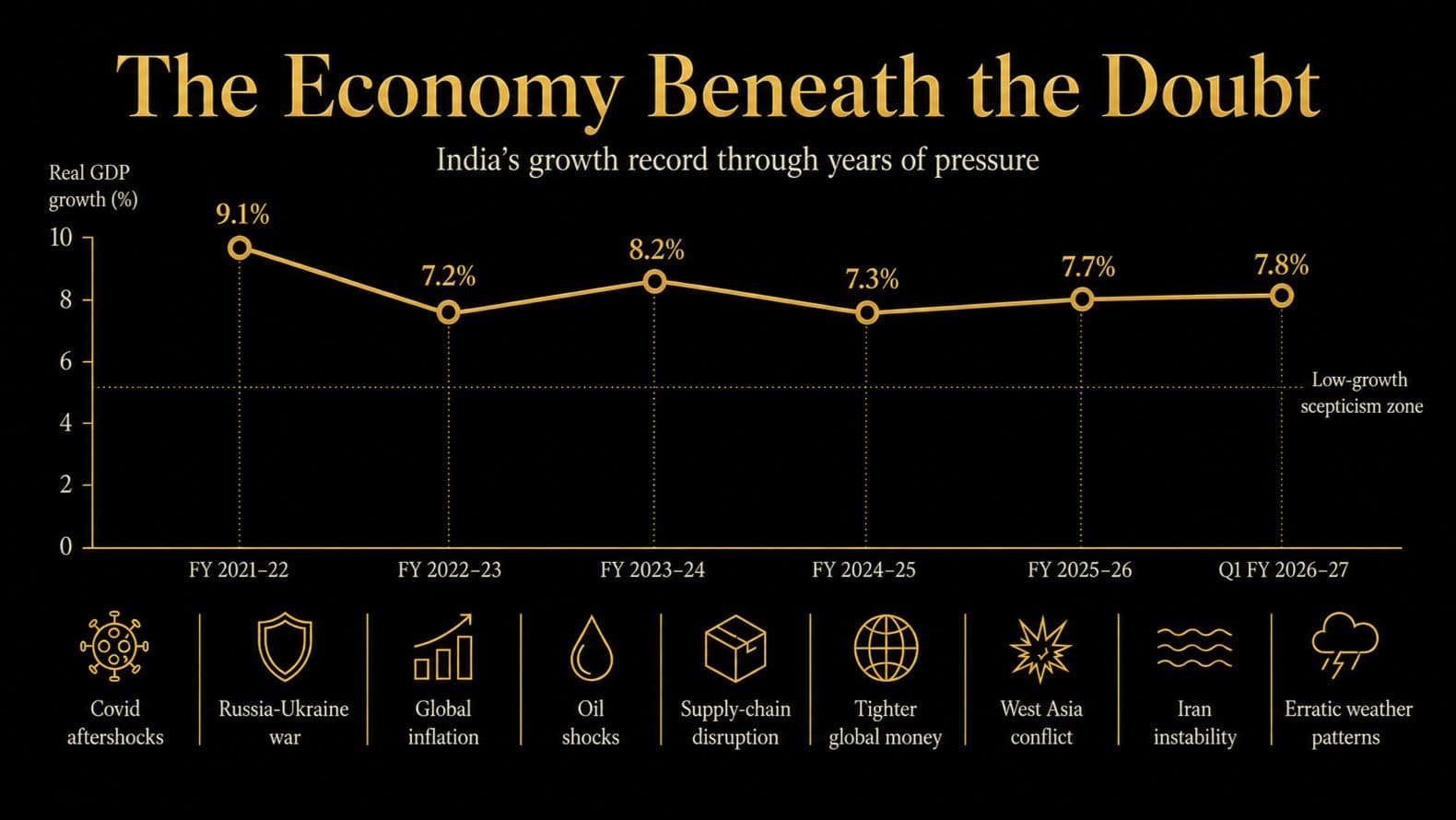
Beyond the 7.8% Headline: What the “Dead Economy” Remark Missed
When confidence in India’s post-Covid recovery was fragile, the then Chief Economic Adviser saw a 7% growth decade ahead. 5 years later, the latest 7.8% Q1 GDP print gives that call sharper context.
August 31, 2026

Can Sugar-Free Chocolate Become the Next Billion-Dollar Better-for-You Food Category?
Sugar-free chocolate, already a USD 2.6 billion global market, is projected to reach USD 4.86 billion by 2034, as better-for-you indulgence moves from niche demand toward mainstream consumption.
August 18, 2026
Industrial Cybersecurity Market: India’s Role In A USD 54.8 Billion Global Cyber-Resilience Opportunity
As factories, utilities & supply chains connect faster, India is emerging as a force in the USD 54.8 billion industrial cybersecurity market, where resilience will define the next industrial edge.
August 6, 2026