Intelligence
Climate Risk Has Moved From the Report to the P&L
Climate risk is no longer a reporting exercise. It's an operational priority shaping capital allocation, competitiveness, and enterprise value.
I
IndiSight Editorial
July 19, 20266 min read

For a decade, climate resilience lived in the sustainability report, wedged between the diversity numbers and the carbon offset math. Nobody in the corner office read past the executive summary. In 2026, that has changed. Climate resilience has moved out of the appendix and into the operating plan, and the companies that haven't noticed are already behind.
The shift is structural. The global climate adaptation market is worth roughly $35.4 billion this year and is on track to reach $95.3 billion by 2033. That growth is being driven by a simple realization inside finance and operations teams: resilience has become operating logic. The businesses that build it into daily operations will be the ones still standing after the next disruption.
From Reporting to Operating
The old model treated climate risk as a disclosure problem. Measure the emissions, publish the report, hire a sustainability officer to manage the narrative. The new model treats climate risk as an operations problem, and operations problems get solved with capital investment and engineering decisions.
Take data centers. Tech companies have spent years experimenting with recycled wastewater cooling as a nice-to-have pilot project. In 2026, it is becoming standard design, because drought-prone regions cannot guarantee water access, and a data center that goes offline is a data center that costs real money. The same logic applies to grids, ports and supply chains. Resilience now means avoiding downtime as much as avoiding bad headlines.
This is the distinction that matters, and it is the one most executives still get wrong. A compliance mindset asks what a company must disclose. An operating mindset asks what a company cannot afford to lose. The businesses winning in 2026 are the ones that answered the second question first, and built budgets around the answer instead of a press release.
Insurers have already made this calculation for everyone else. Underwriters are pricing climate exposure into commercial policies with a precision once reserved for actuarial tables. A manufacturer with a hardened supply chain gets a better premium than one betting the same drought-prone region works out fine again this year. This is happening in renewal conversations right now, and it is quietly forcing the same operating mindset onto companies that never thought of themselves as climate businesses in the first place.
The Competitive Advantage Nobody Priced In
There is a version of this story where resilience is just a defensive cost, an insurance premium businesses pay to sleep better at night. That version is already out of date. The companies pulling ahead are using resilience to do something more ambitious: circular supply chains and AI-enabled energy systems are helping them control costs that used to be locked to volatile energy and commodity markets.
That cost control compounds into something investors care about even more than a sustainability score: predictability. A company that has decoupled its operations from geopolitical energy volatility can forecast its margins with more confidence than a competitor still exposed to the next price shock. In a market where capital is chasing stability as hard as it is chasing growth, that predictability has become its own asset class. Investors are funding resilience because it behaves like a hedge that also compounds.
Where the Capital Is Actually Going
Follow the money and the priorities become obvious. Climate intelligence platforms, the kind that give companies real-time risk modeling built on live conditions, are seeing serious demand. Tools like the DTN Weather Hub, launched in January, exist because executives want operational decisions backed by data they can act on today.
Infrastructure is being redesigned around a similar premise. Roads, energy grids and water systems are being hardened for the extremes of the near future, because the cost of retrofitting after a failure is always higher than the cost of building for it upfront.
Agricultural technology is the fastest-growing corner of this market, expanding at a projected 20.3 percent a year. Food systems sit closer to climate volatility than almost any other sector, and yield preservation has gone from a farming concern to a supply chain concern for anyone who sells a product that depends on a harvest somewhere down the line.
Then there is nature-based solutions: mangroves, wetlands and other natural buffers against coastal flooding. This is the one area still waiting for capital to catch up to conviction. Restoring a wetland is cheaper and more durable than building a seawall, but the financing hasn't matched the logic yet, which brings us to the uncomfortable part of this story.
The Uncomfortable Math
The UNEP State of Finance for Nature report published this year contains a number that should embarrass every investment committee that calls itself climate-conscious. For every dollar spent protecting nature, thirty dollars are spent on activities that degrade it, fossil fuel subsidies chief among them. That is a funding inversion, and it is the single biggest opportunity sitting in plain sight for anyone willing to bet against the current flow of capital.
The macro pressure to close that gap is building. Following COP30, the Baku to Belém roadmap has set a target of $1.3 trillion a year in international climate finance by 2035. Governments cannot fund that alone, and everyone in the room knows it. That is why private capital is being pulled toward resilience instruments that didn't exist five years ago, and why the pressure on the private sector to show up is only going to intensify from here.
India offers a useful preview of what this looks like in practice. The country's river restoration and wetland conservation programs have pushed it to 99 Ramsar-listed wetland sites by April this year. That scale of public commitment does not happen without private partners in civil engineering, ecological monitoring and environmental services standing next to it. Watch this space closely. Government-led resilience work in emerging markets tends to be where the most underpriced private opportunities show up first.
Materiality Now Beats Marketing
Here is the part that surprises most people: the regulatory backlash against broad ESG labeling has actually helped the climate resilience sector. When companies could get credit for box-ticking, they did. Now that the box-ticking currency has been devalued, companies are being forced to ask a sharper question. Which climate investments actually protect the bottom line?
That question is doing more to sort winners from losers than any disclosure mandate ever did. A company reducing downtime from weather-related grid failures is making a materiality-driven decision. A company publishing a glossy sustainability report with no operational teeth behind it is making a marketing decision. Investors in 2026 can tell the difference, and they are pricing it accordingly. Boards that used to reward the size of the sustainability team are now asking what that team actually prevented, in dollars, this quarter.
The other force reshaping this landscape is geopolitical fragmentation. Energy security and affordability are increasingly at odds with long-term climate commitments, and companies operating across multiple markets cannot assume the same playbook works everywhere. The businesses navigating this well are building local, decentralized resilience: onsite renewable microgrids, localized water recycling, systems that do not depend on a single fragile supply chain or a single government's policy stability.
The Real Test Ahead
This does not guarantee climate resilience has become easy or fully priced in. The market has shifted from rewarding companies for talking about risk to rewarding companies for removing it. The winners in this new phase will be the ones who treated water access, grid reliability and supply chain volatility as immediate operational problems, well before the disruption that would have made them theoretical.
Enough capital is already moving to confirm that companies will invest in resilience. The real test ahead is whether they build it before the next disruption forces their hand, or scramble to build it after paying the price of not having it. By 2033, that answer will show up in the numbers either way, with very little left to explain in a footnote.
More Intelligence
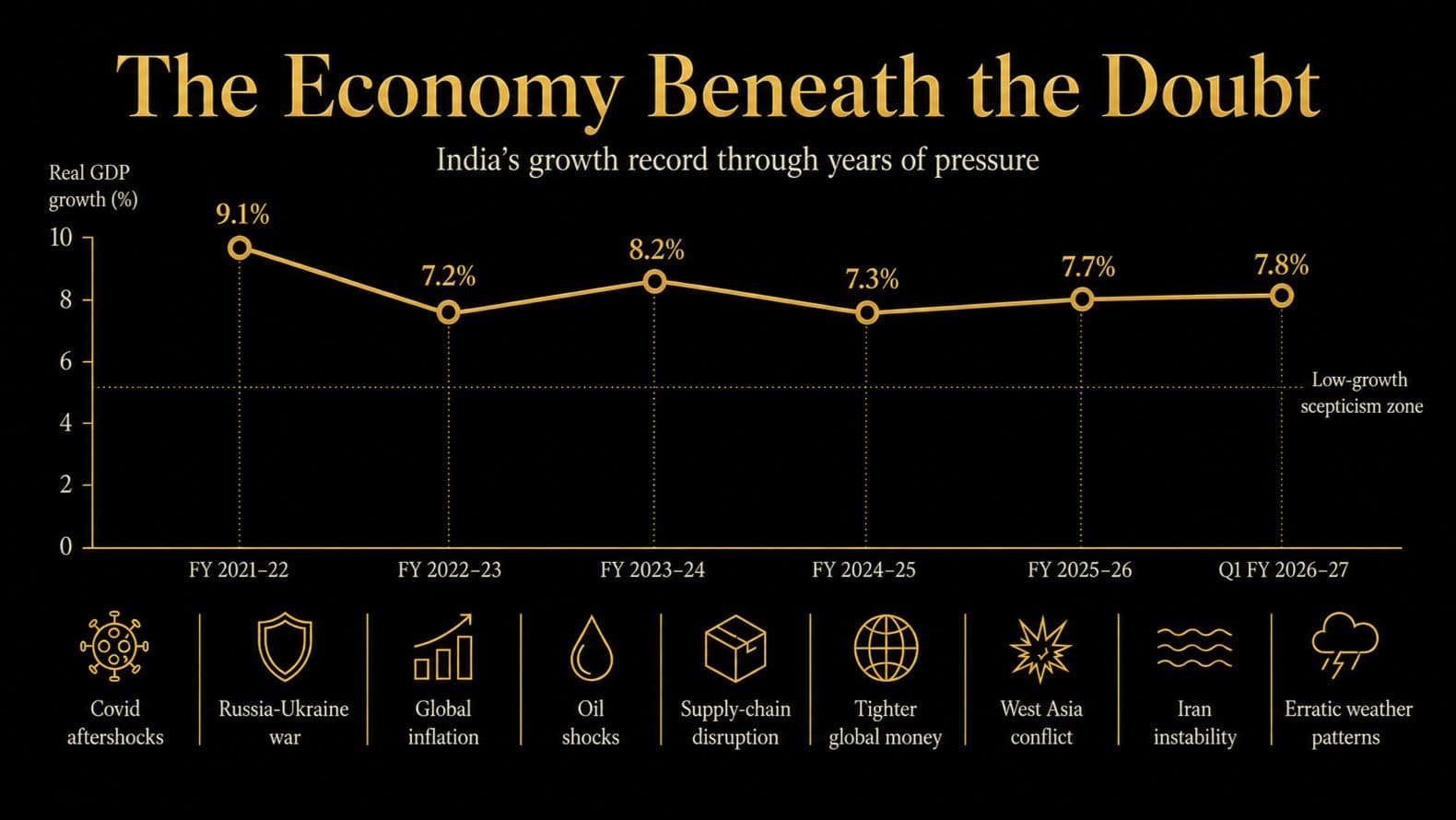
Beyond the 7.8% Headline: What the “Dead Economy” Remark Missed
When confidence in India’s post-Covid recovery was fragile, the then Chief Economic Adviser saw a 7% growth decade ahead. 5 years later, the latest 7.8% Q1 GDP print gives that call sharper context.
August 31, 2026

Can Sugar-Free Chocolate Become the Next Billion-Dollar Better-for-You Food Category?
Sugar-free chocolate, already a USD 2.6 billion global market, is projected to reach USD 4.86 billion by 2034, as better-for-you indulgence moves from niche demand toward mainstream consumption.
August 18, 2026
Industrial Cybersecurity Market: India’s Role In A USD 54.8 Billion Global Cyber-Resilience Opportunity
As factories, utilities & supply chains connect faster, India is emerging as a force in the USD 54.8 billion industrial cybersecurity market, where resilience will define the next industrial edge.
August 6, 2026