Category: Education Leadership
Vasudev Murthy blends yoga, music and lived experience to offer a sharper take on leadership, where entrepreneurial courage, reinvention and continuous learning are essential to staying relevant.
The Polymath's Discipline: Vasudev Murthy on Music, Management, and the Architecture of Entrepreneurship
IndiSight Editorial
Oct 9, 2025
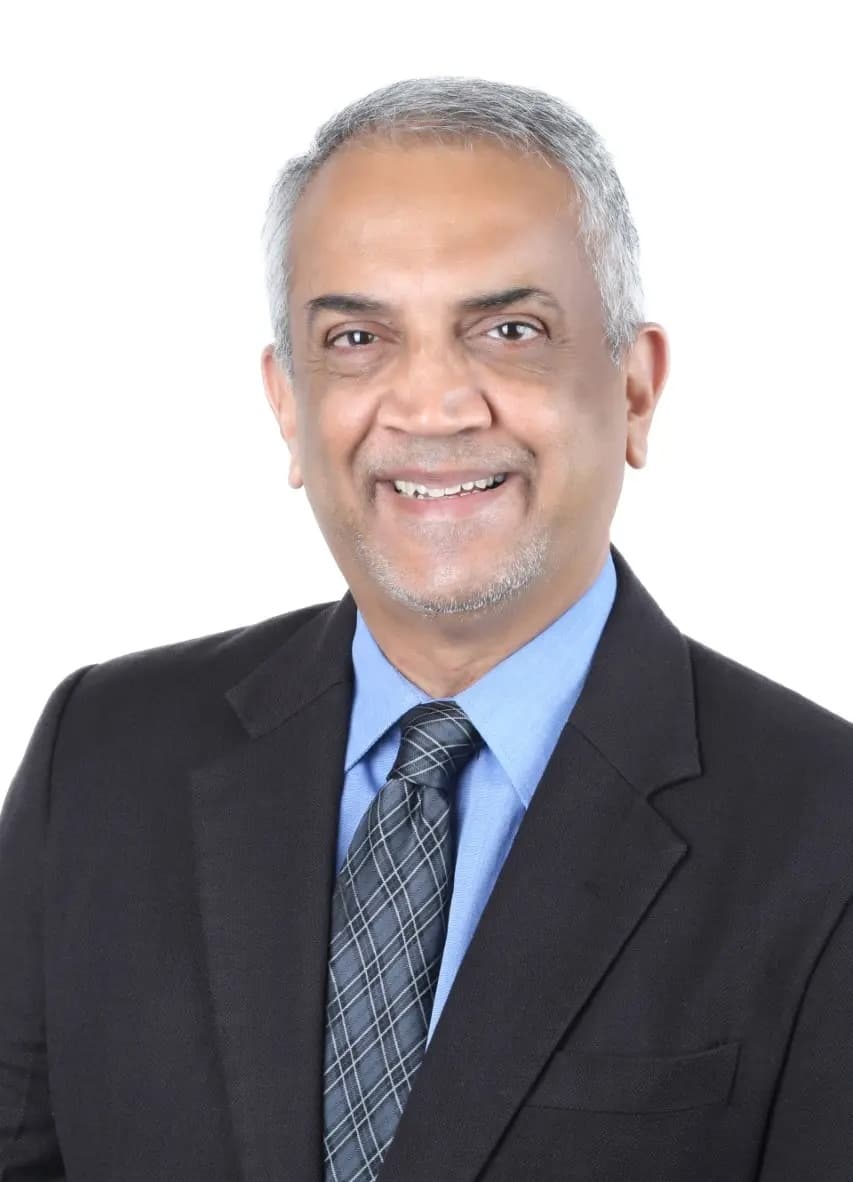
Vasudev Murthy
At 4 AM, while most executives are still in bed or checking emails on their phones, Vasudev Murthy begins an hour of rigorous yoga. By 5 AM, he is immersed in violin practice, working through ragas with the same intensity he once brought to consulting boardrooms and strategy workshops. This is not a wellness theater. For Vasudev, these rituals are the scaffolding that sustains his ability to coach leaders, design entrepreneurial curricula, and guide organizations through change.
The contrast is striking. In an economy that prizes specialization, Vasudev has built his career around integration. He began as a Unix engineer in the United States, shifted into management consulting at Deloitte, returned to India to lead functional consulting at Wipro, authored seven books across genres as diverse as Sherlock Holmes fiction and organizational theory, and today serves as Executive Director of the School of Entrepreneurship at Rishihood University. Each role reflects his conviction that professional relevance depends not on narrowing expertise, but on expanding it.
“Specialization tends to have a short shelf life these days,” he says. “You cannot rest on your past laurels. You must stay relevant every single day.”
The Architecture of Multiplicity
Vasudev resists the idea that multiple identities dilute professional credibility. He sees them as complementary forces. Music taught him improvisation and risk-taking. Consulting taught him abstraction and problem-solving. Teaching gave him patience and the ability to sense when a learner is ready. Writing sharpened his communication and humor. Together, these roles form an integrated worldview.
“In our classical music, you take a particular raga and explore multiple dimensions that belong only to your imagination,” he explains. “That process gave me the confidence to enter unknown territories.”
This willingness to cross domains is not simply personal preference. It has become a methodology for leadership. In his executive coaching practice, Vasudev often looks beyond the corporate role to ask about personal passions. A CEO who appears immovable in strategy discussions may reveal themselves as a painter or poet. By connecting with these dimensions, he builds trust and unlocks conversations that conventional consulting frameworks would miss.
Why Transformations Fail
Vasudev’s consulting career revealed a brutal truth: most transformation programs do not fail because of strategy or technology. They fail because people resist. He recalls a telecom billing project in Alabama where the business case was “brilliant on PowerPoint” yet employees quietly sabotaged implementation through delays, silence, and negative body language. He calls it passive resistance.
“Almost 75 to 80 percent of all transformation exercises actually fail,” he says. “People pretend to agree, but they do not cooperate. They are not impressed by the business drivers. It is always about what is in it for me.”
In Saudi Arabia, he saw a client refuse to pay for change management, assuming behavioral shifts would come free with the technical rollout. The project stalled. For Vasudev, this confirmed a principle that consulting firms often underplay: without a muscular change management track, staffed with behavioral experts, transformation is an illusion.
Coaching Beyond the Business Mask
Traditional consulting rituals, he argues, are outdated. A narrow focus on business problems ignores the personal dimensions that shape professional behavior. Many executives seek help not because they lack technical competence, but because they struggle with confidence, self-perception, or interpersonal blind spots.
His approach begins with a simple but powerful exercise. Clients list everything they dislike about themselves or their careers, then write down their strengths. The contrast often surprises them. By reconnecting leaders with undervalued capabilities, Vasudev helps rebuild self-confidence, the foundation upon which organizational change must rest.
“Once you touch that spot about their sense of identity, everything else falls into place easily,” he says.
He also highlights a gap in business education. “One serious flaw in the MBA curriculum is that it talks about leadership but never about psychology. People discover their leadership style late in their careers, when they should have been learning it in school.”
Stillness as Strategy
Vasudev emphasizes that not every battle is worth fighting. He calls stillness a leadership edge. In tense meetings, he relies on the principle that “this will also pass” to avoid getting pulled into emotional escalations.
“You do not have to be part of every conversation or every argument,” he says. “That restraint diffuses tension and preserves your energy for what truly matters.”
Stillness, in his framing, is not detachment. It is strategic control over where to deploy attention and influence.
Workshop Alchemy
His facilitation style reflects the same philosophy. The most successful workshops, he notes, are those where CEOs introduce objectives at the beginning and then leave, returning only for final presentations. This absence gives participants psychological safety to speak freely.
When CEOs insist on staying throughout, discussions collapse into cautious attempts to guess what the boss wants. The result is predictable failure.
To lower defenses, Vasudev begins workshops with humor and imperfection. He encourages participants to reveal “something crazy about yourself that you never shared with anyone.” The room relaxes. Vulnerability becomes contagious. Serious conversations follow only after this climate of trust is created.
“Humor is a highly underrated leadership trait,” he says. “People like to smile. They like to feel safe enough to be themselves. That is when real insight emerges.”
Rewriting Entrepreneurial Education
At Rishihood University, Vasudev has become an architect of entrepreneurial education. He recognized that the MBA program had reached its limits, producing graduates more risk-averse than entrepreneurial. Instead, the school emphasizes a BBA in entrepreneurship where students are expected to launch ventures while studying.
The curriculum is designed backward, starting not from theory but from the expectations of venture capitalists. Students are taught economics early, are encouraged to open demat accounts to trade with real money, and practice pitching repeatedly, even when they fail. They conduct live market interviews with shopkeepers in local markets, learning that execution matters as much as ideas.
Alongside the BBA, the school also runs a B.Tech program in computer science and data science, designed for students who want to pair technical depth with entrepreneurial ambition.
“If someone joins saying they want a safe placement, we do not take that application forward,” he says. “It shows they are risk-averse, and entrepreneurship is not for them.”
The Ancient-Modern Synthesis
Vasudev often refers to the 64 kalas described in ancient Indian texts, skills meant to complete a human being. For him, these are not performance arts but leadership tools. He argues that modern professionals, discouraged from creative arts, miss the balance that comes from abstraction and experimentation.
“Those skills create the right balance between rational thinking and the ability to take risks,” he says.
Yoga and music remain at the center of his daily practice. He believes these disciplines sustain physical energy, enhance productivity, and cultivate openness to multiple thought processes. In his view, they complete what conventional business education leaves unfinished.
The Coming Identity Crisis
Looking forward, Vasudev warns that the metaverse will blur the line between reality and imagination. He predicts that people will increasingly prefer AI-driven avatars to human interaction, creating profound psychological challenges.
“There is going to be a certain loss of identity,” he says. “People may relate more to their digital character than to themselves. Commerce will thrive there, but organizations will also face crises of authenticity.”
He intends to write a book on this theme, merging Vedanta, metaverse design, and institutional theory. His thesis is that leadership in digital spaces will require new forms of grounding, or risk collapsing under the weight of blurred boundaries.
Rewiring the Teacher
Perhaps his most personal evolution has been as an educator. Trained in consulting, Vasudev once penalized students harshly for weak articulation. Today, he focuses instead on content and meaning.
“Just because someone fumbles or writes with errors does not mean they lack capability,” he says. “The education system has failed them. What matters is whether they can think, not how polished they sound.”
This rewiring reflects his broader philosophy of teaching as transmission, not transaction. Knowledge, he believes, is a gift to be handed over without reservation. Students who feel seen are more likely to absorb difficult lessons.
Leadership Lessons
Transformation fails without behavioral change as the primary focus.
Strategic absence often enables more insight than constant presence.
Stillness is not withdrawal but selective deployment of energy.
Multiplicity creates resilience; specialization can expire quickly.
Coaching succeeds when it reconnects leaders with undervalued strengths.
Humor and vulnerability unlock trust faster than authority.
Experiential education builds risk appetite; credentials alone often reduce it.
Creative arts cultivate abstraction and risk-taking essential for leadership.
Teaching is transmission of self, not just content.
Future institutions must prepare leaders for identity crises in digital spaces.
The Unfinished Score
Vasudev continues to learn Python and explore quantum computing even as he leads an entrepreneurial school. He regrets not picking up more instruments earlier but sees that as part of the same philosophy: one life to live, many domains to explore.
What binds his career is not a straight ladder of promotions but a consistent commitment to integration. Music, consulting, teaching, and writing are not separate pursuits but movements in a single composition. For Vasudev, leadership is less about mastering one instrument and more about orchestrating many.
“The more you know, the more you realize you don’t know,” he says. “That realization keeps me restless. And that restlessness keeps me alive.”
Our Suggestions to Read
Discover The Leaders Shaping India's Business Landscape.
Education Leadership
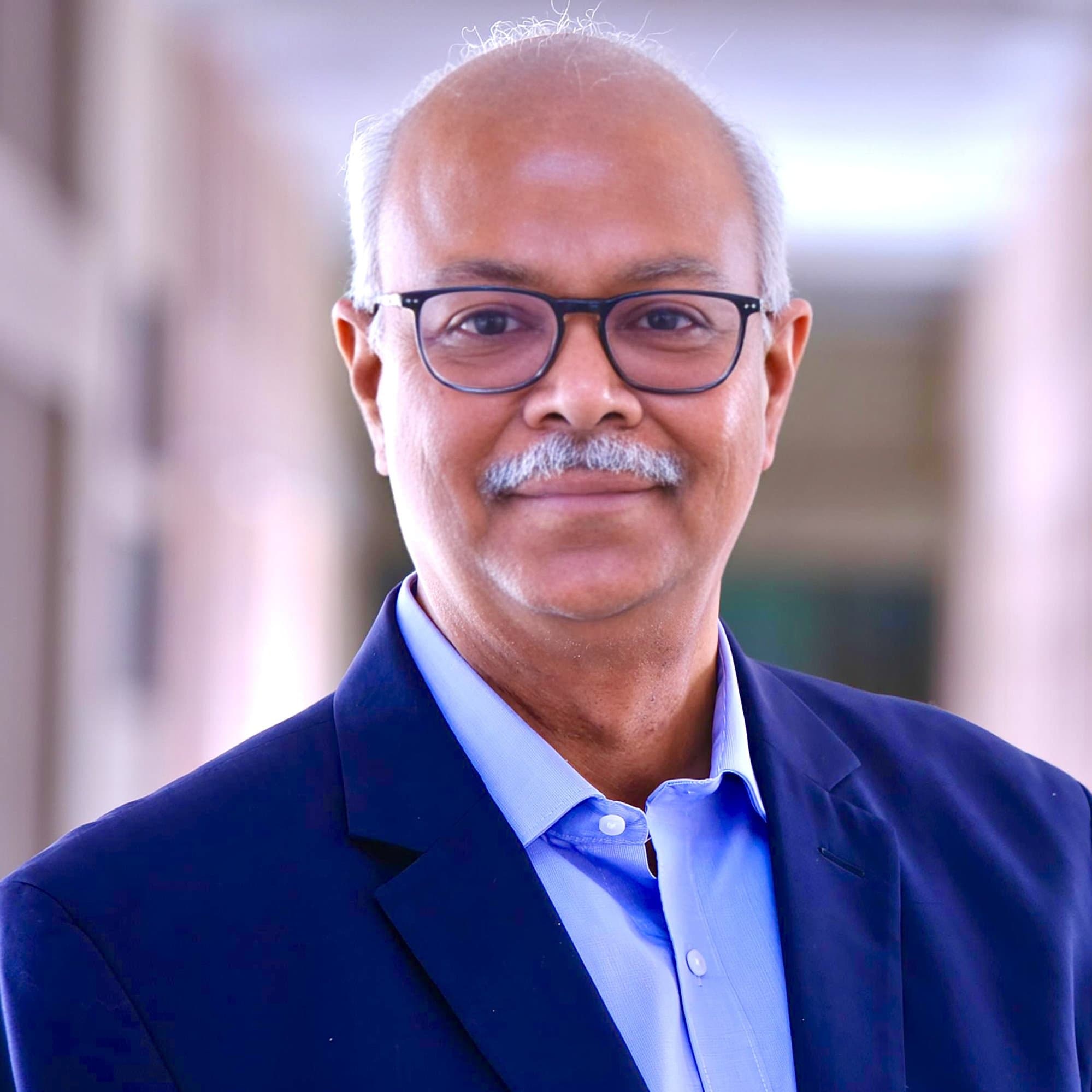
Dr. Chandrasekhar Sripada on Building Human Capital for a Future-Ready India
A global HR leader across SAIL, NIIT, Reliance, Capgemini, IBM and Dr. Reddy’s, and now an academic at ISB, Dr. Chandrasekhar Sripada brings a rare view of how institutions build trust, participation, and capability.
Read Full Story
Founders & Innovators
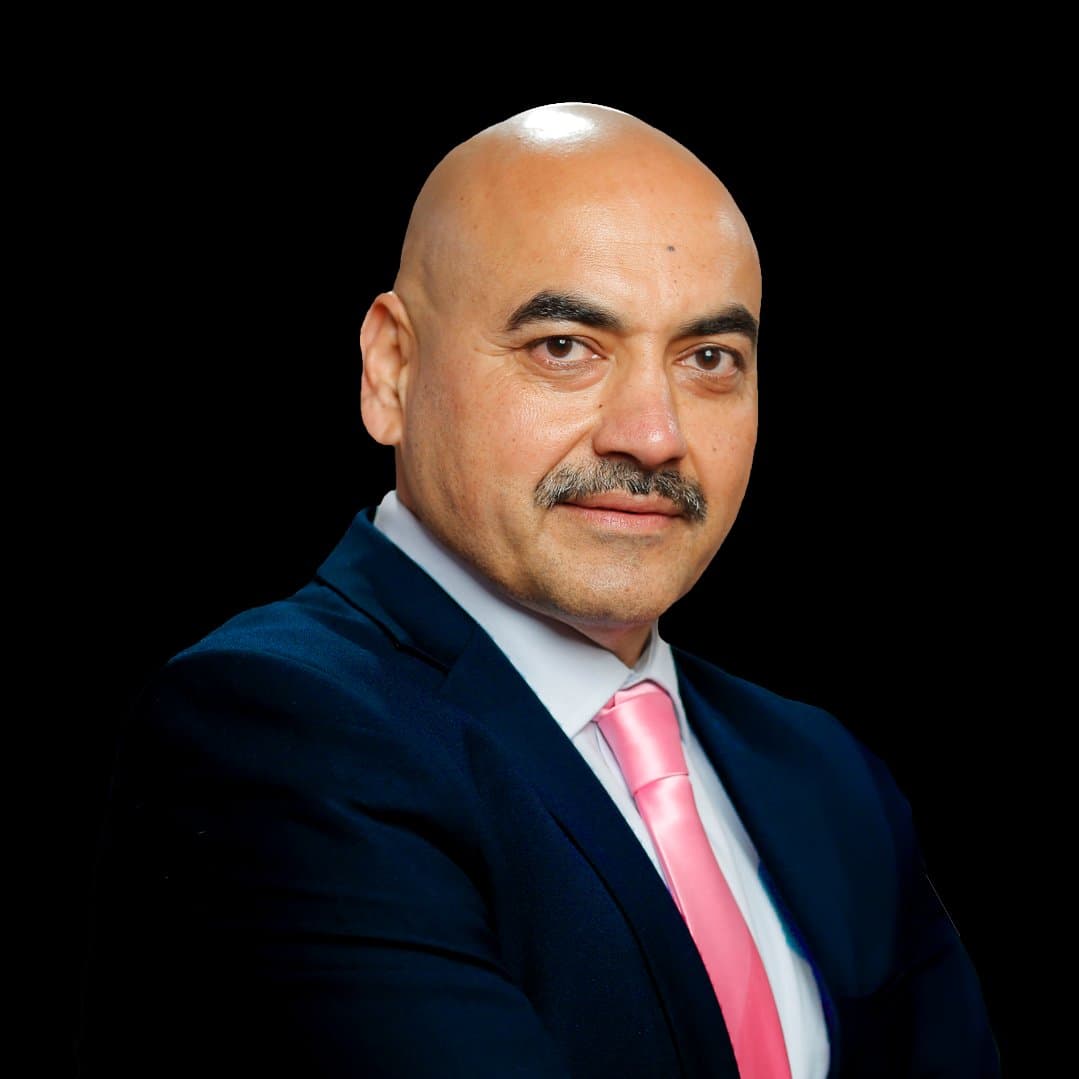
Sanjay Laul on Building Global Education's Next Chapter
Sanjay Laul, Founder of MSM Unify, a global education and talent-mobility platform, has spent 25+ years helping institutions expand internationally and learners access cross-border opportunities.
Read Full Story

Education Leadership
The Founder the World Has Been Waiting For: Dr Noa Gafni on AI, Access and the New Entrepreneurial Moment
Dr Noa Gafni, Professor & Academic Director (Entrepreneurship) at New York University, explains why AI-era founders need more than speed: judgment, trust, community, and the discipline to solve real human problems.
Read Full Story