Category: Investors & Catalysts
Colonel (Retd.) Sarjeet Yadav, a decorated combat veteran turned defense tech investor, sees risk as something to be designed and mastered, not feared. Drawing on lessons from counterinsurgency to capital allocation, he backs founders who understand the soldier-user, build genuine sovereign capability, and pursue deep-tech defense with structured patience. His guiding principle, “holding ground,” reflects his belief that India’s technological sovereignty will be built through decades of credibility, not quarters of momentum.
The Patient Capital Paradox: Sarjeet Yadav on Redefining Venture Capital for Sovereignty
IndiSight Editorial
Oct 6, 2025
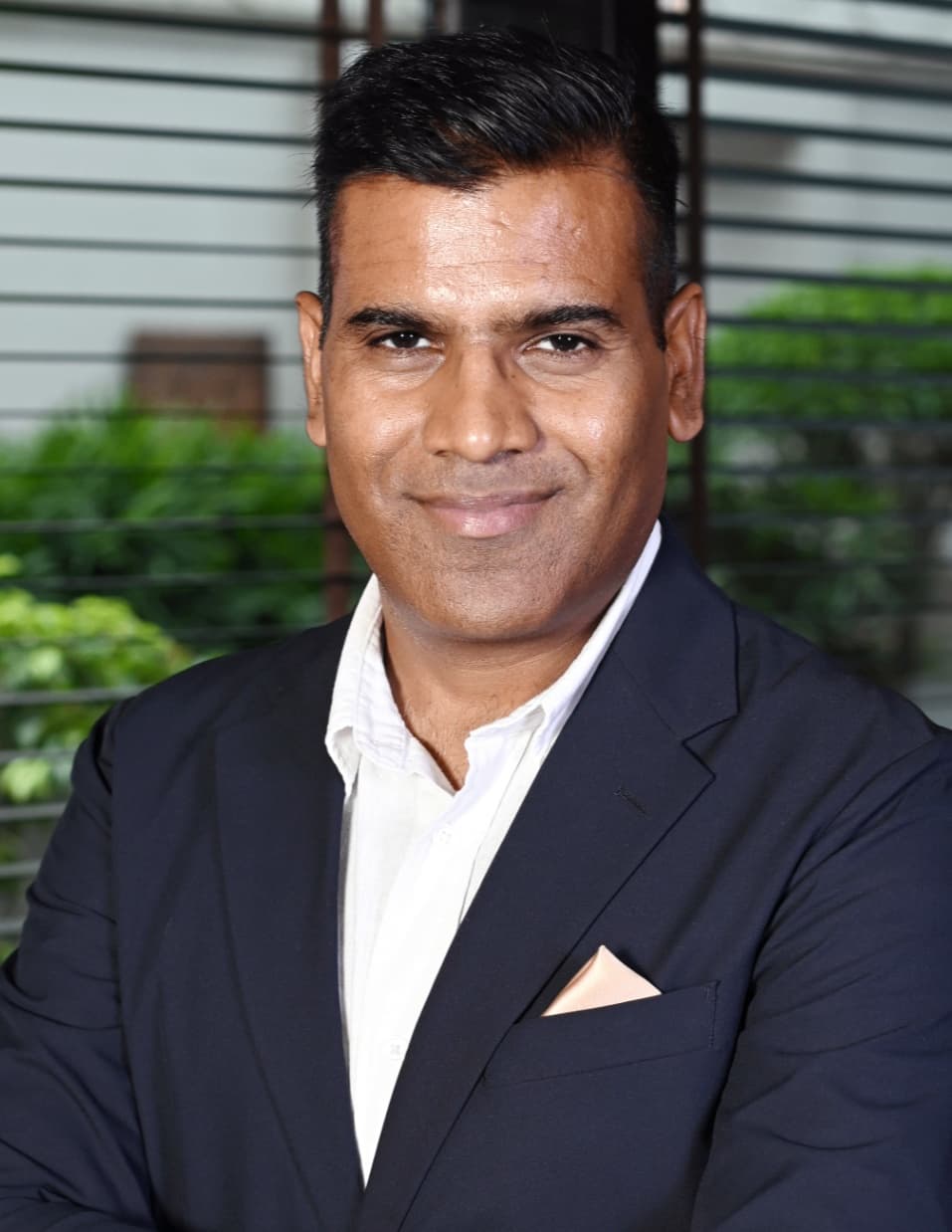
Col Sarjeet Yadav, SM (Veteran)
Venture Partner · MountTech Growth Fund
Delhi
Risk Is Not the Opposite of Safety
In war, hesitation gives the enemy advantage. In investing, it burns opportunity. Few people can speak about both with lived authority. Sarjeet Yadav can. A Sena Medal awardee who served across counterinsurgency theaters, along contested borders, inside procurement corridors, and in diplomacy, he is a Colonel who took premature retirement and now operates in defense startups and investments as a venture partner. That continuum shapes a simple but exacting philosophy.
“Risk is always an opportunity,” Sarjeet says. The distinction for him is not between risk and safety. It is between being reckless and being deliberate. In uniform, every action carried risk. Courage was not a substitute for planning. Plans were validated, risks identified, and mitigation built in before execution. He carries the same discipline into investing. Strategic technology, he argues, cannot be backed by intuition or trend. It must be backed by a designed approach to uncertainty, by milestones that signal real progress, and by an acceptance that cycles will test endurance rather than speed.
This is not a romantic view of patience. “Strategic technology cannot be funded with consumer timelines,” he says. If patience is not an active strategy, success is unlikely. Active patience is not passive waiting. It is structured conviction. You set milestones. You track progress. You course correct. What you do not do is panic when commercialization lags a forecast that was never realistic in the first place.
The Investor Who Understands the User
Sarjeet’s lens is always the user. He is uninterested in theatrics dressed up as technology. He has seen equipment fail where failure had consequences that no presentation can convey. That is why his first test for a founder is practical, not rhetorical. Does the team understand how the product lives in a soldier’s hands, in specific terrain, under actual weather, with real maintenance rhythms, and within a procurement philosophy that exists for reasons learned the hard way.
“The signals are very clear,” he says. Founders who understand user context talk about the product differently. They know how it behaves at altitude. They anticipate desert storms and subzero conditions. They reference specifications and why those specifications differ from commercial grade analogs. They do not dismiss procurement as paperwork. They recognize that the paperwork encodes a memory of how systems break and why.
He does not equate user understanding with knowing everything. “Everybody does not need to learn everything.” A founder must have deep mastery of one core domain. They must also have the humility to hire for blind spots. That could mean bringing in veterans who know trials, policy specialists who read procedures as architecture rather than hurdle, and financial thinkers who understand cash cycles in slow moving markets. The expectation is not omniscience. It is trainability, openness, and judgment about when to add which capability to the team.
Every Purchase Is a Signal
Procurement taught him that acquisitions are not transactions. They are signals. Each contract declares what the institution values, what risks it is willing to carry, and which capabilities it is choosing to scale. The habit of reading purchases as signals translates directly into his investment work. A successful trial is not just a technical validation. It is a vote of confidence in a team’s ability to translate specifications into field credibility. A rejected bid is not always a failure of technology. It can be a misread of process or a mismatch with doctrine.
He is blunt on the difference between recoverable and terminal failures. In consumer markets, a failed launch can be followed by a pivot in months. In defense, a failed demonstration can set back credibility for years. That is why his version of patience is strict. It requires redundancy built in from the start. It prefers endurance over elegance. It rewards founders who survive the environmental extremes that lab conditions cannot simulate.
“Battles can be lost to win the war.” The line is not a metaphor for him. It is a template. Iterations that correct nonfatal faults are part of progress. Failures that break trust in the field are not.
Indigenization Without Illusion
Sarjeet is rigorous about the difference between local assembly and sovereign capability. He has no interest in percentage figures that create comfort while hiding dependency. “If the engine is still imported, if electronics live on a foreign supply chain, if critical minerals are processed elsewhere, then sovereignty is only partial,” he says. You may assemble locally, but you remain vulnerable globally. He argues for indigenization that closes chokepoints rather than meets optics. Engines, semiconductors, rare earth processing, and the subsystems that decide performance under stress are his focus. Anything less is assembly risk packaged as achievement.
He divides technology into three layers that determine where investment should concentrate. The first is necessity, where technologies exist globally and are available to buy, but must be indigenized to avoid strangulation of supply. The second is denial, where technologies exist but are withheld by policy or geopolitics, forcing domestic development. The third is void, where solutions do not exist anywhere and must be originated.
India today is heavily engaged at the necessity layer. That is progress. It lowers immediate exposure. It builds capability. But it is not destination. Moving through denial into void is what will change how the country is seen by allies and adversaries. “The real test is whether we can move from necessity to void,” he says. Until that shift happens, India will be tagged as cost efficient and adaptive rather than as an originator.
Why Indian VCs Behave Like Private Equity
India has a venture industry drawn from management and finance talent that excels at pattern recognition in fast, scalable consumer markets. Sarjeet has no quarrel with that competence. He questions its application to strategic domains. Funds designed for three to five year commercialization cycles often project the same expectations onto deep tech. “They promise early returns to their own investors,” he says, which then shapes behavior when they enter strategic technology. The result is pressure on founders to chase revenue in adjacent commercial markets, eroding the depth required to build credible defense products.
He is not prescribing charity. He wants a change in architecture. Sector thematic depth matters. Milestone based financing matters. The courage to accept uncertainty within a designed risk envelope matters. He also argues for a role that Indian funds have been slow to play. Strategic industry sponsorship of venture capital is normal in markets with mature defense ecosystems. In India, it is rare. He would like to see primes and large defense suppliers sponsor or anchor funds that commit to patient timelines and bring operational insight to diligence and governance.
The Patient Capital Paradox
Even as he argues for active patience, Sarjeet is candid about the paradox it creates. Strategic technology requires long horizons. Institutional capital in India, such as pensions and insurance, has mandates that prioritize security of principal and predictable outcomes. Those pools are unlikely to enter until they see consistent returns from venture funds. The sequence is inconvenient. VCs must mature first. Institutions will follow later. In the interim, companies can stall between seed and scale, not because the technology fails, but because the capital scaffolding breaks.
His response is unambiguous. Invest anyway. Document the gaps. Do not pretend the system is complete. Be explicit about what conviction can and cannot fix. Patient capital without structure becomes sentiment. He will not indulge sentiment. He expects funds to stretch horizons, founders to measure progress in milestones, and sponsors to bring their weight to the table. If the ecosystem is incomplete, someone has to act as if completion is possible.
From Lab Brilliance to Field Credibility
There is a difference between a product that performs in a lab and a system that survives in the field. Sarjeet returns to this point often. He has empathy for teams that are brilliant in controlled environments. He refuses to back solutions that are untested in the conditions that users face. Field credibility consists of more than a successful trial. It includes maintenance under resource constraints, behavior in abnormal conditions, and the realities of logistics. A communications system that passes a demonstration at sea level can fail in a valley where cold and altitude change everything. A sensor that looks elegant in a presentation can foul in dust and wind.
He advises founders to build for redundancy and repairability. He expects them to speak about the user’s rhythm, not only about performance metrics. He also expects to hear how they will reach manufacturing quality at scale. In his view, a defense company that cannot control quality cannot survive procurement testing that looks for failure points by design.
Dual Use Without Dilution
Founders often wrestle with the tension between staying pure defense and chasing dual use markets. Sarjeet acknowledges why the tension exists. Cash flows in defense are lumpy. Revenues can be unpredictable. Dual use can derisk operations and sustain a team through long trials. The line for him is clear. If the same technology can be repackaged for an adjacent market without major reengineering, dual use is leverage. If serving a second market requires heavy tailoring and a diversion of engineering energy, it is dilution.
He also distinguishes between the depth required for pure defense and the breadth that dual markets demand. Deep technologies in critical subsystems often need narrow focus for years. Teams working on less complex technologies may benefit from diversified markets. The point is not a moral preference. It is an operational choice dictated by complexity and by where credibility needs to be strongest.
Europe’s Opening and the Export Credibility Gap
Sarjeet sees credible signals in Europe. He references continental plans to raise defense spending and to build readiness by 2030. Supply chains that atrophied during years of underinvestment are being rebuilt. Contracts once unthinkable for Indian suppliers are now open to conversation, especially in subsystems. He is realistic about the bar. European buyers will not trade quality for price. They will not accept delayed deliveries because a supplier is still learning. But they will look for reliable partners who can scale.
He is also realistic about the time exports take to compound. Credibility in foreign markets is a slow curve. A first reference sale can be the hardest. After that, momentum is possible. The worst mistake for an Indian supplier would be to secure a first contract and then treat it as optional. Reliability in delivery, consistency in quality, and clarity about roadmap will decide whether exports become a line item or a habit.
What Conviction Cannot Fix
Conviction is necessary. It is not a substitute for institutions. Sarjeet sets three boundaries clearly.
First, procurement velocity remains a barrier. Even with improved procedures, trials and testing can stretch over years. Scheduling test ranges, coordinating units, and processing documentation move at institutional pace for reasons that may be valid but that collide with startup runways. This is a reality that no investor can rewrite on demand.
Second, the capital architecture is incomplete. Until strategic industry players sponsor funds and until institutions see enough return history to participate, middle years will remain fragile. Bridge rounds will be asked to carry too much weight. Promising companies will fail for reasons that have nothing to do with technology. He will invest anyway, but he will not pretend that individual investors can replace structural change.
Third, export credibility takes decades. It requires a consistency of behavior that survives political cycles and leadership changes. Startups with five year plans cannot manufacture a twenty year reputation alone. They can deliver flawlessly. They can over communicate. They can build trust one contract at a time. But in the end, the country needs a cumulative record of reliability that founders alone cannot create.
“What I can do,” he says, “is ensure the founders I back do not fail for lack of conviction or capital.” The rest needs policy clarity, institutional risk appetite, and time.
Founders He Backs and Questions He Asks
Early stage defense investing is a bet on founders more than anything else. Sarjeet looks for technical mastery and leadership traits that do not fit neatly into slides. He is watching for resilience. He wants to see whether a founder can pivot without losing the core. He pays attention to how a team speaks about failures. The best teams treat failure as information. They do not romanticize it. They do not hide it. They absorb it and keep moving.
He asks questions that compress a doctrine into a sentence. “What does the customer want.” The answer to that single question reveals whether the founder understands the problem they are solving, the urgency of the user’s need, the quantity that might be bought if the product works, and the route by which the product will be bought. The question seems simple. It is not. A superficial answer exposes a superficial business.
He also looks for a particular posture toward learning. In his words, the founder must be “trainable.” That includes engaging with veterans who have seen systems operate under stress, listening to policy advice on how to structure bids and trials, and being willing to change course when a procurement path is closed for reasons outside the team’s control.
The Discipline of Milestones
Milestones are the grammar of patience in Sarjeet’s practice. They turn long horizons into tractable sequences. He allows for technology milestones that precede revenue. He expects financial milestones that measure capital discipline long before profitability. He wants to see evidence that the team knows which milestone matters most at which stage, and that they will not chase optics when substance is needed.
He extends the discipline to portfolio construction. He is clear that aerospace and defense are lumpy in a way that consumer sectors are not. The order that drops after slow quarters can be one and a half times last year’s revenue. That is why margins in strategic sectors often look higher than in consumer brands. The margin is not a windfall. It is a buffer against volatility, a way to keep teams alive when revenue arrives in irregular pulses. He has no interest in social media narratives that confuse margin with impropriety. The cost of capital is real. Working capital is real. Payment cycles in government contracts are real. The price must carry those realities or companies will not survive to deliver the quality the user expects.
Sovereignty as Architecture
Everything returns to a single aim. India must build an architecture of sovereignty. That architecture is not a slogan. It is a set of capabilities that remove the risk of strangulation, that resist the temptation to treat assembly as achievement, and that place the country on a path from necessity to denial to void. Engines that run without foreign permission. Electronics that do not require a waiver. Minerals that do not disappear into a geopolitical bottleneck. Systems that work in the field because they were designed for the field.
To get there, he expects investors to behave with discipline, founders to build with endurance, and policymakers to read procurement as an instrument of doctrine. He also expects the larger industry to step forward. Sovereignty cannot be outsourced to startups alone. Large companies must invest in emerging technologies beyond what immediately improves their margins. They should become anchors for funds, not only buyers of the occasional subsystem. He is clear that India has already traveled far enough that reversal is unlikely. Self reliance has popular support and political incentive. It generates jobs. It creates export potential. It strengthens national security. He does not expect any government to run against those optics.
Holding Ground
Years before the language of venture entered his life, Sarjeet learned a practice that the military calls holding ground. Maintain position when the cold bites. Maintain position when exhaustion sets in. Maintain position when reinforcements delay. It is neither heroism nor stubbornness. It is calculated endurance. You know what you defend. You know why it matters. You know what you are willing to sacrifice to stay.
That discipline now shapes how he evaluates founders and how he allocates capital. Can a team hold ground when contracts stall. Can they hold ground when prototypes fail and must be rebuilt. Can they hold ground when capital thins and they are tempted by easier markets that would dilute capability. The same question applies to investors. Can a fund hold ground when institutions hesitate and when milestones take longer than models assumed.
“The test is not speed,” he says. “It is endurance with purpose.”
India’s path to technological sovereignty will not be won in a quarter. It will not be decided by a single platform. It will be earned by an ecosystem that holds ground long enough for credibility to compound. Sarjeet has chosen his ground. The question is whether the ecosystem can hold its own.
Leadership Lessons
Design risk, do not fear it.
Risk is inevitable in strategic domains. Recklessness is optional. Build mitigation into the plan, then execute.Practice active patience.
Waiting is not a strategy. Milestone based conviction turns long horizons into disciplined sequences.Read procurement as philosophy.
Every acquisition expresses priorities and risk tolerance. Treat contracts as signals, not only as sales.Hire for blind spots.
A founder needs one deep domain. For everything else, be trainable and add the right people at the right time.Build for field credibility.
Design for altitude, cold, dust, and repairability. Endurance beats elegance that fails under stress.Distinguish leverage from dilution.
Dual use is leverage when repackaging suffices. It is dilution when it drags engineering away from the core.Aim past optics.
Local assembly without control over engines, electronics, and critical minerals is dependency in disguise.Climb the ladder: necessity, denial, void.
Indigenize what exists. Develop what is withheld. Originate what does not yet exist.Accept what conviction cannot fix.
Procurement velocity, capital architecture, and export credibility require institutional change. Invest anyway, but know the limits.Hold ground.
Strategic technology rewards those who endure deliberately. Endurance with purpose is the strategy.
Our Suggestions to Read
Discover The Leaders Shaping India's Business Landscape.
Founders & Innovators
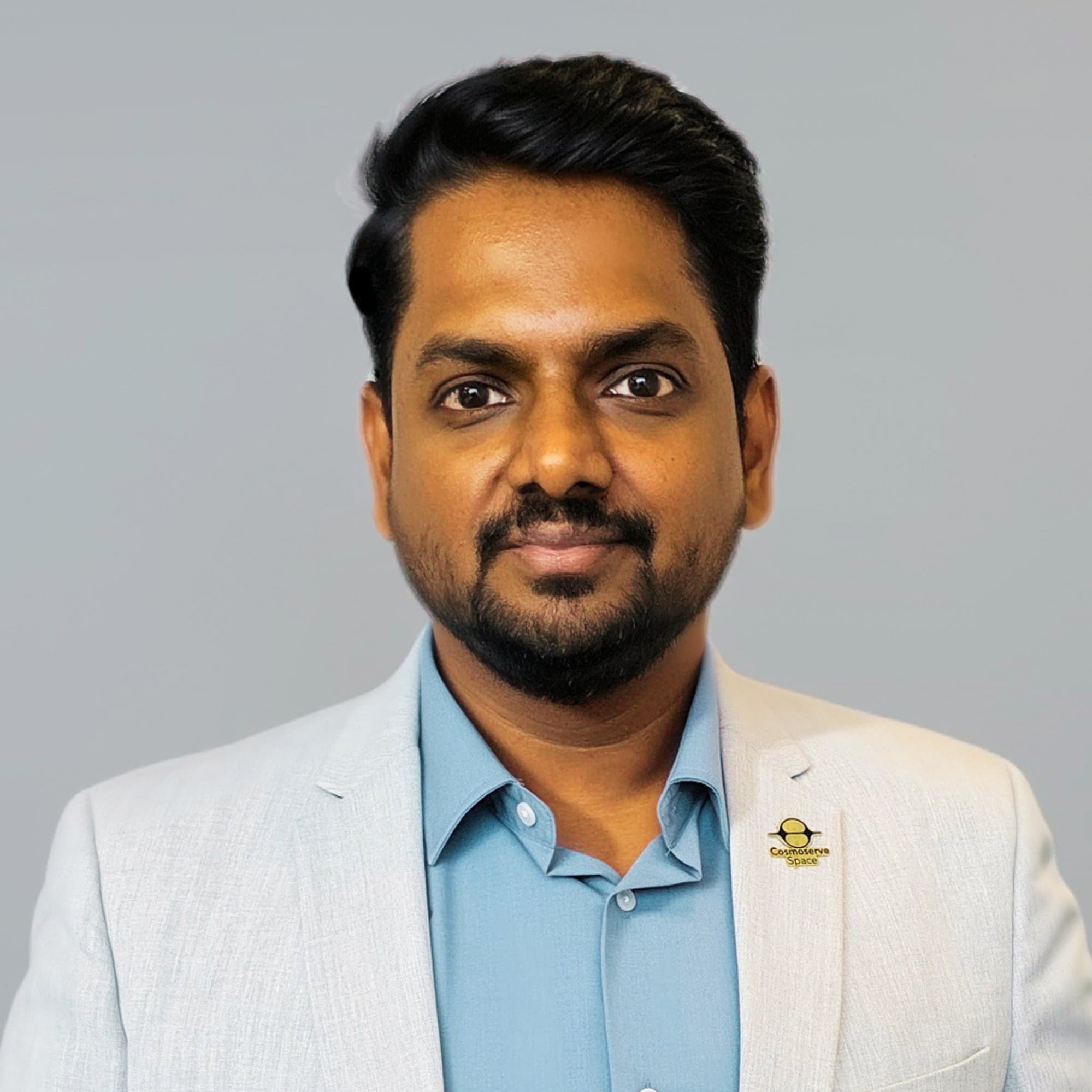
Building the Next Space Economy: Chiranjeevi Phanindra and Cosmoserve's Case for Orbital Maintenance
Chiranjeevi Phanindra, Founder & CEO of Cosmoserve Space, spent 14 years at ISRO working on re-entry and human spaceflight. Today, he is focused on a vital challenge: keeping Earth’s orbit usable.
Read Full Story

Corporate Visionaries
Shashank Sahni on What Success Leaves Out
Shashank Sahni, Google’s Managing Director of Global Ads Solutions, reflects on what customers reveal, what ambitious teams need from their leaders & what the mountains and marathons have taught him about going further.
Read Full Story
Corporate Visionaries
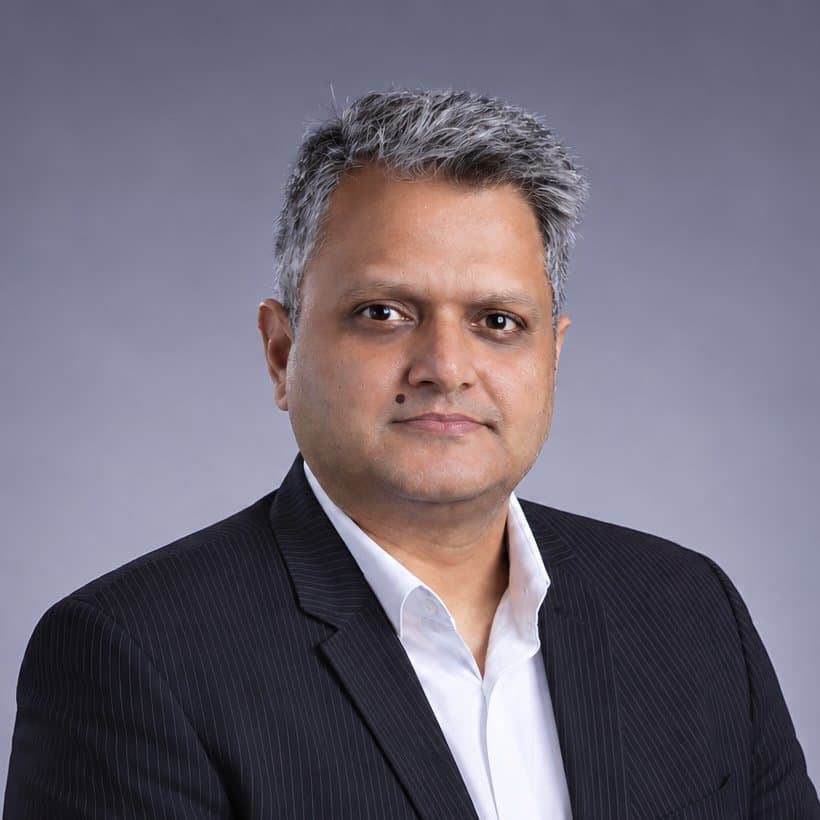
Clinical Multiplication: Divesh Singla on the Healthcare AI Case That Headlines Keep Missing
Divesh Singla, Managing Director, India at Veradigm, brings two decades in healthcare technology to the AI question leaders cannot avoid: how to expand clinical capacity without weakening human judgment.
Read Full Story