Category: Mentors & Coaches
Bhakti Shah navigates legacy jewellery and global education, revealing how trust, systems and emotional discipline shape enduring institutions, and why lasting leadership is built, not inherited.
The Paradox of Power: Bhakti Shah on Redesigning Institutions for Fragile and Enduring Worlds
IndiSight Editorial
Oct 21, 2025

Bhakti Shah
When Bhakti Shah talks about leadership, she does not begin with a title or a hierarchy. She begins with a table. At one table sit jewelers, heirs to centuries of inherited networks, where trust is coded into surnames and legacies. At another sit educators, counselors, and reformers in India and across the Global South, where influence is fragile and must be earned every single day.
“Power wears many outfits,” Bhakti says. “In jewelry, it often comes from lineage. In education, it comes from reputation, and reputation can vanish overnight.”
This paradox has defined her life’s work. Few leaders straddle two worlds as different as luxury diamonds and global education. Yet Bhakti has done so not as a hobbyist but as an institution builder. At The Jewelers League, she helps traditional jewelry businesses confront the digital era. At The Outreach Collective (TOC), she has created one of the largest independent networks of career counselors and education leaders in Asia, connecting more than 900 professionals across 400 educational institutions and companies worldwide since its inception three years ago.
The contrast between these sectors is not an accident of career. It is a deliberate vantage point that gives her rare insight into how power, legitimacy, and trust move through systems. And it is why her voice matters beyond either industry.
From Journalism to Education: Learning to Listen
Bhakti’s path into leadership was not a polished ascent through elite institutions. Her journey began as a journalist, and while training to become one she developed a discipline that sharpened her instinct for power: who had it, who lacked it, and how stories could legitimize or erase entire communities.
Her move into education was not something she had planned before. Like many professionals in India, she entered a sector that promised transformation but revealed constricting hierarchy beneath its progressive vocabulary. For years, independent counselors and innovative education companies, whether focused on edtech, tutoring, test prep, or experiential learning, were sidelined and treated simply as sponsors rather than as stakeholders with a genuine voice. The paradox was glaring.
Rather than accept the role of a peripheral actor, Bhakti began to build networks. What started as informal exchanges among peers became TOC, a structured collective designed to give these stakeholders visibility, resources, and leverage in conversations once dominated by institutions.
Leadership as Ownership
For Bhakti, leadership is not about charisma or eloquence. It is about ownership.
“You have to own what you do,” she says. “I don’t care about your communication skills or your personality. If you cannot take ownership as an individual, you will never take it as a leader.”
In her teams, ownership is the single non-negotiable quality. Those who embrace responsibility rise quickly, regardless of degrees or pedigree. Those who avoid it fall away. She has learned that ownership cannot be taught in abstract terms. It reveals itself in the smallest actions: informing colleagues when running late, closing loops with professional courtesy, or following through on a commitment even when circumstances change.
The simplicity of the rule hides its power. Ownership is not only an ethic but also a filter. It determines who is worth investing in, mentoring, or connecting into larger networks.
Codifying Instinct into Systems
Bhakti acknowledges that instinct is central to her decision-making. But she is careful to emphasize that instinct is not mysticism. It is pattern recognition shaped by experience.
“Instinct is not a supernatural gift,” she says. “It is the sum of patterns you have seen before. It is the experience talking.”
At TOC, she has learned to translate instinct into structure. A volunteer-driven organization cannot run on goodwill alone. People must feel empowered to contribute, yet systems that ensure accountability must be put firmly in place. This balance requires codification. Having proper templates for projects, structured committees, and defined roles ensures that instinctive calls become repeatable processes.
But there is another paradox she notices. Instinct without structure leads to chaos. Structure without instinct becomes sterile. Sustainable institutions require both.
Managing Conflict and Emotion
Diverse teams bring disagreement. For Bhakti, the question is not whether conflict will occur but how leaders respond.
“The first rule is to dial down your own emotions and that is not always easy,” she explains. “The moment you enter a discussion to prove yourself, you have lost. Passion is fine. Mistrust is fatal.”
When discussions grow heated, she deliberately pauses decisions. Nothing is treated as urgent by default. Time is used as a design tool. Stepping back allows emotions to settle and decisions to serve purpose rather than ego.
Her method blends group dialogue with one-on-one conversations. In collective meetings, she avoids escalation. Later, she speaks individually with dissenters, listening to their perspectives and aligning them with the institution’s north star. That north star is always the same question: does this serve the purpose of TOC?
This approach highlights another of Bhakti’s frameworks. Leadership is not about being right. It is about preserving trust long enough for the right decision to emerge.
The Paradox of Power
Across both jewelry and education, Bhakti has observed that power does not move vertically. It travels sideways.
She tells stories of individuals who were underestimated for years but gained influence overnight by asking a bold question at a conference or by taking on a project others avoided. Power shifted not through formal titles but through courage at the right moment.
Equally, she has seen leaders lose credibility by confusing volume with influence.
“Power can come from a mic or a tweet,” she says. “But it can leave just as quickly.”
In education, this fragility is constant. Reputation is everything, and it can be undone in days by missteps or even by rivals. In jewelry, by contrast, power is often inherited. It comes with surnames, family ownership, and lineage. This makes it harder to lose but also harder to gain.
“Power in education is earned but fragile. Power in jewelry is inherited but durable,” Bhakti explains. “Both models create vulnerabilities. Both must evolve.”
Networks and the Responsibility of Access
If power travels sideways, networks are the roads it moves along. Bhakti is adamant that access must be treated as responsibility, not entitlement.
“I have not maintained relationships for eighteen years by misusing access,” she says. “Just because you know someone does not mean you open every door for others. Access cannot be taken for granted.”
This philosophy protects her credibility. She refuses to act as a broker, trading introductions without intention. Instead, she builds connections that are timely, relevant, and respectful of trust.
Her view resonates globally, particularly in markets where networking often drifts into transactionalism. Bhakti reframes it: networks are not commodities. They are compacts of trust.
Jewelers League: Power in Legacy Industries
The jewelry industry provides Bhakti with a living laboratory of legacy power. At Jewelers League, she works with businesses where authority often comes from surname, geography, or family lineage.
“Diamonds survive on scarcity,” she notes. “But today, trust is the real currency. And trust comes from transparency, not mythology.”
The rise of lab-grown diamonds has forced an identity crisis. Luxury houses that once relied on heritage alone must now answer deeper questions: why does authenticity matter, and to whom? Bhakti’s counsel to these companies is not to abandon essence but to abandon ego. Preserving a story requires evolution, not stubbornness.
She points to generational clashes within family businesses. Younger leaders push for e-commerce and digital marketing. Elders resist, insisting tradition is enough. The conflict is not merely about technology. It is about legitimacy. For centuries, legitimacy was inherited. Today, it must be continually re-earned through consumer trust.
Here again there is a paradox. Legacy creates stability but resists change. Innovation creates momentum but threatens continuity. Leaders must design systems that preserve both.
Education as a Fragile Institution
If jewelry embodies permanence, education reveals fragility. Independent counselors, once excluded from mainstream conversations, now find themselves seated at university receptions and global summits. TOC has played an instrumental role in bringing about this shift in attitudes through persistent lobbying.
This shift is not just for show. It shows that legitimacy can be reset. Bhakti and her peers argued that guidance cannot be monopolized by institutions. Independent voices matter, not as accessories but as catalysts.
The progress is immediately noticeable. Universities that had once ignored counselors now recognize their role in shaping student choices. Yet a degree of fragility remains. A single reputational slip can undo years of work. In this sense, education demands vigilance. Legitimacy must be defended daily.
Global Partnerships and Invisible Signals
For Bhakti, building partnerships is less about contracts than about signals. She looks for language, tone, and subtle cues in early interactions.
“If a partner behaves as if they are doing us a favor, the deal is over,” she says. “Partnerships work only when both sides ask what we can do together, not what you can do for us.”
Other red flags include disrespect for commercial engagement and failure to honor commitments. She insists that ghosting or barter without consent destroys trust. Her rule is simple: equal respect or no deal.
These insights apply well beyond education. Multinationals negotiating in emerging markets, startups seeking alliances in foreign geographies, and nonprofits entering cross-cultural spaces all face the same invisible signals. Bhakti’s framework helps leaders recognize them before it is too late.
Governance Beyond the Founder
One critique often directed at collectives is their dependence on charismatic founders. Bhakti does not deny the risk but reframes it.
“Founder dependency is not always a trap. In the early years, it is a requirement,” she says. “Two years is not long. Three years is not long. If you are building something disruptive, you cannot step back too soon.”
At TOC, she dedicates half her professional time. Yet she is conscious of designing for continuity. The first full-time employee has been hired. Committees are being structured with chairs and goals. Volunteers are given both autonomy and accountability.
The model she envisions is hybrid: a mix of employees, part-timers, and volunteers. Such design resists collapse while retaining the dynamism of a collective.
This approach is relevant globally. Many social ventures and nonprofits falter because founders step back too early or stay too long. Bhakti’s philosophy suggests a middle path: honor founder intensity but architect systems for succession.
Measuring What Matters
Most institutional metrics reflect funder priorities, not human transformation. Bhakti proposes three anchors for a different theory of change:
Agency: Can individuals make confident, informed choices about their own lives and careers based on expanded knowledge and networks?
Collaboration: Has the platform enabled meaningful partnerships, contracts, and joint ventures that create mutual value?
Contribution: Do members feel they are adding genuine purpose beyond personal advancement, contributing to something larger than individual success?
“These metrics reflect authentic empowerment and sustainable meaning, not dashboard numbers designed to impress investors or board members.”
Human Discipline in Leadership
Beyond frameworks and systems, Bhakti emphasizes the daily disciplines that sustain institutional transformation: decisions must resist false urgency while embracing genuine opportunity; networks must be stewarded responsibly rather than exploited tactically; industries must evolve authentically without abandoning their essential character.
Recognition, she adds, must be practiced consistently in small moments, not reserved for ceremonial occasions, because resilient communities are built on daily acknowledgment of contribution, not compliance with hierarchy.
These seemingly simple habits distinguish leaders who build institutions that outlast their founders from those who create personality-dependent organizations that collapse when key figures depart.
Global Vision: A Table of Our Own
Bhakti closes many conversations with a metaphor.
“We did not want to jostle for chairs at someone else’s table. We brought our own table and our own chairs. We made our own space.”
It is a message that resonates beyond education or jewelry. In every sector, leaders from emerging markets face the temptation to mimic Western models. Bhakti insists on another path: design locally, adapt globally, and claim legitimacy through contribution rather than imitation.
Lessons in Leadership
Recognition must be genuine and timely.
Leadership is based on ownership, which also serves as a filter for mentoring.
To guarantee sustainability, instinct must be incorporated into systems.
To settle disputes, develop emotional self-control and a higher purpose than ego.
Instead of moving vertically through titles, power moves sideways through networks.
When networks are properly protected and not exchanged like commodities, they gain value.
If legacy industries maintain their core values and shed their ego, they will thrive.
Reputation defense is a daily necessity for fragile institutions.
Only with equal respect and kept promises can professional collaborations succeed.
Closing Reflection
Bhakti Shah’s life across sectors has produced a rare vantage point. In jewelry, she sees the endurance of inherited power. In education, she confronts the fragility of earned legitimacy. In both, she works to design institutions that can survive volatility without losing soul.
Her message is not that one system is superior to the other. It is that leaders must understand the paradoxes within each. Power inherited without evolution decays. Power earned without structure evaporates.
In a global era where institutions are tested daily, her counsel is both simple and profound: build tables that endure, invite voices that matter, and treat trust as the only asset that compounds across generations.
Our Suggestions to Read
Discover The Leaders Shaping India's Business Landscape.
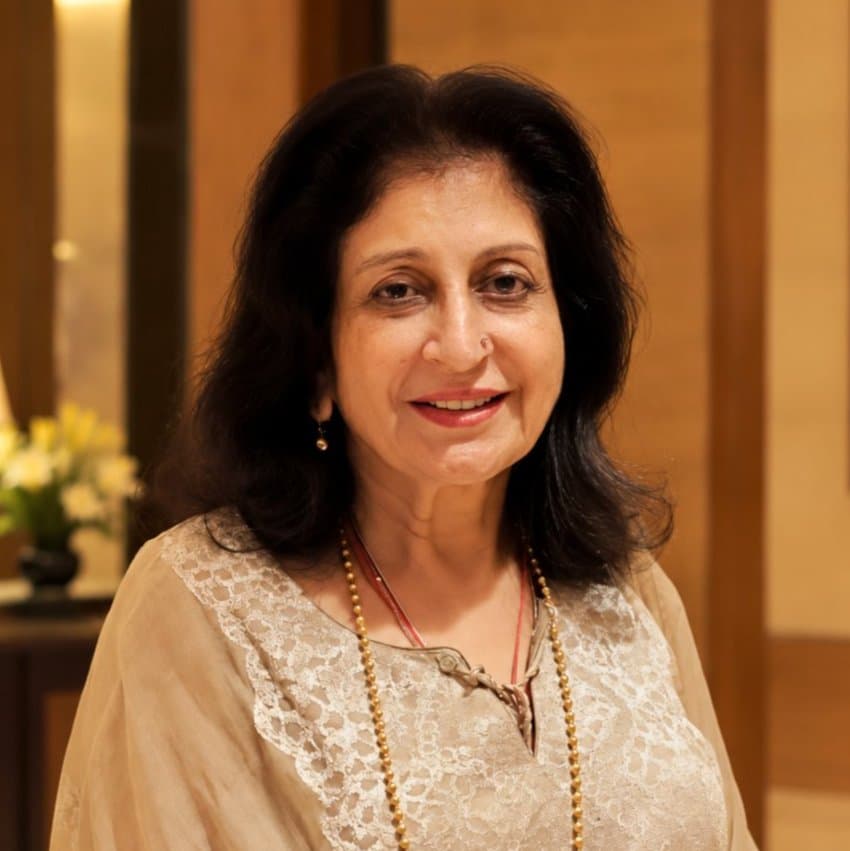
Education Leadership
The Human Advantage: Anu Monga on What Schools Must Still Create
Drawing on decades of leadership in international schools and education, Anu Monga reflects on what institutions must continue to create in a world where knowledge is increasingly accessible and shaped by technology.
Read Full Story
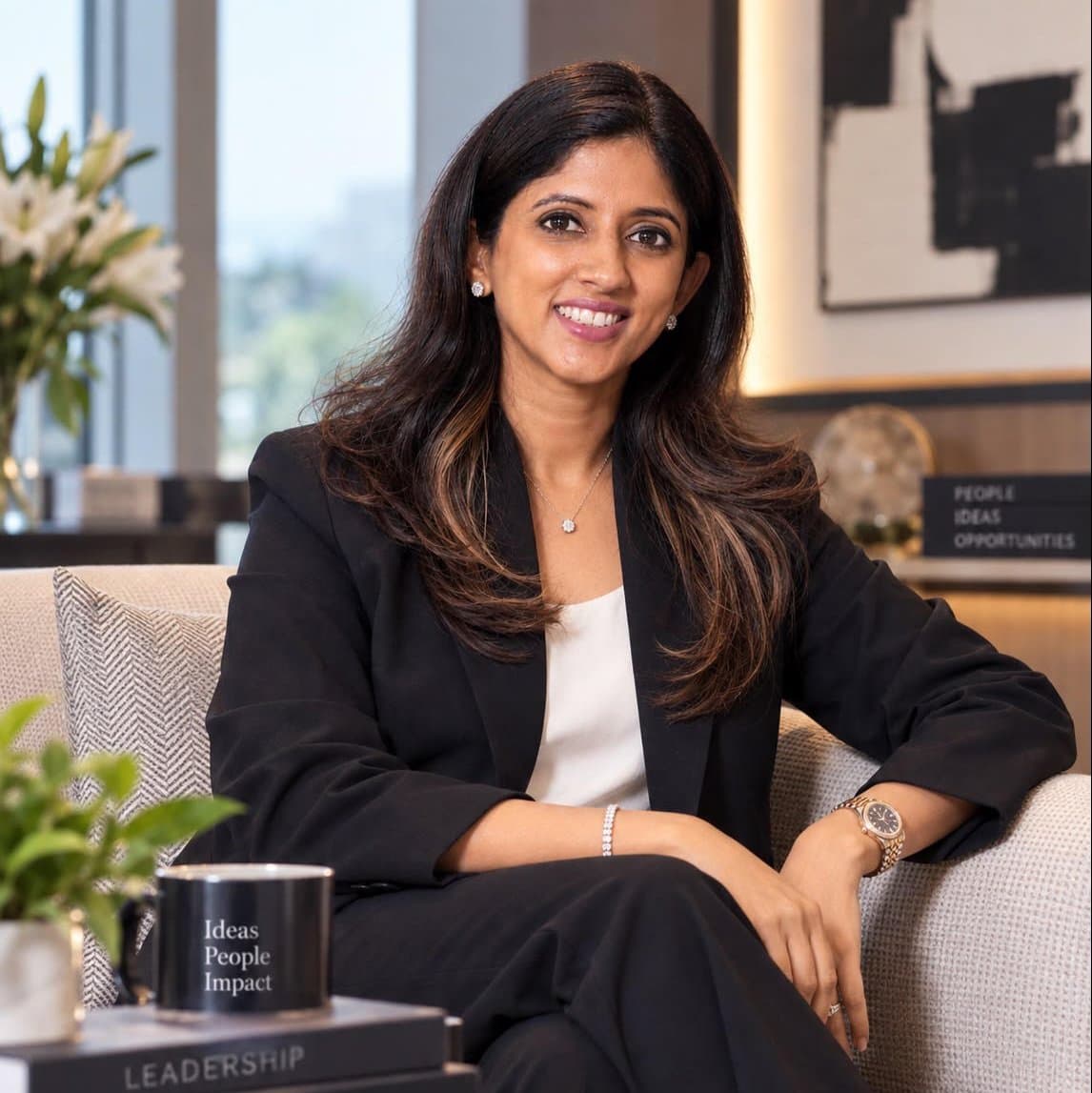
Investors & Catalysts
From Millet to Method: Rasika Prashant on Building What Consumers Return To
Rasika Prashant, CEO of NSRCEL at IIM Bangalore and Co-founder of Soulfull (later aquired by Tata Consumer Products) on consumer trust, category creation, Indian brands, and the founder discipline required after belief.
Read Full Story
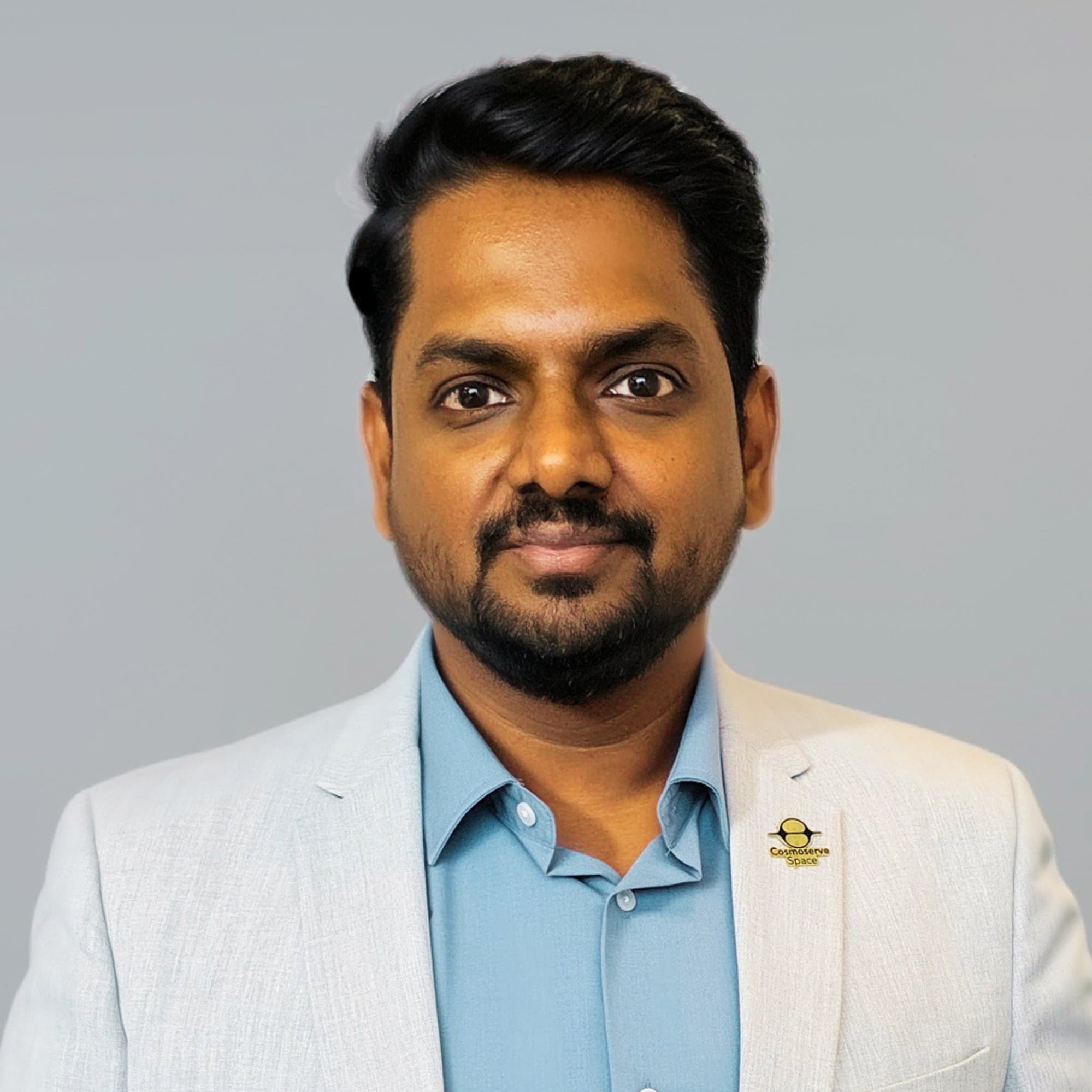
Founders & Innovators
Building the Next Space Economy: Chiranjeevi Phanindra and Cosmoserve's Case for Orbital Maintenance
Chiranjeevi Phanindra, Founder & CEO of Cosmoserve Space, spent 14 years at ISRO working on re-entry and human spaceflight. Today, he is focused on a vital challenge: keeping Earth’s orbit usable.
Read Full Story