Category: Corporate Visionaries
Sunil Mishra has helped shape India's evolution from infrastructure to intelligent enterprises. His leadership blends technology, human judgment, and strong cultures to build resilient, future-ready organizations.
The India Playbook: Sunil Mishra on Leading with Intelligence, Not Imitation
IndiSight Editorial
Jan 3, 2026
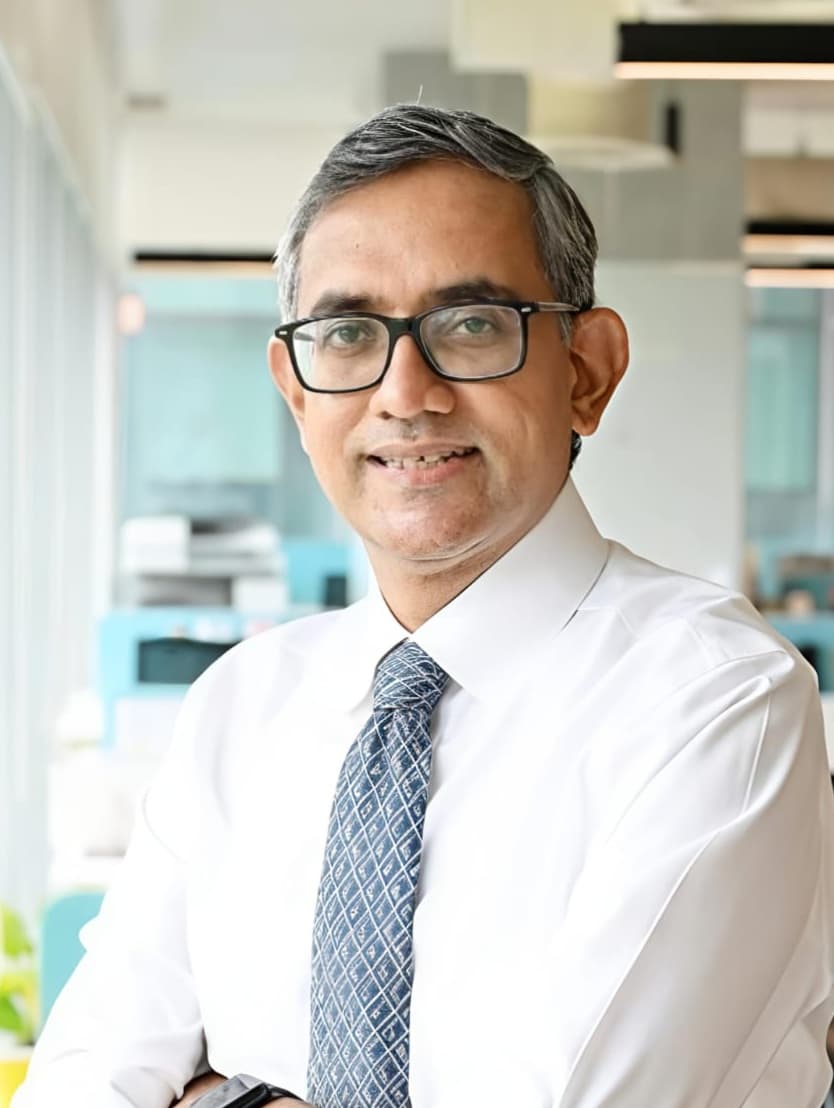
Sunil Mishra
MD & CEO - Growth Businesses · ANAROCK
Mumbai
Progress is never linear. It depends on people who sense change early and connect what still matters with what is about to matter. Sunil Mishra is one of them. For over thirty years he has worked at the intersection of India’s biggest shifts in telecom, finance, and real estate, building systems that learn, scale, and endure. From Airtel’s early expansion to Karvy’s wealth transition to ANAROCK’s AI-led transformation, his path reflects one principle: leadership is not about chasing what is new, it is about preparing people and processes to stay relevant when the new arrives.
In conversation, he avoids talk of titles or numbers. What interests him are decisions, especially the difficult ones that decide direction. “You can’t pretend to lead for long,” he says. “If your thoughts, words, and actions don’t align, you’ll tire before you inspire.” The idea is simple but earned through decades of work across industries that change faster than most people can keep up.
Sunil’s career mirrors the evolution of India’s economy but also tells a quieter story of a professional who keeps evolving while staying deeply human. He graduated before the internet existed, worked through the country’s telecom revolution, and now leads conversations around artificial intelligence in real estate. He does not see technology as a threat or a trophy. He treats it as a tool that works only when the people using it are anchored in purpose.
Learning Before Knowing
Every leader begins within the limits of their time and learns to work through them. Sunil Mishra started his career in an India that was still defining what a modern economy should be. Technology was limited, information moved slowly, and most careers followed a straight path. Those limits became his first classroom. “We didn’t have dashboards,” he says. “You had to develop judgment.”
His early years in finance and strategy, first in WorldTel with Sam Pitroda and later with KPMG, exposed him to systems much larger than himself. Telecom in the 1990s was not just an industry; it was a national project. Working between regulators, investors, and operators, he learned that value creation was less about technical brilliance and more about inspired coordination. Strategy, he concluded, is not a document; it is alignment in motion.
He admits that early on, he often confused clarity with certainty. Experience taught him that strategy is less about knowing and more about staying teachable. When he returned to India to join Bharti Airtel, the company was still a challenger brand with national ambitions. The shift from consulting to execution taught a tougher lesson: scale does not forgive confusion. “A strategy only survives contact with reality if it is repeatable by thousands of people who were never in the room when it was made.” That discipline of turning clarity into systems others can use became central to his thinking.
At Airtel he realized that growth depends on rhythm, not speed. “The best organizations,” he says, “learn to breathe, expand, pause, adapt, and then move again.” It is a lesson he carried into wealth management and later into proptech. Across industries, his principle remained constant: leadership is not control, it is coherence in complexity.
The Discipline of Adaptation
Each move in Sunil Mishra’s career has tested his ability to adapt and start again. From telecom to finance to real estate to AI, every shift forced him to rebuild context, teams, and credibility. For him, these were not changes of direction but experiments in resilience. “If a principle doesn’t hold across industries,” he says, “it is probably not a principle.”
When he moved from Airtel to Karvy in 2009, global markets were still recovering from crisis. He entered wealth management when investors were cautious and the industry’s trust deficit was deep. The easy choice was to wait. He did the opposite, expanding into real-estate-linked financing while others held back. “The opportunity wasn’t in the product,” he explains. “It was in understanding what fear does to markets and how to build around it.”
Not everything went to plan. Some integrations failed, some teams struggled with pace, and a few strategies aged quickly. The Housing.com merger in 2016 was one of those lessons, when several teams broke apart within months and senior leaders left soon after. “We moved too fast, assuming culture would catch up with strategy,” he reflects. “It didn’t. I learned that alignment on paper means little if belief hasn’t caught up in people’s hearts.” For Sunil, that is what progress demands, the humility to rebuild without bitterness. “Cycles teach you that loss isn’t failure,” he says. “It is feedback that you moved before the world was ready.”
Later, when enthusiasm began to turn into risk, he stepped back before exposure became loss. The choice cost short-term revenue but protected the institution’s credibility. It became a habit he would repeat across his career, knowing when to slow down before momentum turns into noise.
At PropTiger the challenge was different. Real estate in India had long resisted digital change. Sunil saw technology not as disruption but as infrastructure, a way to make transactions traceable, data-driven, and less dependent on informal networks. The acquisition of Housing.com revealed a deeper truth: innovation fails when cultures are misaligned. “The problem wasn’t innovation,” he says. “It was velocity. When growth outruns understanding, systems collapse from within.”
These experiences shaped his central idea of leadership: scale without design is fragility. Whether at Karvy, PropTiger, or ANAROCK, he has treated growth as an engineering problem that requires constant calibration between ambition and process. The hardest part, he admits, is not building systems but getting people to trust them. Every system has one inevitable flaw: human impatience.
Technology with a Human Face
In most economies, real estate mirrors a nation’s maturity. In India, it mirrors its ambition. It is both a symbol of progress and a test of patience, one of the largest contributors to GDP and among the last to be meaningfully digitized. For Sunil Mishra, this is not a weakness but a chance. “It is one of the few industries where technology still has to earn human trust,” he says. “That is why the learning curve is slower but deeper.”
When he began leading digital transformation at ANAROCK, his starting point was simple: what does technology look like when it respects the human layer? His team now works across predictive AI models that identify serious buyers, conversational bots that re-engage dormant leads, and analytics tools that map sales potential across cities. Yet he rarely calls this automation. “AI is not a substitute for instinct,” he says. “It is an amplifier of it.”
In India’s property markets, where the average transaction still begins with a handshake, Sunil’s approach has been to introduce intelligence without losing intimacy. “Real estate was one of the last sectors to embrace technology,” he explains. “The ticket size is massive, so people want to see, touch, and trust before they decide. But AI can help everyone in that chain think smarter, developers, brokers, and customers alike.”
AI systems at ANAROCK now handle millions of data points, but their real achievement lies in changing behavior. “Technology didn’t just change process,” he notes. “It changed posture.” Salespeople rely less on guesswork and more on insight. Developers see transparency not as a threat but as leverage. Young employees who once waited for direction now challenge with data. “In India,” he says, “we shouldn’t be designing AI to cut jobs. We should be using it to create better ones.” That belief defines his view of innovation, technology that grows the pie instead of shrinking it.
The Architecture of Continuity
For Sunil Mishra, leadership is less about control and more about continuity.
“If the business depends on you to function, you haven’t built it right,” he says. The idea that real impact should outlast the individual has guided how he builds teams and systems in every organization he has led.
At Airtel he learned how large systems evolve when velocity meets vision. At Karvy he learned how ambition must be balanced by restraint. At ANAROCK he applied both lessons to design what he calls “people-agnostic systems,” models that can grow, adapt, and even challenge their creator. “A true leader,” he says, “creates a rhythm that continues without his hand conducting it.”
That belief is visible in the people he has mentored. “Out of forty leaders who have worked with me,” he shares, “around twenty still call when they are changing roles. Some are CEOs, some are founders. That is the legacy that matters.”
His meetings are known less for hierarchy and more for candor. “If your team needs you every day,” he says, “you are managing, not leading.”
Sunil’s leadership model rests on three principles: autonomy, process, and trust. Autonomy because people grow under responsibility, not supervision. Process because creativity without structure collapses under pressure. Trust because it is the only advantage that cannot be automated.
The Future is Human
Sunil Mishra often calls AI “the first technology that learns from us as fast as we learn from it.” For him, artificial intelligence is not a passing trend; it is a turning point in human progress. “Like electricity or the internet,” he says, “AI expands what humans can become.” The paradox, he adds, is that the smarter technology gets, the more human leadership must become.
At ANAROCK this vision is already visible in results. His teams have built AI models that can predict buyer intent, score leads, and talk to customers at scale. But the true transformation, he says, is not technical; it is human.
“The tools forced us to rethink what efficiency and empathy mean in the same sentence,” he says. “AI didn’t just make the system smarter; it made people more aware of their own judgment.”
He believes India’s advantage will not come from competing with the United States or China in large AI models, but from learning faster in how those models are applied. “We don’t need to outspend the world,” he says. “We need to outlearn it.”
“In the years ahead,” he says, “India will give rise to AI-led platforms that reach global scale, not because they are cheaper, but because they will solve for complexity that Western systems cannot model.”
He calls this the Indian Advantage, a lived complexity that trains resilience faster than any algorithm. “Our data is messy, our markets are fluid, our customers are unpredictable, and that is exactly what makes this the perfect laboratory for the next era of intelligence,” he says. “If AI can learn to adapt here, it can adapt anywhere.”
His framing resonates beyond India. In every emerging economy, from Brazil to Indonesia, the same question looms: how to digitize without dehumanizing. Sunil believes India’s chaos holds the clue. “If technology can make sense of us,” he laughs, “it can make sense of anyone.”
Leadership as Humanity in Motion
“Most people don’t leave companies,” Sunil says. “They leave indifference.”
Across Airtel, Karvy, PropTiger, and ANAROCK, he has led through cycles of disruption, yet one belief has stayed constant: respect is not a soft skill, it is structure. “It costs nothing to treat people well but everything if you don’t.”
He measures leadership by what continues to work after he steps away, not by how much he controls while he is there.
If people still trust you when they no longer report to you, then you have led right.
For him, culture is built in silence, in small choices and steady behavior.
He rejects the false trade-off between performance and empathy. “You can build fast,” he says, “but if you forget how to care, you have already started to collapse.” The quiet paradox of leadership, he adds, is that it grows louder only when you stop needing to be heard.
For Sunil, leadership is about calm under pressure, promises kept, and people who still call years later, not for advice but for perspective.
India’s Moment of Design
Sunil Mishra sees India standing at a pivotal point, not as an imitator of global systems but as a designer of new ones.
For fifty years we built foundations. For the next thirty we competed. The next thirty must be about creation. India’s next leap will come not from regulation or capital, but from mindset. We have proven we can grow, now we must prove we can imagine.
For him, leadership, not technology, is the decisive variable. “Technology globalizes faster than human maturity. Our job as leaders is to make sure judgment grows as fast as our tools.”
He argues that this is not just India’s opportunity but its obligation to the world, to prove that progress can be both intelligent and humane. He calls this shift the India Model, growth rooted in inclusion, innovation grounded in integrity, and technology used not to replace humans but to expand human potential. “We have proven we can build fast,” he says. “Now we must build things that last.”
Leadership Lessons
1. Growth without quality is fragility. Fast growth can impress, but durable growth earns trust. Real leadership builds for the second.
2. Respect is the strongest operating system. People stay where they feel seen. Culture is built in daily behavior, not in slogans.
3. Promises made must equal promises kept. Credibility compounds when words and actions match over time.
4. Build systems that thrive without you. The true test of leadership is what continues to function when you are no longer there.
5. Data can guide, but instinct must decide. The hardest choices often appear before the numbers confirm them.
6. Be kind early, not late. Respect costs nothing when given early, but everything if withheld too long.
7. Growth must include the human equation. Efficiency is mathematics; empathy is architecture. The best leaders design for both.
8. AI is a mirror, not a shortcut. Technology does not replace intelligence; it reflects it. The wiser the human, the better the machine.
9. India’s next export must be leadership, not labor. The nation’s edge will come from deeper judgment, not cheaper execution.
10. Think in decades, act in days. Long-term vision matters only when matched with daily discipline.
11. Build beyond valuation. Institutions last when integrity is treated as strategy, not sentiment.
12. Leadership is how you are remembered when hierarchy ends. Titles fade. The tone you leave behind does not.
Closing Reflection
He speaks of legacy not as an endpoint but as a transfer of energy. “You have to build in a way that others can inherit your momentum,” he says. The line captures how he sees progress itself, as a relay, not a race.
Thirty years into his career, Sunil is still designing new businesses, mentoring younger CEOs, and experimenting with AI. Yet his tone carries none of the exhaustion of a veteran. “The work is never done,” he says. “You just keep finding better questions.”
Perhaps that is what defines his kind of leadership, a man still curious after certainty, still restless after success, and still learning how to build systems that never forget the people who built them.
Our Suggestions to Read
Discover The Leaders Shaping India's Business Landscape.
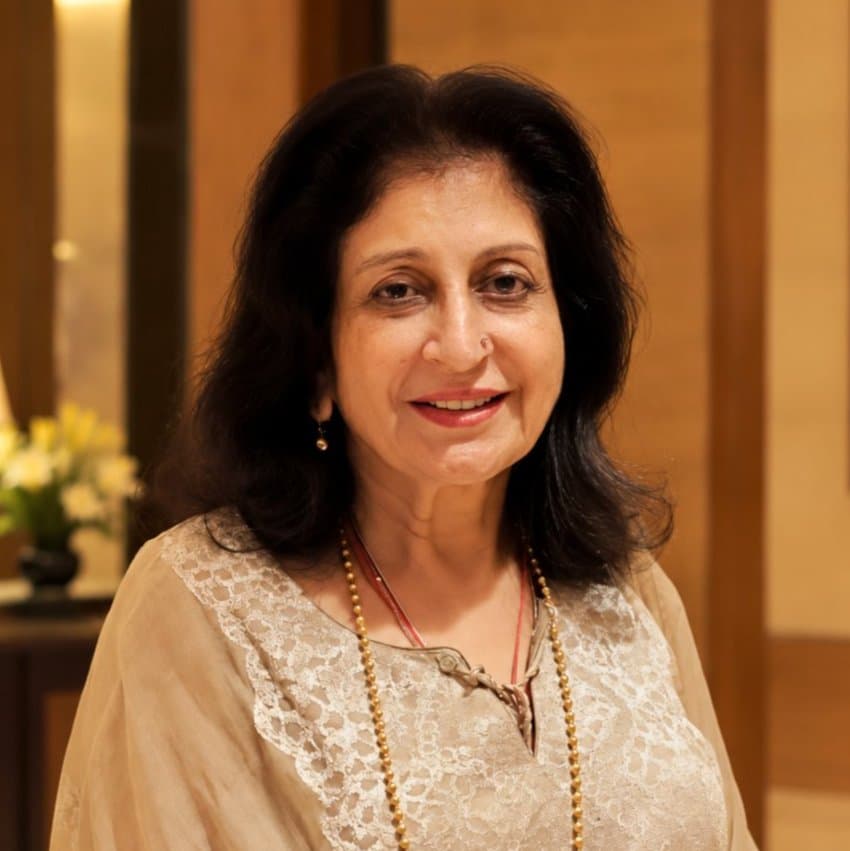
Education Leadership
The Human Advantage: Anu Monga on What Schools Must Still Create
Drawing on decades of leadership in international schools and education, Anu Monga reflects on what institutions must continue to create in a world where knowledge is increasingly accessible and shaped by technology.
Read Full Story
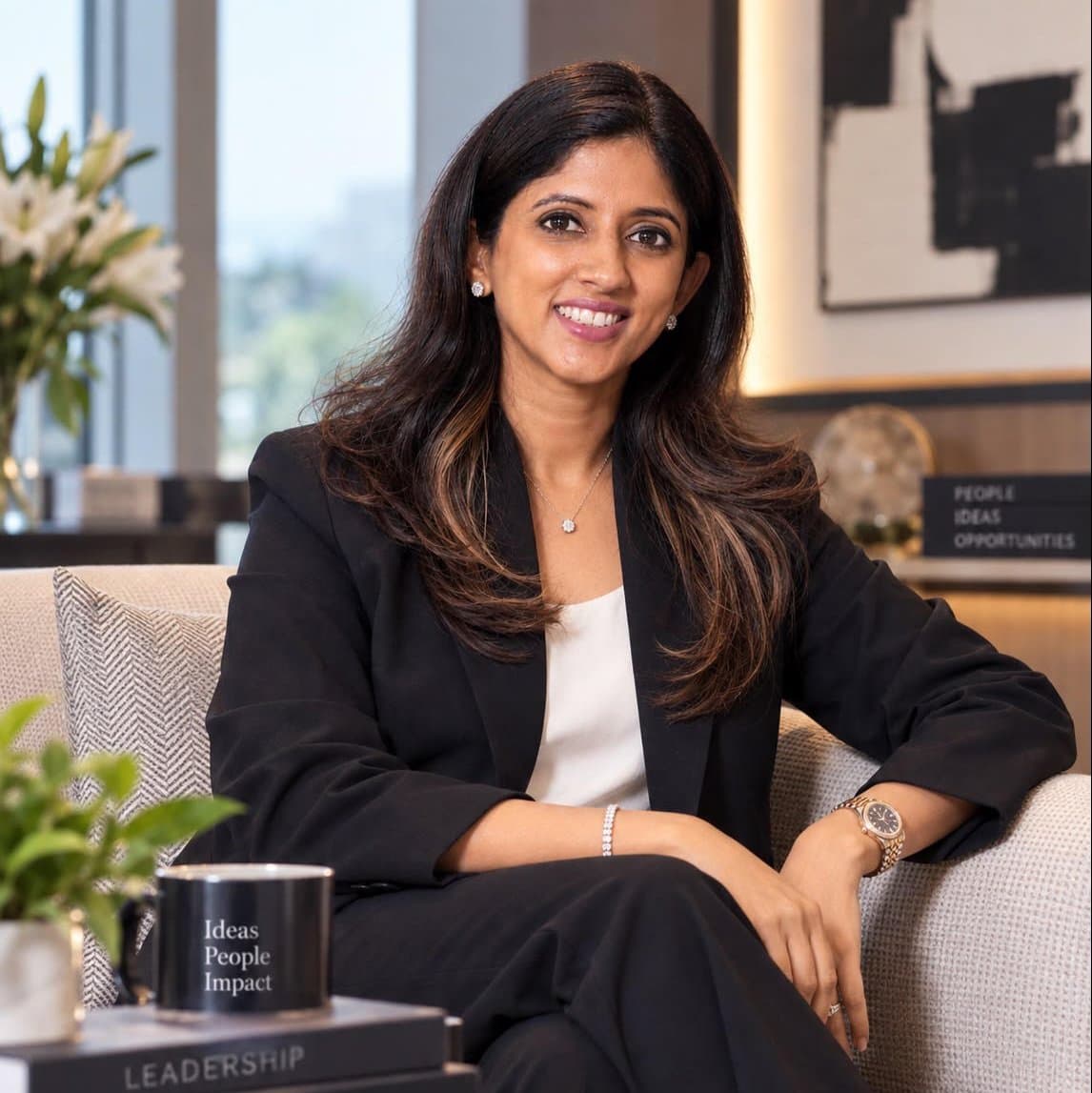
Investors & Catalysts
From Millet to Method: Rasika Prashant on Building What Consumers Return To
Rasika Prashant, CEO of NSRCEL at IIM Bangalore and Co-founder of Soulfull (later aquired by Tata Consumer Products) on consumer trust, category creation, Indian brands, and the founder discipline required after belief.
Read Full Story
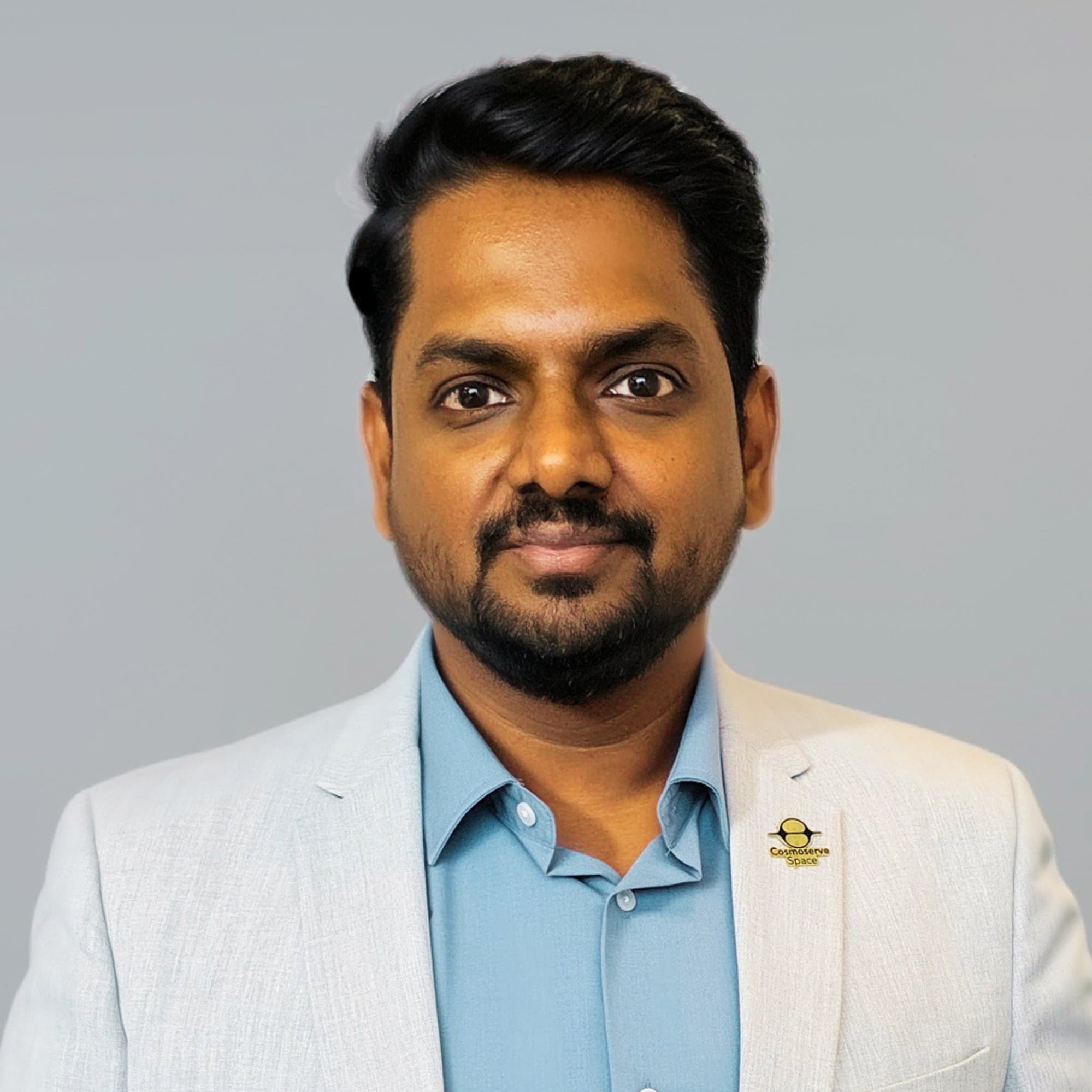
Founders & Innovators
Building the Next Space Economy: Chiranjeevi Phanindra and Cosmoserve's Case for Orbital Maintenance
Chiranjeevi Phanindra, Founder & CEO of Cosmoserve Space, spent 14 years at ISRO working on re-entry and human spaceflight. Today, he is focused on a vital challenge: keeping Earth’s orbit usable.
Read Full Story