Category: Investors & Catalysts
Most entrepreneurs learn to speak in metrics. Anshuman Sinha speaks a different language: rhythm, honesty, and design. Over twenty-five years, he has built a career that refuses the artificial divide between headhunter and investor, operator and philosopher.
The Compounding Effect of Honesty: Anshuman Sinha's Framework for the Future of Founders
IndiSight Editorial
Nov 5, 2025
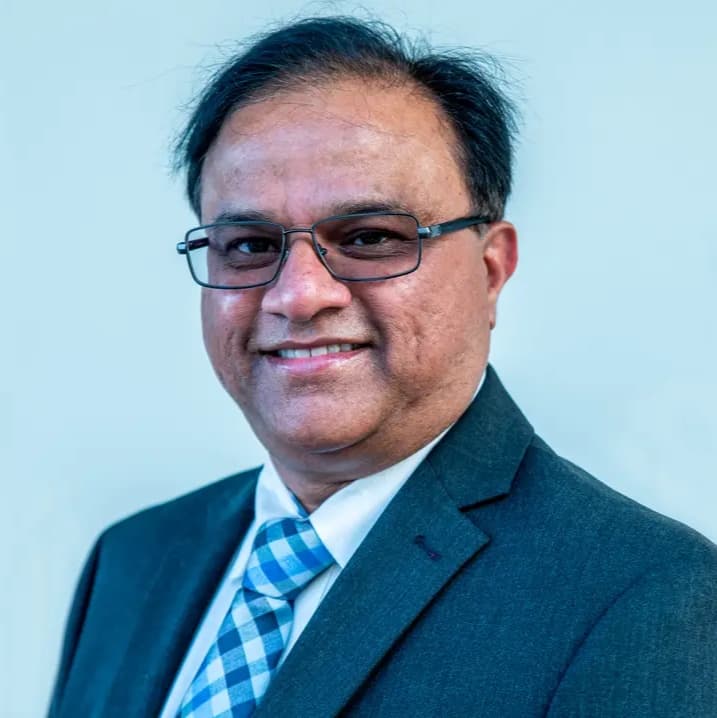
Anshuman Sinha
Most people who enter the startup world learn to speak in metrics. ARR, CAC, runway, valuation. A vocabulary of velocity.
Anshuman Sinha speaks a different language. His words revolve around rhythm, honesty, and design. He treats organizations like living systems and markets like moral machines.
“I don’t believe ‘truth’ is moral. I believe it’s mechanical,” he says. “The faster a company processes truth, the longer it survives.”
It sounds philosophical until you watch him work. Over the past twenty-five years, he has built a career that refuses the artificial divide between headhunter and investor, operator and philosopher. He has scaled teams across continents, built venture ecosystems that connect the United States to Coimbatore, and invested in more than forty two startups without turning into the caricature of the hyperactive angel. His rhythm is steady. His words are deliberate. His conviction is quiet but exacting.
He does not chase noise. He builds scaffolding.
Foundations: The First System Was Human
Anshuman began in recruitment and staff augmentation, a profession most treat as transactional but he treated as diagnostic. He still remembers the interview rooms where he first learned how people lie to themselves.
“A résumé is a story of what people want to believe about their own life,” he recalls. “My job was to find the one sentence that reveals what they’re avoiding.”
That discipline, observing what people avoid, became the foundation for everything that came later. His years at Iverest Corporation, managing multi-country staffing operations, taught him that performance collapses rarely start with competence. They start with silence. Somewhere inside the system, a small truth is delayed. Someone chooses diplomacy over data. And by the time the truth surfaces, the damage compounds.
When he launched Optizm Global in 2011, he was not just building a boutique recruitment agency. He was building a truth-processing engine. The company survived economic cycles that broke competitors because its internal vocabulary rewarded candor. Teams were trained to identify friction early, clients were encouraged to challenge assumptions, and mistakes were treated as information rather than failure.
“In operations, delay is the real cost,” he says. “If you catch a lie late, you’ve already paid for it.”
What this really means is that Anshuman sees business not as a sprint toward revenue but as an endurance sport of integrity.
From Breakdown to Breakthrough
Success did not arrive linearly. Optizm Global’s first major downturn nearly broke him. A key client pulled out overnight. Cash flow froze. For six months, he watched a decade of momentum evaporate.
Instead of masking the pain, he dissected it. He found that the company’s failure was not market volatility but decision latency. People waited too long to surface bad news.
“That was the year I realized honesty isn’t a value. It’s infrastructure,” he says.
He redesigned internal systems so that discomfort became mandatory. Every weekly review started with one question: What truth did we delay this week? The result was an organization that learned to metabolize uncertainty.
The recovery was slow but structural. The episode changed him permanently. He became less reactive, more architectural. Calm, for him, was no longer emotional restraint. It was operational design.
“Calm is not a personality trait,” he says. “It’s a process choice.”
That transformation marked the shift from entrepreneur to ecosystem builder, from personal control to institutional design.
Truth as Infrastructure
Every conversation with Anshuman eventually converges on one concept: truth velocity. He describes it like a supply chain. Money, information, and trust move through an organization at different speeds. When truth travels slower than ambition, collapse becomes inevitable.
He maps this through three mechanisms: the honesty clock, the decision rhythm, and the energy architecture.
The honesty clock measures how fast reality reaches the decision-maker. In healthy companies, it ticks continuously. Feedback loops are tight, data is unfiltered, and small issues are exposed early. In fragile ones, the clock stops during comfort. Leaders hear only filtered optimism.
The decision rhythm is how frequently teams convert new information into new action. Too frequent, and they become chaotic. Too rare, and they fossilize. Great organizations maintain a rhythm where decisions are made, tested, revised, and logged without drama.
The energy architecture is the human layer. Every system generates friction. What determines endurance is how energy is stored and recycled. Leaders who run entirely on adrenaline collapse. Leaders who build emotional buffers sustain.
At Startup Steroid, his deal-flow platform for angels and accelerators, these rhythms are embedded in code. The system surfaces hard data to investors before emotion shapes narrative. Founders who exaggerate projections are gently exposed by automated benchmarks.
“We don’t punish exaggeration,” he says. “We neutralize it with math.”
This is not cynicism. It is design.
The Paradox of Performance
The startup ecosystem runs on confidence as currency. Founders sell optimism. Investors reward storytelling. Yet that same optimism can become the ecosystem’s most elegant self-deception.
“Confidence attracts capital,” he says, “but it also delays truth.”
He recalls countless pitch sessions where founders rehearsed charisma rather than clarity. They spoke in vision statements, not operating realities. Anshuman’s method is disarmingly simple. He asks founders to tell him what went wrong last week. If they hesitate, he knows the conversation will remain shallow.
He learned early that success distorts perception. Once a founder’s story starts outperforming their system, they begin to manage reputation more than execution. This poses a danger that hides in plain sight. The gap between public narrative and private reality widens until the company can no longer synchronize the two.
“Startups don’t die from bad products,” he says. “They die from delayed honesty.”
His investing philosophy now revolves around what he calls truth arbitrage, the differential between what founders know and what they are willing to share. The narrower that gap, the higher the investability.
This approach is not moralistic. It is predictive. Startups that reduce truth latency outlive those that perform confidence.
India, America, and the Bridge of Trust
Anshuman’s worldview was shaped by decades of operating across the United States and India, two markets that view risk and truth differently. American startups, he says, excel at narrative velocity. Indian founders excel at resource endurance.
“The US builds fast. India lasts long,” he says. “If you combine the two, you get real compounding.”
In his view, India is emerging as the trust bridge in the new global order of capital. As the US-China tech rivalry deepens, capital seeks ecosystems that balance innovation speed with institutional reliability. India, he believes, is that middle ground. A country agile enough to experiment and disciplined enough to deliver.
As TiE SoCal’s former President and later board member, he expanded the network beyond networking, pushing it toward active capital deployment and cross-border mentorship. He turned what was once an event circuit into an operating ecosystem.
“I’m not interested in events,” he says. “I’m interested in systems that survive their founders.”
Through SGC Angels and Startup Steroid, he is building a digital corridor for trust, where investors from the United States can evaluate Indian startups with transparency and where Indian founders can access global capital without distortion.
He calls it “building the pipes for honesty.”
The Investor Who Charges for Truth
Unlike many ecosystem leaders, Anshuman is unafraid to commercialize clarity. He charges founders for brutal feedback sessions. Some critics see this as unorthodox. He sees it as alignment.
“When people pay, they listen,” he says. “Free advice is entertainment. Paid truth is transformation.”
His reasoning is simple. In an era flooded with mentorship webinars and accelerators promising exposure, most founders consume feedback like content. They listen passively, act rarely, and repeat mistakes cyclically. By making honesty a paid service, he forces commitment.
This reflects a deeper belief that capitalism and integrity are not opposites. For him, markets work best when incentives and truth are synchronized. His entire architecture of investment, recruitment, and education is built on this idea.
The Energy Architecture of Leadership
The deeper you probe into his thinking, the more evident it becomes that Anshuman’s operating system is psychological before it is financial.
He believes leadership is fundamentally about energy governance, the ability to regulate emotional and cognitive load without outsourcing responsibility. He measures founders not by optimism but by their recovery patterns.
“I don’t ask how excited they are,” he says. “I ask how they behave after disappointment.”
He credits his own resilience to years of failure and repetition. “Discipline,” he says, “is underrated because it looks boring.”
At Optizm Global, he observed that teams with lower volatility performed better over time. In investor meetings, he learned that calm investors attract better founders. His conclusion is empirical: emotional stability is an operational advantage.
In his mentoring sessions at Chapman University’s Leatherby Center, he often asks students to define ambition without adjectives. Most struggle. The exercise shows how much of ambition is imitation, borrowed from media or peers.
“You can’t scale a borrowed emotion,” he tells them.
This insight translates directly into how he structures teams: fewer motivational speeches, more designed environments.
The Meta Game: Power, Systems, and Meaning
Anshuman resists the conventional markers of success. Headlines, valuation spikes, public celebration. He prefers to operate at the meta level, designing the rules that shape behavior rather than competing within them.
“Real power,” he says, “is invisible coordination.”
He compares ecosystems to neural networks. Each node, whether investor, founder, mentor, or regulator, transmits signals. The health of the system depends on how cleanly those signals move. When vanity distorts them, capital misallocates and ecosystems slow down.
That is why he treats Startup Steroid not as a company but as a protocol. The platform does not chase brand visibility; it optimizes transparency. Every feature is built to minimize signal distortion between founders and investors.
He calls this the civilization layer of entrepreneurship, where design decisions today shape the moral texture of tomorrow’s markets.
“If we want ethical ecosystems, we have to make honesty the easier option,” he says.
Anshuman’s worldview favors evolution over revolution. He believes the next generation of founders will win not by breaking systems but by designing better ones.
Human Discipline, Not Heroism
Behind the frameworks and metaphors is a person who learned endurance the hard way. He admits he has failed more often than he has succeeded.
“I’ve seen months when payroll felt like a personal judgment,” he says. “But every time I stopped panicking and started designing, things improved.”
He tells young founders that the mythology of the fearless entrepreneur is dangerous. Courage, he says, is not the absence of fear but the discipline of containment.
He once coached a founder who lost a co-founder and half their team in the same month. Instead of advice, Anshuman gave him a spreadsheet, a one-page system to map emotions against decisions. The founder stabilized within three months. The company survived.
“Emotion is data,” he says. “If you can measure it, you can manage it.”
This is not the language of a typical investor. It is the lexicon of a builder who sees leadership as engineering.
Leadership Lessons
Truth is a speed metric, not a virtue.
Companies that surface reality faster compound faster.Calm is a system choice.
Emotional regulation can be designed into workflows.Confidence attracts capital but delays truth.
Build cultures that reward accuracy over optimism.Integrity is infrastructure.
Honesty scales only when embedded in process, not personality.Measure the honesty clock.
Track how long it takes bad news to reach you.Build for rhythm, not reaction.
Sustainable teams operate like orchestras, not alarms.Money is a lagging indicator of trust velocity.
Capital flows to where truth moves freely.Power is clean coordination.
Influence is not about control but signal clarity.Ambition without architecture is burnout.
Every vision needs a system that conserves human energy.Make honesty easier than performance.
Design incentives where transparency is rewarded, not punished.
The Closing Mirror
When asked how he wants to be remembered, Anshuman pauses longer than usual.
“I don’t want to be remembered as an investor,” he finally says. “I want to be remembered as someone who made the system a little more honest.”
The simplicity of that answer carries the weight of a philosophy. In an era where attention is the currency and narratives inflate faster than balance sheets, Anshuman Sinha’s quiet conviction feels almost radical.
He is not trying to outshout the market. He is building the architecture that will let others speak the truth longer.
Our Suggestions to Read
Discover The Leaders Shaping India's Business Landscape.
Corporate Visionaries
Shashank Sahni on What Success Leaves Out
Shashank Sahni, Google’s Managing Director of Global Ads Solutions, reflects on what customers reveal, what ambitious teams need from their leaders & what the mountains and marathons have taught him about going further.
Read Full Story
Corporate Visionaries
Clinical Multiplication: Divesh Singla on the Healthcare AI Case That Headlines Keep Missing
Divesh Singla, Managing Director, India at Veradigm, brings two decades in healthcare technology to the AI question leaders cannot avoid: how to expand clinical capacity without weakening human judgment.
Read Full Story
Investors & Catalysts
The Physical Economy Was Never Slow: A Conversation with Nikhil Choudhary
Nikhil Choudhary, Managing Partner at Nirman Ventures, on the harder ground of technology, where physical AI, venture discipline and industrial adoption have to meet the realities of machines, workers, capital and trust.
Read Full Story