Category: Founders & Innovators
Satish Reddy is redefining what power means in the twenty-first century. As the founder of Xbattery, he is building the intelligence layer of India’s energy future, where control is earned through precision, not protection, and integrity becomes an engineering principle. His story is a study in conviction, patience, and the quiet ambition to make India not just energy independent but energy intelligent.
Owning the Future: How Satish Reddy Is Reimagining Energy Systems
IndiSight Editorial
Jan 12, 2026

Satish Reddy
Founder & CEO · Xbattery
Hyderabad
Redefining Power
Every generation redefines what power means. In the industrial age, it was measured by factories; in the digital one, by algorithms. The coming era will measure it by control, specifically who controls the energy that powers intelligence itself. Satish Reddy, founder and CEO of Xbattery, believes that autonomy in energy design will define the next frontier of national competitiveness.
India’s dependence on imported battery systems, he argues, is not a market failure but a sovereignty risk. When he built Xbattery, his goal was not to outproduce global manufacturers but to reclaim the intelligence layer of energy: the algorithms, sensors, and firmware that decide how energy is stored, distributed, and monetized.
“You cannot become a world leader by importing what powers your own economy,” he says.
Xbattery’s flagship platform, BharatBMS, is India’s first high-voltage indigenous battery management system designed for electric vehicles, factories, and grid-scale storage. It is not a product of sentiment but of necessity, a system engineered to make control synonymous with accountability.
From Scale to Agility
When Satish Reddy left the predictability of corporate systems to build his own, it was not a decision born from impatience or rebellion but from an evolving awareness that scale without adaptability eventually becomes inertia. His years at Microsoft and Roche gave him a front-row seat to how large organizations master the science of reliability, yet in their pursuit of perfection often lose the willingness to experiment beyond the safety of precedent.
“At Microsoft, I learned how to engineer stability,” he says. “But stability has a hidden cost. It often teaches you to preserve what exists rather than imagine what could.”
In many ways, his decision to start Pascalcase, and later Xbattery, came from the recognition that the systems shaping modern industries were designed to minimize deviation rather than cultivate discovery. He wanted to build something that could learn in motion, an organization that treated uncertainty not as a risk to be contained but as a teacher to be engaged with.
Corporate environments, he reflects, protect people from volatility. Entrepreneurship forces them to metabolize it. In large enterprises, the feedback loops are long and carefully managed, but ina startup, especially one operating in deep technology, feedback is immediate, often brutal, and always instructive. That immediacy, he believes, is what shapes judgment. “The hardest part of building something new,” he says, “is not the absence of process. It is learning to trust judgment before data arrives.”
The shift from enterprise engineering to entrepreneurship was therefore less about changing industries and more about changing philosophies. Satish began designing Xbattery around a principle he calls thinking in feedback. Every iteration, every design correction, every small failure was seen as a conversation between intention and reality. He did not hire engineers to execute; he hired thinkers who could reason, question, and adapt. Every team member was expected to understand not only what they were building but also why it mattered in the larger system of energy intelligence.
“When you move from writing code to building physical systems, every mistake has mass,” he says. “That’s when you realize precision is not the opposite of speed; it is what makes speed sustainable.”
The deeper Satish went into product design, the more he understood that agility is not chaos but disciplined responsiveness. The company’s approach to problem-solving evolved from static frameworks into dynamic feedback structures where learning was continuous and context-driven. In India, he observed, infrastructure unpredictability is not an occasional disruption but a structural condition. Instead of designing around that chaos, he decided to design through it, creating what he later called chaos-informed design, systems that learn from disorder rather than collapse under it.
This philosophy became a defining part of Xbattery’s identity. It is what allowed BharatBMS to perform reliably in environments where temperature, voltage, and demand fluctuate unpredictably. It shaped the mindset of teams who now view disruption as information, not interruption. For Satish, agility is not about reacting faster; it is about building an organization that remains coherent when everything around it changes.
“The temptation in startups is to chase momentum,” he says. “But momentum without endurance is noise. You have to build in a way that the system becomes wiser with every setback.”
That balance between control and learning, between scale and agility, has since become the central principle of Xbattery’s design philosophy. It is what transforms hardware into intelligence and intelligence into resilience. Satish believes that in the age of interconnected energy systems, the companies that will endure are not those that move the fastest but those that keep evolving without losing their coherence.
Vision and Opportunity
Satish often describes energy as the nervous system of modern civilization. Without it, economies pause, and with the wrong dependencies, they stagnate. His long-term vision is not just to localize battery manufacturing but to architect an ecosystem where India builds the intelligence that controls it.
“When you look at the current landscape, we are importing both cells and sense,” he says. “The future is not just about where energy is produced but where its intelligence resides.”
That insight shaped the foundation of Xbattery. BharatBMS was never meant to be a single-point product but a platform that could evolve with every new chemistry and application. Its algorithms are adaptable to multiple use cases, from electric mobility to industrial storage, creating interoperability that allows different manufacturers to plug into one shared intelligence layer.
He believes that India’s greatest opportunity in clean energy lies not in replicating what China has already mastered but in innovating where others have not yet competed: the data, control, and integration architecture that allows energy systems to make autonomous decisions. “We are late to cell manufacturing,” he says. “But if we build the control layer, we can lead the intelligence layer of the global energy transition.”
According to projections from the India Energy Storage Alliance, the domestic BMS market, valued at USD 278 million in 2024, could exceed USD 1.2 billion by 2033. Even a modest 5 percent share represents an opportunity worth more than USD 60 million, enough to catalyze a generation of engineers, suppliers, and entrepreneurs.
Satish frames this not as a race against others but as a race against dependence. “Every year India spends billions importing the same systems that power our vehicles, our factories, and our homes,” he says. “That is not just an economic cost; it is a strategic one.”
He envisions a future where India becomes a hub for contextual deep-tech manufacturing, not cheaper versions of foreign designs but smarter systems that understand local constraints from voltage instability to climate extremes. To him, innovation must serve geography as much as ambition. “You can only lead globally when you are deeply rooted locally,” he says.
Competing Without Protection
Satish rejects the assumption that India’s path to competitiveness lies in isolation. “Protection”, he says, “breeds fragility. Competition breeds credibility.”
You cannot protect an industry into greatness. You have to compete your way into credibility.
While China’s dominance in battery cell production remains undeniable, he believes India can lead in the intelligence layer, the software and analytics that govern how batteries behave across chemistries and use cases. BharatBMS manages multiple chemistries, including LFP, NMC, and solid-state, with adaptive firmware that recalibrates itself in real time, allowing interoperability across manufacturers and markets.
For Satish, competition must evolve from imitation to interpretation, not copying what exists but contextualizing what works. “Efficiency will become universal,” he says. “Intelligence will remain the differentiator.”
He argues that deep-tech ventures should be treated not as startups but as strategic infrastructure, protected by long-cycle capital, policy continuity, and performance-linked R&D incentives. “Patience,” he adds, “must become policy. Otherwise deep-tech will remain ambition, not industry.”
Integrity as Operating System
Control, in Satish’s view, is not about dominance but responsibility. He calls this idea ethical control, the practice of designing systems where reliability, transparency, and security reinforce one another.
“Control without integrity becomes coercion,” he says. “Control with integrity becomes stability.”
Every engineering decision at Xbattery reflects Satish’s belief that technology must serve consequence. Each choice is examined for who benefits, who bears risk, and how it affects sustainability and reliability. The firmware is developed internally to preserve design integrity from the first line of code. Supply chains are localized wherever possible to strengthen resilience, and data governance follows transparent protocols established within the company.
The technical roadmap remains a collective endeavor guided by Satish’s vision of precision meeting intelligence. Under his direction, engineering and design operate as one continuous system that merges hardware craftsmanship with adaptive software innovation. Every quarter, the thirty-member team gathers for focused “reset sessions” to challenge assumptions, surface blind spots, and align technical direction with ethical intent.
“People stay when they feel like part of the equation, not a variable in it,” Satish says.
These sessions institutionalize dissent, converting alignment from compliance into collective reasoning. Failures are studied, not hidden. When early prototypes collapsed under high-load conditions, Satish asked his team to rebuild the platform from the ground up, a demanding decision that embedded humility into design.
“Resilience is not optimism,” he says. “It is the discipline to keep correcting without losing conviction.”
Leadership as Consequence
Satish runs Xbattery with what he calls the dialogue between vision and velocity. Vision defines the destination; realism defines the route. Idealism without execution, he says, becomes rhetoric. Execution without vision becomes drift.
“Idealism must define the destination,” he says. “Realism must define the route.”
The company has raised roughly five million dollars in early-stage capital, ensuring a two-year runway to scale from pilots to commercial deployment. Current contracts with EV-fleet operators and industrial clients represent more than one million dollars in annual recurring value, modest but steady validation for a capital-intensive deep-tech model.
For Satish, conviction is not emotional fuel but an engineered property. When investors doubted his vision, he built product before pitch. When funds ran tight, he preserved R&D rather than marketing spend. “Conviction has to survive longer than excitement,” he says. “You cannot eliminate doubt; you can only manage how fast it finds answers.”
Leadership, for him, is measured not by control but by consequence. “Leadership is not power over people,” he says. “It is responsibility for the systems that shape their decisions.” He rejects the binary between purpose and profit. Profit, he argues, is evidence that the system works; purpose is evidence that it matters. “Profit is proof that the idea works,” he says. “Purpose is proof that it matters.”
As artificial intelligence, automation, and energy systems converge, Satish believes energy will become the central nervous system of intelligent infrastructure. Whoever governs that energy intelligence responsibly will shape the next era of leadership.
“The line between energy and intelligence is disappearing,” he says. “When power becomes thinking, control will decide who leads.”
His definition of legacy is pragmatic. Legacy, he says, is not recognition but continuity without dependence. “If it ends with me, it was never leadership,” he says. “It was only management.”
What he wants to leave behind is not a company but a capability, an institution that proves integrity can coexist with innovation, and that patience, when systematized, can scale faster than any shortcut.
Leadership Lessons
Engineer control, do not declare it. Autonomy must live in design, governance, and decision architecture, not rhetoric.
Patience is policy. Deep-tech success requires investor and policy frameworks that reward long horizons over quick returns.
Failure is institutional memory. Every breakdown, when codified, becomes an instruction manual for resilience.
Resilience is structural, not emotional. Systems endure when endurance is built into culture and process, not personality.
Integrity must be operational. Ethics must live in procurement, data, and decision-making systems.
Compete through precision, not protection. Real advantage lies in reliability and contextual intelligence.
Leadership is consequence. The measure is whether an organization functions coherently in the founder’s absence.
Idealism sets the compass; realism sets the route. Vision must coexist with adaptive execution.
Legacy equals capability. Institutions outlive individuals only when they are self-correcting.
Profit validates purpose. Without viability, impact cannot scale; without integrity, profit cannot endure.
Policy must reward endurance. Nations that institutionalize patience in innovation attract long-horizon capital.
Energy and intelligence will converge. The next century will belong to those who govern both responsibly.
Closing Reflection
When asked what he ultimately wants Xbattery to represent, Satish answers quietly. “I want us to prove that intelligence and integrity can coexist,” he says. It is a simple idea, but in practice, it defines an entire philosophy: that the future of leadership will not belong to those who build the largest systems but to those who design them to stay ethical when nobody is watching.
Our Suggestions to Read
Discover The Leaders Shaping India's Business Landscape.

Education Leadership
The Human Advantage: Anu Monga on What Schools Must Still Create
Drawing on decades of leadership in international schools and education, Anu Monga reflects on what institutions must continue to create in a world where knowledge is increasingly accessible and shaped by technology.
Read Full Story

Investors & Catalysts
From Millet to Method: Rasika Prashant on Building What Consumers Return To
Rasika Prashant, CEO of NSRCEL at IIM Bangalore and Co-founder of Soulfull (later aquired by Tata Consumer Products) on consumer trust, category creation, Indian brands, and the founder discipline required after belief.
Read Full Story
Founders & Innovators
Building the Next Space Economy: Chiranjeevi Phanindra and Cosmoserve's Case for Orbital Maintenance
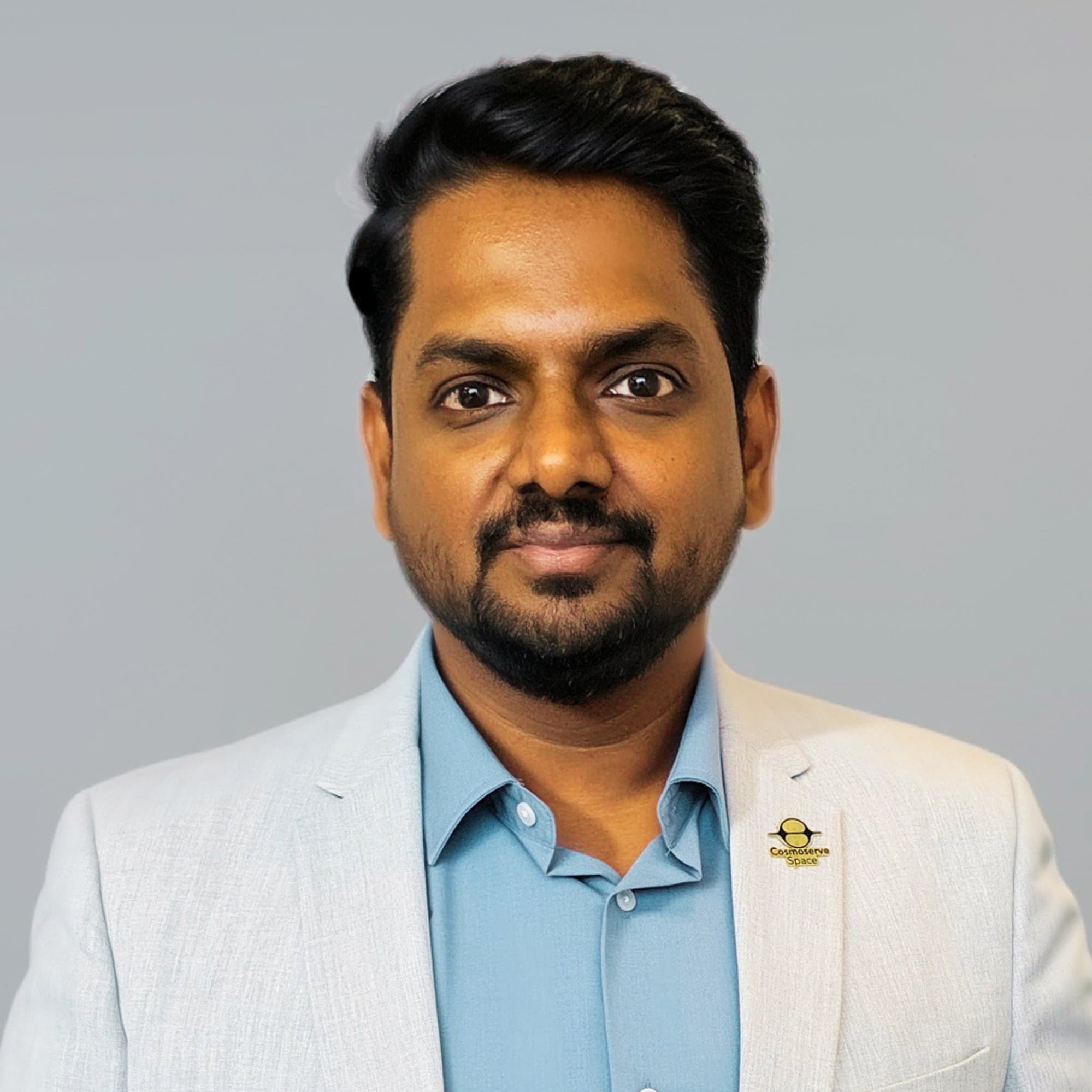
Chiranjeevi Phanindra, Founder & CEO of Cosmoserve Space, spent 14 years at ISRO working on re-entry and human spaceflight. Today, he is focused on a vital challenge: keeping Earth’s orbit usable.
Read Full Story