Category: Investors & Catalysts
Across economies, social and urban infrastructure has long been seen as steel and concrete. Jasmeet Singh Chhabra sees it differently. In his world, a school is not just a building; it is the beginning of dignity.
India’s Next Frontier: How Jasmeet Singh Chhabra is Turning Infrastructure into an Institutional Asset Class
IndiSight Editorial
Nov 17, 2025
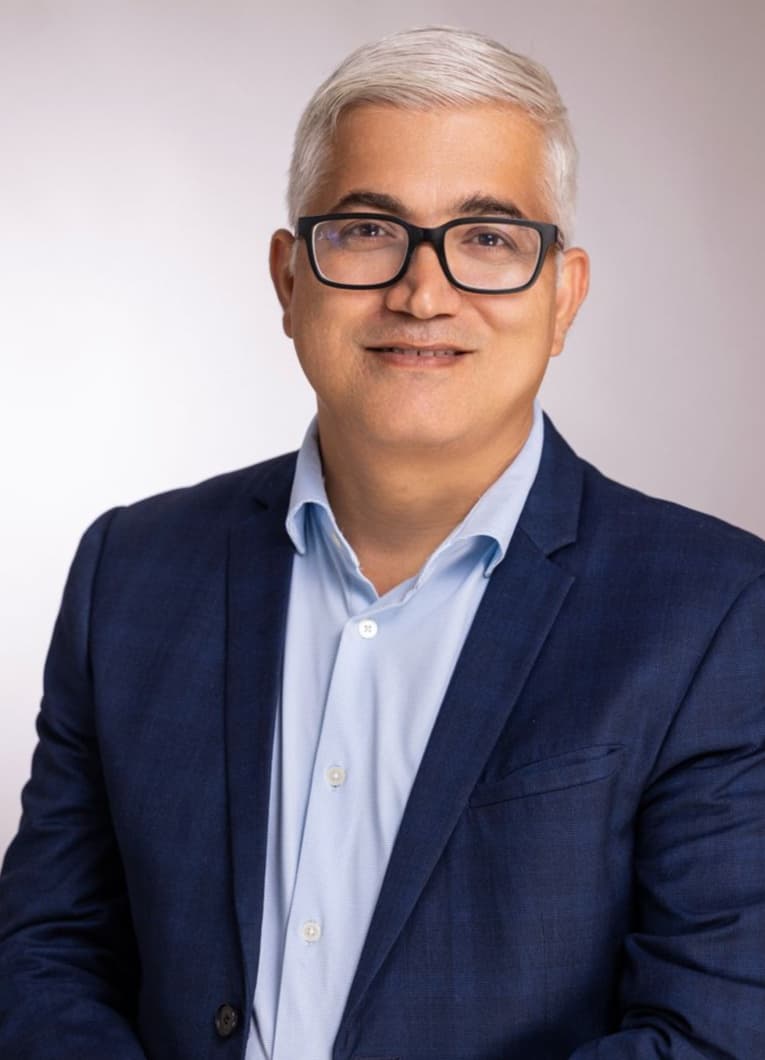
Jasmeet Singh Chhabra
Co-Founder · JV Ventures
Gurugram
Across economies, social and urban infrastructure has long been seen as steel and concrete. Jasmeet Singh Chhabra sees it differently. In his world, a school is not just a building; it is the beginning of dignity. A hospital is not just a facility; it is the difference between fear and recovery. For Jasmeet, social infrastructure is emotional infrastructure. It holds the trust of a society, the rhythm of a child’s learning, the resilience of a family in crisis.
As Co-Founder of JV Ventures, where Cerestra now operates as a core vertical, Jasmeet has spent over a decade re-architecting how institutional capital meets societal needs. Today, he leads a portfolio exceeding one billion dollars, spanning education, healthcare, and hospitality. But the real ambition is not asset accumulation; it is an architectural correction. Jasmeet is not merely investing in buildings; he is rebuilding how we think about social and urban infrastructure.
When he speaks of infrastructure, Jasmeet is not referring to roads or flyovers, but to the invisible civic scaffolding of learning, care, and community, the social and urban systems that define a nation’s quality of life. His bet is clear: the future of a nation will be shaped not by the tallest towers, but by the quiet strength of schools and care systems that actually work.
Origins of Conviction
Jasmeet’s entry into real estate and infrastructure was never a textbook career move; it was a slow awakening. He began in the traditional corridors of private equity, managing portfolios that grew into billion-dollar entities. At IndiaREIT and later Red Fort Capital, he honed the discipline of structuring deals and reading markets before they spoke. But the turning point came when he began to see patterns that data could not explain, why cities grew unevenly, why schools struggled for capital even when demand was soaring, and why healthcare infrastructure lagged behind patient need.
He learned early that capital alone does not create value; alignment does. A deal’s structure could be flawless on paper and still fail if it ignored the lived realities of teachers, doctors, and communities. That realization was the beginning of a new playbook that measured success not only by returns but by resilience.
When Jasmeet co-founded Cerestra within JV Ventures, he began putting this philosophy to test. The firm built one of India’s first education infrastructure funds, enabling K–12 institutions to unlock growth capital through sale-and-leaseback models. What began as a financial experiment evolved into an industry blueprint, transforming how schools accessed liquidity without losing control of their mission. It was here that Jasmeet’s lifelong thesis began to crystallize: infrastructure is not about what stands; it is about what sustains.
Those early years moulded his operating instincts. He learned to look for risk as much as opportunity, to observe social signals as closely as balance sheets, and to design capital as a service, not a weapon. Each decision, from those formative days to the growth of JV Ventures, was guided by one principle: every asset must serve both an economic and a human purpose.
The Discipline of Alignment
Every enduring institution is built on tension, the push between ambition and restraint, scale and substance, speed and patience. Jasmeet learned early that in infrastructure, these tensions are not obstacles; they are design principles. If capital moves too fast, it fractures purpose. If it moves too slow, opportunity decays. The art lies in pacing progress with integrity.
He often says that “the invisible work decides whether the visible survives.” For Jasmeet, that invisible work is the discipline of alignment between investors and operators, builders and communities, policy and purpose. It is where most institutions fail, not because they lack vision, but because they forget how fragile trust can be when stretched across long time horizons.
In building education and healthcare platforms, Jasmeet has constantly navigated the paradox between profitability and permanence. He believes the real test of capital is whether it can endure the slow compounding of societal value. In his view, short-term arbitrage can build wealth, but only long-term conviction can build legacy.
This belief is what differentiates JV Ventures. It does not chase trends; it curates continuity. Every project, whether a K–12 school, a healthcare hub, or a hospitality platform, is treated as a social organism, not a financial instrument. The return on investment is measured not only in yields but in years of impact.
Reimagining Capital and Society
Most economies celebrate innovation in products. Jasmeet argues that true innovation often lies in how we build the platforms that enable those products to exist. Education, healthcare, and life sciences are not merely sectors; they are the structural arteries of a functioning society. Yet for decades, capital treated them as afterthoughts, too slow, too complex, too difficult to model.
What Jasmeet saw early was that this very friction was the opportunity. When systems are fragmented, value does not disappear; it hides. His approach has been to design the connective tissue between social need and institutional capital. That bridge, when engineered well, creates both return and resilience.
In his view, education and healthcare infrastructure share the same economic DNA: long-gestation, high-impact, and non-speculative. Their reap rewards not in terms of speed but in endurance. So rather than chasing short cycles of valuation, Jasmeet focuses on creating frameworks that compound over decades. A school that can self-sustain for thirty years or a healthcare network that reduces dependence on subsidies, generates a more reliable form of prosperity than any quarterly spike.
He often contrasts India’s reality with global benchmarks. “In the West, infrastructure follows intent. In India, intent is often waiting for infrastructure.” That gap, he believes, is not just logistical; it is philosophical. It reflects how societies prioritize time, trust, and permanence. Through JV Ventures, his 1 billion dollar platform, Jasmeet is attempting to close that gap, not by mimicking developed economies but by creating a new institutional grammar for emerging ones.
At the core of that grammar is a belief that infrastructure is not a backdrop to progress; it is the stage itself. Capital, when designed intelligently, becomes an educator and a healer in its own right. In that sense, Jasmeet’s work blurs the line between finance and nation-building.
The Architecture of Leadership
Jasmeet believes leadership is not a performance of certainty but a practice of discernment. In volatile markets, most people search for control; he searches for coherence. What he has learned over two decades in alternative investments is that clarity does not come from having more data; it comes from asking better questions of that data. “The role of a leader,” he often says, “is not to predict the future, but to design systems that remain useful when the future arrives.”
His philosophy draws heavily from pattern recognition and mental endurance. He describes decision-making as an art of separating what is temporary turbulence from what is permanent truth. The turbulence demands agility; the truth demands patience. The ability to toggle between the two defines his style of leadership. It is why he often resists the investor instinct to overreact to noise. “You cannot time conviction,” he notes. “It has to mature like compounding trust.”
For Jasmeet, conviction is not a belief in outcomes; it is belief in process. This belief translates into how he structures capital, institutions, and teams. Every system he builds is designed for self-correction, not heroism. “If a structure can only work when I am present, it is not leadership. It is dependence.”
Globally, his thinking aligns with the emerging school of slow capital, the idea that value should be measured not by the speed of returns but by the depth of resilience. He points out that education and healthcare, like energy or water systems, are temporal assets. Their worth compounds with societal continuity. Leadership, therefore, cannot be transactional. It must be regenerative.
He sees integrity as infrastructure, the invisible system that keeps everything else upright. Data, strategy, and capital may determine the scale of an organization, but integrity determines its half-life. “Markets forgive mistakes,” he says quietly, “but they do not forgive insincerity.”
This balance between precision and patience defines his approach at JV Ventures. The firm’s culture is engineered not around ambition but around calibration, the ability to pause, recalibrate, and realign when market narratives drift from fundamentals. Jasmeet believes such pauses are not weakness but wisdom. Reflection, in his vocabulary, is not the opposite of performance; it is the condition that makes performance sustainable.
The Geometry of Decisions
Complexity, for Jasmeet, is not chaos. It is a mirror of how the world truly works. He has built his career on the conviction that systems rarely fail because they are unpredictable; they fail because we misread their patterns. “Markets do not misbehave,” he says. “They simply reveal what we refused to see.”
He approaches decision-making as a discipline of perception. In a world overflowing with data, the advantage no longer lies in access to information but in the quality of attention one brings to it. Jasmeet’s framework begins with separating facts that move markets from stories that distort them. This distinction, he believes, allows leaders to navigate long horizons without being hijacked by noise.
He often reminds his team that confidence is not the absence of doubt; it is the ability to stay steady inside it. For him, leadership under uncertainty means creating systems that remain coherent even when outcomes do not. He describes this as architectural patience, designing structures that can bend without breaking and adapt without losing identity.
Across two decades, he has learned that the most critical choices are not made in moments of certainty but in corridors of ambiguity, where reason and intuition intersect. “The mind calculates,” he says, “but conviction comes from synthesis, the ability to integrate logic, emotion, and pattern memory into a single moment of clarity.”
He does not romanticize risk. He classifies it. There are structural risks, which must be engineered out, and perception risks, which must be endured until consensus catches up. His career is built on recognizing the difference, seeing opportunity where others see opacity. This guided his early conviction in education and healthcare infrastructure, long before they became fashionable asset classes.
Decision-making, in his view, is not about choosing quickly; it is about holding alignment long enough for time to reveal who was right. “Every good idea,” he reflects, “goes through a phase where it looks wrong. If you can survive that phase without losing your center, you have already won half the battle.”
Jasmeet’s intellectual rigor is matched by a rare serenity. He believes markets reward not aggression but coherence. The leader’s role is not to chase certainty but to create equilibrium between instinct and analysis, patience and urgency, structure and flow. “Uncertainty is not an enemy,” he says. “It is a teacher. If you listen carefully, it tells you where the real work begins.”
Building Nations, One System at a Time
Jasmeet’s worldview rests on one belief: infrastructure is the spine of civilization. The strength of a nation, he argues, is not measured by how fast its capital moves but by how wisely it is anchored. For him, the next decade of value creation will not come from fleeting arbitrage or valuation surges but from building foundational ecosystems, education, healthcare, and science, that expand both opportunity and trust.
Through JV Ventures, he has translated that conviction into an institutional model managing over 1 billion dollars across education, life sciences, and hospitality. Yet what distinguishes him is not scale but intention. Each investment is treated as a system, not a silo, designed to serve human needs first, and shareholder interest as a function of that service. “Infrastructure,” he says, “is not concrete. It is continuity. It holds societies together when everything else evolves.”
He views India not as a latecomer but as a laboratory for how emerging markets can lead differently. The country’s rapid urbanization, he believes, creates a once-in-a-generation opportunity to design new archetypes of social infrastructure, schools that are financially sustainable, hospitals that are ethically resilient, and cities that grow with dignity. “If we get this right,” he says, “India will not just catch up. It will define the template for responsible growth in the global south.”
Jasmeet sees policy as a silent partner in this vision. He often notes how frameworks like India’s emerging SM-REIT ecosystem can unlock the latent value of social assets, provided capital learns patience. “Long-term capital,” he explains, “is not slow capital. It is intelligent capital. It understands that compounding happens not only in balance sheets but in social systems.”
This thinking has guided his work in creating investable asset classes around education and healthcare, spaces historically overlooked by traditional real estate. He sees them as the new frontier of blended value, where impact and returns converge through design, not charity. “An economy matures,” he says, “when its investors begin to think like architects, not tourists.”
Globally, his philosophy reflects a larger shift, from extraction to endurance, from speculation to stewardship. He believes India’s role in this transition is both moral and strategic. “We are not just building assets,” he says. “We are building examples. The world does not need another Silicon Valley. It needs ecosystems that can sustain billions with grace.”
For Jasmeet, the true test of infrastructure is not how grand it looks, but how quietly it serves. Airports, schools, and hospitals are, in his eyes, the modern temples of trust, institutions that remind societies what continuity feels like. “If leadership has any purpose,” he reflects, “it is to leave behind systems that make faith practical.”
The Discipline Behind the Calm
Behind Jasmeet’s analytical precision lies a deeply reflective temperament. He has built billion-dollar frameworks on the outside, but the architecture that truly sustains him is inward, quiet, disciplined, and rooted in self-awareness.
He often describes leadership as a conversation between chaos and calm. “Markets test your conviction,” he says, “but silence tests your truth.” In his life, silence is not absence; it is a deliberate practice. Long before a deal is signed or a fund is raised, he spends hours journaling, observing, and translating instinct into language. That habit, developed early in his career, helps him separate urgency from importance.
Poetry, for him, is not a hobby; it is a framework for clarity. Writing helps him “listen to what the noise is trying to hide.” Through verse, he has learned to metabolize pressure and to transform ambiguity into insight. It is this emotional discipline that allows him to make high-stakes decisions without the fatigue of constant reaction. “When you are centered,” he says, “you respond instead of react, and that changes everything.”
Those who work closely with him often describe an unusual calm, not detachment but depth. He builds teams that mirror that energy, composed, questioning, and aligned with purpose rather than position. He believes culture is not written in handbooks but felt in tone, in how people speak to each other, how they resolve disagreement, how they handle failure. “Respect,” he says, “is the first form of governance.”
In moments of uncertainty, Jasmeet turns to patterns, not market ones, but human ones. He watches how people hold themselves in discomfort, how they process criticism, how they rebuild after loss. “Capital is abundant,” he often says, “but composure is rare.” For him, emotional steadiness is the ultimate differentiator, the quality that separates professionals who endure from those who merely perform.
His version of success is measured less by expansion and more by alignment. Growth, he believes, must feel coherent, not just profitable. Every venture he builds is designed to be emotionally sustainable, for the people who run it and for those it serves. “If leadership burns you out,” he says, “you are scaling the wrong thing.”
This inward architecture, a blend of patience, restraint, and reflection, gives his leadership its unusual weight. He operates at the intersection of mind and meaning, where decision-making becomes not just a skill but a philosophy. Those around him often describe him as both strategist and sage, someone who treats business as a form of consciousness, not just commerce.
Leadership Lessons
Infrastructure is identity. It is not a structure we build; it is the continuity we preserve.
Every asset must earn its right to exist. If it does not solve a real human problem, it is speculation, not investment.
Conviction is not noise control. It is the discipline to stay steady when the data looks incomplete and the crowd turns away.
Markets reward coherence. When thought, emotion, and execution move in rhythm, capital follows.
Do not chase diversification. Chase depth. Endurance is built through focus, not variety.
Capital is a guest in the system. Treat it with respect, but never let it dictate the architecture of purpose.
Design out fragility. Great institutions are not those that never bend, but those that bend without losing shape.
Trust is the highest form of due diligence. Build systems where stakeholders do not have to wonder if their interests are aligned; they can feel it.
Emotional steadiness is a competitive advantage. The calmest person in the room is usually the one thinking long term.
Growth must have an inner logic. Scale without soul is just expansion; leadership without restraint is noise.
Patience is not inaction. It is the quiet confidence that compounding is already happening beneath the surface.
Legacy is not what outlives you. It is what continues to make sense after you are gone.
Closing Reflection
History remembers those who built speed, but it endures those who built systems. Jasmeet Singh Chhabra belongs to the second kind, the quiet architects who think in decades, not quarters. For him, infrastructure is not a financial asset; it is the moral architecture of civilization.
He often says that societies do not collapse from scarcity, but from neglect, when the invisible scaffolding of trust, education, and healthcare begins to crack. His work through JV Ventures, Cappella, and the larger 1 billion dollar ecosystem is, in essence, an act of repair, restoring confidence where markets saw inertia and bringing purpose to places capital had ignored.
“Functional infrastructure is not glamorous,” he once said, “but it is what makes a society breathe.” In that one sentence lies the core of his philosophy, that every school, hospital, and lab built with care is not just an investment in returns, but in resilience. These are the quiet compounds of progress, where value compounds not only in balance sheets but in human possibility.
Jasmeet believes India’s true inflection point will not come from technological disruption or policy reform alone. It will come when investors, policymakers, and entrepreneurs begin to see physical and social infrastructure as one continuum, a living system that links learning, wellness, and innovation into a single rhythm of national capability.
He is building institutions meant to last longer than their founders, places where structure meets soul and stewardship replaces ownership. His belief is that infrastructure must be designed not only to function but to outlast ideology and leadership cycles. “What survives,” he says, “is what serves.”
As India positions itself at the frontier of global capital, Jasmeet’s philosophy offers a new playbook for leadership, one where empathy is strategy, endurance is intelligence, and design itself becomes destiny. Because when infrastructure begins to carry intention, a country stops merely growing. It begins to evolve.
Our Suggestions to Read
Discover The Leaders Shaping India's Business Landscape.

Corporate Visionaries
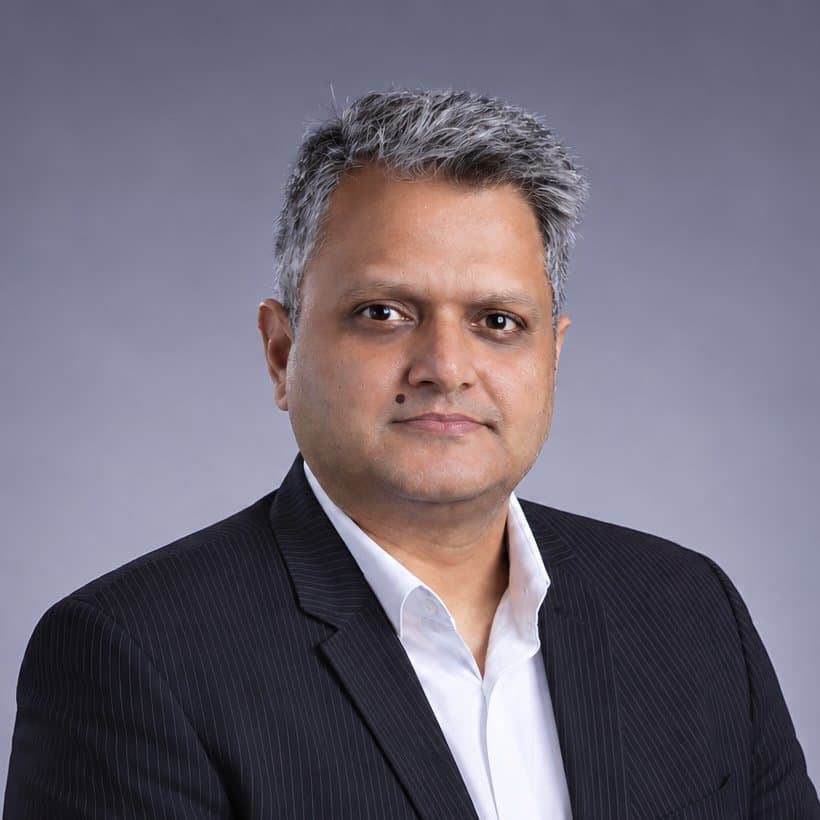
Shashank Sahni on What Success Leaves Out
Shashank Sahni, Google’s Managing Director of Global Ads Solutions, reflects on what customers reveal, what ambitious teams need from their leaders & what the mountains and marathons have taught him about going further.
Read Full Story
Corporate Visionaries
Clinical Multiplication: Divesh Singla on the Healthcare AI Case That Headlines Keep Missing
Divesh Singla, Managing Director, India at Veradigm, brings two decades in healthcare technology to the AI question leaders cannot avoid: how to expand clinical capacity without weakening human judgment.
Read Full Story
Investors & Catalysts
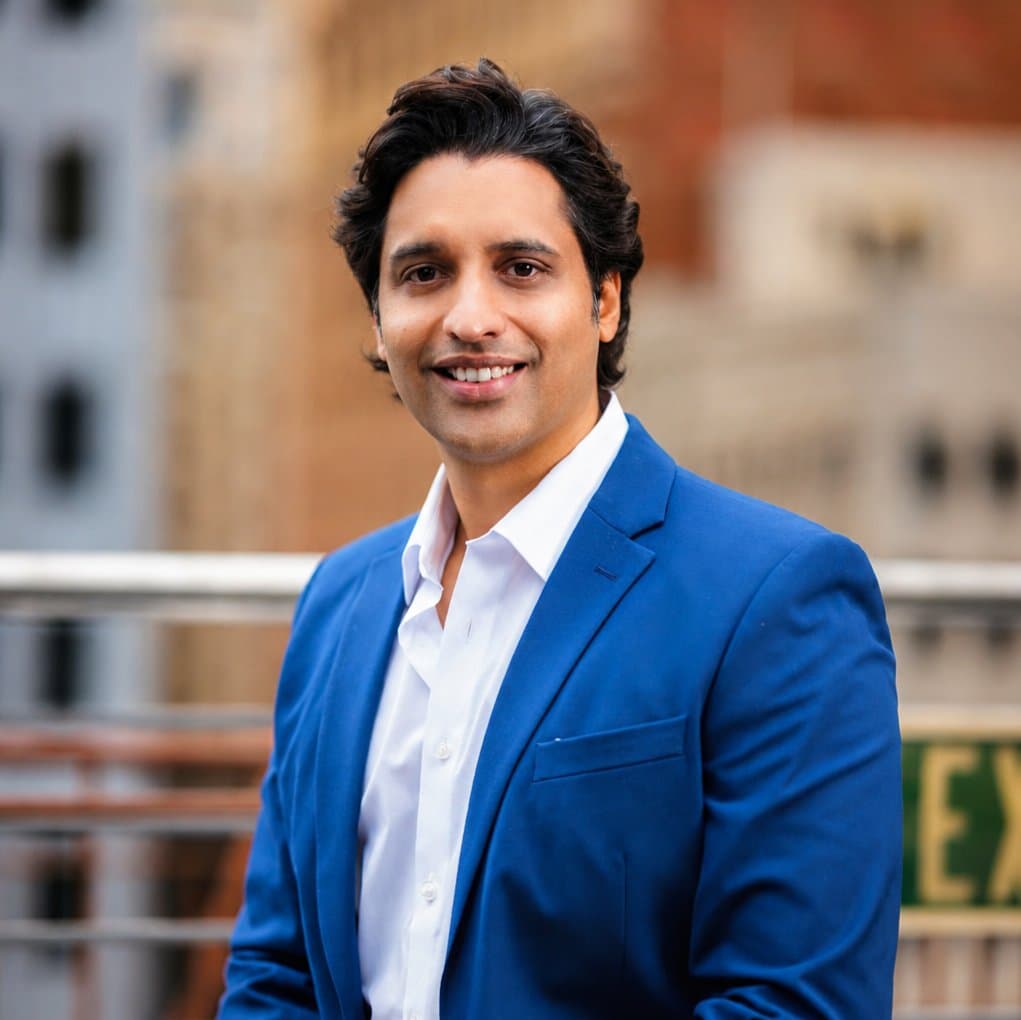
The Physical Economy Was Never Slow: A Conversation with Nikhil Choudhary
Nikhil Choudhary, Managing Partner at Nirman Ventures, on the harder ground of technology, where physical AI, venture discipline and industrial adoption have to meet the realities of machines, workers, capital and trust.
Read Full Story