Category: Founders & Innovators
Inderjit Makkar’s path shows that visibility is fleeting, but execution compounds. From S&P to Shark Tank to building Factacy, he has consistently chosen disciplined momentum over hype. His core belief—intent to learn beats static skill—anchors his approach to AI and entrepreneurship. He builds for endurance, not applause, focusing on systems that create real, lasting value.
Inderjit Makkar: Building Discipline in the Age of AI
IndiSight Editorial
Nov 10, 2025
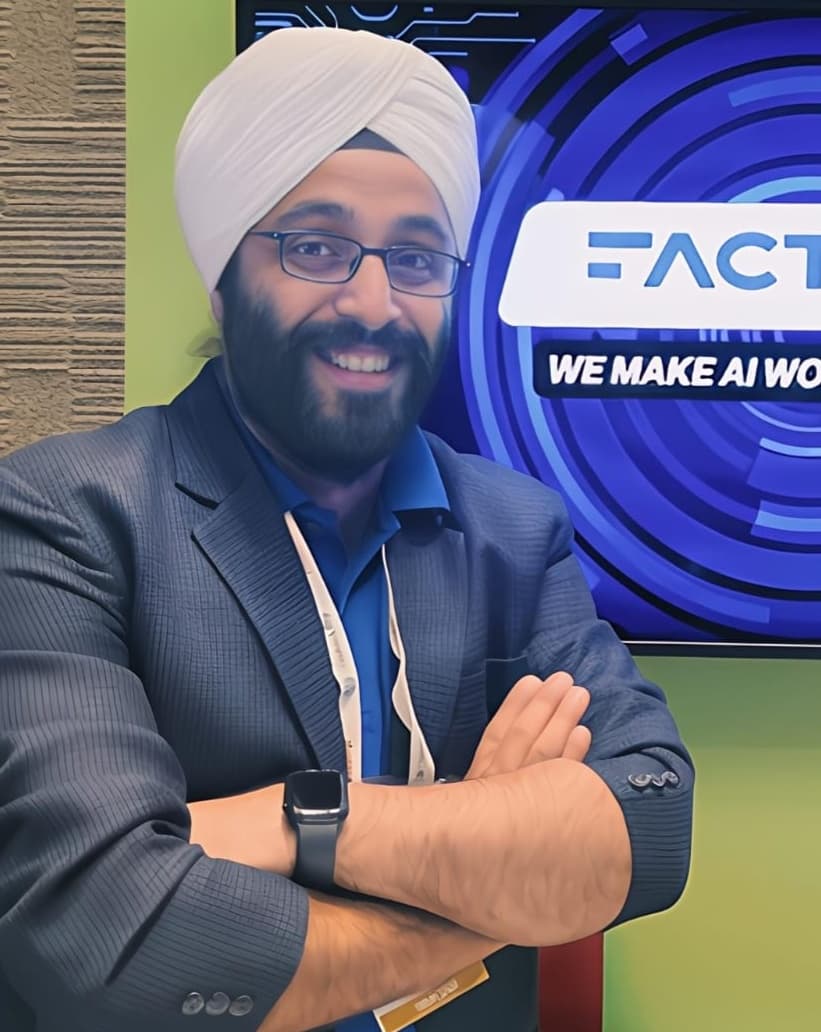
Inderjit Makkar
Inderjit Makkar has a simple rule: never fall in love with your press coverage.
It is advice many entrepreneurs wish they had followed. A splash of visibility often becomes a substitute for discipline. Inderjit, founder of Factacy.ai and Founding Director of Proxgy, knows the temptation firsthand. He once stood in the bright lights of Shark Tank India, but he insists that what came after mattered far more. “Fame lasts weeks,” he says. “Execution lasts decades.”
The Corporate Foundation: Learning How Systems Work
Before startups and television cameras, there was a long apprenticeship in the corporate world. Inderjit spent thirteen years at Standard & Poor’s, building and scaling global market intelligence platforms. He joined when the company was transitioning from static HTML pages to full-fledged data systems. Market pricing, symbologies, private equity and venture capital data, all of it had to be integrated into platforms that could serve a global client base.
He rose from research analyst to associate director, eventually leading a 150-person team across multiple locations. Those years provided him with something more enduring than promotions: a philosophy. At S&P, he discovered that skills matter less than intent. “Overnight, people can change their roles,” he recalls. “If someone had the intent to learn, we built teams around them even if they lacked the formal skillset.” One such team focused on automation, turning repetitive work into scalable processes. Productivity tripled.
This insight still guides him. In a market where AI is rewriting job descriptions every quarter, Inderjit believes intent will determine who thrives. What mattered at S&P, willingness to learn, matters even more in the AI era.
But corporate stability carried a hidden risk: complacency. “After a while,” he says, “you realize your tasks take five hours, and if you do nothing with the extra two or three, you stop growing.” That realization planted the seed of entrepreneurship.
The First Leap: A Regulatory Wall
His first venture was not glamorous. Inderjit began importing e-cigarettes. It was a trading play, legal at the time, and he leveraged his family’s networks to scale. Within months the business showed promise. And then, in September 2019, the Indian government banned the industry outright. Shops closed in two weeks. Inventory became worthless.
Many would describe that as failure. Inderjit frames it differently: as education in policy risk. Entrepreneurs in Silicon Valley worry about product-market fit. In China, founders track state priorities closely, knowing that a policy shift can erase entire sectors overnight. India sits somewhere in between, but his e-cigarette collapse was a blunt lesson: regulation can erase years of work faster than competitors ever will.
The experience sharpened his philosophy of backups and risk buffers. “Your time is ten to twelve productive hours a day. Where are you putting them, and what is the opportunity cost?” he asks. That calculus, always weighing reward against exposure, would later shape his approach to both Proxgy and Factacy.
Proxgy and the Shark Tank Spotlight
From trading he moved into building. Together with his friend Pulkit, he explored two ideas: a data company focused on private markets and an IoT venture. The IoT idea became Proxgy, a wearable and mobility-tech startup that eventually made it to Shark Tank India. The appearance brought fame, investors, and rapid growth. The valuation leapt from ten crore to over four hundred crore in three years.
Yet Inderjit insists Shark Tank was not the victory many assume. “The show is visibility, not validation,” he explains. “The episode airs, the calls pour in, and then it fades. What lasts is execution.”
The tension was clear: invention had won them the spotlight, but execution would decide survival. He points to lessons from fellow founders. Many D2C brands sold out overnight after their Shark Tank episodes but struggled to manage inventory. “Imagine a perishable goods company,” he says. “If you overproduce after the spike, you lose everything. If you underproduce, you miss the moment. The real test begins after the cameras stop.”
For Inderjit, Shark Tank crystallized a paradox: visibility can destroy as easily as it creates. The hype cycle rewards bold claims, but only founders who discipline themselves afterward convert fame into durable growth. “Having featured on prime-time television doesn’t give you success,” he says. “It only spotlights you. Success has to be earned after that.”
Factacy: AI as a Service, Not a Slogan
By 2022, a new wave had arrived. When OpenAI’s breakthroughs grabbed global attention, Inderjit saw the headlines differently. To him, the real story wasn’t the models themselves but the companies struggling to use them. Most were tied to outdated systems and teams that didn’t know where to start.
That is where Factacy stepped in. Not to build another giant model, but to make AI usable for businesses in ways that solved real problems. The company focused on AI as a service, helping enterprises generate actionable insights in market intelligence, financial research, and competitive analysis. Instead of asking leaders to reinvent their operations overnight, Factacy gave them tools they could deploy immediately.
Inderjit compares AI to laptops. “You don’t compete with Dell or Apple by reselling laptops with your logo,” he argues. “The value lies in showing people how to use the tool better than they imagined.” Factacy’s proposition is not to supply data scientists by the dozen but to solve problems end to end: reduce cost centers, ease operational headaches, and build investor-ready MVPs.
This positioning avoids the trap of “wrapper AI” companies that build superficial layers on top of existing models. He has seen that hype cycle come and go. True value, he believes, lies in application, helping clients do in hours what once took days.
India, the U.S., and China: Three Models of AI
Inderjit frames the AI race in simple terms:
The United States builds foundational models.
China scales them with hardware and state backing.
India makes them work for everyone.
It is not a slogan but a recognition of comparative advantage. India may not produce its own OpenAI tomorrow, nor dominate semiconductor supply chains like Taiwan. But it can dominate adoption. With its service DNA, technical workforce, and linguistic diversity, India can position itself as the engine of last-mile AI solutions.
He is clear-eyed about limitations. “We are still known more for services than for manufacturing or invention,” he says. “But services are a powerful place to be if you do them right.” In a world where enterprises drown in choice, India’s role may be to translate capability into usability.
Market Dynamics and Capital Allocation
Having operated in both corporate finance and startups, Inderjit sees capital markets through a double lens. Today, he argues, most VCs still value AI companies like traditional businesses: revenue growth, retention, repeat customers. What is missing is a framework for evaluating AI-specific value creation.
Factacy itself is working on products to match startups with investors using AI to analyze pitch decks, patents, and sector growth trajectories. The aim is to reduce information asymmetry, one of the biggest inefficiencies in venture markets. “If two companies look the same on dashboards but one has commercially viable patents, that matters,” he explains.
Here he voices a contrarian critique of India’s capital markets. Too much money, he argues, flows to consumer startups chasing early exits rather than to fundamental technologies. “Investors screen for exits, not endurance,” he says. That cycle may keep valuations high in the short term but leaves India vulnerable in global technology races.
Courage, Recklessness, and the Role of Family
Inderjit speaks often about calculated risk. He frames it in stages of life. In your twenties, with little to lose, you can afford recklessness. In your thirties, with responsibilities, risks must be backed by buffers. By your forties, when families and obligations deepen, risks must be calculated with safety nets.
He lived this philosophy personally. When salaries were due and the company account was nearly empty, he put his provident fund savings into Proxgy. Later, during another crunch, he and Pulkit debated taking personal loans to pay employees. These were not theoretical discussions. They were lived choices.
Family became the first investor. On a rainy evening, when the safer path was a lucrative corporate job, his wife told him simply: “Let’s try.” That emotional buy-in, he insists, was as valuable as any financial capital. “Your first pitch,” he says, “is always to your family. If they say yes, that is investment.”
This human angle gives weight to his frameworks. Resilience is not abstract. It is nights of doubt, choices between school fees and salaries, and the discipline to keep moving forward.
Leadership in an AI World
Inderjit distinguishes between decisions AI can support and those humans must retain. Backward-looking analysis and trend projection are within AI’s scope. Forward-looking choices, especially those involving people and risk, remain human. “AI can tell you what happened,” he says. “Only humans should decide what should happen next.”
He worries less about job loss than about second-order risks: misinformation, fraud, and the erosion of trust. Deepfakes targeting seniors, WhatsApp misinformation weaponized at scale, ethical blind spots in coding, these concern him more than automation. Here he calls for AI literacy as a societal counterweight. The U.S. battles election misinformation, China responds with censorship, and India must find its own balance between openness and safeguards.
Momentum, Not Speed
One of his sharpest ideas is about momentum. Startups often confuse growth with velocity. “Hypergrowth is tempting,” he says, “but it cannot be sustained. Direction matters more.” A company growing 15 percent annually with strong foundations may outlast one chasing 10x growth in unsustainable sectors.
He cites examples of startups that surged when ChatGPT arrived but collapsed once pricing pressures shifted. Momentum requires patience. Hypergrowth may impress investors, but endurance is what defines lasting companies.
The Legacy Question
Asked what he wants his chapter in the AI era to say, Inderjit replies without hesitation: wisdom over excitement. He would rather be remembered as the builder of systems that helped hundreds of startups grow than as a headline-grabbing founder. “I want the company to outgrow my name,” he says. “I don’t want to be an influencer. I want the work to speak.”
That perspective separates him from many peers. In an age of branding, he chooses institution-building. His ambition is not to be the loudest voice in AI but to be the most enduring architect.
Leadership Lessons
Visibility fades. Execution lasts.
Build before you leap. Always have backups.
Direction beats speed. Endurance wins the long game.
Family is the first investor. Emotional buy-in is capital.
Replaceability is strength. Intent to learn beats static skill.
Policy risk matters as much as market risk.
Fame is fragile. Discipline compounds.
Momentum requires patience. Hypergrowth often burns out.
Services can be strategy. Adoption is power.
Success is not about being smart. It is about being prepared.
Closing Reflection
In a business culture obsessed with disruption, Inderjit Makkar represents something rarer: deliberate construction. His story reminds us that the real disruption may not come from moving fast but from building slowly, wisely, and with discipline.
“Success,” he says, “is about being prepared. In an age of artificial intelligence, perhaps the most human advantage left is knowing when to slow down.”
Our Suggestions to Read
Discover The Leaders Shaping India's Business Landscape.
Founders & Innovators
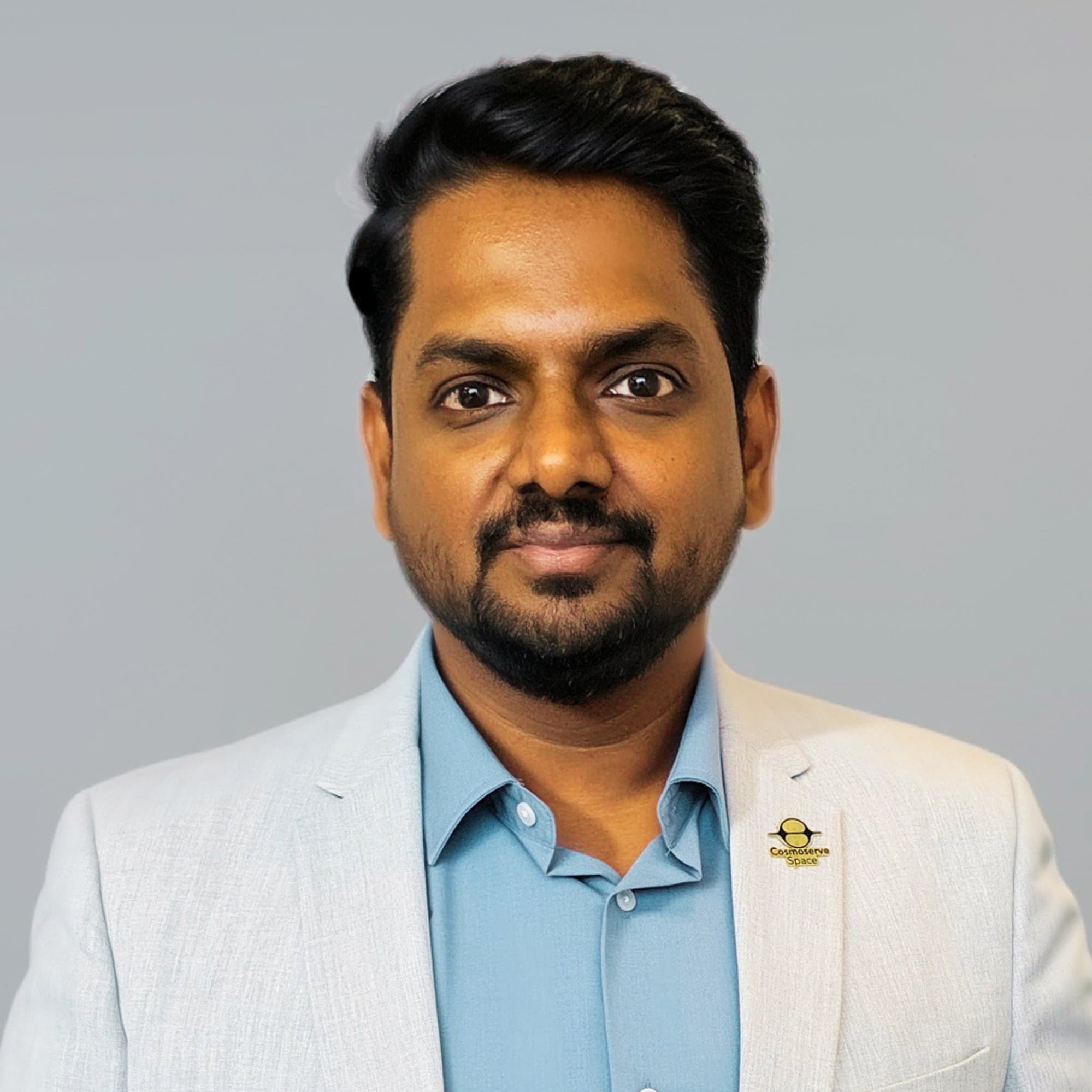
Building the Next Space Economy: Chiranjeevi Phanindra and Cosmoserve's Case for Orbital Maintenance
Chiranjeevi Phanindra, Founder & CEO of Cosmoserve Space, spent 14 years at ISRO working on re-entry and human spaceflight. Today, he is focused on a vital challenge: keeping Earth’s orbit usable.
Read Full Story

Corporate Visionaries
Shashank Sahni on What Success Leaves Out
Shashank Sahni, Google’s Managing Director of Global Ads Solutions, reflects on what customers reveal, what ambitious teams need from their leaders & what the mountains and marathons have taught him about going further.
Read Full Story
Corporate Visionaries
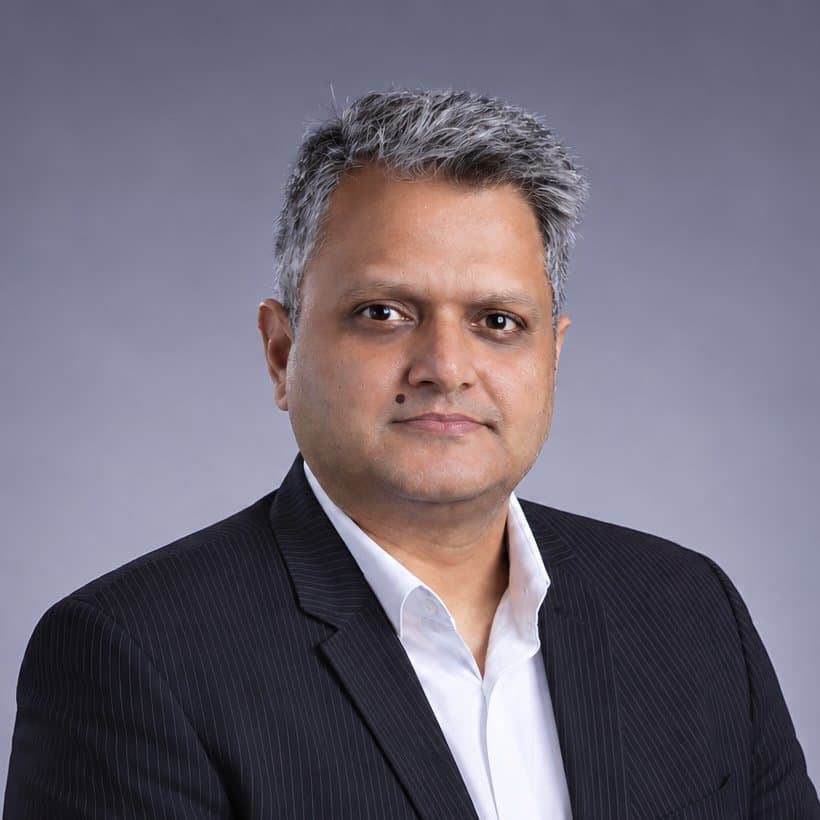
Clinical Multiplication: Divesh Singla on the Healthcare AI Case That Headlines Keep Missing
Divesh Singla, Managing Director, India at Veradigm, brings two decades in healthcare technology to the AI question leaders cannot avoid: how to expand clinical capacity without weakening human judgment.
Read Full Story