Category: Corporate Visionaries
Rajesh Dhuddu, Partner & Leader, Emerging Technologies at PwC India, believes enduring innovation is built on ethics, interoperability, and systems designed to scale.
Designing Tomorrow: Rajesh Dhuddu on How Constraints Become Catalysts
IndiSight Editorial
Sep 9, 2025
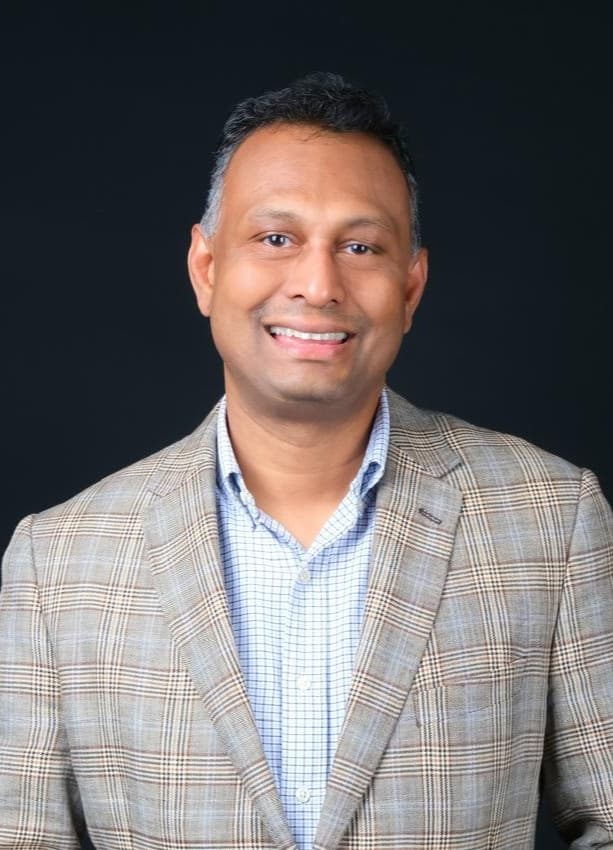
Rajesh Dhuddu
Partner & Emerging Tech Leader · PwC
Philosophy as Practice
In the Bhagavad Gita, Krishna reminds Arjuna to act without clinging to results, to focus on the duty of the moment rather than the promise of reward. For most leaders, this remains a lofty philosophy. For Rajesh Dhuddu, it is daily practice. Detachment, to him, is not withdrawal but discipline: the ability to pause before acting, to draw strength from stillness, and to see complexity not as chaos but as raw material for design.
As Partner and Leader, Emerging Technologies at PwC India, Rajesh is responsible for accelerating the market adoption of next-generation technologies across sectors. But his influence extends far beyond any single company. From pioneering blockchain at population scale to reimagining governance through token economies, Rajesh has become one of India's foremost voices in systems design and ethical innovation.
At a time when the world equates innovation with speed and scale, Rajesh advances a contrarian view. Real breakthroughs, he believes, emerge from working inside constraints. Scarcity, fragmentation, and friction are not obstacles in his vocabulary; they are catalysts. His career, spanning telecom, digital payments, blockchain, and policy, shows how designing through constraint can unlock architectures strong enough to serve hundreds of millions.
This is not the story of a technologist building tools. It is the story of a systems thinker designing futures that endure.
Beginnings in Broken Plans
Rajesh often begins his story with a setback. As a teenager, he appeared for the state medical entrance exam and secured a rank of 1400. While this was a respectable score, it was not high enough to qualify for a seat at a medical college, given the extremely limited number of spots. In the Indian context of the 1980s, where entire careers could hinge on a single test, this might have been catastrophic. Instead, it became formative.
“I missed getting into a Medical College. That's the truth,” he recalls. “But it taught me how to pivot before I had anything to prove.”
That early disappointment sparked a lifelong habit of reframing. Rather than clinging to a predetermined path, he learned to see alternative routes as design opportunities. That decision carried him into India’s telecom revolution, just as mobile adoption was still uncertain.
Rajesh began his early career by helping expand mobile networks across 90 towns in the then undivided Andhra Pradesh, during a time when telecom was still finding its feet in rural India. The hurdles were significant, including poor literacy, erratic electricity, and unreliable infrastructure. But instead of seeing these as setbacks, he treated them as starting points. In districts where power cuts were frequent, he pushed for hybrid network models to ensure consistent uptime. In regions where reading instructions wasn’t always possible, he reimagined how customer engagement could work without relying on text. Rather than building in spite of the constraints, he built with them. That experience left him with a simple but powerful truth: sometimes, the best designs emerge when you begin with what’s missing.
Systems Mindset
At Tata, Rajesh led one of the first rural contact centers in the United States, a 250-seat operation in Ohio that reversed the very idea of outsourcing. Most saw it as risky. He saw it as resilient. This move predated the now-common model of distributed teams. “It was about proving work could flow both ways,” he explains. Alongside, he handled M&A strategy, U.S. incorporation, and multi-time zone operations, years before global delivery became the industry norm.
At Quatrro, under the mentorship of Raman Roy, a pioneer of India’s BPO industry, he encountered strategic complexity at scale. Presenting to leaders like Infosys Co-founder Kris Gopalakrishnan and former Planning Commission member Arun Maira, Rajesh began sharpening what he now calls his “systems mind.” These were not just presentations. They were pressure tests that taught him to map interdependencies, not merely pitch solutions.
The pattern was emerging. Problems were rarely isolated. They were symptoms of systems. And if you didn’t understand the system, you’d never fix the signal.
Constraint Architecture
This systems mindset culminated in one of Rajesh’s core design beliefs: constraint architecture.
Where traditional innovation models assume abundance of capital, infrastructure, or literacy, India forces its builders to solve inside constraints. For Rajesh, this is not a weakness but a creative superpower.
He cites the Unified Payments Interface (UPI) as a powerful example. While he was not involved in building UPI, his work at Quatrro during the same period focused on pioneering card payments and processing services for Tier 2 and Tier 3 banks across India. In many ways, the timing and intent of his work ran parallel to UPI’s larger goal of financial inclusion.
UPI itself was not built by ignoring challenges. It was shaped by them. In July 2025 alone, it handled nearly 19.5 billion transactions. This is a testament to the kind of architecture that scales not in ideal conditions but precisely because of them.
At Tech Mahindra, Rajesh led blockchain deployments that blocked over 600 million spam messages daily. Again, constraint was the mother of invention. Telcos were overwhelmed, regulators hesitant, users frustrated. But instead of launching experimental pilots, Rajesh designed for scale from the start. His systems didn’t showcase capability. They delivered public utility.
His guiding logic remains consistent. Efficiency is not a luxury in constrained systems. It is a precondition for survival.
Mental Layering
If constraint architecture is about what you design, mental layering is about how you see.
Traditional organizations separate thinking into silos: strategy here, compliance there, operations elsewhere. Rajesh sees danger in that division. “Systems don’t fail inside silos,” he says. “They fail at the seams.”
Mental layering is his method for connecting those seams. He breaks it down into steps:
Surface the Real Problem: Start with symptoms, but dig until you find the root.
Map Beneficiaries of the Status Quo: Someone always benefits when things stay broken.
Spot Hidden Patterns: What dysfunction is hiding a deeper issue?
Anticipate Resistance: What will the system refuse to surrender?
He used this method across the payments industry to navigate regulation, compliance, and technology alignment. In telecom, the same approach helped scale identity-linked systems across diverse user bases. For Rajesh, complexity is not something to be simplified too quickly. It is something to be understood deeply, then layered until patterns reveal themselves.
Protocol Diplomacy
Rajesh believes the next global power shift will not be about who builds the best algorithms, but about who designs the best protocols.
“The next frontier isn’t intelligence. It’s interoperability.”
He calls this protocol diplomacy, the ability to design bridges between fragmented systems. Whether in AI, cross-border finance, or decentralized governance, the key challenge will not be capability but coherence.
History, he argues, supports this. The Medici banks didn’t just lend money. They built the ledger systems that powered Renaissance commerce. Aadhaar and UPI didn’t just connect users. They codified trust. AI is heading in the same direction. What matters isn’t who builds the biggest node. It’s who enables the nodes to speak to each other.
The future, he insists, will belong to those who can both build and bridge.
Scarcity as Advantage
Rajesh often challenges India’s image as the back office of the world. He sees a different narrative.
“Our advantage isn’t cost. It's constraint. Our innovation comes from chaos, from working systems through friction.”
Where others see barriers, he sees levers:
Fragmented infrastructure becomes a driver for modular design.
Linguistic diversity pushes inclusive, multilingual solutions.
Population scale forces protocol-level efficiency.
India’s digital public goods are not anomalies. They are emerging templates. As the rest of the world enters its own age of constraint due to climate, politics, and demographic shifts, India’s scarcity-native architectures may prove to be the new global standard.
Stillness as Strategy
In a world obsessed with hustle, Rajesh practices stillness.
“The deepest pause creates the fastest clarity,” he says.
Stillness, for him, is not passivity. It is an active discipline and a design choice. It allows second-order thinking. It stops organizations from jumping to trendy solutions. It opens space for ethical foresight.
He traces this to the Gita. Act without attachment, but with discernment. In an environment that rewards immediacy, stillness becomes the safeguard against fragility.
Ethics as the Invisible Architecture
Rajesh is not interested in what technology can do. He is focused on what it should do.
To stay aligned, he asks three questions:
Does it entrench power, or distribute it?
Does it build resilience, or fragility?
Does it enable trust, or erode it?
These are not philosophical abstractions. They animate his public talks, frame his book Blockchain in e-Governance, and shape his governance models. In his view, ethics is not the last check. It is the first blueprint.
Roles for the Next Generation
Looking ahead, Rajesh defines two new leadership archetypes the world will need:
Constraint Architects: Builders who treat scarcity as the canvas, not the obstacle.
Protocol Diplomats: Bridge-makers who translate across fractured systems.
These leaders will not only need to design systems. They will also need to hold the space between them, negotiating coherence at scale.
Impact Measurable, Influence Earned
Rajesh’s frameworks are not theory. They have shaped national systems. From payment networks to spam-blocking blockchain deployments, his designs have influenced millions of users and transformed public digital infrastructure.
The recognition has followed naturally. He has been ranked among Thinkers360’s Top 10 Global Blockchain Leaders and included in Lattice80’s list of the Top 100 Influencers. His ideas have also been featured in Forbes and discussed on platforms such as BBC, CNN, CNBC-TV18, and India Today TV, carrying his perspective from Indian policy circles to global conversations.
He prefers it that way. “If a system still works ten years after I’ve left, that’s success. Even if no one remembers my name.”
Creating Lasting Futures
Rajesh Dhuddu does not design for applause. He designs for endurance.
His legacy will not be in tools. It will be in frameworks. Not in visibility, but in validation. Not in trends, but in trust.
His advice for tomorrow’s leaders rests on three principles:
Build for trust, not just scale.
Design with constraints, not in spite of them.
Anticipate the second order, not just the next step.
This is not just innovation under pressure. It is wisdom under complexity.
Final Word: To Those Who Will Build What’s Next
To future leaders: Build with care, not just ambition. Create work that holds up even when you're not there to explain it. Think not just about what's urgent, but what will stay relevant for a longer period of time. And when things feel unclear, don’t rush to tidy them up. Sit with the mess. Let the discomfort teach you something. That is often where real leadership begins.
To students and first-jobbers: Read the system behind the surface. Don’t just chase jobs. Study how structures work. It is pattern recognition, not position, that builds power.
To policymakers and institutions: Treat governance like architecture. Make it modular, testable, and enduring. Your responsibility is not just the next policy. It is the next decade.
To all builders: Reach does not mean relevance. Speed is not wisdom. Innovation that ignores ethics will collapse on its own ambition.
And finally, in Rajesh’s softest advice:
“Also, meditate. Especially when the world tells you to hustle.”
Our Suggestions to Read
Discover The Leaders Shaping India's Business Landscape.

Corporate Visionaries
Shashank Sahni on What Success Leaves Out
Shashank Sahni, Google’s Managing Director of Global Ads Solutions, reflects on what customers reveal, what ambitious teams need from their leaders & what the mountains and marathons have taught him about going further.
Read Full Story
Corporate Visionaries
Clinical Multiplication: Divesh Singla on the Healthcare AI Case That Headlines Keep Missing
Divesh Singla, Managing Director, India at Veradigm, brings two decades in healthcare technology to the AI question leaders cannot avoid: how to expand clinical capacity without weakening human judgment.
Read Full Story
Corporate Visionaries
When AI Leaves the Lab: Gowrav Shekar on AI, Judgment and Building for Consequence
Gowrav Shekar, Head of Technology and AI Practices at Adani AI Labs, brings a builder’s lens to AI, shaped by real workflows, imperfect data, ownership, consequence and validation after deployment.
Read Full Story