Category: Corporate Visionaries
As the world reorganizes around energy, industrial leadership is shifting from production to integration. Mangesh Barge, CEO of Sterling Green Power Solutions, is building systems that connect power, mobility, and digital intelligence into one coherent industrial framework. For him, electrification is not just technological change, it is a test of how well organizations can design, adapt, and endure as the future keeps rewriting its rules.
Designing the Next Industrial Order: Mangesh Barge and the Discipline of Building Systems That Last
IndiSight Editorial
Feb 12, 2026

Mangesh Barge
CEO (E-Mobility) · Sterling Green Power Solutions
Mumbai
The Industrial Redesign
The world is being reorganized around energy. As nations race to electrify transport, digitalize infrastructure, and decarbonize supply chains, energy and mobility have fused into a single economic system. Whoever manages the flow of electrons will shape the flow of global economies. Beneath the surface of every electric vehicle or charging hub lies a deeper contest for mastery of materials, manufacturing intelligence, and institutional resilience.
India has entered this race with scale, ambition, and complexity in equal measure. Yet policy or investment alone will not define its success. What will matter is management depth, the ability to translate industrial aspiration into consistent execution. That is where Mangesh Barge operates.
After two decades shaping operations and product strategy at Delphi Technologies, Valeo, and Tata AutoComp Systems, Mangesh now leads Sterling Green Power Solutions, the e-mobility arm of the Sterling and Wilson Group. His role is not incremental expansion but transformation. He is building an enterprise designed for integration, one that connects power, mobility, and digital intelligence across the same value chain.
“Electrification is not just a technology shift,” he says. “It is an organizational test. The challenge is to evolve how we think, collaborate, and sustain conviction when the future keeps changing its terms.”
His view comes from lived experience. Across multinational and Indian organizations, he has led teams through cycles of innovation, contraction, and renewal. His career reflects the journey of Indian industry itself, moving from manufacturing partner to systems designer. His current mission is to ensure that India’s energy transition is not built on borrowed knowledge, but on original thinking and operational precision.
From Engineering Precision to Strategic Systems
Industrial leadership often begins in scarcity, not abundance. Mangesh grew up in Satara, a small town in Maharashtra where engineering was seen as both discipline and dream. “You learn early that nothing moves unless you make it move,” he recalls. That practical mindset would later define his leadership style.
After earning top honors in mechanical engineering, he pursued management studies and a business program in France. The experience was formative. It exposed him to Europe’s culture of process discipline, where design, finance, and production worked as one integrated rhythm.
Precision is not a technical capability. It is a collective value system.
At Delphi Technologies, part of General Motors, Mangesh learned how global supply chains function under real constraints. He rotated through strategy, sales, and operations, observing how coordination, not scale, creates efficiency. “Innovation matters only when it becomes repeatable,” he says. “Systems protect progress from volatility.”
Valeo became the next inflection. The automotive world was moving from mechanical to electronic intelligence, and India’s participation was under question. “The hardest part was not technology,” he says. “It was belief. We had to prove that Indian operations could perform at the same standard and speed as Europe.”
At Tata AutoComp Systems, he managed a ten-thousand-crore business portfolio across continents. The shift from a functional leader to a P&L owner was decisive.
You learn that data gives control, but people give continuity. Strategy without empathy fails faster than execution without perfection.
During this period, he also contributed to the Tata Business Excellence Model, advising multiple group companies on operational resilience. The experience shaped his philosophy that transformation must become an operating condition, not a campaign. “Change has to survive enthusiasm,” he says. “Otherwise, it is just motion.”
When he assumed leadership at Sterling Green Power Solutions, the challenge expanded. The company stood at the intersection of traditional power and new mobility. “My role is not to build a product line,” he says. “It is to build conviction that India can lead this transition on its own terms.”
The Logic of Transformation
Every industrial revolution tests the balance between ambition and structure. Mangesh believes organizations succeed not by chasing disruption but by managing dual realities: the efficiency of today and the experimentation required for tomorrow.
Efficiency and innovation cannot be managed in sequence. They have to run together.
He calls this approach dual-speed leadership. One part of the company focuses on stability, the other on exploration. “If you manage them separately, one will starve the other,” he says. “The leader’s job is to synchronize the two engines.”
At Valeo, he applied this principle while building India’s capability for advanced EV electronics. The task was to deliver reliability within the cost pressures of a global system. “The real test was not building a facility. It was building confidence that we could meet the same precision as mature markets.”
At Tata AutoComp Systems, he managed transformation across geographies and learned the discipline of pacing change. “Markets move faster than organizations,” he says. “If you push the system beyond its capacity to absorb, trust breaks down.”
At Sterling Green, the model is explicit. One business unit sustains the company’s legacy power systems. Another builds the future through e-mobility and renewable integration. “The present funds credibility; the future funds conviction,” he says. “Both must coexist.”
Transformation, in his view, is not an event but a permanent capability. “If a process only works when you personally supervise it, it is not scalable,” he says. “True transformation is when good decisions become self-sustaining.”
Competing Through Coherence
In the global race for clean mobility, every country plays a different role. China dominates manufacturing, the United States leads in software and capital, and Europe governs through regulation. India, Mangesh believes, can lead through adaptation. “Our advantage is conversion,” he says. “We take global models and make them workable under constraint.”
He identifies four levers that will determine India’s competitive position: policy stability, access to capital, supply-chain integrity, and technical talent. “Each of these exists,” he says. “The task is to make them move in unison.”
India’s mobility sector, he argues, evolves at multiple speeds. Two- and three-wheelers grow fastest; passenger and freight mobility progress more slowly but with higher technology intensity. “This unevenness is not a flaw,” he says. “It is how complex systems mature.”
The equilibrium between scale and capability is central to his thinking.
Volume generates economic oxygen. Capability gives it durability. Both are necessary.
At Sterling Green, this logic translates into action. The company is localizing component manufacturing and building proprietary intelligence for charging and power systems. The intent is not isolation but mastery. “Partnerships should multiply learning, not dependence,” he says.
He sees the next phase of competition shifting from products to systems. “The winners will be those who can integrate data, energy, and supply chains into one intelligent network,” he says. “The measure of leadership will be coherence.”
For India, he sees a historical opportunity to design frameworks that balance ambition with conscience. “Our strength is not in replication,” he says. “It is in redesigning progress for our own realities.”
The Human Equation
Mangesh’s view of leadership begins with people, not plans. “Technology can change a process,” he says. “Only trust can change behavior.”
He treats culture as an invisible operating system that determines how an organization interprets uncertainty. “A company’s true strategy,” he says, “is revealed by how it behaves when things go wrong.”
At Sterling Green, transformation begins with orientation. Teams are trained to understand the purpose behind every initiative before they execute it. “If people can locate meaning in the mission, they can handle volatility,” he says.
He draws a clear distinction between loyalty and trust.
Loyalty depends on emotion. Trust depends on fairness. You can’t scale loyalty, but you can institutionalize trust.
He also measures organizational health by curiosity under stress. “If people stop asking questions when pressure rises, the system is already breaking,” he says.
His decision discipline rests on three checks: probability, proportion, and patience. “Probability tests realism, proportion measures impact, and patience ensures the system can absorb the change,” he explains. “Ignore any one, and motion replaces progress.”
Resilience, in his words, is not toughness but recovery. “Leadership is the ability to regain clarity after disruption,” he says. “That is what keeps systems alive.”
Mentorship, to him, is a process of inquiry.
You guide people by improving the quality of their questions. When people start thinking structurally, they stop needing supervision.
His philosophy of leadership comes down to one measure: continuity. “You know you have led well,” he says, “when the organization continues to make sound decisions without you.”
Beyond Electrification
For Mangesh, the coming decade is not about electric mobility alone. It is about redesigning the logic of progress itself. “The last century measured power by production,” he says. “The next will measure it by integration.”
He predicts three forces will shape global competitiveness: technological sovereignty, ecosystem design, and governance quality. Sovereignty will determine which nations own their core technologies. Ecosystem design will define how efficiently industries synchronize across sectors. Governance will decide who earns trust in an era of transparency.
The world is entering a period where integrity has economic value. Investors will reward reliability, not just returns.
At Sterling Green, this philosophy translates into self-reliant systems that engage globally without dependence. “Self-reliance is not isolation,” he says. “It is negotiation from strength.”
He believes the next industrial order will be polycentric, a network of interdependent systems rather than one dominant power. “No single nation will control the future,” he says. “But those that design cooperation effectively will lead it.”
For Mangesh, the role of leadership is to ensure that technology remains accountable to ethics. “Technology can electrify industries,” he says. “Leadership must make them intelligent.”
His closing reflection is both practical and philosophical.
Every industrial revolution has been powered by new energy. This one is powered by responsibility.
Leadership Principles
Build systems that scale discipline, not dependence.
Treat culture as the logic behind decisions, not an emotional slogan.
Make purpose explain volatility so people can act with clarity.
Balance ambition with capacity; pace matters as much as direction.
Measure health through curiosity under pressure.
Design for learning; permanence is a myth in fast-changing industries.
Use fairness as the foundation of authority.
Replace speed with coherence; growth must remain understandable.
Convert trust into measurable advantage; it compounds faster than capital.
Teach through questions; thinking is the only scalable resource.
Closing Reflection
Mangesh Barge sees the next phase of progress as a test of judgment. The contest will not be about who scales faster, but about who thinks more clearly under pressure. “The future will not belong to those who move the quickest,” he says. “It will belong to those who build wisely.”
In his world, leadership is not about prediction. It is about design, structuring systems that grow without losing coherence. “Power and responsibility must advance together,” he says. “That is the real definition of progress.”
As India navigates this transition, Mangesh represents a new generation of leaders who combine industrial pragmatism with strategic patience. His focus is not on noise or speed, but on continuity and intelligence.
Technology may electrify the world, but as he puts it, “Leadership is what must illuminate it.”
Our Suggestions to Read
Discover The Leaders Shaping India's Business Landscape.

Education Leadership
The Human Advantage: Anu Monga on What Schools Must Still Create
Drawing on decades of leadership in international schools and education, Anu Monga reflects on what institutions must continue to create in a world where knowledge is increasingly accessible and shaped by technology.
Read Full Story
Investors & Catalysts
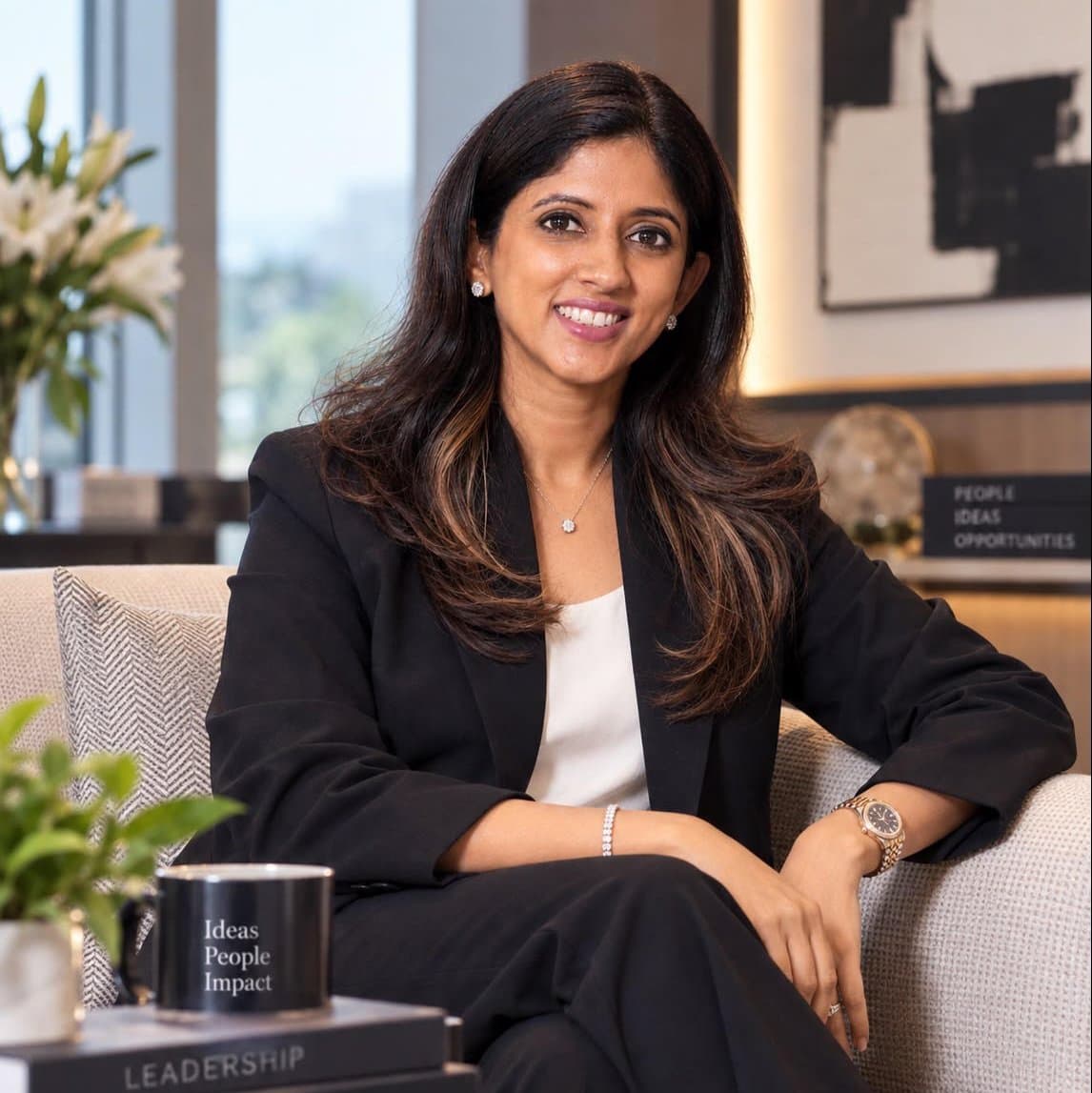
From Millet to Method: Rasika Prashant on Building What Consumers Return To
Rasika Prashant, CEO of NSRCEL at IIM Bangalore and Co-founder of Soulfull (later aquired by Tata Consumer Products) on consumer trust, category creation, Indian brands, and the founder discipline required after belief.
Read Full Story
Founders & Innovators
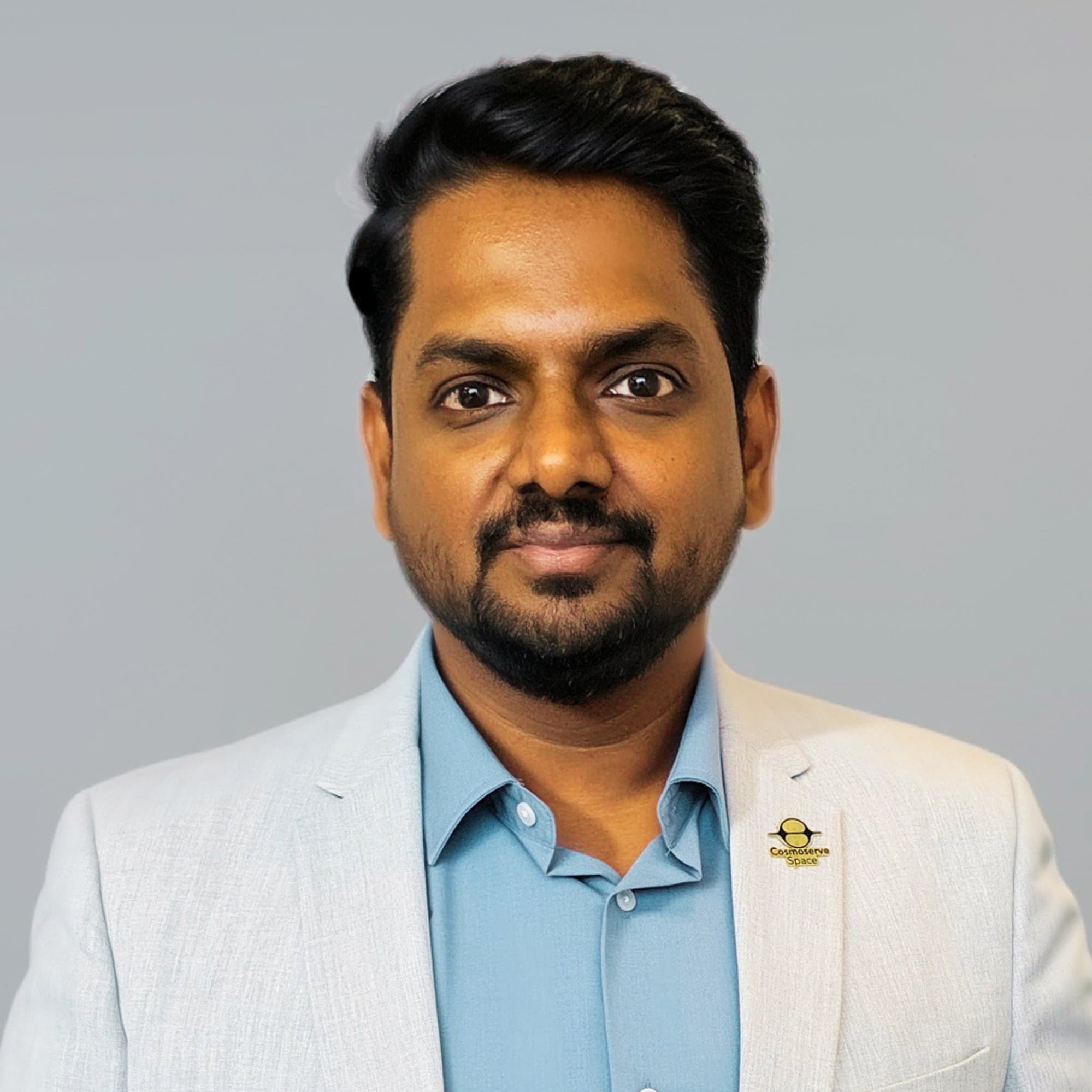
Building the Next Space Economy: Chiranjeevi Phanindra and Cosmoserve's Case for Orbital Maintenance
Chiranjeevi Phanindra, Founder & CEO of Cosmoserve Space, spent 14 years at ISRO working on re-entry and human spaceflight. Today, he is focused on a vital challenge: keeping Earth’s orbit usable.
Read Full Story